Quick Info
Curated Experiences
Newgrange and Boyne Valley Day Tour from Dublin
Private Bru na Boinne and Newgrange Experience
Newgrange, Knowth, and Trim Castle Heritage Circuit
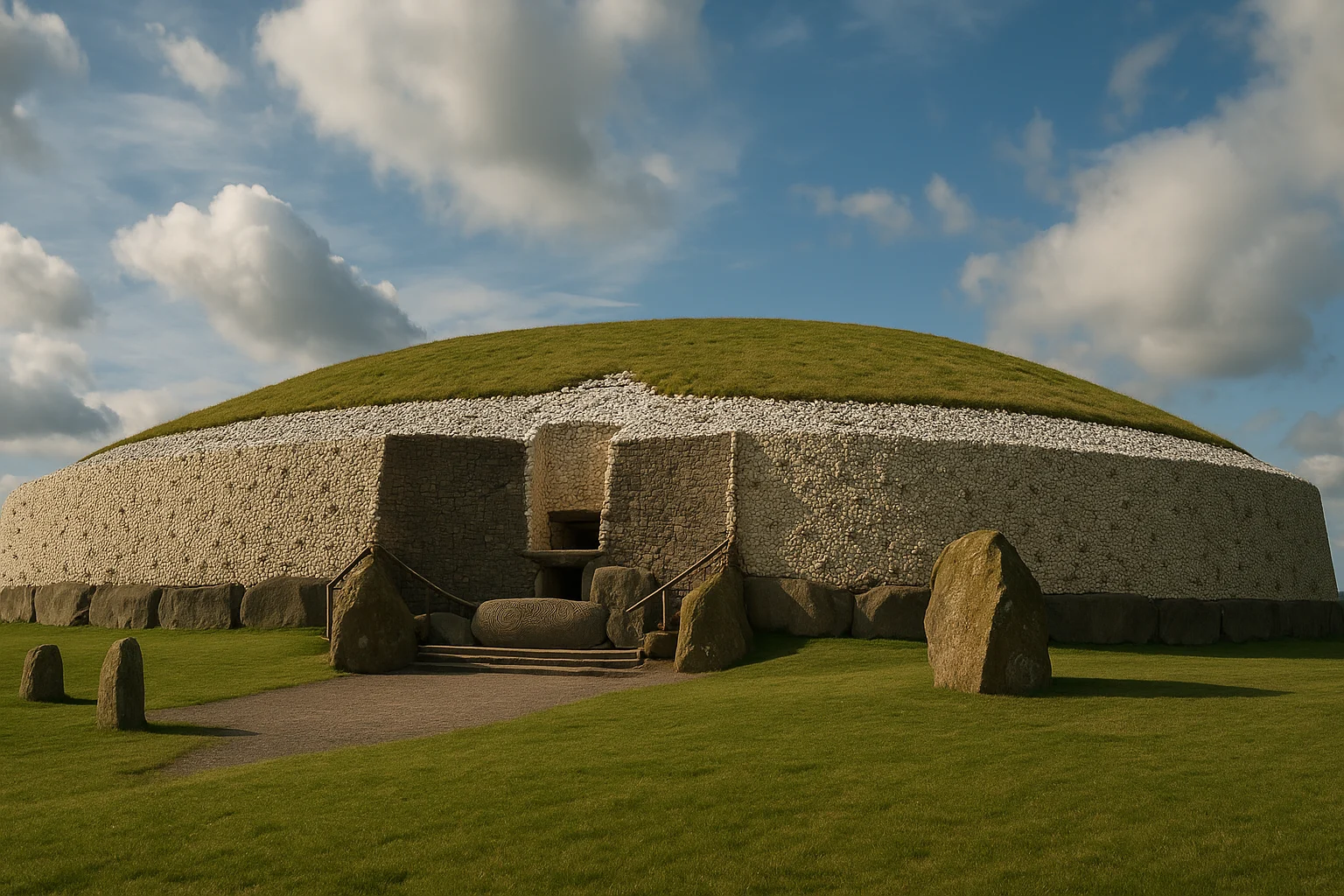
Newgrange is one of Europe’s most important prehistoric monuments - a massive Neolithic passage tomb built around 3200 BCE, predating Stonehenge’s main phases by roughly a thousand years and older than the Great Pyramid of Giza. Set within the Brú na Bóinne UNESCO World Heritage landscape in Ireland’s Boyne Valley, it compresses five millennia of human ambition into a single grassy mound you can walk through in under an hour.
For travelers interested in deep-time archaeology, Newgrange is not optional. It is the clearest surviving example of Neolithic monumental engineering in Western Europe, and one of very few prehistoric sites where the builders’ astronomical intent remains physically verifiable.
Why Newgrange Matters
Newgrange is not a ruin. Unlike most monuments of comparable age, its corbelled interior chamber has never collapsed. The passage and central room remain structurally intact after more than five thousand years, which means you are walking into the same enclosed space that its builders designed and used. That continuity is exceptionally rare at this time depth.
The monument’s most celebrated feature is its winter solstice alignment. A purpose-built roof-box above the entrance channels a narrow beam of dawn sunlight down the 19-meter passage and into the central chamber for roughly 17 minutes around the shortest days of the year. This is not an accident of orientation. The roof-box is a separate, precision-engineered opening with its own lintel and sill, distinct from the main entrance below it. Its existence confirms that the builders planned the monument around solar observation from the outset.
Beyond the solstice mechanism, Newgrange matters for its megalithic art. The kerbstones ringing the base of the mound carry some of the most elaborate carved motifs in European prehistory - spirals, lozenges, concentric arcs, and chevrons pecked into stone surfaces with stone tools. Kerbstone 1, directly at the entrance, and Kerbstone 52, at the rear, are among the most photographed examples of Neolithic rock art anywhere.
Historical Context
Newgrange was constructed around 3200 BCE by farming communities in the Boyne Valley. It belongs to a tradition of passage tomb building that spread across Atlantic Europe during the fourth millennium BCE, but the Brú na Bóinne complex - Newgrange, Knowth, and Dowth together - represents the tradition at its most ambitious scale.
Construction required moving approximately 200,000 tonnes of material. The mound is roughly 85 meters in diameter and 13 meters tall. Structural stones were sourced locally from the Boyne riverbed and surrounding glacial deposits, while the distinctive white quartz facing on the entrance side was transported from the Wicklow Mountains, some 70 kilometers to the south. That distance implies organized labor, planning, and a community with surplus resources dedicated to a project with no immediate survival function.
After its primary use period, Newgrange accumulated later deposits. Beaker pottery and Roman-era artifacts found in the vicinity suggest the site retained significance (or at least visibility) across subsequent millennia. By the medieval period, it had become associated with mythological narratives - the Tuatha Dé Danann and the god Dagda in Irish tradition. Systematic archaeological investigation began in the 1960s under Michael J. O’Kelly, whose excavation and partial reconstruction shaped the monument visitors see today.
What to Prioritize Onsite
Brú na Bóinne Visitor Centre
All access to Newgrange runs through the Brú na Bóinne Visitor Centre, located south of the river. You cannot drive directly to the monument. Start with the centre’s exhibition, which covers construction techniques, excavation history, and the relationship between Newgrange, Knowth, and Dowth. The display on the solstice alignment includes a simulated light-box experience that provides useful context before you enter the real passage.
The Guided Tour and Chamber Access
Shuttle buses carry visitors from the centre to the monument. Tours are guided and group-based, with a staff member providing commentary on construction, art motifs, and the restoration decisions made during the 1960s-70s excavation. Pay attention to the discussion of the corbelled roof - the technique of progressively overlapping stone courses to create a dome without mortar is visible inside and has kept the chamber dry for over five millennia.
Inside the chamber, the guide will typically simulate the solstice light effect using artificial light. The space is tight (the passage narrows to under a meter wide at points) and the interior is cool. Your time inside is brief but concentrated. Focus on the chamber’s three side recesses and the carved basin stones within them.
Kerbstones and Exterior Circuit
After exiting, walk the exterior perimeter. The decorated kerbstones are genuinely remarkable, and most visitors rush past them. Kerbstone 1 at the entrance deserves sustained attention - its triple-spiral motif is the most recognizable image in Irish prehistoric art.
Practical Visit Strategy
Timing and Tickets
Book in advance, especially for visits between April and October. Newgrange tours sell out, and walk-up availability is unreliable during peak months. The first morning slots tend to be least crowded and give you flexibility to add Knowth or explore the valley afterward. Aim for weekdays over weekends if your schedule allows.
The best visiting windows are April through June and September through October - manageable crowds, longer daylight, and generally cooperative weather. July and August are busiest. Winter visits are quieter but limited by shorter hours and weather.
Solstice Lottery
Access to the chamber during the actual winter solstice dawn (around December 21) is allocated by lottery. Applications open annually through the OPW (Office of Public Works) website. Roughly 50 people are selected for the multi-day solstice window. If solstice access matters to you, enter the lottery well in advance and plan your trip around it only if selected.
What to Bring
Wear layered, weatherproof clothing. The Boyne Valley is open and exposed, and conditions shift quickly - rain, wind, and sudden clearing are all normal within a single visit. Sturdy walking shoes are sufficient (no hiking boots required). The passage interior is cool regardless of outside temperature. Photography inside is restricted during guided tours, so manage expectations accordingly.
Getting There
Newgrange is roughly 50 kilometers north of Dublin, an easy drive via the M1 motorway. The visitor centre is signposted from Donore village. Public transport options are limited - a rental car or organized day tour from Dublin is the most practical approach. Allow a minimum of two hours for the Newgrange visit alone, three to four if combining with Knowth.
Route Pairing and Nearby Sites
Newgrange anchors an Irish itinerary around deep prehistory. The most natural pairing is with Knowth, the neighboring passage tomb complex within Brú na Bóinne, which holds the largest collection of megalithic art in Western Europe. Knowth tours run from the same visitor centre and can be combined with Newgrange in a single half-day.
Beyond the valley, Hill of Tara is 20 minutes south and adds the Iron Age and early medieval ceremonial layer - a useful counterpoint to Newgrange’s Neolithic focus. Trim Castle, 30 minutes west, provides a dramatic shift into Anglo-Norman military architecture and works well as an afternoon stop.
For travelers building a broader Ireland route, Glendalough in County Wicklow covers early Christian monastic settlement, while Dún Aonghasa on the Aran Islands offers a prehistoric stone fort in an entirely different landscape context. Together with Newgrange, these sites build a timeline from the fourth millennium BCE through the medieval period without redundancy.
Final Take
Newgrange earns its reputation. It is one of a handful of prehistoric sites in Europe where the original builders’ intent - architectural, astronomical, ritual - remains legible without requiring much imagination. The passage, the chamber, the solstice alignment, and the carved kerbstones all still function as readable evidence of what a Neolithic community chose to build when survival alone was not enough.
Go with enough time, follow the guided flow, and resist the impulse to treat it as a quick checkbox between Dublin stops. Newgrange rewards the visit you give it.
Quick Facts
| Attribute | Details |
|---|---|
| Location | Donore, County Meath, Ireland |
| Country | Ireland |
| Region | County Meath |
| Civilization | Neolithic Ireland |
| Historical Period | c. 3200 BCE |
| Established | c. 3200 BCE |
| UNESCO Status | World Heritage Site (Brú na Bóinne, 1993) |
| Coordinates | 53.6947, -6.4750 |
| Managed By | Office of Public Works (OPW) |
| Access | Guided tours via Brú na Bóinne Visitor Centre only |
Frequently Asked Questions
Can you go inside Newgrange?
Yes, but only on an official guided visit booked through the Bru na Boinne Visitor Centre system. Access is limited and can sell out in peak months.
How long do you need for Newgrange?
Most travelers should budget 2.5 to 4 hours including visitor-center transfer, guided monument access, and short walking time around the site.
Is Newgrange worth visiting if you have already seen Stonehenge?
Yes. Newgrange is older and offers a different type of Neolithic architecture, with a passage-and-chamber interior that gives a stronger sense of ritual design.
Nearby Ancient Sites
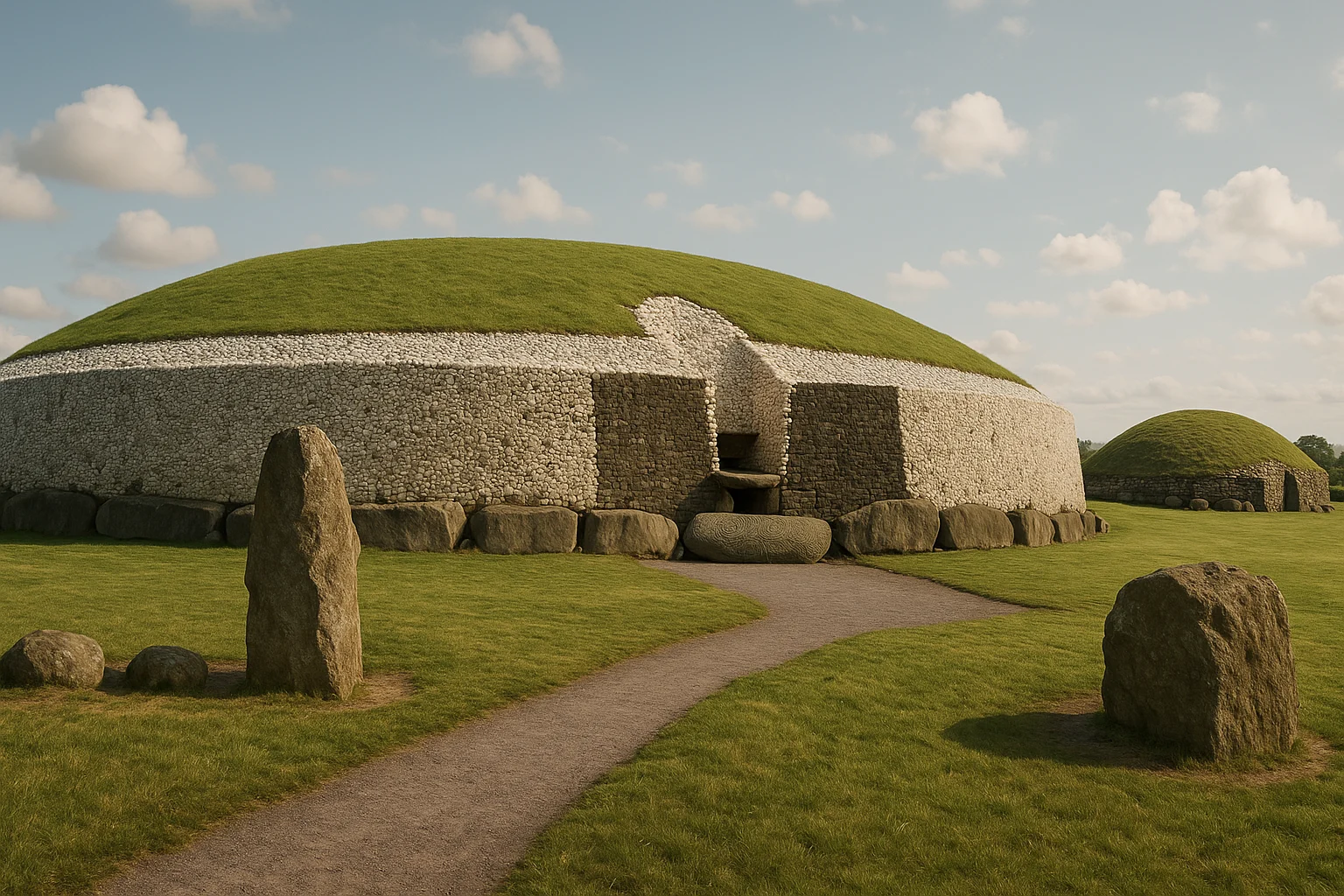
Boyne Valley Passage Tombs Travel Guide 2026: Newgrange, Knowth, and Dowth Visit Strategy
Neolithic IrelandPlan your first Boyne Valley passage tombs visit with practical timing, Brú na Bóinne access flow, a...
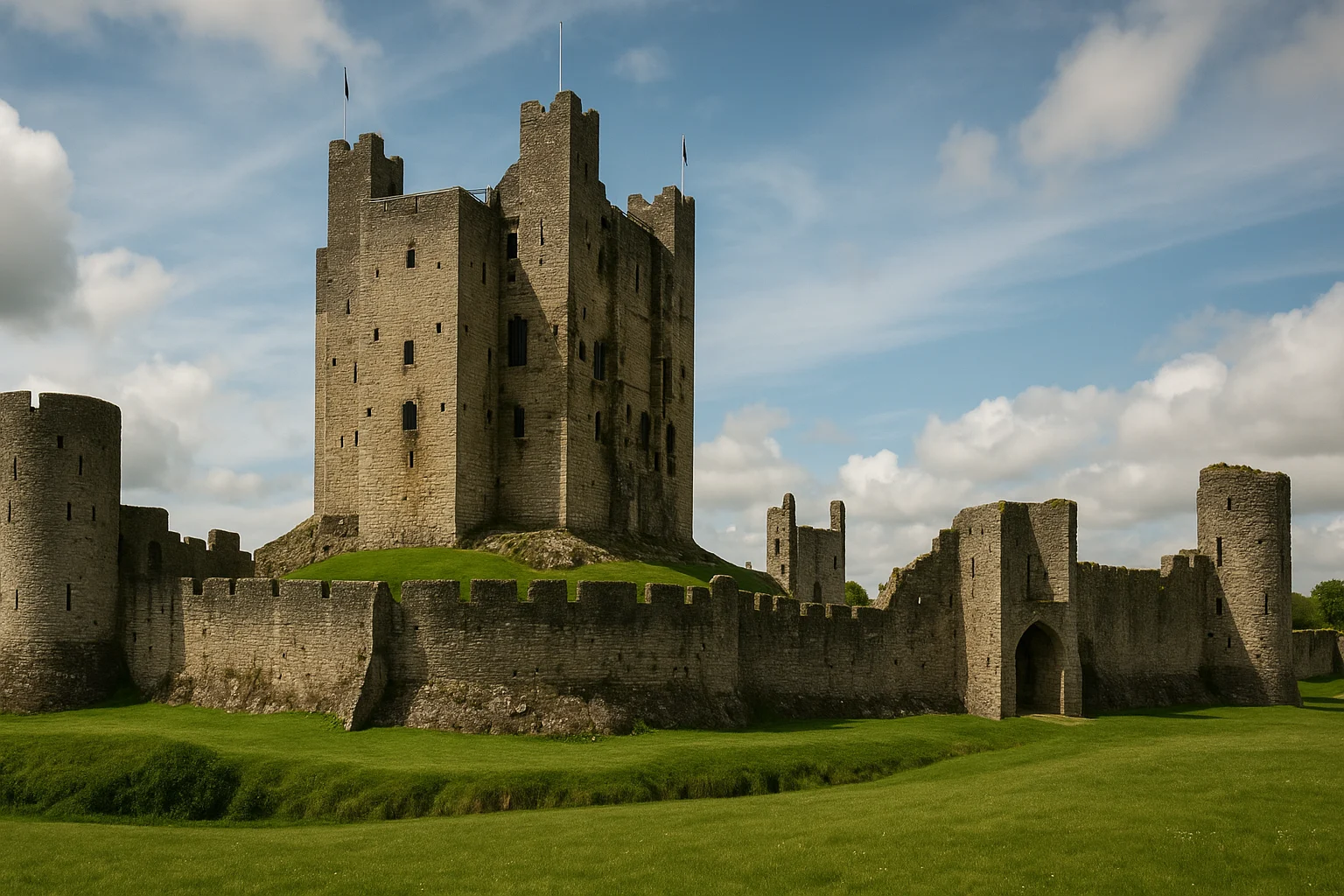
Trim Castle Travel Guide 2026: Norman Keep, Curtain Walls, and County Meath Plan
Anglo-Norman IrelandPlan a first visit to Trim Castle with practical timing, keep-tour logistics, and clear context for ...
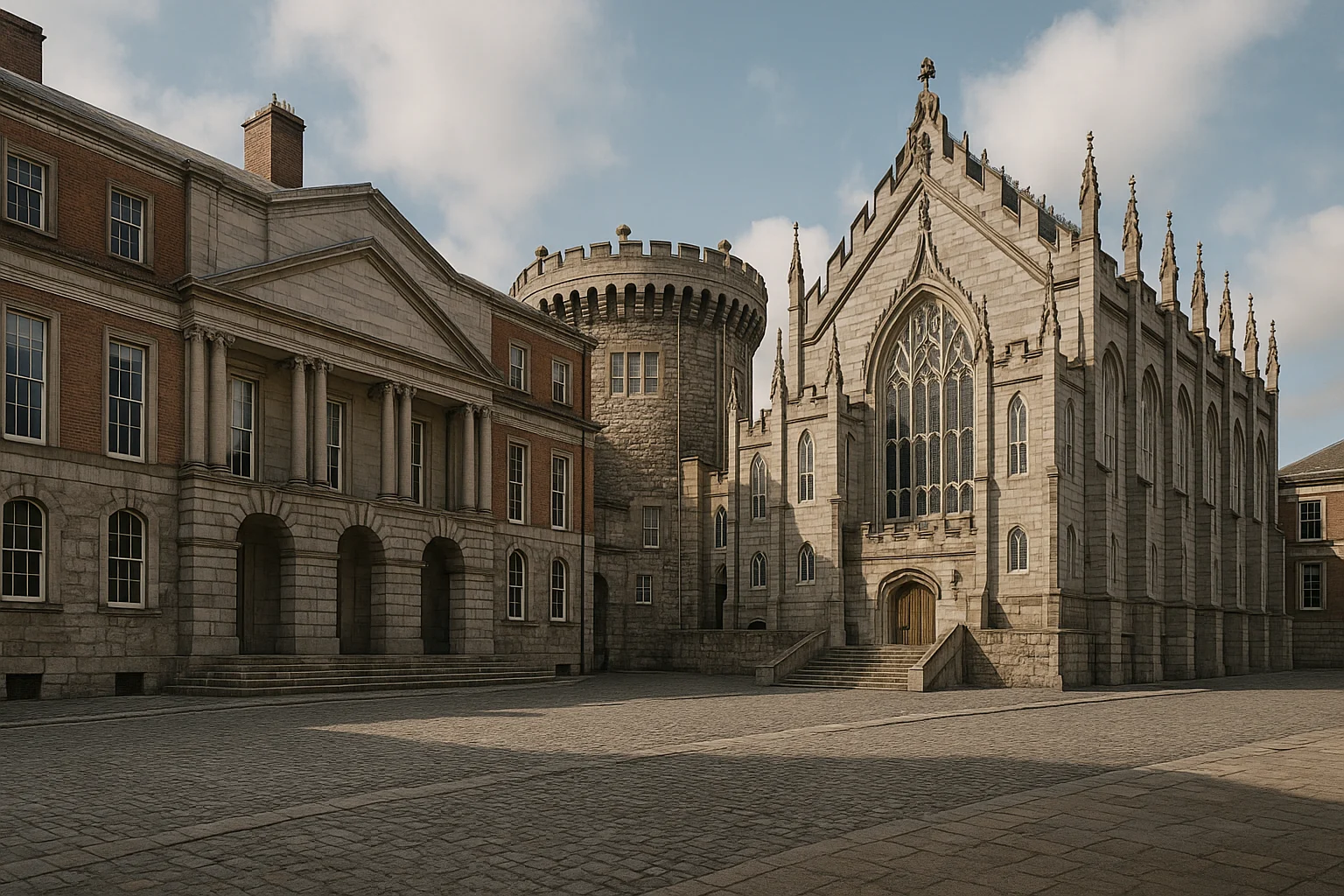
Dublin Castle Travel Guide 2026: State Apartments, Viking Layers, and City-Center Route
Medieval and Early Modern IrelandPlan a first visit to Dublin Castle with practical timing, ticket strategy, and clear context on the...