Quick Info
Curated Experiences
Nijo Castle Guided Walking Tour in Kyoto
Kyoto UNESCO World Heritage Sites Full-Day Tour
Kyoto Imperial Palace and Nijo Castle Half-Day Tour
There is a moment inside the Ninomaru Palace at Nijo Castle when the floor announces you. Each step along the polished hinoki corridor releases a faint, reedy chirp — not a creak or a groan, but something uncannily birdlike, a sound engineered rather than accidental. You are walking across one of the most sophisticated security systems of the premodern world, and the floor is doing exactly what its 17th-century carpenters intended: telling the shogun’s guards that someone is coming. Nijo Castle sits in the heart of Kyoto, Japan, about two kilometers west of the Kyoto Imperial Palace, and it remains the most complete surviving expression of Tokugawa military power wrapped in the aesthetics of aristocratic refinement. The outer walls, the sweeping tiled rooftops, the meticulously raked gravel gardens, and above all the Ninomaru Palace — a building whose every sliding door panel and coffered ceiling was calculated to project dominance — have endured largely intact for over four centuries. UNESCO recognized that rarity in 1994. For any visitor trying to understand how feudal Japan actually looked, smelled, and felt at the height of samurai governance, Nijo Castle is the most accessible, most vivid answer Kyoto offers.
History
Ieyasu’s Statement in Stone and Wood
Tokugawa Ieyasu, who had unified Japan after the Battle of Sekigahara in 1600, ordered Nijo Castle constructed in 1601 and completed it in 1603 — the same year the emperor formally granted him the title of shogun. The timing was not coincidental. Kyoto remained the seat of the imperial court, and Ieyasu needed a residence in the capital that would serve two purposes simultaneously: a secure lodging when he visited the emperor, and an unmistakable advertisement of where real power now resided. Feudal lords (daimyo) from across Japan were conscripted to fund and supply the construction, a deliberate policy of financial and logistical subordination that Ieyasu would refine into a system of control lasting 265 years.
The original castle focused on the Ninomaru complex — the secondary circle of defense — which remains the showpiece of the site today. The interior’s decorative program was executed by painters of the Kano school, the dominant artistic lineage of the Edo period, who filled over 3,000 painted panels with tigers in bamboo groves, eagles on pines, and willow trees bending over streams. The subjects were chosen with political intention: powerful animals for the shogun’s reception halls, softer landscapes for rooms where the shogun himself would relax, and flowering trees for spaces assigned to lesser guests. Every room communicated rank.
The Iemitsu Expansion
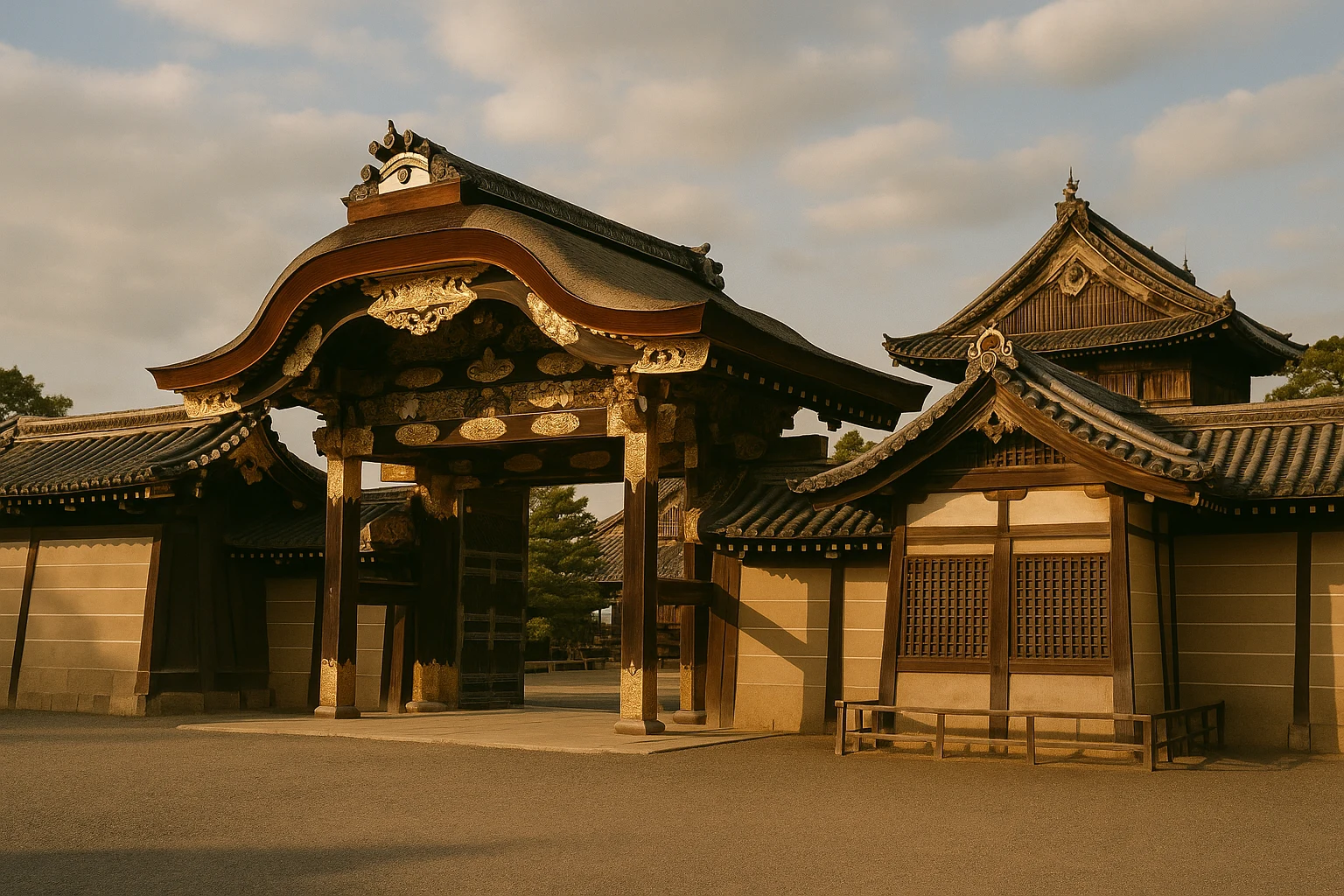
Ieyasu’s grandson, Tokugawa Iemitsu, substantially expanded the castle between 1624 and 1626 in preparation for Emperor Go-Mizunoo’s visit — one of the last times a reigning emperor would visit a shogun’s residence. Iemitsu added the Honmaru Palace within the inner compound, enlarged the gardens, and constructed the ornate Karamon Gate whose Chinese-style curved gable and intricate carved panels of cranes, pines, and plum blossoms remain one of the most photographed architectural details in Kyoto. The emperor’s visit in 1626, attended by some 100,000 people, marked the symbolic apex of Tokugawa dominance over the imperial institution.
Decline, Abandonment, and Restoration
After 1634, when the third shogun Iemitsu left Kyoto, no Tokugawa shogun visited Nijo Castle for 229 years. The Honmaru Palace burned in a lightning strike in 1750 and was not rebuilt for over a century. When the final shogun, Tokugawa Yoshinobu, came to Nijo in 1867, it was to announce the restoration of imperial rule — the formal end of the shogunate system his ancestor had founded in this very city. In a room of the Ninomaru Palace, the Edo period closed.
The castle transferred to imperial household control in 1871 and served briefly as the Kyoto Imperial Palace Detached Villa. The city of Kyoto received the property in 1939 and has administered it since. The Ninomaru Palace and its surrounding garden are today recognized as a National Special Historic Site and National Special Place of Scenic Beauty in addition to their UNESCO status.
Key Features
The Ninomaru Palace
The Ninomaru Palace is the heart of Nijo Castle and the reason most visitors come. It comprises six interconnected buildings arranged in a zigzag plan covering roughly 3,300 square meters, designed so that no single room receives a view of all others — a layout that controlled sight lines and allowed for secret conversations in the innermost chambers. Visitors enter through the Toosha-no-ma, an outer hall where vassals waited, and proceed through increasingly private spaces: the Shikidai (a formal anteroom), the Ohiroma (the main audience hall where the shogun received daimyo), and finally the Kuro-shoin, the intimate inner chamber reserved for the shogun’s most trusted retainers.
The painted panels throughout are extraordinary in their scale and their condition. The tigers in bamboo — gold leaf backgrounds giving the compositions a warm, lantern-lit luminosity even in daylight — were painted to intimidate visitors waiting in the outer halls. Closer to the shogun’s private spaces, the imagery softens: willows, flowing water, cherry blossoms. The tonal shift was intentional and is still immediately perceptible as you move deeper into the building.
The nightingale floors (uguisubari) run through all the corridors connecting the palace buildings. The mechanism involves iron clamps (uguisu-bari-kanagu) fitted to the flooring boards, which press against a nail when weight is applied, producing the characteristic sound. Modern analysis has confirmed that the chirping is loudest when walking at a natural pace and virtually impossible to suppress entirely, making it a genuinely effective passive security system rather than merely a legend.
The Ninomaru Garden
Directly south of the palace lies the Ninomaru Garden, designed by the master landscape artist Kobori Enshu in the early 17th century and one of the finest surviving examples of Edo-period stroll garden design. A central pond fed by stone-channeled water holds three islands — Horai, the mythical isle of immortality in Chinese tradition — linked by stone bridges. Carefully shaped pine trees, raked gravel, and moss-covered stones create a composition that reads differently from every angle, designed to be appreciated from both within the palace rooms and during a walking circuit of the pond. The garden was built for the 1626 imperial visit and remains almost entirely in its original configuration.
The Honmaru and East Garden
The Honmaru (inner compound) is enclosed within its own moat and contains the reconstructed Honmaru Palace, which replaced the original after the 18th-century fire. The current Honmaru Palace dates from 1893, when structures were relocated from the Kyoto Imperial Palace complex. It is opened to the public only during special seasonal exhibitions, but the Honmaru’s stone walls and the stone-paved pathways surrounding them convey the military logic of the castle’s concentric defensive design. The keep tower once stood at the northwest corner of the Honmaru; its stone foundations are still visible, a ghost of the structure Iemitsu demolished in 1750 after another lightning strike.
The secondary East Garden (Seiryuen) was added in 1965 and combines a traditional Japanese garden with a Western-style lawn, used today for seasonal illumination events in spring and autumn.
The Karamon Gate
The Karamon Gate — literally “Chinese gate” for its karahafu curved gable — separates the outer compound from the Ninomaru inner grounds and is the most architecturally elaborate single structure on the site. Every surface carries carved decoration: cranes and turtles (symbols of longevity), crysanthemums (the imperial crest), pine and plum (symbols of constancy). The gate was built for Emperor Go-Mizunoo’s visit and represents the single moment when the castle had to speak simultaneously to shogunal power and imperial dignity. It does so with extraordinary delicacy.
Getting There
Nijo Castle is one of the most straightforward major heritage sites in Japan to reach without a car. From Kyoto Station, the Kyoto Municipal Subway Tozai Line runs directly to Nijojo-mae Station; the journey takes approximately 12 minutes and costs ¥260. From the station exit, the castle’s East Gate (Higashi-Otemon) is a 90-second walk.
Buses are equally convenient and offer routes from a wider range of Kyoto neighborhoods. City Bus lines 9, 50, and 101 all stop at Nijo Castle (Nijo-jo mae stop). From Kyoto Station Bus Terminal, lines 9 and 50 reach the castle in about 15–20 minutes depending on traffic; fares are a flat ¥230 for city buses. Bus 101 connects Nijo Castle directly to Kinkaku-ji and Ginkaku-ji, making it the natural route for visitors combining the three sites in a single day.
Taxis from Kyoto Station take about 10 minutes and cost approximately ¥800–¥1,000. For visitors staying in central Kyoto near Karasuma or Kawaramachi, the castle is also reachable by bicycle — flat terrain makes cycling comfortable, and rental shops near Kyoto Station offer day rates from around ¥1,000.
There is no public parking on site, and driving in central Kyoto is generally inadvisable given traffic and parking costs.
When to Visit
Nijo Castle rewards visits in all four seasons, but spring and autumn are the most celebrated. Cherry blossom season — typically late March to mid-April in Kyoto — transforms the outer and secondary gardens into a sea of pale pink. The castle holds over 400 trees spanning 50 varieties, including early-blooming Kawazu-zakura and late-blooming weeping cherries, which means the display extends over several weeks rather than a single explosive week. Evening illumination events during peak bloom allow visitors to see the castle under lights, which is atmospheric and dramatic. Book tickets in advance for these events, as they sell out.
Autumn foliage arrives in mid-November and runs through early December. The Honmaru and Ninomaru gardens gain a richness during this period — the maples turn deep red and orange against the white castle walls — and the autumn illumination events are among the best in the city.
Summer (July–August) is hot and humid by Kyoto standards, with temperatures regularly reaching 35°C. The castle opens early, and arriving at 8:45 AM keeps morning heat manageable; crowds also thin in summer compared to spring. Winter is quiet and uncrowded. The castle occasionally closes sections in late December and early January; check the official schedule. On clear winter mornings, the stone walls and white plastered towers reflect crisp light particularly well, and the absence of crowds makes it possible to hear the nightingale floors without distraction.
| Quick Facts | Details |
|---|---|
| Location | Nijo-jo cho, Nakagyo Ward, Kyoto, Japan |
| Coordinates | 35.0142° N, 135.7480° E |
| Established | 1603 (Ninomaru Palace); expanded 1624–1626 |
| UNESCO Status | World Heritage Site since 1994 |
| Designation | National Special Historic Site; National Special Place of Scenic Beauty |
| Admission | ¥1,300 adults (Ninomaru Palace included); ¥500 without palace entry |
| Opening Hours | 8:45 AM – 5:00 PM (last entry 4:00 PM); closed selected days Dec–Jan |
| Nearest Station | Nijojo-mae Station (Tozai Line), 1-minute walk |
| Key Feature | Ninomaru Palace with uguisubari (nightingale floors) |
| Garden Designer | Kobori Enshu (Ninomaru Garden, c. 1626) |
| Palace Artwork | Kano school painted panels (approx. 3,000 panels) |
| Cherry Trees | 400+ trees, 50 varieties |
Frequently Asked Questions
What are the nightingale floors at Nijo Castle?
The nightingale floors (uguisubari) are specially constructed wooden corridors in the Ninomaru Palace that produce a chirping sound when walked upon. The floorboards were engineered with clamps and nails beneath the surface that rub together under foot pressure, creating an early-warning system against intruders.
Is Nijo Castle a UNESCO World Heritage Site?
Yes. Nijo Castle was inscribed as a UNESCO World Heritage Site in 1994 as part of the Historic Monuments of Ancient Kyoto designation, which encompasses 17 sites across Kyoto, Uji, and Otsu.
How long does it take to visit Nijo Castle?
Most visitors spend 1.5 to 2.5 hours exploring the grounds. Touring the Ninomaru Palace interior, the Honmaru compound, and the extensive garden comfortably takes around two hours.
When is cherry blossom season at Nijo Castle?
Cherry blossoms at Nijo Castle typically peak between late March and early April. The castle grounds contain over 400 cherry trees of 50 varieties, making it one of Kyoto's most celebrated hanami (flower-viewing) spots.
Can you enter the Ninomaru Palace at Nijo Castle?
Yes, the Ninomaru Palace interior is open to visitors and is the highlight of any castle visit. You walk in socks along the famous nightingale corridors and pass through six interconnected reception halls decorated with Kano school paintings.
What are the opening hours and admission fees for Nijo Castle?
Nijo Castle is generally open from 8:45 AM to 5:00 PM (last entry 4:00 PM), with occasional closures in December and January. Adult admission is ¥1,300 as of recent pricing; check the official website before visiting as fees can change seasonally.
How do I get to Nijo Castle by public transport?
The easiest option is the Kyoto Municipal Subway Tozai Line to Nijojo-mae Station, which is a one-minute walk from the East Gate. Bus lines 9, 50, and 101 also stop directly at Nijo Castle.
Nearby Ancient Sites
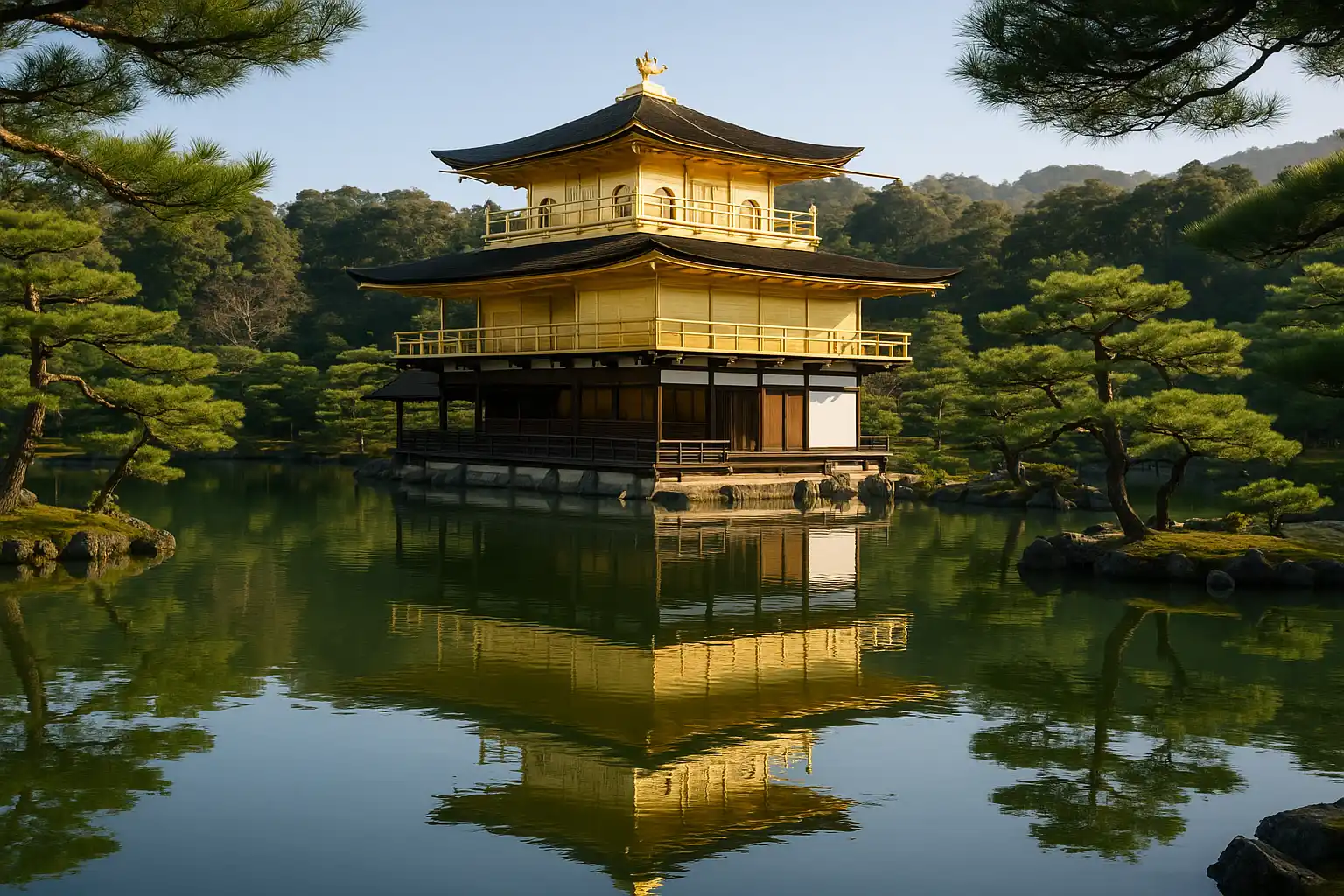
Kinkakuji Temple Japan Travel Guide 2026: Kyoto's Golden Pavilion
Japanese Zen BuddhistVisit Kinkakuji, the Golden Pavilion, Kyoto's most iconic Zen temple. Discover the gold-leaf covered...
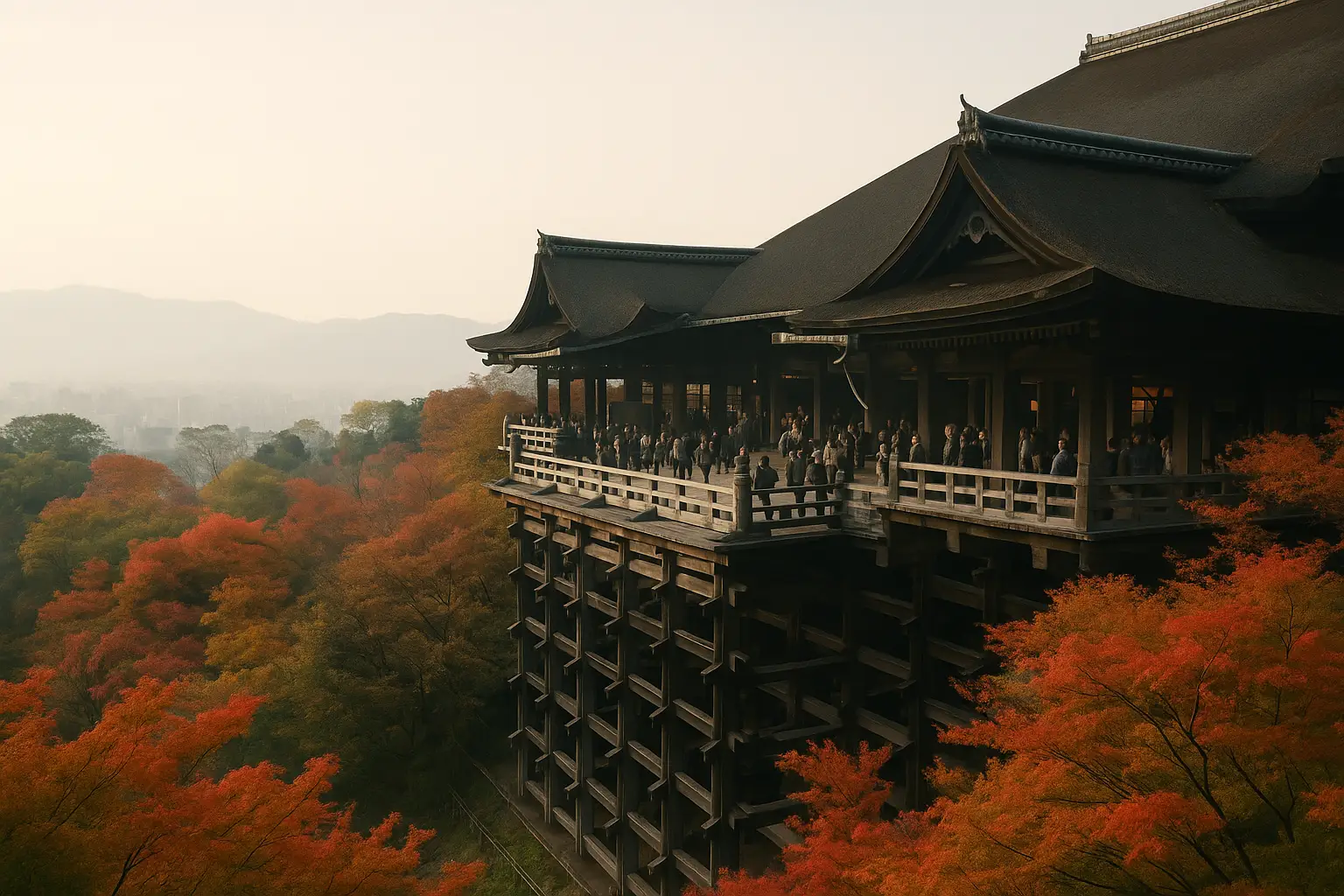
Kiyomizudera Temple Japan Travel Guide 2026: Kyoto's Wooden Stage
Japanese Buddhist (Kita-Hosso)Visit Kiyomizudera, the Pure Water Temple with its famous wooden stage overlooking Kyoto. Explore th...
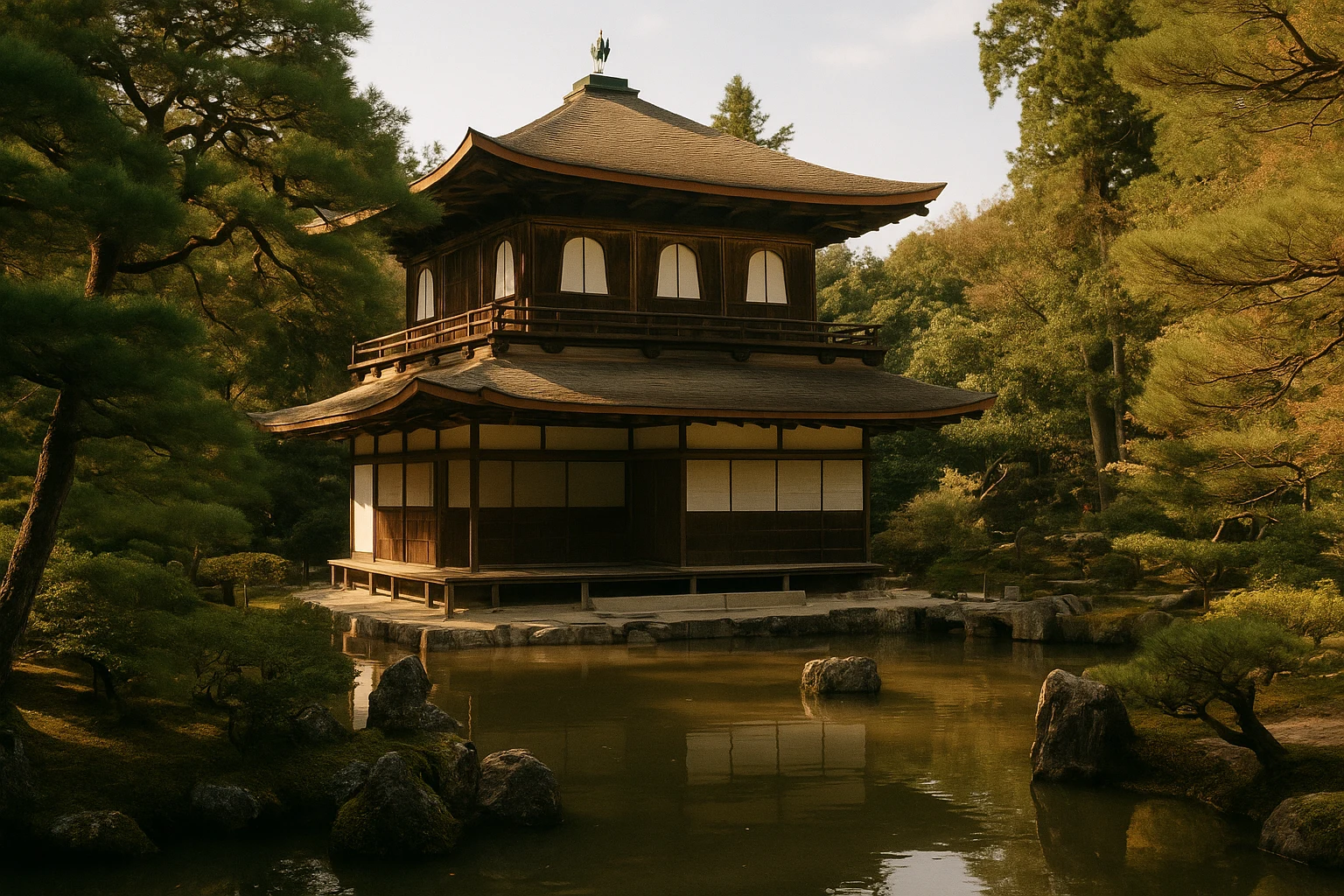
Ginkakuji Temple: Kyoto's Silver Pavilion and the Art of Wabi
Explore Ginkakuji Temple in Kyoto, Japan — the Silver Pavilion, sand gardens, and Ashikaga Yoshimasa...
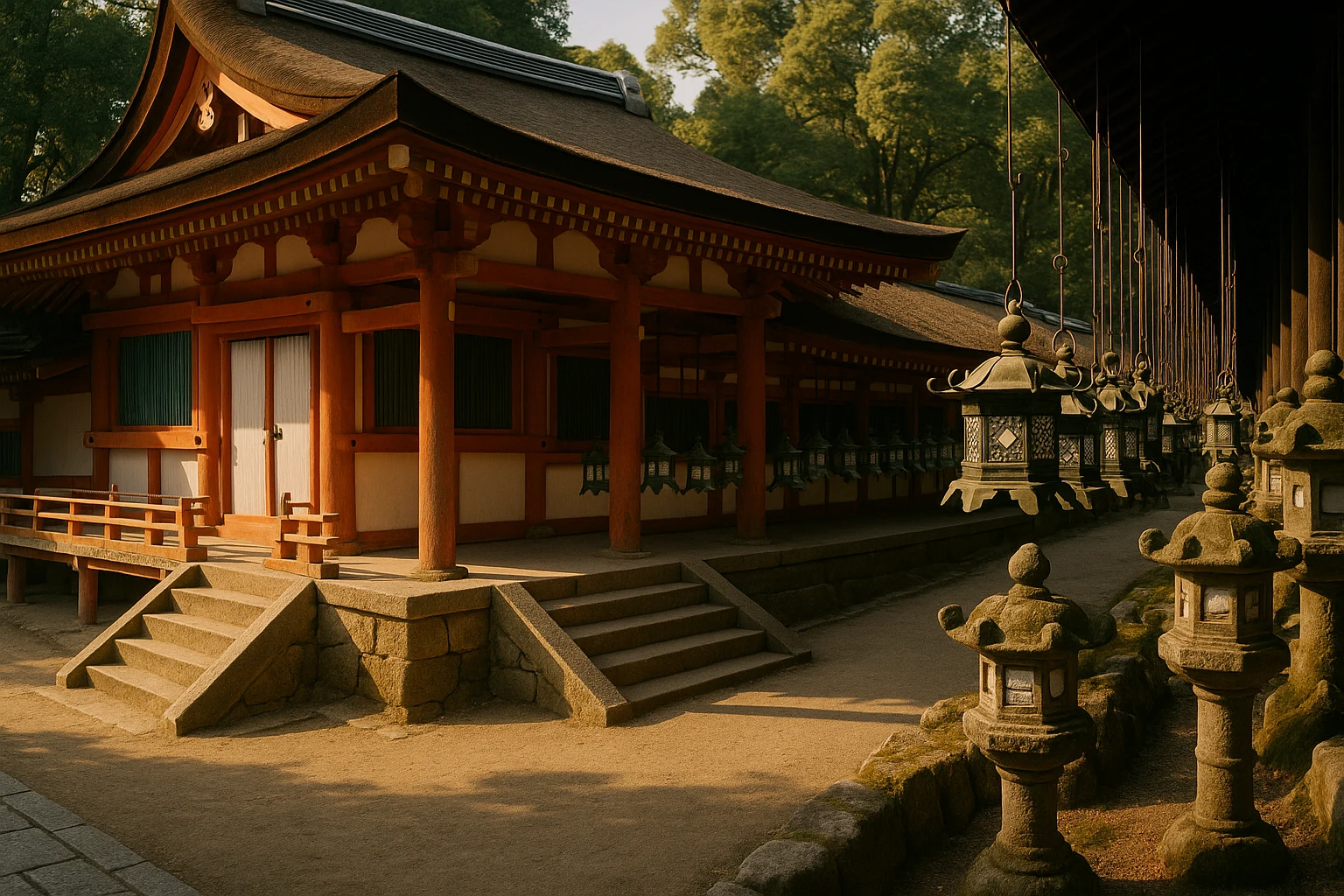
Kasuga Taisha Shrine
JapaneseSacred Shinto shrine in Nara, Japan, renowned for thousands of bronze and stone lanterns and UNESCO ...
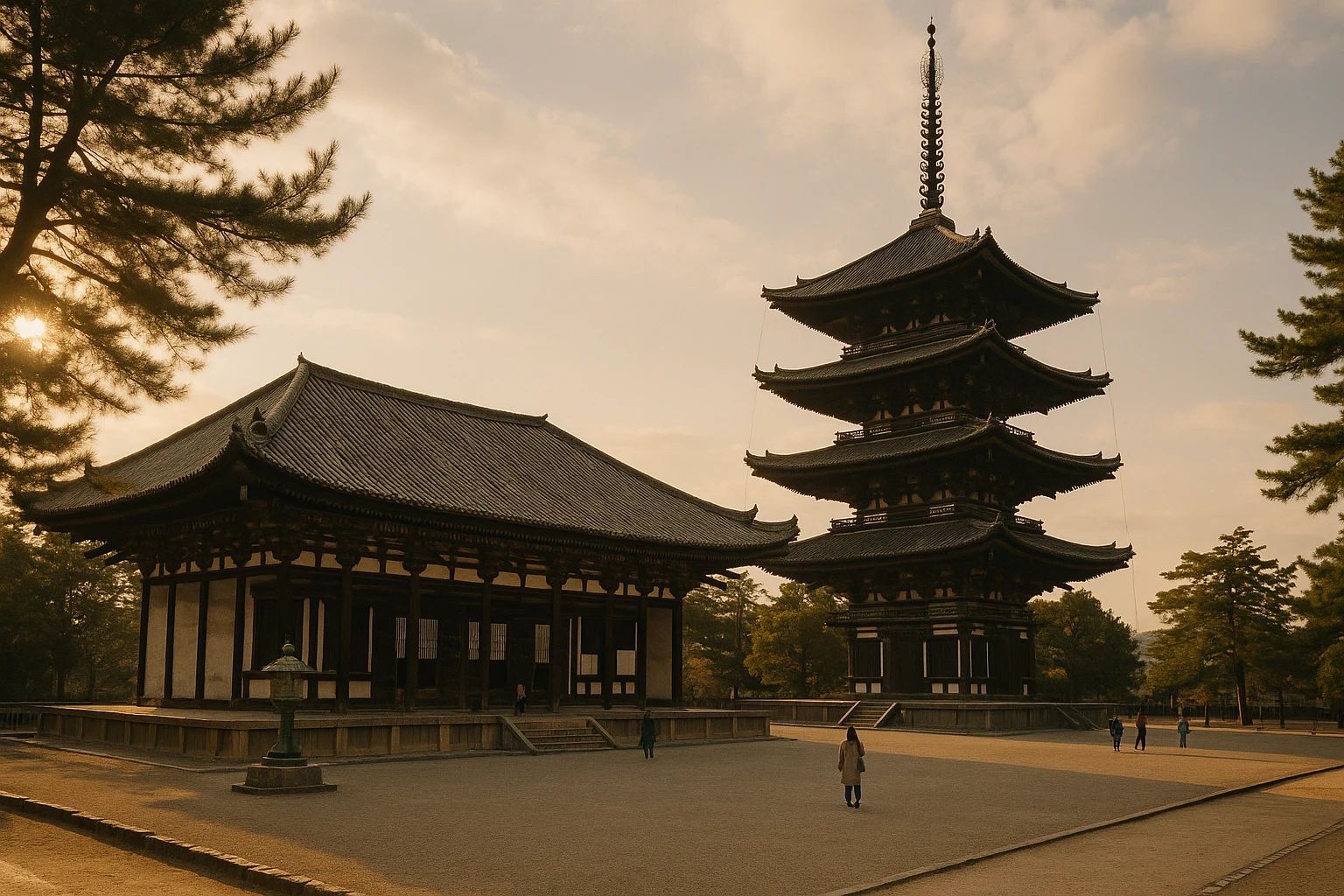
Kofukuji Temple
JapaneseKofukuji Temple in Nara, Japan is a UNESCO World Heritage landmark famed for its soaring five-story ...