Quick Info
Curated Experiences
Nîmes Roman Arena and Historic Center Walking Tour
Private Roman Nîmes Heritage Tour
Nîmes and Roman Provence Guided Excursion
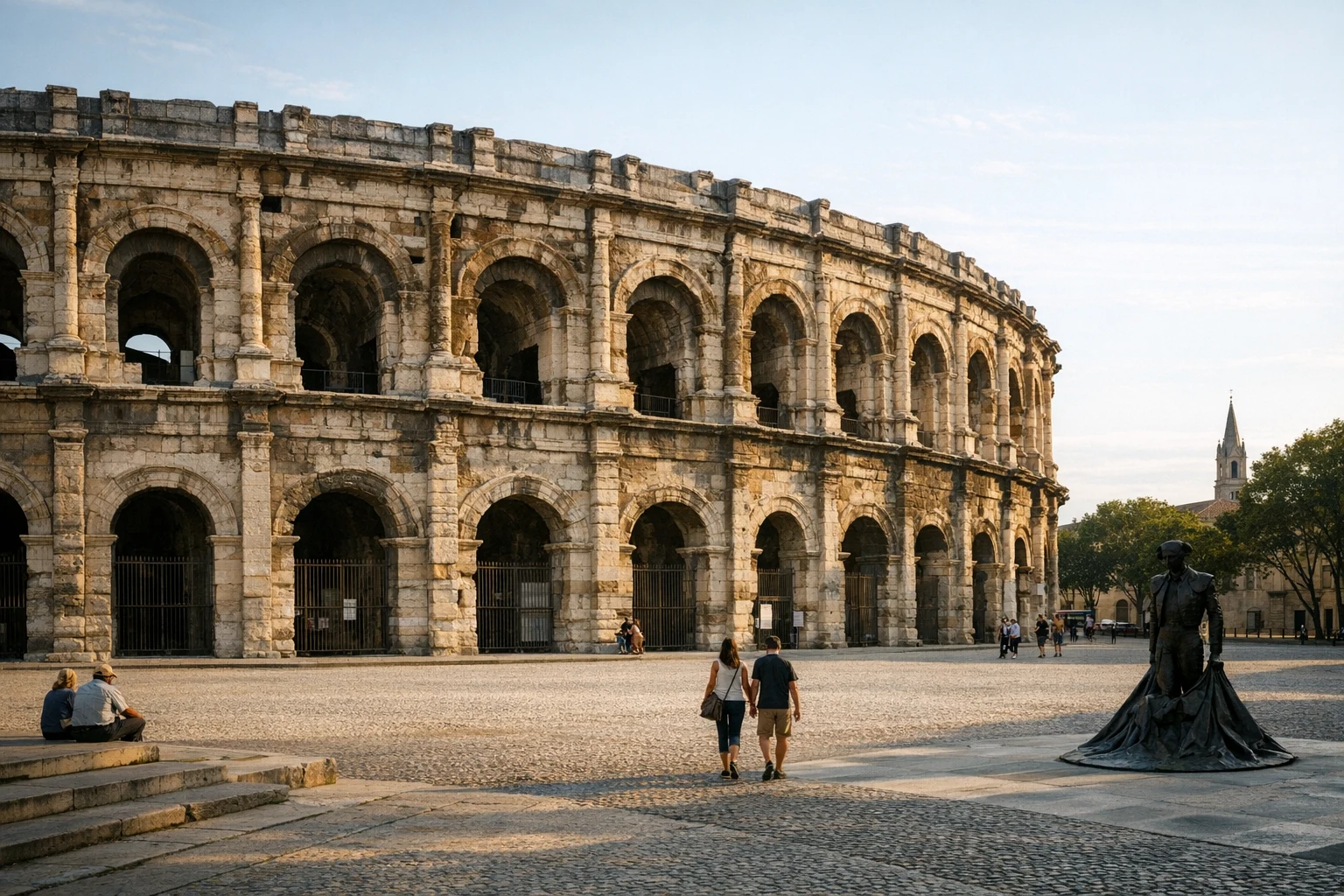
Nîmes Roman Arena in France is one of those monuments that makes the Roman world feel uncannily present. In the middle of modern Nîmes, surrounded by cafés, city streets, and the rhythms of everyday life in southern France, the amphitheater rises with a confidence that has hardly diminished over two millennia. Its pale stone arcades, stacked in neat elliptical order, still dominate the urban center so completely that the city seems to curve around it rather than the other way round. Many travelers arrive expecting an impressive Roman ruin; what they find is something closer to a functioning civic heart whose Roman form remains almost shockingly intact. The arena does not sit at the edge of town as an isolated relic. It stands at the center of life, still able to gather crowds, shape circulation, and command attention.
That continuing urban power is part of what makes the site special. The Arena of Nîmes is not just a well-preserved amphitheater in an architectural sense. It is a monument that never entirely stopped being useful. Built for the spectacles of Roman provincial life, later adapted as a fortified refuge, absorbed into the medieval city, and now repurposed as a venue for modern events, it has remained a place of gathering across radically different ages. For visitors, this gives the monument unusual vitality. You can read the stone seating, circulation systems, and external arcades as ancient engineering, but you can also feel that the building still understands crowds. Nîmes Roman Arena is therefore more than a Roman ruin. It is a long-lived machine for public assembly, and one of the most convincing reminders anywhere in Europe that Roman urbanism still shapes the present.
History
Nîmes as a Roman City
The story of the arena begins with the Romanization of Nîmes, ancient Nemausus, one of the most important cities in Roman Gaul. The settlement had earlier roots, but under Roman rule it developed into a prosperous urban center connected to imperial roads, provincial administration, and the wider economic life of the Mediterranean world. Nîmes benefited from both location and status. It became one of the showpiece cities of southern Gaul, equipped with monuments that expressed Rome’s ability to transform local landscapes into recognizably Roman civic environments.
The amphitheater belonged to this moment of urban confidence. A city that built such a structure was advertising wealth, political loyalty, and social complexity. Amphitheaters were not ornamental extras. They were major public works associated with entertainment, civic identity, and the staging of imperial order. Nîmes was already rich in Roman architecture, as its temple, waterworks, and urban layout still demonstrate, but the arena became one of its clearest symbols of Roman civic culture.
Construction in the Early Imperial Period
The Nîmes Roman Arena was built in the late 1st century CE, likely during a period when the Roman Empire was consolidating architectural prestige across the western provinces. By this stage, amphitheaters had become one of the most recognizable building types of Roman public life. They hosted gladiatorial combats, animal hunts, staged spectacles, and public displays that reinforced both social hierarchy and imperial identity. The Arena of Nîmes was designed to accommodate thousands of spectators, making it one of the major public gathering spaces in the city.
Its architectural form reflects the maturity of Roman engineering. The elliptical plan, stacked arcades, circulation routes, seating divisions, and arena floor all worked together to channel large crowds efficiently while maintaining social order inside the building. Spectators did not simply enter a large open structure. They entered a carefully controlled machine of movement and status. This organizational logic still makes the arena surprisingly easy to understand today. You can feel the Roman genius for crowd management in the stone itself.
Late Antiquity and Medieval Transformation
The decline of Roman spectacles did not mean the end of the arena. Like many great amphitheaters, it entered a long afterlife shaped by adaptation rather than simple abandonment. In periods of insecurity, especially during late antiquity and the early Middle Ages, the robust shell of the monument made it useful as a fortified refuge. Additional structures were inserted into or around it, and the arena gradually became less a theater of spectacle than a protected inhabited space.
This phase is crucial to its survival. Many Roman monuments were quarried extensively once their original purpose faded. Nîmes Roman Arena survived partly because people kept using it, even if in radically different ways. Medieval housing and fortification features altered the structure but also preserved it. Over time, the building became woven into the life of the city in ways the Romans could not have anticipated. The amphitheater was no longer simply a Roman entertainment venue. It had become part fortress, part neighborhood, part inherited urban shell.
Restoration and the Modern Civic Monument
In the modern era, especially from the 18th and 19th centuries onward, restoration and archaeological interest gradually stripped away many later additions and clarified the arena’s Roman form. This process was part of a broader European rediscovery of classical antiquity, but in Nîmes it also reflected local recognition that the amphitheater was one of the city’s defining monuments. Conservation aimed not to freeze the building as a detached museum object, but to restore its legibility while maintaining its role in urban life.
Today the arena is one of the best-preserved Roman amphitheaters anywhere in the world and continues to host public events. This modern use is not a betrayal of its history but, in some ways, its continuation. The nature of the spectacle has changed, but the building remains what it was made to be: a place where a city gathers. That continuity gives the Nîmes Roman Arena a rare energy. It does not merely survive. It still performs.
Key Features
The most immediate feature of Nîmes Roman Arena is the extraordinary preservation of its outer shell. The stacked arcades remain so complete and so clearly proportioned that the monument can feel less like a ruin than like a Roman building temporarily waiting for its original audience to return. This sense of completeness is what first astonishes visitors. The arena’s elliptical form remains easy to grasp from the outside, and the repetition of arches gives the structure both rhythm and discipline. In architectural terms, it is one of the clearest surviving expressions of Roman amphitheater design in the western empire.
Inside, the seating and circulation system reveal the true intelligence of the monument. Roman amphitheaters were not only visually imposing; they were built to move large populations efficiently while preserving hierarchy. Stairways, corridors, and entrances at Nîmes still make that logic visible. Visitors can walk through the galleries, emerge onto seating levels, and look back across the arena floor in a way that makes Roman public life suddenly easier to imagine. This is not a place where interpretation depends entirely on labels. The architecture itself explains a great deal.
The arena floor and the viewing relationship it creates are another important feature. Standing inside the central space and looking up at the encircling tiers gives a visceral sense of enclosure and spectacle. The building was designed to focus attention inward while holding thousands of eyes in disciplined relation to one another. Few surviving monuments communicate the social mechanics of Roman entertainment as clearly as this one does.
Another major strength is the arena’s urban setting. Because it stands in the center of Nîmes rather than in an isolated archaeological field, visitors can immediately relate it to the rest of the Roman city. The Maison Carrée, the Jardins de la Fontaine, and other historic layers are nearby, which means the arena is not experienced as an isolated masterpiece but as part of a broader Roman urban fabric. This context deepens everything. Nîmes was not simply a town with a nice amphitheater; it was a major Roman city, and the arena is one visible expression of that identity.
Finally, the monument’s continued use is itself a feature. Events, festivals, and performances allow the building to remain what it has always been in essence: a civic stage. Even if you visit on a quiet day, the setup for modern events or the traces of recent crowds often reinforce that sense of continuity. The arena feels alive because it still functions as a container for collective experience.
Getting There
Nîmes Roman Arena is located right in the center of Nîmes, making it exceptionally easy to reach once you are in the city. Nîmes itself is well connected by train, including high-speed and regional services from cities such as Montpellier, Avignon, Marseille, Lyon, and Paris. For many travelers, rail is the most convenient option. From Nîmes station, the arena is within easy walking distance, usually around 10 to 15 minutes depending on your route and pace.
If you are driving, Nîmes is accessible by major roads in southern France, though city-center parking can be more complicated than arriving by train. Public parking garages are available, but once you are in the center, walking is the best way to explore. Guided tours often combine the arena with the Maison Carrée and other Roman landmarks, and these can be a good choice if you want historical context without planning individual site tickets.
Because the monument sits inside the urban core, logistics are refreshingly simple. The main question is whether you want only the arena or a full Roman Nîmes day. The latter is highly recommended, since the amphitheater becomes more meaningful when seen as part of the broader city. Comfortable shoes and awareness of event schedules are helpful, especially if a concert or festival affects access.
When to Visit
The best time to visit Nîmes Roman Arena is in spring or early autumn, when the weather in southern France is warm but generally comfortable for city walking. April through June and September through October are especially attractive because they combine good light, manageable temperatures, and a lively but not always peak-summer level of activity. These months are ideal if you want to pair the arena with the rest of Nîmes on foot.
Summer is also a strong option, especially if you are interested in seeing the arena in use during festivals or evening events. The city can be hot, but southern France’s long evenings help, and the monument becomes especially atmospheric when lit later in the day. If visiting in July or August, early morning or late afternoon is usually best for exploring comfortably. Midday can be bright and hot on exposed stone.
Winter has a quieter appeal. While less obviously dramatic than a summer event season, the arena remains powerful in cool weather, and the lighter crowds can make the architectural experience easier to absorb. The monument works year-round because its strength lies so much in form and urban presence. Still, for most travelers, spring and autumn strike the best balance between comfort, atmosphere, and access.
| Quick Facts | Details |
|---|---|
| Location | Nîmes, Occitanie, France |
| Best Known For | One of the best-preserved Roman amphitheaters in the world |
| Historical Period | Late 1st century CE |
| Original Function | Gladiatorial games, spectacles, and public gatherings |
| Signature Feature | Exceptionally complete outer arcades and interior seating system |
| Urban Context | Central Nîmes, close to other Roman landmarks |
| Recommended Visit Length | 1 to 2 hours for the arena, longer with wider Roman Nîmes |
| Best Season | Spring and early autumn |
| Modern Use | Concerts, festivals, reenactments, and public events |
| Practical Tip | Check event schedules before visiting, since the arena is still an active venue and that can affect access or add extra atmosphere |
Frequently Asked Questions
What is Nîmes Roman Arena best known for?
Nîmes Roman Arena is best known as one of the best-preserved Roman amphitheaters in the world, still dominating the city center and continuing to host major public events.
How old is the Nîmes Roman Arena?
The arena was built in the late 1st century CE, making it nearly two thousand years old.
Can you go inside the Nîmes Roman Arena?
Yes. Visitors can enter the amphitheater, walk through its galleries, climb to seating levels, and often explore exhibitions explaining Roman spectacles and the monument’s history.
Is the Nîmes Roman Arena still used today?
Yes. The arena still hosts concerts, festivals, reenactments, and public events, continuing its long tradition as a space for mass gathering.
How much time should you spend at the Nîmes Roman Arena?
Most visitors should allow 1 to 2 hours for the arena itself, with additional time if combining it with the Maison Carrée, Jardins de la Fontaine, and other Roman sites in Nîmes.
When is the best time to visit the Nîmes Roman Arena?
Spring and early autumn are ideal for comfortable city walking, though the arena is rewarding year-round and especially lively when events are scheduled.
Nearby Ancient Sites
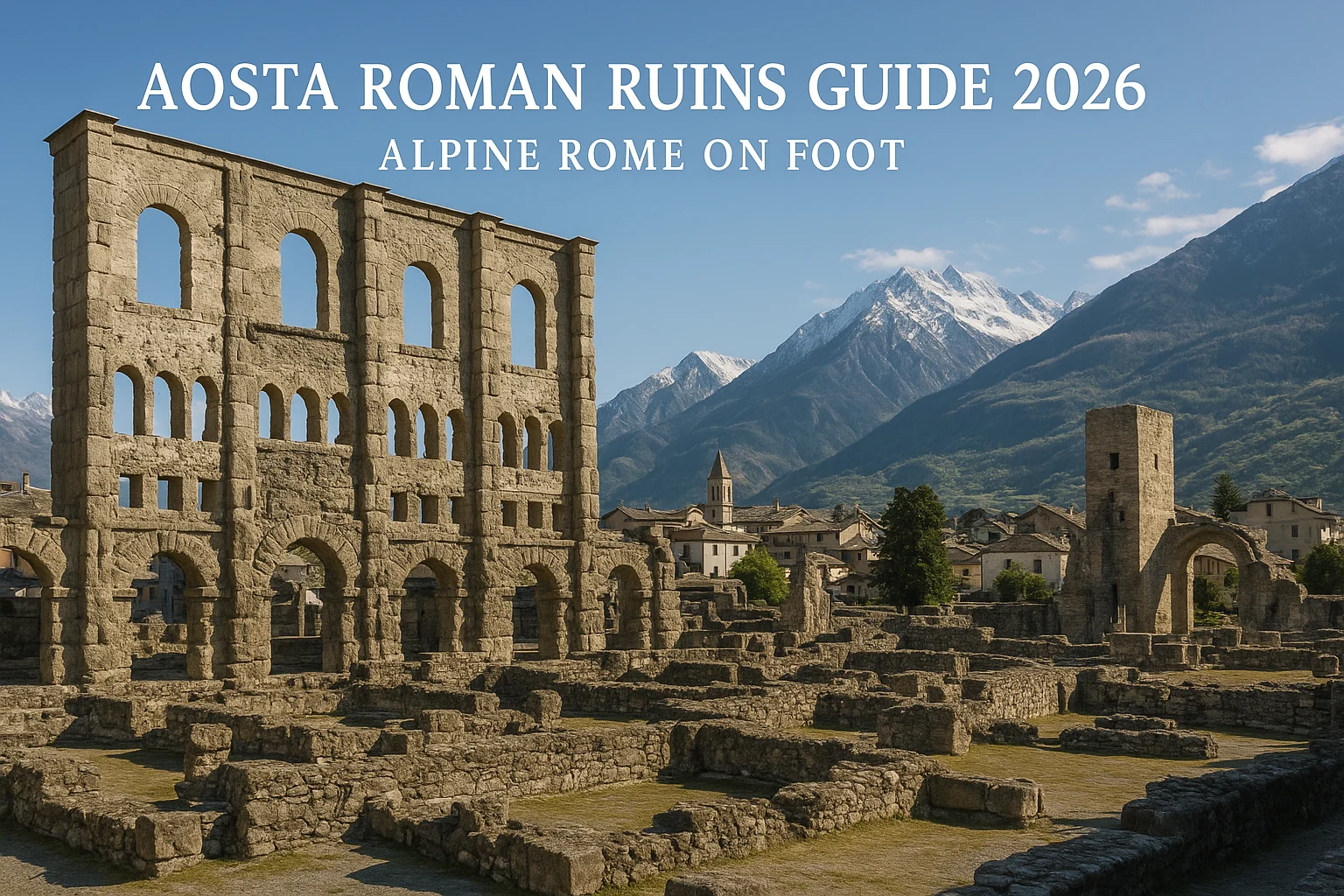
Aosta Roman Ruins Guide 2026: Alpine Rome on Foot
RomanPlan a practical visit to Aosta's Roman remains, including the Arch of Augustus, theater, city walls...
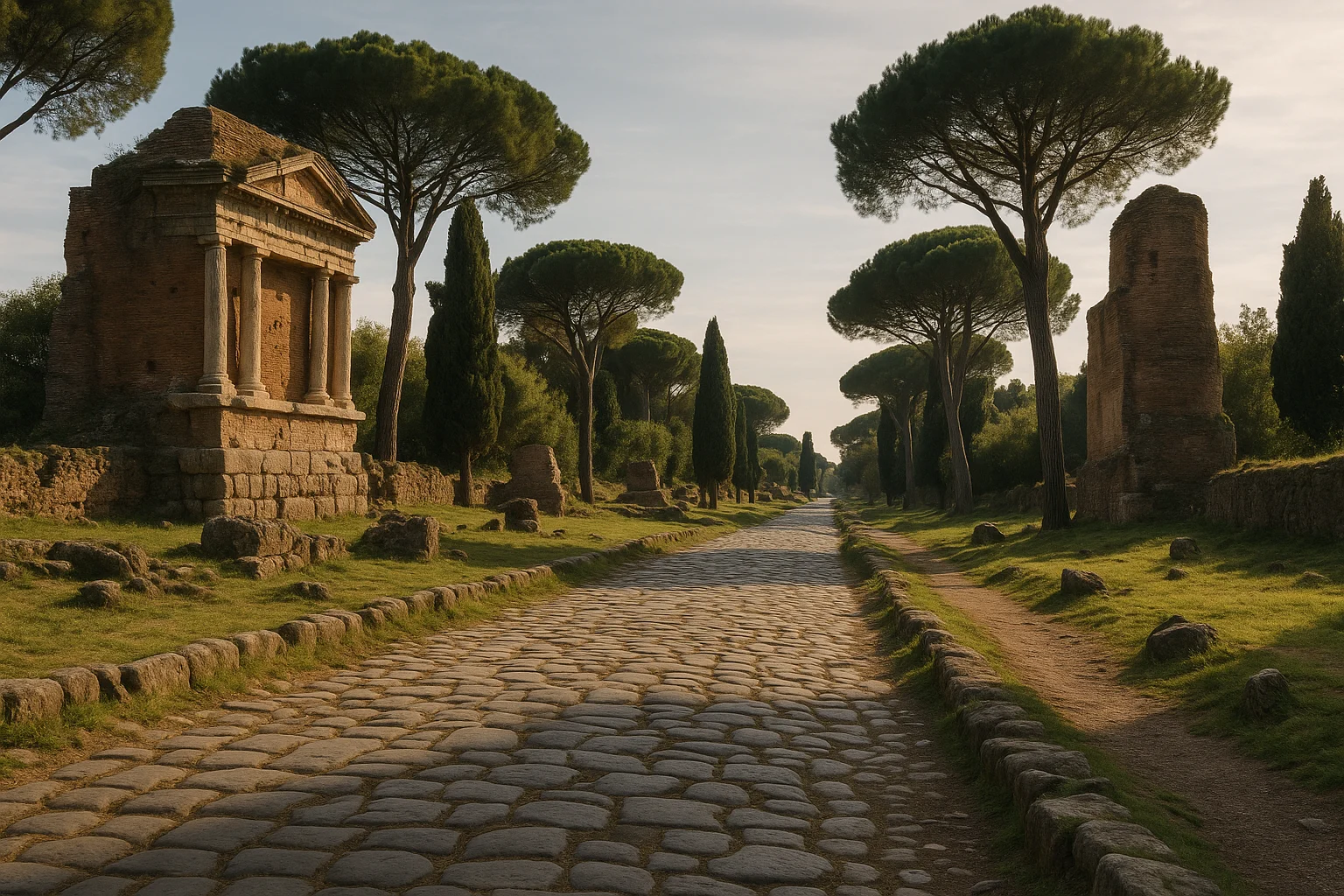
Appian Way Rome Guide 2026
RomanPlan a smart visit to the Appian Way with route choices, catacomb logistics, bike-vs-walk strategy, ...
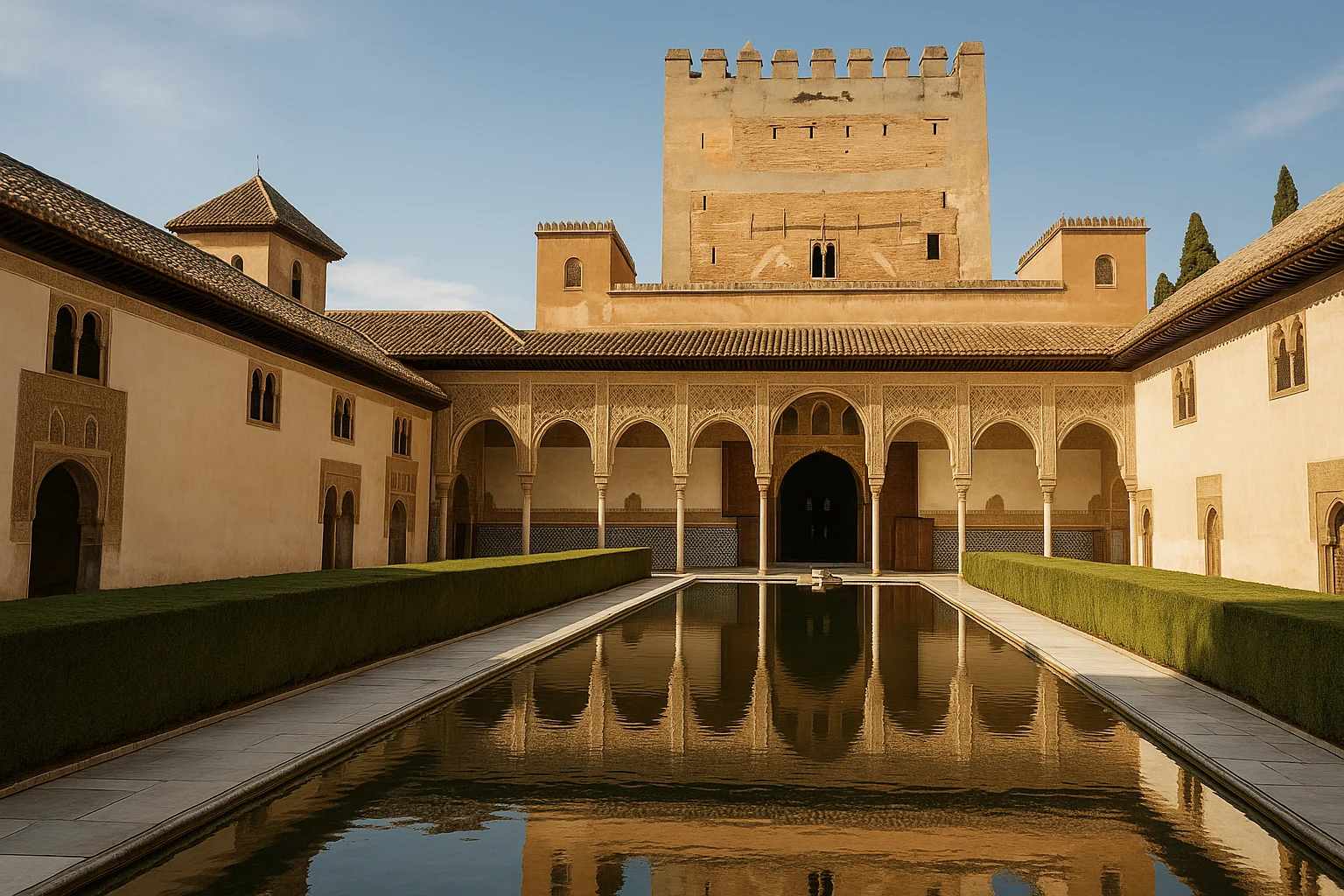
Alhambra Travel Guide 2026: Nasrid Palaces, Tickets, and Visit Strategy
Nasrid Dynasty (Moorish)Plan a well-timed visit to Granada's Alhambra with practical ticket advice, must-see highlights, and...