Quick Info
Curated Experiences
Olympos and Chimera Night Tour from Antalya
Ancient Olympos and Adrasan Boat Trip from Kemer
Private Antalya Coast Tour: Phaselis, Olympos, and Chimera
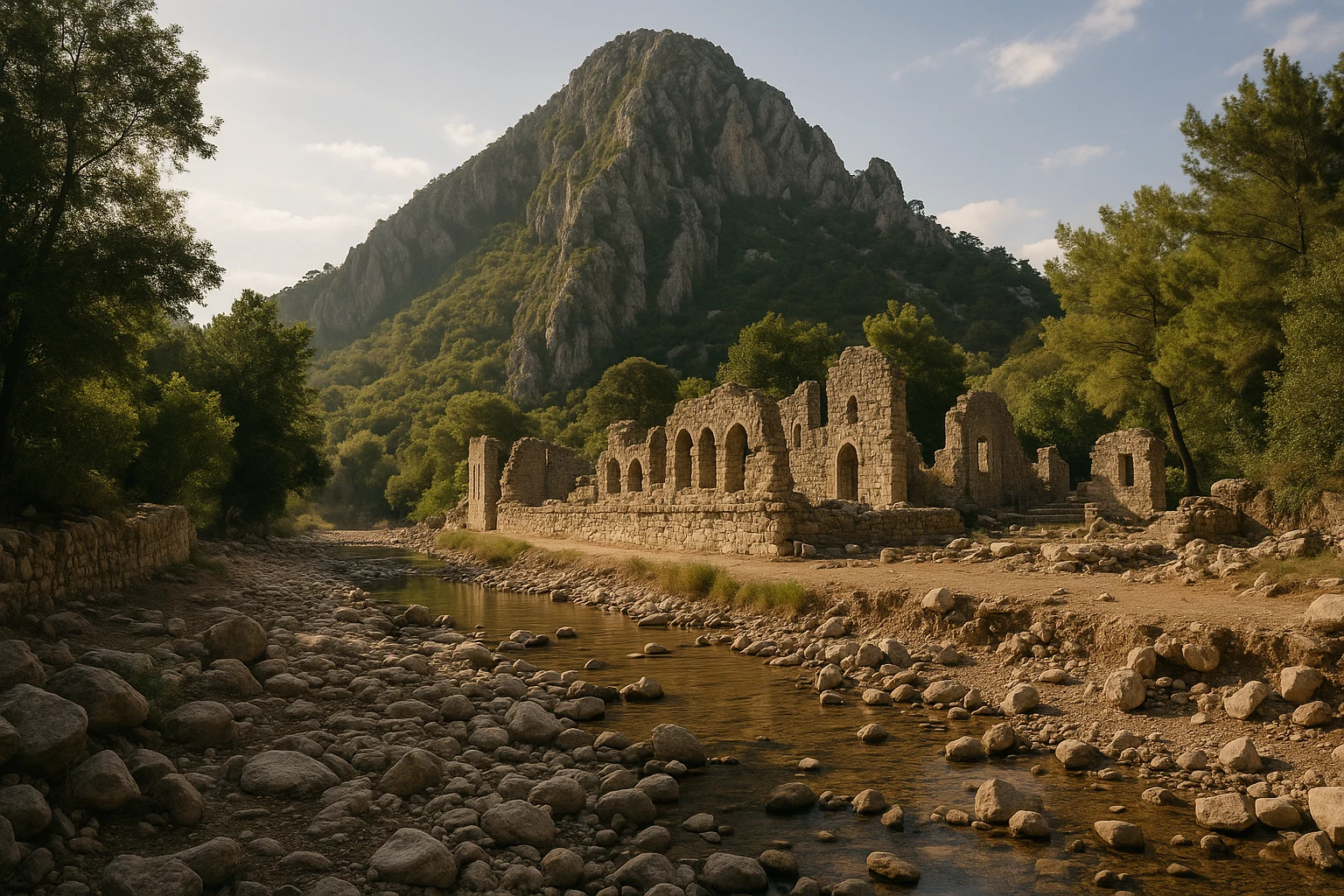
If many ancient cities feel like open-air museums, Olympos in Turkey feels like a secret reclaimed by trees. You enter through a narrow valley where a stream moves between reeds and stone, and then fragments of walls, tombs, and vaulted chambers begin appearing through the greenery as if they were never fully abandoned, only quieted. By the time you reach the beach, the ruins are no longer separate from the landscape. They are part of it: Lycian and Roman masonry under fig branches, Byzantine traces in the same corridor where backpackers now walk toward the sea.
That fusion is what makes Olympos one of the most atmospheric archaeological stops on Turkey’s southern coast. It was never a grand imperial capital like Ephesus, but as a Lycian port city it mattered strategically, economically, and culturally for centuries. Piracy, Roman consolidation, Christianization, and medieval decline all left marks here, yet the site never became over-monumental. At Ancient Travels, we recommend Olympos as a high-value destination for travelers who want archaeological depth without losing access to nature and coastline in the same day. This guide covers the city’s history, the key monuments to prioritize, practical transport and admission details, seasonal timing, and how to combine Olympos with Çıralı and Yanartaş for a complete Lycian-coast experience.
History: A Port City Between Mountain and Sea
Lycian origins and regional trade (c. 2nd century BCE-1st century BCE)
Olympos emerged as an important city in the Lycian League, the federation of towns that developed one of the ancient Mediterranean’s most interesting shared governance systems. Set where the coastal plain narrows beneath the western Taurus Mountains, Olympos benefited from natural shelter and access to maritime routes linking southwest Anatolia with the wider eastern Mediterranean. Archaeological and epigraphic evidence suggests sustained urban development by the Hellenistic period, with civic structures and funerary monuments reflecting both local Lycian traditions and growing Hellenic influence. Even in its early phase, Olympos was less isolated outpost than connected node in regional exchange.
Piracy, Roman intervention, and imperial integration (1st century BCE-3rd century CE)
By the 1st century BCE, parts of the southern Anatolian coast had become entangled with Cilician piracy networks. Olympos appears in ancient accounts tied to these turbulent decades, including episodes involving the pirate leader Zeniketes. Rome’s anti-piracy campaigns under Pompey transformed the coast’s political landscape, folding previously unstable maritime zones into imperial administration. Under Roman rule, Olympos saw major urban investment: baths, civic buildings, funerary monuments, and likely expanded port-related infrastructure in the valley and shoreline approaches. This period gave the site much of the masonry visitors see today, even where walls survive only in fragmentary lines.
Late antiquity and Christian Olympos (4th century CE-7th century CE)
Like many Anatolian cities, Olympos adapted to the Christianizing world of late antiquity. Ecclesiastical structures, including basilica remains, point to an active Byzantine-era community integrated into regional church networks. Urban life continued, but with shifting priorities as older civic spaces were repurposed. The valley setting that now feels romantic could also be difficult in periods of insecurity, and coastal towns in this era were increasingly vulnerable to raids and disruptions in long-distance trade. Still, Olympos retained enough continuity to leave a layered archaeological footprint rather than a single moment frozen in time.
Medieval contraction and abandonment (8th century CE-15th century CE)
Over the medieval centuries, changing trade routes, political fragmentation, and maritime threats contributed to long-term decline across sections of the Lycian coast. Olympos appears to have contracted significantly, with some structures abandoned and others reused in reduced settlement phases. Sedimentation, vegetation growth, and stone spoliation gradually softened the city’s visible profile. By the late medieval to early Ottoman periods, the urban core had largely ceased to function as a major center. What survived was a corridor of ruins between mountain and sea, preserved in part because no large later city overbuilt it.
Modern rediscovery and protected landscape archaeology (19th century-present)
European travelers and scholars documented Olympos in the 19th century, but systematic archaeological work developed gradually under Turkish institutions. Research has focused on funerary architecture, bath complexes, ecclesiastical remains, and settlement patterning within the valley’s environmental constraints. Today Olympos exists inside a highly valued natural and cultural landscape where archaeology, tourism, and conservation must coexist. That balance is not always simple, yet it gives visitors a rare experience: a site where you can still sense ecological processes shaping the visibility of ancient urban space.
The Key Monuments: What to See at Olympos
The river valley necropolis and Lycian sarcophagi
The most distinctive first impression at Olympos is its funerary landscape. As you follow the stream corridor, Lycian-style sarcophagi and tomb structures appear among dense vegetation, often set slightly above the old movement lines where they remained visible to passersby in antiquity. Unlike neatly staged museum pieces, these tombs feel embedded in living terrain. Their placement underscores status, memory, and family continuity in a port city where mobility and risk were constants. Look for lid profiles and block construction details that distinguish local Lycian funerary vocabulary from later Roman masonry interventions.
Photography tip: arrive early and use side light filtering through trees; harsh midday sun can flatten relief details and create heavy contrast under foliage.
The Roman bath complex
Olympos’s Roman baths are among the clearest indicators of full urban integration into imperial civic habits. Even in ruined form, you can identify thick walling, vaulted sections, and room sequencing typical of bathing architecture adapted to local topography. Bath complexes were not luxuries alone; they were social infrastructure tied to hygiene, commerce, and status display. At Olympos, the surviving fabric suggests a community with enough resources to maintain public amenities despite the challenges of a coastal valley environment.
Pay attention to masonry transitions. In several sections, repairs and later reuses are visible in stone size and bonding style, showing that the baths remained relevant beyond a single building phase. This is one of the best places on site to read continuity through construction technique rather than monumental scale.
The Byzantine basilica remains
The basilica zone marks Olympos’s late antique and Byzantine chapter, when religious institutions increasingly structured urban life. Surviving wall lines and foundation patterns indicate a church complex integrated into the existing city fabric rather than built in isolation. Though less visually dramatic than the tombs or beach approach, this area is crucial for interpreting Olympos as a multi-era settlement rather than a purely Lycian-Roman snapshot.
If you pause here, the city’s long timeline becomes clearer: pre-Roman local identity, Roman public architecture, then Christian spatial reorganization using and reinterpreting inherited urban ground. In practical terms, this is where many rushed visitors lose depth by moving too quickly toward the sea.
The monumental gate and city wall fragments
Near the access corridor, wall lines and gate-like masonry fragments suggest controlled movement into key urban zones. While reconstruction details remain debated in places, the surviving stones make clear that Olympos managed circulation between inland approach, inhabited areas, and harbor-facing sectors. Defensive and administrative functions likely overlapped, especially in periods of maritime instability.
These sections are not polished showpieces, but they reward slow reading. Look for reused blocks and differences in alignment that hint at multiple building phases. Olympos’s story is one of adaptation, and the walls capture that better than any single freestanding monument.
The beach-end ruins and harbor approach
The walk to Olympos Beach is part of the archaeological experience, not just its endpoint. As the valley opens, fragmentary structures on either side of the path suggest the transitional zone between urban core and maritime edge. The original harbor installations are less complete than at some neighboring sites, yet the spatial logic remains legible: river outlet, sheltered shoreline, and movement channels for goods and people. When you step onto the beach and look back inland, you can see exactly why this location sustained a city for centuries.
For many travelers, this is the emotional center of Olympos: ruins, river, and sea in one continuous frame. Give yourself time here before turning back, especially in late afternoon when the valley light softens and crowds thin.
Getting There: Transportation and Access
Olympos is reachable without much difficulty, but final access involves local roads and a short walk through the valley entry area.
From Antalya city center
Most independent visitors depart Antalya via the D400 highway toward Kumluca/Finike direction, then follow the Olympos-Çıralı turnoff.
- Taxi/private transfer: Typically 2,000-3,200 TRY ($62-100 USD) one way depending on season and pickup location; around 1.5-2 hours.
- Intercity bus + local transfer: Buses from Antalya Otogar toward Kumluca/Finike are frequent; from the Olympos junction, continue by dolmuş or taxi to valley access. Combined typical cost ranges 220-450 TRY ($7-14 USD).
- Rental car: Best for flexibility, especially if combining Olympos with Çıralı, Phaselis, or Myra in one trip; parking is available near entry areas.
From Kemer, Tekirova, and Çıralı
If you are based east of Antalya’s center, transfer times are shorter and day trips are easier to pace.
- Taxi from Kemer/Tekirova: Usually 900-1,700 TRY ($28-53 USD), roughly 50-80 minutes depending on starting point.
- Dolmuş corridor routes: Budget-friendly for highway legs, with final short transfer often required.
- From Çıralı: Olympos and Çıralı are adjacent zones in practical itinerary terms; local transfers are quick and inexpensive by taxi.
From Antalya Airport (AYT)
Airport-to-site travel is straightforward for same-day arrivals heading directly to the coast.
- Private transfer: About 2,300-3,500 TRY ($72-110 USD), typically 1 hour 45 minutes to 2 hours 15 minutes.
- Rental car from airport: Efficient for multi-stop coastal archaeology routes.
- Organized day tour: Convenient if you want guiding plus a fixed schedule that includes Yanartaş.
Admission and hours
Olympos entry is usually ticketed under Turkish cultural heritage pricing in TRY, with seasonal updates possible. In recent years, pricing has generally been moderate relative to major flagship sites. Card payment is commonly available but can be inconsistent in busy periods, so carrying cash is smart. Opening windows typically favor daytime visiting, with longer practical daylight use in summer and earlier closures in winter. Always verify current hours on official museum or provincial listings before departure.
Practical Information
Plan for mixed terrain: compact dirt paths, exposed stones, occasional roots, and uneven surfaces near ruined walls. Supportive footwear is the single most important comfort decision. Bring at least one liter of water per person (more in summer), plus sun protection even though sections of the valley offer partial shade. In shoulder seasons, light layers help because mornings and evenings can feel much cooler than midday.
If you want both archaeology and beach time, pack swimwear and a quick-dry towel. This is one of the few ancient sites where that pairing feels natural rather than forced. Facilities near access points vary by season, so do not assume full-service amenities year-round. For visitors with limited mobility, note that full-site accessibility is constrained by uneven ground and gradients, though shorter, partial routes can still provide meaningful views of key remains.
When to Visit: Seasonal Considerations
Spring (March-May)
Spring is the best all-around season, with temperatures commonly around 17-28°C (63-82°F). Vegetation is lush, walking conditions are comfortable, and light quality is excellent for photography. Crowds rise on holiday weekends but are usually manageable with early starts. For most travelers, April and May are the ideal balance of climate and access.
Summer (June-August)
Summer often reaches 30-37°C (86-99°F), and humidity in the valley can make midday feel hotter than forecast. Crowd levels peak with coastal tourism, especially late morning through afternoon. Visit at opening time or after 4:00 PM, rest in shaded stretches, and avoid long exposed stops near midday. Hydration and sun protection are essential.
Autumn (September-November)
Autumn is another excellent window, with early-season warmth tapering into mild conditions around 18-31°C (64-88°F). Sea temperatures remain pleasant if you want to swim after the ruins walk. Crowds generally ease after summer peaks, and late-afternoon light in the valley is especially photogenic.
Winter (December-February)
Winter is quiet and atmospheric, usually 10-19°C (50-66°F) with occasional rain. Crowd levels are low, making the site feel contemplative and spacious. Paths can be muddy after storms, so waterproof footwear is recommended. If weather is stable, winter offers one of the most intimate experiences of Olympos.
Combining Olympos with Çıralı and the Chimera Flames
The most rewarding Olympos day uses the valley ruins as your historical anchor and builds around the nearby natural and mythic landscape. Start at Olympos around 8:30 AM, when temperatures are still moderate and paths are quiet. Spend about two hours covering the necropolis, bath complex, basilica zone, and beach approach without rushing. By 11:00 AM, return toward the access area and transfer to Çıralı for lunch; small guesthouse restaurants and beachside spots are usually best in this window.
After a break, use early afternoon for gentle beach time or a shorter coastal walk, then begin the Yanartaş (Chimera) hike around 5:00 PM in warmer months or slightly earlier in shoulder seasons. Reaching the flames near dusk gives you the strongest visual contrast and avoids the hottest part of the climb. Bring water and a light layer, as the slope cools quickly after sunset.
If you are self-driving and want a longer archaeology-focused day, you can start in Phaselis at 8:00 AM, continue to Olympos by late morning, and finish at Yanartaş after sunset. That full loop usually takes 10-11 hours with transfers and breaks. Travelers who prefer depth over volume should do Olympos plus Yanartaş only; it creates a balanced half-day to full-day experience with less time pressure and more room to absorb the site.
Why Olympos Matters
Olympos matters because it shows that ancient cities were not only marble stages for empire. They were ecological negotiations: between river and sea, trade and security, memory and adaptation. Here, ruins are not isolated objects under open sky; they are embedded in a valley that keeps changing, season after season, as it has for centuries.
That setting changes how you read history. Lycian funerary forms, Roman civic infrastructure, and Byzantine religious traces do not appear as separate textbook chapters. They coexist in one walk, in one landscape, with no hard boundary between archaeology and lived coast. You finish at the beach and realize the city did not fail because it lacked significance; it simply moved out of the historical spotlight while the land kept its record.
For travelers building a serious route through Turkey’s ancient world, Olympos offers something rare: depth without spectacle fatigue. Come for the ruins, stay for the atmosphere, and leave with a stronger sense of how place shapes civilization.
Quick Facts
| Attribute | Details |
|---|---|
| Location | Olympos Valley near Çıralı, Antalya Province, Turkey |
| Ancient Name | Olympos (Lycia) |
| UNESCO Status | Part of the Olympos Beydağları protected cultural-natural landscape (not standalone UNESCO inscription) |
| Established | c. 2nd century BCE urban settlement |
| Distance from nearest hub | ~40 km from Kumluca (about 55-70 min by road) |
| Entry Fee | Variable TRY heritage-site pricing; check official channels before visit |
| Hours | Seasonal daytime access; longer practical window in summer |
| Best Time | Spring and autumn; early morning or late afternoon |
| Suggested Stay | 2-3 hours (4-5 hours with beach time) |
| Known For | Forested Lycian-Roman ruins, riverside tombs, and beach-end archaeology |
Explore More Turkey
- Phaselis: Harbor ruins, Roman street axis, and coastal pine landscapes east of Antalya.
- Myra: Monumental Lycian rock-cut tomb façades and a large Roman theatre in Demre.
- Kekova: Coastal archaeology and submerged remains viewed by boat in one of Turkey’s most scenic bays.
Plan your wider route with our Turkey Ancient Sites Guide. For practical planning, see our beginner guide to archaeological travel.
Frequently Asked Questions
How much time should I plan at Olympos?
Plan 2-3 hours for the core ruins and river valley walk to the beach. If you want to add swimming, photography, and a relaxed pace, 4-5 hours is better. Many visitors pair Olympos with Yanartaş in the same day.
What is the best time to visit Olympos?
Spring and autumn are ideal for comfortable walking and clear light. In summer, arrive early morning or late afternoon because midday heat in the valley can be intense. Winter is peaceful but occasional rain can make paths muddy.
How much is Olympos entry and can I pay by card?
Entry is usually charged in Turkish lira at rates similar to other Antalya archaeological sites, and pricing can change seasonally. Card payment is often available but not always reliable, so carry cash as backup. Check official museum channels before your visit for current fees and hours.
How do I get to Olympos from Antalya without a tour?
The easiest independent option is rental car via the D400 and Olympos turnoff, then a descent to the valley parking area near the entrance. Budget travelers can use buses toward Kumluca or Finike and transfer by dolmuş or taxi for the final leg. Travel time from Antalya is usually around 1.5 to 2 hours.
What are the main highlights inside Olympos?
Top highlights include Lycian sarcophagi in the vegetation, Roman bath and basilica remains, riverside tombs, and the dramatic path that opens onto Olympos Beach. The atmosphere is distinct: ruins woven into forest rather than exposed on an open plain.
Is Olympos suitable for families and casual travelers?
Yes, for most visitors with moderate mobility. Paths are uneven with stones, roots, and occasional shallow crossings, so supportive shoes are essential. Families often enjoy pairing archaeology with beach time in Çıralı or Olympos at the end of the walk.
Nearby Ancient Sites
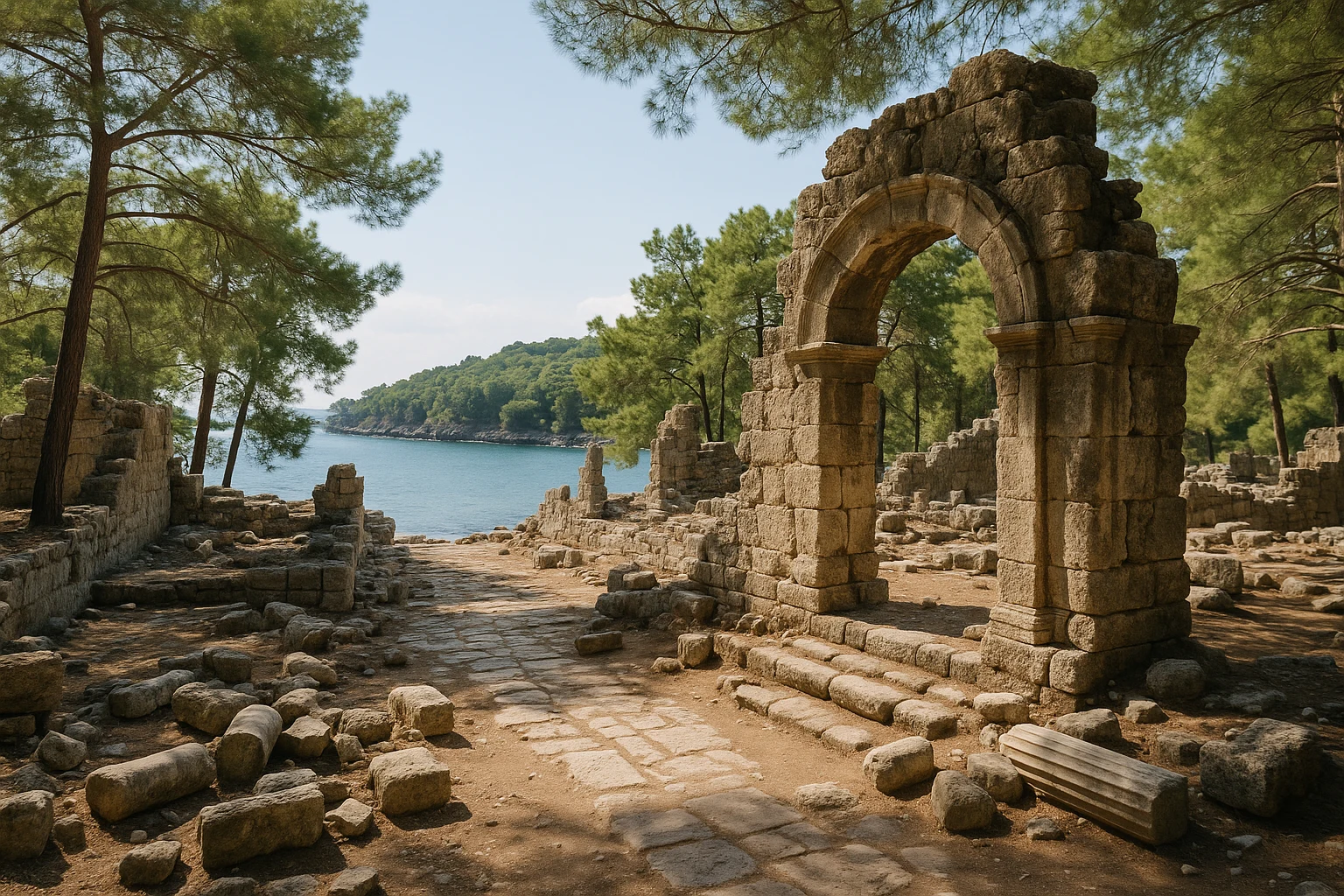
Phaselis Turkey Guide 2026: Harbor Ruins & Lycian-Roman Streets
Lycian-Greek-Roman-ByzantinePlan your Phaselis, Turkey visit with harbor ruins, aqueducts, and beach access, plus transport, tic...
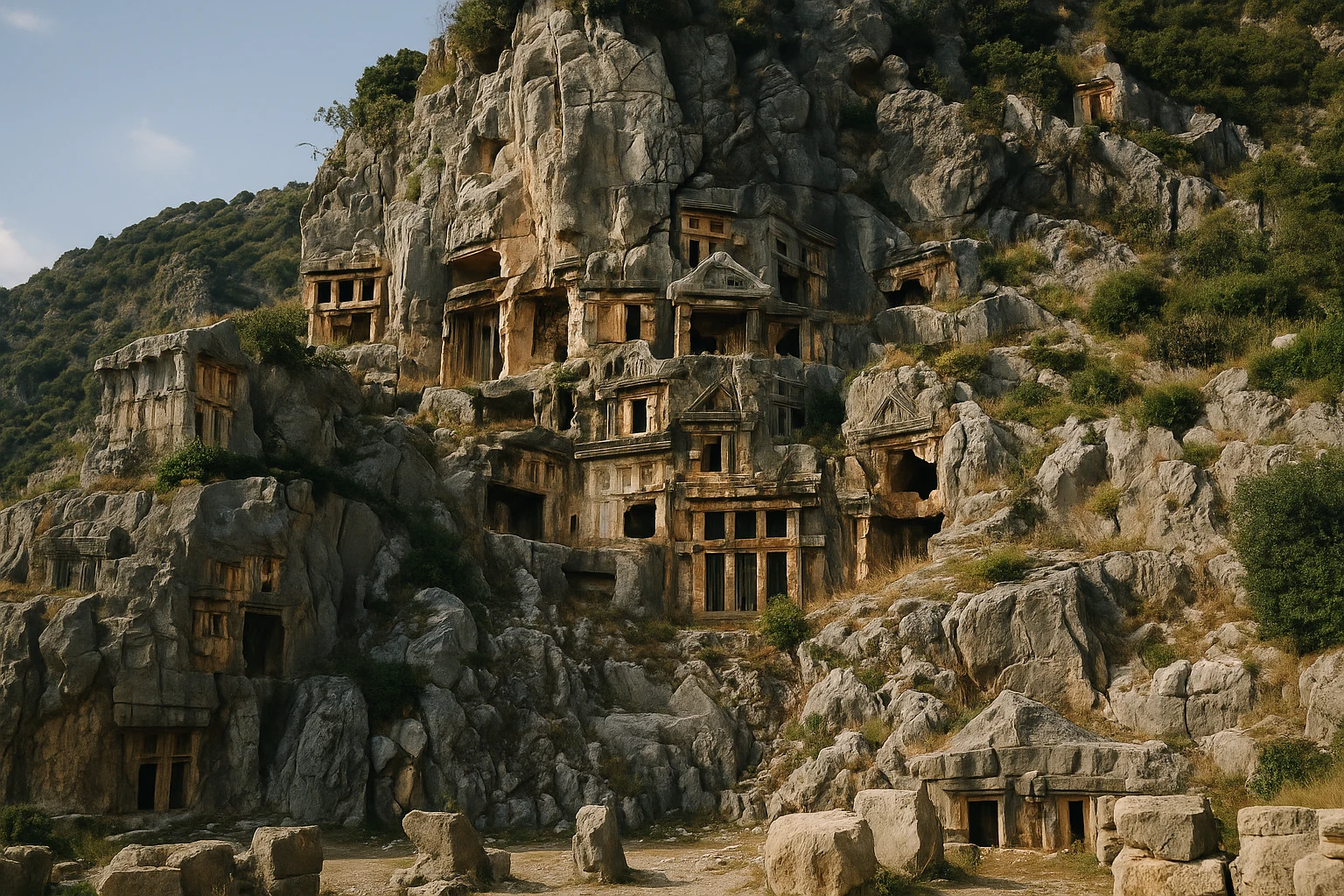
Myra Turkey Guide 2026: Lycian Tombs & Roman Theatre
Lycian-Roman-ByzantinePlan your Myra, Turkey visit with rock-cut Lycian tombs, a Roman theatre, tickets, hours, and transp...
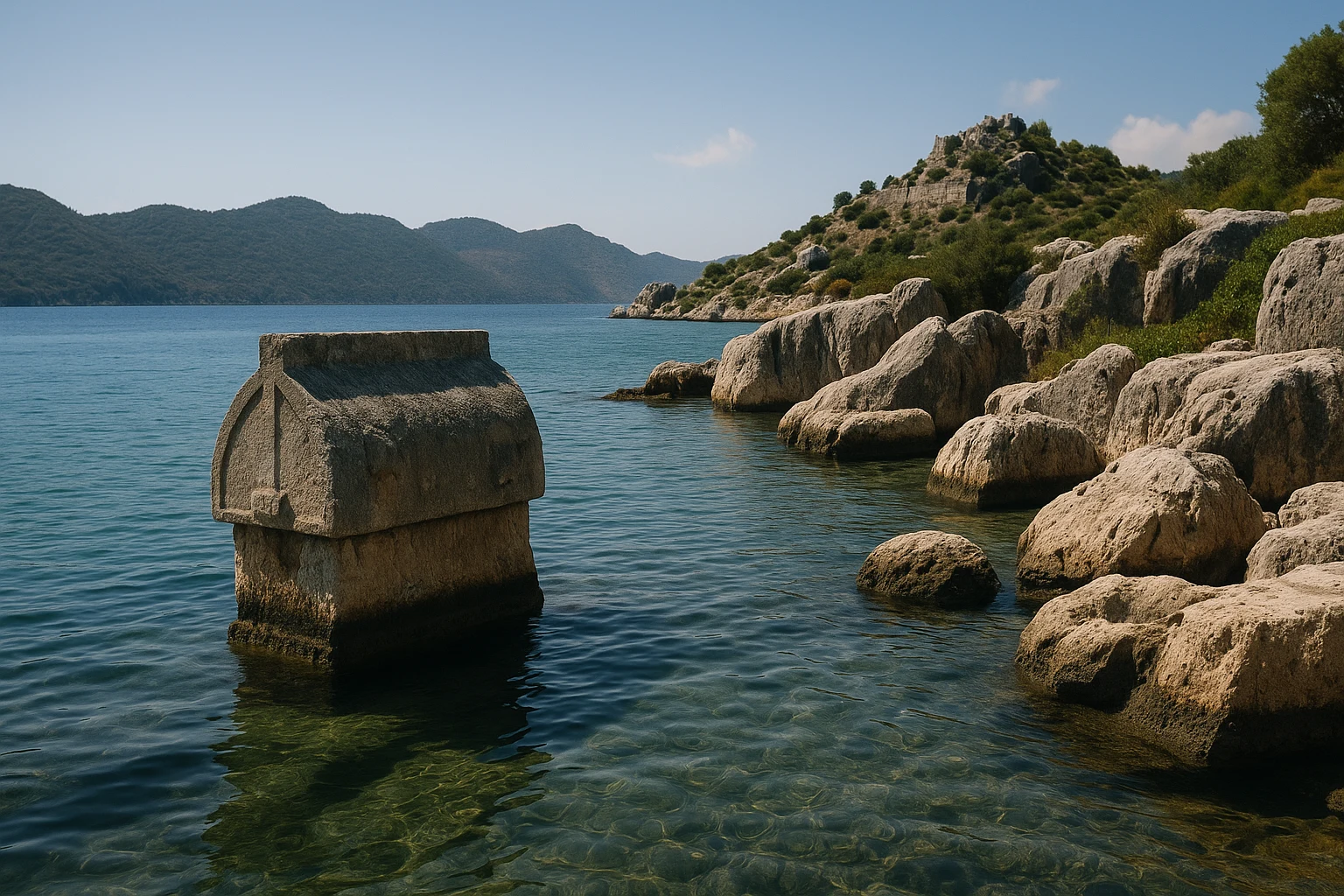
Kekova Turkey Guide 2026: Sunken City & Simena Castle
Lycian-Roman-Byzantine-OttomanPlan a full-day Kekova, Turkey visit with Sunken City boat routes, Simena Castle, transport from Kaş...