Quick Info
Curated Experiences
Palenque Archaeological Site and Museum Tour
Palenque Ruins, Agua Azul and Misol-Ha Waterfalls Combo
Palenque Archaeological Site Private Tour
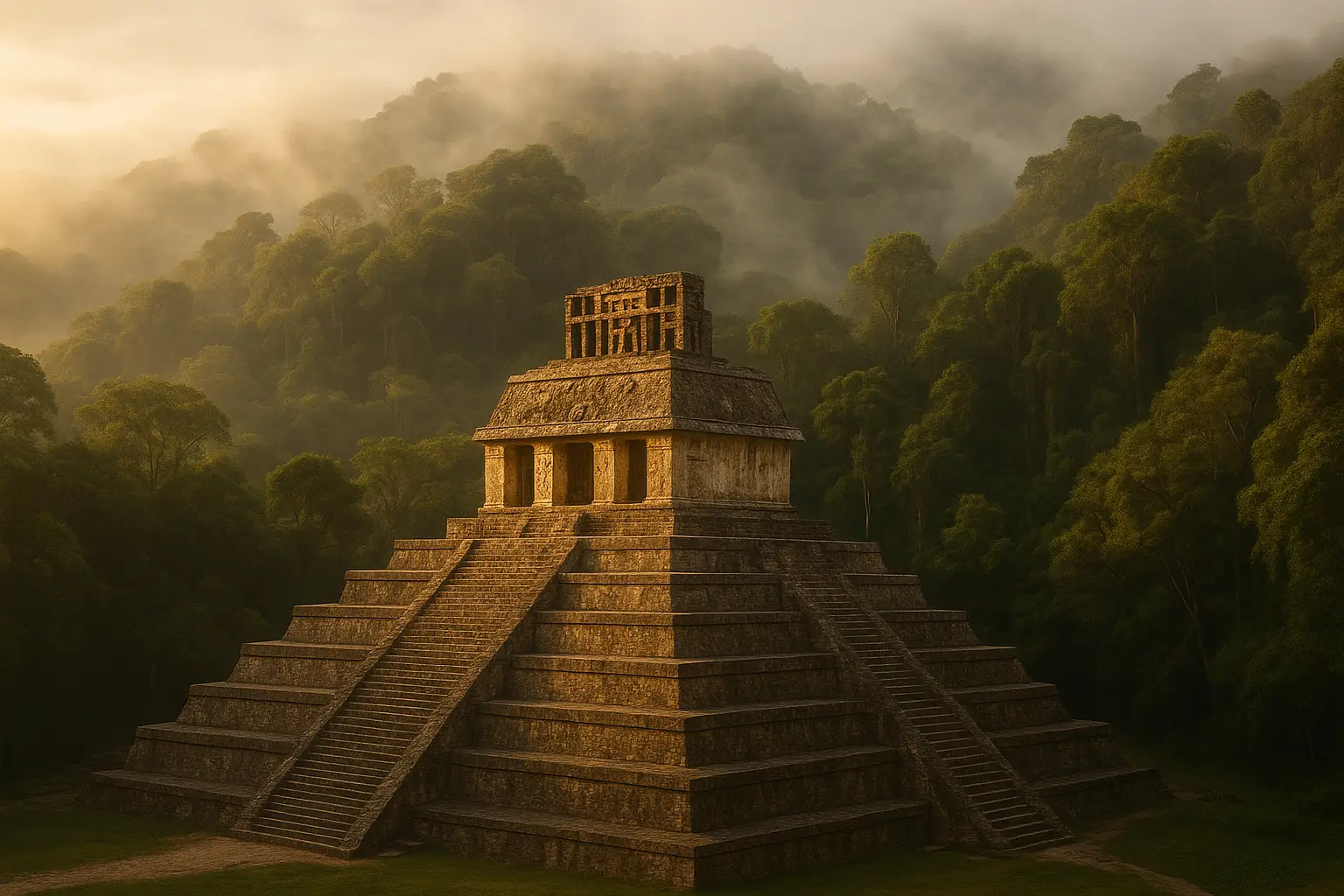
You hear Palenque before you see it. The howler monkeys start at first light, their territorial calls carrying through the canopy in a sound that newcomers routinely mistake for a large predator. Then the mist lifts, and the Temple of Inscriptions materializes above the tree line — a nine-tiered pyramid rising from the jungle floor with its summit temple still intact, the gray stone impossibly sharp against the green. Every Maya site has its atmosphere, but Palenque’s is unlike the rest. This is not a ruin reclaimed from scrubland or restored on cleared plains. This is a city still embedded in the forest that consumed it, where excavated temples stand alongside unexcavated mounds that conceal entire buildings, and where the boundary between archaeology and wilderness remains genuinely blurred.
Palenque occupies a series of natural terraces at the base of the Chiapas highlands, where the Sierra Norte escarpment drops toward the Gulf Coast lowlands. Only about ten percent of the ancient city has been excavated. The rest sleeps under the Lacandon Jungle canopy, a fact that transforms every visit into something more layered than the usual archaeological site walk-through. You are seeing what has been recovered, but the forested hills surrounding the cleared plazas remind you constantly of how much remains unknown.
What has been uncovered, however, places Palenque among the most important sites in the Maya world. The city produced the longest hieroglyphic texts in Mesoamerica, the most dramatic royal tomb ever found in the Americas, and an architectural tradition of vaulted corridors, multi-story towers, and narrative sculpture panels that has no parallel elsewhere. For travelers who reach Chiapas — and it takes some effort — Palenque delivers an experience that no amount of Yucatan ruins can replicate.
Historical Context
Palenque’s origins stretch to the 3rd century BCE, but the city spent its first several hundred years as a modest regional center, unremarkable among the dozens of Maya polities competing for territory in the southern lowlands. Its transformation began with a dynastic crisis in the 6th century CE, when military defeats at the hands of Calakmul and its allies left Palenque humiliated, its political authority shattered, and its population demoralized. The city might have faded into obscurity. Instead, it produced one of the most remarkable rulers in ancient American history.
K’inich Janaab Pakal — known simply as Pakal the Great — ascended the throne in 615 CE at the age of twelve. He would rule for 68 years, one of the longest reigns in recorded ancient history, and during those seven decades he rebuilt Palenque from a defeated city-state into a ceremonial capital of extraordinary refinement. The tiered plazas, elevated temples, and processional routes that visitors walk today are largely his creation, their arrangement reflecting a ruler who understood architecture as a language for expressing cosmic order, dynastic legitimacy, and the relationship between mortal kings and divine forces.
The inscriptions Pakal commissioned went well beyond standard royal commemoration. They constructed a genealogy reaching back to mythological time, embedded the dynasty within cycles of creation and renewal, and established a narrative that his successors would continue elaborating for generations. The city’s ancient name, Lakamha’ — “Big Waters” in Maya — honored the mountain streams that Palenque’s engineers channeled through subterranean aqueducts beneath the plazas, a hydraulic feat that allowed the city to function on its steep terrain. Pakal’s building program reshaped the landscape above those hidden waterways into something that announced permanence.
Pakal died in 683 CE and was buried within the pyramid he had spent decades constructing — the Temple of Inscriptions. His son K’inich Kan Bahlam II continued the architectural program, adding the Temple of the Cross group on the eastern hillside and extending both the physical city and the dynastic mythology his father had set in motion. The dynasty produced capable rulers for another century, but the end came quickly. The last hieroglyphic date recorded at Palenque falls in 799 CE. Within decades, the population dispersed, the ceremonial buildings fell silent, and the jungle began its patient reclamation. When Spanish explorers encountered the ruins in the 18th century, the site was so overgrown that they could not estimate its original scale.
One detail worth noting: before Pakal’s reign, Palenque was ruled by Lady Yohl Ik’nal, a woman who governed the city in her own right during the late 6th century — an anomaly in the patrilineal Maya political system. That Palenque’s dynastic record includes a female sovereign speaks to the unusual character of this city’s history even before its greatest king reshaped it.
What to See
Temple of Inscriptions
The western edge of the main plaza is dominated by a nine-tiered pyramid rising 23 meters above the jungle floor. The Temple of Inscriptions takes its name from three large hieroglyphic panels inside the summit temple — together constituting one of the longest known Maya texts, a dynastic history running from mythological origins to Pakal’s reign. The panels alone would make this building significant. What made it extraordinary beyond all expectation was what it concealed.
In 1952, archaeologist Alberto Ruz Lhuillier noticed a stone slab in the temple floor fitted with unusual finger-holes. Lifting it revealed a rubble-choked staircase descending 80 steps through the pyramid’s interior to a vaulted burial chamber at its base. Inside lay the remains of Pakal the Great, his skeleton adorned with jade jewelry, his face covered by a jade mosaic mask, his body resting inside a five-ton limestone sarcophagus. The carved lid bears one of the most analyzed images in Mesoamerican archaeology: Pakal at the moment of death, descending into the underworld along the World Tree while cosmic serpents and ancestral figures frame the scene. The discovery remains the most significant single find in the history of Mesoamerican archaeology.
The tomb interior is now sealed to protect its microclimate. But knowing what lies inside the pyramid as you stand at its base transforms the structure from an impressive building into something more charged: a monument designed to house a king for eternity, and which succeeded.
Practical note: You can climb the exterior steps of the Temple of Inscriptions (restrictions vary — check posted signs). The summit temple with its hieroglyphic panels is visible from the top. The on-site museum houses a full-scale reproduction of the sarcophagus lid.
The Palace
Occupying the elevated artificial platform at the center of the main plaza, the Palace is unlike any other structure in the Maya world. It did not rise as a single building but accumulated over centuries into an interconnected complex of courtyards, vaulted galleries, residential quarters, and ceremonial rooms spread across multiple levels. The effect is deliberately disorienting: passages open into unexpected courtyards, stairs lead to overlooking platforms, and the sense of enclosure alternates with sudden vistas over the surrounding canopy.
The Palace’s most distinctive feature is its four-story observation tower — no equivalent survives anywhere else in Maya architecture. Its function remains debated: astronomical observatory, military watchtower, or a symbolic mountaintop where the king could elevate himself above his subjects. Whatever its original purpose, the tower dominates the skyline of the main plaza from every angle, its squared-off profile rising above the jungle like a declaration of vertical ambition.
The interior preserves stucco relief sculptures depicting royal court scenes, accession rituals, and captive enemies displayed in postures of submission. Beneath the complex, a stone sweat bath where royal purification ceremonies were conducted survives largely intact.
Practical note: Plan 30-45 minutes for the Palace alone. The interior corridors are dimly lit and uneven — watch your footing. The tower is visible from outside but interior access varies.
Temple of the Cross Group
On the hillside east of the main plaza, Pakal’s son K’inich Kan Bahlam II constructed his own architectural legacy: three temples arranged around a shared plaza, each containing a stone tablet of exceptional quality depicting scenes from Maya cosmology and royal accession. The Temple of the Cross, the Temple of the Foliated Cross, and the Temple of the Sun constitute the most sophisticated theological argument made in Maya architecture — a unified program about creation, the role of kings as mediators between mortal and divine realms, and the continuity of a dynasty whose authority derived from the gods.
Each temple’s sanctuary contains a carved panel of distinct focus. The Temple of the Cross shows Pakal and Kan Bahlam flanking the World Tree at creation. The Temple of the Foliated Cross depicts a corn plant growing from a human skull — resurrection and agricultural renewal fused into a single image. The Temple of the Sun displays a war shield flanked by captive figures, celebrating the military power that protected the dynasty’s cosmic claims.
The temples’ exterior roof combs — latticed stonework rising above the sanctuaries — were once painted in vivid pigments visible from miles away. Today they survive as elegant skeletal structures that give the Cross Group its distinctive silhouette, particularly beautiful in the low morning light.
Practical note: Reaching the Cross Group requires a moderate uphill walk from the main plaza (10-15 minutes). The effort is rewarded with elevated views back across the Palace and Temple of Inscriptions. Go early — the hillside catches morning sun while the main plaza remains in shadow.
Jungle Trails and Unexcavated Sectors
Beyond the cleared archaeological zone, marked trails wind through the Lacandon Jungle past mounded shapes that conceal entire unexcavated buildings. The contrast between restored temples and forested humps makes viscerally clear how much of Palenque remains unknown. The trail to Group IV, a residential complex excavated in the mid-20th century, takes about 30 minutes and passes through forest that opens unexpectedly onto stone walls still emerging from undergrowth.
The jungle provides outstanding wildlife. Howler monkeys are most vocal in early morning and can frequently be spotted in the canopy directly above the main plaza. Spider monkeys, toucans, parrots, and coatis make regular appearances along the trails. Occasional jaguar tracks on outer paths remind visitors that this remains a functioning ecosystem.
Practical note: Bring insect repellent for the jungle trails — mosquitoes are aggressive, particularly in the rainy season. Stay on marked paths. The trails can become muddy and slippery after rain.
Museo de Sitio
The on-site museum near the main entrance houses artifacts that restore context the ruins cannot convey: jade jewelry, ceramic vessels, obsidian blades, carved stelae, and the centerpiece reproduction of Pakal’s sarcophagus lid at full scale. Standing before it, the image of a king descending the World Tree becomes legible rather than merely symbolic, and the Temple of Inscriptions acquires a new dimension.
Practical note: Open Tuesday through Sunday, 9:00 AM to 4:30 PM. Included with site admission. Allow 45-60 minutes. Visit the museum after the ruins — the artifacts are more meaningful once you have walked through the spaces they came from.
Timing and Seasons
Palenque occupies a subtropical zone at the jungle’s edge, and the heat and humidity are a genuine factor in visit planning.
Best months: November through April (dry season). Temperatures range from 22-28°C (72-82°F), rainfall is minimal, and the trails are firm. January through March provides the most stable weather overall.
Rainy season: May through October brings afternoon downpours, lush green vegetation, and significantly fewer visitors. Morning visits typically avoid the rain. The tradeoff is higher humidity (often exceeding 90%), muddy trails, and more aggressive insect activity. Dengue and Zika are present in Chiapas — repellent is mandatory.
Best time of day: Arrive at the 8:00 AM opening. Morning mist lifts from the canopy, wildlife is most active, and the light filtering through the trees creates the atmospheric conditions that define Palenque’s visual character. By 10:30-11:00 AM, tour buses from San Cristobal de las Casas arrive, heat intensifies, and the experience changes significantly.
Temperature reality: Even in dry season, midday temperatures at Palenque reach 30°C+ (86°F+) with high humidity. This is not a site where you can comfortably linger on open plazas at noon. Plan your visit for the morning and retreat by early afternoon.
Tickets, Logistics and Getting There
Admission: 95 pesos (approximately $5-6 USD) for non-Mexican adults. Cash only — bring pesos in small denominations. Mexican nationals enter free on Sundays.
Hours: Open daily 8:00 AM to 5:00 PM, with last entry at 4:30 PM.
From Palenque town: The archaeological site is 7-8 km from the town center within the national park. Colectivos (shared vans) depart frequently from Calle Juarez near the market for 20-30 pesos ($1-2 USD). Look for signs reading “Zona Arqueologica.” Taxis cost 100-150 pesos ($5-8 USD) one-way. The ride takes 15-20 minutes through dense jungle — watch for wildlife crossing, especially in early morning.
From Villahermosa: The closest commercial airport is Villahermosa (VSA), approximately 150 km away (2-2.5 hours by road). Flights connect to Mexico City and other hubs. Shuttle services and taxis run from the airport directly to Palenque town for approximately 500-700 pesos ($25-35 USD).
From San Cristobal de las Casas: ADO and OCC buses make the 5-hour mountain journey several times daily for approximately 300-400 pesos ($15-20 USD). The road winds through stunning highland scenery but is genuinely twisting — motion sickness medication is worth considering. Leaving San Cristobal early allows afternoon arrival in Palenque town with time to settle before a next-morning ruins visit.
From Merida or Cancun: ADO overnight buses connect to Palenque from the Yucatan Peninsula. The journey from Merida takes approximately 8 hours; from Cancun, roughly 12 hours. First-class buses are comfortable with reclining seats and air conditioning.
Rental car: A car is useful for combining the ruins with waterfalls and gives flexibility on timing, but the road from San Cristobal requires confidence on narrow mountain highways. Parking at the site costs 30-50 pesos.
Practical Tips
- Bring at least 1.5 liters of water per person. Vendors near the entrance sell water and snacks, but options thin out in the deeper sectors of the site.
- Insect repellent is non-negotiable, especially in rainy season. Apply before entering and reapply at midday. DEET-based formulas work best in this environment.
- Wear closed-toe shoes with good grip. The limestone surfaces and jungle trails are uneven, and rain makes everything slippery. Hiking sandals are acceptable; flip-flops are not.
- Sun protection matters on the open plazas: hat, sunglasses, SPF 50+ sunscreen. The jungle canopy provides shade on the trails but not in the main archaeological zone.
- A light rain jacket is worth carrying even in dry season. Chiapas weather can shift quickly.
- Binoculars serve double duty: wildlife spotting in the canopy and reading hieroglyphic details high on temple walls. A small investment that significantly enriches the visit.
- The town of Palenque has basic but adequate accommodation, restaurants, and ATMs. El Panchan, a collection of jungle cabanas and restaurants on the road between town and the ruins, is a popular traveler hub with better food and atmosphere than the town center.
- For budget travelers, the colectivo + site entry combination costs under $10 USD total, making Palenque one of the most affordable major archaeological sites in the Americas.
Suggested Itinerary
7:30 AM — Catch a colectivo or taxi from Palenque town to the archaeological zone.
8:00 AM — Enter the site at opening. Walk directly to the Temple of Inscriptions. Spend 20-30 minutes studying the pyramid’s exterior and, if open, climbing to the summit temple. The morning mist rising behind the temple creates the site’s most atmospheric moment.
8:30 AM — Cross to the Palace. Explore the courtyards, vaulted galleries, and stucco sculptures. Find the sweat bath in the lower level. Allow 30-45 minutes.
9:15 AM — Walk uphill to the Temple of the Cross group. Visit all three temples and their carved interior panels. The elevated position provides excellent views back across the main plaza. Allow 30-40 minutes.
10:00 AM — Take the jungle trail toward Group IV and the unexcavated sectors. Watch for howler monkeys and toucans in the canopy. Allow 30-40 minutes for the round trip.
10:40 AM — Return to the main plaza area for any structures you want to revisit or photograph with changed light.
11:00 AM — Exit the archaeological zone and walk or take transport to the Museo de Sitio. Spend 45-60 minutes with the collection, including the sarcophagus lid reproduction.
12:00 PM — Exit the site. Total time: approximately 4 to 4.5 hours.
Afternoon option: Drive to Misol-Ha waterfall (30 minutes, 35-meter single drop into a jungle pool, swimming permitted, 30 pesos entry) and then Agua Azul (another 45 minutes, turquoise cascades through limestone pools, 50 pesos entry). Return to town by evening.
Nearby Sites
Uxmal — The Puuc-style Maya masterpiece in the Yucatan is a full day’s travel from Palenque (approximately 8 hours by car or overnight bus). The architectural contrast is profound: Palenque’s vaulted corridors and narrative sculpture versus Uxmal’s mosaic-covered facades and geometric precision. Both represent the peak of Maya artistry, but in radically different idioms.
Chichen Itza — The Yucatan’s most famous archaeological site lies roughly 10 hours from Palenque by road. Most travelers visit it as part of a separate Yucatan circuit. The monumental scale of Chichen Itza’s Pyramid of Kukulkan makes a striking counterpoint to Palenque’s more intimate, forest-framed architecture.
Teotihuacan — Mexico City’s colossal pyramids are reachable by a domestic flight from Villahermosa to Mexico City. Teotihuacan predates Palenque’s peak by several centuries, and Maya inscriptions at Palenque reference Teotihuacan’s influence on the broader political landscape of Classic-period Mesoamerica.
Bonampak and Yaxchilan — Two smaller Classic Maya sites deeper in the Lacandon Jungle, accessible as day trips from Palenque town. Bonampak preserves the finest surviving Maya murals anywhere — vivid painted scenes of battle, tribute, and royal ceremony that revolutionized understanding of Maya life. Yaxchilan, reached by boat on the Usumacinta River at the Guatemala border, offers jungle-shrouded temples with extraordinary carved lintels. Organized tours to both sites ($60-90) depart daily from Palenque.
Final Take
Palenque is the Maya site that refuses to let you treat ruins as abstraction. The jungle presses in from every side, howler monkeys announce themselves overhead, and the unexcavated mounds surrounding the cleared temples remind you that what you are seeing is a fraction of what exists. The Temple of Inscriptions holds a king inside its stone core. The Palace accumulated its labyrinthine plan over centuries of additions by successive rulers, each building onto what came before. The Cross Group temples contain carved panels whose theological arguments scholars are still working to decode.
This is not a site that yields its meaning in a quick walk-through. Palenque asks for time, for heat tolerance, for willingness to follow a jungle trail past buildings that have not been touched since the 9th century. What it gives in return is an encounter with a civilization at its most intellectually ambitious — a city whose rulers did not merely build monuments but authored a narrative of creation, kingship, and cosmic order in stone, stucco, and hieroglyphic text. The narrative is incomplete. The jungle holds the rest. That incompleteness is part of what makes Palenque extraordinary: a masterpiece still being uncovered, twelve centuries after its creators walked away.
Discover More Ancient Wonders
- Uxmal — Puuc-style stone mosaics and the elliptical Pyramid of the Magician near Merida
- Chichen Itza — The iconic pyramid of Kukulkan and Maya-Toltec fusion architecture
- Teotihuacan — The colossal Pyramids of the Sun and Moon near Mexico City
- Tikal — Guatemala’s towering jungle pyramids and Palenque’s Classic-period rival
- Explore our complete Mexico Ancient Sites Guide for full itinerary planning
Quick Facts
| Attribute | Details |
|---|---|
| Location | Palenque, Chiapas, Mexico |
| Country | Mexico |
| Region | Chiapas |
| Civilization | Maya |
| Historical Period | c. 226 BCE-799 CE |
| Established | c. 3rd century BCE |
| Ancient Name | Lakamha’ (Maya: “Big Waters”) |
| UNESCO Status | World Heritage Site (1987) |
| Entry Fee | 95 pesos (~$5-6 USD); cash only |
| Hours | 8:00 AM - 5:00 PM daily |
| Best Time | November-April; arrive at 8:00 AM opening |
| Nearest Airport | Villahermosa (VSA), ~2.5 hours by road |
| Nearest Town | Palenque (7-8 km from ruins) |
| Coordinates | 17.4849, -92.046 |
Frequently Asked Questions
How much time should I plan at Palenque?
Plan 4-6 hours for the main archaeological site, including the museum. A full day allows you to explore at a relaxed pace and observe wildlife. Combine with Misol-Ha and Agua Azul waterfalls for a memorable full-day itinerary.
What is the best time of day to visit Palenque?
Arrive at the 8 AM opening. Morning mist rising from the jungle creates atmospheric photography conditions, temperatures are cooler, and howler monkeys are most active. By 11 AM, heat and humidity become intense.
How do I get to Palenque from the town?
Colectivos (shared vans) run frequently from downtown Palenque to the ruins for 20-30 pesos ($1-2 USD). Taxis cost 100-150 pesos ($5-8 USD). The journey takes 15-20 minutes along a road through the national park.
Can I climb the temples at Palenque?
Some temples allow climbing, including parts of the Palace complex with its iconic tower. However, the Temple of Inscriptions tomb interior is closed to the public to protect Pakal's sarcophagus. Follow posted signs as restrictions change.
What wildlife might I see at Palenque?
The Lacandon Jungle surrounding the ruins hosts howler monkeys, spider monkeys, toucans, parrots, coatis, and occasional jaguar sightings. Early morning offers the best wildlife viewing opportunities along the jungle trails.
Is Palenque safe to visit?
Yes, the archaeological site and town are generally safe for tourists. Standard precautions apply: use official colectivos or registered taxis, stay on marked trails, and visit waterfalls only with reputable guides due to occasional strong currents.
Nearby Ancient Sites
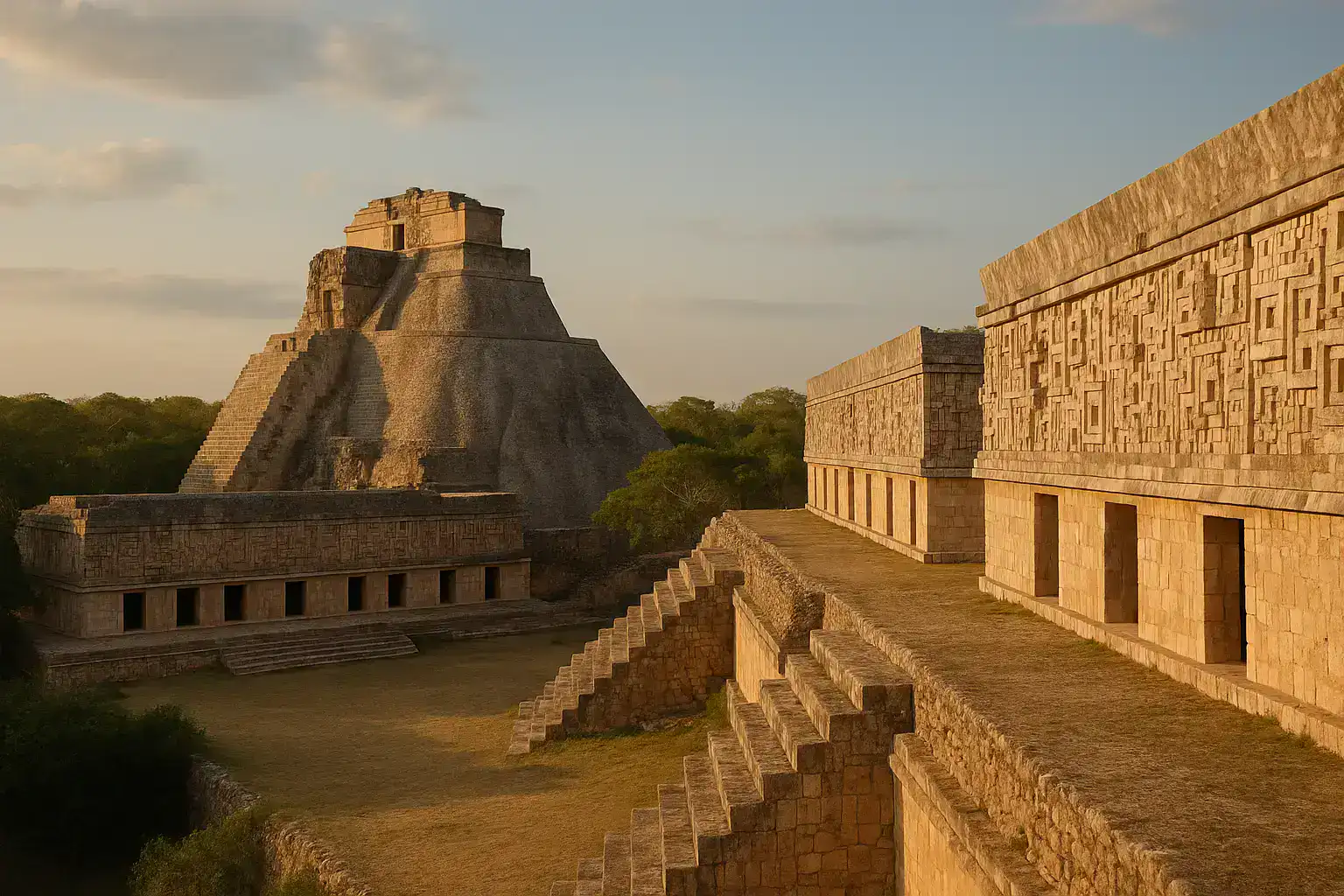
Uxmal Mexico Travel Guide 2026: Puuc Architecture & Stone Mosaics
MayaDiscover Uxmal's exquisite Puuc architecture with intricate stone mosaics. Explore the Pyramid of th...
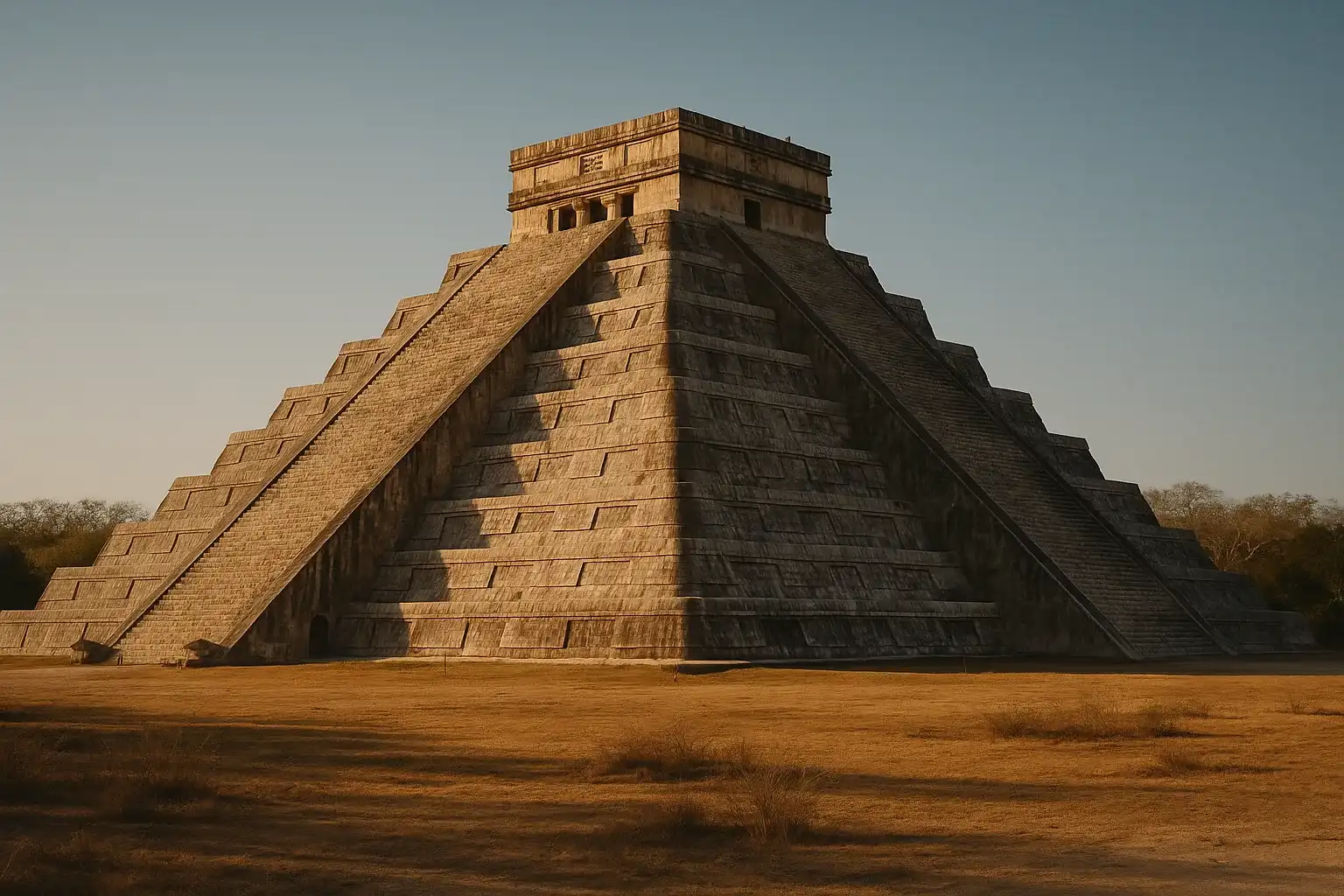
Chichen Itza Travel Guide 2026: Maya Secrets, Sacred Cenote, and Smart Timing
MayaChichen Itza stands as the most visited ancient site in Mexico, showcasing the architectural genius ...
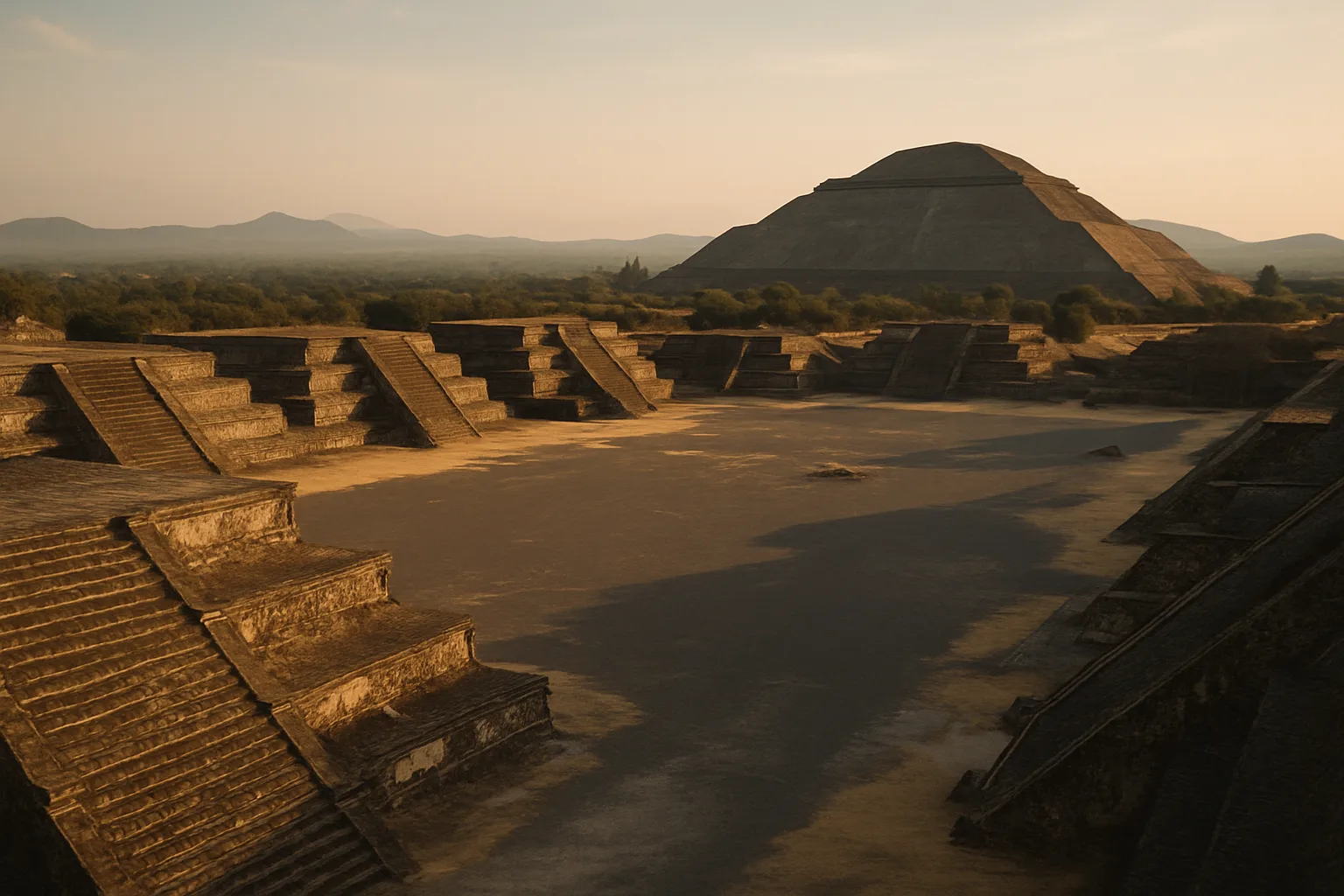
Teotihuacan Mexico Travel Guide 2026: Pyramids, Mysteries & Day Trips
TeotihuacanoTeotihuacan, the 'birthplace of the gods,' remains Mesoamerica's most influential ancient city. This...