Quick Info
Curated Experiences
Patan Durbar Square Heritage Walking Tour
Kathmandu Valley Tour Including Patan Durbar Square
Private Patan Durbar Square and Newar Culture Tour
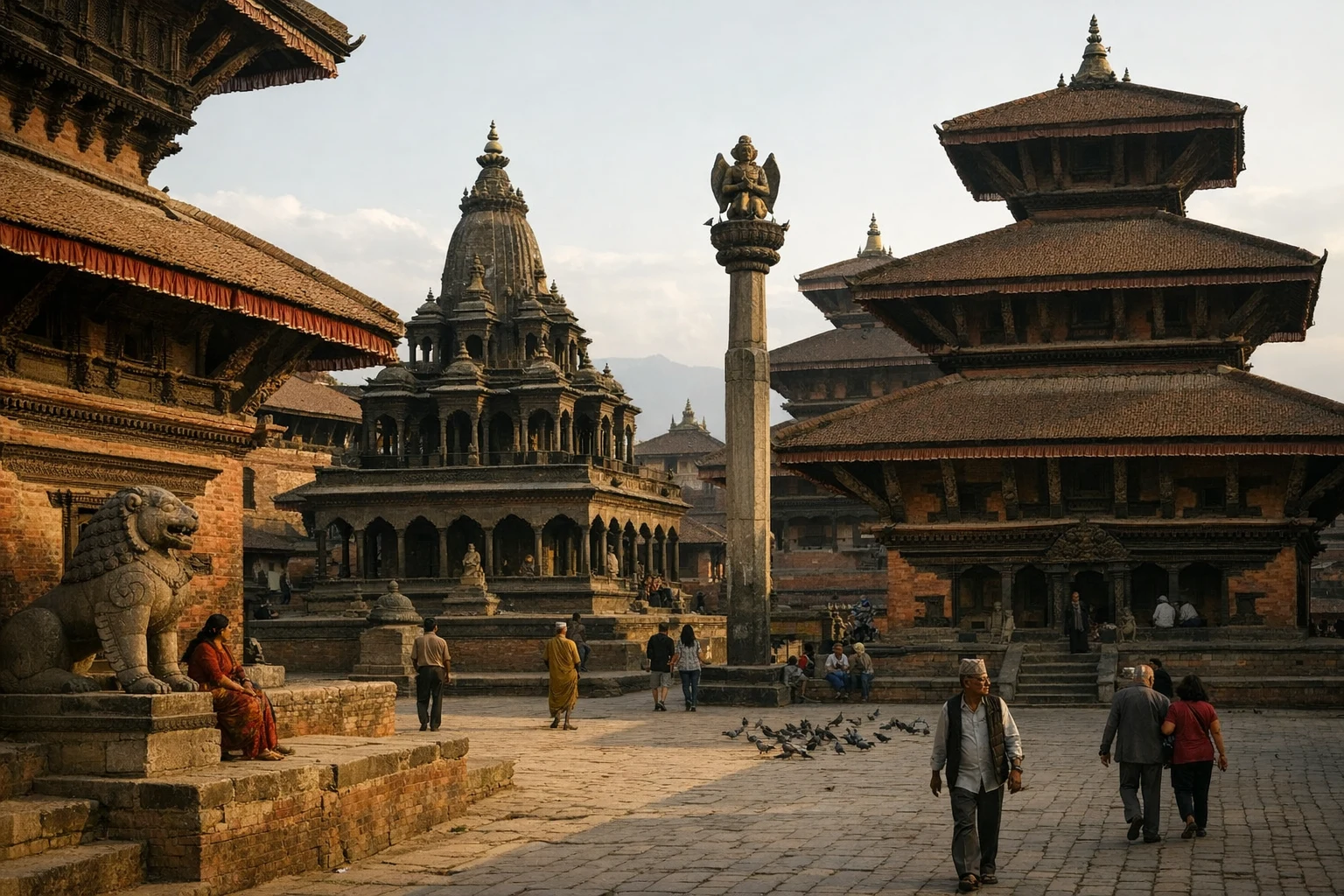
Patan Durbar Square in Nepal is one of the finest urban sacred spaces in South Asia, a place where royal architecture, temple artistry, and everyday city life still meet in the same stone-paved heart of old Lalitpur. Just across the Bagmati River from Kathmandu, the square gathers palace buildings, tiered temples, shrines, courtyards, rest houses, and carved facades into a dense and beautifully ordered historic ensemble. At first glance, the impression is one of warm brick, dark timber, and layered roofs rising in elegant proportions against the valley light. Then the details begin to take over: window screens cut like lace from wood, stone guardians at temple stairs, bells, metal toranas, and courtyards that open one after another behind seemingly solid palace walls. Few places reward slow looking more generously.
What makes Patan Durbar Square so memorable is that it feels both monumental and lived in. This is not a dead ceremonial plaza preserved behind a velvet rope. Worship continues, residents pass through, artisans work nearby, and the square remains deeply tied to the Newar culture that shaped it. Even after earthquakes, restorations, and modern urban pressures, Patan retains an unusual sense of coherence. The old palace still anchors the square, temples remain legible as ritual spaces rather than abstract ruins, and the surrounding lanes continue to feed life into the historic core. Travelers often arrive expecting another famous UNESCO site in the Kathmandu Valley. They leave remembering a place where the artistry of brick, wood, stone, and metal seems almost impossibly concentrated, and where history survives not only in monuments but in habit, devotion, and urban texture.
History
Early Settlement and Sacred Foundations
Patan, also known as Lalitpur, is one of the oldest continuously inhabited cities in the Kathmandu Valley, and its origins reach far earlier than the monuments now dominating Durbar Square. Long before the Malla kings shaped the urban form most visitors see today, the area had already developed as a settlement, trade center, and sacred landscape. The Kathmandu Valley’s fertile soils and strategic position along Himalayan trade routes helped sustain urban life, while religious traditions linked the city to both Hindu and Buddhist practices in ways that remain visible today.
Like the other old royal centers of the valley, Patan grew through cumulative sacred and political layering rather than a single founding event. Shrines, water systems, monasteries, and local cult sites helped structure the city before the square reached its mature form. This long urban continuity is important because Patan Durbar Square is not an isolated courtly stage set. It emerged from a broader city that was already culturally rich, ritually active, and economically connected.
The Malla Period and the Making of the Square
The Patan Durbar Square visitors know today was shaped primarily during the Malla period, especially between the 16th and 18th centuries, when the Kathmandu Valley’s rival city-kingdoms patronized extraordinary building programs. The Malla rulers of Patan invested heavily in palace construction, temple architecture, courtyards, and public monuments, using architecture as a language of kingship, devotion, and civic prestige. This was the age in which Newar artistic traditions reached some of their most sophisticated expressions, especially in carved wood, repoussé metal, stone sculpture, and brick masonry.
Under rulers such as Siddhi Narasimha Malla and his successors, Patan developed into a highly refined royal center. Temples rose in the characteristic multi-tiered style of the valley, palace courtyards took on increasingly elaborate ceremonial roles, and the square became a concentrated display of dynastic power and sacred legitimacy. Yet even here, the religious mix of the valley remained visible. Hindu and Buddhist traditions interacted constantly, and Patan’s artistic culture was deeply shaped by that overlapping devotional world.
The palace itself was not a single monolithic building but a complex of courtyards, administrative spaces, ritual zones, and royal residences. This pattern remains one of Patan’s defining features: power was organized through nested spaces rather than only through one grand facade. The result is an architectural experience of layers and transitions, where political authority was embedded in the city rather than separated from it.
Shah Unification and the End of Independent Royal Power
In the late 18th century, the rise of the Shah dynasty under Prithvi Narayan Shah ended the independent Malla kingdoms of the Kathmandu Valley. Patan ceased to be the center of a separate royal court, and the political role of Durbar Square changed accordingly. Yet the square did not lose its cultural importance. The monuments, courtyards, and temples remained central to local life, and the city continued to preserve its strong Newar identity despite larger shifts in Nepal’s political structure.
This transition matters because it explains why Patan Durbar Square survived as something more than the shell of a defeated court. Its significance had never been purely political. It was also religious, artisanal, and civic. Even after royal sovereignty moved elsewhere, the square remained a powerful symbolic center. Festivals, local worship, and neighborhood use kept it active, while the extraordinary craftsmanship of its buildings ensured that scholars, pilgrims, and later travelers would continue to value it.
Earthquakes, Restoration, and Modern Heritage Status
Like much of the Kathmandu Valley, Patan has been repeatedly shaped by earthquakes. Several monuments were damaged, repaired, rebuilt, or restored across the centuries, and this process forms part of the square’s authentic history rather than a modern interruption. The 2015 earthquake brought especially serious damage to heritage sites across Nepal, including monuments in Patan Durbar Square, and restoration has since become one of the defining chapters of its recent life.
UNESCO recognition as part of the Kathmandu Valley World Heritage Site helped reinforce Patan’s international importance, but the real challenge has always been balancing preservation with living urban continuity. Patan is not a museum enclosure. Its sacred spaces still matter to local communities, and its architecture still stands inside a functioning city. Modern restoration efforts therefore involve more than structural repair. They also raise questions about craft continuity, material authenticity, and how to preserve a place whose identity depends on use as much as on appearance.
Today, Patan Durbar Square stands as both a masterpiece of Newar urban design and a testimony to resilience. Its history is visible in its repairs, its rebuilt temples, and its ongoing life as a square where devotion, tourism, artistry, and neighborhood rhythms coexist.
Key Features
The most immediate feature of Patan Durbar Square is the extraordinary concentration of temple architecture gathered around the old palace complex. Rather than one single monument dominating everything else, the square works through a balanced composition of structures whose differences make the whole more compelling. Tiered temples rise beside palace wings, shrines cluster near wider open spaces, and stone steps, plinths, and sculptures create a sequence of visual pauses. The effect is dense without feeling chaotic. Patan’s layout reflects a sophisticated understanding of how sacred and royal architecture can share urban space.
The royal palace complex is one of the square’s essential anchors, especially through its sequence of courtyards. Keshav Narayan Chowk, Mul Chowk, Sundari Chowk, and other palace spaces reveal Patan’s genius for nested architecture. From the outside, the palace may seem like a continuous brick mass, but inside it opens into carefully proportioned courts that once served ritual, domestic, and administrative purposes. These courtyards are some of the most rewarding spaces in the square because they reveal the private grammar behind the public facade. The old palace museum also deepens the experience, displaying sculpture, metalwork, and sacred art that help explain the broader cultural world from which the square emerged.
Among the freestanding temples, Krishna Mandir is especially famous and visually distinct. Built in stone rather than primarily brick and timber, and using a shikhara-inspired form unusual in the square’s immediate context, it stands out immediately. Its multi-level composition and carved relief program make it one of the most important monuments in Patan. Yet it does not overwhelm the rest of the square; instead, it enriches the architectural conversation by showing another register of sacred ambition. Nearby temples such as Bhimsen Mandir and Vishwanath Temple contribute their own textures of carved struts, rooflines, and sculptural ornament.
Wood carving is one of Patan Durbar Square’s greatest pleasures. Windows, doors, brackets, roof supports, and screens are treated not as secondary decorative surfaces but as major artistic fields. The carved timber elements often display a level of refinement that can feel almost improbable in such quantity. This artistry is not purely ornamental. It expresses status, devotion, myth, and the high technical culture of Newar craftsmanship. Even casual visitors quickly notice that Patan is a place where the details reward as much attention as the skyline.
The square’s final key feature is that it remains inseparable from the surrounding city. Step beyond the main plaza and you find Buddhist courtyards, workshops, shrines, small lanes, and neighborhood life still tied to the historic center. That continuity gives Patan a warmth some major heritage squares lose. It does not feel emptied out for visitors. It feels inhabited by memory, ritual, and craft in the present tense.
Getting There
Patan Durbar Square is located in Lalitpur, directly south of central Kathmandu, and reaching it is usually straightforward for travelers staying anywhere in the Kathmandu Valley. The easiest options are taxi, rideshare app, or private driver. From Thamel, central Kathmandu, or Boudha, the ride usually takes around 20 to 45 minutes depending heavily on traffic, which in the valley can be unpredictable. Taxi fares vary, but short rides commonly fall in the range of roughly NPR 500 to 1,500 depending on distance, negotiation, and timing. App-based bookings can reduce the need to bargain and are often more convenient.
Many travelers visit Patan as part of a broader Kathmandu Valley heritage circuit that may also include Bhaktapur, Kathmandu Durbar Square, Boudhanath, or Swayambhunath. Organized half-day and full-day tours are common and can be useful if you want historical context without navigating traffic logistics yourself. Independent travel is equally viable, especially if Patan is the main focus rather than one stop among many.
Once you arrive, the square is best explored on foot. The surrounding lanes are walkable, though surfaces can be uneven and traffic in nearby streets may be busy. Entry tickets are generally required for foreign visitors entering the heritage zone. Bring small cash, comfortable shoes, and some patience for urban bustle. Patan rewards slow wandering more than rushed box-checking, so it is worth structuring the day around the square rather than squeezing it between too many other stops.
When to Visit
The best times to visit Patan Durbar Square are generally autumn and spring. From October to November, skies are often at their clearest after the monsoon, visibility is excellent, and the valley light makes the brick and wood architecture especially beautiful. Spring, especially from March to April, also offers good conditions, with pleasant temperatures and active city life, though haze can sometimes soften the views compared with autumn.
Morning is one of the best times of day to explore. The square feels calmer, the light is better for architectural photography, and the sacred atmosphere is often more noticeable before the middle of the day becomes busy. Late afternoon is also rewarding, when the warm light catches the carved wood and brick facades. Midday can still be worthwhile, especially if you plan to spend time inside the museum or palace courtyards, but the square’s finer textures are easiest to appreciate when the light is less harsh.
The monsoon season, roughly June through September, brings rain, humidity, and muddier walking conditions, though the city can also feel lush and dramatic. Winter is usually dry and quite manageable, with cooler mornings and evenings. Festival timing can add a powerful dimension to a visit. During major local celebrations, the square becomes more crowded but also more intensely alive, with rituals and processions that reveal its continuing sacred role. If you want the architecture at its clearest, choose autumn. If you want a balance of good weather and lively urban rhythm, spring is excellent too.
| Quick Facts | Details |
|---|---|
| Location | Lalitpur, Bagmati Province, Nepal |
| Best Known For | Newar palace architecture, temples, courtyards, and wood carving |
| UNESCO Status | Part of the Kathmandu Valley World Heritage Site |
| Cultural Tradition | Newar Hindu and Buddhist urban heritage |
| Signature Monument | Krishna Mandir |
| Key Palace Spaces | Mul Chowk, Sundari Chowk, Keshav Narayan Chowk |
| Recommended Visit Length | Half day minimum, full day ideal with nearby lanes and museum |
| Best Season | Autumn and spring |
| Nearby Base | Kathmandu or Lalitpur |
| Practical Tip | Explore early or late in the day and make time for the palace courtyards, not just the main square facade |
Frequently Asked Questions
What is Patan Durbar Square best known for?
Patan Durbar Square is best known for its dense concentration of Newar palace architecture, intricately carved temples, royal courtyards, and metalwork traditions.
Is Patan Durbar Square different from Kathmandu Durbar Square?
Yes. While both are historic royal squares in the Kathmandu Valley, Patan is often praised for its more cohesive artistry, quieter atmosphere, and exceptional temple detailing.
How much time should you spend at Patan Durbar Square?
Most visitors should allow at least half a day to explore the main square, museum, courtyards, and surrounding lanes without rushing.
Do you need a guide at Patan Durbar Square?
A guide is not required, but one can greatly improve the visit by explaining Newar symbolism, temple history, earthquake restoration, and the significance of the palace courtyards.
Is Patan Durbar Square still active as a living neighborhood?
Yes. Patan Durbar Square is not just a monument zone; it remains embedded in a living urban setting with shrines, festivals, shops, artisans, and local daily life.
When is the best time to visit Patan Durbar Square?
Autumn and spring are usually the best seasons, with clear skies, comfortable temperatures, and excellent conditions for walking and photography.
Nearby Ancient Sites
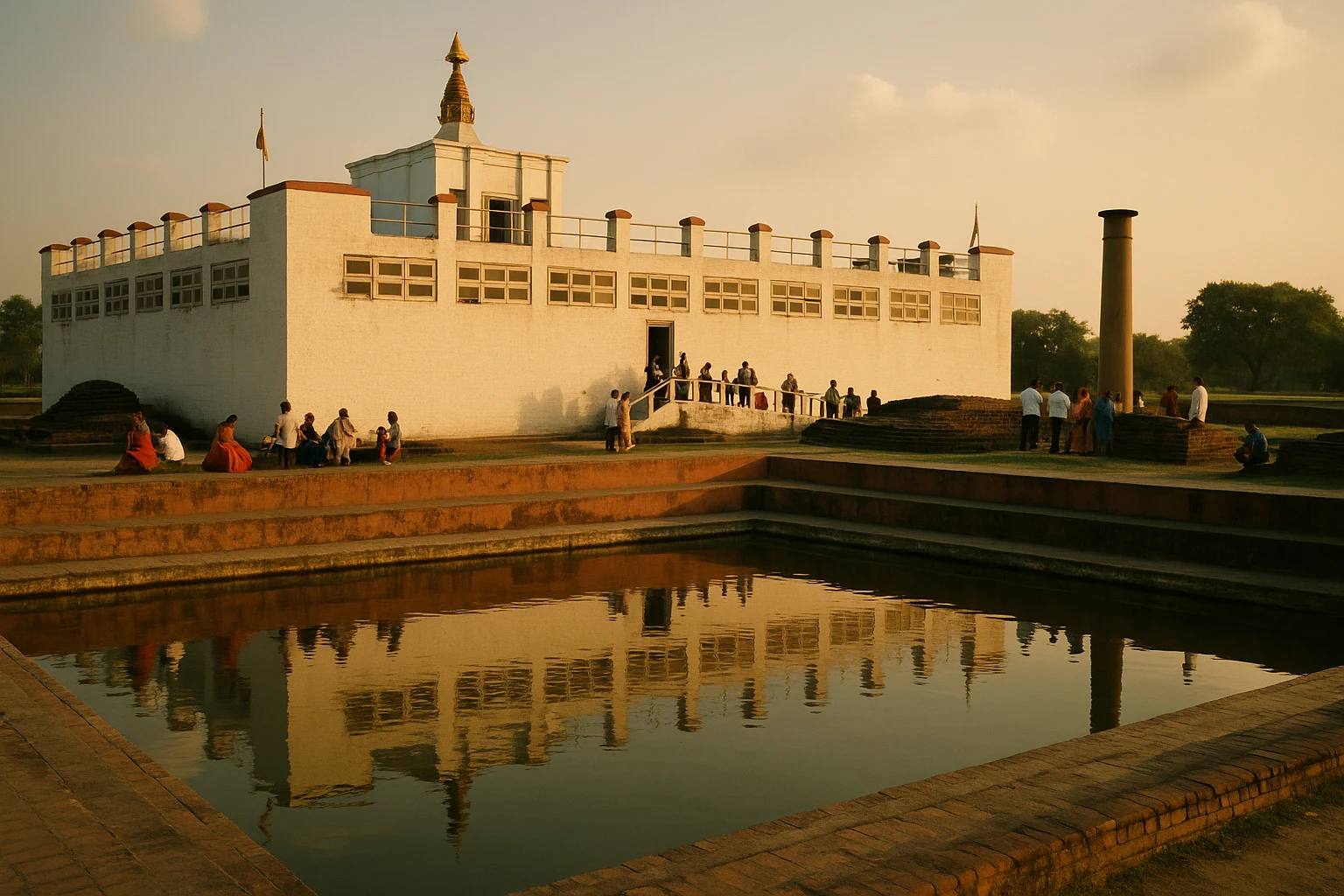
Lumbini
Ancient Indian / Early BuddhistLumbini, birthplace of the Buddha, is a sacred UNESCO World Heritage Site in Nepal's Terai plains wh...
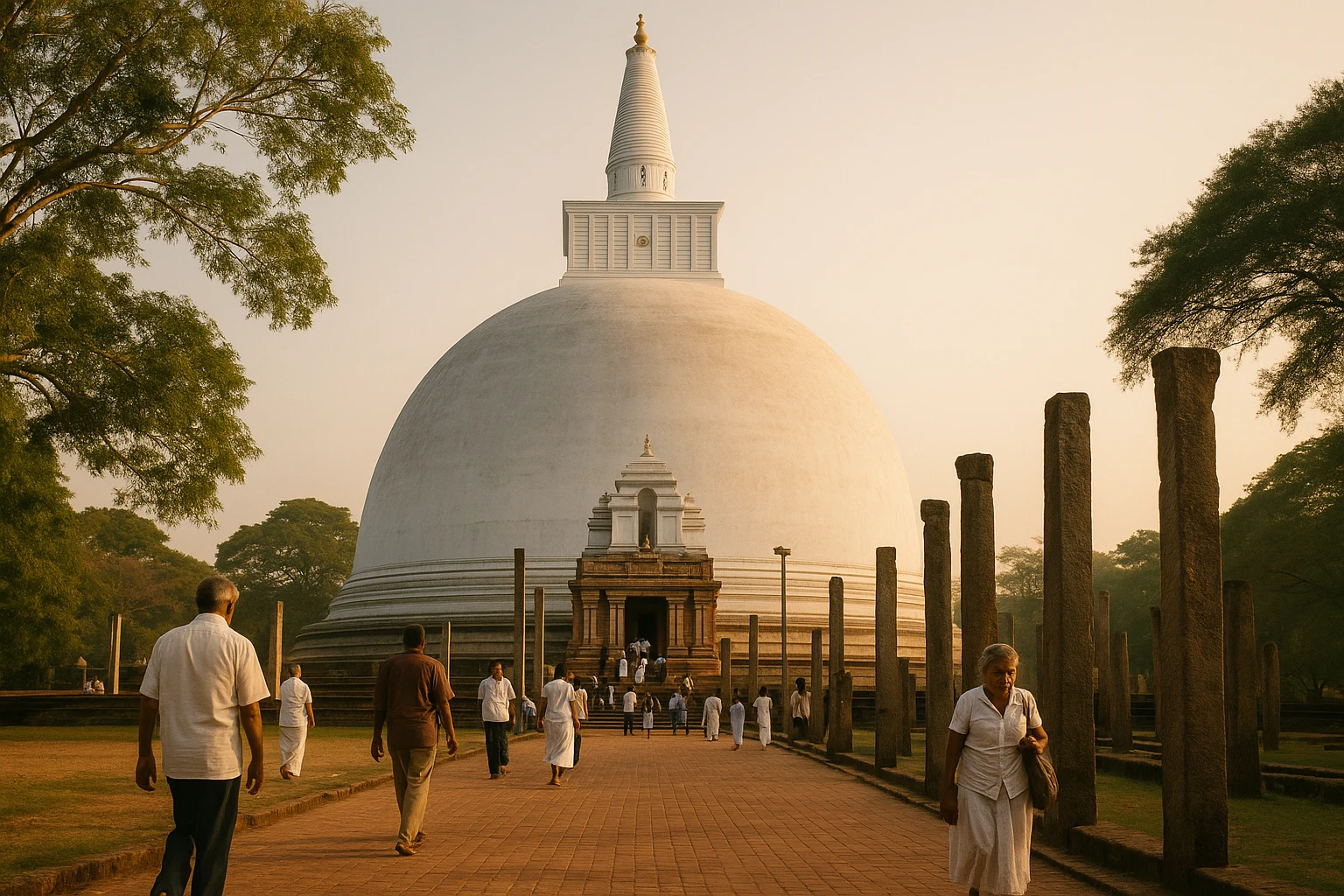
Anuradhapura
SinhaleseSacred ancient capital of Sri Lanka, Anuradhapura preserves towering Buddhist stupas, the world's ol...
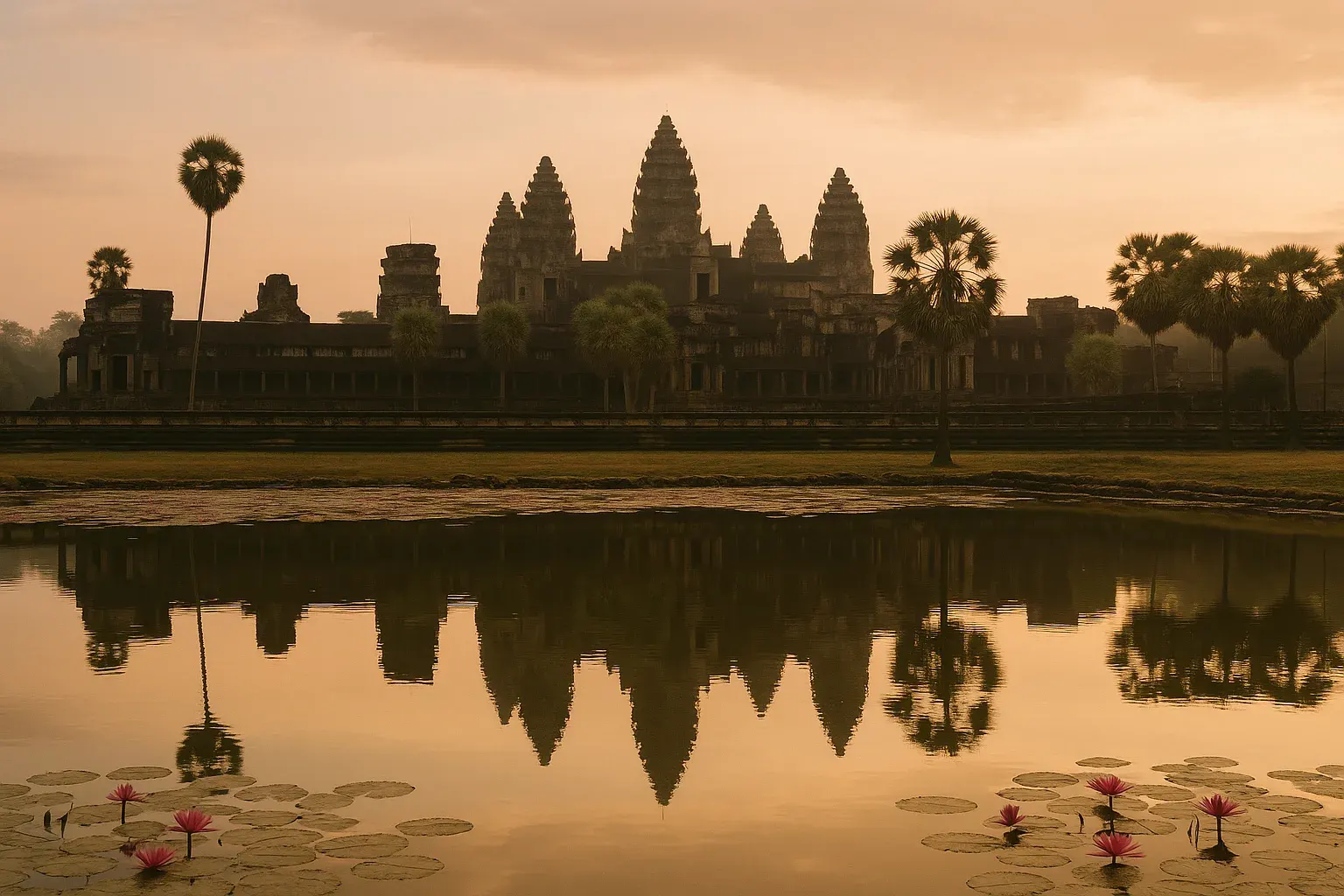
Angkor Wat Travel Guide 2026: Everything You Need to Know
KhmerAngkor Wat, the world's largest religious monument, spans over 400 acres in the heart of Cambodia. T...