Quick Info
At a glance
Quick Facts
- Location: Hillside near Antalya in southwestern Pamphylia
- Best for: Roman theater architecture, civic planning, short trip from Antalya
- When to visit: April-May, September-October
- Entry fee: Around 100 Turkish Lira
- Crowds: Low to moderate
- What to see: Theater, colonnaded street, gates, baths, agora, stadium
A Gateway City
Perge was one of Pamphylia’s major cities—a port that connected Mediterranean trade networks to interior Anatolia. Founded by settlers from Argos (in Greece), the city maintained a hybrid identity: Greek culture, Pamphylian location, Roman governance.
The city’s prosperity depended on its position as a gateway between coast and interior. Goods moved through Perge in both directions: Mediterranean wine and oil heading inland; timber, grain, and minerals heading toward the coast. This commercial importance attracted investment in public architecture—theaters, baths, markets—designed to display civic prestige.
The Theater
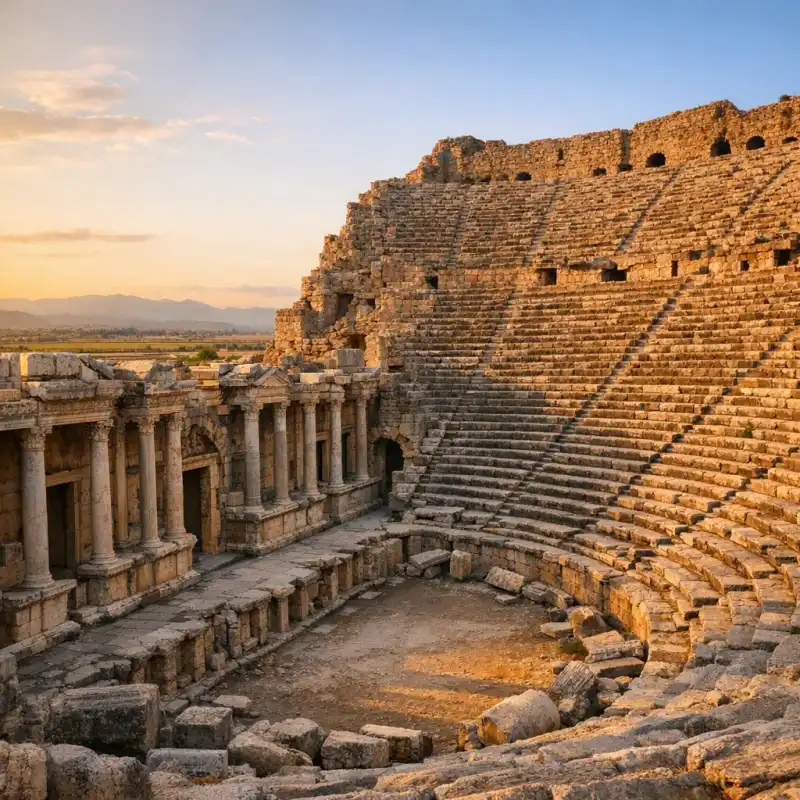
Perge’s most impressive monument is its well-preserved theater, built into the hillside with seating for approximately 14,000. The theater shows Roman engineering and civic ambition: steep seating, excellent sightlines, impressive columns supporting the stage structure.
Roman theaters often retained Greek-style designs while emphasizing the spectacular. The stage (scaena) at Perge has multiple tiers of columns that originally supported elaborate scenic backgrounds. The theater likely hosted dramatic performances, gladiatorial combats, and civic assemblies where citizens gathered for political decisions.
Standing in the theater, you’re aware of the surrounding landscape—views of the plains below, the distant coast. The theater wasn’t isolated from the city but integrated into a hillside geography that made the theater a natural gathering point.
The Main Street and Urban Plan
Descending from the theater, you encounter the main street of Perge—a colonnaded avenue lined with shops and civic buildings. The columns are partially preserved, allowing you to imagine the street in antiquity: shaded by columns, busy with merchants and citizens, a visual statement of civic organization and commercial activity.
The street layout reveals rational urban planning. Streets intersect at right angles. Buildings are organized by function—markets, baths, administrative structures. The colonnaded street creates a processional quality suitable for both commercial traffic and ceremonial movement.
Fortification and Border City Function
Perge’s fortifications underscore its strategic importance. Massive gates controlled entry to the city. Walls protected against both piracy (from the Mediterranean) and raiding from interior tribes. The city was not simply a trading center but also a defense point protecting the Pamphylian coast.
These fortifications became more significant during Rome’s later period, when barbarian raids from the interior increased. The gates and walls you see today reflect various periods of reconstruction as different threats required different defenses.
Baths and Public Infrastructure
Like other Roman cities, Perge invested in elaborate thermal complexes. The baths featured hypocaust heating systems, cold and hot chambers, and decorative veneering. The baths served both practical and social functions—Romans bathed for cleanliness, health, and social gathering.
The presence of well-built baths indicates Perge’s prosperity. Only cities wealthy enough to afford the infrastructure—aqueducts bringing water, heating systems, decorative materials—could maintain elaborate public baths. Their presence at Perge suggests a population of sufficient size and resources to justify such investment.
Trade Networks and Economic Prosperity
Perge’s economic foundation was its position at the convergence of maritime and terrestrial trade routes. Goods arriving by ship through the Mediterranean could be distributed inland along established routes toward the interior of Anatolia. Conversely, mineral wealth and agricultural products from the hinterland could be collected and exported through the harbor. This dual function—both redistribution center and port facility—generated wealth that funded civic architecture.
The city’s wealth is reflected not only in the scale of its monuments but in the quality of their construction. The theater’s engineering demonstrates mastery of architecture and hydraulics. The colonnaded street speaks to careful urban planning and investment in public aesthetics. These weren’t necessary buildings—they were statements of civic pride and prosperity.
Pottery evidence from archaeological excavations shows that Perge traded extensively with other Mediterranean cities. Lamps from North Africa, amphorae from the Aegean, fine wares from Asia Minor—all appear in excavation contexts. This material evidence demonstrates that Perge was integrated into broader Mediterranean economic networks and benefited from those connections.
The Pamphylian Confederation
Understanding Perge requires understanding its regional context within Pamphylia. Pamphylia was one of ancient Anatolia’s distinctive regions, with its own cultural and political identity. The Pamphylian confederation included several major cities—Side being the most prominent, along with Perge, Silyon, Aspendos, and others. These cities maintained a collective identity while also competing for resources and influence.
The relationship between Pamphylian cities was complex. They cooperated on matters affecting the region while often competing for control of trade routes and agricultural lands. When Rome extended its authority over Anatolia, the Pamphylian cities initially resisted. Piracy was endemic along the Pamphylian coast, and cities like Side and Perge were centers for corsair activity. Roman naval power ultimately suppressed this piracy, and the region was incorporated into the Roman provincial system.
Once integrated into the Roman Empire, Pamphylian cities prospered. Roman security enabled trade to flourish without fear of piracy. Roman infrastructure—roads, harbors, administrative systems—facilitated commerce. The prosperity of Perge during the Roman period reflects these structural advantages.
The Agora and Stadium
The agora (marketplace) provided space for commerce and civic gathering. The stadium, while less impressive than the theater, served athletic competitions and training. These facilities—theater, baths, agora, stadium—were the standard infrastructure of a successful Hellenistic and Roman city.
Together, they create a landscape where public life was central. Perge wasn’t primarily residential; its architecture prioritized shared spaces where citizens encountered one another and civic life happened.
Cultural Syncretism and Urban Identity
Perge’s urban character reflected a synthesis of Greek, Pamphylian, and Roman cultural elements. The city maintained Greek civic institutions—the assembly, the magistrates, the public festivals—while incorporating Roman administrative structures and military presence. Religiously, the city honored both Greek and local deities, with temples and shrines reflecting diverse spiritual traditions.
This cultural syncretism was not unique to Perge—it was characteristic of Mediterranean cities under Roman rule. Rather than completely erasing local traditions, Rome typically incorporated existing institutions into the imperial system. Local elites often benefited from Roman rule, maintaining or even enhancing their social status while accepting Roman political authority. This arrangement created stability and prosperity for cities that adapted successfully.
The physical landscape of Perge reflects this cultural mixing. Greek-style theaters coexist with Roman administrative buildings. Temples to Greek deities stand near shrines to local gods. The street plan shows rational Roman urban planning applied to a Hellenistic city. The architecture tells the story of cultural integration and compromise.
Visiting Perge
Access: Perge is near Antalya, about a 45-minute drive east of the city center.
Best time: April-May or September-October. Summers are hot; winters bring rain.
Duration: 1-2 hours to see the main monuments. The site is manageable and not overwhelming.
Museum: The Antalya Museum holds artifacts from Perge, providing context for the site.
Crowds: Generally low, especially outside peak season.
Guides: Local guides can explain the evolution from Greek settlement to Roman city.
Accessibility: The theater requires climbing stairs; the lower city is relatively accessible.
Connecting to Pamphylian Cities
Perge should be experienced with Side (another Pamphylian city nearby) to understand regional variations. Both were port cities, but each developed distinct character. Together, they show how different communities adapted to similar geographic and economic circumstances.
What Perge Reveals
Perge demonstrates how Roman governance integrated existing Hellenistic cities into a broader empire. The city wasn’t conquered and destroyed; it was incorporated and invested in. Roman architecture coexists with Greek civic institutions. Trade patterns intensified under Roman security and infrastructure.
The result is a city that works—a place where commerce, civic life, and public infrastructure supported a prosperous population. Visiting Perge means encountering the functional reality of Roman imperial cities: efficient, profitable, and designed for urban life.
Guided tours: worth it?
Self-guided works here, but a guide can add real value if you want the ruins explained as a living place rather than just a sequence of monuments.
Best for
- First-time visitors who want context, not just photos
- Short visits where a planned route saves time
When to go self-guided
Go independently if you prefer setting your own pace, reading as you go, and checking official hours or ticket rules directly before you arrive.
What I’d avoid
Skip paid tours that bundle unrelated stops you do not actually want. The best option should either save meaningful planning time or add historical context you would miss on your own.
Perge Ancient Theatre Tour from Antalya
Useful when: transport or pickup logistics matter
Pamphylia Coastal Ancient Sites Day Trip
Useful when: transport or pickup logistics matter
Aspendos and Perge Combination Tour
Useful when: you want to compare guided formats before deciding
Some tour links are affiliate links, which may earn Ancient Travel a small commission at no extra cost to you. I try to surface options that make practical sense for the site—not just anything bookable.
Nearby Ancient Sites
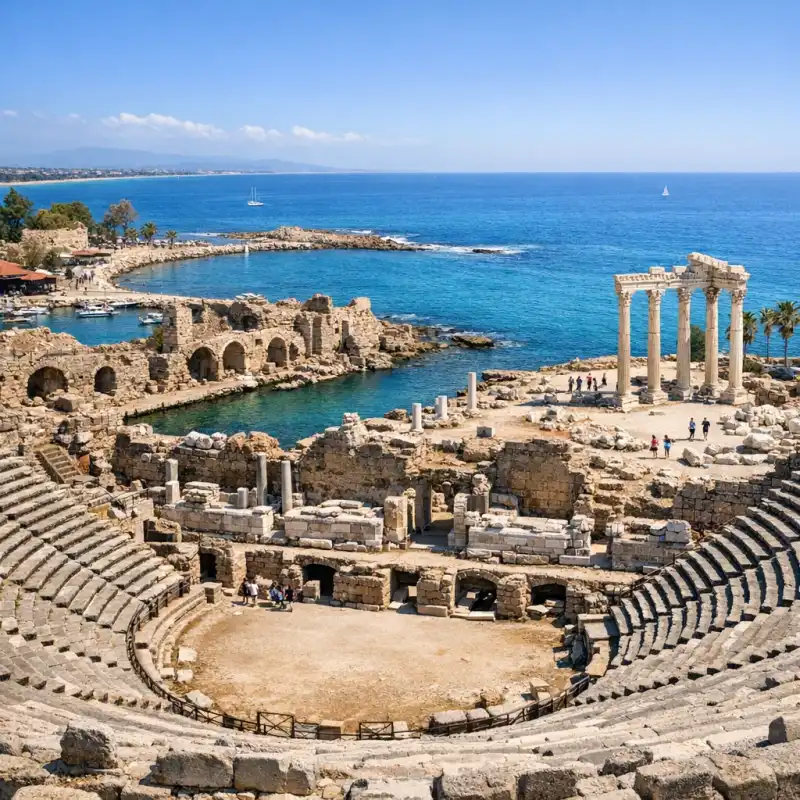
Side Turkey Travel Guide: Ancient Harbor & Theater by the Sea
Pamphylian, Greek, RomanExplore Side, an ancient Pamphylian port city with dramatic theater overlooking the Mediterranean an...
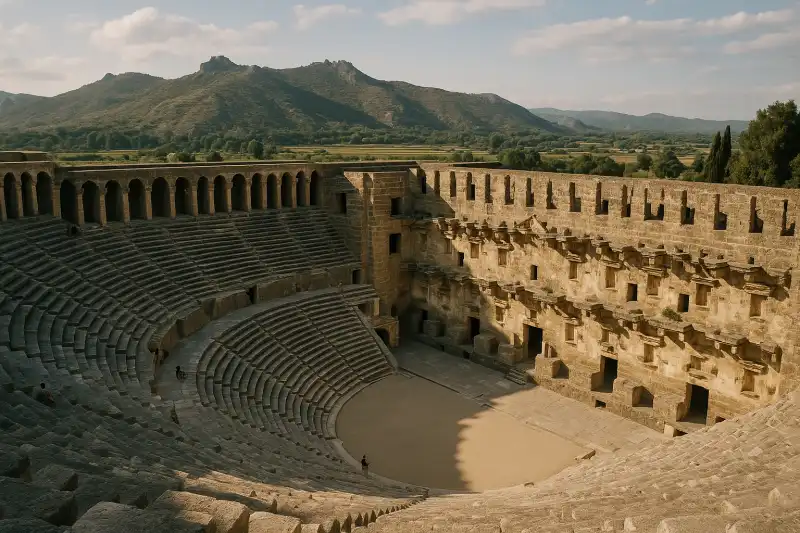
Aspendos Turkey Guide 2026: Roman Theatre & Pamphylian Aqueduct
Pamphylian-Greek-Roman-Byzantine-SeljukPlan your Aspendos visit in Turkey with practical tips on tickets, transport from Antalya, and what ...