Quick Info
At a glance
Quick Facts
- Location: Harbor peninsula near Manavgat on the southern coast
- Best for: Coastal archaeology, combining history with beach access
- When to visit: April-May, September-October (summer is crowded)
- Entry fee: Around 200 Turkish Lira
- Crowds: Moderate to high in summer; quieter in shoulder seasons
- What to see: Theater, temples of Athena and Apollo, harbor, museums
The Perfect Harbor
Side occupies a natural harbor peninsula—one of the Mediterranean’s great geographic advantages. The narrow isthmus connects the peninsula to the mainland, while the natural curve of the coast creates protected anchorage. For a trading city, this location is ideal. For a port city’s founder, it’s inevitable.
Side was founded by Greeks, probably from Cyme in Anatolia. The city prospered through trade, piracy (before Rome suppressed it), and eventually Roman incorporation. The peninsula was densely built: temples, markets, houses, warehouses—all organized around the harbor that was the city’s reason for existence.
The Theater and Coastal Drama
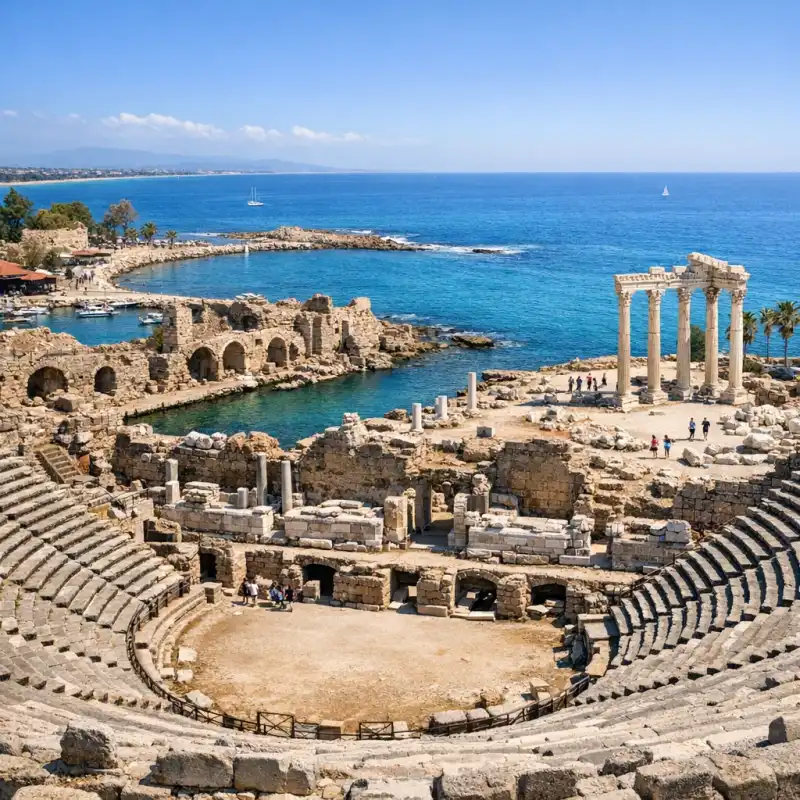
Side’s theater is one of the most beautifully positioned theaters in the Mediterranean—built at the edge of the peninsula with seating oriented toward the harbor. The theater could hold approximately 15,000—substantial for a city of this size.
The view from the theater is remarkable: the Mediterranean stretches beyond the stage, the harbor curves below, the city spreads on either side. The theater wasn’t simply an entertainment venue but a vantage point from which the city’s geography and prosperity were visible. Standing in the theater, you see what Side was about: a harbor city using architecture to celebrate its position and prosperity.
The theater was built in the 2nd century CE and underwent multiple renovations. The stage building (scaena) featured multiple tiers of columns with elaborate sculptural decoration. The infrastructure—hydraulic system, passages beneath the seating, facilities for performers—suggests sophisticated theatrical production.
Temples and Sanctuaries
The Temple of Athena stands near the harbor, its columns visible from the water. Dedicated to the goddess of wisdom and warfare, the temple announced the city’s prosperity and piety to arriving sailors. Nearby stands the Temple of Apollo, which originally housed a colossal statue visible from the harbor—a visual marker of the city’s religious identity.
These temples served both religious and economic functions. Pilgrims brought offerings. Merchants sought blessings. The temples displayed the city’s resources and artistic sophistication. Their position near the harbor meant they were among the first monuments visitors encountered arriving by sea.
Harbor Infrastructure and Trade
The harbor’s infrastructure reveal how important Side’s economic function was. Warehouses lined the waterfront. Docking facilities accommodated merchant ships. The shallow harbor beach was suitable for beaching smaller vessels and conducting commerce directly from water to shore.
The presence of warehouses indicates that Side was a distribution center—goods arrived from distant sources, were stored, then redistributed. Side wasn’t simply consuming imported goods; it was a trading hub coordinating Mediterranean commerce.
The City Street and Commercial Life
The main colonnaded street of Side shows urban organization and commercial vitality. Shops lined the street. The colonnades provided shelter for merchants and shoppers. The street layout facilitated movement while allowing merchants to display their wares to passing traffic.
The street intersects with other passages, creating a network designed to move people and goods efficiently. Smaller shops sold food, pottery, and everyday necessities. Larger establishments dealt in wine, oil, and luxury goods. The street represents the economic engine of the city.
Bath Complex and Public Life
Like other Roman cities, Side invested in elaborate thermal facilities. The bath complex was well-built, with multiple chambers and heating systems. The presence of bathhouses indicates that bathing was central to urban life—both a necessity and a social institution where citizens gathered, exercised, and conducted business.
The baths served multiple social classes. Public baths were accessible to anyone with a few coins. Wealthy citizens might have private bath facilities in their homes. The scale of public baths indicates that bathing facilities were valued as civic infrastructure.
Museums and Artifacts
Side’s museums display artifacts that illustrate the city’s history: sculpture from temples, everyday pottery, inscriptions, coins. These objects ground you in the reality of Side as a living community—not just monuments but a place where specific people made specific decisions and lived specific lives.
The museums are worth visiting to understand the archaeology beyond what the ruins alone can convey.
Visiting Side
Access: Side is near Manavgat, easily reached by bus or car. Most visitors come from beach resorts in the Antalya region.
Best time: April-May or September-October. Summers are extremely crowded; winters bring rain.
Duration: 2-3 hours for main monuments. A full day allows exploration of neighborhoods and museums.
Swimming: The beach is accessible and suitable for swimming.
Crowds: Expect significant crowds in July and August. Shoulder seasons are considerably quieter.
Guides: Local guides can explain the city’s evolution from Greek trading post to Roman port.
Museum: The Side Museum is excellent and deserves 1-2 hours.
Connecting to Other Pamphylian Cities
Side should be experienced with Perge (inland city) to understand the contrast between port and inland settlements. Together, they show how geography shaped different urban strategies within the same region.
What Side Teaches
Side demonstrates how natural geography shaped human settlement and economic development. The harbor was the city’s reason for existing. When harbor-based trade declined, the city declined. When Rome pacified the Mediterranean and suppressed piracy, trade intensified.
Side reveals the Mediterranean as an economic network—goods, people, and ideas moved constantly. Cities succeeded by positioning themselves advantageously within that network. Side’s location was advantageous, and its prosperity reflects that geographic blessing.
Visiting Side means understanding the material reality of ancient trade, the economic networks that connected distant cities, and the central role that ports played in the Mediterranean world.
Piracy and Naval Conflict
Side’s history was not always peaceful. The Eastern Mediterranean was notorious for piracy, and Pamphylian cities including Side were centers of corsair activity. Pirate ships from Side and other Pamphylian ports raided merchant vessels, coastal settlements, and even took slaves for ransom. This piracy was not occasional banditry but an organized system, with pirate cities maintaining fleets and infrastructure specifically designed to support raiding.
The pirate problem became so serious that Rome eventually sent naval expeditions to suppress it. The suppression of Mediterranean piracy in the 1st century BCE was a significant military campaign, comparable in scale to Rome’s other imperial projects. Once piracy was eliminated and Roman naval power ensured security, Mediterranean trade intensified dramatically. Side benefited from this transition—the city prospered under Roman rule when piracy was eliminated and trade became safer.
The shift from piracy to legitimate commerce transformed the economic and political character of cities like Side. Resources previously devoted to naval warfare could be redirected to commercial infrastructure. The transition created wealth, but it also meant loss of independence. Cities that had previously been military powers with their own fleets now depended on Rome for security.
Maritime Architecture and Trade Infrastructure
Side’s harbor infrastructure reveals its importance as a trading center. Warehouses lined the waterfront, designed to store goods temporarily before redistribution. Docking facilities accommodated merchant ships. The presence of multiple temples near the harbor suggests that arriving sailors made offerings of thanksgiving for safe passage—a common practice in ancient maritime cultures.
The Temple of Athena, visible from the harbor, was strategically positioned to greet arriving ships. Athena, goddess of wisdom and warfare, was a patron of cities and a protector of sailors. Her temple’s visible position on the harbor announced the city’s prosperity and piety to arriving merchants. Other temples similarly served religious and economic functions simultaneously—they were expressions of faith and statements of civic prestige.
The harbor at Side required constant maintenance. Silting threatened to clog the harbor with sand and sediment. Breakwaters and docking facilities required repair. The city’s maintenance of harbor infrastructure over centuries demonstrates the economic importance of maritime trade and the resources Side could devote to infrastructure.
Urban Organization and Social Structure
The main colonnaded street of Side organized space for commerce and civic display. Merchants could display goods in shops opening onto the street. Citizens could gather in the colonnade for conversation and commerce. The street served practical economic functions while also creating an aesthetic environment that reflected civic prestige.
The street layout reveals assumptions about how urban space should be organized. Streets intersected at right angles, creating a rational grid—the same planning principle Roman architects used elsewhere. The colonnade provided shelter from sun and rain while allowing visibility of merchants’ goods. The proportions of columns and spacing suggests conscious aesthetic planning, not accidental development.
Social hierarchy is evident in housing remains. Wealthy citizens lived in larger houses, many with courtyards and multiple rooms. Working people lived in smaller, more densely packed housing. The distribution of housing types reveals class divisions within the city. Some citizens had resources for comfort and privacy; others lived in crowded conditions. Yet all participated in shared civic space—the theater, the harbor, the marketplace—where social distinctions were visible but not absolute.
Religious Life and Ritual
The temples at Side served as centers of religious life. Pilgrims visited temples to make offerings, to seek divine guidance, to participate in festivals and processions. The presence of multiple temples suggests diverse religious practices—different deities for different purposes, different communities maintaining distinct devotions.
Inscriptions and votive offerings reveal aspects of individual religious practice. A merchant might dedicate an offering to Athena in gratitude for successful voyage. A woman might visit a shrine to seek fertility or protection in childbirth. A soldier might make an offering before military service. Religious practice was integrated into daily life, marking important transitions and seeking divine favor for human enterprises.
The theater, while primarily an entertainment venue, served religious functions as well. Festivals and dramatic competitions honored gods. Processions moved through the city, connecting temples and theaters, creating ritual circuits that linked the sacred and civic spaces. Religion and entertainment were not separate spheres but intimately connected aspects of urban life.
The Achievement of Side
What Side teaches us is that ancient cities were complex organisms—economically sophisticated, socially hierarchical, religiously vital, and politically consequential. Side was not a simple trading post but a genuine city where thousands lived their lives according to patterns of work, family, civic participation, and religious devotion. The ruins and artifacts tell stories of ordinary lives lived in extraordinary times and places.
Guided tours: worth it?
Self-guided works here, but a guide can add real value if you want the ruins explained as a living place rather than just a sequence of monuments.
Best for
- First-time visitors who want context, not just photos
- Short visits where a planned route saves time
When to go self-guided
Go independently if you prefer setting your own pace, reading as you go, and checking official hours or ticket rules directly before you arrive.
What I’d avoid
Skip paid tours that bundle unrelated stops you do not actually want. The best option should either save meaningful planning time or add historical context you would miss on your own.
Side Ancient Harbour City Full Day Tour
Useful when: you want to compare guided formats before deciding
Side Beach and Archaeology Combination
Useful when: you want to compare guided formats before deciding
Pamphylian Cities Multi-Day Tour
Useful when: you want to compare guided formats before deciding
Some tour links are affiliate links, which may earn Ancient Travel a small commission at no extra cost to you. I try to surface options that make practical sense for the site—not just anything bookable.
Nearby Ancient Sites
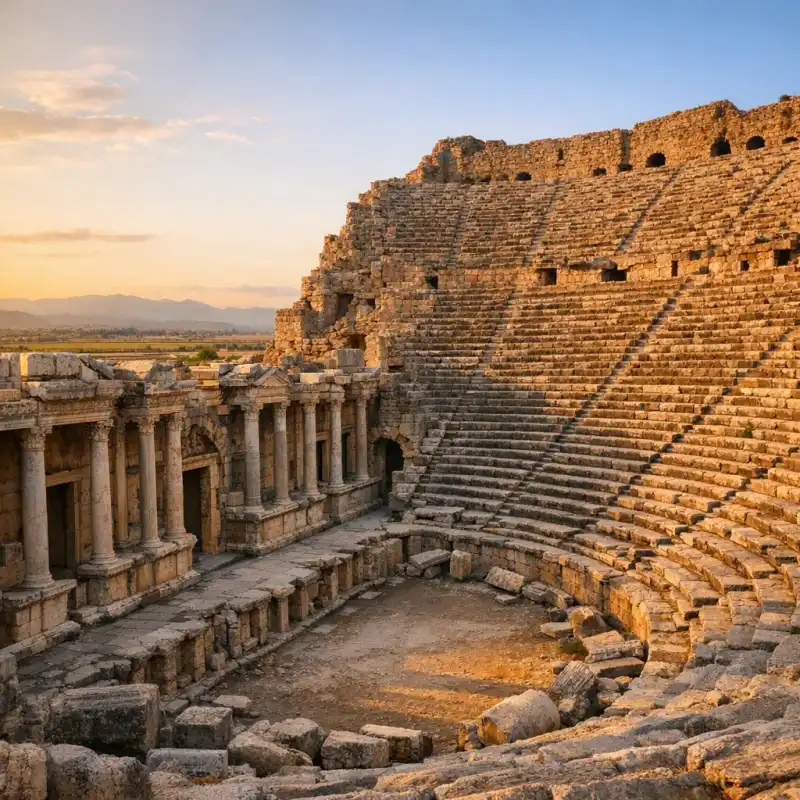
Perge Turkey Travel Guide: Roman Theater & Gateway City
Pamphylian, Greek, RomanExplore Perge, a prosperous Roman city in Pamphylia with a well-preserved theater and impressive civ...
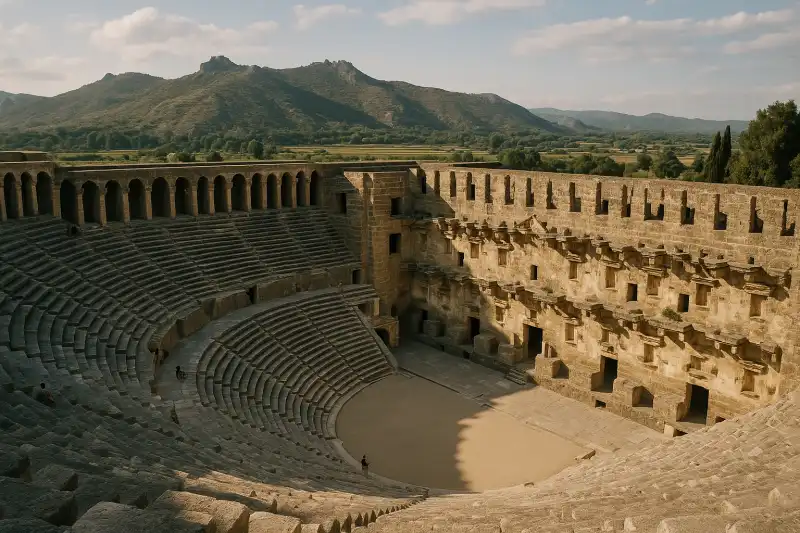
Aspendos Turkey Guide 2026: Roman Theatre & Pamphylian Aqueduct
Pamphylian-Greek-Roman-Byzantine-SeljukPlan your Aspendos visit in Turkey with practical tips on tickets, transport from Antalya, and what ...