Quick Info
Curated Experiences
2-Day Private Jordan Tour from Amman: Petra, Wadi Rum & Dead Sea
Lasting memories in Petra & Jordan
3-Day from Amman: Petra, Wadi Rum, Mt.Nebo, Dana, Red & Dead Seas
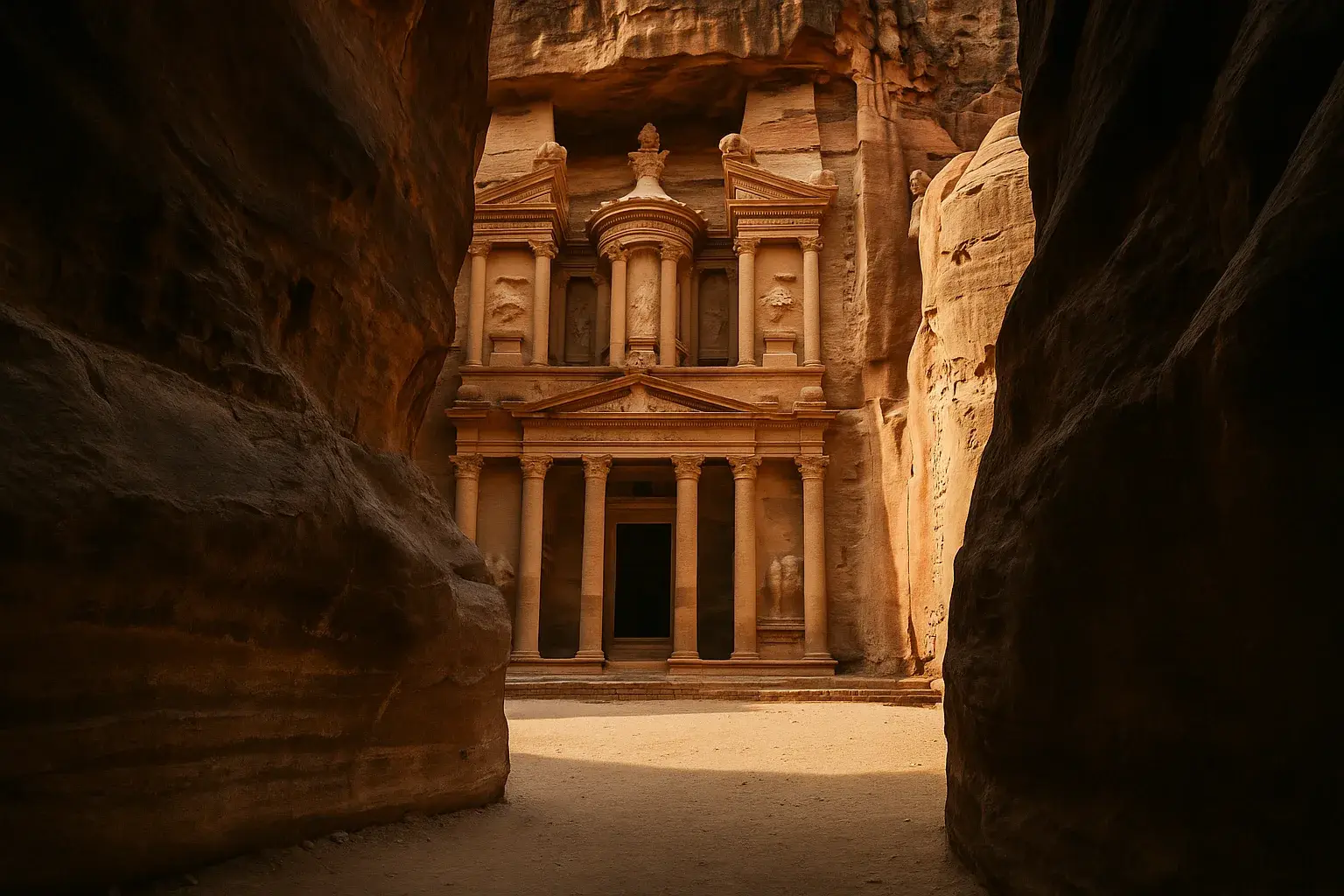
There are places that exceed their reputation, and then there is Petra—a wonder so profound that no photograph, no documentary, no written description can truly prepare you for the moment you emerge from the narrow canyon and witness the Treasury facade glowing rose-red in the morning sun.
Carved directly into sandstone cliffs by the Nabataeans over 2,000 years ago, Petra represents one of humanity’s most extraordinary architectural achievements. This ancient city, hidden in the rugged mountains of southern Jordan, was once a thriving caravan center connecting Arabia, Egypt, and the Mediterranean. Today, it stands as Jordan’s crown jewel and one of the New Seven Wonders of the World.
But Petra rewards those who come prepared. The site sprawls over 60 square kilometers. Its hikes are demanding. Its animal rides require ethical navigation. And the difference between a rushed day trip and a thoughtful two-day exploration can be the difference between checking a box and having a transformative experience.
This comprehensive guide will help you plan your Petra pilgrimage with the depth it deserves.
Stepping into the Rose Red City
The Nabataeans were desert nomads who rose to power through trade. By the 4th century BCE, they had established control over the frankincense and spice routes connecting southern Arabia to the Mediterranean world. Petra became their capital—a fortress city hidden in a valley accessible only through narrow canyons, with elaborate rock-cut tombs that announced their wealth and sophistication to all who entered.
The city’s name comes from the Greek word for “rock,” but the Nabataeans called it “Raqmu.” Its famous rose-red color derives from the iron oxide in the sandstone cliffs, which glows pink, red, and ochre in different lights, creating one of the world’s most visually striking archaeological sites.
At its peak in the 1st century CE, Petra may have housed 30,000 inhabitants. The Nabataeans created sophisticated water management systems, carving channels and cisterns throughout the mountains to capture scarce rainfall. They built theaters, temples, and monumental tombs that blended Hellenistic, Egyptian, and Mesopotamian influences into a distinctive Nabataean style.
Roman annexation in 106 CE brought Petra into the empire, and an earthquake in 363 CE damaged many structures. The city gradually declined as trade routes shifted, eventually fading from Western consciousness until Swiss explorer Johann Ludwig Burckhardt rediscovered it in 1812, disguised as an Arab merchant.
Today, Petra welcomes over a million visitors annually, yet its vast scale means that thoughtful travelers can still find moments of solitude among the ancient tombs.
Essential Logistics: Getting to Petra
From Amman to Wadi Musa (Bus, Taxi, Rental Car)
By Bus: JETT Bus operates daily services from Amman’s Abdali station to Petra (Wadi Musa). The journey takes approximately 4 hours and costs around 10 JD. Morning departures (6:30 AM) allow for a full day at Petra upon arrival.
By Rental Car: The Desert Highway (Route 15) connects Amman to Petra in about 3 hours of straightforward driving. Having a car provides flexibility to visit Little Petra, Wadi Rum, and other southern Jordan sites. Parking is available at the Petra visitor center.
By Taxi/Private Transfer: Private transfers from Amman cost approximately 100-130 JD and can be arranged through hotels or tour operators. This is the most comfortable option for groups of 2-4 travelers, offering door-to-door service and flexibility for stops along the way.
From Aqaba to Petra
Aqaba, Jordan’s Red Sea resort city, lies about 2 hours south of Petra. This route is popular with travelers combining diving or beach time with their Petra visit.
By Bus: Local minibuses run irregularly between Aqaba and Wadi Musa. JETT Bus offers more reliable service during high season.
By Taxi: Expect to pay 50-70 JD for a private taxi from Aqaba to Petra.
Day Trip Considerations: While possible, a day trip from Aqaba only allows 4-5 hours at Petra—barely enough to see the Treasury and walk partway into the main city. An overnight stay in Wadi Musa is strongly recommended.
When to Visit: Timing Your Trek
Spring (March-May): The ideal season for Petra. Temperatures are pleasant (15-25°C), wildflowers bloom in the desert hills, and the lighting is perfect for photography. March may still see occasional rain, while April and May offer optimal conditions.
Fall (September-November): Similar advantages to spring, with comfortable temperatures and fewer crowds than peak season. September can still be quite hot, while November brings cooler evenings that require light jackets.
Summer (June-August): Extreme heat makes summer visits challenging. Temperatures regularly exceed 35°C, and there’s minimal shade within the site. If visiting in summer, start at 6:00 AM when gates open, retreat to your hotel during midday heat, and return for late afternoon exploration.
Winter (December-February): Cool temperatures (5-15°C) make hiking comfortable, though rain and occasional flash floods can occur. The site sees far fewer visitors, and the winter light creates dramatic photographic opportunities. Bring warm layers for early mornings and evenings.
The Perfect 1-Day Petra Itinerary
If time constraints limit you to a single day at Petra, this itinerary captures the essential highlights while maximizing your energy for the most spectacular features.
Early Morning: Walking The Siq to the Treasury
Arrive at the visitor center as gates open (6:00 AM in summer, 7:00 AM in winter). The Siq—the narrow, winding canyon that serves as Petra’s main entrance—rewards early risers with empty paths and magical morning light filtering through the cliffs.
This 1.2-kilometer walk takes 20-30 minutes without rushing. As you wind deeper into the canyon, notice the Nabataean water channels carved into the rock walls—the engineering marvel that made life in this arid valley possible. The gorge narrows to just 3 meters wide in places, building anticipation with every step.
Then comes the moment: the Treasury (Al-Khazneh) suddenly appears through the final bend of the Siq, its elaborate facade glowing in the morning sun. This 40-meter-high Hellenistic masterpiece was actually a royal tomb, not a treasury—the nickname came from local legends about Pharaoh’s treasure hidden in the urn at the top.
Spend time here photographing the Treasury from different angles, examining the sculptural details, and simply absorbing the magnitude of this iconic monument. The plaza in front fills quickly with tour groups, so early arrival is essential for photos without crowds.
Mid-Day: The Royal Tombs and The Colonnaded Street
Continue past the Treasury into the heart of ancient Petra. The path widens into the Outer Siq, lined with tombs carved into the cliff faces. The Street of Facades features rows of simpler tombs demonstrating the range of Nabataean funerary architecture.
Climb the stairs to the Royal Tombs—four massive facades that demonstrate the height of Nabataean architectural ambition:
- The Urn Tomb: Distinctive for its open terrace and converted Byzantine church
- The Silk Tomb: Named for the swirled, fabric-like patterns in the sandstone
- The Corinthian Tomb: Incorporating classical architectural elements
- The Palace Tomb: Resembling a Roman palatial facade
Descend to the Roman Theatre, carved directly into the hillside and expanded by the Romans to seat 6,000 spectators. Beyond lies the Colonnaded Street, Petra’s main thoroughfare during Roman times, lined with the remains of shops, temples, and public buildings.
Lunch at the ** Basin Restaurant** near the Museum (the only restaurant within the site) or bring packed food to enjoy in the shade of ancient structures.
Afternoon: The Hike to the Monastery (Ad-Deir)
The Monastery (Ad-Deir) rivals the Treasury in scale and surpasses it in the effort required to reach it. This 45-60 minute hike climbs approximately 800 steps carved into the mountainside, rewarding determined travelers with Petra’s largest monument and significantly fewer crowds than the Treasury.
The path begins near the Museum at the end of the Colonnaded Street. The climb is strenuous but not technically difficult—take your time, rest at the various stalls and viewpoints along the way, and stay hydrated.
The Monastery itself is breathtaking: 47 meters wide and nearly 50 meters tall, its facade dominates a natural amphitheater with sweeping views across the desert mountains. The interior is a simple, unadorned chamber, but the exterior presence is overwhelming.
A short climb above the Monastery leads to additional viewpoints over the Jordan Valley and, on clear days, toward the Israeli-occupied West Bank.
Plan your return hike to reach the visitor center before sunset (gates close at sunset), or arrange to exit through the less-common back route if staying at a lodge in the area.
Beyond the Treasury: Top Sights You Can’t Miss
The High Place of Sacrifice: This mountain-top altar requires another steep climb (about 1 hour) from the main path but offers the best panoramic views of Petra and insight into Nabataean religious practices. The blood channels carved into the altar demonstrate that animal sacrifices were indeed performed here.
The Garden Tomb and Triclinium: A quieter alternative to the main Royal Tombs, this complex includes a large courtyard tomb and a rock-cut dining hall (triclinium) where ritual feasts honored the dead.
The Great Temple: Recent excavations have revealed this massive complex, likely a royal reception hall rather than a religious structure, with elaborate stonework and sophisticated engineering.
Little Petra (Siq al-Barid): Located about 8 kilometers north of the main site, this smaller satellite settlement offers similar carved facades in a more intimate setting. It’s free to enter and offers a peaceful complement to the main site’s grandeur.
Practical Tips for First-Time Visitors
The Jordan Pass (Crucial for Value)
The Jordan Pass is essential for most visitors, providing visa fee waiver (40 JD savings), plus entry to Petra and over 40 other Jordanian attractions. Three tiers are available:
- Jordan Wanderer (70 JD): Includes 1-day Petra entry
- Jordan Explorer (75 JD): Includes 2-day Petra entry (recommended)
- Jordan Expert (80 JD): Includes 3-day Petra entry
For stays of 3+ nights, the Jordan Pass pays for itself through visa savings alone. Purchase online before arrival and present the QR code at immigration and site entrances.
Footwear and Sun Protection
Petra demands sturdy, comfortable hiking shoes with good grip. The ancient paths are uneven, and the hikes to the Monastery and High Place of Sacrifice require sure footing. Sandals or fashion sneakers will leave you miserable.
Sun protection is critical—there’s minimal shade once you leave the Siq. Wide-brimmed hats, sunglasses, and SPF 50+ sunscreen are essential. Consider lightweight, long-sleeved shirts for additional protection.
Navigating the Animal Rides (Ethics and Scams)
Horse rides from the visitor center to the Siq entrance are technically included in your ticket price, but handlers universally expect substantial tips (5-10 JD). The ride is short and unnecessary for most visitors—consider simply walking the flat 700 meters.
Donkey and camel rides within the site are available but require careful consideration of animal welfare. If you choose to ride, select healthy-looking animals, refuse overworked animals, and negotiate prices firmly before mounting.
The Legacy of the Nabataeans
Petra is not a site to be rushed. It’s not a monument to be photographed and checked off a list. This rose-red city demands time, physical effort, and contemplative presence to reveal its secrets.
Walk the Siq in early morning solitude, when the Treasury appears like a mirage at the canyon’s end. Climb to the Monastery and sit in silence before its massive facade, imagining the carvers who spent years creating this mountainside masterpiece. Explore the Royal Tombs at sunset when the sandstone glows like embers. These moments will stay with you long after you’ve left Jordan.
The Nabataeans built Petra as a testament to their wealth, ingenuity, and spiritual connection to this dramatic landscape. Two millennia later, their creation continues to inspire wonder in all who make the journey. Come with adequate time, proper preparation, and an open heart. Petra will transform you.
The Rose City awaits. Take your first step into the Siq.
Discover More Ancient Wonders
- Jerash: The best-preserved Roman city in the Middle East
- Ephesus: The magnificent Roman city on Turkey’s Aegean coast
- Machu Picchu: The legendary Inca citadel in Peru
- Angkor Wat: The world’s largest religious monument in Cambodia
Plan your Jordan adventure with our Jordan Ancient Sites Guide and learn about budget archaeological travel.
Quick Facts
| Attribute | Details |
|---|---|
| Location | Wadi Musa, Maan, Jordan |
| Country | Jordan |
| Region | Maan |
| Civilization | Nabataean |
| Historical Period | c. 4th century BCE - 106 CE |
| Established | c. 4th century BCE |
| Coordinates | 30.3285, 35.4444 |
Frequently Asked Questions
What is the best time to visit Petra?
March-May and September-November offer the best combination of pleasant weather and manageable crowds. Summer visits are possible but require early morning starts to avoid extreme heat.
How long do I need in Petra?
A minimum of one long, strenuous day can cover the Treasury, Royal Tombs, and Monastery. Two days allows for a more relaxed pace with secondary sites like the High Place of Sacrifice. Three days enables true immersion and repeated visits at different lighting conditions.
Is the horse ride into Petra really free?
Horse transport from the visitor center to the Siq entrance is technically included in your ticket, but handlers expect tips of 5-10 JD and may become aggressive if expectations aren't met. Most visitors prefer to walk.
How hard is the hike to the Monastery in Petra?
The Monastery hike involves approximately 800 stone steps climbing steadily for 45-60 minutes. It's moderately strenuous but achievable for anyone of average fitness who takes their time. The elevation gain is about 200 meters. Bring water and rest at the viewpoints along the way.
Should I stay in Wadi Musa when visiting Petra?
Yes. Wadi Musa is the modern town adjacent to Petra with the full range of accommodation, restaurants, and services. Day trips from Amman or Aqaba shortchange your Petra experience significantly.