Quick Info
Curated Experiences
Pingyao Ancient City Walking Tour
Pingyao City Wall and Historic Sites Day Tour
Pingyao Day Trip from Taiyuan or Xi'an
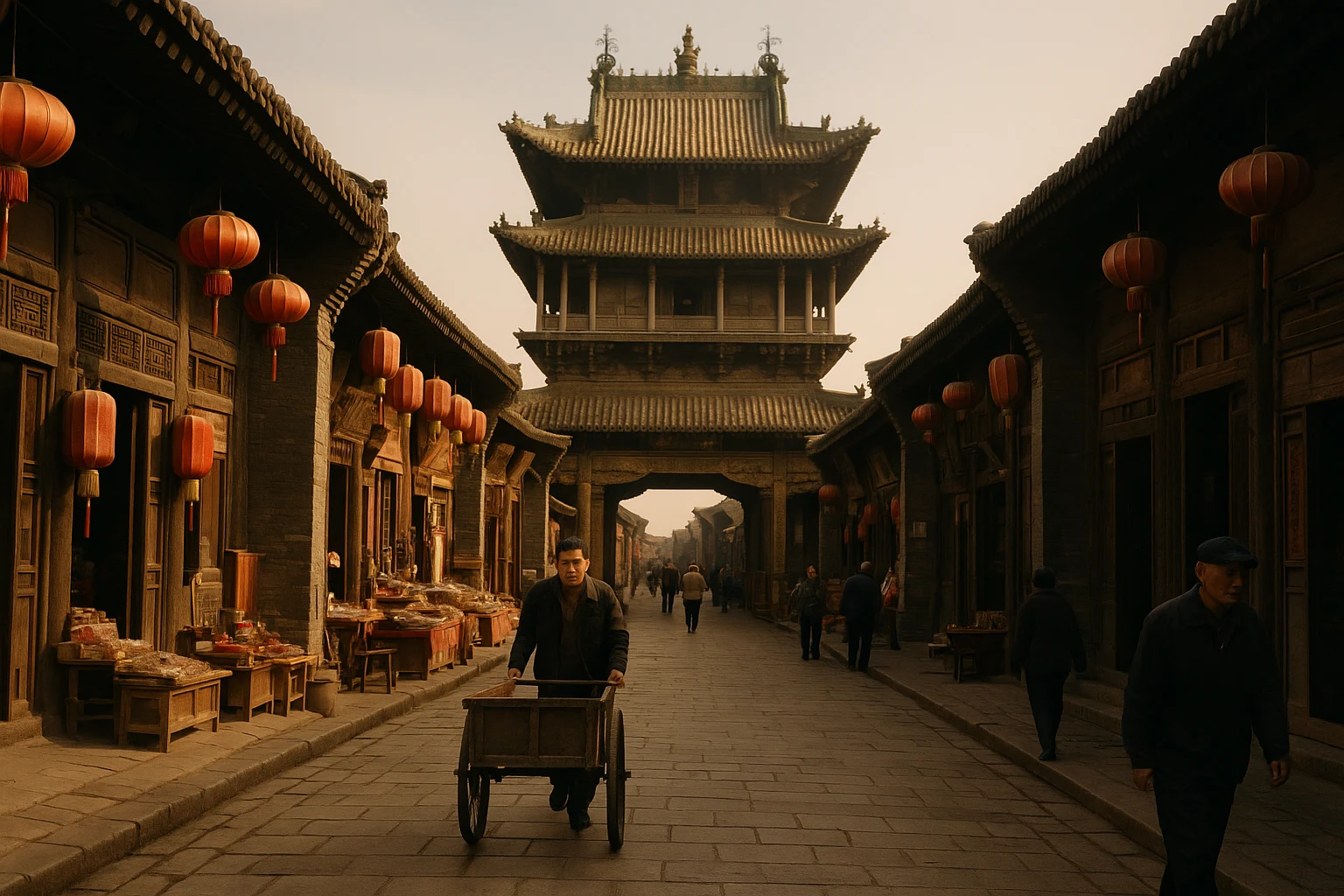
Step through one of Pingyao Ancient City’s six fortified gates and the centuries compress. Located in Shanxi Province, China, roughly midway between Beijing and Xi’an in the Fen River valley, Pingyao is among the best-preserved walled cities in East Asia — not a reconstruction or a heritage theme park, but a living urban fabric that Ming-dynasty planners laid out in 1370 and that subsequent generations modified without ever fundamentally dismantling. The city wall, six kilometers of fired brick rising nine meters above the surrounding plain, still describes the same perimeter it has held for more than 650 years. Within it, the grid of lanes, the placement of temples, and the orientation of courtyard compounds all follow the spatial logic the original builders intended.
What makes Pingyao’s survival remarkable is the combination of what happened here and what didn’t. For roughly a century beginning in the 1820s, this small county seat functioned as the financial capital of China, headquarters to a network of private draft banks — the piaohao — that effectively operated the country’s monetary system without any state mandate. The wealth that flowed through Pingyao’s merchant compounds financed some of the most elaborate domestic architecture in Chinese history. Then, when the piaohao system collapsed in the early twentieth century, the money simply stopped coming. Pingyao was too economically marginal to attract the modernization projects that demolished comparable cities across China’s interior, and too historically dense to be easily cleared. It survived by becoming irrelevant. UNESCO recognized what that irrelevance had preserved in 1997, inscribing Pingyao on the World Heritage List as one of the outstanding examples of a traditional Han Chinese city anywhere in the world.
History
Zhou Dynasty Foundations
The site has been continuously occupied since at least the Western Zhou period (1046–771 BCE), when a fortified settlement known as Gu Tao was established in the Fen River valley to serve both agricultural and military functions. The valley’s position between the Taihang Mountains to the east and the Lüliang Mountains to the west made it a natural transit corridor and a strategic point for any power seeking to control movement through Shanxi. The name “Pingyao” appears in administrative records from the Northern Wei dynasty (386–534 CE), by which time the settlement had grown into a recognized regional center with its own garrison and market. Through the Tang and Song dynasties, Pingyao functioned primarily as an agricultural market town and way-station on routes connecting the Central Plains with the communities of the northern loess plateau — significant enough to maintain but never prominent enough to attract the kind of sustained imperial investment that would have rebuilt it on a monumental scale.
The Ming Reconstruction
The city’s definitive physical form was established during the reign of the Hongwu Emperor (r. 1368–1398), founder of the Ming dynasty, who undertook a comprehensive program of fortification across northern China in the aftermath of the Yuan dynasty’s collapse. In 1370, Pingyao’s existing earthen walls were rebuilt in fired brick according to standardized Ming military specifications: six kilometers in perimeter, nine meters in height, reinforced with 72 watchtowers — a number traditionally associated with the 72 disciples of Confucius — and penetrated by six gates, each designed as a double-gate system creating an enclosed courtyard between outer and inner passages. The city’s street plan was simultaneously rationalized into a rough chessboard grid, with the county yamen positioned at the geometric and symbolic center of the city, in keeping with Ming doctrine on the proper relationship between civic authority and urban space. Four main streets radiated outward from the yamen district, establishing the axes that still organize movement through the city today.
The Piaohao Revolution
Pingyao’s transformation from market town to financial capital began in 1823, when a dye merchant named Li Daquan converted his Xiyuda Dye Shop on Mingqing Jie into the Rishengchang Exchange House — widely credited as China’s first piaohao, or draft bank. The piaohao solved a fundamental problem of commerce across a continental empire: the physical danger and expense of transporting silver bullion between distant cities. Under the Rishengchang model, a merchant in Guangzhou could deposit silver at the local branch and receive an encoded draft, redeemable at the Pingyao headquarters or at any branch in the network, for a small fee. The system was built on the reputation of the Shanxi merchant families who ran it — a form of trust-based financial infrastructure requiring no state backing, sustained instead through kinship networks and carefully maintained commercial relationships.
The model proved extraordinarily successful. Within decades, rival piaohao had established themselves on Mingqing Jie and across Shanxi, and the network expanded until it encompassed branches in every major Chinese city as well as trading posts in Japan, Russia, Mongolia, and Southeast Asia. At the peak of the system’s power in the mid-nineteenth century, the Shanxi banker network handled transactions amounting to a substantial fraction of the Qing dynasty’s total economic output. The wealth that accumulated in Pingyao was invested in exactly the kind of architecture that survives today: elaborate courtyard compounds whose deliberately plain outer walls concealed interiors decorated with carved wood screens, painted eaves, and ornate brick bas-reliefs.
Collapse and Preservation
The piaohao system unraveled with striking speed in the early twentieth century. The Boxer Rebellion of 1900 disrupted the trade networks that sustained it; the Qing dynasty’s financial crisis accelerated the withdrawal of government deposits that had subsidized many banks; and the establishment of modern Western-style banks in Shanghai and Beijing offered commercial alternatives that the piaohao’s informal structures could not match. Most of Pingyao’s major financial houses had closed by 1920. The merchant families were ruined, the city’s economy contracted to the scale of an ordinary county town, and Shanxi’s interior was largely bypassed by the industrialization and infrastructure investment that transformed China’s coastal cities during the Republican period. When the People’s Republic undertook urban renewal campaigns in the 1950s through 1970s, Pingyao’s county government lacked the budget to demolish its old districts and rebuild in the contemporary style. The Ming walls stood not because of foresight but because tearing them down was expensive and the money was needed elsewhere. Architectural surveys conducted in the 1980s revealed what this prolonged neglect had preserved, and the UNESCO nomination followed.
Key Features
The City Wall
The wall is the most immediately impressive monument in Pingyao and the one most visitors make their first priority. At ground level, approaching a gate tower, its scale is easy to underestimate — the brick surface is weathered and organic rather than imposing, and the gate tunnels are dim and low-ceilinged. The revelation comes on the rampart walk. The wall-top path is wide enough for four people abreast, surfaced with the same fired bricks that have been repaired and replaced piecemeal across six centuries, and it offers a sustained view of the city’s roofscape on one side and the open Fen River farmland on the other. The 72 watchtowers are not evenly distributed but cluster at corners and gate approaches where defensive crossfire was most critical. The southern rampart, closest to the main entrance and best restored, carries the heaviest visitor traffic; the northern sections are quieter, the brickwork more irregular, and the views across the plain more open and contemplative.
Rishengchang Exchange House
The building where China’s banking system was invented occupies a mid-sized courtyard compound on Mingqing Jie and functions today as a well-organized museum. Rooms have been restored to their late-Qing operational condition: wooden counting desks where clerks calculated exchange rates, strongroom vaults with multiple lock mechanisms requiring keys held by different officials simultaneously, and the back offices where senior managers maintained the coded ledger entries that made the draft system resistant to forgery. The museum contextualizes how radical the piaohao innovation was — a private financial network operating across a territory larger than Western Europe, sustained entirely by reputation and kinship obligation rather than government guarantee or legal framework. The building itself repays attention independent of the financial history: the compound’s progressive sequence of courtyards, from the semi-public entrance lane to the intimate inner residential quarters, illustrates the spatial grammar of Shanxi merchant architecture at its most characteristic.
The County Yamen
The yamen — functioning simultaneously as courthouse, administrative headquarters, prison, and magistrate’s residence — occupies the city’s central block, exactly where Ming urban planning doctrine prescribed. The compound has been preserved and partially restored, with the main judgment hall still displaying the magistrate’s bench, the ceremonial instruments of authority, and the implements of punishment arranged in the outer courtyard as a deterrent to potential offenders. The contrast with the merchant compounds around it is instructive: the yamen is larger than most private residences, but it is less elaborately decorated, its carved woodwork less intricate and its painted surfaces less vivid. The merchants who funded Pingyao’s architectural legacy were careful never to make that inversion too obvious — the plain outer walls of the great merchant houses were a conventional show of modesty — but inside the compounds the decorative investment tells a more honest story about where actual economic power resided.
Shuanglin Temple
Located about six kilometers southwest of the city walls, Shuanglin Temple (Twin Forest Temple) dates to the Northern Wei period and houses what is frequently described as the finest collection of polychrome clay sculptures in China. More than 2,000 figures survive across ten halls, ranging from palm-sized votive pieces to monumental seated Buddhas several meters in height. The figures retain substantial original pigment, giving them a presence and expressiveness that stone carvings rarely achieve: arhats with exaggerated individual physiognomies, bodhisattvas draped in painted clay that mimics real textile folds, warrior guardians frozen mid-stride with weapons raised. The temple receives far fewer visitors than the walled city despite the quality of its contents, and the combination of the two sites in a single itinerary adds a dimension of religious and artistic history that the merchant-focused city center cannot supply on its own.
Getting There
Pingyao is best reached by high-speed rail. The dedicated Pingyao Ancient City Station, on the Taiyuan–Xi’an high-speed line, receives trains from multiple directions throughout the day. From Beijing West Station, journey times run approximately 2.5 to 3 hours, with second-class fares around ¥150–¥230 depending on service and booking timing. From Xi’an North Station, the journey takes roughly 2 to 2.5 hours with similar fares. The high-speed station is approximately 8 km from the old city walls; taxis to the main gate cost ¥20–¥30 and take around fifteen minutes. Ride-hailing apps work here for travelers with a Chinese mobile payment method set up in advance.
From Taiyuan, Shanxi’s provincial capital, connections are most frequent. High-speed trains cover the 80 km distance in under thirty minutes for around ¥35–¥60. Regular intercity buses from Taiyuan’s long-distance bus terminal also serve Pingyao for approximately ¥25 and take around 1.5 hours, typically dropping passengers at a stop closer to the city walls than the high-speed station.
Within the walled city, the most practical transport is walking. The enclosed area measures roughly two kilometers north to south and 1.5 kilometers east to west, and all major sites are within comfortable walking distance. Electric golf-cart taxis operate on Mingqing Jie and a few other main streets for short hops of ¥5–¥10, but the narrower residential lanes are inaccessible to any wheeled vehicle, making foot travel the only way to reach many courtyard compounds and smaller museums.
When to Visit
Spring and autumn are the optimal seasons for Pingyao. April and May bring mild temperatures between 15°C and 22°C, manageable visitor numbers compared to summer peaks, and the clear dry air common to Shanxi before the humid months arrive. The first week of May — China’s national Labor Day holiday — is an exception, when domestic tourism surges significantly; the weeks immediately before or after are preferable. October is many experienced visitors’ first choice: harvest light, cooling evenings, and the tail end of the tourist season before winter closes in, with the courtyard guesthouse owners still fully operational and priced for the shoulder period.
Summer (June through August) is Pingyao’s peak domestic tourism period, and the combination of Shanxi heat — regularly 30–35°C in July and August — with narrow lanes that trap warmth effectively makes midday uncomfortable. The main street and popular museums become congested by mid-morning; arriving at opening time, typically 8:00 AM, is the only reliable strategy for experiencing major sites at a manageable pace.
Winter is cold but rewards visitors who can manage it. January temperatures average around -5°C and brief snowfall is possible, but the population of short-stay domestic tourists drops dramatically. Courtyard guesthouses remain open at reduced rates, Mingqing Jie can be walked at the deliberate pace the carved shopfronts deserve, and the wall-top rampart in pale winter light is one of Pingyao’s less-photographed but most atmospheric experiences. The Lantern Festival in late January or February brings a brief revival of crowds for the illuminated evening displays, one of Shanxi’s most celebrated seasonal events.
Combining Pingyao with Other Sites
Pingyao’s position in central Shanxi makes it a natural anchor for a broader northern China itinerary. Taiyuan, under thirty minutes away by high-speed rail, provides access to the Jinci Temple complex, one of China’s oldest surviving wood-structure ceremonial halls. The UNESCO-listed Yungang Grottoes near Datong — among the three great Buddhist cave temple sites in China alongside Dunhuang and the Longmen Grottoes — can be reached in under two hours by high-speed train from Taiyuan.
For travelers connecting Pingyao into a longer national circuit, the most natural routes run south to Xi’an (approximately two hours by high-speed rail), gateway to the Terracotta Warriors and Tang-dynasty sites, or north to Beijing and the imperial architecture of the Forbidden City and the various Great Wall sections within day-trip range. Longmen Grottoes near Luoyang, another major Buddhist cave sculpture site, lies approximately four hours south and can be combined with a Pingyao trip without significant backtracking for travelers moving between Xi’an and Beijing.
Why Pingyao Matters
Pingyao Ancient City occupies an unusual position in Chinese heritage: it is simultaneously a monument to financial innovation and a documentary record of everyday urban life. The great heritage sites of China’s dynastic capitals — the Forbidden City, the imperial tombs, the palace complexes — preserve the built expression of state power at its most concentrated and intentional. Pingyao preserves something rarer: the spatial record of how a prosperous mercantile society organized itself, what it built when it had resources and relative autonomy, and what it valued enough to decorate with the finest craftsmanship its wealth could afford.
The piaohao system that made Pingyao rich was dismantled by history within a single lifetime, and the city’s subsequent decline preserved more of that record than continued prosperity might have. Walking the lanes between the grey courtyard walls, it is possible to read in the surviving architecture an entire economic and social order — the modesty required at the street face, the elaboration permissible behind closed gates, the temples sustained by merchant patronage, the government compound that held official authority while merchants held actual power. Few cities anywhere offer that degree of legibility between physical space and social structure. That is the underlying reason for Pingyao’s UNESCO inscription, and the reason a visit rewards more than a single rushed afternoon.
Quick Facts
| UNESCO Inscription | 1997 |
| Location | Pingyao County, Shanxi Province, China |
| Coordinates | 37.19° N, 112.18° E |
| Founded | Zhou dynasty origins; walls rebuilt 1370 (Ming dynasty) |
| Wall Perimeter | 6 km |
| Wall Height | 9 m |
| Key Monument | Rishengchang Exchange House (China’s first draft bank, est. 1823) |
| Combined Ticket | ¥130–¥150 (covers 22 historic sites) |
| Nearest Airport | Taiyuan Wusu International Airport (~90 km) |
| High-Speed Rail | Beijing ~2.5–3 hrs · Xi’an ~2–2.5 hrs · Taiyuan ~30 min |
| Best Months | April–May, September–October |
Frequently Asked Questions
Is Pingyao Ancient City a UNESCO World Heritage Site?
Yes. Pingyao was inscribed on the UNESCO World Heritage List in 1997 as an outstanding example of a Han Chinese city that retains the urban fabric and architecture of the Ming and Qing dynasties almost entirely intact.
How much does it cost to enter Pingyao Ancient City?
The city itself is free to walk through, but a combined ticket (around ¥130–¥150) grants access to the 22 main historic sites including the city wall, Rishengchang Exchange House, the county yamen, and the Confucian Temple.
How do I get to Pingyao from Beijing?
The fastest option is a high-speed train from Beijing West Station to Pingyao Ancient City Station, taking approximately 2.5–3 hours. Trains run multiple times daily with second-class fares around ¥150–¥230 depending on service.
How long should I spend in Pingyao?
Most visitors spend one to two nights. One full day covers the wall circuit and key museums; a second day allows for the Shuanglin Temple sculpture collection and a slower exploration of the courtyard lanes and smaller family compounds.
What is Pingyao most famous for historically?
Pingyao was the birthplace of China's first draft banking system. The Rishengchang Exchange House, founded in 1823, pioneered the piaohao network that handled an estimated half of all Qing dynasty financial transactions at its peak.
When is the best time to visit Pingyao?
Spring (April–May) and autumn (September–October) offer mild weather and manageable crowds. Avoid the first week of May and first week of October, which are national holidays when domestic tourism surges significantly.
Nearby Ancient Sites
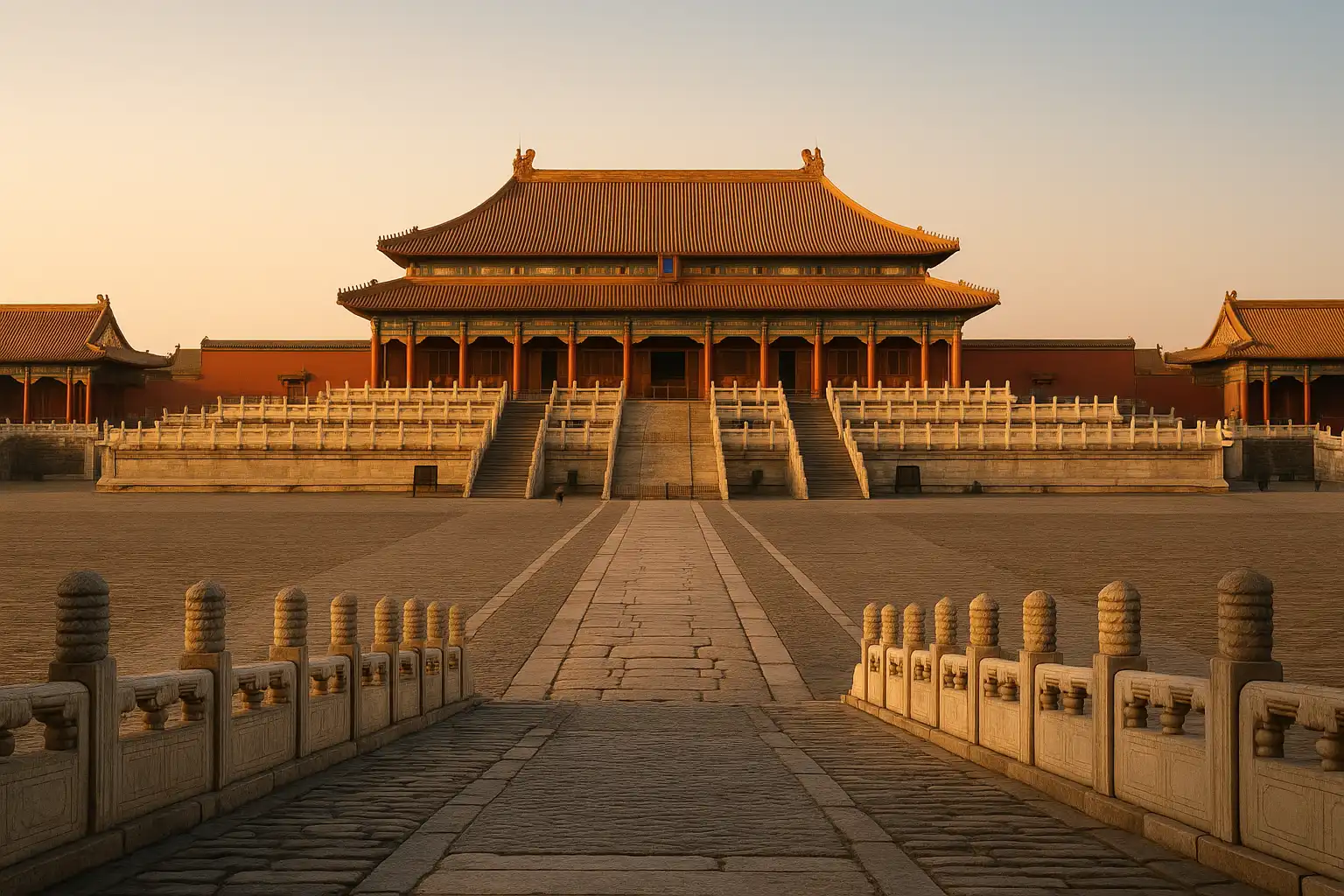
Forbidden City China Travel Guide 2026: Imperial Palace of Beijing
Chinese ImperialExplore the Forbidden City, China's imperial palace for 500 years. Discover the Hall of Supreme Harm...
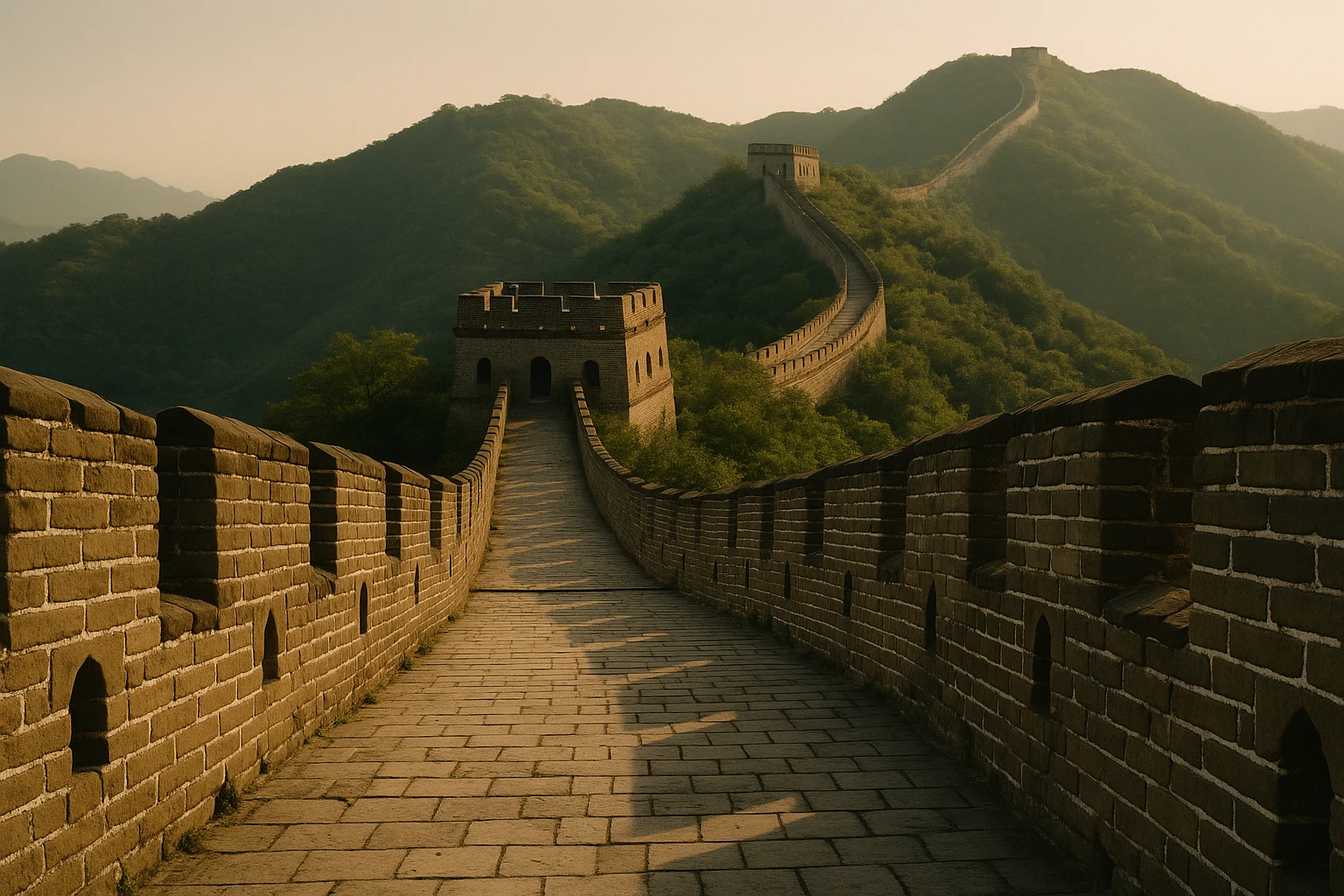
Great Wall of China (Mutianyu)
Explore Mutianyu — the Great Wall's most dramatic restored section, with 22 Ming-era watchtowers, mo...
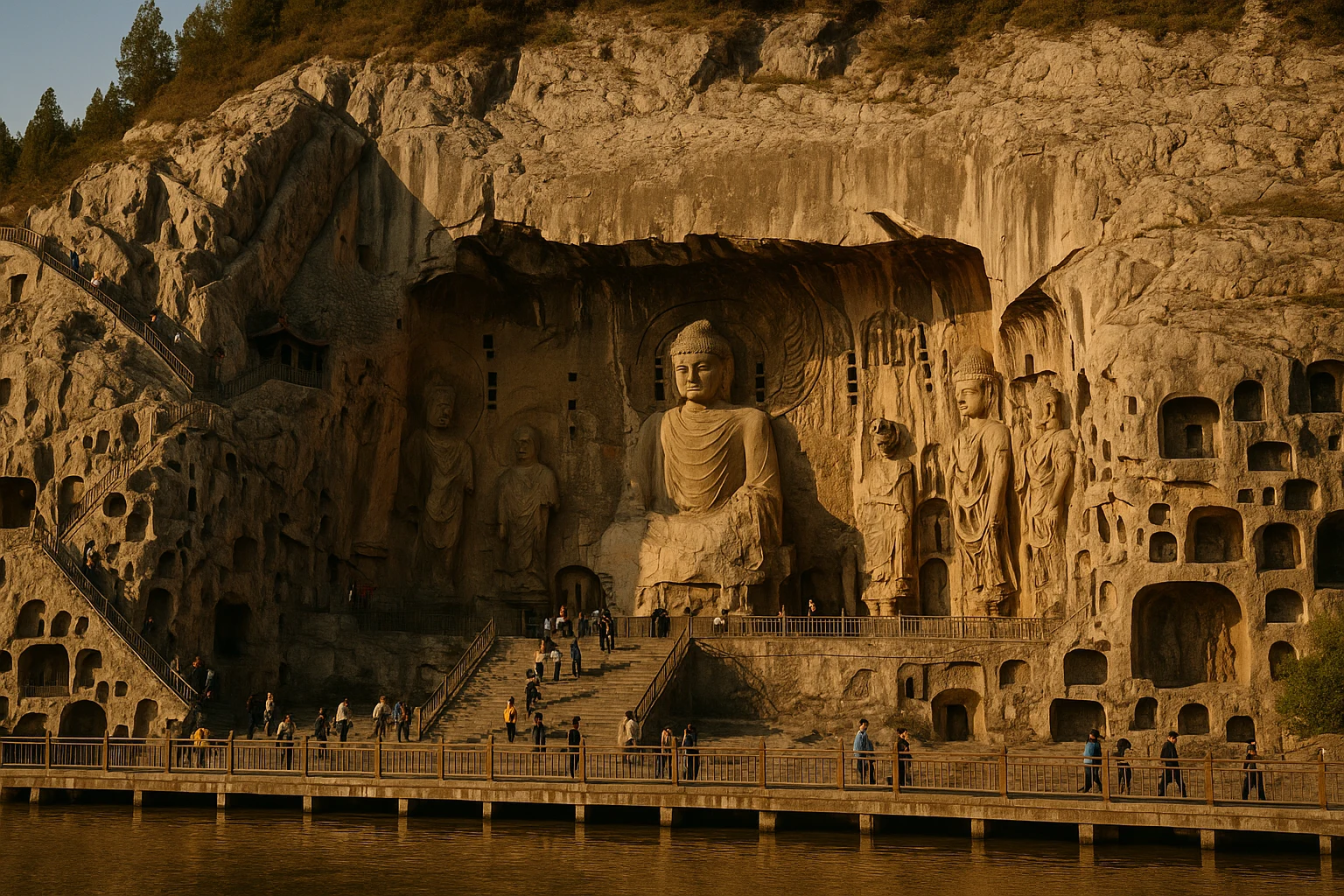
Longmen Grottoes
Chinese BuddhistA UNESCO World Heritage Site near Luoyang, China, featuring over 100,000 Buddhist carvings and statu...
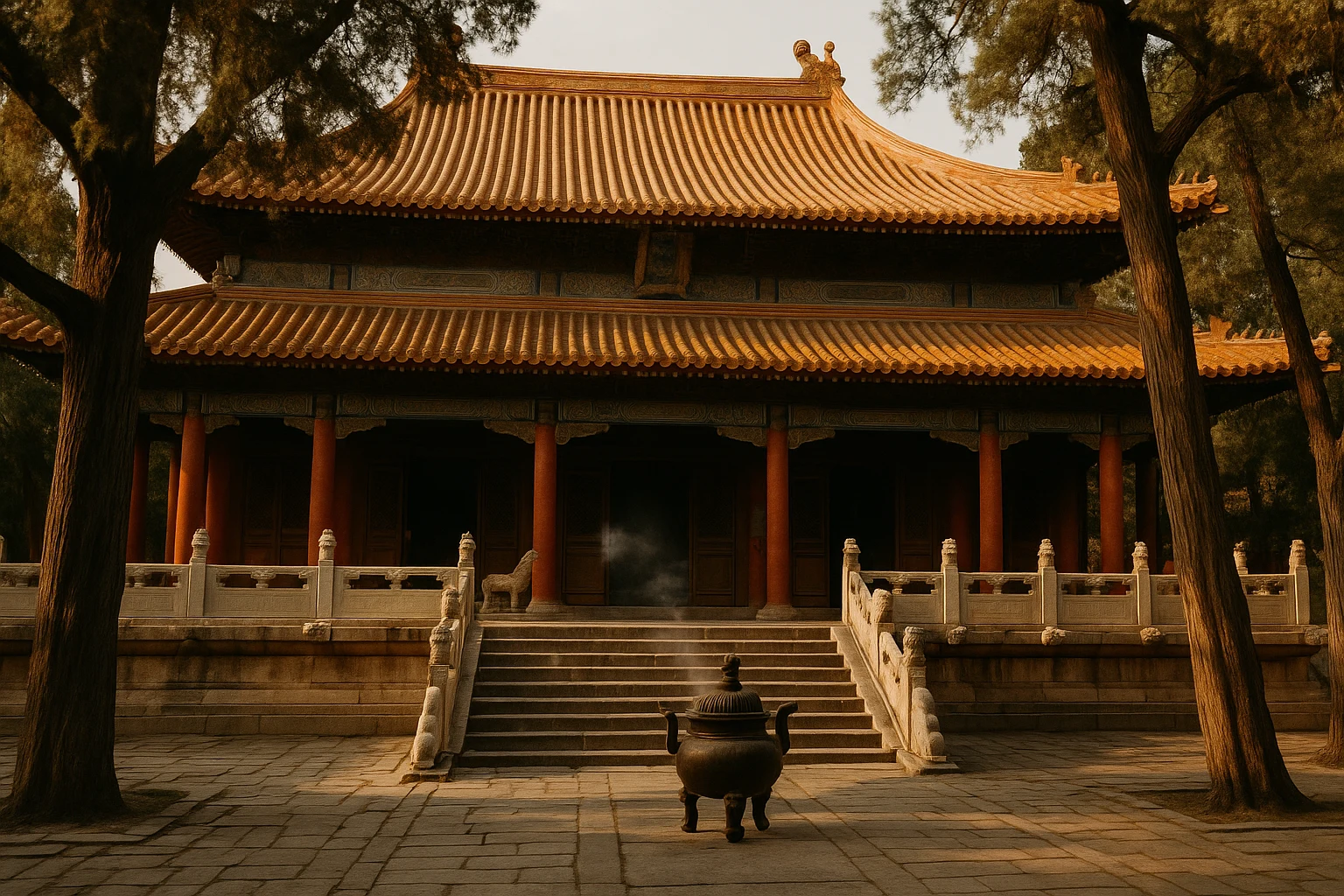
Confucius Temple (Qufu)
The ancient Temple of Confucius in Qufu, Shandong, is China's largest Confucian temple complex, a UN...