Quick Info
Curated Experiences
Explore Angkor Temples Full-Day Tour
Sunrise Tour of Angkor Wat and Surrounding Temples
Private Tour: Angkor Wat, Prasat Kravan, and Banteay Kdei
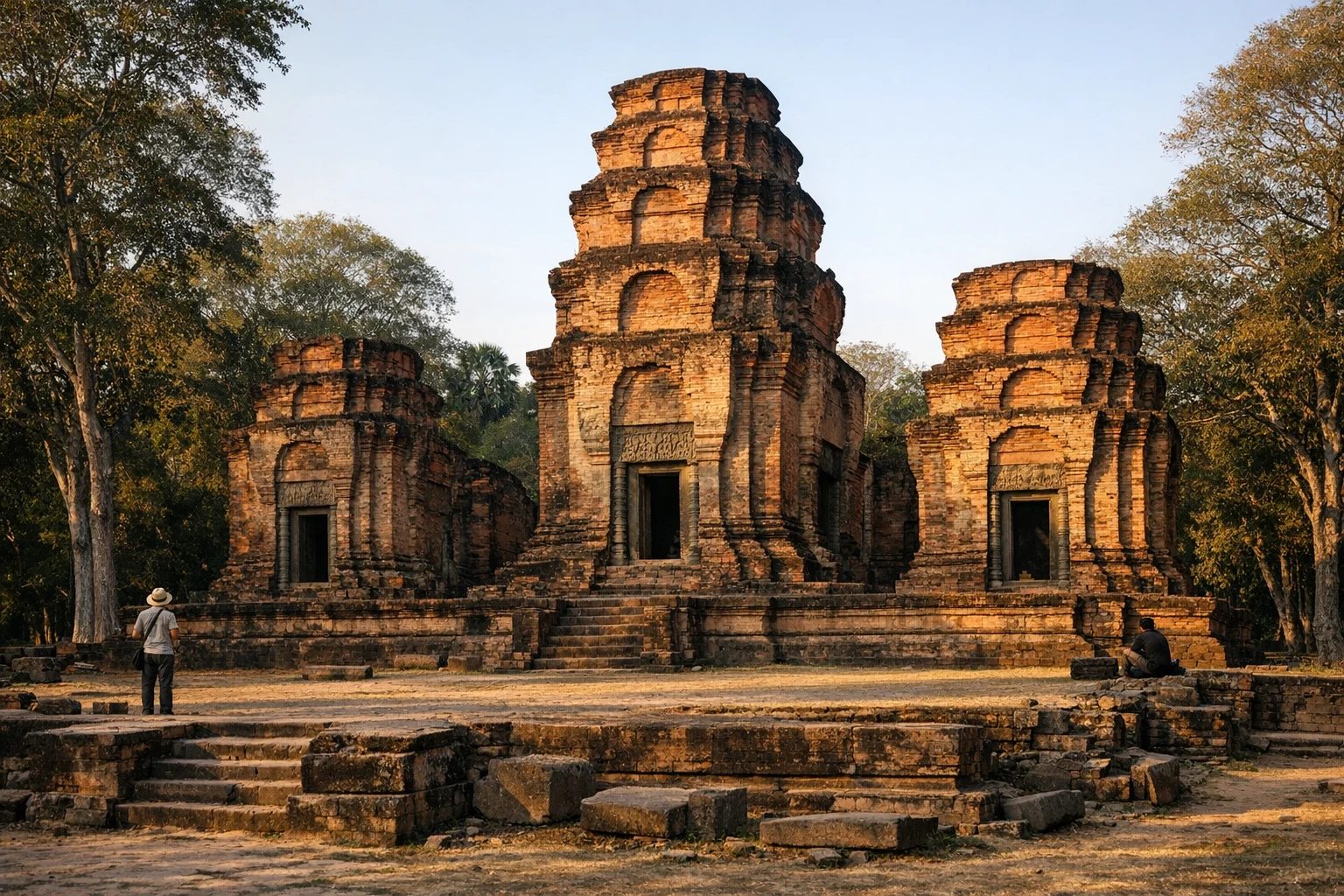
Amid the enigmatic jungles and ancient ceremonial spaces of Cambodia, Prasat Kravan stands as a testament to the devotion, artistry, and architectural innovation of the Khmer Empire. Located a short distance southeast of the majestic Angkor Wat in Siem Reap Province, this remarkable Hindu temple captures both the grandeur and the subtlety of early 10th-century Southeast Asian sacred architecture. Unlike the colossal faces of Bayon or the narrative stone reliefs of Angkor Wat, Prasat Kravan enchants with the simplicity of its layout and the warmth of its reddish-orange brick towers. As you arrive at Prasat Kravan’s shaded clearing—often less crowded than Angkor’s headline sites—you’re greeted by five aligned towers facing east, their slender forms rising from a low base, each wearing centuries of soft moss and timeworn, hand-carved bricks.
Prasat Kravan’s unique character lies not just in its construction, but in the finely adorned interiors that have, remarkably, survived for over a millennium. The sanctuaries, dedicated primarily to Vishnu, display some of the most accomplished Hindu bas-reliefs in the entire Angkor region, sculpted directly into the brickwork. Here, legends and deities emerge as if from the bricks themselves—graceful yet monumental. This harmonious intersection of spiritual narrative and architectural form provides an intimate encounter with the religious life and artistic sensibility of early Khmer civilization. Whether you are a seasoned temple hunter, an admirer of ancient art, or a traveler seeking a meditative pause amid Angkor’s sweep, Prasat Kravan offers a distinctive and rewarding Angkorian experience, set quietly amid Cambodia’s leafy heartland.
History
Prasat Kravan may not boast the scale or fame of Angkor Wat, but its history is intimately linked to the rise of the Khmer Empire and to key innovations in Southeast Asian temple building. The temple was constructed in 921 CE during the reign of King Harshavarman I and completed under his successor, Ishanavarman II. This early period of Angkorian history was characterized by political consolidation following decades of turmoil, as successive kings endeavored to stabilize a growing and artistically ambitious empire centered on the region of modern-day Siem Reap.
Early Khmer Creativity: 10th Century Foundations
The early 10th century marked a pivotal chapter in Khmer architectural development. Prasat Kravan was commissioned not by a ruler but likely by a noble named Mahidharavarman, reflecting the tradition whereby both king and elite patrons could erect temples to gain religious merit. At this time, brick construction was nearing its apex in Cambodian temple architecture, before being gradually supplanted by sandstone in later centuries. Each of the five towers was built using closely fitted bricks, bonded with a vine-derived mortar unique to Southeast Asia. The orientation of the temple—towers aligned east-west and fronted by a moat—testifies to the sophisticated symbolic planning that underpinned Khmer sacred sites.
Religious Function and Dedication
Prasat Kravan was dedicated to Vishnu, the preserver god of Hinduism, as documented in its inscriptions and through the surviving iconography sculpted within its shrines. The temple’s name, meaning “Cardamom Sanctuary,” perhaps refers to the aromatic shrubs that once surrounded its grounds or to ceremonial uses of cardamom in temple rituals. The five towers were designed as cellas (sanctuaries), with the central tower housing the principal image or linga. Although most original statuary has vanished, the walls themselves became the temple’s primary vehicle for religious expression, hosting intricately incised images—a daring innovation for the era.
Rediscovery and Restoration
When European explorers, including the legendary Henri Mouhot, reintroduced Angkor to the wider world in the 1860s, Prasat Kravan was among the many sites documented as overgrown but structurally intact. In the 1930s, the École Française d’Extrême-Orient (EFEO) undertook restoration using anastylosis—a process involving the careful dismantling, cataloguing, and reassembly of original architectural elements. This meticulous effort not only preserved Prasat Kravan’s evocative brick towers and reliefs but also set a precedent for conservation techniques used throughout the Angkor Archaeological Park.
Throughout the late 20th and early 21st centuries, Prasat Kravan remained largely protected from the ravages of war and unchecked tourism that threatened other Angkorian sites. Ongoing stewardship by Cambodian authorities and international conservation groups helps ensure that the temple’s enigmatic beauty remains captivating for generations to come.
Key Features
Prasat Kravan’s enduring appeal flows from several aspects, combining structural grace, tactile artistry, and a unique atmosphere rarely matched by its more monumental neighbors. The temple complex is dominated by its five brick towers, set on a single east-facing platform. Each tower once contained a statue or sacred object, but today, the true marvel lies within the surviving reliefs and the overall harmony of the site’s proportions.
Unlike many Angkorian temples, which relied on sandstone for intricate details, Prasat Kravan’s central and northernmost towers exhibit a rare technique: bas-reliefs sculpted directly into the brick itself. On entering the central sanctuary, visitors are greeted by a masterful portrayal of Vishnu standing atop a pedestal, flanked by attendants—a scene imbued with both tranquility and gravitas. The reliefs here capture visual narratives drawn from Hindu cosmology: Vishnu on Garuda, the heroic episode of Krishna lifting Mt. Govardhana, and female divinities holding lotuses. What distinguishes these images is their clarity, dynamism, and the deep red hue of the fired brick, which remains luminous in the Cambodian sunlight.
The eastern orientation of the temple means that sunrise often bathes the towers and their reliefs in a golden glow, intensifying the sculptural forms and the warmth of the stone. The temple’s overall plan is simple yet rigorously symmetrical, echoing the cosmic order at the heart of Hindu temple design. The towers rise from a modest platform with a slight stairway, making the ensemble feel approachable and intimate—an effect accented by the tranquil setting beneath tall dipterocarp trees, with the now-dry moat faintly tracing the original boundary of sacred space.
A walk through Prasat Kravan is also a tactile experience. Many bricks retain the thumbprints of ancient workers, visible in the patterns pressed into the mortar. Weathering and moss add color and texture, but the reliefs in the central tower are particularly well preserved, with sharp lines still visible after a millennium. This visual immediacy distinguishes Prasat Kravan from much grander but more heavily worn neighbors, offering a rare, direct connection to Khmer artistic genius.
With fewer crowds than Angkor’s marquee sites, visitors can savor this closeness: the interplay of brick, light, and legend; the silent devotion pervading these shrines since their creation; and the sense of discovery that comes from standing alone amid history.
Getting There
Prasat Kravan sits just to the southeast of Angkor Wat, making it one of the easiest Angkor temples to include on any circuit of the Archaeological Park. It lies around 5 kilometers (about 3 miles) from the city center of Siem Reap—a journey of roughly 15 minutes by car, tuk-tuk, or bicycle.
The most popular way to reach Prasat Kravan is by hiring a tuk-tuk from Siem Reap. Tuk-tuk fares are negotiable but typically range from $15 to $20 USD for a half-day tour that covers several Angkor temples, including Prasat Kravan, Angkor Wat, and Banteay Kdei. Tuk-tuks can be arranged through hotels or directly with drivers around the city; for the best experience, consider booking a full-day temple circuit for $20 to $30 USD, allowing for greater flexibility in your itinerary. Many visitors also opt for organized guided tours, which include hotel pickup, a knowledgeable local guide, and comfortable transportation for approximately $30 to $60 USD per person, depending on group size and inclusivity (e.g., lunch or sunrise start).
Adventurous travelers can rent a bicycle for about $3 to $5 USD per day and ride the smoothly paved roads leading into the park. The route to Prasat Kravan is flat and shaded, making for a pleasant cycle. Motorbike rentals are also available, typically at $10 to $15 USD per day, though Cambodian law restricts their use by foreigners inside the Angkor Archaeological Park unless accompanied by a guide.
Regardless of your mode of transport, all visitors must stop at the Angkor ticket office located en route to the park entrance. The single-day pass costs $37 USD, and multi-day options are available for those wishing to delve deeper into Angkor’s wonders. Ample parking is available near Prasat Kravan’s approach road, and the temple itself is within a few steps’ easy walk from the roadside.
When to Visit
Cambodia’s climate is defined by its tropical monsoon patterns, with noticeably wet and dry seasons that can significantly influence your experience at Prasat Kravan. The ideal period for visiting is the cool, dry season between November and February, when daytime temperatures hover between 20–28°C (68–82°F), humidity is low, and clear skies cast vibrant light on the temples’ brick reliefs. Early mornings (7:30–9:00 a.m.) or late afternoons (after 3:30 p.m.) are especially magical at Prasat Kravan, with gentle sunlight highlighting the temple’s sculptural details while the grounds remain tranquil.
From March through May, temperatures soar above 35°C (95°F), and humidity climbs, making midday explorations challenging. However, this is also the period when the temples are at their least crowded, and the later afternoon brings dramatic, angled light for exceptional photography. If you visit in these hotter months, wear light, breathable clothing, bring a sunhat and ample water, and plan interludes beneath the shade of surrounding trees.
The wet season (June to October) transforms Cambodia’s landscape with lush greenery and frequent afternoon showers. Rain is usually intense but short-lived, cooling the air and intensifying the colors of temple bricks and forest canopy. Flooded moats and roads can create atmospheric reflections, but bring waterproof footwear and a poncho, as sudden downpours are common. Despite the rain, this season offers fewer tourists and a quiet, almost mystical mood at Prasat Kravan, especially in the early morning right after a night’s storm.
In all seasons, visiting earlier or later in the day ensures the softest light and maximal privacy, letting you appreciate the fine reliefs and serene setting at Prasat Kravan. The temple is open daily from 7:30 a.m. to 5:30 p.m., in line with Angkor Archaeological Park’s operating hours.
Quick Facts
| Fact | Detail |
|---|---|
| Location | Angkor Archaeological Park, Siem Reap Province, Cambodia |
| Coordinates | 13.4191° N, 103.9013° E |
| Civilization | Khmer Empire |
| Established | 921 CE |
| Primary Deity | Vishnu |
| Architectural Style | Khmer, early Angkorian; brick with sculpted reliefs |
| Number of Towers | 5 |
| Materials | Fired brick with vine mortar, some sandstone |
| Admission | Included in Angkor Park entrance (from $37 USD per person) |
| Opening Hours | 7:30 a.m. – 5:30 p.m. daily |
| Accessibility | Flat access with minimal steps; generally easier than most Angkor temples |
| Suggested Visit Duration | 20–30 minutes |
| Best Time to Visit | November–February (cool, dry season); early morning or late afternoon recommended |
| Nearby Major Sites | Angkor Wat, Banteay Kdei, Angkor Thom |
| Guided Tours | Available as part of Angkor area temple circuits, or by arrangement in Siem Reap |
Frequently Asked Questions
Is Prasat Kravan included in the Angkor admission pass?
Yes, entry to Prasat Kravan is covered by the standard Angkor Archaeological Park ticket.
Are there guides available at Prasat Kravan?
While guides are not stationed directly at Prasat Kravan, you may hire licensed guides at Angkor Wat or organize a guided tour that includes this temple.
How much time should I plan to spend at Prasat Kravan?
Visitors typically spend 20–30 minutes exploring Prasat Kravan, making it ideal as part of a broader Angkor temple itinerary.
Can I visit Prasat Kravan early in the morning?
Yes, the temple opens at 7:30 a.m. along with the rest of the Angkor complex, making it a peaceful early stop.
Is Prasat Kravan accessible for travelers with limited mobility?
The temple’s platform is low and entry steps are minimal, making it more accessible than larger Angkor temples, but assistance may still be needed.
Nearby Ancient Sites
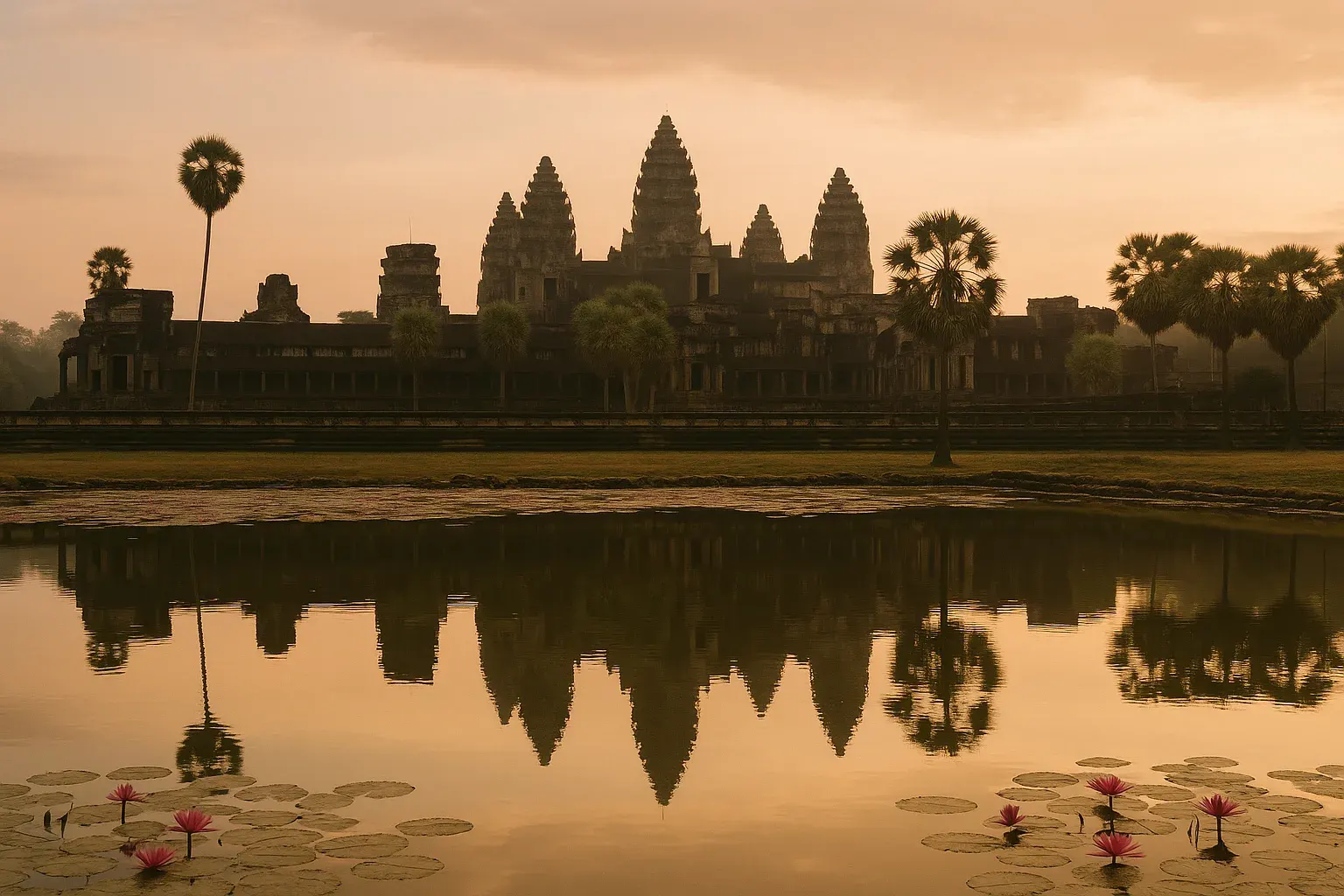
Angkor Wat Travel Guide 2026: Everything You Need to Know
KhmerAngkor Wat, the world's largest religious monument, spans over 400 acres in the heart of Cambodia. T...
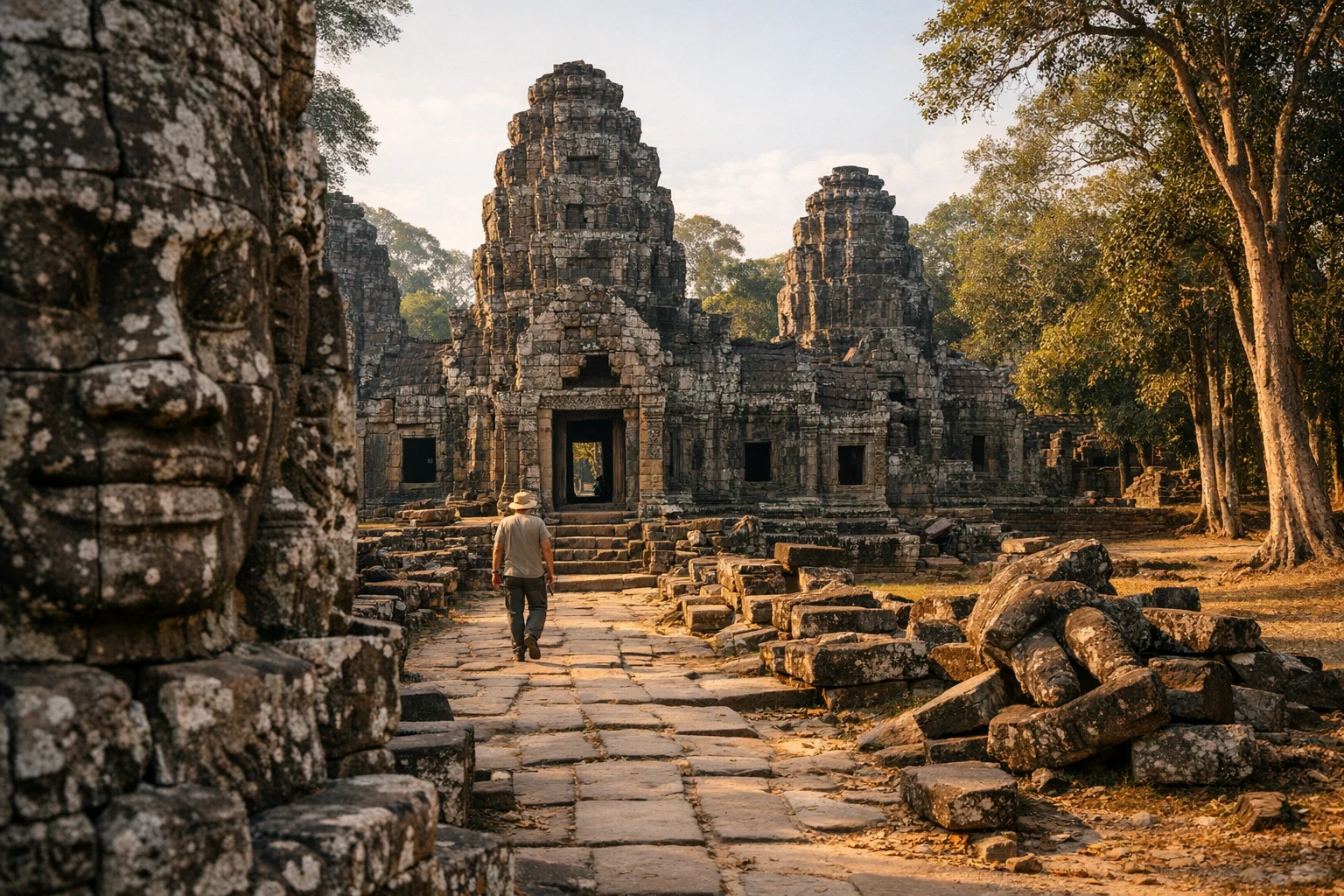
Banteay Kdei
KhmerExplore Cambodia’s Banteay Kdei, a atmospheric Angkor temple-monastery of quiet courtyards, worn car...
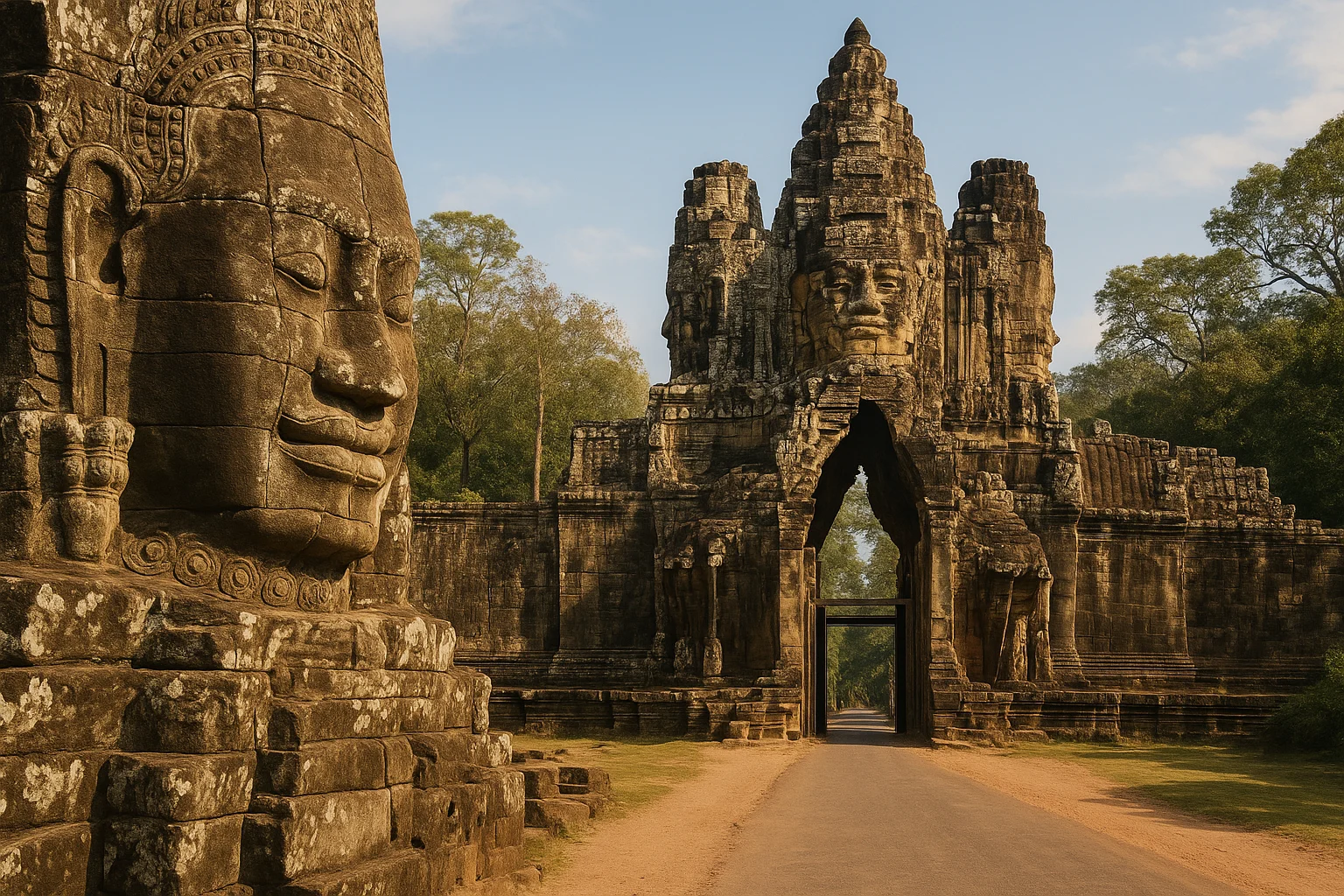
Angkor Thom Travel Guide 2026: Bayon Faces, Gates, and the Khmer Royal City
KhmerAngkor Thom was the last great capital of the Khmer Empire. This guide covers how to visit Bayon, th...