Quick Info
Curated Experiences
Pre Rup Sunrise and Angkor Temples Guided Tour
Private Angkor Grand Circuit Tour Including Pre Rup
Full Day Angkor Temples Tour with Pre Rup and Banteay Srei
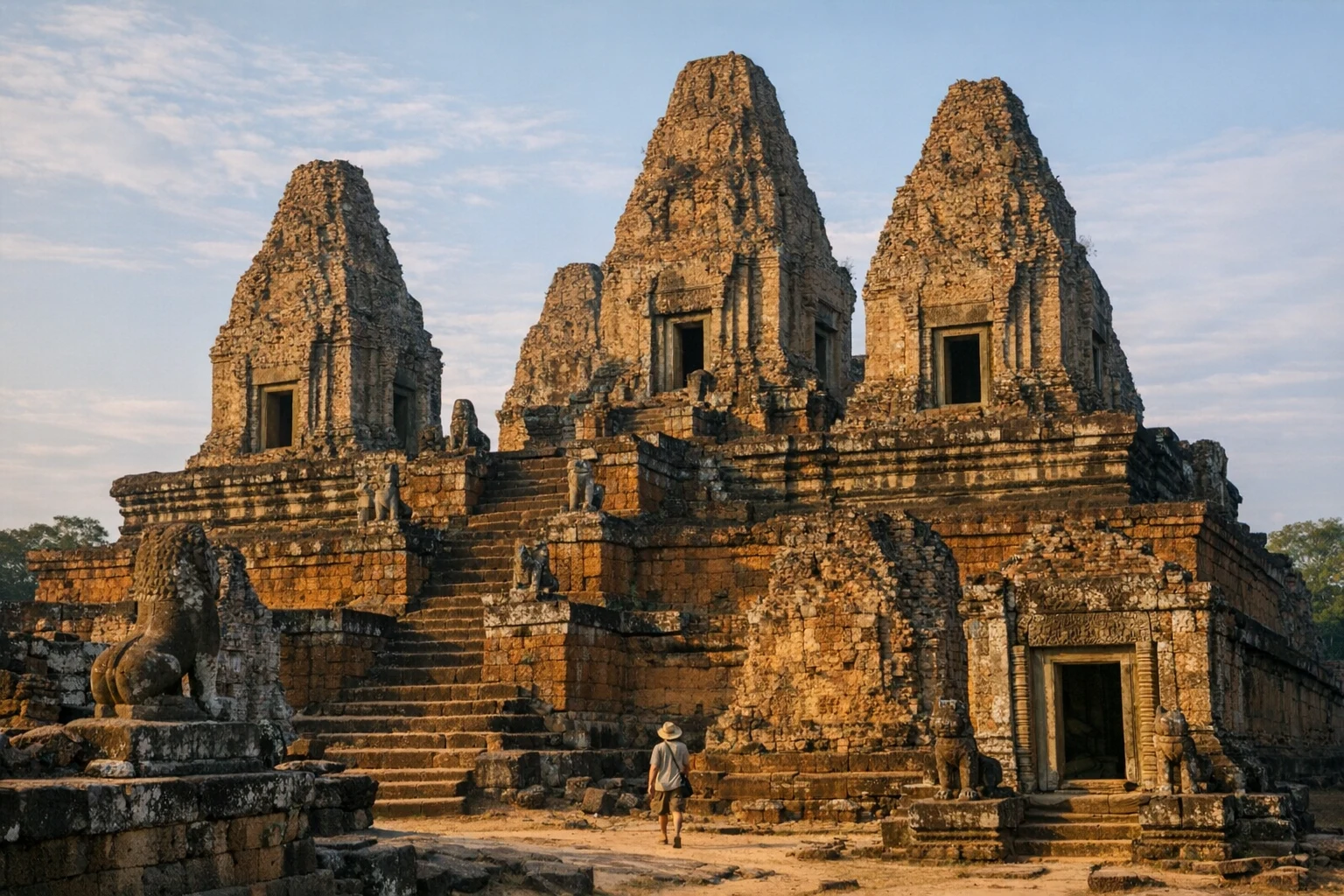
Pre Rup in Cambodia rises from the Angkor plain with a stern, geometric confidence that feels different from the softer, root-entangled romance of temples like Ta Prohm or the crowded grandeur of Angkor Wat. Built of brick, laterite, and sandstone, the temple stands on a stepped pyramid platform whose sharp terraces and steep staircases still give it the physical authority of a true temple-mountain. In the changing light of Siem Reap’s skies, especially toward late afternoon, Pre Rup can appear almost to shift color, from dusty rose and iron red to deeper ochre and shadowed brown. That visual intensity is one reason it remains so popular. Another is clarity. Even visitors with only a basic interest in Khmer architecture often find Pre Rup unusually easy to read. Its form announces itself immediately: this is a temple designed to elevate, to tier sacred space upward, and to make worship inseparable from ascent.
What makes Pre Rup so satisfying is that it offers both grandeur and legibility. Some Angkor monuments impress by sheer scale or decorative complexity, but Pre Rup communicates through structure. You climb through its enclosures and terraces step by step, and the logic of the monument becomes physical. The central sanctuary rises above subsidiary towers, the upper levels create widening views over the surrounding plain, and the whole composition evokes the cosmic mountain symbolism at the heart of Khmer temple design. Though it is often treated as a sunset stop on standard Angkor itineraries, Pre Rup deserves far more than a quick photographic pause. It is one of the most important 10th-century temples in the Angkor area, a key monument of the Rajendravarman period, and one of the clearest places to understand how Khmer kings turned architecture into sacred topography.
History
The Return to Angkor and the Age of Rajendravarman II
Pre Rup belongs to a decisive moment in Angkorian history. It was built in 961 CE during the reign of King Rajendravarman II, a ruler associated with the restoration and reassertion of royal power in the Angkor region after periods of political complexity and shifting centers. The 10th century was an age of energetic temple building, state consolidation, and architectural experimentation in the Khmer Empire. Rajendravarman II’s reign is especially important because it helped re-establish Angkor as a primary royal center and produced monuments that shaped the architectural direction of the empire.
Pre Rup served as the king’s state temple, which means it was not simply a local shrine or isolated devotional site. It stood near the heart of royal ideology, tying kingship to Hindu cosmology and sacred geography. State temples in the Khmer world were places where the ruler’s legitimacy, religious dedication, and relationship to the divine order became visible in monumental form. Pre Rup therefore has to be understood politically as well as religiously. It was architecture as a statement of restored royal authority.
The Temple-Mountain and Shaivite Kingship
Like other major Khmer state temples, Pre Rup was conceived according to the temple-mountain model, in which a tiered structure symbolized Mount Meru, the cosmic center in Hindu cosmology. This symbolism was not abstract decoration. It structured the entire architectural experience. The temple’s ascending terraces, central sanctuary, and ordered arrangement of subsidiary towers made climbing itself a sacred act of movement toward a higher center. Pre Rup was dedicated primarily to Shiva, and inscriptions connect the monument closely to royal religious devotion.
The name by which the temple is known today may be later, and its popular association with funerary rites or cremation remains uncertain. Some scholars have suggested that the name, often interpreted in connection with “turning the body,” may reflect local memory or later ritual associations rather than definitive original function. What is certain is that Pre Rup was first and foremost a major Hindu state temple. Its sacred purpose lay in the structuring of space, ritual, and kingship, not merely in any later folklore attached to its name.
Architectural Innovation in the 10th Century
Pre Rup is historically important because it belongs to a stage in Khmer architecture when temple-mountain design was becoming increasingly sophisticated. It followed earlier developments while also anticipating the grander maturity of later Angkorian building. The combination of brick towers, laterite platforms, sandstone carvings, and strict geometric planning reflects a period of technical confidence and visual ambition. Compared with some later temples, Pre Rup can feel more austere, but that austerity is part of its strength. It reveals the structural logic of Khmer sacred architecture with unusual directness.
Its relationship to the nearby East Baray and the temple of East Mebon is also significant. These monuments formed part of a broader royal and hydraulic landscape in which temples, reservoirs, and state power were closely linked. Angkor was never just a city of isolated shrines. It was a managed sacred environment tied to water control, agriculture, and dynastic prestige. Pre Rup belongs fully to that world.
Decline, Rediscovery, and Modern Preservation
As with the wider Angkor region, Pre Rup passed through phases of abandonment, partial collapse, vegetation growth, and reuse after the political center of the Khmer world shifted and declined. Stone weathered, wooden structural elements disappeared, and the monument entered the long afterlife common to Angkorian sites: no longer the center of state ritual, yet never entirely lost to memory or landscape. Its elevated mass and durable materials ensured that it remained a visible landmark even as its original courtly world faded.
Modern archaeological and conservation efforts helped stabilize and interpret the temple, making it accessible as part of the Angkor Archaeological Park. Today, Pre Rup is recognized both as an important historic monument and as one of the most visually rewarding temples for understanding Khmer temple-mountain architecture. Though often overshadowed in popular discourse by Angkor Wat, Bayon, and Ta Prohm, it remains one of the clearest windows into the 10th-century development of Angkorian state religion and royal building ambition.
Key Features
The defining feature of Pre Rup is its overall form as a temple-mountain. The monument rises through successive terraces in a composition that feels almost mathematically disciplined. Broad lower levels of laterite and sandstone support upper platforms crowned by towers, and the whole structure invites ascent while never letting you forget the effort involved. This is one of the reasons Pre Rup makes such a strong impression. Unlike some temples whose complexity can feel sprawling, Pre Rup’s design is concentrated and legible. You can see the sacred hierarchy in its architecture almost immediately.
The upper sanctuary group is especially striking. Five towers arranged in a quincunx pattern on the uppermost platform create the symbolic heart of the temple. Their brick construction, once likely finished with stucco and additional detailing, gives them a distinctive texture and color compared with the more sandstone-heavy monuments elsewhere in Angkor. Even weathered, these towers retain a severe beauty. Their height above the plain, combined with the temple’s raised platform, produces views that reinforce the sense of ritual elevation. Standing on the upper terraces, you understand why temple-mountain architecture mattered so much to Khmer kingship: the monument organizes both devotion and perspective.
The steep staircases are another memorable feature, not just physically but symbolically. Like many Khmer temples, Pre Rup uses steep ascents to emphasize the difficulty and sanctity of approaching the divine center. Climbing them gives the site an embodied intensity. This is not architecture passively observed. It is architecture negotiated by the body. The steepness also sharpens the contrast between levels, making each terrace feel like a threshold rather than just another platform.
Pre Rup’s materials contribute strongly to its atmosphere. The warm-toned brick and laterite respond beautifully to changing light, especially at sunrise and sunset. This is why the temple became famous as a photography spot, but the effect is not superficial. The color of the materials deepens the temple’s austere geometric character, giving it a warmth and solidity different from the pale sandstone elegance of other Angkor monuments. In softer light, the towers seem to glow from within the earth of the plain itself.
The layout of the lower enclosures and subsidiary structures also rewards attention. Gopuras, libraries, courtyards, and surrounding platforms help reveal how the temple operated as more than a summit shrine. The processional and ritual logic of the monument unfolds through these spaces, and the surviving carvings, though less densely spectacular than at some later temples, give context to the temple’s religious and political ambitions. Pre Rup is a site where structure carries meaning as powerfully as ornament.
Getting There
Pre Rup is located within the Angkor Archaeological Park near Siem Reap and is commonly visited as part of the “grand circuit” route, though it can easily be added to custom itineraries. From central Siem Reap, the drive typically takes around 25 to 40 minutes depending on traffic and the order of your temple visits. Most travelers arrive by tuk-tuk, private car, taxi, bicycle, or organized tour. Tuk-tuk hire for a day within Angkor often falls in the range of about USD 15 to 30, while air-conditioned cars and guided private tours cost more.
Because Pre Rup lies near East Mebon and not far from Banteay Kdei and Srah Srang, it combines well with a broader temple day that balances major icons with quieter architectural stops. Most guided Angkor itineraries include it, especially if sunset is part of the plan, but if you are arranging your own route it is worth specifying because some drivers may prioritize more famous sites unless asked otherwise.
An Angkor pass is required, as with other temples in the archaeological park. The site is relatively straightforward to access once you arrive, but the climb to the upper terraces can be physically demanding for some visitors, especially in heat. Bring water, wear shoes with good grip, and be careful on steep steps. Pre Rup is easiest logistically when treated as part of a broader Angkor exploration rather than a standalone single stop.
When to Visit
The best time to visit Pre Rup is during Cambodia’s cooler dry season, generally from November to February, when climbing the terraces and upper levels is much more comfortable. The temple is famous for late afternoon light and sunset views, and that reputation is deserved. The warm tones of the brick and laterite become especially beautiful as the sun drops and the surrounding landscape softens. This is the most atmospheric time to experience the temple’s color and silhouette.
That said, early morning can be even better for travelers who care more about quiet, cooler temperatures, and the freedom to explore the upper levels without crowds gathering for sunset. In the morning, Pre Rup often feels calmer and more architectural, less dominated by photo-driven movement. For visitors who want to study the layout and carvings, this can be the superior time.
The rainy season brings greener surroundings and dramatic skies, which can suit the temple well visually, but the steps may be more slippery and the humidity more demanding. Midday is generally the least ideal time in any season because the stone radiates heat and the exposed terraces offer limited shelter. However you time your visit, Pre Rup is a temple that rewards lingering a little longer than the average circuit schedule allows. The more the light changes, the more the monument reveals itself.
| Quick Facts | Details |
|---|---|
| Location | Angkor Archaeological Park, Siem Reap Province, Cambodia |
| Best Known For | 10th-century temple-mountain with brick towers and dramatic sunset light |
| Likely Builder | Rajendravarman II |
| Date | 961 CE |
| Cultural Tradition | Khmer Hindu state temple, especially Shaivite |
| Architectural Type | Temple-mountain |
| Recommended Visit Length | 45 minutes to 1.5 hours |
| Best Time to Visit | Early morning or late afternoon |
| Best Base | Siem Reap |
| Practical Tip | Climb carefully on the steep upper stairs and stay long enough to appreciate how the temple’s color changes with the light |
Frequently Asked Questions
What is Pre Rup best known for?
Pre Rup is best known for its dramatic brick-and-laterite temple-mountain form, steep stairways, and the warm glow its stone takes on in late afternoon light.
Who built Pre Rup?
Pre Rup was built by King Rajendravarman II in the 10th century during the Khmer Empire and dedicated as a state temple.
Was Pre Rup a cremation site?
Its name has encouraged that interpretation, but scholars are not certain; it was primarily a major Hindu state temple, and any funerary association remains debated.
How much time should you spend at Pre Rup?
Most visitors should allow 45 minutes to 1.5 hours, especially if they want to climb the upper terraces and appreciate the temple’s layout and views.
Is Pre Rup worth visiting if you are already seeing Angkor Wat?
Yes. Pre Rup offers a very different experience, with a more compact but highly legible temple-mountain design and a strong sense of 10th-century Khmer architecture.
When is the best time to visit Pre Rup?
Late afternoon is especially popular for the light, but early morning is cooler and quieter if you want to explore the terraces more comfortably.
Nearby Ancient Sites
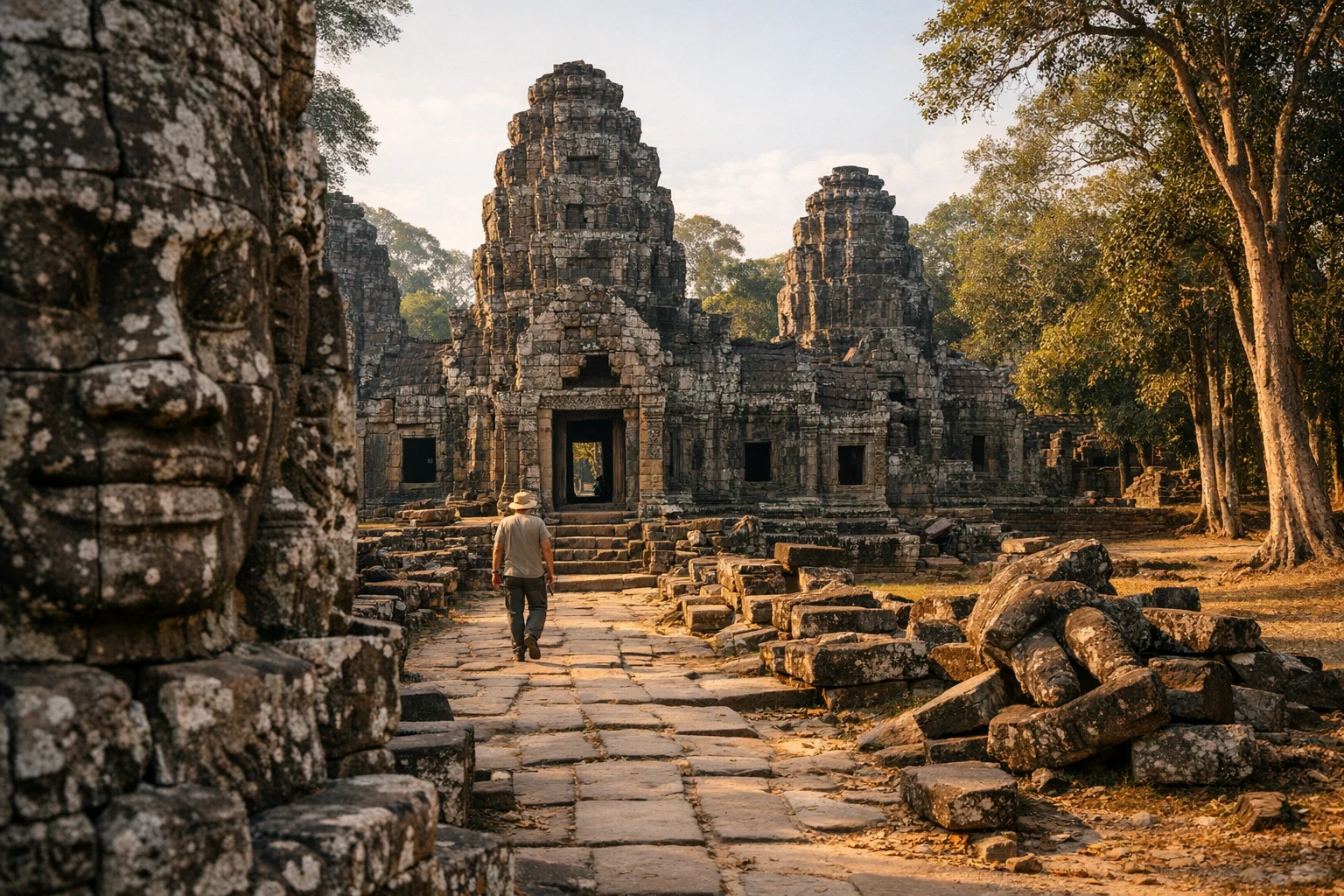
Banteay Kdei
KhmerExplore Cambodia’s Banteay Kdei, a atmospheric Angkor temple-monastery of quiet courtyards, worn car...
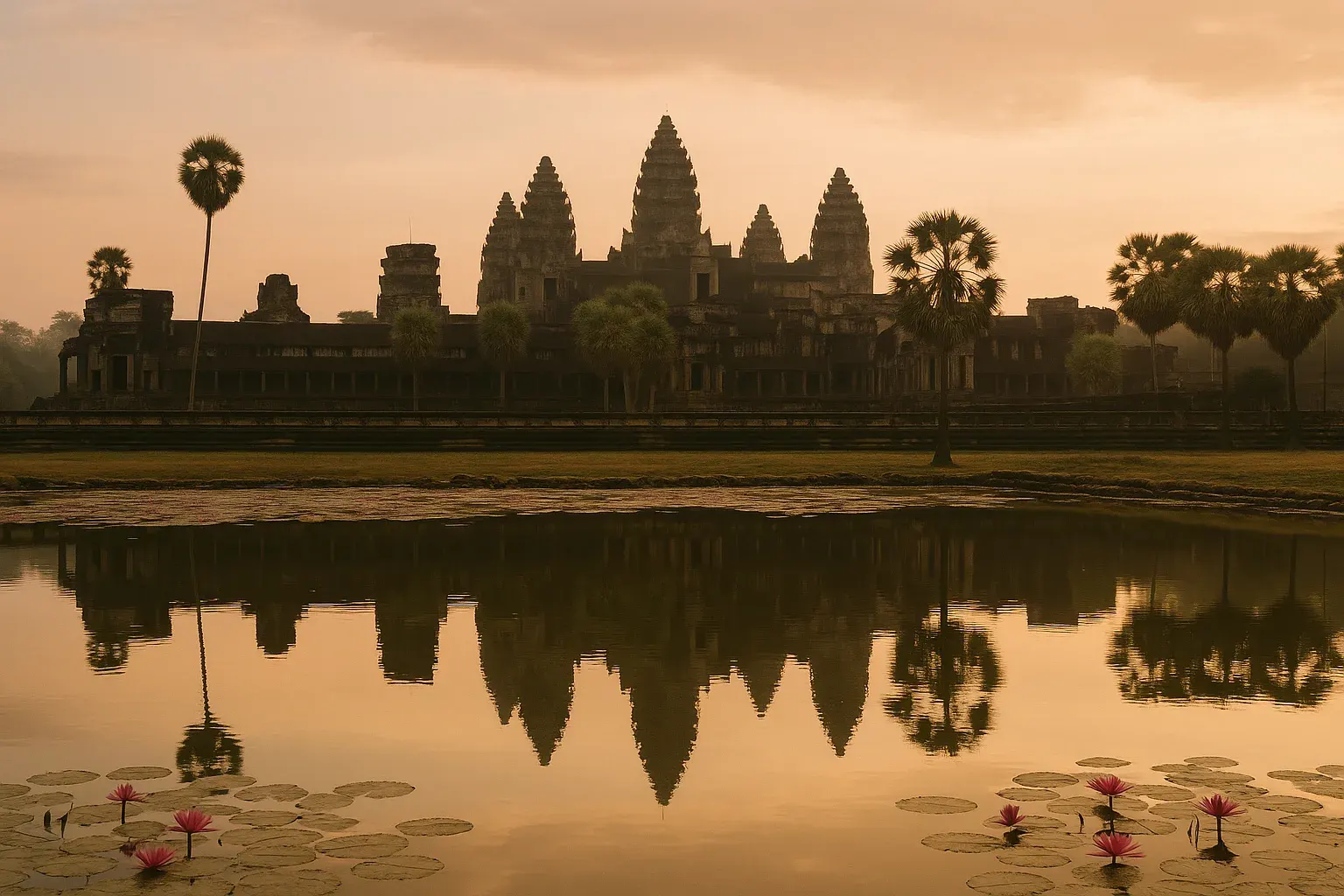
Angkor Wat Travel Guide 2026: Everything You Need to Know
KhmerAngkor Wat, the world's largest religious monument, spans over 400 acres in the heart of Cambodia. T...
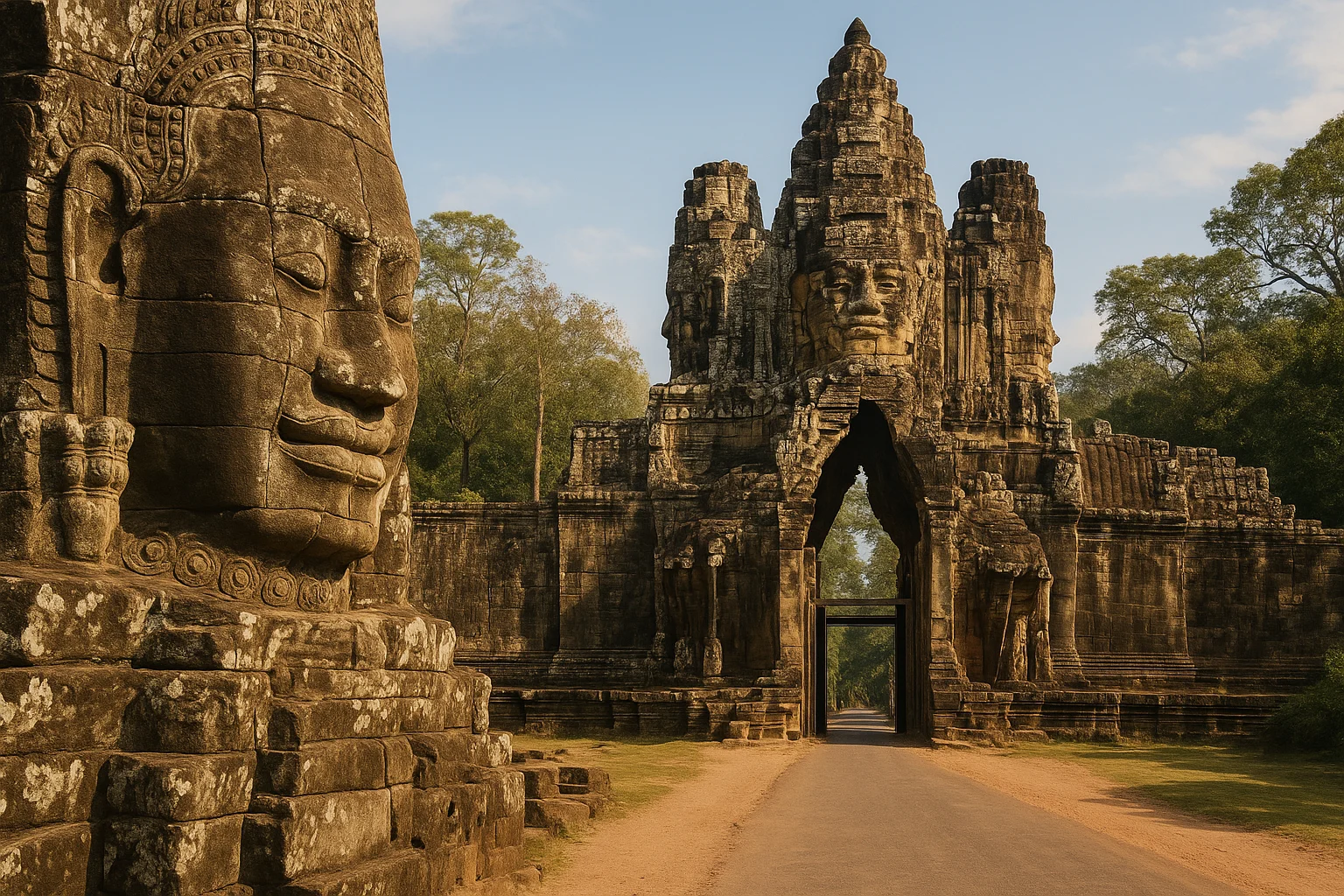
Angkor Thom Travel Guide 2026: Bayon Faces, Gates, and the Khmer Royal City
KhmerAngkor Thom was the last great capital of the Khmer Empire. This guide covers how to visit Bayon, th...
Banteay Srei Travel Guide 2026: Pink Sandstone Temple, Carvings, and Visit Tips
KhmerBanteay Srei is one of Cambodia’s most detailed Khmer temples, known for fine pink sandstone carving...
Preah Khan (Angkor)
Khmer EmpireA vast 12th-century Buddhist city-temple at Angkor built by Jayavarman VII, famed for jungle-draped ...