Quick Info
Curated Experiences
Small Group Roluos Group Temples Tour including Preah Ko
Full-Day Ancient Temples of Roluos Including Preah Ko
Private Tour: Pre-Angkorian Sites Preah Ko, Bakong, Lolei
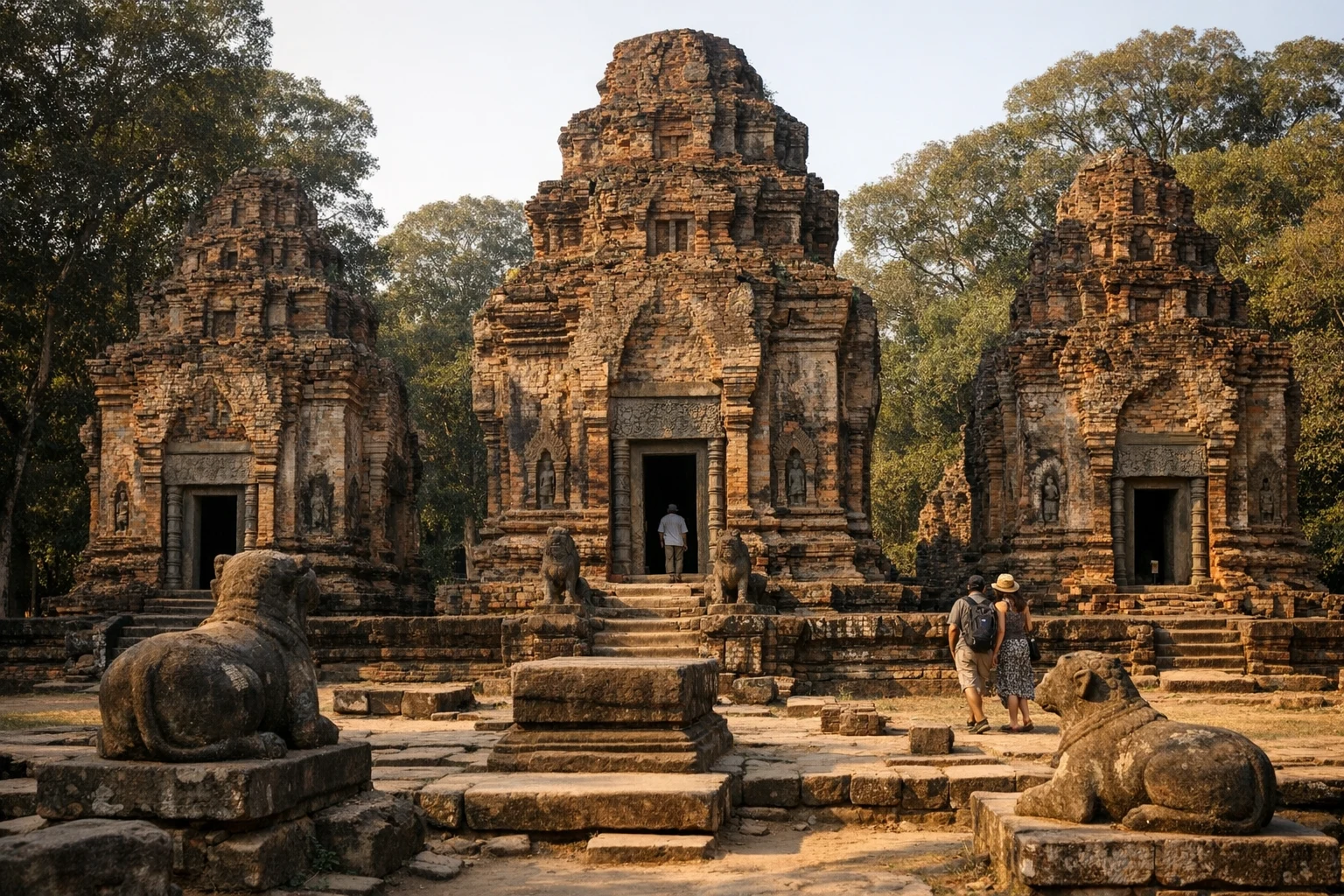
Just north of the bustling town of Siem Reap, Cambodia, where modern life pulses alongside the echoes of antiquity, stands the ancient sanctuary of Preah Ko. Here, time-worn sandstone and brick towers rise quietly above the green Roluos plains, only thirteen kilometers from Siem Reap’s lively streets catering to travelers from across the world. Before Angkor Wat became the symbol of Cambodia, Preah Ko was already centuries old—a reminder that the Khmer Empire’s architectural mastery predates its more famous monuments. Visitors who venture to Preah Ko are treated to a profoundly atmospheric experience: six towers clustered in neat rows, watched over by intricately carved guardian statues and enveloped by the soft chants of distant monks at dawn. Set within a landscape that was once the capital of the first major Khmer kingdom, Preah Ko invites exploration, contemplation, and admiration.
First built in 879 CE, Preah Ko is one of Cambodia’s most significant pre-Angkorian temple complexes, representing the dawn of Khmer monumental architecture. Its ancient towers may be smaller than those at Angkor, but their artistry and symmetry evoke the beginnings of a cultural flowering that would later culminate in some of Asia’s greatest stone cities. Traveling to Preah Ko provides visitors not only the chance to appreciate beautiful early Khmer art and iconography, but also to feel the resonance of history in a tranquil setting. The site’s rural backdrop, free from the crowds that flock to Angkor’s central temples, sets the perfect tone for reflection. Whether you come as a day trip from Siem Reap or as part of a deeper exploration of the Roluos Group, Preah Ko rewards those who seek the roots of Khmer civilization.
History
Foundations in the Early Khmer Kingdom
To understand Preah Ko is to journey back to the very beginnings of the Khmer Empire, a time before the rise of Angkor when the heart of power was situated at Hariharalaya, near modern-day Roluos. In 877 CE, Jayavarman II had already proclaimed himself devaraja (god-king), but it was his successor, King Indravarman I (r. 877–889 CE), who laid the groundwork for the empire’s monumental legacy. Indravarman initiated a flurry of temple construction in the late ninth century to solidify his rule and honor his ancestors. Among his earliest undertakings was Preah Ko—literally “Sacred Bull,” named for the life-sized kneeling Nandi statues that guard its front.
Preah Ko was not only a religious edifice but also a royal family shrine. It was dedicated in 879 CE to Shiva, the Hindu god of destruction and regeneration, and enshrined statues of the king’s ancestors, human and divine alike. The site was meant to cement the legitimacy of Indravarman’s rule by associating his family line with the gods and dharma, a pattern that would be repeated across the Khmer kingdom’s evolution.
Architectural Innovation and Khmer Identity
The construction of Preah Ko marked a turning point in Khmer temple design. Unlike earlier sanctuaries made primarily of wood or less durable materials, Preah Ko’s six main towers were built from brick, with decorative elements in sandstone—providing us with some of the earliest standing architectural evidence of the Khmer genius for temple construction. Its layout—a rectangular platform with three towers in the front row (dedicated to male ancestors), three in the back (female ancestors), all facing east—presented a highly symbolic cosmological order.
Sandstone lintels, pediments, and colonnettes sport intricate carvings: deities, floral motifs, and divine guardians bring life to the brickwork’s simple geometric lines. Preah Ko’s stylistic innovations, including the use of stucco for fine detailing and the adoption of the “Khmer smile” seen on many figures, would be echoed and refined in later sites like Bakong and eventually at Angkor.
Enduring Legacy and Rediscovery
Over the centuries, the heartbeat of the Khmer Empire moved northwest towards Angkor, leaving Preah Ko and Hariharalaya to the slow reclamation of jungle and time. Though its brick towers suffered from erosion and, like many ancient sites, some looting, Preah Ko never vanished completely from local memory. French explorers in the 19th century found the Roluos temples in varying states of ruin, but the relatively intact structure of Preah Ko allowed early conservationists to appreciate the brilliance of its design.
Modern restoration efforts—most recently with international cooperation—have preserved the delicate stucco surfaces and ensured the temple can still be experienced much as it would have looked over a millennium ago. Today, Preah Ko’s calm, rural setting draws those seeking a less-traveled but deeply rewarding facet of Cambodia’s archaeological story. The temple stands as a testament not just to innovative architecture, but to the Khmer civilization’s enduring legacy and reverence for its past.
Key Features
Approaching Preah Ko, visitors are struck by the serene balance of its layout, dominated by six brick towers arranged in two rows atop a raised terrace. The three front towers are taller, representing male ancestors and kings, while the three smaller rear towers symbolize their female counterparts. Each tower faces east, the auspicious direction of the rising sun, and is adorned with finely carved sandstone lintels above the doorways. These lintels and pediments display scenes borrowed from Hindu mythology: Shiva in various forms, celestial dancers (apsaras), floral arabesques, and multi-headed nagas.
Perhaps the most iconic feature guarding the approach to the main platform are the life-sized statues of Nandi, Shiva’s sacred bull, after which the temple is named. These kneeling bulls, sculpted from sandstone, provide not only a symbolic link to Shiva but also serve as protectors of the sanctum. The sense of guardianship is echoed by the guardian lion statues that flank the temple entrance, their expressions fierce and intent.
The towers themselves, though built using simple brick, showcase remarkable craftsmanship. The surfaces were originally coated in white stucco, much of which still clings to the sheltering niches and upper registers of the towers. This stucco was fashioned into highly detailed images: male and female divinities, floral scrolls, and even narrative panels depicting Hindu legends. Some of the surviving carvings are regarded as masterpieces of early Khmer art, with their subtle faces and delicate jewelry still visible after so many centuries.
The interior sanctuaries are now mostly empty, but once held elaborate statues dedicated to both kings and deities—only vestiges remain. Around the sanctuary, visitors can take in remnants of an enclosing laterite wall and the foundations of subsidiary buildings, suggesting the presence of a once-thriving monastic community. The site’s surrounding trees provide cooling shade, making it an especially pleasant place to contemplate the evolution of Khmer religious architecture.
What sets Preah Ko apart from other temples is its intimacy and tranquility. Unlike the busier sites of Angkor Wat or Bayon, here one can explore at a gentle pace, examining the intricate carvings of colonnettes or the narrative scenes above lintels without crowds. The blend of spiritual serenity, elegant proportions, and subtle ornamental detailing makes Preah Ko a rewarding site for those who appreciate the artistry of the early Khmer era.
Getting There
Preah Ko is located approximately 13 kilometers east of Siem Reap, making it easily accessible as a half-day or day trip from the city. The most popular way to reach Preah Ko is by hiring a tuk-tuk driver in Siem Reap, with fares typically ranging from $15–$20 USD for a half-day excursion covering the Roluos Group (which also includes Bakong and Lolei). Tuk-tuks are flexible, allowing for spontaneous stops at other rural sites or photo opportunities along the way.
Travelers looking for a bit of exercise and adventure can rent bicycles in Siem Reap for about $3–$8 USD per day. The mostly flat ride to Preah Ko takes about 45 minutes to an hour each way, passing through scenic rice paddies, friendly villages, and stretches of forest. It’s highly recommended to set out early to avoid the midday sun.
Private taxis are available for those seeking air-conditioned comfort, generally costing around $30–$40 USD for a vehicle and driver to cover the Roluos temples in a single outing. Most hotels and guesthouses in Siem Reap can arrange these services, and it’s easy to coordinate tours in advance or the day before.
Organized group tours are also a popular option, providing transportation, entrance fees, and the added benefit of a knowledgeable English-speaking guide. These tours can be booked through agencies in Siem Reap or online prior to arrival. If combining Preah Ko with Angkor Wat or other temples, be sure to confirm the itinerary includes sufficient time at each site.
All visitors to Preah Ko must possess an Angkor Pass, which is valid not just for the more famous Angkor Archaeological Park, but also for Roluos Group temples. Passes are issued at the central ticket office and cost $37 USD for a one-day visit, $62 USD for three days, and $72 USD for a week (prices as of 2024).
When to Visit
Preah Ko can be visited year-round, but Cambodia’s distinct seasons will affect your experience. The most popular and comfortable time is during the cool, dry season from November to March, when daytime temperatures hover between 20°C to 30°C (68°F–86°F), humidity is low, and skies are blue. Morning visits during this period offer the best light for photography, with soft sun illuminating the towers and the chance of catching atmospheric mist among the rice paddies.
From April to June, temperatures rise sharply, often reaching 35°C (95°F) or more in the afternoons. If you’re visiting in the hot season, aim to arrive early, bring plenty of water, and use sun protection. The site itself offers several shaded spots, but midday heat can be intense.
The rainy season, which lasts from May/June to October, brings frequent (sometimes heavy) afternoon showers, lush green landscapes, and quieter temple grounds. The countryside surrounding Preah Ko becomes especially beautiful, though paths may be muddy and humidity high. Despite the rain, mornings are typically dry and ideal for temple visits. The upside of coming in this season is fewer crowds and a softer countryside atmosphere. Ponchos or umbrellas are advisable.
Regardless of season, Preah Ko is notable for its peaceful setting. Crowds are minimal, especially compared to Angkor Wat, and even during holidays or festivals the temple rarely feels overwhelmed with visitors. If you wish to enjoy the site at its most tranquil, plan to arrive just after sunrise or in the late afternoon, when the light is magical and serenity prevails.
Quick Facts
| Fact | Detail |
|---|---|
| Location | Roluos, Siem Reap Province, Cambodia |
| Built | 879 CE |
| Builder | King Indravarman I |
| Purpose | Hindu temple (dedicated to Shiva, royal ancestor veneration) |
| Architecture | Six brick towers with sandstone ornaments, east-facing, rectangular platform |
| Notable Features | Life-sized Nandi bull statues, intricate lintels, preserved stucco carvings |
| Cultural Context | Among earliest major Khmer temples, pre-Angkor style |
| Admission | Included with Angkor Pass (from $37 USD for 1 day, as of 2024) |
| Distance from Siem Reap | Approximately 13 kilometers (30 min by tuk-tuk or 45–60 min by bicycle) |
| Nearby Sites | Bakong, Lolei, Angkor Wat, Banteay Srei |
| Opening Hours | 7:30am–5:30pm (subject to change) |
| Best Time to Visit | November–March (dry, cool season); early morning or late afternoon |
| Dress Code | Modest clothing required: cover shoulders and knees |
| Facilities | Basic (toilets, refreshments nearby but not on-site) |
| Guides | Available on-site or via pre-arranged tours |
Preah Ko offers a unique opportunity to explore the artistic and spiritual heritage of the early Khmer Empire. Its tranquil setting, beautiful carvings, and place in Cambodian history make it a must-visit for anyone venturing beyond the grand monuments of Angkor. Whether as part of a journey through the Roluos Group or a stand-alone destination, this ancient temple rewards curiosity, patience, and a keen eye for detail.
Frequently Asked Questions
What is the best way to reach Preah Ko from Siem Reap?
The easiest way is by tuk-tuk or private taxi, about 13km from central Siem Reap. Bicycles are also popular for adventurous travelers.
Are there entrance fees for Preah Ko?
Admission to Preah Ko is included in the Angkor Pass, which covers most temples in the area. The one-day pass costs around $37 USD.
How much time should I allocate for visiting Preah Ko?
Allow around 1-1.5 hours to explore Preah Ko itself, and more if combining with the nearby Bakong and Lolei temples.
Is there a dress code for visiting Preah Ko?
Yes, as with most Cambodian temples, visitors should cover shoulders and knees as a sign of respect.
Can Preah Ko be visited year-round?
Yes, though the dry season (Nov-Apr) offers easier access and more comfortable conditions.
Is Preah Ko suitable for children or elderly travelers?
The site is relatively compact and not crowded, but be mindful of uneven ground and a few steps. Supervision is advised for children.
Are there guides available at Preah Ko?
Local guides can often be retained at the entrance or booked through a tour for a deeper historical understanding.
What makes Preah Ko architecturally significant?
It’s one of the earliest Khmer brick temples, featuring delicate sandstone carvings and distinctive guardian statues.
Nearby Ancient Sites
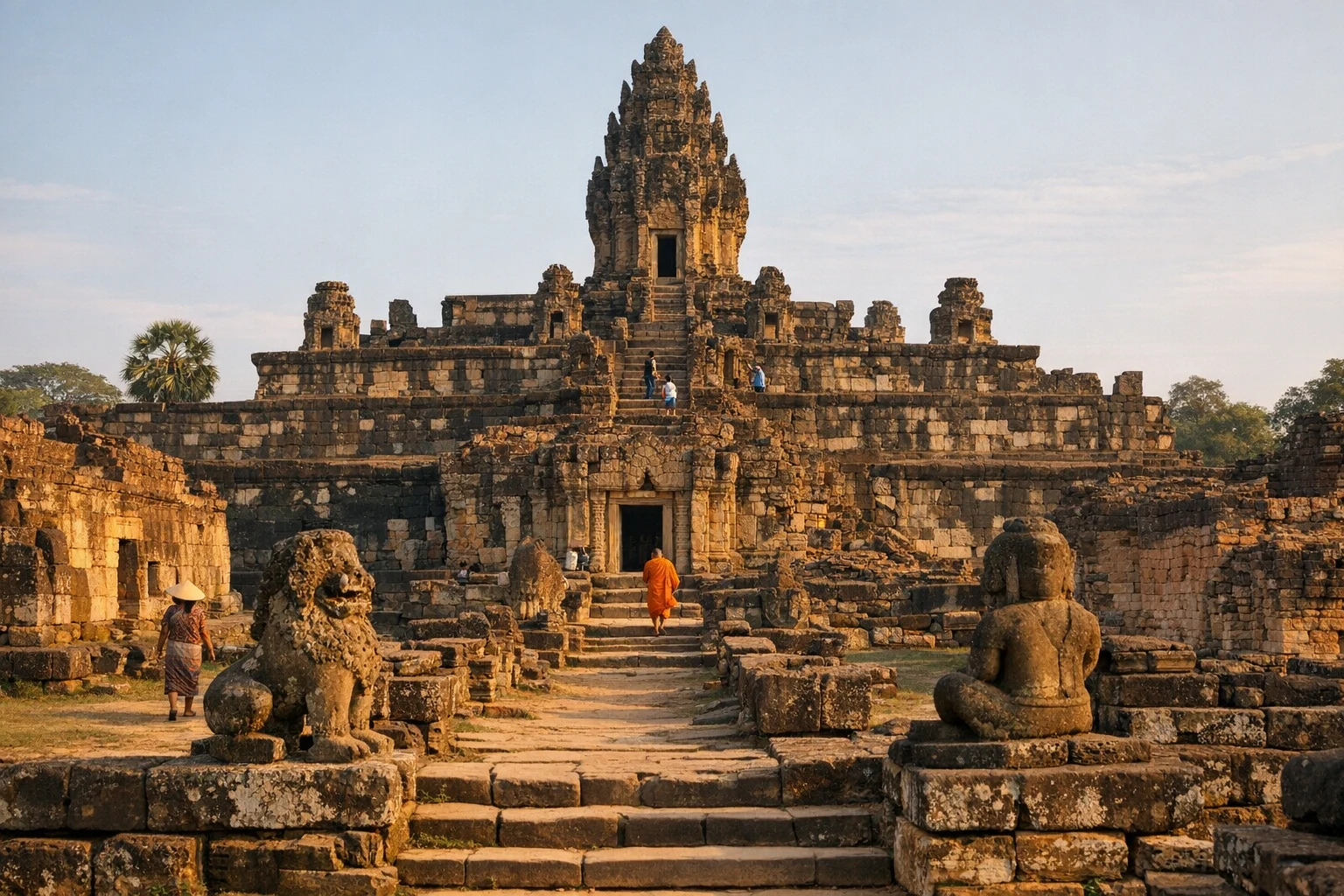
Bakong
Bakong is Cambodia's first major sandstone temple mountain, a stunning Khmer monument at the heart o...
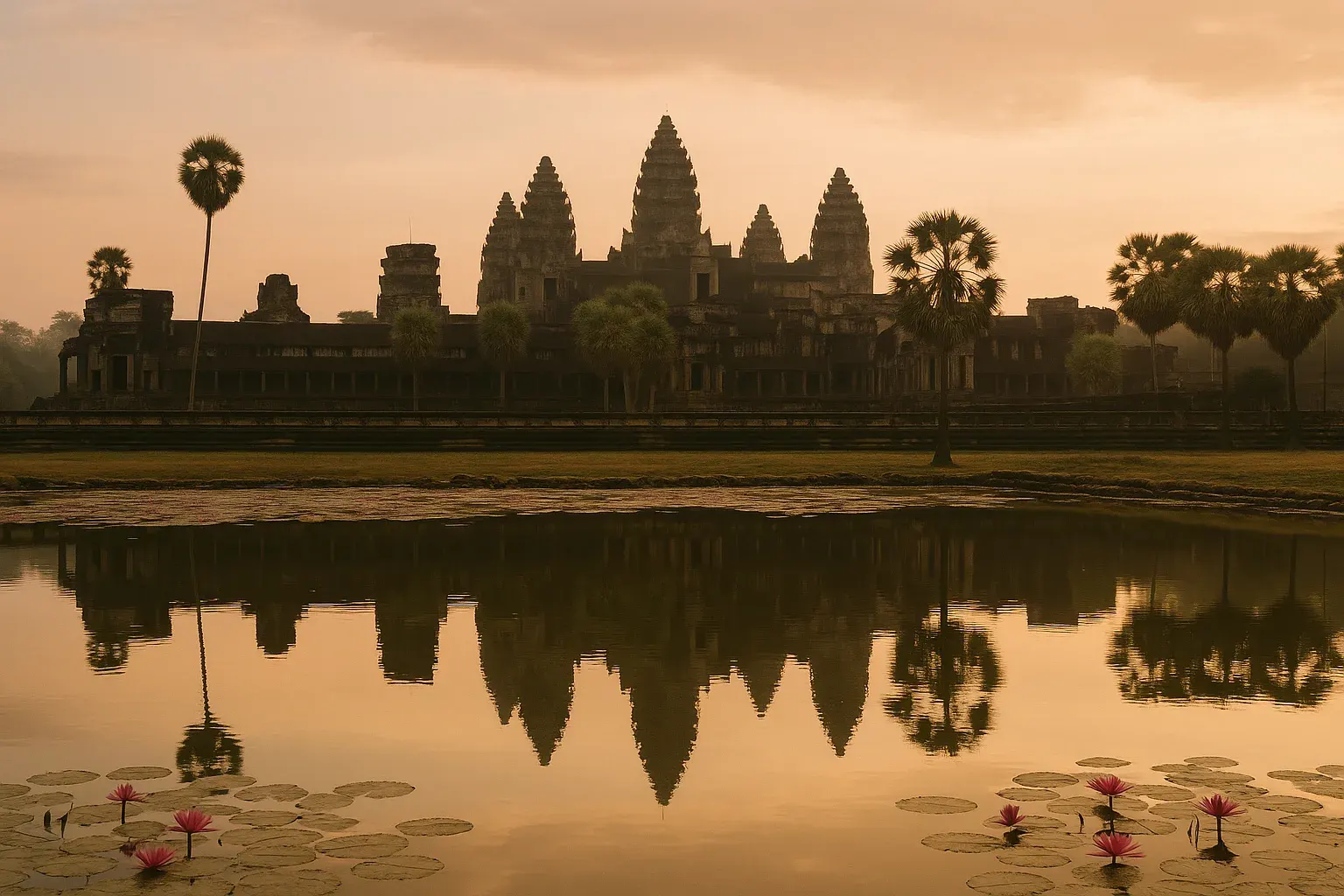
Angkor Wat Travel Guide 2026: Everything You Need to Know
KhmerAngkor Wat, the world's largest religious monument, spans over 400 acres in the heart of Cambodia. T...
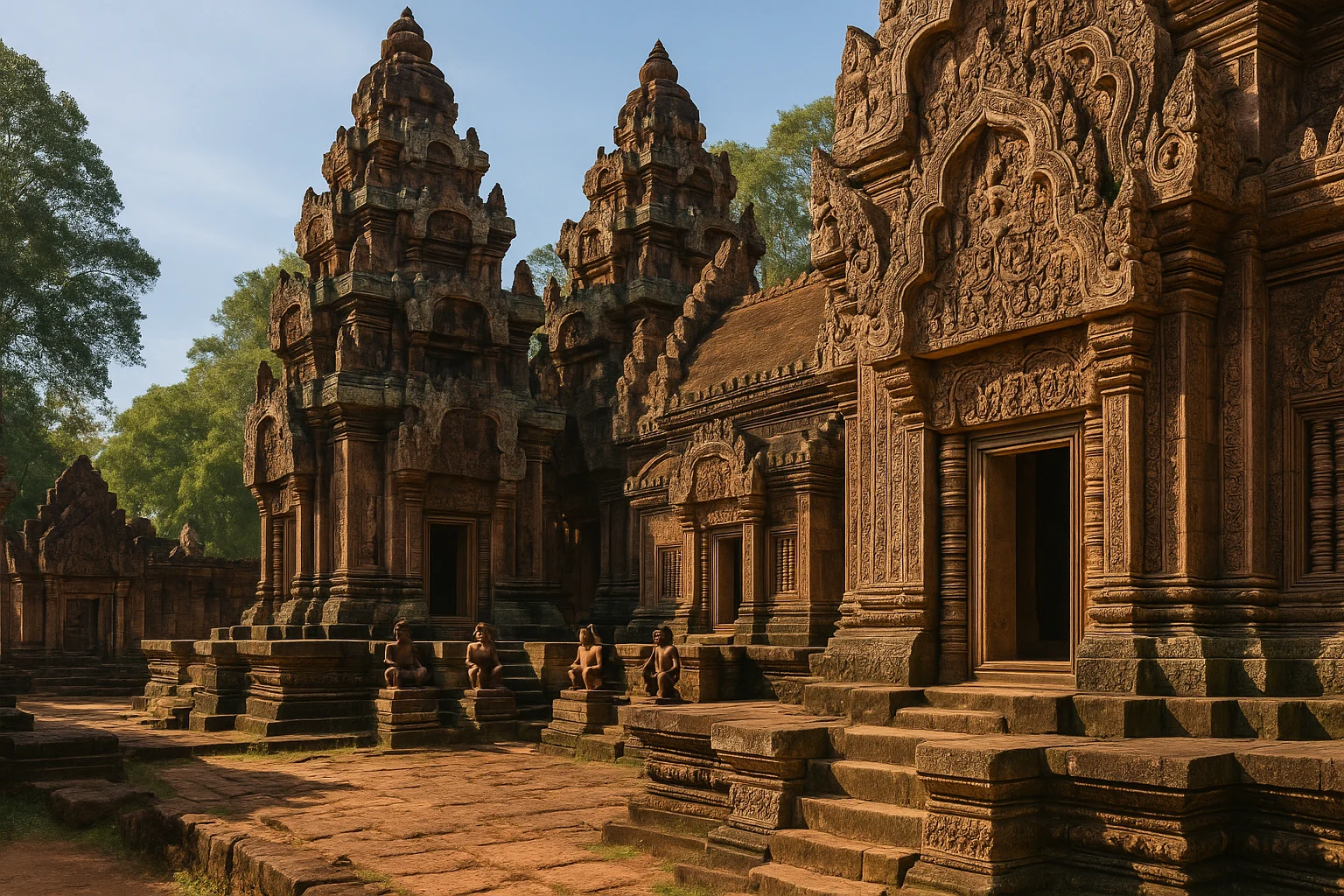
Banteay Srei Travel Guide 2026: Pink Sandstone Temple, Carvings, and Visit Tips
KhmerBanteay Srei is one of Cambodia’s most detailed Khmer temples, known for fine pink sandstone carving...