Quick Info
Curated Experiences
Preah Pithu and Angkor Thom Hidden Temples Tour
Private Angkor Thom Tour Including Preah Pithu
Full Day Angkor Temples Tour with Preah Pithu
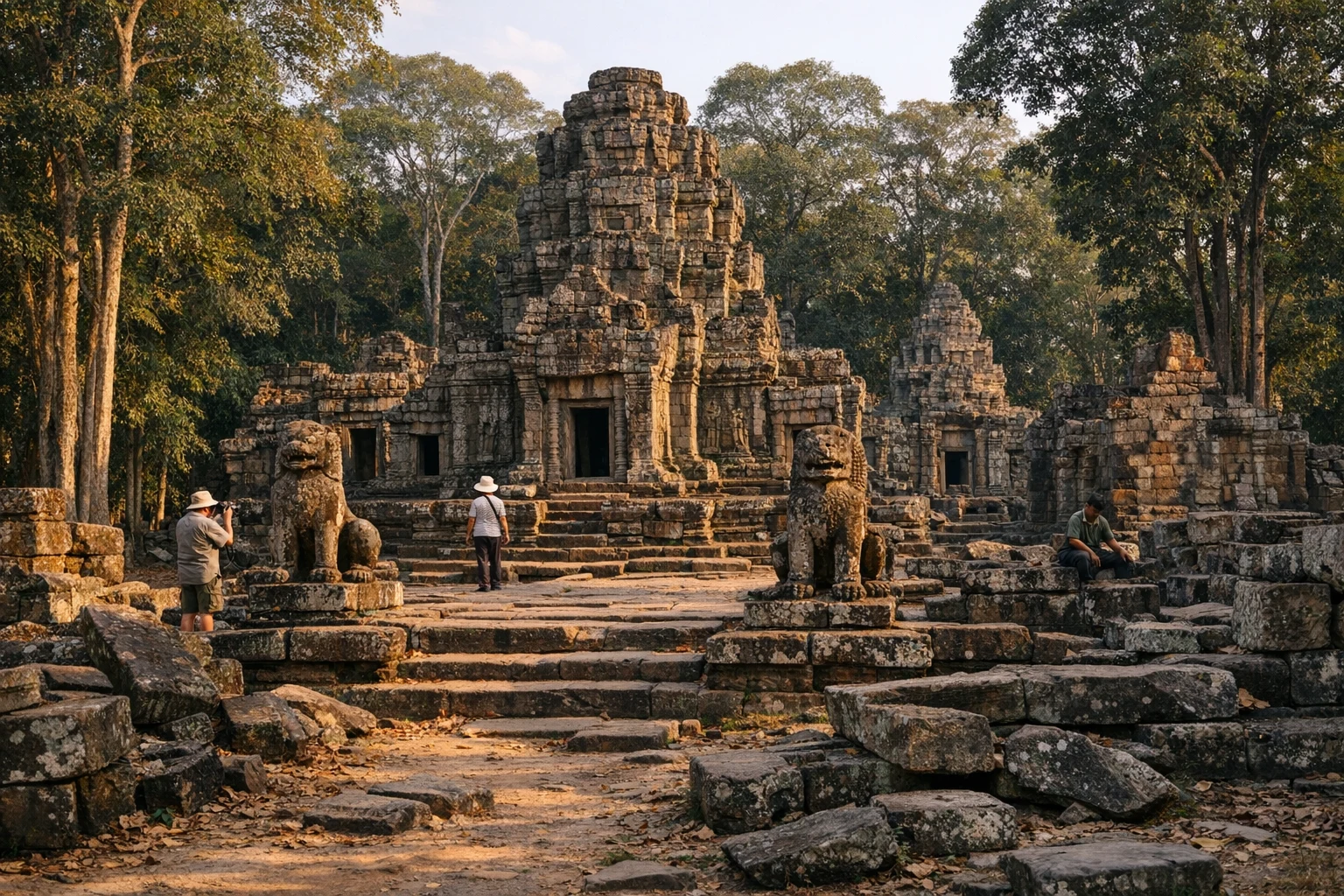
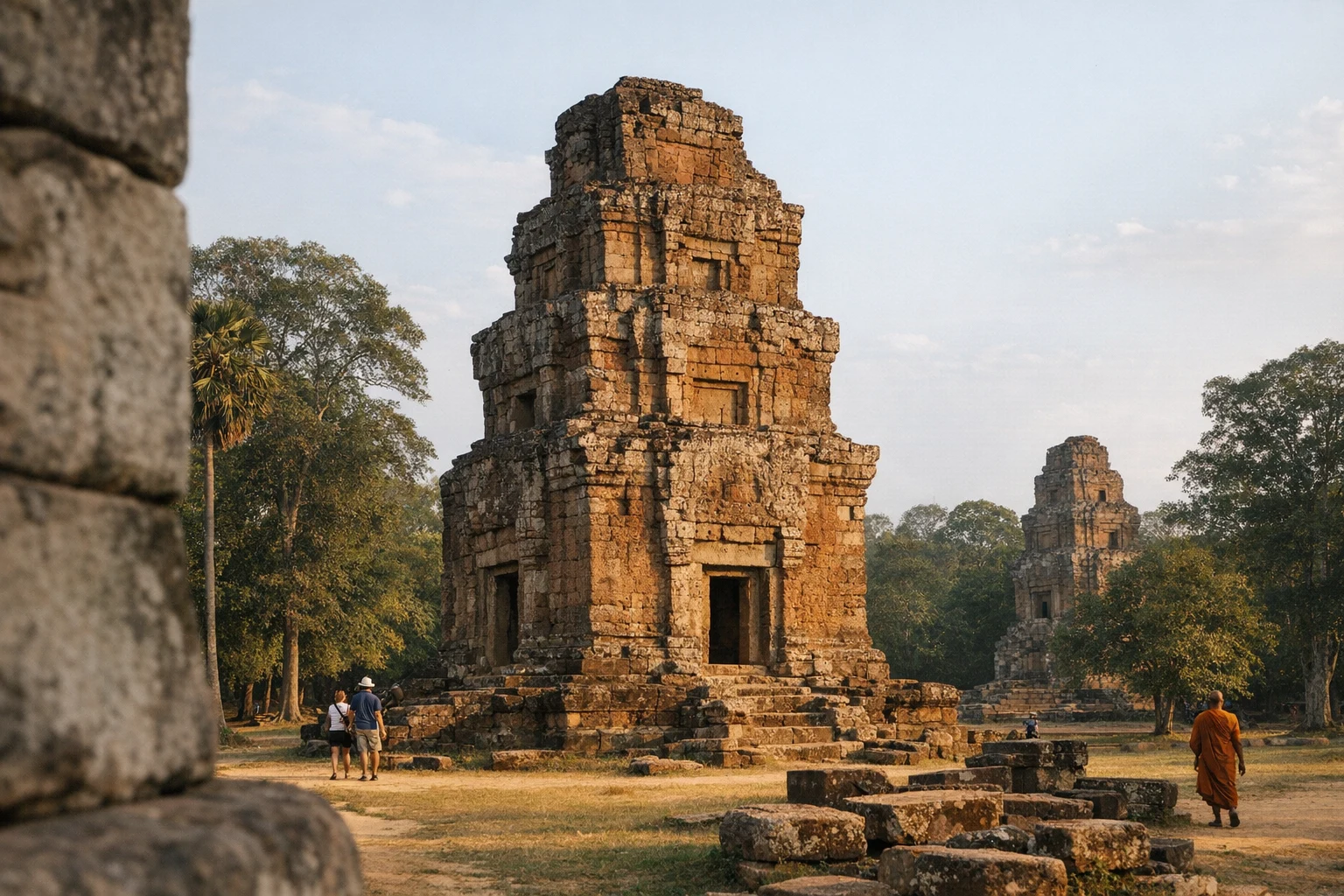
Preah Pithu in Cambodia is one of the places that reminds you Angkor is not just a handful of famous temples but an entire sacred city full of quieter, more elusive monuments. Inside Angkor Thom, not far from Bayon and the better-trodden central zone, this cluster of temples sits in a more subdued register: less theatrical than the great face towers, less immediately iconic than Angkor Wat, and yet deeply rewarding for anyone willing to slow down. The first impression is often one of shade and fragmentation. Trees, broken walls, towers, and half-open courtyards create a setting that feels almost private by Angkor standards. Instead of one dominant temple mass, Preah Pithu unfolds as a group of separate but related structures, each with its own mood and detail.
That looser arrangement is exactly what makes the site memorable. Preah Pithu is not best experienced as a checklist stop or a single-photo monument. It is a place for wandering among lesser-visited ruins and noticing how much variation Angkorian architecture could contain even within a relatively compact zone. Some temples are more intact, some more atmospheric in ruin, and some preserve carvings and layouts that hint at changing religious and political contexts within Angkor Thom itself. Because the crowds are often lighter here, the experience can feel more direct. You hear leaves, footsteps, birds, and the occasional distant sound from the larger temples beyond. For travelers trying to understand Angkor as a layered city rather than a parade of greatest hits, Preah Pithu is one of the most useful and unexpectedly satisfying places to stop.
History
Preah Pithu Within the Urban World of Angkor Thom
Preah Pithu belongs to the broader sacred and urban environment of Angkor Thom, the great walled capital most strongly associated with the reign of Jayavarman VII in the late 12th and early 13th centuries. Angkor Thom is often understood through its central monuments—Bayon, Baphuon, the Royal Palace area, and the Terrace of the Elephants—but that focus can hide the complexity of the city. It was never only a few major ceremonial buildings surrounded by emptiness. It was a dense ritual and political landscape, and temple groups like Preah Pithu help reveal that deeper complexity.
The Preah Pithu cluster lies within this urban setting and appears to include structures from somewhat different phases, likely reflecting both earlier and later building activity in and around Angkor Thom. This layered history is one of the reasons the group can feel slightly different from more unified royal projects. Rather than presenting the clean ideological clarity of a single monumental commission, Preah Pithu suggests accumulation, modification, and adaptation within a city that was itself constantly being reshaped.
Earlier Foundations and Angkorian Layering
Archaeological and stylistic study suggests that the temples of Preah Pithu are not all identical in date or purpose. Some structures may incorporate earlier phases or stand on sites of prior sacred significance, while others appear tied more directly to later Angkorian development. This is entirely in keeping with how Angkor functioned. Temples were frequently added, modified, reused, and reframed by later rulers. Sacred landscapes in the Khmer world were rarely static. A place that had once held ritual significance could be rebuilt, rededicated, or integrated into a larger urban scheme centuries later.
That makes Preah Pithu particularly useful as a site for seeing Angkor’s layered growth. The cluster is not famous because it preserves a single overwhelming architectural statement. It matters because it hints at continuity and adaptation. In a city where royal power, religion, and landscape were constantly renegotiated, temple groups like this one reveal how sacred space could remain meaningful across changing political circumstances.
Angkor Thom, Buddhism, and Religious Transition
The religious context of Preah Pithu reflects the wider complexity of Angkor’s later history. The 12th and 13th centuries were periods of significant transformation in Khmer religious life, especially under Jayavarman VII, whose monumental projects are strongly associated with Mahayana Buddhist kingship. Yet Angkor was never a place where one tradition simply erased all others. Hindu and Buddhist imagery, ritual assumptions, and sacred sites coexisted, overlapped, and were sometimes reinterpreted over time.
Preah Pithu appears to reflect this broader pattern of religious layering. Some structures and decorative programs suggest the persistence of earlier temple forms and sacred assumptions, while their placement within Angkor Thom inevitably ties them to the city’s later Buddhist-inflected political landscape. This kind of ambiguity is one of the most historically interesting things about the cluster. It is not a textbook example of one single cult or ruler’s ideology. It is part of the lived complexity of Angkor as a changing sacred metropolis.
Decline, Ruin, and Modern Rediscovery
As Angkor’s political center shifted and the city’s monumental core entered long phases of abandonment and partial reuse, Preah Pithu, like many smaller temple groups, gradually softened into ruin. Trees, roots, weathering, and the slow collapse of masonry transformed the temples from active sacred spaces into overgrown archaeological remains. Because the site was never one of the very largest temples, it did not dominate later accounts in the same way as Angkor Wat or Bayon. Yet this relative obscurity may also have helped preserve its quieter character.
Modern conservation and visitor access have stabilized the site enough for it to be explored safely while leaving much of its atmospheric quality intact. Today Preah Pithu stands not as a completely reconstructed monument but as a more open-ended encounter with Angkorian ruin. This is part of its appeal. It preserves enough structure to be legible and enough damage to feel authentically timeworn. In a heritage landscape as famous as Angkor, that balance can feel surprisingly rare.
Key Features
The defining feature of Preah Pithu is that it is a cluster rather than a single temple. This changes the entire visitor experience. Instead of approaching one dominant monument with a single ceremonial axis, you move among several structures, each separated just enough to create changes in mood and perspective. The result feels exploratory. You are less likely to fall into the standard tourist rhythm of arrive, photograph, depart. Preah Pithu encourages movement through space, comparison between buildings, and close attention to small differences in form and preservation.
The atmosphere is one of the site’s greatest strengths. Because visitor numbers are often lower than at the main Angkor Thom monuments, the ruins feel more personal and contemplative. Trees and light play across broken walls and towers, and the site holds onto the slightly overgrown quality that many travelers imagine when they think of hidden Angkor. This is especially true in the quieter corners, where a lintel, doorway, or crumbling sanctuary can seem to emerge almost accidentally from shade.
Architecturally, Preah Pithu is interesting because it preserves a mix of Angkorian features without forcing them into a single rigid narrative. You find cruciform terraces, towers, sanctuaries, and enclosure elements that show familiar Khmer planning principles, but in a more fragmented and varied arrangement than at major royal temples. Some structures appear compact and inward, while others open more clearly into surrounding space. This variation makes the cluster a useful place for understanding how much flexibility existed within Angkorian sacred architecture.
Carvings and stone details are another highlight, though they reward attentive looking rather than quick scanning. Preah Pithu does not overwhelm visitors with the sheer density of relief seen at Bayon or Banteay Srei, but it preserves enough decorative work to reveal the elegance of Khmer stone carving even in quieter contexts. Lintels, pediments, and architectural fragments often survive in ways that feel integrated into the ruin rather than isolated from it. This gives the carvings a strong sense of place.
The relationship between Preah Pithu and nearby major monuments is also a feature in its own right. Because the cluster sits inside Angkor Thom, it helps visitors understand the capital as a textured sacred city rather than a few isolated masterpieces. Seen after Bayon, Baphuon, or the royal terraces, Preah Pithu can almost reset the pace of the day. It reminds you that the city contained minor, secondary, and perhaps more local or specialized spaces alongside its great ceremonial centers. That broader urban understanding is one of the best reasons to come.
Getting There
Preah Pithu is located inside Angkor Thom in Siem Reap Province, making it easy to include during any day focused on Angkor Thom’s central monuments. From Siem Reap, the drive to Angkor Thom usually takes around 20 to 35 minutes depending on traffic and your hotel location. Most visitors reach the site by tuk-tuk, private car, taxi, or organized temple tour. Tuk-tuk drivers commonly include Angkor Thom routes as part of a half-day or full-day hire, often in the rough range of USD 15 to 30 depending on the route, season, and negotiation, while air-conditioned cars cost more.
Because Preah Pithu lies close to Bayon, Baphuon, and Prasat Suor Prat, it is best visited as part of a broader Angkor Thom circuit rather than as a standalone destination. Some guides and drivers may skip it unless you specifically ask, since it is less famous than the headline monuments. If the site matters to you, mention it when planning your day. This is especially worth doing if you enjoy quieter temple groups and want relief from the heaviest visitor flow.
You will need a valid Angkor pass, as with all major monuments in the archaeological park. Comfortable shoes, water, and sun protection are important, though Preah Pithu often feels somewhat calmer and shadier than more exposed sites nearby. Navigation is not difficult, but allowing unhurried time makes a big difference to the experience.
When to Visit
The best time to visit Preah Pithu is during Cambodia’s cooler dry season, generally from November to February, when walking around Angkor Thom is more comfortable and the softer weather makes it easier to linger. Because the cluster’s appeal depends heavily on atmosphere and quiet observation, comfort matters more than at some temples where the main goal is simply to see an iconic view.
Early morning is one of the best times to come, especially if you are already exploring Angkor Thom before larger visitor flows build around Bayon. At that hour, Preah Pithu can feel particularly peaceful, with angled light catching rough stone and trees casting long shadows through the ruins. Late afternoon is also rewarding, especially for photography and for a more reflective pace after the central monuments have been seen. Midday can be hotter and less flattering to the subtler stone textures, though the site remains worthwhile year-round.
The rainy season can also suit Preah Pithu surprisingly well. Greenery deepens, the ruins feel more secluded, and the atmosphere becomes more lush and mysterious, though paths may be muddier and downpours can interrupt the visit. Whenever you go, Preah Pithu works best when approached slowly. It is not a site that shouts. It invites.
| Quick Facts | Details |
|---|---|
| Location | Angkor Thom, Siem Reap Province, Cambodia |
| Best Known For | Quiet cluster of lesser-visited Angkorian temple ruins inside Angkor Thom |
| Cultural Tradition | Khmer |
| Main Historical Period | Mainly 12th-13th century CE with layered earlier elements |
| Setting | Shaded temple group near Angkor Thom’s central monuments |
| Recommended Visit Length | 30 minutes to 1 hour |
| Best Nearby Base | Siem Reap |
| Best Time to Visit | Early morning or late afternoon |
| Best Combined With | Bayon, Baphuon, Prasat Suor Prat, and the royal terraces |
| Practical Tip | Ask specifically to include it in your Angkor Thom route, since many quicker itineraries pass it by despite its strong atmosphere and historical value |
Frequently Asked Questions
What is Preah Pithu best known for?
Preah Pithu is best known for its quiet cluster of lesser-visited temple ruins inside Angkor Thom, with atmospheric courtyards, mixed-period architecture, and elegant carvings.
Where is Preah Pithu located?
Preah Pithu is located inside Angkor Thom in Siem Reap Province, Cambodia, not far from Bayon and the central royal area.
Why is Preah Pithu important?
It is important because it preserves a group of temples that reveal the architectural diversity and layered development of Angkor beyond the most famous headline monuments.
How much time should you spend at Preah Pithu?
Most visitors should allow 30 minutes to 1 hour, though temple enthusiasts may want longer to explore the separate structures and quieter corners carefully.
Is Preah Pithu worth visiting if you are already seeing Bayon and Baphuon?
Yes. Preah Pithu offers a more intimate and less crowded experience, helping visitors appreciate Angkor Thom as a broader sacred and urban landscape rather than only its major monuments.
When is the best time to visit Preah Pithu?
Early morning or late afternoon is best, when the shaded temple group is cooler and the softer light brings out the stone textures and carvings.
Nearby Ancient Sites
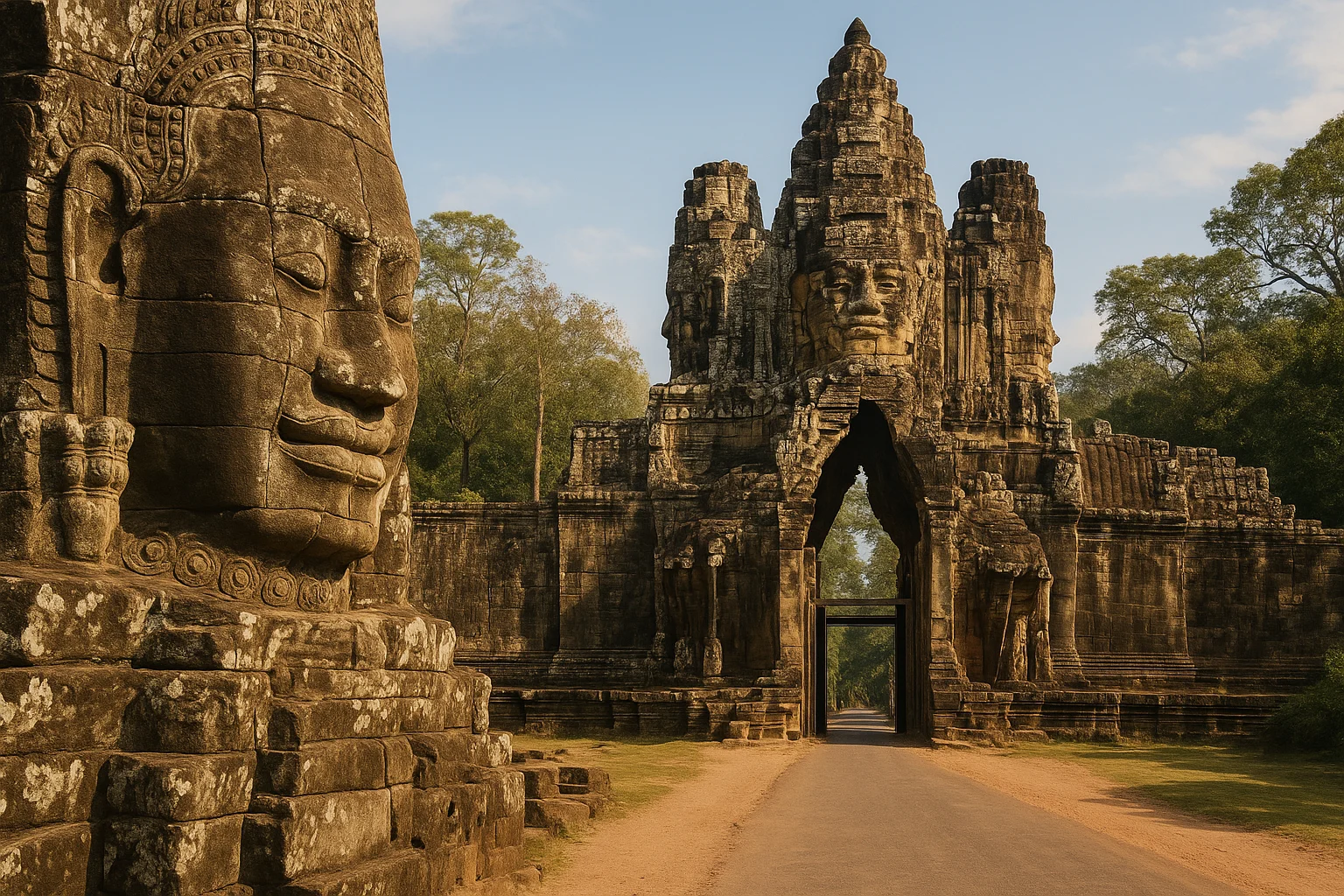
Angkor Thom Travel Guide 2026: Bayon Faces, Gates, and the Khmer Royal City
KhmerAngkor Thom was the last great capital of the Khmer Empire. This guide covers how to visit Bayon, th...
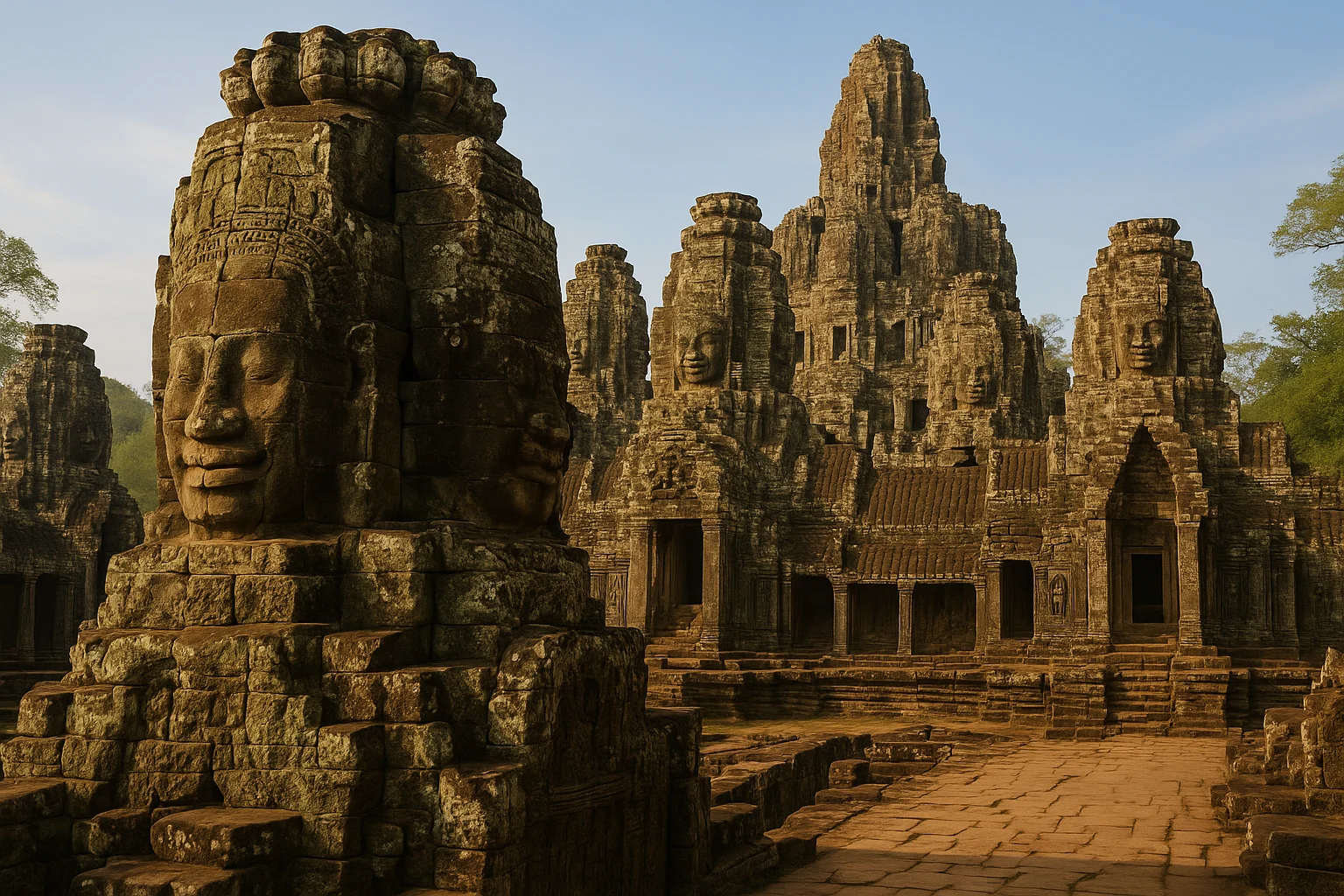
Bayon Temple Travel Guide 2026: Face Towers, Bas-Reliefs, and Best Visit Timing
KhmerBayon Temple sits at the center of Angkor Thom and is famous for its carved stone faces. This guide ...
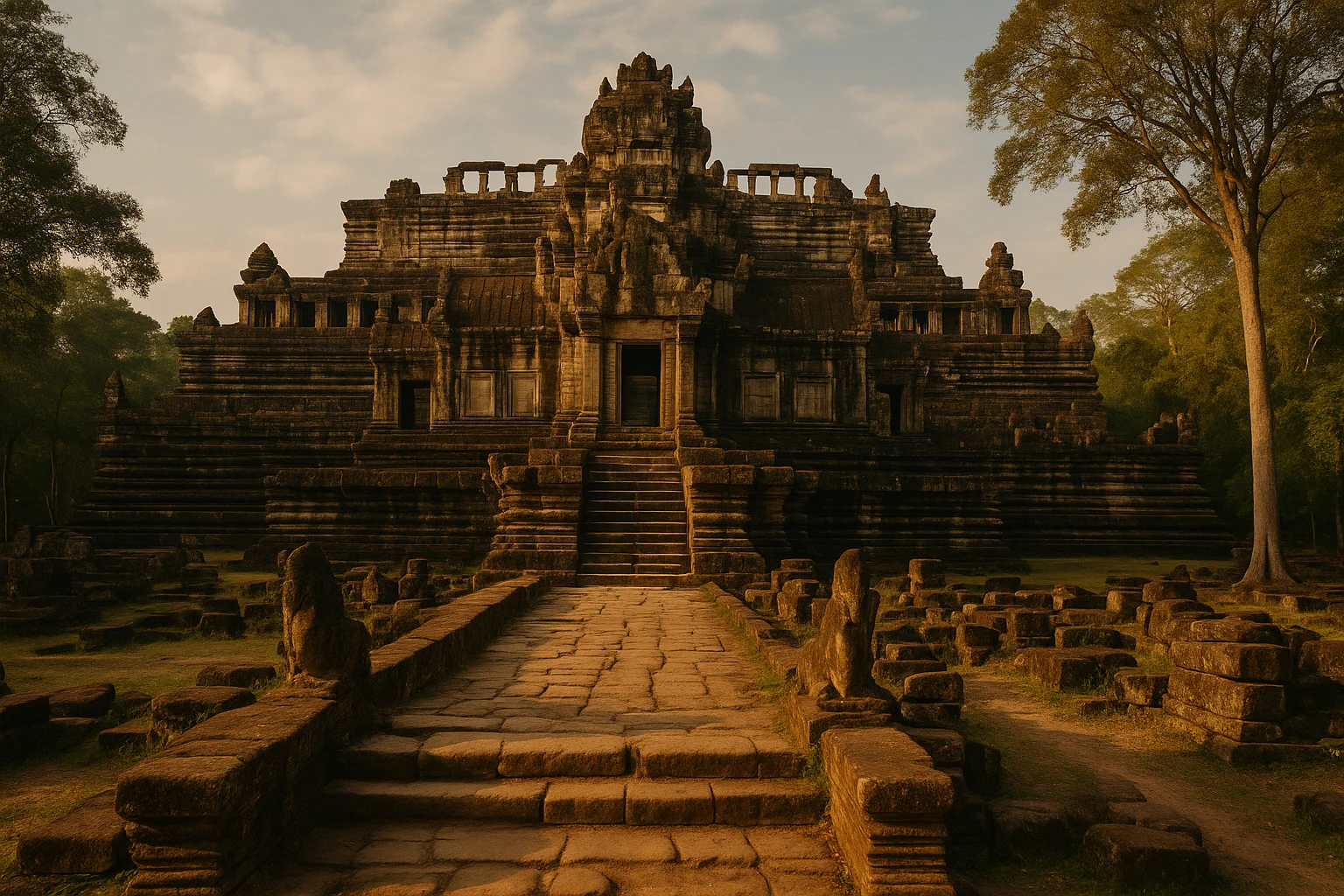
Baphuon
Khmer EmpireAn 11th-century sandstone temple mountain in Angkor Thom, Cambodia, renowned for its monumental recl...
Prasat Suor Prat
KhmerExplore Cambodia’s Prasat Suor Prat, a line of enigmatic towers in Angkor Thom facing the royal squa...
Angkor Wat Travel Guide 2026: Everything You Need to Know
KhmerAngkor Wat, the world's largest religious monument, spans over 400 acres in the heart of Cambodia. T...