Quick Info
Curated Experiences
Kom Ombo and Edfu Temple Day Tour From Aswan
Private Day Tour: Kom Ombo Temple and Crocodile Museum
Nile Cruise Stop: Kom Ombo Temple Guided Visit
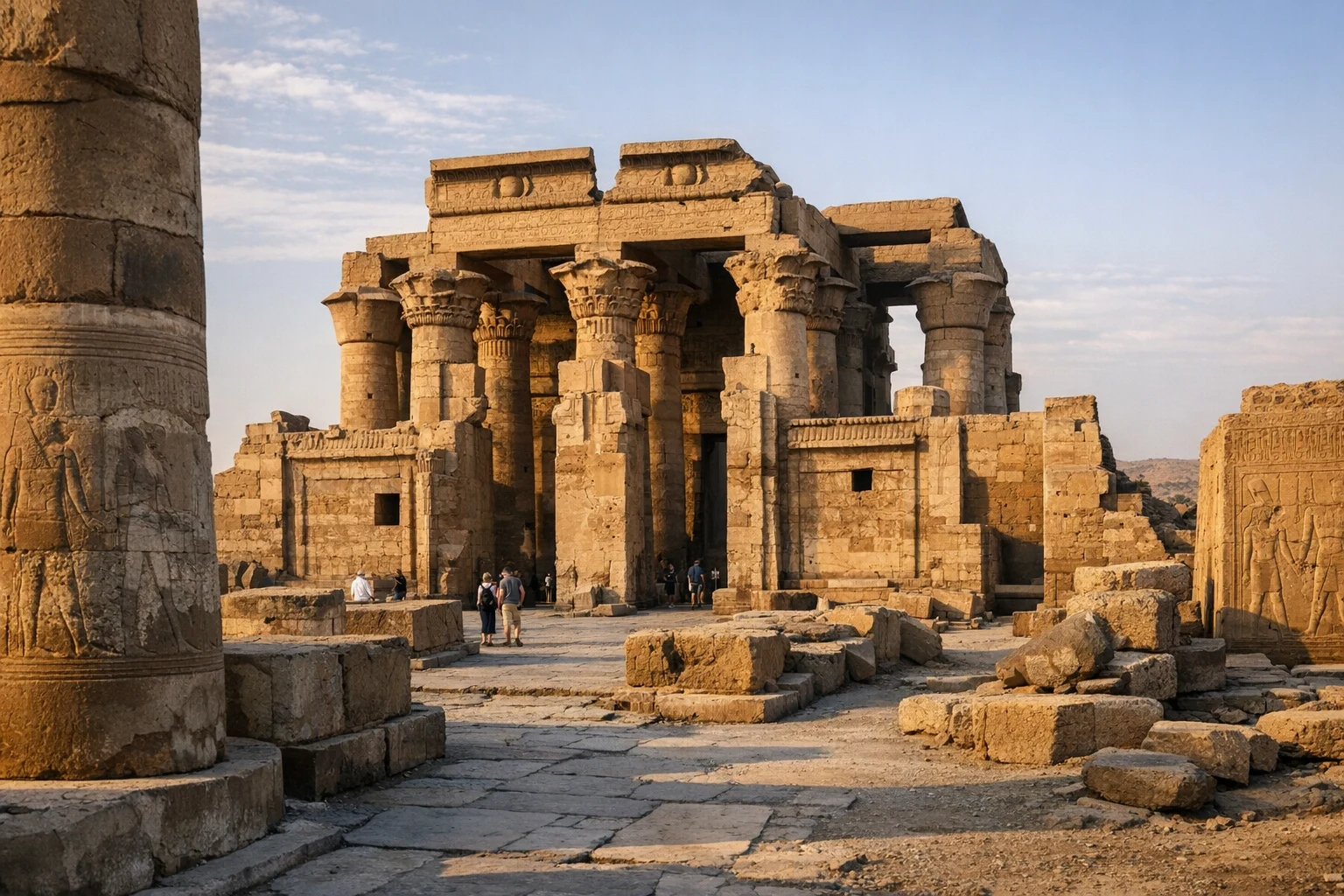
Rising serenely above the east bank of the Nile, the Ptolemaic Temple of Kom Ombo in Egypt is a site that both arrests the senses and nourishes the imagination. Its tanned sandstone columns, marred in places by the hands of weather and time, stand as a poignant testament to an era when the pharaohs of Egypt’s twilight vied for legitimacy and survival by constructing grand temples to their gods. Unique among Egypt’s monumental temples, Kom Ombo’s most remarkable feature is its dual dedication — to Sobek, the crocodile god associated with fertility and the Nile’s triumphant chaos, and to Haroeris (also known as Horus the Elder), the falcon-headed sky god who epitomized order and protection. This rare double dedication is reflected architecturally: the temple complex is perfectly split down the middle, with duplicated sanctuaries, courts, and halls for each deity, giving visitors the unique sense of walking in parallel religious worlds.
As you approach Kom Ombo from the river or road — palms rustling and the glint of crocodile-infested waterways in the distance — you encounter not only a temple but a community anchored in centuries of faith, science, and everyday drama. The site’s strategic position, close to Nubian transit routes and the great artery of the Nile, ensured its significance through tumultuous eras when Egypt’s Ptolemaic rulers absorbed, synthesized, and occasionally clashed with the long traditions of the land they governed. Today, far removed from the tides of empire, Kom Ombo stands as an evocative bridge linking ancient magic and modern curiosity. Whether you journey here on a Nile cruise, join a day-tour from Aswan, or plot your own course along dusty roads, you soon find yourself enthralled by the power of this uniquely doubled sanctuary.
History
Origins in the Ptolemaic Era
The foundation of Kom Ombo dates to Egypt’s later dynastic history, specifically during the reign of Ptolemy VI Philometor (180–145 BCE) in the early 2nd century BCE. The Ptolemaic dynasty, Macedonian Greeks who inherited the throne after Alexander the Great’s death, were acutely aware that their legitimacy depended on embracing ancient Egyptian religious customs. At Kom Ombo, they initiated construction not just as an act of devotion but also as a statement of continuity, linking themselves to a lineage stretching back into the mists of Egyptian myth. The choice to dedicate the temple to both Sobek and Haroeris was strategic: Sobek, feared and revered as the crocodile god, had been worshipped in this region for centuries, while Haroeris brought associations with royalty and cosmic order.
Expansion Through the Roman Period
Though the initial construction took place under the Ptolemaic kings, additions and modifications continued through Roman rule. Emperors such as Augustus, Tiberius, and Domitian sponsored inscriptions, reliefs, and restorations throughout the 1st and 2nd centuries CE, which are still visible around the temple’s grand halls and gateways. Roman artisans continued the established Ptolemaic pattern, maintaining the dual layout and offering dedications to both deities in their own names. This commitment ensured Kom Ombo’s place as a living cult center well into the Roman occupation of Egypt.
The Roman period also marked significant integration of medical knowledge into temple walls. Kom Ombo became a hub of healing, with priests taking on roles as physicians. One of the temple’s most famous relief panels illustrates a series of ancient medical instruments — scalpels, forceps, and probes — testifying to Kom Ombo’s role not just as a spiritual center, but as a place of practical hope and healing for the wider Nile valley.
From Decline to Rediscovery
Like so many of Egypt’s monuments, Kom Ombo suffered during centuries of neglect in the medieval period. Nile floods periodically eroded the riverbank and temple’s foundations, and entire blocks of carved stone were pillaged for later buildings. By the 19th century, much of Kom Ombo had been buried under sand or lost to the river, but European explorers — notably the French Egyptologist Jacques de Morgan — set to work clearing, recording, and preserving what remained. Their excavations revealed the twin sanctuaries, imposing columns, and hundreds of intricate reliefs depicting pharaohs, gods, Roman Caesars, and scenes of worship and healing.
Today, Kom Ombo is not only one of Egypt’s best-preserved Ptolemaic temples, but also a vivid window onto interactions between pharaohs, priests, and an evolving polytheistic tradition that adapted and flourished — even as empires changed hands with the river’s eternal flow.
Key Features
Stepping through the massive entrance gateway, the visitor first encounters a vast forecourt, whose sunlit flagstones once teemed with priests, pilgrims, and supplicants from across the Nile valley. Here stands a double altar, a rare feature that immediately telegraphs Kom Ombo’s two-faced identity, with offerings once split for the dual gods — Sobek to the south, Haroeris to the north. The temple’s symmetry is both astonishing and intentional: unlike nearly every other Egyptian temple, all major architectural elements are duplicated, from the grand Hypostyle Hall and processional paths to the mirror-image sanctuaries at the rear.
Within these shadowy halls, vivid relief sculptures cover nearly every available surface. On one wall you can see Pharaoh Ptolemy XII Neos Dionysos, father of the famous Cleopatra VII, making offerings to Sobek, while on another wall, Augustus, first Emperor of Rome, is depicted venerating Haroeris. Each relief recounts both mythic tales and historical events: Sobek appears emerging from the Nile’s chaos with crown and scepter; Haroeris is enthroned beside a small child, symbolizing protection and healing.
The Hypostyle Hall is an architectural marvel in its own right, with rows of columns topped by intricately carven floral capitals that mimic the local papyrus and lotus. Priests traversing these columns would have been awash in an amber gloom, torchlight glinting off painted glyphs that are still visible, particularly on the lower registers where centuries of soot and windblown sand have had less effect. Of particular note are the exceptional medical reliefs found in one of the rear chambers: scalpels, forceps, and other surgical instruments are rendered in precise profile, underscoring Kom Ombo’s reputation as a center for healing and medicine.
Outside, a small but captivating Crocodile Museum houses dozens of mummified crocodiles — some more than two meters long — which were painstakingly wrapped and interred as offerings to Sobek. The museum also displays wooden coffins, tiny carved amulets, and explanatory panels that bring to life the cult of the crocodile and the role of animal worship in ancient Egypt.
The temple’s setting amplifies its allure. Set on a slight bend in the Nile, Kom Ombo commands sweeping river views, and at sunset, the stone columns glow a haunting gold as the sky flames behind distant palm groves. The temple itself is dramatically lit in the evenings, revealing shadowy hieroglyphs and gods’ faces to visitors arriving by boat or wandering through the silence of the desert night.
Getting There
Reaching the Ptolemaic Temple of Kom Ombo is an adventure that can cater to all types of travelers, whether they favor leisurely river journeys or more intrepid overland travel. The most popular route is undoubtedly via Nile cruise: nearly every cruise between Luxor and Aswan includes Kom Ombo as a major stop. With the river at its doorstep, visitors disembark straight onto paved paths, often greeted by knowledgeable guides. Cruise fares for a multi-day trip from Luxor to Aswan, including guided shore excursions to Kom Ombo and other ancient sites, generally start at around $350–$500 USD per person (all-inclusive for 3 nights).
For independent travelers, traveling by train is a convenient and affordable option. Egypt’s main national railway connects Aswan and Luxor with several local stops, including Kom Ombo station. Trains from Aswan take about 45 minutes and tickets cost approximately 15–35 EGP ($0.50–$1.20 USD) in second class; taxis or tuk-tuks from the station to the temple cost around 50–100 EGP ($1.60–$3.50 USD). For those based in Aswan, arranging a private car or taxi is another flexible option, taking just under one hour and costing between 300 and 500 EGP ($10–$15 USD) for a return journey, with the possibility to combine Kom Ombo with stops at Edfu or other regional sites.
Tour companies in Aswan and Luxor offer day trips to Kom Ombo, frequently combined with Edfu Temple. These tours typically include transfers, guide service, and entrance fees, with package prices ranging from $35 to $90 USD per person depending on group size and inclusions.
Be aware that Kom Ombo village itself is quite small, offering only basic amenities. It’s wise to bring bottled water, a hat, and sunblock, especially during warmer months. Local vendors near the entrance sell souvenirs and cold drinks, providing welcome relief at journey’s end.
When to Visit
The best time to visit the Ptolemaic Temple of Kom Ombo is during the cooler periods of the year, from October to April. Daytime temperatures in this stretch of Upper Egypt are pleasantly mild, usually ranging from 20°C to 30°C (68°F to 86°F), making archaeological explorations comfortable and unhurried. In these months, winter sun casts long shadows through the great columns, and the breeze from the Nile offers welcome respite. This is also peak cruise season, so while the temple is never as crowded as Egypt’s more northerly attractions, there may be occasional surges when several cruise ships dock simultaneously — generally just after dawn or late in the afternoon.
Summer months (May to September) are marked by sweltering heat, with daytime highs often exceeding 40°C (104°F). Visiting in the early morning is advisable if you are traveling during this season; the site opens at sunrise, and the golden hour light makes for unforgettable photographs. Carrying ample water and sun protection is essential; shaded areas within the temple provide some relief, but much of the complex is exposed to the sun.
Ramadan and other local festivals may affect the timing of transport and opening hours, though the temple generally remains accessible year-round. For those seeking tranquil moments and fewer visitors, mid-week mornings in the cool season provide the quietest and most atmospheric experience.
Quick Facts
| Fact | Detail |
|---|---|
| Location | East bank of Nile, Kom Ombo village, Aswan Governorate, Egypt |
| Ancient Name | Nubt (City of Gold) |
| Date of Construction | Began circa 180 BCE (Ptolemy VI), expanded in Roman period |
| Dedicated Deities | Sobek (crocodile god) and Haroeris (Horus the Elder) |
| Unique Features | Twin/dual temples, two identical sanctuaries, Crocodile Museum, medical reliefs |
| Opening Hours | 9:00 AM – 5:00 PM daily |
| Entry Fee | ~140 EGP; student discounts available |
| Accessibility | Accessible by Nile cruise, train (Kom Ombo station), road/taxi from Aswan |
| Nearby Major Cities | Aswan (47 km south), Luxor (168 km north) |
| UNESCO World Heritage | No, but included within the “Ancient Thebes and its Necropolis” protected area |
| Best Time to Visit | October–April, early morning or late afternoon |
| Crocodile Museum | Adjacent to site, included with entry ticket |
| Distance from Nile | Directly on the east bank, with panoramic river views |
| Typical Visit Duration | 1.5–2 hours |
Frequently Asked Questions
What makes Kom Ombo Temple unique among ancient Egyptian temples?
Kom Ombo Temple is notable for its rare dual dedication to two gods: Sobek, the crocodile god, and Haroeris (Horus the Elder), with mirrored sanctuaries and courts for each deity.
What are the opening hours and ticket prices for the Kom Ombo Temple?
The temple is open daily from 9:00 AM to 5:00 PM. Ticket prices are approximately 140 EGP for adults; discounts are available for students with valid ID.
Can you visit Kom Ombo Temple on a Nile cruise?
Yes, Kom Ombo is a popular stop on Nile cruises between Luxor and Aswan. Guided shore excursions are typically included in cruise packages.
Is there a museum at Kom Ombo Temple?
Yes, the Crocodile Museum next to the temple displays more than 20 mummified crocodiles, artifacts, and information about ancient Sobek worship.
How long does it take to explore Kom Ombo Temple?
A thorough visit, including the temple and Crocodile Museum, generally takes about 1.5 to 2 hours.
Nearby Ancient Sites
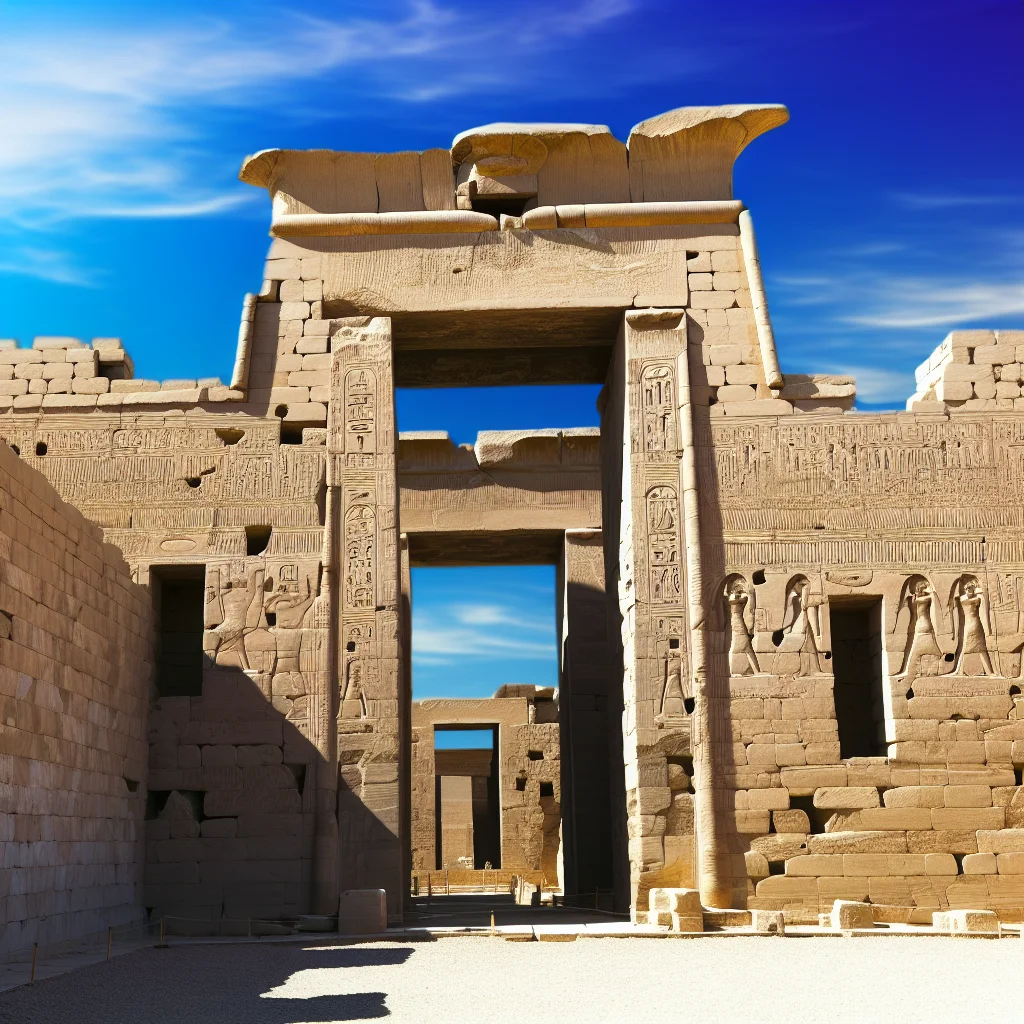
Edfu Temple Egypt Guide 2026: Temple of Horus & Dramatic Battle Reliefs
PtolemaicEdfu Temple near Aswan: Temple of Horus with stunning battle scenes, ritual texts, and the best-pres...
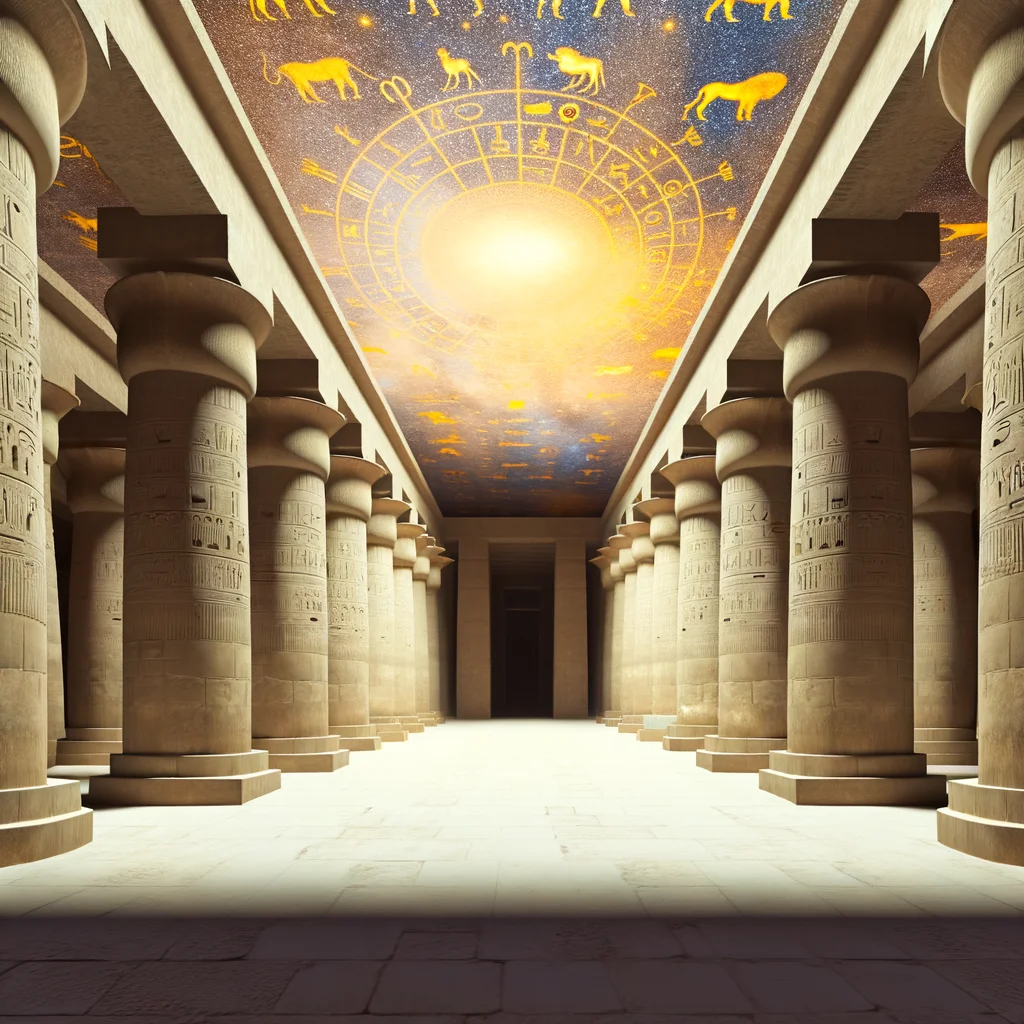
Dendera Temple Complex Egypt Guide 2026: Temple of Hathor & Zodiac Ceiling
Ptolemaic-RomanExplore Dendera's magnificent Temple of Hathor near Luxor. Star-mapped zodiac ceiling, Ptolemaic arc...
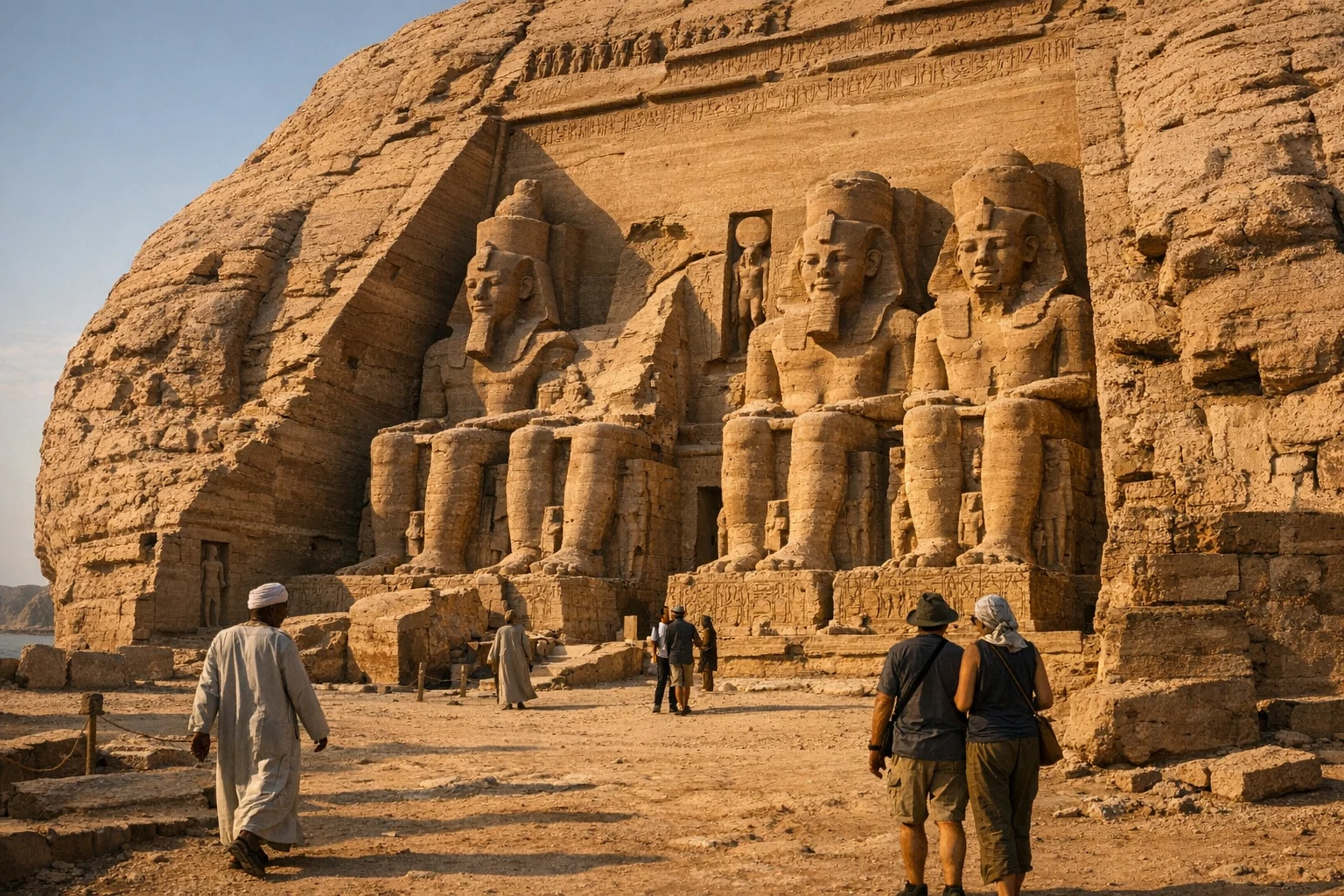
Abu Simbel
Ancient EgyptianDiscover Abu Simbel in Egypt, where colossal rock-cut temples of Ramses II rise above Lake Nasser ne...