Quick Info
Curated Experiences
Saqqara, Memphis, and Dahshur Day Tour from Cairo
Private Guided Tour to Saqqara and the Pyramid of Unas
Full-Day Ancient Egypt Pyramids, Saqqara and Memphis Tour
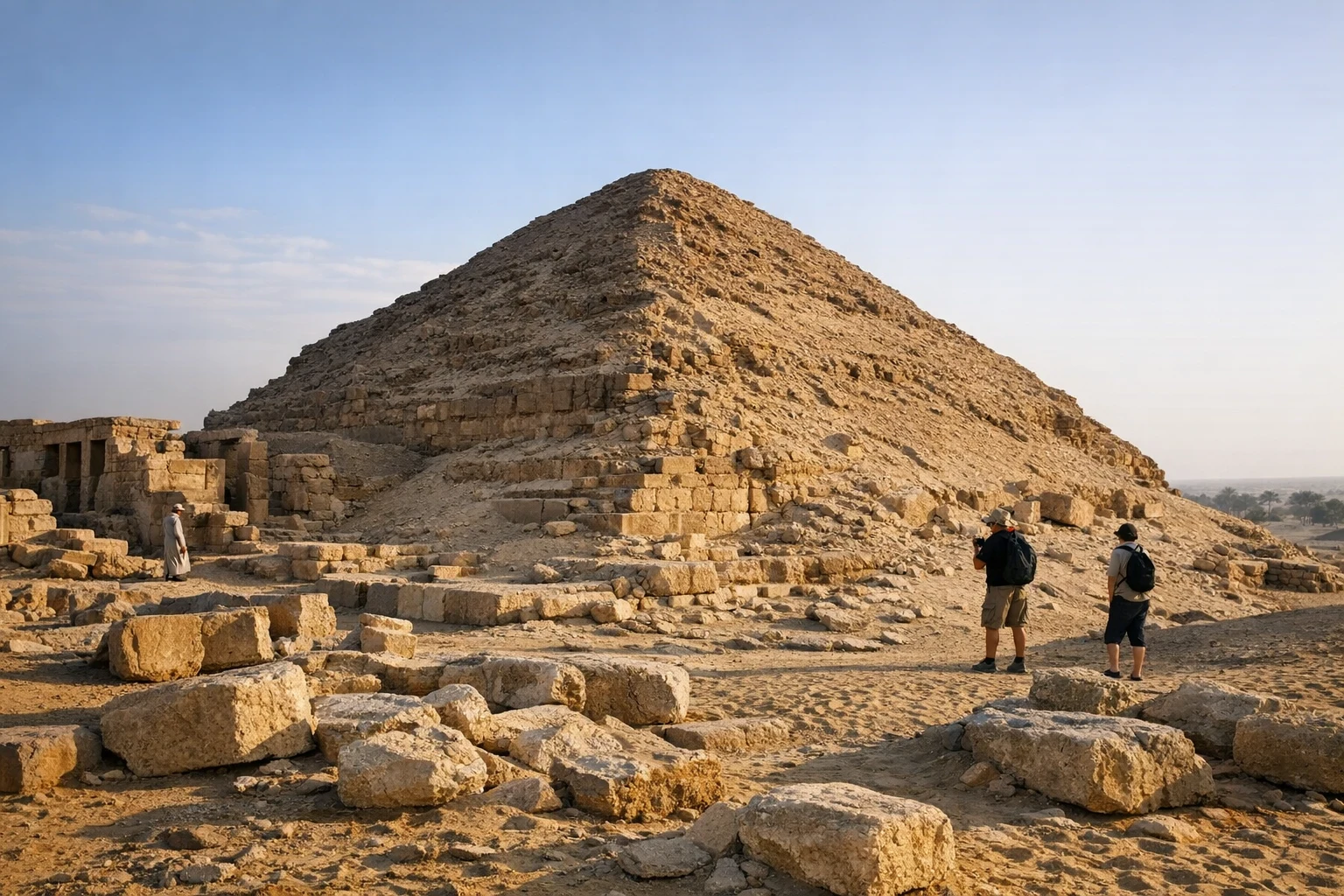
Beneath the eternal blue skies of Egypt, where the sand dunes of history drift across the horizon, the Pyramid of Unas stands as a profound testament to ancient Egyptian ingenuity. Located at Saqqara, in the Giza Governorate just south of Cairo, this relatively modest pyramid forms an integral part of the hallowed necropolis that gave birth to the world’s most iconic funerary architecture. To wander the grounds of the Pyramid of Unas is to walk in the footsteps of pharaohs, priests, and artisans who established cultural and religious precedents for millennia to come. Although it may not possess the soaring height or intact grandeur of the Great Pyramid, the Pyramid of Unas captures the devoted and mystic craftsmanship of Egypt’s Old Kingdom, most notably as the pioneer monument adorned with the “Pyramid Texts.”
As you approach through the shifting light and shadow of Saqqara’s landscape, the remains of the Pyramid of Unas merge with the greater story of Egypt’s ancient rulers. It was here, over 4,300 years ago, that King Unas, the last pharaoh of the Fifth Dynasty, supervised the creation of a tomb not merely as a place of interment, but as a monument to his divine journey. The surrounding sands cradle not only his pyramid, but also mastabas belonging to esteemed officials—each structure echoing the ambition and faith of a civilization obsessed with immortality. For archaeologists, travelers, and dreamers alike, visiting the Pyramid of Unas offers a rare opportunity: to examine the transition between known, visible stonework and the intangible legacies written in the world’s earliest monumental inscriptions.
History
The Creation of the Pyramid of Unas
The Pyramid of Unas was built during the twilight years of Egypt’s Fifth Dynasty, a period that spanned c. 2494–2345 BCE. Unas ascended the throne during a time of both stability and gradual transformation in royal ideology, and his pyramid project at Saqqara marked the culmination of Fifth Dynasty funerary traditions. The necropolis at Saqqara had already witnessed the construction of the Step Pyramid of Djoser nearly two centuries earlier—a marvel that forever changed Egyptian tomb architecture. But Unas aimed for something distinct: a pyramid that would not only hold his remains but also inscribe his journey to the afterlife in words as enduring as stone.
Construction began with a core of roughly hewn limestone blocks, surrounded by a fine white Tura limestone casing. Today, much of this outer casing has vanished, eroded by time, natural disasters, and reuse as construction material in later ages. Yet, the underlying structure remains a powerful symbol of Old Kingdom innovation. While its base measures approximately 57.7 meters per side and its original height reached about 43 meters—a more modest scale compared to its predecessors—the Pyramid of Unas set the tone for later royal projects in several crucial ways.
The Pyramid Texts: Literature in Stone
Perhaps the most pivotal development within the Pyramid of Unas is the introduction of the Pyramid Texts, scripture-like inscriptions that mark the earliest known corpus of religious texts in the world. Prior Old Kingdom pyramids bore little interior decoration; they stood as silent guardians. Unas, however, sought to raise his prospects for divine resurrection by sanctifying his burial chambers with spells, hymns, and divine utterances. These inscriptions were not merely decorative: they served as magical invocations intended to assist the deceased pharaoh on his perilous journey through the afterlife.
Etched in delicately painted hieroglyphics that adorn the tunnel-like corridors and burial chamber, the Pyramid Texts articulate detailed instructions, prayers, and celestial knowledge—a mystical literature that shaped all future Egyptian funerary practices. Later pharaohs and even non-royal elites would incorporate these texts, making Unas’s innovation a cornerstone of ancient Egyptian religious culture.
Decline and Rediscovery
Over centuries, the necropolis of Saqqara became a silent record of Egypt’s changing fortunes. Tomb robbers, shifting sands, and the reuse of pyramid stones for newer construction caused damage, and the site fell into obscurity for long periods. It wasn’t until the 19th and early 20th centuries—amid the wave of global Egyptomania and formal archaeology—that the Pyramid of Unas was excavated in earnest by Gaston Maspero, who first documented and translated the now-famous Pyramid Texts. Since then, the site has served as a powerful source of historical, religious, and linguistic knowledge.
Modern-day visitors can wander among these surviving remnants and witness not just the grandeur of ancient architecture, but the very words with which a civilization sought to guarantee their rulers’ immortality.
Key Features
The Pyramid of Unas may appear understated at first glance—especially set against the dramatic skyline of Saqqara, with its famed Step Pyramid and sprawling necropolis. Yet a closer inspection reveals a monument of profound innovation and subtle artistry, both above and below ground.
On approach, the pyramid is noticeably low and eroded, its once-smooth outer casing now largely stripped away. The rough remains evoke a sense of history’s passage, yet the monument’s structure is unmistakable. The causeway, originally lined with reliefs depicting royal victories and sacred ceremonies, connected the valley temple to the mortuary temple at the pyramid’s eastern face. Traces of these scenes still cling to the stone surfaces in sheltered corners, hinting at the splendid decorations that would have greeted ancient visitors—celebrations of kingly power, offerings to the gods, and rituals intended to renew the universe with Unas at its center.
Arguably the most significant part of the pyramid lies beneath its weathered exterior. The entrance, once sealed against tomb raiders, leads into a series of descending corridors narrowing into the heart of the structure. This passage opens into the antechamber and the burial chamber, both astonishing for their decoration. The walls are etched floor to ceiling with hundreds of hieroglyphic texts—every passage cut with care to encode the spells, utterances, and myths known as the Pyramid Texts. Unlike later tombs that favored vivid paintings, this chamber’s beauty is in the solemn, shadowed glow of incised hieroglyphs filling the narrow space, making the interior feel less like a room and more like a scripture-laden cocoon meant to cradle the king for eternity.
Some blocks retain faint traces of the original blue and green pigments, evocative of the Nile’s fertility and the heavens above. The sarcophagus, hewn from a massive block of basalt, still sits in the burial chamber. While looters removed any royal treasures long ago, the spiritual power of the space is palpable even to modern eyes.
Around the pyramid, the greater Unas complex includes the remains of a mortuary temple, an offering hall, storage chambers, and a cult pyramid—features typical of a royal Old Kingdom pyramid complex but executed on a slightly smaller, more intimate scale. Surrounding mastabas bear the names and histories of Unas’s most loyal officials, while the causeway suggests ceremonial processions and moments of communal remembrance. Each stone, whether weathered or inscribed, tells its part in the ageless drama of Egypt’s ancient state.
Getting There
Visiting the Pyramid of Unas is a memorable excursion whether you are an adventurous independent traveler or prefer the guidance of a knowledgeable tour operator. Saqqara is located roughly 30 kilometers south of central Cairo and is well-connected by major roads.
The most convenient way to reach the Pyramid of Unas is by private car or taxi. Local taxis from Cairo to Saqqara typically cost between 250–400 EGP ($8–$13 USD) one way, depending on negotiation and traffic. It’s best to confirm your rates in advance and, if possible, request that the driver waits for your return journey. Ride-hailing apps, such as Uber and Careem, also service this route for a similar price, though you should check app coverage and availability.
For those seeking a more structured experience, organized day tours are readily available from Cairo. Many tours combine Saqqara with other highlights in Memphis and Dahshur, offering transport, entrance fees, and expert guides for an all-in-one experience. Prices for group tours typically start around $35–$60 USD per person, with private tours beginning at $80–$120 USD, depending on the itinerary inclusions.
Public transportation is an option for the adventurous, albeit less efficient. Minibuses depart from Giza or central Cairo towards Saqqara village, but routes can be inconsistent, convenient only for those comfortable with a blend of walking and haggling for onward private rides between the village and the necropolis.
Upon arrival at Saqqara, the Pyramid of Unas is within easy walking distance from the main entrance and neighboring the more famous Step Pyramid of Djoser. Clear signposting and local site maps make navigation straightforward. As always in Egypt, it’s advisable to carry bottled water, sun protection, and small change for tips or incidental expenses.
When to Visit
The Pyramid of Unas, like much of Egypt, is open to visitors year-round, but timing your trip can significantly enhance your comfort and the overall experience of this ancient monument.
The most favorable period to visit is during the winter and early spring months, from November to March. During this season, daytime temperatures are comfortable, typically ranging from 18°C to 25°C (64°F to 77°F), with clear skies and manageable crowds. The mild weather and lower risk of dehydration make it ideal for exploring outdoor sites such as Saqqara, where shade is minimal and reflective limestone can intensify the sun’s rays.
The shoulder months of October and April can also be pleasant, though temperatures start to climb toward midday. Early arrivals are especially rewarding: the cooler air, golden morning light, and relatively sparse visitor numbers allow for a more tranquil and reflective experience amid the ruins.
Summer (May through September) brings extreme heat, with daytime highs frequently surpassing 35°C (95°F) and little respite from the sun. If you must visit during these months, plan to arrive as early as opening hours allow, bring plenty of water, and wear a wide-brimmed hat and sunscreen. Note that the heat can intensify inside buried or stone-lined chambers, and many visitors choose to limit their time exploring underground spaces during peak midday hours.
Official opening hours at Saqqara necropolis usually span from 8:00 AM to 4:00 PM, but these may adjust during Ramadan or national holidays. Entrance tickets to the necropolis are required and grant access to the Pyramid of Unas as well as surrounding monuments. For up-to-date opening times, entry fees, and potential maintenance closures, consult the Egyptian authorities’ websites or reputable travel operators before setting out.
Whether you come under the cool shadow of winter or the relentless brilliance of summer, the Pyramid of Unas is sure to leave a lasting imprint—one shaped by the tireless hands of Egypt’s ancient builders and the timeless power of immortal words.
Quick Facts
| Fact | Detail |
|---|---|
| Name | Pyramid of Unas |
| Location | Saqqara, Giza Governorate, Egypt |
| Built | c. 2375–2345 BCE (Fifth Dynasty, Old Kingdom) |
| Builder | Pharaoh Unas |
| Height (original) | 43 meters (141 ft) |
| Base | 57.7 meters per side (189 ft) |
| Distinctive Feature | First pyramid to feature Pyramid Texts (oldest known religious texts) |
| Material | Limestone (core and casing), basalt sarcophagus |
| Occupant | Unas, last king of Egypt’s Fifth Dynasty |
| Associated Sites | Step Pyramid of Djoser, Mastabas of high officials, causeway, valley and mortuary temples |
| UNESCO World Heritage | Yes (as part of Memphis and its Necropolis) |
| Nearest Big City | Cairo (approx. 30 km/19 mi north) |
| Accessibility | Via private car, taxi, group tour, or organized excursion |
| Site Opening Hours | Typically 8:00 AM – 4:00 PM; seasonal/holiday variation possible |
Frequently Asked Questions
Where is the Pyramid of Unas located?
The Pyramid of Unas is located at Saqqara in the Giza Governorate, just south of Cairo, Egypt.
Is the interior of the Pyramid of Unas open to visitors?
Access to the inner chambers and corridors may occasionally be permitted for tours or research, but entry is often restricted for conservation reasons. Check with local authorities or your tour provider before your visit.
What makes the Pyramid of Unas unique compared to other pyramids?
The Pyramid of Unas is the first to feature the 'Pyramid Texts,' a collection of religious inscriptions that later influenced all subsequent pyramids and tombs.
What is the best way to reach the Pyramid of Unas from Cairo?
The Pyramid of Unas is roughly 30 km south of Cairo. The easiest way to reach the site is by private car, taxi, or organized tour.
What should visitors wear when visiting the Pyramid of Unas?
Wear comfortable, light clothing and sturdy shoes, as the area is sandy and exposure to the sun can be intense. Remember to bring water and sun protection.
Are there entrance fees to visit the Pyramid of Unas?
Yes, there are entrance fees, usually included in Saqqara necropolis tickets. Prices vary for locals and foreigners, and extra charges may apply for photography.
Is photography allowed inside the Pyramid of Unas?
Photography may be restricted in the inner chambers to preserve the Pyramid Texts, but photography is usually permitted in the surrounding area.
Which civilization built the Pyramid of Unas?
The Old Kingdom Egyptians, during the 5th Dynasty, constructed the Pyramid of Unas as a royal burial place.
Nearby Ancient Sites
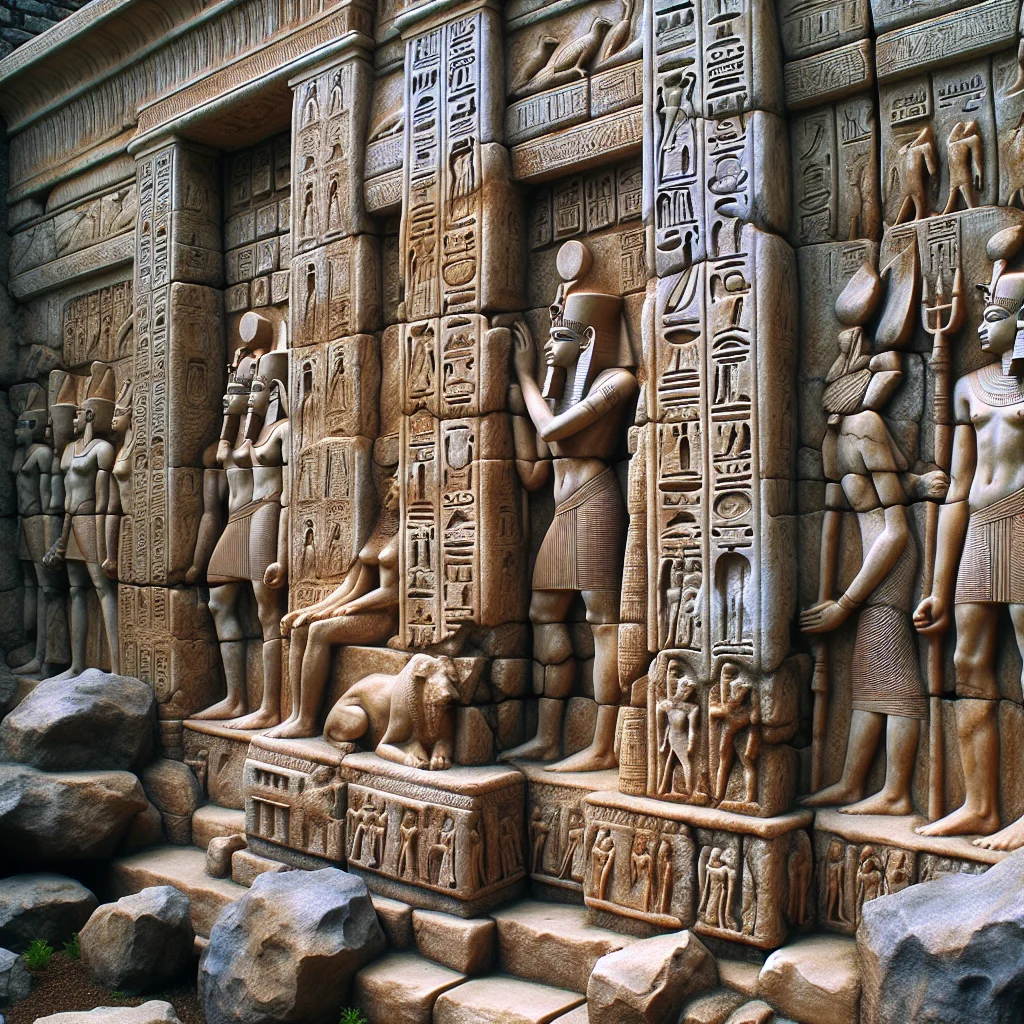
Abydos Temple Egypt Guide 2026: Temple of Seti I & King List
New Kingdom-PtolemaicAbydos Temple near Luxor: magnificent Temple of Seti I with war reliefs, ancient king list, and vibr...
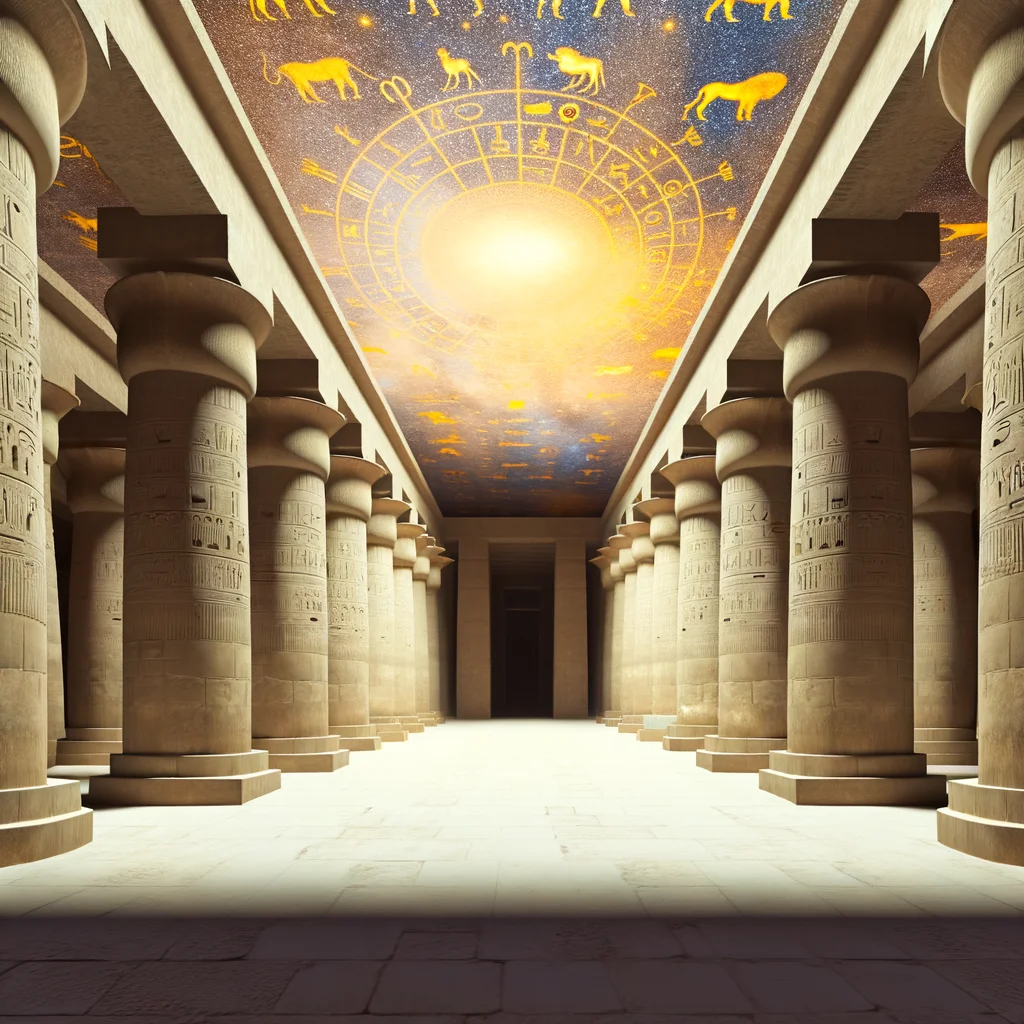
Dendera Temple Complex Egypt Guide 2026: Temple of Hathor & Zodiac Ceiling
Ptolemaic-RomanExplore Dendera's magnificent Temple of Hathor near Luxor. Star-mapped zodiac ceiling, Ptolemaic arc...
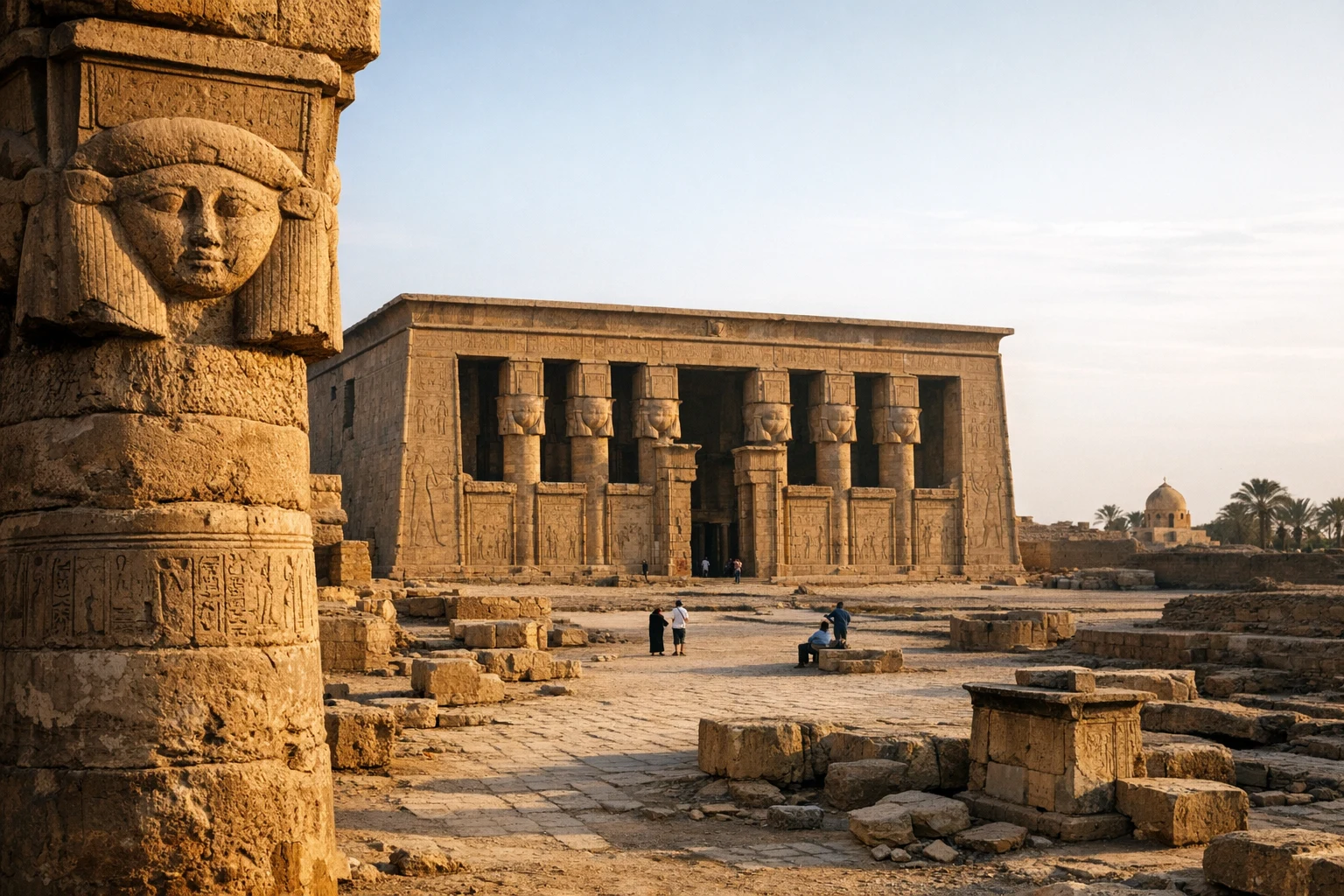
Dendera Temple Complex
The Dendera Temple Complex in Egypt is a remarkably preserved ancient site renowned for its grand Te...