Quick Info
Curated Experiences
Xi'an Qianling Mausoleum and Tang Imperial Tombs Day Tour
Xi'an Full-Day Historical Sites Tour Including Tang Imperial Tombs
Xi'an Private Day Trip to Qianling and Princess Yongtai Tomb
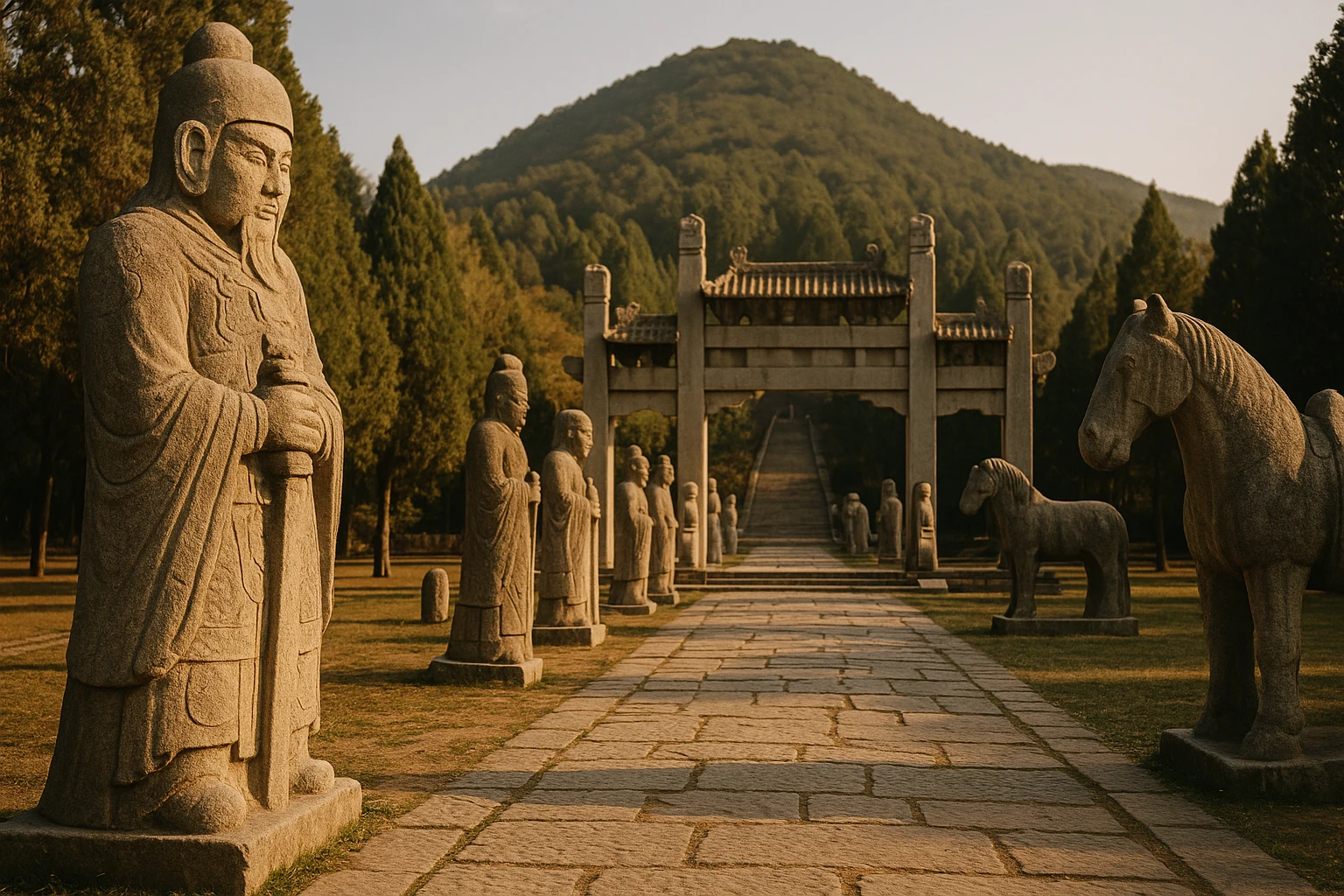
Seventy-eight kilometers northwest of Xi’an, where the dusty Guanzhong Plain gives way to rolling hills, Mount Liang rises sharply against the Shaanxi sky. From a distance it looks like a natural double peak, but visitors approaching the Qianling Mausoleum in China quickly realize the summit has been sculpted by human hands — or rather, that two Tang emperors rest inside the mountain itself, sealed within a chamber that has never been opened. The long ceremonial avenue leading to the burial mound, lined with towering stone horses, ostriches, winged horses, and officials, stretches more than a kilometer through open countryside. At its midpoint stand sixty-one stone figures that once represented foreign dignitaries — every one of them now headless, their weathered torsos still attending in perpetual silence the funeral that ended more than thirteen centuries ago. Qianling Mausoleum is the joint resting place of Tang Emperor Gaozong and his empress, Wu Zetian, the only woman in Chinese history to rule as emperor in her own name. Together they oversaw one of the most expansive and cosmopolitan periods in Chinese civilization. Their tomb, unlooted and unexcavated, is believed to contain art treasures and imperial documents of extraordinary value. Even without those hidden riches, what stands above ground — the stone sculptures, the paired steles, the satellite tombs with their dazzling murals — makes Qianling one of the most important imperial burial sites in all of East Asia.
History
The Tang Dynasty and the Making of an Empire
When Gaozong ascended the Tang throne in 649 CE following the death of his father, the great Emperor Taizong, the dynasty was already a continental power. Taizong had rebuilt Chinese unity after centuries of fragmentation, and his armies had opened the Silk Road to Central Asian trade and culture. Gaozong inherited this momentum and pressed it further. Under his reign, Tang armies reached their greatest territorial extent, pushing west into Central Asia, north into Korea, and south into what is now Vietnam. Chang’an — the Tang capital, modern Xi’an — became the world’s most populous city, a cosmopolitan hub where Persian merchants, Sogdian musicians, Nestorian Christians, and Buddhist pilgrims jostled in the same marketplace.
Empress Wu Zetian: From Consort to Emperor
The story of Qianling Mausoleum cannot be told without the story of Wu Zetian, a woman whose political career defied every convention of her era. She had originally entered the imperial household as a consort of Taizong, but after his death she became closely allied with the new emperor, Gaozong, eventually becoming his empress consort. As Gaozong’s health declined in the 660s, Wu assumed an increasingly dominant role in governance, co-ruling alongside him in what contemporaries called a “dual rule.” When Gaozong died in 683 CE, Wu did not retire. She ruled first through two of her sons, then deposed them, and in 690 CE proclaimed herself emperor of a new dynasty she named Zhou — making her the only woman in four thousand years of Chinese imperial history to claim that title outright. Her reign, which lasted until 705 CE, was marked by pragmatic administration, aggressive use of the civil examination system to promote talent outside the aristocracy, and a flourishing of Buddhist art and architecture. She died later that year, leaving instructions that she be buried beside Gaozong at Qianling.
Construction and Completion
Construction of the mausoleum began the year after Gaozong’s death, in 684 CE. Tang engineers chose Mount Liang for both its symbolic elevation and its natural defensive qualities: rather than excavating a pit and piling earth above it, as earlier dynasties had done, they bored directly into the limestone mountain, creating a subterranean palace within the living rock. The sealed stone gate passage, located on the southern slope, has been located and surveyed in modern times but not opened. Work on the surrounding ceremonial precincts, including the Spirit Way, the paired steles, and the walls of the outer enclosure, continued for decades. With Wu Zetian’s interment in 706 CE, the construction of satellite tombs for imperial family members followed, expanding the total complex across an area of approximately 40 square kilometers. The Tang court lavished immense resources on the site, and historical records suggest that a significant portion of the state treasury was spent on funerary goods intended to furnish the main chamber.
Survival Through the Dynasties
Unlike many imperial tombs of comparable age, the main chamber at Qianling was never successfully looted. Robbers reportedly attempted to breach it multiple times — most famously during the chaotic Five Dynasties period that followed the Tang collapse — but found the mountain’s granite core impenetrable. The satellite tombs fared worse and were plundered over the centuries, which is partly why archaeologists chose to excavate them in the 1960s through 1990s: if the chambers had already been disturbed, controlled excavation could at least recover what remained. The above-ground stone sculptures suffered attrition from earthquakes and neglect. The site was formally protected after the establishment of the People’s Republic and today is administered as the Qianling Museum, a national-level cultural heritage site.
Key Features
The Spirit Way
The ceremonial avenue known as the Spirit Way, or Shendao, is the defining visual experience of Qianling and one of the grandest examples of Tang funerary art anywhere in China. It runs roughly north to south for more than a kilometer, beginning at a pair of tall watch towers and progressing through successive pairs of stone monuments toward the burial mound. The sequence is deliberate and symbolic: first come paired pillars, then winged horses representing the mythological steeds that carry the deceased to heaven, followed by ostriches — a reminder of Silk Road contacts that brought exotic animals to Tang Chang’an from as far as Persia and Arabia — then five pairs of saddled horses attended by grooms, and finally two groups of stone officials. The quality of the carving is exceptional. The horses are rendered with a naturalism that reflects the Tang obsession with the animal; the dynasty’s aristocracy were celebrated equestrians, and horse imagery permeates their art. Walking the Spirit Way on a clear morning, with the double summit of Mount Liang ahead and the plain stretching away behind, produces a sense of scale and solemnity that is difficult to match at any other site in China.
The Sixty-One Headless Envoys
Just inside the northern gate of the enclosure stand two groups of stone figures arranged in rows, thirty-one to the east and thirty to the west. These are the famed sixty-one headless statues, each representing a foreign dignitary or envoy who attended Emperor Gaozong’s funeral. Their presence here was a deliberate political statement: it proclaimed the Tang empire’s global reach, illustrating that rulers and ambassadors from across the known world came to pay respects at the Chinese court. Traces of paint and inscriptions on the backs of some figures identify individuals from kingdoms as distant as Persia, Japan, and the states of the Western Regions along the Silk Road. The loss of the heads — almost certainly a combination of seismic damage and human vandalism accumulated over thirteen centuries — lends the figures an eerie, powerful quality. Their uniformly courtly robes and clasped-hand posture remain fully intact, making the missing heads feel all the more conspicuous.
The Paired Steles
Near the approach to the burial mound stand two massive steles that encapsulate the contrasting legacies of the mausoleum’s two occupants. The stele of Emperor Gaozong is covered in text composed by Wu Zetian herself after his death, cataloguing his virtues and achievements in florid Tang prose. Beside it stands the Wordless Stele — Wu Zetian’s own monument, blank on all four faces. Standing more than six meters tall and weighing over a hundred tons, the uncarved stone has become one of the most discussed objects in Chinese imperial history. Scholars have proposed several interpretations: that Wu believed her accomplishments surpassed any written summary; that she left the stele blank as a challenge to posterity to judge her; or that political reversals in her final days prevented an inscription from being completed. The ambiguity is part of the monument’s enduring fascination.
The Satellite Tombs and Their Murals
Ringing the main mausoleum are seventeen subsidiary tombs for Tang imperial relatives, of which five have been excavated and opened to visitors. The most celebrated are the tomb of Princess Yongtai — Gaozong’s granddaughter, who died aged seventeen — and the tomb of Prince Zhanghuai. Both contain murals of breathtaking quality that were executed by court painters in the early eighth century. The Yongtai tomb’s inner chamber walls depict processions of court ladies in layered silk robes, their hairstyles, jewelry, and postures recorded with the precision of a documentary photograph. The Zhanghuai tomb includes a famous polo-playing scene that captures the Tang aristocracy’s passion for the sport, as well as images of foreign envoys that closely parallel the stone figures outside on the Spirit Way. Many of the finest individual pieces — painted pottery figures, gold and silver vessels, jade ornaments — have been removed to the on-site Qianling Museum, where they are displayed in temperature-controlled galleries.
Getting There
Qianling Mausoleum is located in Qian County, administered under Xianyang City, approximately 80 kilometers northwest of Xi’an. Most visitors arrive from Xi’an, which has high-speed rail connections to Beijing, Chengdu, Chongqing, and Shanghai.
The most practical option for independent travelers is a guided day tour departing from Xi’an. Tour agencies and hotel desks throughout the city offer full-day itineraries that typically combine Qianling with one or two satellite tombs and sometimes the nearby Zhao Mausoleum (resting place of Taizong). Prices range from roughly 200 to 500 CNY per person depending on group size and inclusions.
For those who prefer flexibility, hiring a private car through a Xi’an agency or a ride-sharing platform costs approximately 300 to 450 CNY for the round trip, with the driver waiting while you explore. The drive takes about 90 minutes in normal traffic.
A budget-friendly public transport option involves taking an intercity bus from Xi’an’s Xiguan long-distance bus station to Qianxian County (roughly 15 CNY, about 90 minutes), then transferring to a local taxi for the short final leg to the mausoleum entrance (around 20 CNY). Return buses to Xi’an run until late afternoon; confirm the last departure time before setting out.
Admission to the main mausoleum park is approximately 122 CNY, covering the Spirit Way precinct and access to several satellite tomb museums. An all-inclusive ticket that adds the Qianling Museum galleries costs slightly more. Children under 1.2 meters enter free.
When to Visit
Shaanxi Province has a continental climate with hot summers and cold winters, and the best seasons for visiting Qianling Mausoleum are spring and autumn.
Spring (March to May) brings mild temperatures, clear skies, and wildflowers on the surrounding slopes. The light in the Guanzhong Plain during April is particularly good for photography, casting long shadows across the Spirit Way sculptures in the early morning hours. Weekends can draw school groups, so aim for a weekday if possible.
Autumn (September to November) is arguably the finest time. Temperatures drop to comfortable levels after the summer heat, the harvest-season air is unusually clear, and the golden tones of the surrounding farmland complement the warm stone of the sculptures. October around the National Day holiday (October 1–7) is the busiest week of the entire year; avoid it unless you do not mind large crowds.
Summer (June to August) is hot and occasionally humid, with temperatures exceeding 35°C in July. The site is largely unshaded, so early-morning visits are strongly advisable. Carry water and sun protection.
Winter (December to February) is cold and sometimes snowy, but visitor numbers drop sharply, and a dusting of snow on the stone horses and the mountain summit creates a striking atmosphere. Several satellite tomb museums maintain the same hours year-round, making winter a rewarding choice for those focused on the murals rather than the outdoor sculptures.
The site opens daily at 8:00 AM and closes at 6:00 PM (last entry 5:30 PM), with slightly reduced hours in winter months.
| Quick Facts | |
|---|---|
| Location | Qian County, Xianyang, Shaanxi Province, China |
| Coordinates | 34.5798° N, 108.2425° E |
| Established | 684 CE |
| Dynasty | Tang Dynasty |
| Occupants | Emperor Gaozong (d. 683 CE) and Empress Wu Zetian (d. 705 CE) |
| Status | Unexcavated; nationally protected cultural heritage site |
| Site Area | ~40 sq km (entire complex including satellite tombs) |
| Admission | ~122 CNY (main park); all-inclusive ticket slightly higher |
| Opening Hours | 8:00 AM – 6:00 PM daily (last entry 5:30 PM) |
| Nearest City | Xi’an, ~80 km southeast |
| Best Seasons | Spring (March–May) and Autumn (September–November) |
| UNESCO Status | Not inscribed; on China’s tentative list |
Frequently Asked Questions
Who is buried at Qianling Mausoleum?
Qianling Mausoleum is the joint burial site of Tang Dynasty Emperor Gaozong (Li Zhi) and his empress, Wu Zetian — the only woman in Chinese history to rule as emperor in her own right. Gaozong died in 683 CE, and Wu Zetian was interred beside him after her death in 705 CE.
Has the main burial chamber of Qianling been excavated?
No. The primary burial chamber carved into Mount Liang has never been opened. Archaeological surveys have confirmed the sealed stone entrance passageway, but Chinese authorities have elected to leave it undisturbed, both to preserve fragile contents and to respect the site's cultural significance.
Why are the 61 stone statues at Qianling headless?
The 61 stone statues representing foreign envoys who attended Emperor Gaozong's funeral lost their heads over the centuries, most likely through a combination of earthquakes, weathering, and periodic vandalism. Some accounts place significant damage in the Ming Dynasty period, though the precise cause remains debated.
How do I get from Xi'an to Qianling Mausoleum?
Qianling Mausoleum lies about 80 km northwest of Xi'an in Qian County, Xianyang. Options include a guided day tour from Xi'an (the easiest choice), a hired private car for roughly 300–400 CNY round trip, or an intercity bus from Xi'an's Xiguan bus station to Qianxian followed by a short local taxi ride.
What is the Wordless Stele at Qianling Mausoleum?
The Wordless Stele (Wuzi Bei) is a large blank stone tablet Wu Zetian erected for herself beside the inscribed memorial stele of Emperor Gaozong. It bears no text. Historians debate whether this was deliberate — reflecting Wu's belief that her deeds exceeded written praise — or an unfinished project left incomplete at her death.
What other tombs are part of the Qianling complex?
The broader Qianling complex includes seventeen satellite tombs for members of the Tang imperial family. The most visited are the Tomb of Princess Yongtai, famous for its vivid murals, and the Tomb of Prince Zhanghuai. Several satellite tombs have been excavated and converted into on-site museums displaying their extraordinary wall paintings and burial goods.
Nearby Ancient Sites
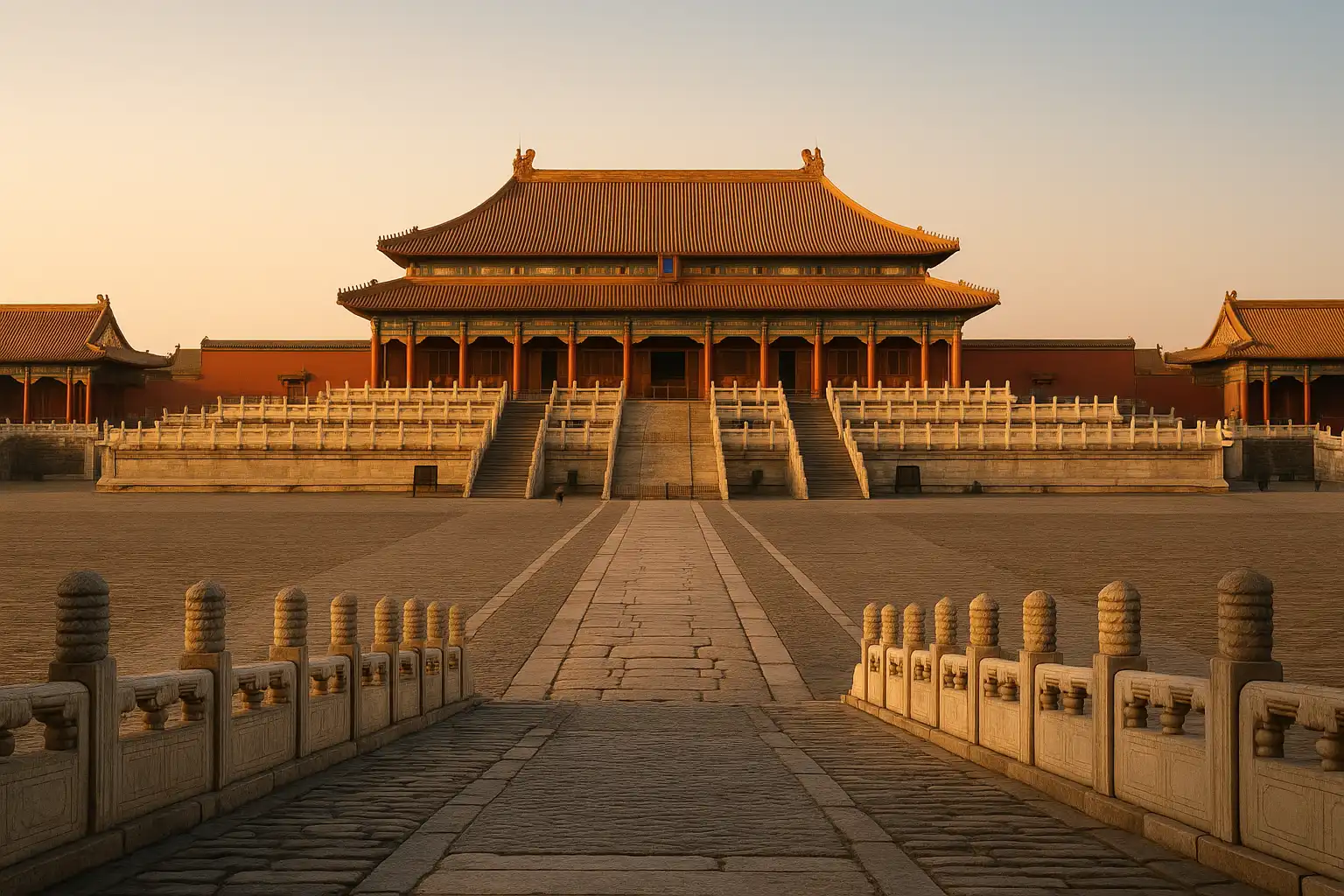
Forbidden City China Travel Guide 2026: Imperial Palace of Beijing
Chinese ImperialExplore the Forbidden City, China's imperial palace for 500 years. Discover the Hall of Supreme Harm...
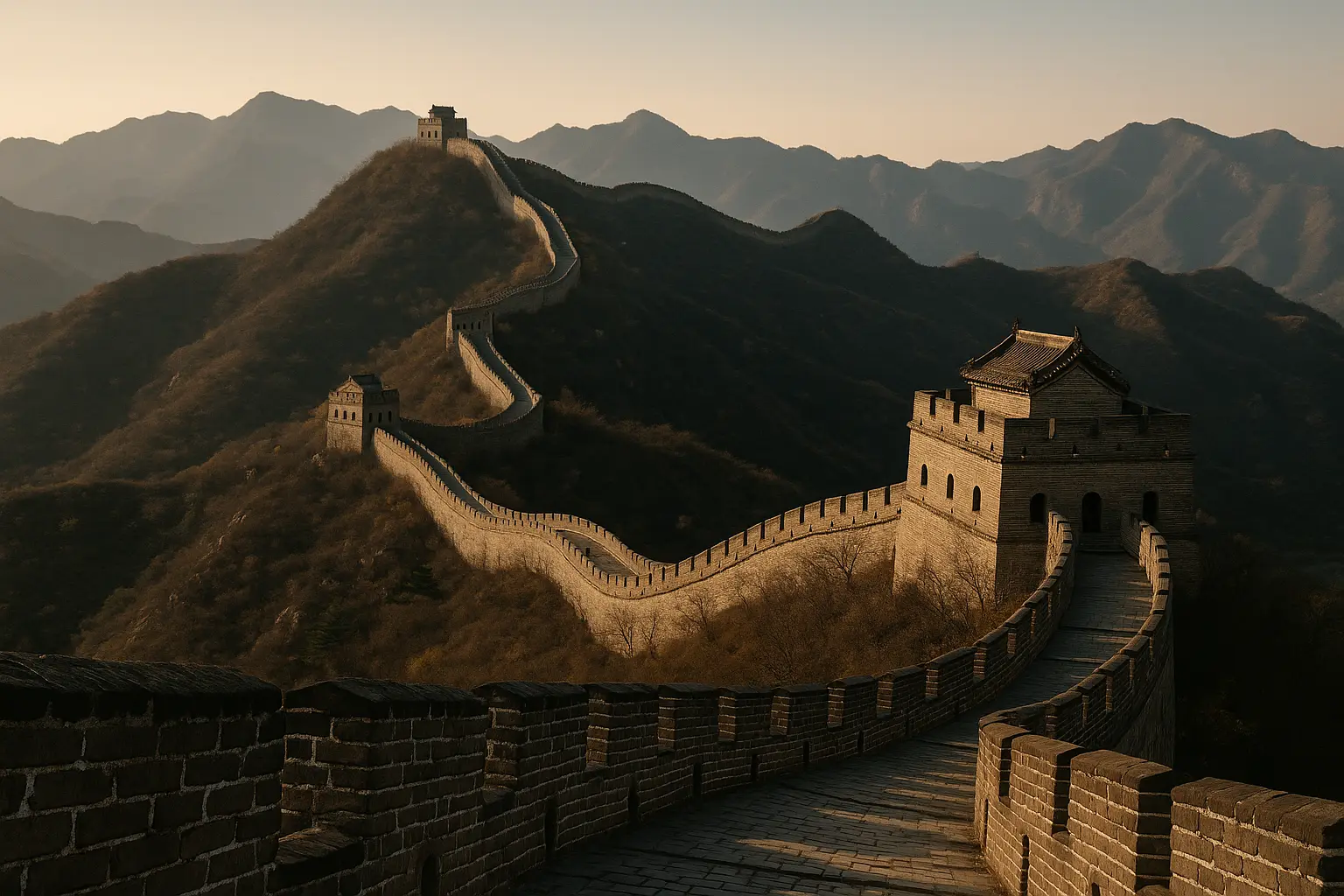
Great Wall of China Badaling Travel Guide 2026: Iconic Fortification
Chinese ImperialVisit Badaling, the most famous section of the Great Wall of China. Our guide covers tickets, cable ...
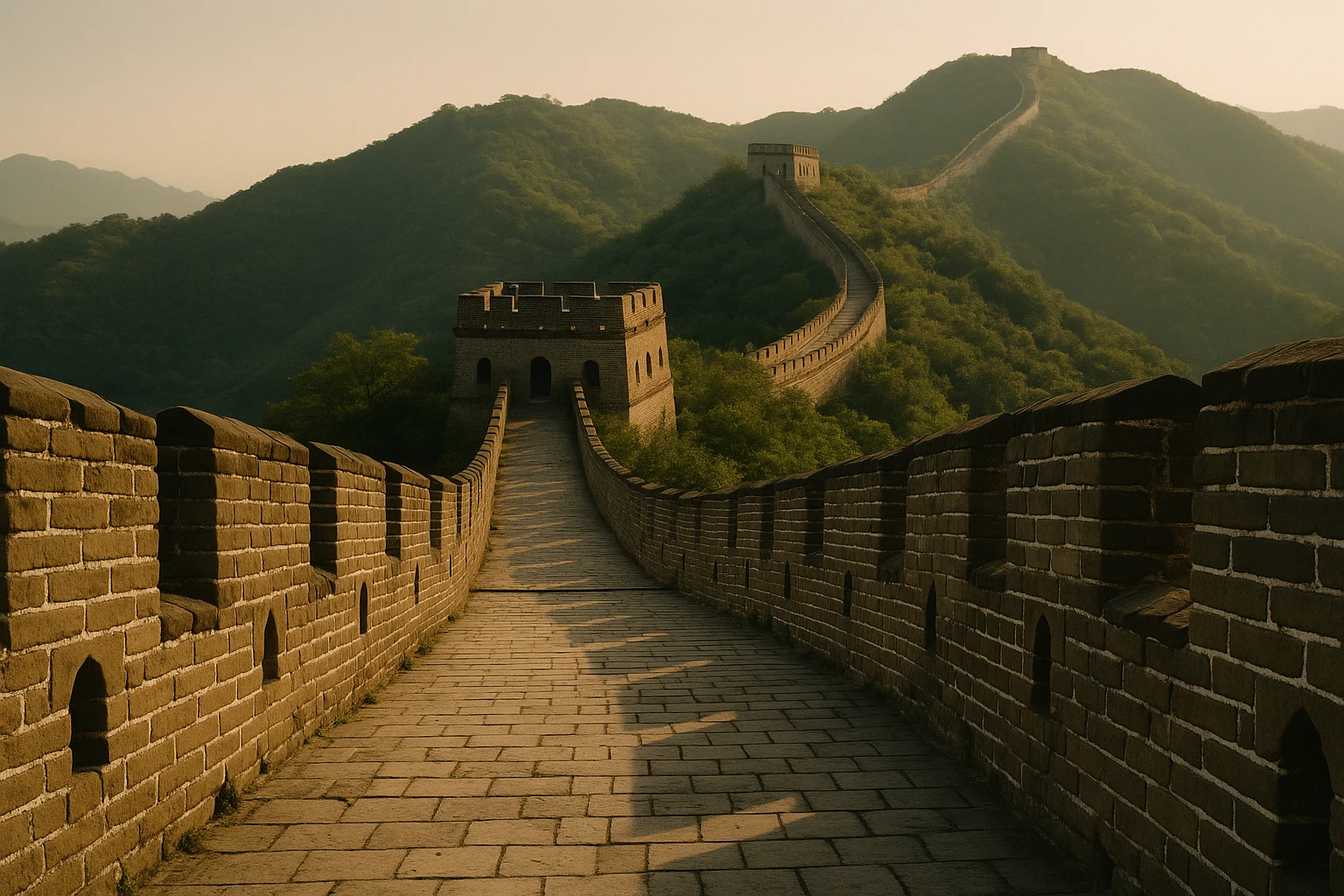
Great Wall of China (Mutianyu)
Explore Mutianyu — the Great Wall's most dramatic restored section, with 22 Ming-era watchtowers, mo...
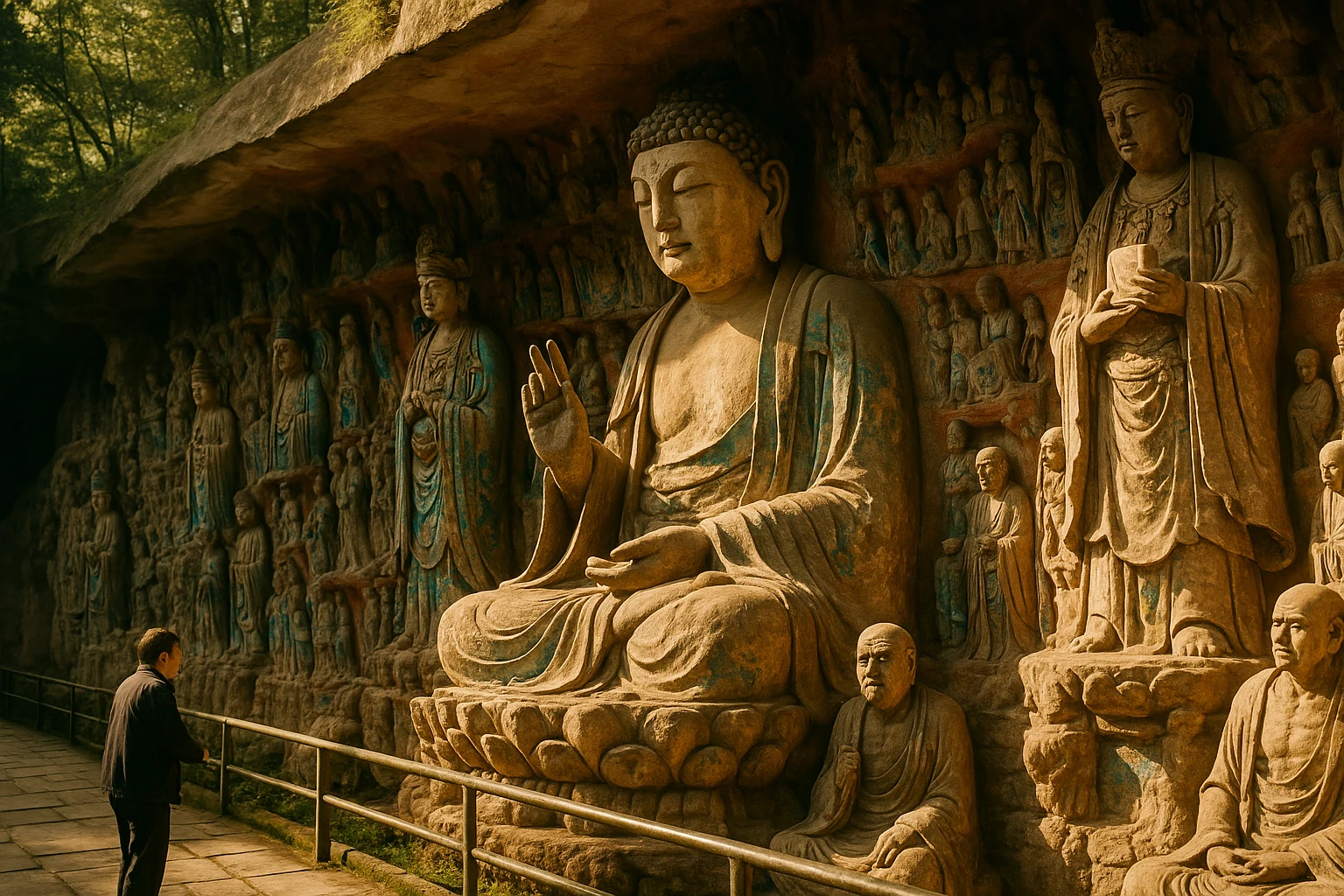
Dazu Rock Carvings
Tang and Song Dynasty ChinaAncient Buddhist, Taoist, and Confucian rock sculptures carved into cliffsides across Dazu District,...