Quick Info
Curated Experiences
Ramesseum and Valley of the Kings Full-Day Tour from Luxor
West Bank Tour: Ramesseum, Habu Temple & Colossi of Memnon
Private Guided Tour of Luxor including Ramesseum
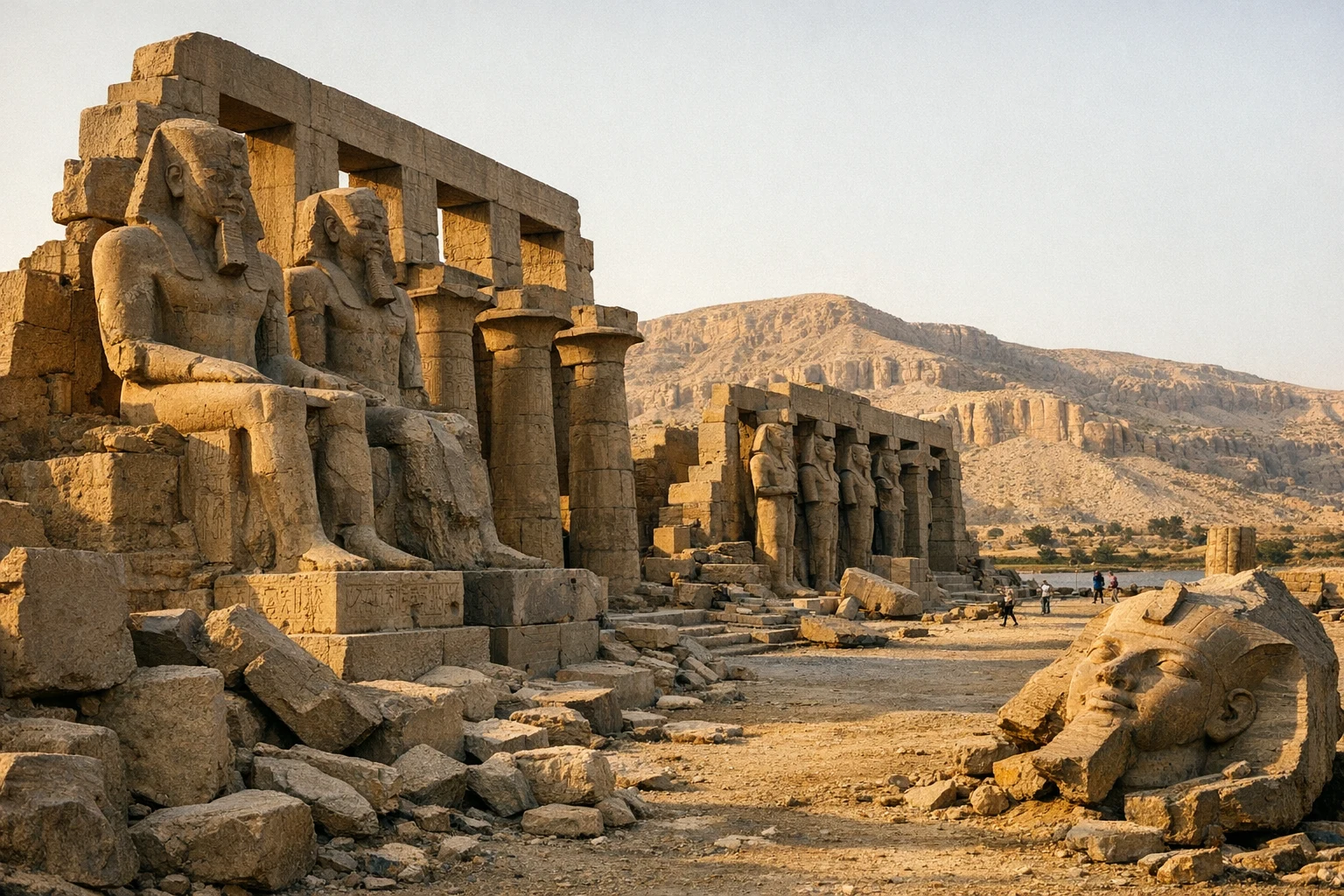
Set amidst the sweeping Theban Necropolis on the west bank of the Nile, the Ramesseum stands as one of Egypt’s most evocative ancient monuments. Rising in dignified ruin against the desert horizon, the mortuary temple of Ramses II—one of Egypt’s greatest pharaohs—invites both the well-traveled and the curious into a world where grandeur meets transience. The Ramesseum’s battered columns, colossal statues, and exquisite reliefs evoke a sense of awe reminiscent of the imperial ambitions that shaped dynastic Egypt. Here in the heart of Luxor Governorate, visitors trace footsteps worn by priests, artisans, and royalty alike. With every weathered hieroglyph and fractured sculpture, the Ramesseum proclaims not only the divine kingship of Ramses II but also the enduring narrative of Egypt’s ancient civilization, etched in stone and sand.
It’s easy to understand why the Ramesseum captures the imagination of travelers and scholars from across the world. Framed by palm groves and hemmed in by the haunting quiet of the desert edge, the temple complex is both a testament to human aspiration and a poignant reminder of time’s inevitable toll. Despite centuries of looting and erosion, the Ramesseum’s surviving towers and tablets hint at a structure once rivaling the most magnificent in Thebes. Walking beneath its mighty pylons and through its sun-drenched courtyards, visitors are enveloped by the same mystical aura that so entranced 19th-century explorers and inspired the poetry of Percy Bysshe Shelley. Today, the Ramesseum remains an essential link in Egypt’s monumental heritage—a must-visit for anyone drawn to the silent majesty of the ancient world.
History
The Vision of Ramses II
The genesis of the Ramesseum is inseparable from the personality and reign of Ramses II, often known as Ramses the Great. Ascending the throne in the 13th century BCE during Egypt’s Nineteenth Dynasty, Ramses II was a pharaoh of immense ambition, famed for his military campaigns, extensive building projects, and the cultivation of his own mythic legacy. In an age when kings sought to immortalize themselves through stone, Ramses II commissioned the Ramesseum as his mortuary temple—a place for the eternal worship of his divine spirit and a testament to his prowess as a ruler favored by the gods.
The temple was constructed during the early years of the pharaoh’s six decades-long reign, likely beginning around 1279 BCE and reaching completion two decades later. Ramses II’s architects chose a prime location: directly opposite ancient Thebes, close to the sacred Valley of the Kings where his tomb was to be carved, and surrounded by the necropolises of his royal predecessors. The site would serve not only as a funerary chapel but also as a monument to his reign, hosting rituals, festivals, and offerings to ensure his immortality in the afterlife.
Construction and Architectural Innovation
The construction of the Ramesseum was a monumental enterprise, drawing on Egypt’s finest artisans and laborers. The temple’s layout mirrored standard New Kingdom architectural principles, but its scale and decorative ambition were unprecedented. The first act was the raising of the great pylons, whose battered remains still loom above the desert. Colossal statues of Ramses II—one in particular reputed to have stood over 17 meters tall—guarded the entrance and projected the pharaoh’s power to all who approached.
The hypostyle hall, with its forest of towering papyrus columns, was adorned with scenes of royal triumphs and divine encounters. Surrounding the main sanctuary, storerooms, chapels, and subsidiary buildings supported the cult of the king and accommodated the priests, scribes, and workmen serving his spirit. Complex logistical feats were required to transport the massive stone blocks and statuary, including a fallen colossus whose shattered fragments still litter the ground. The inexorable flooding of the Nile, combined with pillaging and earthquakes over centuries, has left only traces of the original majesty.
Rediscovery and Modern Scholarship
Despite its grandeur, the Ramesseum was partially dismantled in antiquity as later rulers repurposed its masonry for their own projects. Sand engulfed its courtyards, and time obscured its significance. However, the temple was never wholly forgotten. In the 18th and 19th centuries CE, Egyptologists and travelers from Europe, including the French scholar Jean-François Champollion and British poet Percy Bysshe Shelley, documented its ruins. Shelley’s famous poem “Ozymandias” immortalized the shattered visage of the fallen Ramses, capturing the site’s profound symbolism of impermanence.
Systematic excavation began in the late 19th century, revealing the temple’s layout, inscriptions, and remnants of colorful frescoes. These efforts have continued through to the present day, with teams uncovering new artifacts, refining our understanding of its religious and social functions, and piecing together the story of the Ramesseum amid the wider landscape of ancient Thebes.
The Ramesseum in Cultural Memory
Today, the Ramesseum stands as one of the foremost archaeological sites of ancient Egypt, both for its historical value and its evocative power. Its preservation allows scholars to reconstruct the theology, art, and socio-political world of the New Kingdom. For modern Egypt, the site remains a symbol—one both of lost grandeur and of the enduring spirit that links the ancient and the present.
Key Features
Stepping into the Ramesseum, visitors immediately sense the interplay between monumental ambition and the passage of time. The most iconic feature is the vast, shattered colossus of Ramses II lying at the base of the temple’s first pylon—a once-towering statue that originally stood over 17 meters high and weighed nearly 1,000 tons. Its gigantic feet and regal face hint at the unrestrained self-image of Egypt’s mightiest pharaoh. The surviving pylons themselves, though battered, usher visitors forward with reliefs of military triumph and religious pageantry, narrating the pharaoh’s campaigns against the Hittites, most famously at the Battle of Kadesh.
Beyond the pylons, the hypostyle hall sprawls with more than 40 columns, some still standing, each elaborately decorated with scenes of gods, goddesses, and the king performing rituals. The intricacy of the painted capitals, still faintly visible under the sun-baked stone, testifies to the artistic mastery of New Kingdom craftsmen. The side walls of the temple are rich in hieroglyphic texts and vibrant mural scenes, many depicting offerings to deities such as Amun, Ra-Horakhty, and Osiris—affirming Ramses’ divine right to rule and his expected place among the gods.
The temple complex also encompasses storerooms, priestly residences, and a unique “palace of millions of years”—a space meant for ceremonial and administrative functions. Archaeologists have uncovered storerooms and offices used for temple management and food preparation, illustrating the efficiency and scale of the ancient Egyptian religious economy. In many corners of the site, original mudbrick walls remain, providing rare insight into the construction techniques and daily operations sustaining the Ramesseum’s ritual activity.
Another highlight is the Osiride Hall, where rows of columns show Ramses himself in the guise of the god Osiris, arms crossed and holding the scepter and flail. This representation underscores the king’s eternal nature and his hope for resurrection, tying the mortuary function of the temple to the broader cosmology of the ancient Egyptians. Close to the main sanctuary, remnants of beautiful wall paintings survive—delicate traces of blue, red, and ochre pigments suggesting once dazzling interiors filled with processional banners, incense, and the murmur of worship.
As one explores the enclosure, elements such as the granaries, kitchens, and stables emerge, attesting to the busy life of a major New Kingdom temple complex. The foundation documents, unearthed in recent decades, reveal crucial details of the temple’s administration, staff, and supply lines. The juxtaposition of monumental and everyday features makes the Ramesseum unique—both a place of divine encounter and of human activity—echoing with the resonance of lost glory and enduring faith.
Getting There
Reaching the Ramesseum is a straightforward and rewarding journey for any traveler to Luxor. The site is located on the west bank of the Nile, approximately 5 kilometers from downtown Luxor. To get there, visitors can choose from several convenient transport options, tailored to different budgets and preferences.
For the independent traveler, local taxis are the easiest and fastest means of transit. A taxi from central Luxor to the Ramesseum typically takes about 30 minutes, depending on traffic and ferry schedules. Fares range from 100 to 200 Egyptian pounds (EGP) one way—be sure to agree the fare in advance and clarify whether the price includes waiting time or return. For the culturally inclined, a short ride on a public felucca or motorboat across the Nile, followed by a local minibus or tuk-tuk, can make for a more atmospheric experience. Minibuses between the ferry dock and the Ramesseum cost around 10–20 EGP per person.
Many visitors prefer to join organized tours, which often bundle the Ramesseum alongside the Valley of the Kings, the Colossi of Memnon, and other West Bank sites. These tours provide the advantage of knowledgeable guides, air-conditioned transport, and coordinated itineraries—especially helpful for those pressed for time or seeking deeper insight into Ancient Egypt’s legacy. Tour prices vary but generally start at 500–700 EGP per person for a half-day group excursion.
For more adventurous explorers, bicycle rentals are widely available in Luxor and offer a scenic (if somewhat strenuous) way to visit the Ramesseum and neighboring sites at a leisurely pace. The route crosses the Nile by local ferry and winds through lush canals, sugarcane fields, and rural villages before reaching the desert plateau. Essential to any visit are sturdy shoes, bottled water, and a sun hat, as the West Bank’s climate can be unforgiving—especially during high summer.
When to Visit
Timing your visit to the Ramesseum is crucial for comfort and enjoyment. Egypt’s climate is best defined by two seasons: a sweltering summer from late May to September, and a more temperate winter stretching from October to April. The prime period for visiting Luxor and its West Bank gems—including the Ramesseum—is during the cooler winter months.
From November to early March, daytime temperatures generally range from 20°C to 28°C (68°F to 82°F). This makes for pleasant walking and ideal conditions for exploring under the open sun, all the while avoiding the discomfort of midday heat. The winter months also coincide with Egypt’s main tourist season, ensuring a lively but not overcrowded ambiance at most sites. Early mornings are particularly magical at the Ramesseum, when the sun’s first light washes the ruins in gold and crowds are thin.
During the shoulder seasons of October and late March through April, visitors encounter fewer tourists and slightly higher temperatures—still manageable with adequate hydration and sun protection. Summertime, by contrast, brings scorching midday highs often exceeding 40°C (104°F), making visits between 11 AM and 3 PM challenging for even the hardiest explorers. If summer is your only option, aim for early morning or late afternoon trips, and be prepared with plenty of water, sunscreen, and sun-shielding clothing.
While rain is exceptionally rare in Luxor, brisk winds can stir up sand in spring, and shade is minimal on site. Holidays such as Ramadan see changing visitor patterns and may impact opening hours, so it’s wise to check ahead. Regardless of season, the Ramesseum’s haunting beauty and powerful presence deliver a moving experience for all who make the effort to journey to its timeless remains.
Quick Facts
| Attribute | Detail |
|---|---|
| Location | West Bank, Luxor, Egypt |
| Also Known As | Mortuary Temple of Ramses II |
| Construction Period | Built c. 1279–1213 BCE, Nineteenth Dynasty |
| Builder | Pharaoh Ramses II (Ramses the Great) |
| Main Function | Mortuary temple and cult center of Ramses II |
| Notable Features | Colossal statues, hypostyle hall, Osiride columns, reliefs |
| Closest City | Luxor |
| Opening Hours | 6:00 AM – 5:00 PM (may vary seasonally) |
| Admission Price | Around 100 EGP (subject to change) |
| UNESCO Status | Part of Ancient Thebes and its Necropolis, World Heritage |
| Accessibility | Uneven terrain, partial access for mobility-impaired |
| Nearby Sites | Valley of the Kings, Colossi of Memnon, Deir el-Medina |
The Ramesseum’s dignified ruins reach across millennia, inviting each visitor to contemplate not only the power and faith of ancient Egypt, but also the shared human yearning for remembrance and transcendence. Whether as a pilgrimage through history, an architectural marvel, or the inspiration for immortal verse, the Ramesseum rewards every journeyer who stands before its fallen colossi and whispers of eternity.
Frequently Asked Questions
What is the Ramesseum?
The Ramesseum is the mortuary temple of Ramses II, located on Luxor's west bank, celebrated for its monumental statues, vast courtyards, and historical reliefs.
How do I get to the Ramesseum from central Luxor?
You can reach the Ramesseum by taxi, minibus, or guided tour from central Luxor. The journey takes about 30 minutes and costs 100–200 EGP by taxi.
What are the Ramesseum's opening hours?
The Ramesseum is generally open daily from 6 AM to 5 PM. Seasonal hours may vary, so it's best to check locally before visiting.
Is the Ramesseum accessible for visitors with limited mobility?
The site has uneven ground and substantial ruins, so accessibility is limited. Visitors with mobility impairments may find some areas difficult to access.
What should I bring when visiting the Ramesseum?
Bring sunscreen, water, comfortable shoes, a hat, and your camera. There is little shade, and the terrain is rough and dusty.
Nearby Ancient Sites
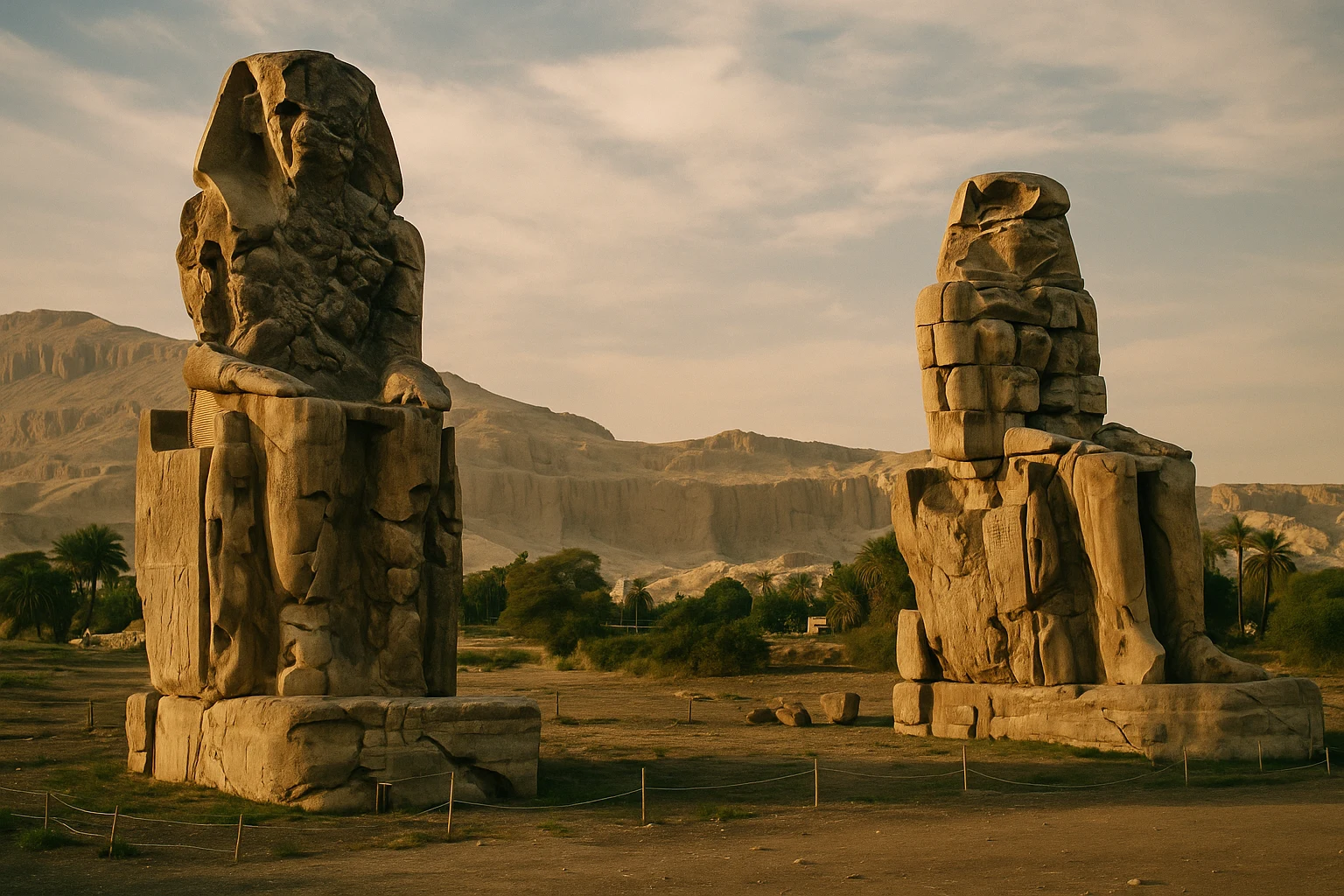
Colossi of Memnon
Ancient Egypt (New Kingdom)Twin colossal statues of Pharaoh Amenhotep III guarding the Theban necropolis on Luxor's West Bank, ...
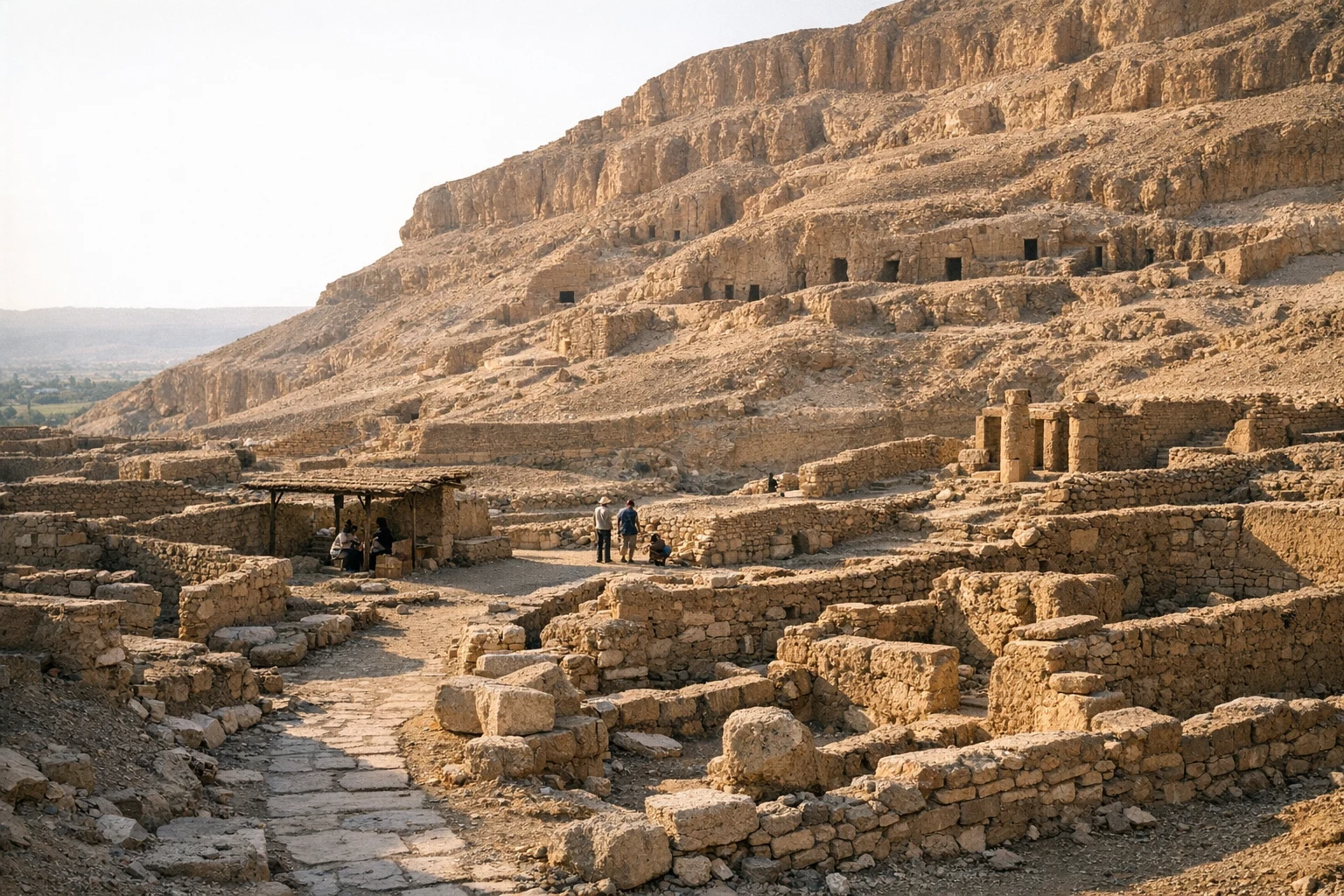
Deir el-Medina
Deir el-Medina is an ancient Egyptian workers’ village near Luxor, renowned for its remarkably prese...
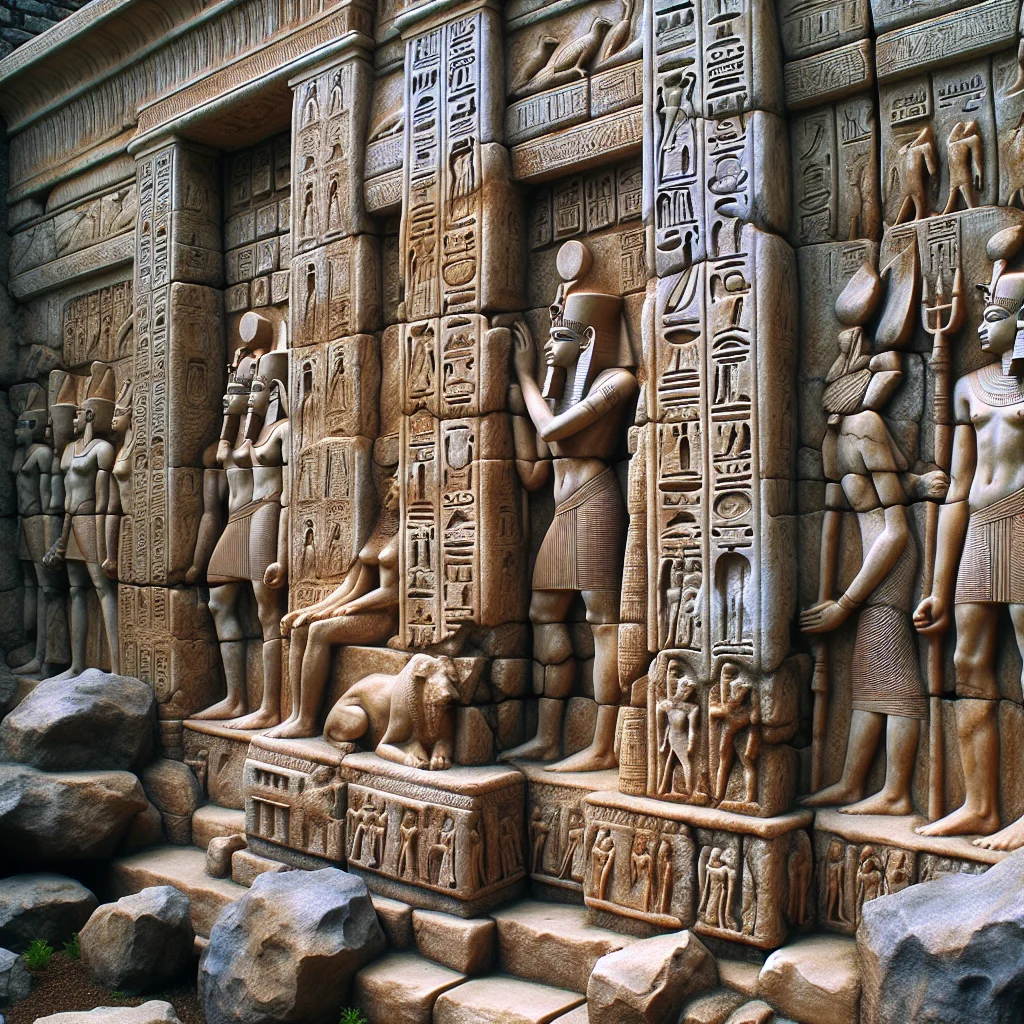
Abydos Temple Egypt Guide 2026: Temple of Seti I & King List
New Kingdom-PtolemaicAbydos Temple near Luxor: magnificent Temple of Seti I with war reliefs, ancient king list, and vibr...