Quick Info
Curated Experiences
Cairo Day Tour: Giza, Saqqara & Dahshur Pyramids
Private Tour to Dashur, Memphis, and Saqqara
Full-Day Dahshur, Sakkara and Memphis Tour
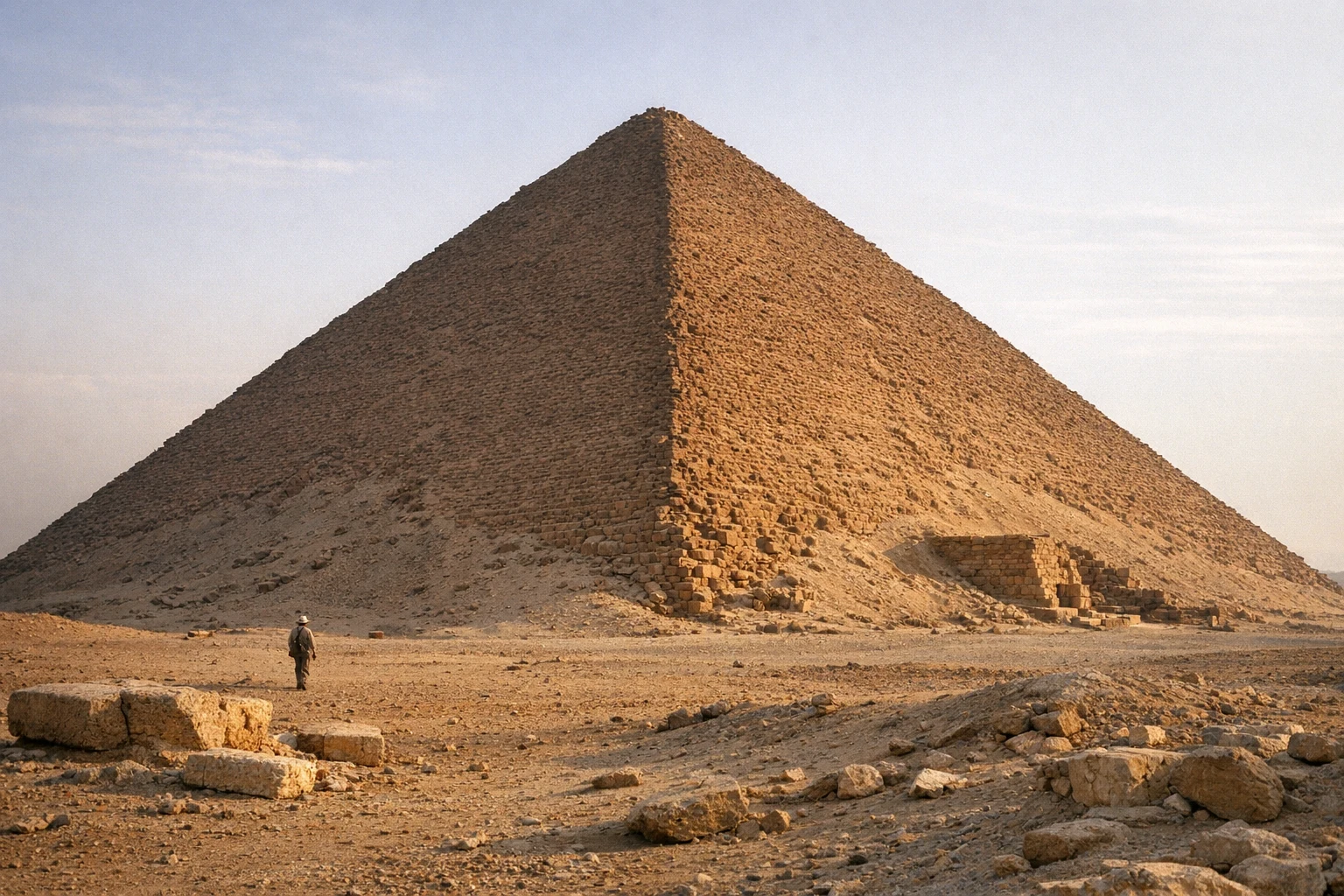
Rising majestically from the windswept sands of the Dahshur necropolis, south of Cairo, the Red Pyramid stands as a testament to Egypt’s architectural ingenuity and enduring allure. Situated in Giza Governorate, this ancient marvel is the third largest of Egypt’s pyramids, after those at Giza, and holds a pivotal role in the evolution of pyramid construction. Unlike its more famous counterparts, the Red Pyramid is quietly isolated in the desert, offering a tranquil and hauntingly atmospheric experience for those venturing into the heart of ancient Egypt. The landscape around Dahshur is stark and awe-inspiring, with the pyramid’s reddish limestone glowing under the Egyptian sun and the silence of the surrounding desert punctuated only by the whispers of history.
For centuries, the Red Pyramid has stood as a marker on the timeline of pharaonic ambition, representing a crucial step in the journey from stepped pyramids to the sleek, smooth-sided icons of the Giza Plateau. It was built during the Old Kingdom, under the reign of Pharaoh Sneferu, and its construction techniques reveal experimental advances that laid the groundwork for the future of pyramid building. Today, the Red Pyramid is both an archaeological treasure and a fascinating destination for modern explorers seeking insight into the ingenuity and spirit of ancient Egyptian civilization. Visitors who make the journey find themselves immersed in the echoes of pharaohs, haunted corridors, and sculpted stones that tell a story thousands of years in the making. Whether you are an Egyptology enthusiast, an architecture buff, or a casual traveler seeking a unique adventure, the Red Pyramid offers a journey into both the greatness and mystery of Egypt’s past.
History
The Reign of Pharaoh Sneferu and Architectural Revolution
The Red Pyramid’s history is inextricably linked to the reign of Pharaoh Sneferu, the first king of Egypt’s Fourth Dynasty. Sneferu, who ruled from around 2613 to 2589 BCE, was a visionary whose aspirations fundamentally altered the country’s monumental landscape. Prior to his reign, the concept of a true pyramid—one with smooth sides—had not yet been fully realized. Instead, earlier kings were commemorated with step pyramids, the most famous of which was built for Djoser at Saqqara.
Sneferu’s quest for the perfect pyramid began with the construction of the Meidum Pyramid, which collapsed during or shortly after its construction, revealing the dangers and difficulties of such ambitious projects. Undeterred, Sneferu next commissioned the Bent Pyramid at Dahshur. This monument began with a steep angle but was modified midway, resulting in its signature bent shape—likely a reaction to the instability experienced at Meidum. These setbacks and adaptations demonstrate how trial and error characterized the early period of Egyptian pyramid-building.
Construction and Innovations
Emerging next on the banks of architectural progress, Sneferu initiated the building of the Red Pyramid, also known as the “North Pyramid” of Dahshur. The construction is thought to have begun around 2590 BCE. Named for the reddish hue of its local limestone blocks, the Red Pyramid was Egypt’s first successful attempt at a true, smooth-sided pyramid. Its angle of inclination is a modest 43 degrees, reflecting lessons learned from the collapse of the Meidum Pyramid and the awkward slopes of the Bent Pyramid.
Historians and archaeologists believe that the Red Pyramid represented a crucial transition in ancient Egyptian mortuary architecture. For the first time, a stable, grand pyramid was achieved without the risk of structural failure, owing much to the lessons learned from Sneferu’s earlier experiments. While the exact details of its construction remain shrouded in some mystery, it’s clear that vast resources and labor were mobilized. Skilled workers, engineers, and vast teams of laborers quarried and transported limestone, constructed ramps, and laid courses that still endure today.
Later Use and Rediscovery
Though designed as Sneferu’s burial place, evidence suggests that it may not have actually served this function, as a mummy or definitive burial goods have never been discovered within the Red Pyramid. Nonetheless, the pyramid’s design and construction method became the foundation for all subsequent royal burial monuments, spurring the perfection of pyramid-building in Egypt—including the Great Pyramid of Giza, constructed by Sneferu’s son, Khufu.
For centuries, the Red Pyramid, along with its sister pyramids at Dahshur, faded from prominence. Buried under millennia of sand and neglect, the site was largely unknown outside Egypt until European explorers in the 19th century began documenting the ancient necropolis. Over the last century, significant archaeological work has restored its place as a vital key in understanding both the political and technological ambitions of the Old Kingdom. Visitors today can venture into its cool, cavernous chambers and stand where ancient priests, architects, and Pharaoh Sneferu himself once stood, confronted by the promise and peril of immortality.
Key Features
The Red Pyramid is a masterwork of symmetry, engineering, and understated grandeur. Unlike the blindingly white Tura limestone casing that once adorned many pyramids, including those at Giza, the Red Pyramid’s warm coloring comes from the local limestone core—much of the outer casing was looted over time, exposing the russet-colored stone that gives the structure its modern name. Rising to a height of roughly 104 meters (341 feet) and measuring 220 meters (722 feet) on each base side, the pyramid’s imposing geometrical perfection is immediately striking to visitors approaching across the open desert.
Perhaps most remarkable about the Red Pyramid is the quality and intent of its design. The pyramid’s angle of just over 43 degrees represents a cautious compromise between grandeur and stability; it is less steep than Sneferu’s earlier projects but far safer and more sustainable. The monument’s axis is aligned almost perfectly to the cardinal points, further illustrating the Egyptians’ extraordinary awareness of astronomy and geometry.
Entry to the pyramid is dramatic and unforgettable. A narrow entrance located on the northern face of the structure leads down a long, low corridor—steep and confining, demanding a slow, careful descent. After negotiating the downward passage, visitors enter a series of corbel-vaulted chambers, designed to support the immense weight of stone above. These chambers echo with footsteps and the distant memories of burial rites, their sharply sloped ceilings showcasing both mathematical prowess and a deep understanding of structural pressures.
Further inside, the burial chamber is an imposing, high-roofed space, its sides slanting upward like the steps of a pyramid within a pyramid. While devoid of artifacts, wall decorations, or a sarcophagus, this chamber nonetheless radiates a profound solemnity—the very essence of royal ambition and religious devotion set in stone. The stark interior, combined with the pyramid’s isolated setting, creates a ghostly, otherworldly ambiance, untouched by the centuries.
Another distinctive feature is the use of massive stone blocks for the core construction, each fitted with remarkable precision. The pyramid’s masonry is simpler and more regular than its predecessors, a sign that the ancient Egyptians were perfecting their building techniques. Although the Red Pyramid lacks the elaborate mortuary temples and satellite pyramids common to later structures, its stand-alone splendor marks it as both a precursor and a pioneer in ancient world architecture.
Visitors often marvel at the pyramid’s imposing yet welcoming geometry—less intimidating than the monumental Giza pyramids, but every bit as captivating. The absence of crowds, the opportunity to survey the sweeping desert vistas from its base, and the privilege of venturing within its enigmatic heart, together make the Red Pyramid an unmissable highlight for anyone exploring Egypt’s ancient legacy.
Getting There
Visiting the Red Pyramid is a journey into history and across the landscape of ancient Egypt—a trip that is both easily accessible and strikingly secluded. The pyramid is located in the Dahshur necropolis, approximately 40 kilometers (25 miles) south of central Cairo. Most travelers choose to begin their adventure in Cairo, taking advantage of the Egyptian capital’s rich accommodations, easy transport links, and proximity to major ancient sites.
Traveling by private taxi is the most popular and convenient option, offering a direct route and the flexibility to combine your visit with nearby pyramids, such as the Bent Pyramid or the earlier structures at Saqqara and Memphis. Taxis between central Cairo and Dahshur generally cost between 400 and 700 EGP (13–23 USD) for a half-day return trip, depending on your bargaining skills and travel time. It is advisable to negotiate your fare in advance.
Many visitors opt for guided day tours, which often include transportation, entry fees, and the expertise of a licensed Egyptologist. These tours typically cost between 40 and 90 USD per person, offering the added value of narration and context. Organized tours are easily booked online or through major hotels in Cairo. For those seeking an independent adventure, buses and microbuses from Cairo’s Giza area travel in the southern direction toward Badrashin or Dahshur village, though these routes can be complicated for non-Arabic speakers and usually require a final leg by tuk-tuk or taxi.
For adventurers with more time, bicycle rentals are an increasingly popular way to experience the desert sites of Dahshur, especially during cooler months. The route is relatively flat, and the open scenery and quiet roads provide a unique perspective on the ancient necropolis. Whatever your choice, plan for at least a half-day to fully appreciate the pyramid and its surroundings; the peaceful isolation of the site is a welcome contrast to the bustling city, allowing for reflection and unhurried exploration.
When to Visit
The best time to visit the Red Pyramid is between October and April, when Egypt’s climate is most temperate and the desert sun is less overwhelming. During these months, daytime temperatures generally range from 18°C to 28°C (65°F–82°F), making outdoor exploration comfortable and rewarding. The cool breezes of winter and early spring are perfect for climbing the approach ramp, lingering around the pyramid base, and descending into its shadowy corridors without the risk of heat exhaustion.
Summers, from May through September, bring searing heat, with midday temperatures often soaring past 40°C (104°F). While the early mornings may still be manageable, midday exploration can be challenging due to the exposed desert environment and the lack of shade. The internal chambers of the pyramid, although sheltered from direct sunlight, can also become hot and humid during the peak of summer, making visits less comfortable.
Crowds are rarely an issue at the Red Pyramid, which retains a tranquil, off-the-beaten-path charm year-round. However, weekends—especially Fridays and the Egyptian public holidays—can attract more local visitors. To maximize your experience, arrive in the early morning hours, bringing water, sun protection, and a camera for capturing the beautiful light as it moves across the pyramid’s ancient stones. The nearby Bent Pyramid and other sites in the Dahshur necropolis can all be visited comfortably in a single day, making this an ideal excursion no matter the season.
| Quick Facts | |
|---|---|
| Location | Dahshur, Giza Governorate, Egypt |
| Coordinates | 29.8007°N, 31.2053°E |
| Builder | Pharaoh Sneferu (Fourth Dynasty) |
| Year Built | ca. 2590 BCE |
| Height | 104 meters (341 feet) |
| Base Length | 220 meters (722 feet) each side |
| Pyramid Angle | 43° |
| Current Exterior | Exposed local limestone (reddish hue) |
| Accessible to Visitors | Yes (interior and chambers) |
| Entrance Fee | 60-100 EGP (subject to change) |
| Nearby Sites | Bent Pyramid, Saqqara, Memphis |
Frequently Asked Questions
Can you go inside the Red Pyramid?
Yes, visitors can access the interior of the Red Pyramid, climbing down a long corridor to view its ancient burial chambers.
How much time should I spend at the Red Pyramid?
Most visitors spend 1-2 hours at the site, exploring both the exterior and the accessible interior chambers.
Is there an entrance fee for the Red Pyramid?
Yes, there is a modest entrance fee for visitors, generally 60-100 EGP for adults, with discounts for students and Egyptian citizens.
Is the Red Pyramid suitable for children or people with mobility issues?
The approach and interior involve steep, narrow corridors; it may be challenging for young children or individuals with limited mobility.
What should I bring when visiting the Red Pyramid?
Carry water, sunscreen, a hat, and wear comfortable shoes. The interior can be hot and humid, so dress appropriately for the conditions.
Nearby Ancient Sites
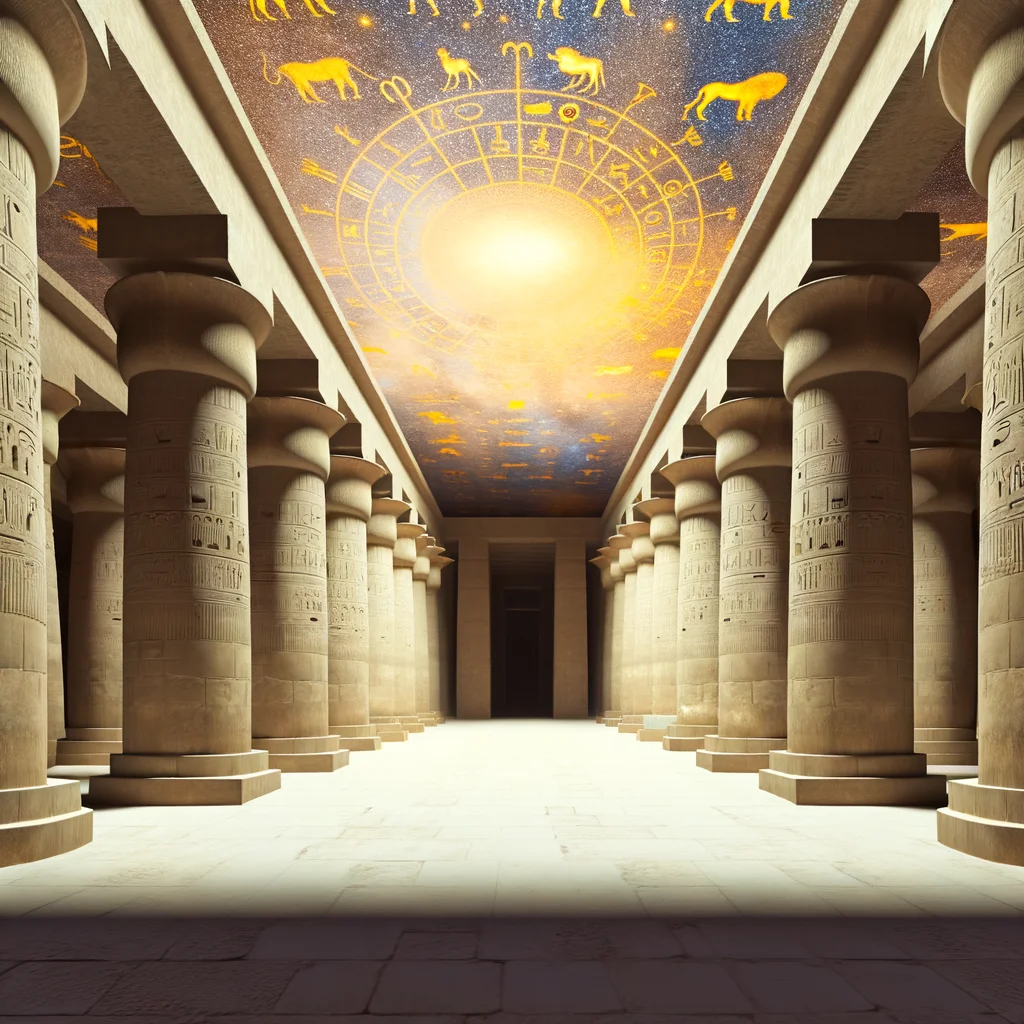
Dendera Temple Complex Egypt Guide 2026: Temple of Hathor & Zodiac Ceiling
Ptolemaic-RomanExplore Dendera's magnificent Temple of Hathor near Luxor. Star-mapped zodiac ceiling, Ptolemaic arc...
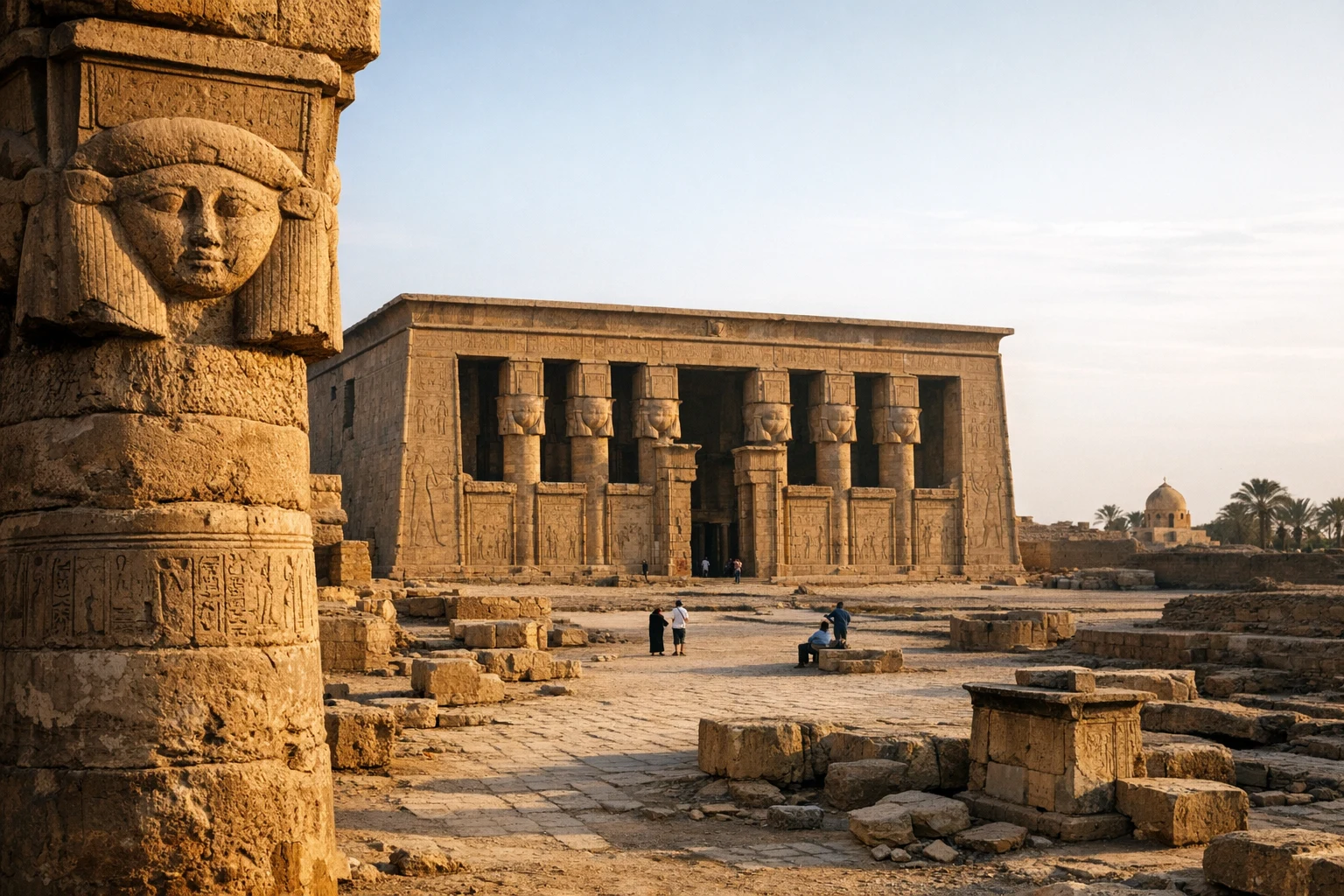
Dendera Temple Complex
The Dendera Temple Complex in Egypt is a remarkably preserved ancient site renowned for its grand Te...
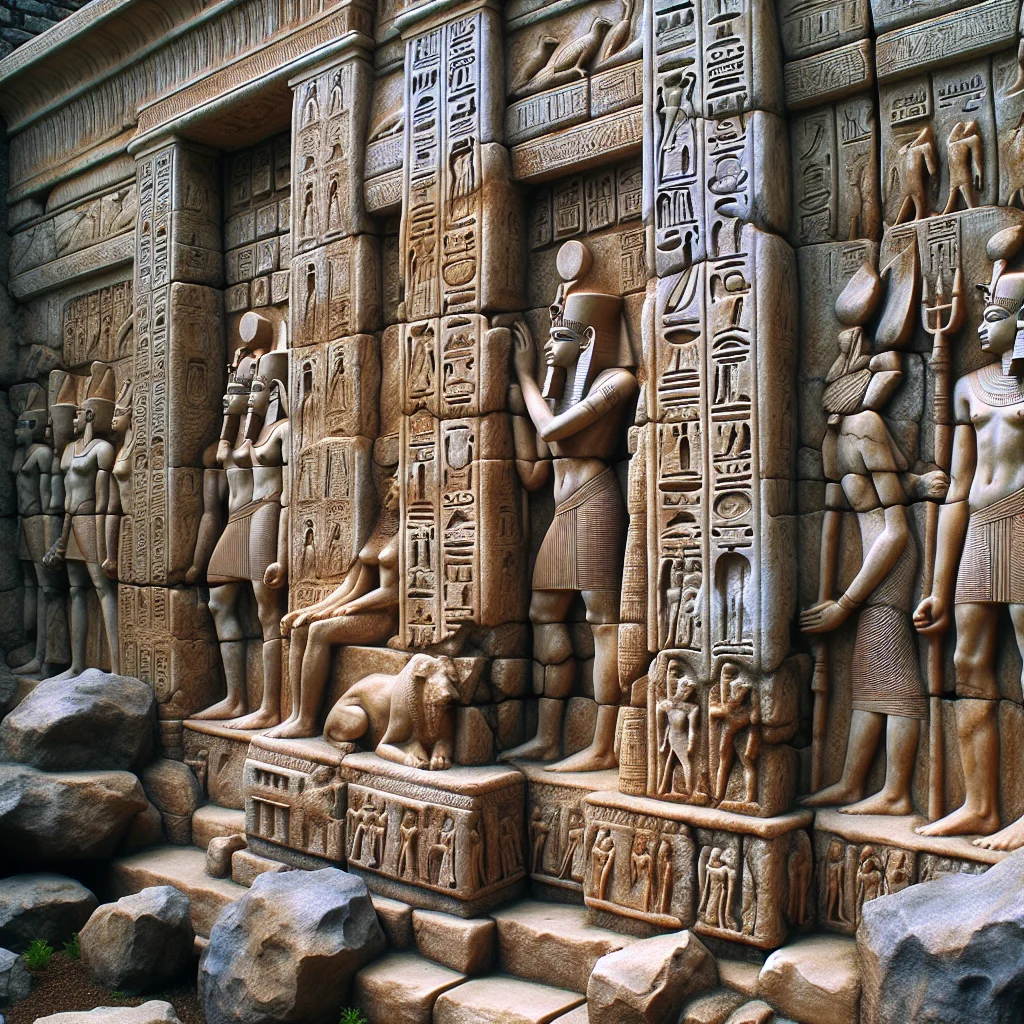
Abydos Temple Egypt Guide 2026: Temple of Seti I & King List
New Kingdom-PtolemaicAbydos Temple near Luxor: magnificent Temple of Seti I with war reliefs, ancient king list, and vibr...