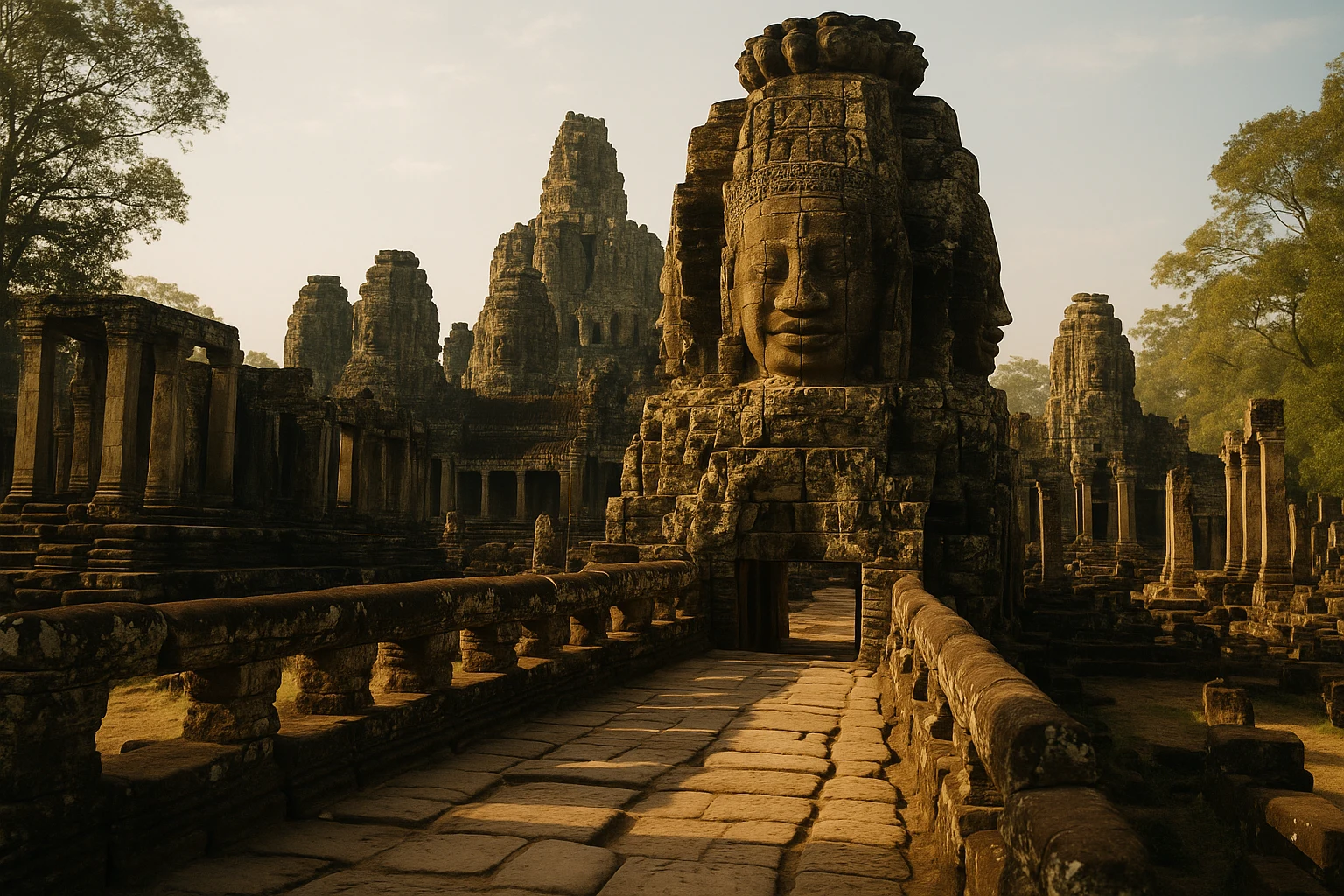
Quick Info
Curated Experiences
Angkor Thom & Royal Palace Guided Day Tour from Siem Reap
Angkor Sunrise Small-Group Tour including Angkor Thom
Full-Day Angkor Complex Tour with Phimeanakas Temple
Within the walled city of Angkor Thom in northwestern Cambodia, a high sandstone enclosure hides what was once the most exclusive address in the Khmer world. The Royal Palace of Angkor Thom was the private residence, sacred sanctuary, and political nerve center of the kings who governed one of Southeast Asia’s greatest empires. Unlike the vast temple mountains that still loom over the surrounding jungle, the palace halls, sleeping chambers, and audience rooms were built of timber, lacquered and gilded, hung with silk, and attended by thousands of servants and court officials. They have been gone for centuries, dissolved by the same tropical humidity that eventually consumed the city around them. What endures is the skeleton: tall laterite and sandstone enclosure walls, the elegant stepped pyramid of Phimeanakas rising from the center of the compound, and two long rectangular pools that once reflected the sky above a city at the height of its power. Cambodia’s Royal Palace at Angkor Thom does not offer the dramatic carved galleries of Angkor Wat or the smiling stone faces of the Bayon, but it offers something rarer — a glimpse into the intimate world behind the ceremonial facade, the space where kings slept, prayed, and governed in a city that once held perhaps a million people.
History
Origins and Early Construction
The plateau of land in the north-central area of Angkor Thom has been associated with royal habitation since at least the ninth century CE, when the Khmer capital first consolidated in this region under Yasovarman I. The most important surviving structure within the enclosure, the Phimeanakas temple, is attributed primarily to Rajendravarman II, who ruled from 944 to 968 CE, though later scholars have noted evidence of construction phases extending into the reign of Jayavarman V. The name Phimeanakas derives from the Sanskrit and Khmer for “celestial palace,” reflecting the Khmer belief that the pyramid-temple was not merely a place of worship but the literal earthly dwelling of the divine. In Khmer cosmology, the king was himself a god-king, a devaraja whose palace had to mirror the mountain home of the gods in cosmic architecture.
Suryavarman I and the Expansion of Royal Power
The early eleventh century brought significant expansion and refinement to the Royal Palace compound under Suryavarman I, a king who consolidated Khmer power over a much wider territory and patronized ambitious construction projects across the empire. Suryavarman I added to Phimeanakas and strengthened the enclosure walls, giving the palace compound more of the formal, fortified character visible today. His reign marks a period when the relationship between the king’s personal sanctity and the architectural expression of royal power became increasingly formalized — the palace was not simply a comfortable residence but a theological statement about the nature of Khmer kingship.
Jayavarman VII and the Rebuilding of Angkor Thom
The Royal Palace as part of the wider Angkor Thom complex reached its most elaborate form under Jayavarman VII, who came to power in 1181 CE following the catastrophic Cham invasion of 1177 that sacked the capital and killed the previous king. Jayavarman VII’s response was one of the most extraordinary building campaigns in premodern Asian history. He rebuilt and vastly expanded Angkor Thom, enclosing the city within a massive moat and wall, constructing the Bayon at its center, and raising the great ceremonial terraces along its eastern axis. The Royal Palace enclosure was reorganized within this new urban framework, its position just north of the Baphuon and behind the Terrace of the Elephants giving the king’s private world a logical relationship to the public ceremonial space of the city.
Zhou Daguan’s Eyewitness Account
The most vivid historical record of the Royal Palace in its functioning years comes from an unlikely source: a Chinese diplomat named Zhou Daguan, who accompanied a Yuan dynasty embassy to the Khmer court and resided in Angkor from 1296 to 1297. His account, known as the Record of Cambodia, describes the palace compound in remarkable detail. He wrote of golden windows framed in carved stone, a great golden tower (almost certainly Phimeanakas) where the king was believed to sleep each night with a divine serpent spirit in female form, and the elaborate court rituals that governed every aspect of royal life. Zhou Daguan estimated the palace buildings were roofed with lead and described gilded halls, colonnaded galleries, and the segregated living quarters of the king’s wives and concubines, a population he placed in the thousands. His account makes clear that the palace was an entire city within a city, complete with gardens, markets for court attendants, and its own internal hierarchy.
Decline and Abandonment
The Khmer Empire’s power contracted steadily through the fourteenth and fifteenth centuries, pressured by the rising Ayutthaya kingdom to the west and internal instability. By the mid-fifteenth century the capital had effectively shifted south toward Phnom Penh, leaving Angkor and the Royal Palace compound largely depopulated. The wooden structures of the palace rotted away within decades of abandonment, and the jungle slowly reclaimed the enclosure walls and Phimeanakas. French archaeologists encountered the site in the nineteenth and twentieth centuries and undertook clearing and partial restoration work, revealing the layout of the compound for the first time in modern scholarship.
Key Features
Phimeanakas: The Celestial Pyramid
The dominant surviving structure within the Royal Palace enclosure is Phimeanakas, a three-tiered pyramid temple built of laterite and sandstone that rises approximately twelve meters above its base. Its form follows the classic Khmer temple-mountain concept — a man-made sacred mountain representing Mount Meru, the mythological home of the gods — but at a more intimate scale than the great state temples. Each tier of the pyramid is smaller than the one below, and the ascent via steep stairways on each of the four cardinal faces leads to a gallery and a small sanctuary at the summit. The upper level originally supported a golden tower, the one Zhou Daguan described as gleaming above the compound. That tower is long gone, but the proportions of the pyramid and the delicacy of its carved sandstone details remain impressive. Naga balustrades line the upper galleries, and the carved lintels above the sanctuary entrances display the refined iconography of the late tenth and early eleventh century Khmer style. Standing at the summit, you look out over the enclosure walls toward the Baphuon to the south and sense the layered geography of Angkor Thom, each monument placed in deliberate relationship to the others.
The Reflecting Pools
Within the palace enclosure, flanking the approach to Phimeanakas, are two large rectangular reflecting pools. Their origin is practical as well as aesthetic — they served as water reservoirs for the palace compound, fed by the sophisticated Khmer hydraulic infrastructure that supplied the entire city. But their placement is also clearly ceremonial, their still surfaces intended to mirror the sky and the temples above, reinforcing the palace compound’s symbolic connection between the earthly and the divine. The pools are still filled with water today, and in the early morning light they catch the reflections of the surrounding trees and the pyramid of Phimeanakas in a way that makes the scale and ambition of the original complex suddenly legible. Around the edges of the pools, the laterite borders are worn smooth, and in some places traces of the original paving stones that surrounded them can still be seen.
The Enclosure Walls and Gopuras
The Royal Palace compound is defined by a rectangular enclosure wall roughly 600 meters by 250 meters, built of laterite blocks that have weathered to a deep reddish-brown. The wall is punctuated by gopuras, towered gateways on each of its four sides, of which the eastern gopura is the primary entrance for visitors today. The east gopura is a substantial structure in its own right, with a central tower and flanking passages, its carved pediments and lintels displaying scenes from Hindu mythology. Walking along the interior face of the enclosure wall gives a powerful sense of the contained, private world that the palace was designed to create — the noise and bustle of the city beyond its walls would have been completely shut out, leaving the royal household in a separate ceremonial universe governed by its own rules and rhythms.
Traces of the Wooden Structures
For visitors who look carefully, the stone foundations and postholes of the vanished wooden palace buildings are legible in places across the interior of the compound. Archaeological surveys have identified the probable locations of the king’s audience hall, residential quarters, and service buildings from these traces, as well as from the descriptions in Zhou Daguan’s account. The absence of the wooden structures is itself historically instructive: it demonstrates how much of the Khmer built environment was impermanent, how the stone temples that survive were only the most durable layer of a much richer material culture that included extraordinary craftsmanship in wood, textile, lacquer, and metal.
Getting There
The Royal Palace enclosure is located within Angkor Thom, roughly five kilometers north of Siem Reap city center. The standard approach from Siem Reap follows the road north to Angkor Wat and then continues to the south gate of Angkor Thom. From the south gate, the road leads directly through the city to the Bayon, and from there it is a short distance northwest to the palace enclosure. Most visitors reach the site by tuk-tuk, the three-wheeled motorized vehicles that are the dominant form of tourist transport in Siem Reap. A full-day tuk-tuk hire covering Angkor Thom and surrounding monuments typically costs between $15 and $20 USD, negotiated in advance with your driver. For the Angkor Thom circuit specifically — Bayon, Baphuon, Royal Palace area, and the terraces — half-day rates of $10 to $15 are common. Bicycle rental is also popular; the flat roads within the archaeological park are well-suited to cycling, and the distance from the park entrance to the Royal Palace enclosure is manageable for most riders. Electric bicycles are available for those who prefer a less strenuous option. Organized tours from Siem Reap range from budget group tours around $25 to $40 USD per person to private guided experiences with expert commentary costing $60 to $150 USD or more. All entry requires a valid Angkor Archaeological Park pass, purchased at the official ticketing center near Angkor Wat: one day costs $37 USD, three days $62 USD, and seven days $72 USD.
When to Visit
Northwestern Cambodia has a tropical monsoon climate with a pronounced wet season from May through October and a dry season from November through April. The dry season is by far the most popular time to visit: skies are reliably clear, roads within the archaeological park are in good condition, and temperatures, while still warm, are more manageable than in the humid heat of the pre-monsoon months. November through February offers the most comfortable conditions, with temperatures in the high twenties Celsius during the day and cooler nights. January and February are the peak of peak season; expect crowds at the most popular monuments, particularly Angkor Wat at sunrise, and book accommodation in Siem Reap well in advance. March and April see increasing heat, often reaching the mid-thirties, but also somewhat smaller crowds than the heart of peak season. The wet season, particularly June through September, brings heavy afternoon rains that can make exploration uncomfortable, but the park transforms into a lush green landscape, the reflecting pools fill completely, and visitor numbers drop substantially. Many experienced travelers consider the wet season underrated. The Royal Palace enclosure specifically is less shadowed by large trees than Ta Prohm or Banteay Srei, so morning visits are recommended to avoid the full heat of midday; the light is also more flattering for photography in the early hours. Aim to arrive by eight in the morning for the best experience.
| Quick Facts | |
|---|---|
| Location | Angkor Thom, Siem Reap Province, Cambodia |
| Coordinates | 13.4444° N, 103.8594° E |
| Civilization | Khmer Empire |
| Period | 10th–15th century CE |
| Key Structure | Phimeanakas (Celestial Palace Temple) |
| Original Materials | Laterite, sandstone, gilded timber |
| Entry | Included in Angkor Archaeological Park pass |
| Pass Cost | $37 (1 day), $62 (3 days), $72 (7 days) |
| Nearest City | Siem Reap (~5 km south) |
| Best Visiting Time | November–February (dry season) |
| Recommended Duration | 45–60 minutes within the compound |
| UNESCO Status | Part of Angkor World Heritage Site (1992) |
Frequently Asked Questions
What is the Royal Palace of Angkor Thom?
The Royal Palace of Angkor Thom was the private residential compound of Khmer kings within the great walled city of Angkor Thom. Its most significant surviving structure is Phimeanakas, a three-tiered pyramid temple that served as the symbolic celestial seat of royal power. The palace buildings themselves were constructed of perishable wood and have not survived, but the stone enclosure walls, the Phimeanakas temple, and two large reflecting pools within the compound remain.
Can you go inside the Royal Palace enclosure at Angkor Thom?
Yes, visitors can enter the Royal Palace enclosure through its eastern gopura (gateway). You can explore the Phimeanakas temple pyramid, walk around the two rectangular reflecting pools, and examine the remains of the sandstone enclosure walls. Climbing to the upper levels of Phimeanakas is sometimes restricted depending on current conservation conditions, so check with your guide on the day of your visit.
What does Phimeanakas mean?
Phimeanakas is a Sanskrit-derived Khmer name meaning 'celestial palace' or 'heavenly palace.' It refers to the pyramid temple at the center of the Royal Palace compound, which was believed to be the earthly home of a divine serpent spirit (naga) that assumed human form and visited the king each night. The king was required to sleep with this spirit before joining his wives and concubines, and it was believed that the prosperity of the realm depended on this nightly union.
How does the Royal Palace area fit into the broader Angkor Thom complex?
Angkor Thom is a vast walled city roughly 9 square kilometers in area. The Royal Palace enclosure occupies the north-central section of the city, immediately north of the Baphuon and west of the famous Terrace of the Elephants. The Bayon temple sits at the geographic center of Angkor Thom, while the palace compound was the private domain of the king — hidden behind high walls and accessible only to the royal household and its attendants.
When was the Royal Palace of Angkor Thom built?
The palace complex evolved across several reigns. Earlier royal structures likely occupied the site from the ninth or tenth century, but the compound as it is understood today was substantially shaped during the reign of Jayavarman VII in the late twelfth century, when Angkor Thom was rebuilt on a grand scale after the Cham sack of 1177. Phimeanakas itself predates Jayavarman VII and is attributed to Rajendravarman II in the tenth century, with later additions by Suryavarman I in the early eleventh century.
Do I need a separate ticket to visit the Royal Palace area?
No separate ticket is required. The Royal Palace enclosure is included within the standard Angkor Archaeological Park pass, which is sold in one-day, three-day, and seven-day denominations at the official ticketing center near Angkor Wat. The pass covers access to all major monuments within the park, including Angkor Thom and all structures within it.
How long does it take to visit the Royal Palace area?
Most visitors spend thirty to sixty minutes exploring the Royal Palace enclosure, including time at Phimeanakas, the reflecting pools, and the enclosure walls. If you are visiting as part of a broader Angkor Thom circuit that includes the Bayon, Baphuon, and the terraces, budget a full half-day for the entire city, with a full day if you want to take your time and absorb the details.
Nearby Ancient Sites
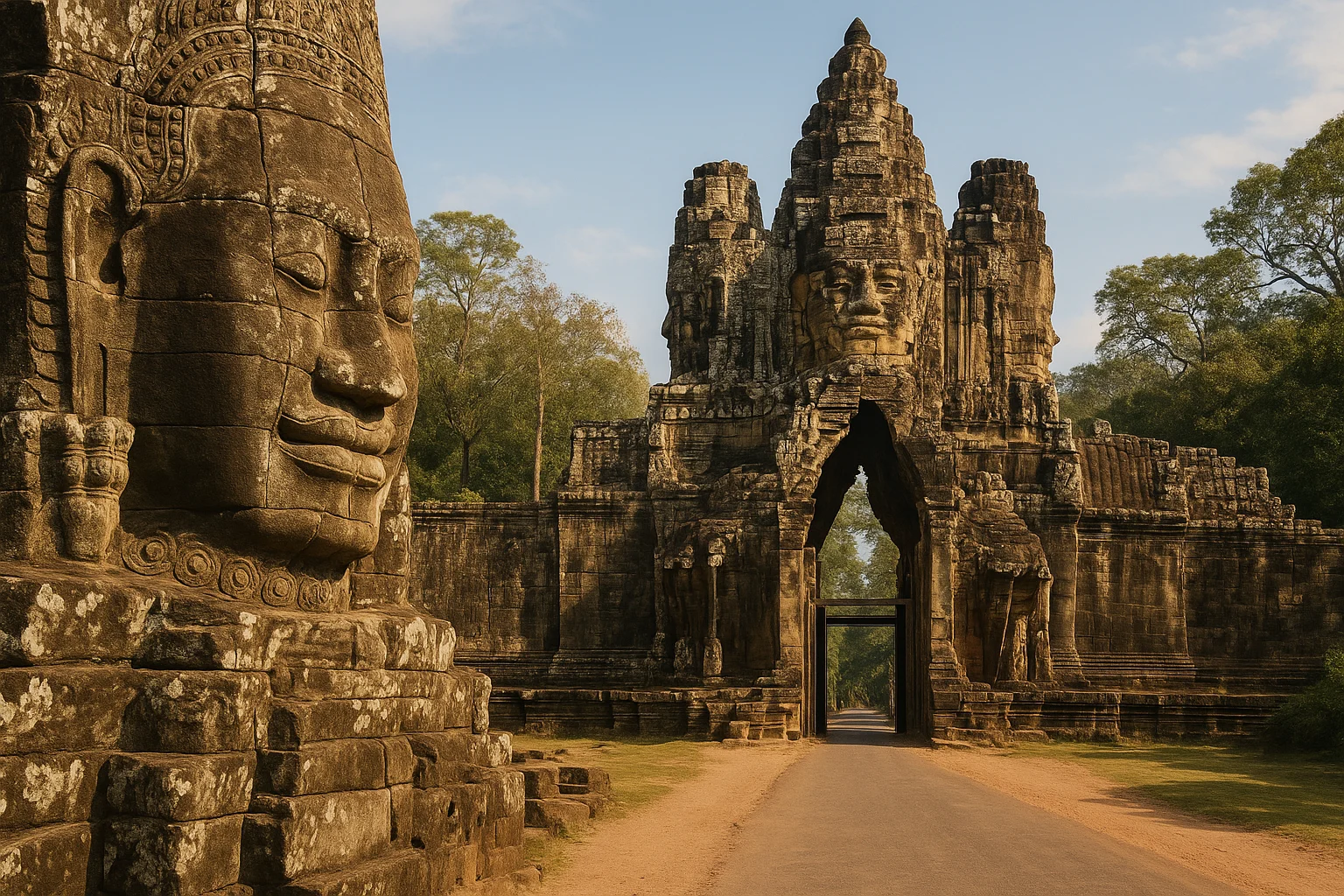
Angkor Thom Travel Guide 2026: Bayon Faces, Gates, and the Khmer Royal City
KhmerAngkor Thom was the last great capital of the Khmer Empire. This guide covers how to visit Bayon, th...
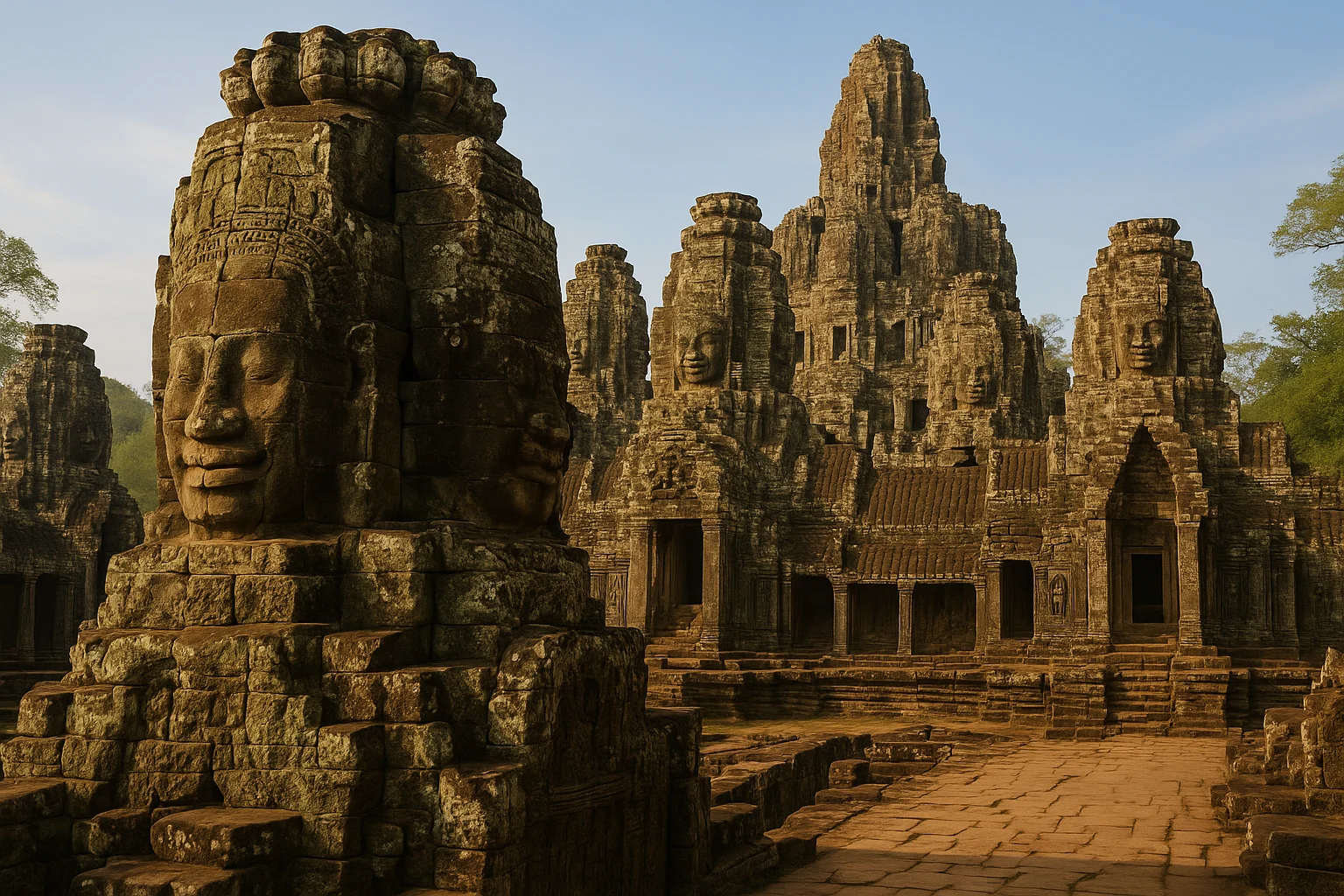
Bayon Temple Travel Guide 2026: Face Towers, Bas-Reliefs, and Best Visit Timing
KhmerBayon Temple sits at the center of Angkor Thom and is famous for its carved stone faces. This guide ...
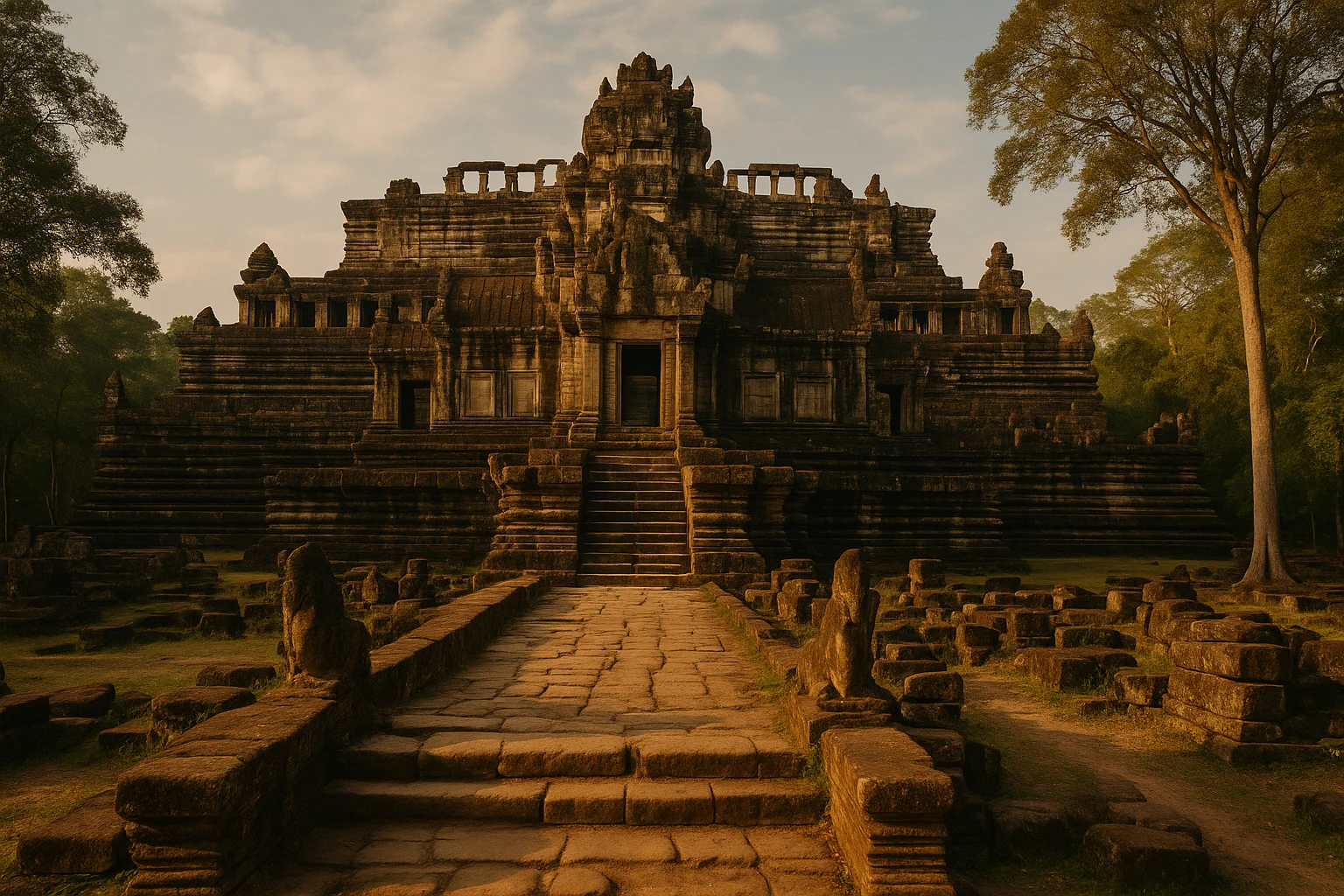
Baphuon
Khmer EmpireAn 11th-century sandstone temple mountain in Angkor Thom, Cambodia, renowned for its monumental recl...
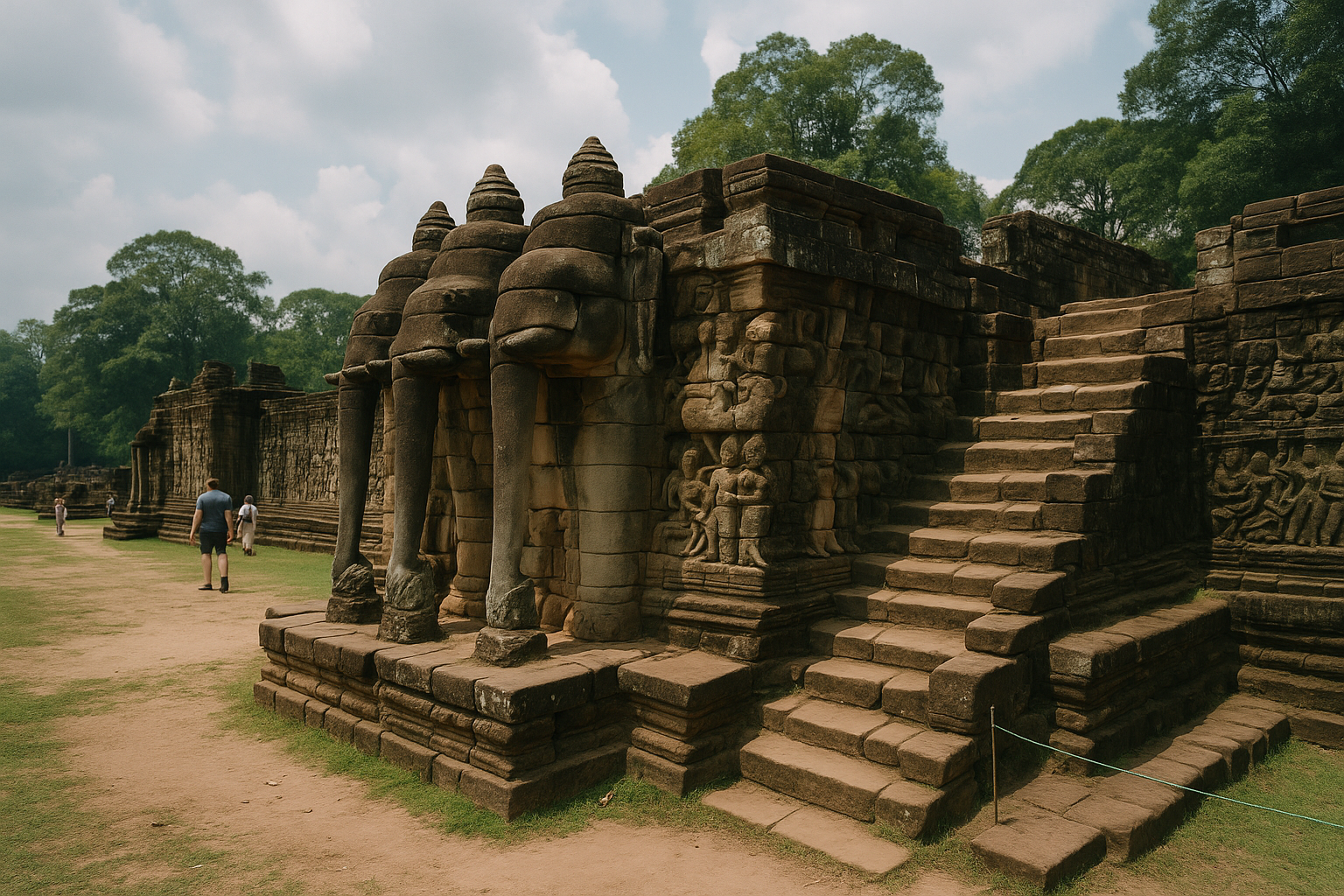
Terrace of the Elephants Travel Guide 2026: Angkor Thom’s Royal Viewing Platform
KhmerThe Terrace of the Elephants in Angkor Thom was a ceremonial platform used for royal events. This gu...
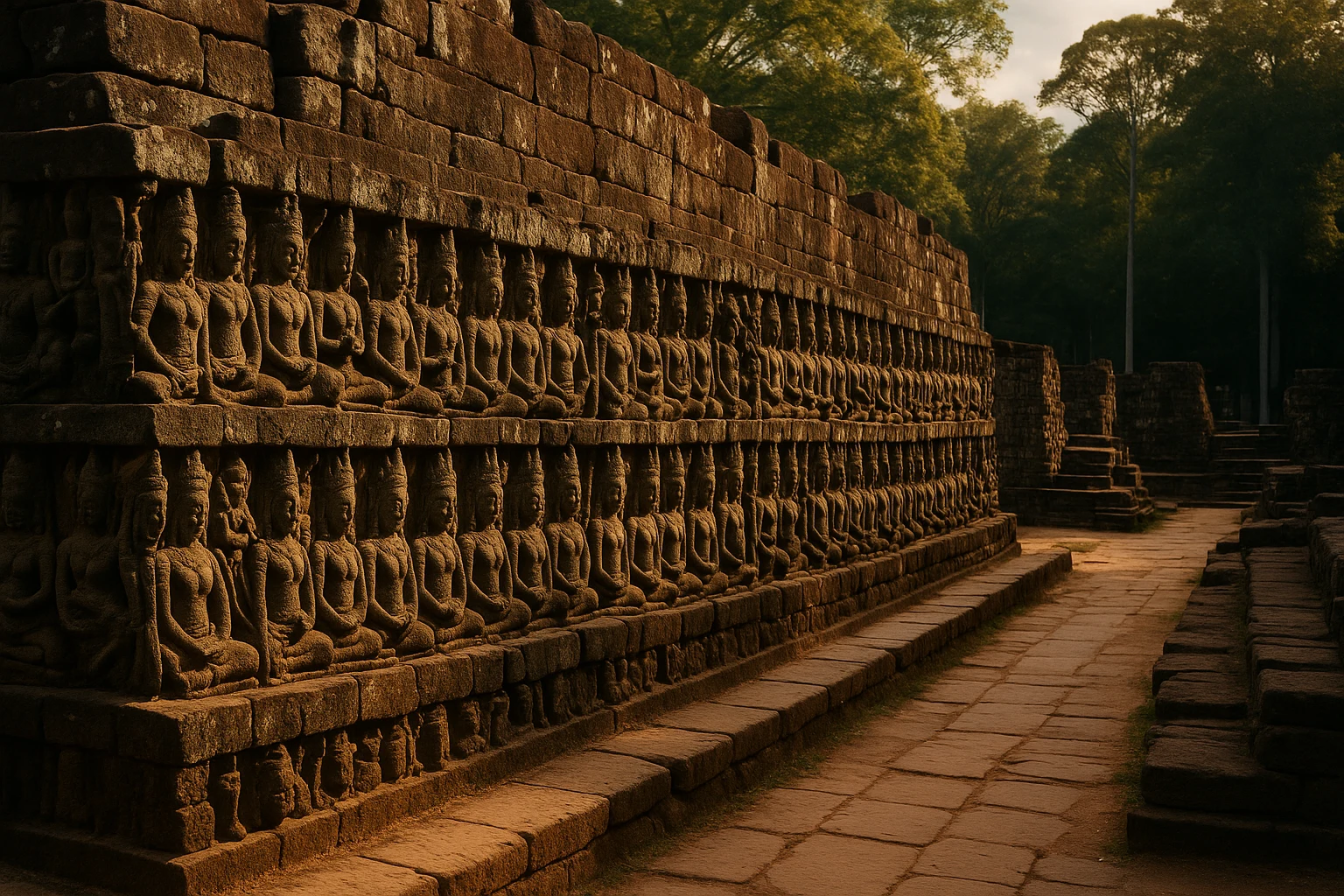
Terrace of the Leper King
Khmer EmpireA royal Khmer terrace at Angkor Thom adorned with seven tiers of intricate bas-relief carvings and c...