Quick Info
Curated Experiences
Saqqara, Memphis, and Dahshur Day Tour from Cairo
Private Saqqara Necropolis and Step Pyramid Tour
Cairo Day Trip to Saqqara Necropolis and Memphis
Saqqara Necropolis in Egypt stretches across the desert south of Cairo like a vast stone memory bank, preserving how one of the world’s greatest civilizations understood death, prestige, and eternity. Most travelers arrive with the Step Pyramid of Djoser already in mind, and fairly so: it is one of the most important buildings ever made. But Saqqara is not a one-monument destination. It is the burial ground of ancient Memphis, and over more than three thousand years it gathered royal pyramids, noble mastabas, painted chapels, funerary temples, sacred animal catacombs, and burial shafts into a single sacred landscape. Walking here feels less like ticking off ruins and more like entering a long conversation across dynasties. Every zone of the plateau preserves a different answer to the same old question: how should the dead be remembered, protected, and equipped for the next world?
That continuity is what gives Saqqara its depth. At Giza, the effect is immediate and monumental. At Saqqara, the effect accumulates. You see the first monumental stone pyramid in Egypt, then step into elite tombs where scenes of fishing, farming, music, and ritual still carry a startling human warmth. Farther on are later pyramids, subterranean burials, and evidence of cult practices that flourished long after the Old Kingdom had passed. Saqqara is one of the few sites in Egypt where you can trace not only the development of pyramid architecture, but also the evolution of funerary religion, elite self-image, and sacred memory in one place. For travelers who want a fuller understanding of ancient Egypt rather than only its most iconic skyline, this necropolis is indispensable.
History
Early Dynastic Beginnings
Saqqara first emerged as the principal necropolis of Memphis, one of ancient Egypt’s earliest and most powerful capitals. Its position on the western edge of the Nile valley made it ideal both practically and symbolically. The dry desert preserved burials well, while the west was associated with the setting sun and therefore with death, transition, and rebirth. During the Early Dynastic Period, tombs at Saqqara were mainly mastabas, low rectangular structures built above underground chambers. These may seem restrained compared with later pyramids, but they already expressed essential Egyptian beliefs: the dead required a permanent dwelling, ritual access, and a steady supply of offerings to sustain them in the next life.
Even at this early stage, Saqqara was not simply a convenient burial field. It was a sacred extension of Memphis, connecting the political heart of the kingdom with a landscape of funerary prestige. That bond between the city of the living and the desert of the dead helped establish Saqqara as a site of exceptional status. By the time the Old Kingdom began, it was already a place where power, memory, and ritual converged.
Djoser and the Architectural Breakthrough
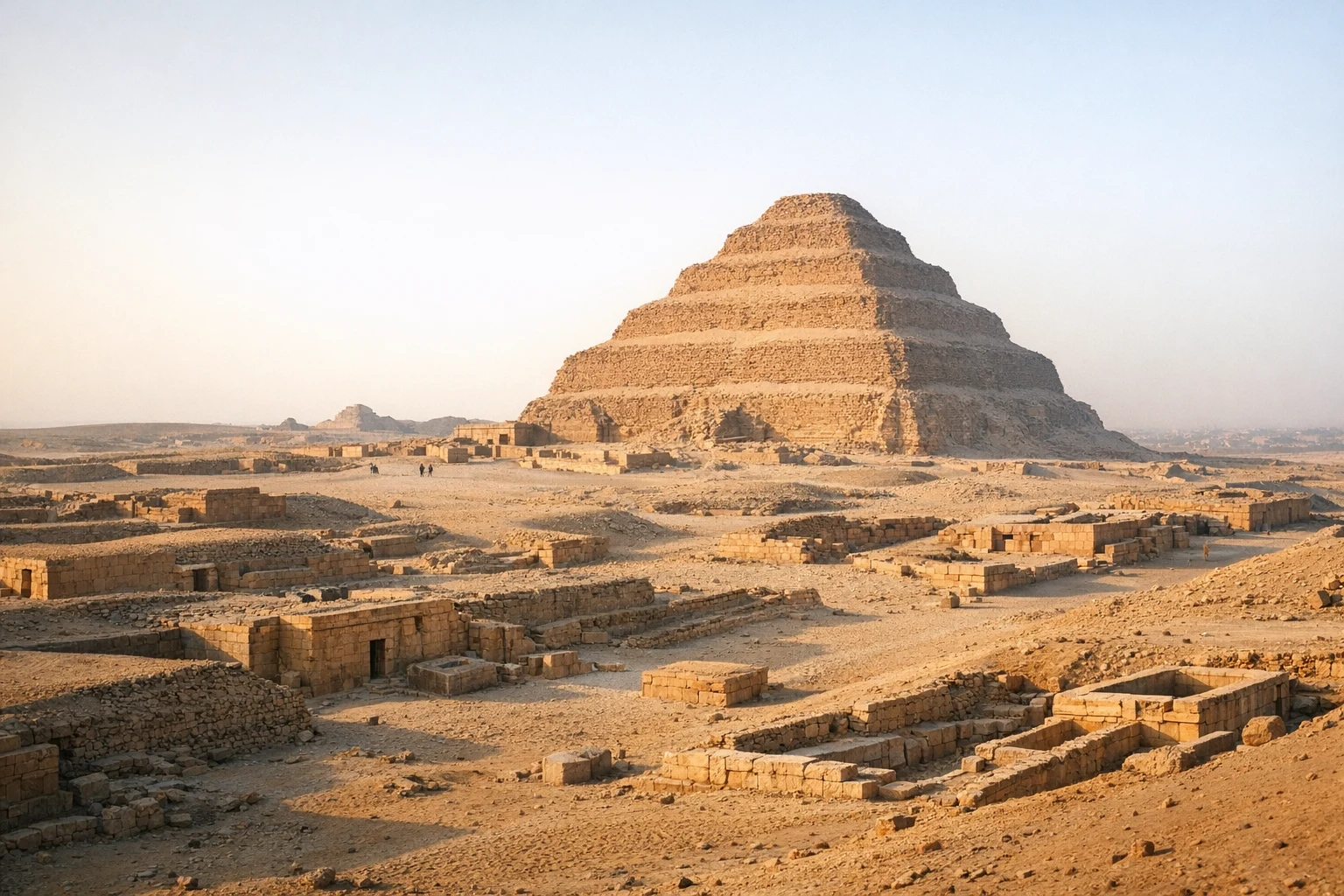
Saqqara’s most revolutionary moment came in the 3rd Dynasty with King Djoser. Around the 27th century BCE, he commissioned the monument now known as the Step Pyramid, generally regarded as the earliest monumental stone pyramid in Egypt. The project is traditionally associated with Imhotep, the king’s architect and advisor, whose name later acquired legendary status. What makes this moment so important is that it does not represent the refinement of an existing model. It represents a leap.
Evidence suggests Djoser’s tomb began as a mastaba before being enlarged several times into the six-tiered pyramid visible today. That staged development matters because the monument preserves experimentation in physical form. The builders were not executing a settled idea; they were inventing a new one. Just as crucial was the use of cut limestone on an unprecedented scale. Stone became the primary language of permanence, elevating royal funerary architecture into something more ambitious and more ideologically charged than anything that had come before.
The Step Pyramid did not stand alone. It was enclosed within an immense ritual precinct filled with walls, courtyards, shrines, and ceremonial passages. This wider complex was designed to support the eternal renewal of royal authority. With Djoser, architecture stopped being just the setting of burial and became a cosmic statement about kingship itself.
Old Kingdom Expansion and Elite Tomb Culture
After Djoser, Saqqara remained a major center of royal and elite burial throughout the Old Kingdom. Later kings built pyramid complexes here, including Unas and Teti, while officials, priests, and administrators created large mastaba tombs around them. This mix of royal and non-royal monuments is one reason Saqqara feels so rich. It does not present only the story of kings. It also preserves the wider society that supported them.
The decorated mastabas are especially important. Inside these tomb chapels, relief scenes show marsh hunting, animal husbandry, fishing, estate management, craft production, processions, and funerary banquets. These images served a magical purpose, ensuring that the deceased would continue to receive food, labor, and status in eternity. But they also preserve one of the most vivid visual records of Old Kingdom life. The carving is often animated, detailed, and deeply observant, turning Saqqara into a gallery of human activity as well as a necropolis.
Saqqara also became a major site in the development of Egyptian funerary religion. The pyramid of Unas contains the earliest known Pyramid Texts, sacred spells inscribed on burial chamber walls to help guide and protect the dead king. This innovation transformed the tomb interior into a written religious space, giving Saqqara a foundational role in the history of Egyptian theology.
Reuse, Revival, and Ongoing Discovery
Saqqara did not decline into irrelevance after the Old Kingdom. In the New Kingdom and especially during the Late Period, Egyptians returned to the site because it had already become ancient and revered. New burials were placed here, older monuments were restored or imitated, and parts of the necropolis took on new ritual functions. This prolonged reuse gives Saqqara one of its most compelling qualities: the ancient Egyptians themselves treated it as a landscape of ancestral authority.
One of the most striking later developments was the rise of sacred animal cults. Catacombs for ibis, baboons, bulls, and other creatures linked to specific deities transformed parts of Saqqara into pilgrimage destinations. Deep shaft tombs, painted coffins, and elaborate burials from the Late Period show that the necropolis remained active and prestigious. Modern archaeology has continued that story of renewal in a different form. Saqqara is still yielding major discoveries, including sealed sarcophagi, statues, painted chambers, and inscribed objects. It remains one of Egypt’s most productive archaeological sites, a place where the ancient past is still being assembled in the present.
Key Features
The Step Pyramid of Djoser is the most famous feature of Saqqara and still the one that shapes the entire site. Its six stacked levels rise above the plateau with a form that feels both simple and revolutionary. Unlike the later smooth-sided pyramids, this monument exposes its own development, making the leap from mastaba to pyramid visibly legible. That quality gives it unusual intellectual force. You are not just seeing a king’s tomb; you are seeing the moment when an entire architectural tradition changed direction. The surrounding enclosure wall, ceremonial courts, and entrance colonnade show that the pyramid was part of a much larger ritual composition. Djoser’s afterlife was not imagined as static burial but as eternal royal performance enacted through architecture.
Saqqara’s mastaba tombs provide a different kind of wonder. Tombs such as those of Ti, Mereruka, and Kagemni contain some of the finest relief carving in Egypt. Their walls are crowded with scenes of farming, fishing, herding, butchery, craftwork, music, and ritual offerings, all rendered with remarkable vitality. Animals strain against ropes, fishermen lean into their nets, servants balance jars and baskets, and nobles sit poised to receive the abundance of their estates forever. These carvings are historically invaluable, but they are also genuinely beautiful. They bring texture, humor, and movement into a landscape often imagined only in terms of kings and stone masses.
The later royal pyramids at Saqqara broaden the site’s narrative. Though many survive in partial or ruined form, they remain central to Egyptian history. The pyramid of Unas is especially significant because of the Pyramid Texts carved inside it, the earliest known corpus of royal funerary spells. Here, sacred language was integrated directly into the architecture of burial, turning the chamber into an active theological space. That fusion of monument and text makes Saqqara crucial not only to the story of pyramid building, but to the story of Egyptian religion.
Another essential feature is the site’s chronological layering. Saqqara is not frozen in the Old Kingdom. It preserves evidence of New Kingdom burials, Late Period shaft tombs, and sacred animal catacombs that show how the landscape remained active and meaningful for millennia. This continued reuse gives the site depth that more single-period monuments often lack. Visitors are not just looking at one peak era, but at a sacred place repeatedly reinterpreted by later generations.
The physical setting is also one of Saqqara’s strengths. The necropolis stretches across a broad desert escarpment, with open views and real distance between many monuments. That space matters. It lets the site read as a planned landscape rather than a crowded cluster of ruins. The pale limestone, dust-colored ground, and wide sky create an austere beauty that feels entirely appropriate to a place dedicated to eternity. Museums and active excavation zones complete the experience, linking the famous monuments to new discoveries that continue to emerge from the plateau. Saqqara feels ancient, but not closed. It is still speaking.
Getting There
Saqqara Necropolis is most commonly visited from Cairo, which sits roughly 30 to 35 kilometers to the north. Depending on traffic, the journey can take around 45 minutes or stretch to 1.5 hours. For most travelers, the easiest option is a taxi, rideshare, or private driver. A one-way trip from central Cairo or Giza generally costs around 350 to 700 EGP, depending on the time of day, pickup location, and vehicle type. If you hire a driver to wait and combine the visit with Memphis or Dahshur, a half-day or full-day arrangement usually falls between 1,200 and 2,500 EGP.
Organized tours are very common and often a smart choice, especially if you want historical interpretation along with transport. Many tours pair Saqqara with Memphis and Dahshur, and some add Giza. Group tours can be economical, while private tours allow more flexibility if you want extra time in decorated mastabas or museums. Because Saqqara is so extensive, a good guide can help you understand how the monuments relate to one another across time.
Public transportation is possible only in fragments and is rarely the simplest route for first-time visitors. Independent travelers should arrange return transport in advance rather than assume a ride will be easy to find at the entrance. Bring cash for tickets, water, tips, and small purchases, since card acceptance can be inconsistent. Wear comfortable shoes and expect more walking than the map may initially suggest.
When to Visit
The best time to visit Saqqara Necropolis is from October through April, when Egypt’s cooler season makes the exposed desert plateau much easier to enjoy. Winter is particularly pleasant, with mild temperatures and bright, clear light that brings out the texture of the limestone. In these months, it is realistic to spend several hours exploring without the heat becoming the dominant memory of the day. That matters because Saqqara rewards slow looking. It is a site where details, not just silhouettes, carry much of the experience.
Early morning is the best time to arrive in any season. The air is cooler, the site is often quieter, and the stone surfaces look especially striking in softer light. If you plan to combine Saqqara with Memphis or Dahshur, seeing Saqqara first usually gives you the best energy for its long walks and dense historical content. The decorated tombs are also easier to enjoy before midday heat builds.
Summer visits are still possible, but from June through August the plateau can be intensely hot. Shade is limited, and reflected light from limestone and sand can be surprisingly draining. If you go in summer, start as early as possible, carry plenty of water, and wear strong sun protection. Spring and autumn are often ideal compromises, with warm but manageable weather and fewer peak-season crowds than winter holiday periods. Wind and dust can occur year-round, so sunglasses and a light scarf can be useful. However you time your trip, Saqqara is at its best when you give yourself space to move slowly and pay attention.
| Quick Facts | Details |
|---|---|
| Location | Saqqara, near ancient Memphis, Giza Governorate, Egypt |
| Best Known For | The Step Pyramid of Djoser and one of Egypt’s oldest and largest necropolises |
| UNESCO Status | Part of the Memphis and its Necropolis World Heritage Site |
| Main Periods | Early Dynastic, Old Kingdom, New Kingdom, Late Period, Ptolemaic |
| Signature Monument | Step Pyramid complex of Djoser |
| Key Tomb Types | Mastabas, royal pyramids, shaft tombs, and animal catacombs |
| Recommended Visit Length | 3 to 5 hours |
| Best Season | October to April |
| Common Day Trip Pairings | Memphis, Dahshur, and Giza |
| Practical Tip | Start early, carry water, and leave time for decorated tombs beyond the main pyramid |
Frequently Asked Questions
What is Saqqara Necropolis best known for?
Saqqara Necropolis is best known for the Step Pyramid of Djoser, the earliest monumental stone pyramid in Egypt, and for its vast spread of royal and elite tombs.
How far is Saqqara Necropolis from Cairo?
Saqqara lies roughly 30 to 35 kilometers south of central Cairo, and the drive usually takes between 45 minutes and 1.5 hours depending on traffic.
Can you visit Saqqara and Giza on the same day?
Yes, many travelers combine Saqqara with Giza, Memphis, or Dahshur in one day, though an early start is best if you want time inside tombs and museums.
Do you need a guide at Saqqara Necropolis?
A guide is not required, but it is highly recommended because the site is extensive and its pyramids, mastabas, and later burial areas are much easier to appreciate with historical context.
How much time should you spend at Saqqara Necropolis?
Most visitors should allow at least three to five hours to explore the Step Pyramid complex, decorated tombs, and the main highlights without rushing.
Is Saqqara Necropolis worth visiting if you already saw Giza?
Absolutely. Giza shows the mature form of pyramid building, while Saqqara reveals how pyramid architecture began and offers a broader view of ancient Egyptian funerary culture.
Nearby Ancient Sites
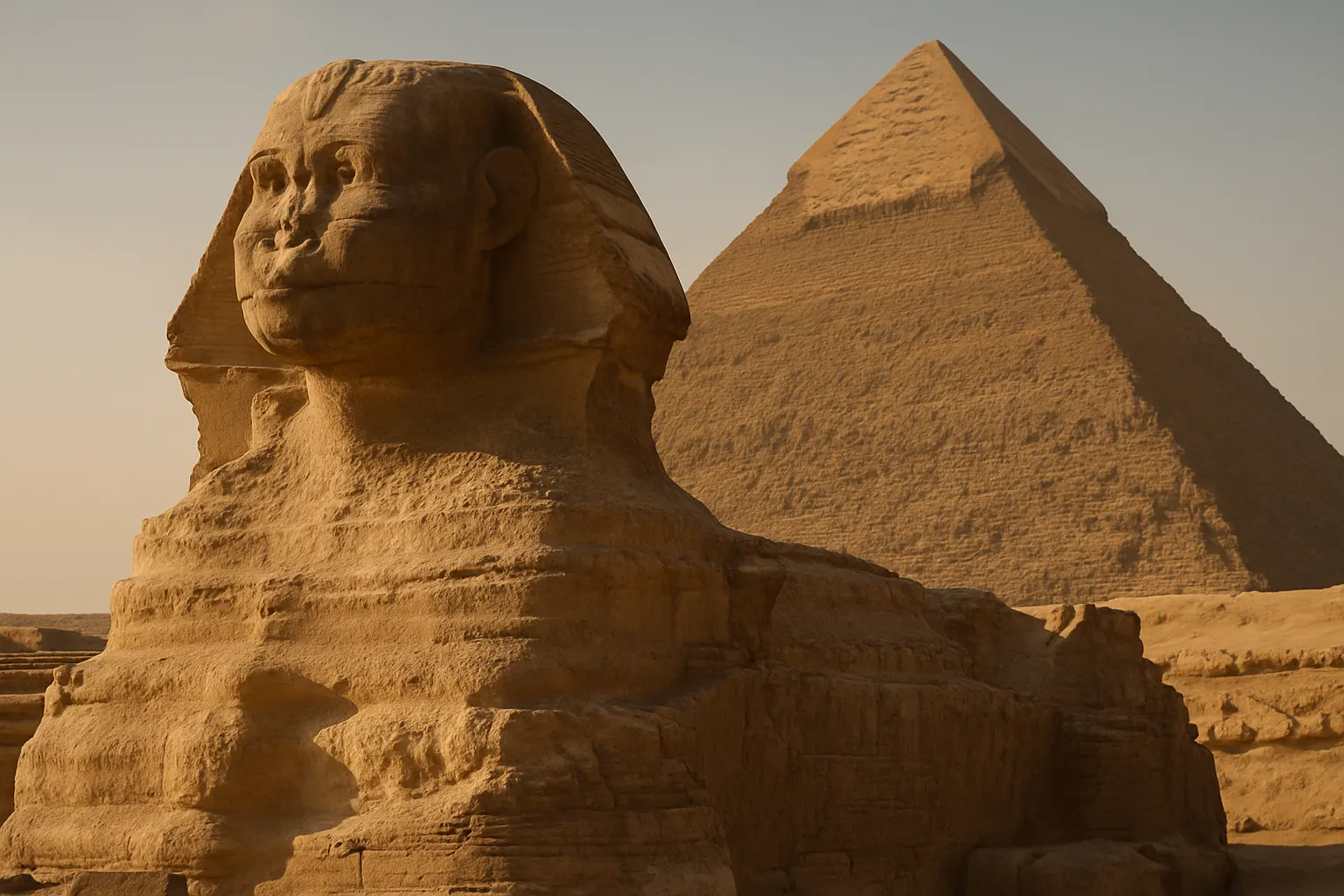
Great Sphinx of Giza Egypt Travel Guide 2026: Guardian of the Pyramids
Ancient EgyptianVisit the Great Sphinx, Egypt's enigmatic limestone guardian. Our guide covers the Sphinx's history,...
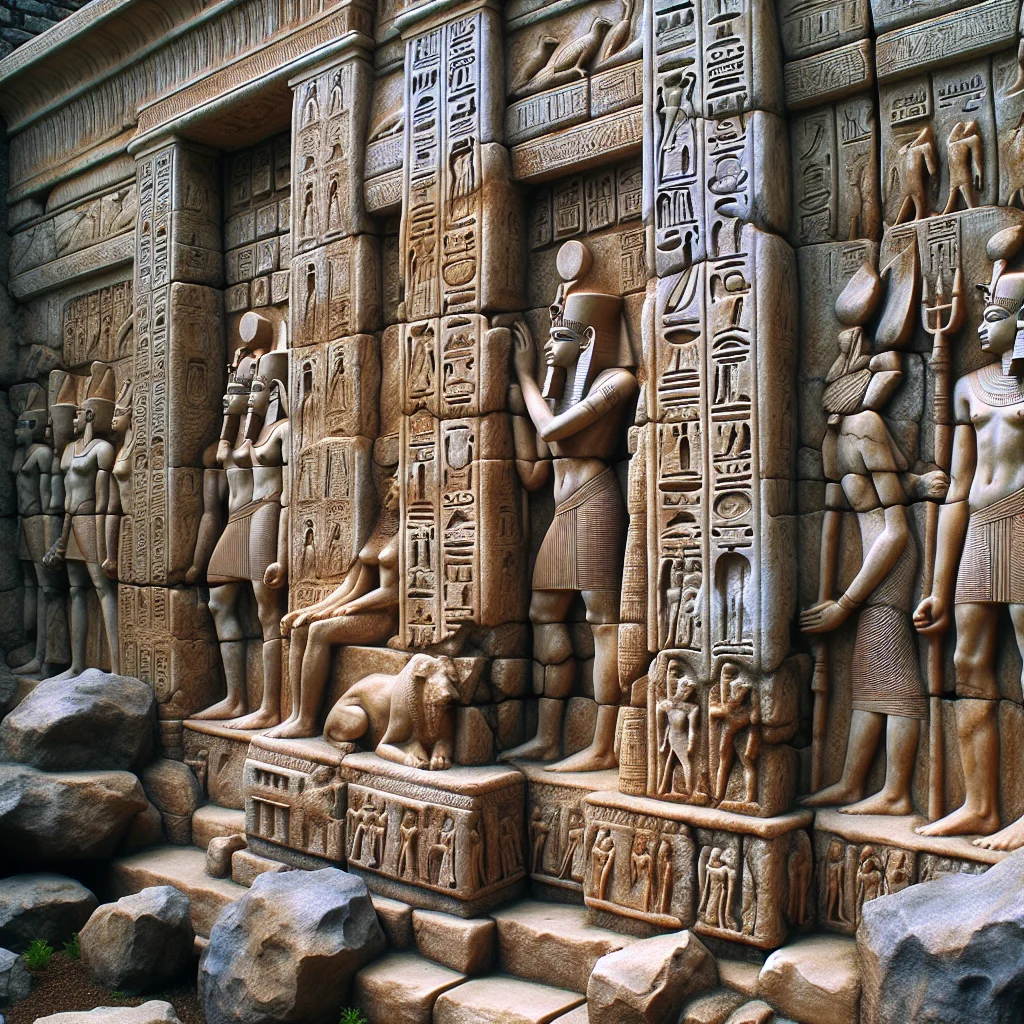
Abydos Temple Egypt Guide 2026: Temple of Seti I & King List
New Kingdom-PtolemaicAbydos Temple near Luxor: magnificent Temple of Seti I with war reliefs, ancient king list, and vibr...
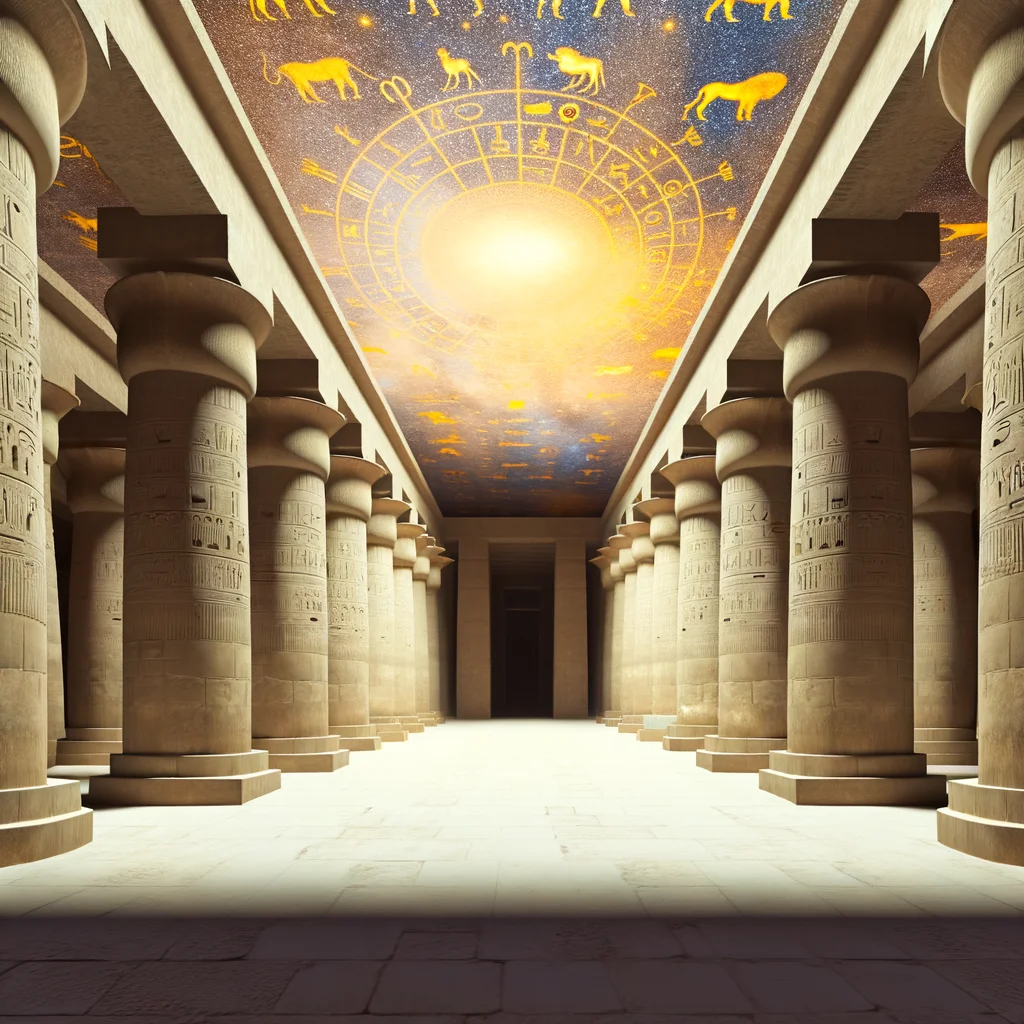
Dendera Temple Complex Egypt Guide 2026: Temple of Hathor & Zodiac Ceiling
Ptolemaic-RomanExplore Dendera's magnificent Temple of Hathor near Luxor. Star-mapped zodiac ceiling, Ptolemaic arc...
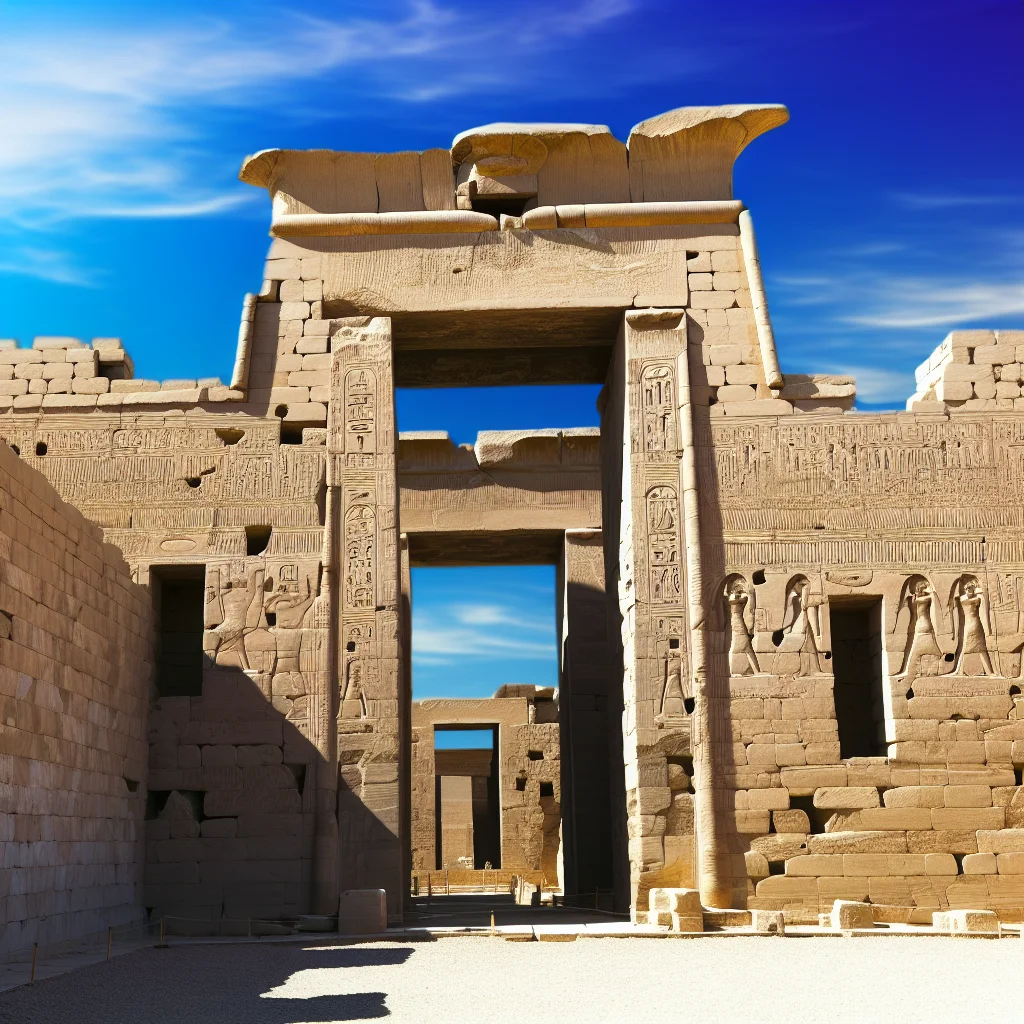
Edfu Temple Egypt Guide 2026: Temple of Horus & Dramatic Battle Reliefs
PtolemaicEdfu Temple near Aswan: Temple of Horus with stunning battle scenes, ritual texts, and the best-pres...