Quick Info
Curated Experiences
Private Sardis Tour from Izmir with Lunch
Biblical Seven Churches Tour from Izmir
Sardis and Philadelphia Private History Tour
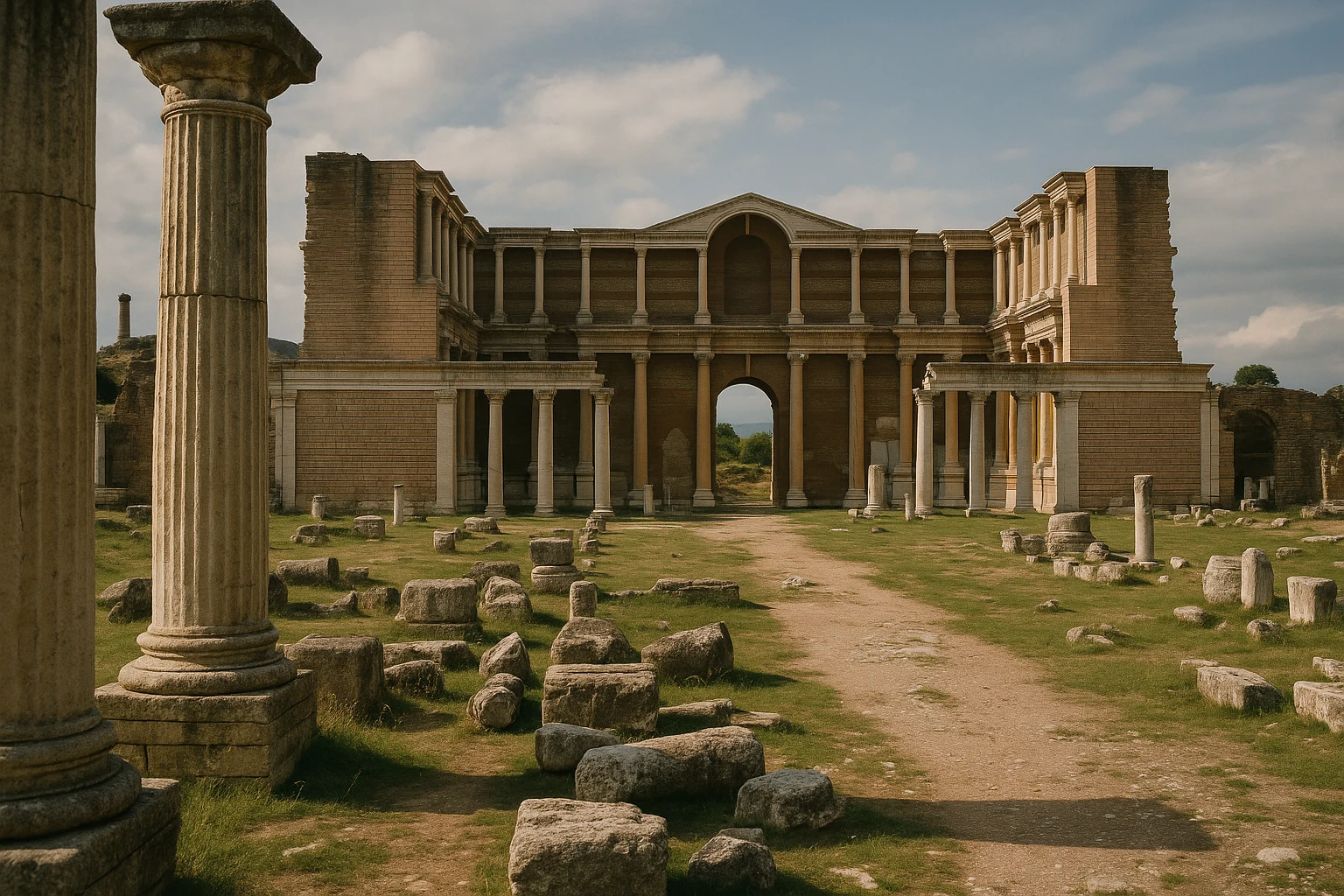
At Sardis in western Turkey, history does not arrive as a single postcard monument. It arrives in layers: the broken Lydian capital of King Croesus, the Persian satrapal center on the Royal Road, a Roman metropolis with one of the largest known ancient synagogues, and a Byzantine town that kept rebuilding as power shifted around it. You stand between tall columns of the Temple of Artemis, turn a few minutes toward the valley, and suddenly face the restored brick-and-marble wall of a colossal Roman bath-gymnasium that looks almost theatrical in scale. Few archaeological sites make political history, urban life, and religious diversity visible in one compact visit the way Sardis does.
This is the city where wealth became legend. Ancient writers used Croesus, the last great Lydian king, as shorthand for unimaginable riches, and the nearby Pactolus River helped fuel that reputation through gold-bearing sands. But Sardis is more than a story about money. It is a place where empires repeatedly inherited the same strategic landscape and then rewrote it in their own architectural language. This guide walks you through that full arc: the history of Sardis, the key monuments you should prioritize, practical transportation from Izmir and Salihli, seasonal planning, and how to combine the site with other major destinations in the Aegean interior.
History: From Lydian Capital to Roman Crossroads
The Lydian kingdom and Croesus (c. 1200-546 BCE)
Sardis emerged as the heart of the Lydian Kingdom in the fertile Hermus Valley, backed by the dramatic massif of Mount Tmolus. By the 7th and 6th centuries BCE it had become one of Anatolia’s most powerful capitals, controlling trade routes between the Aegean coast and the inland plateau. Under King Croesus (r. c. 560-546 BCE), Sardis reached its most famous phase, associated with royal wealth, early coinage traditions in electrum and gold, and extensive diplomatic ties with Greek cities. The city also held strong religious prestige through Artemis worship and local Anatolian cult practices rooted in earlier eras.
Persian Sardis and the Royal Road (546-334 BCE)
In 546 BCE, Cyrus the Great captured Sardis and incorporated it into the Achaemenid Persian Empire. Rather than declining, the city became an imperial administrative center, serving as the western terminus of the Royal Road to Susa. Couriers, officials, merchants, and military detachments moved through Sardis in a steady stream, giving the city strategic value that outlasted Lydian kingship. Persian authority reshaped local governance but did not erase Sardis’s urban role. The city remained a place where Anatolian, Persian, and Greek worlds overlapped, especially in trade and taxation systems that linked the Mediterranean frontier with the imperial interior.
Hellenistic transitions and Roman expansion (334 BCE-3rd century CE)
After Alexander’s campaigns, Sardis passed through Hellenistic control before stabilizing under Rome. In 17 CE, a devastating earthquake damaged much of the city, and Emperor Tiberius provided major financial support for reconstruction. That rebuilding phase drove the monumental Roman city visible today: broad avenues, bath complexes, civic buildings, and an urban plan integrated with older sacred zones. Sardis became a prosperous inland center of Roman Asia, connected to agricultural wealth from the valley and long-distance exchange routes. The built environment from this era reflects confidence, technical sophistication, and sustained state investment rather than frontier improvisation.
Late antiquity and Byzantine Sardis (4th-14th centuries CE)
In late antiquity, Sardis evolved into a major Christian center while preserving a remarkably diverse civic fabric. The city’s famous synagogue, expanded in the Roman period, continued to signal a substantial Jewish community living within a predominantly Greco-Roman urban context. Byzantine fortifications and reoccupied sectors show adaptation to new military pressures and changing trade flows. As regional politics shifted and neighboring centers rose, Sardis contracted but did not disappear. Even in reduced form, the city remained inhabited and strategically relevant, with communities reusing earlier materials and spaces in practical, layered ways typical of long-lived Anatolian settlements.
Modern rediscovery and archaeology (19th century-present)
Systematic study of Sardis accelerated in the 19th and 20th centuries, with major American-led excavations from Harvard and Cornell helping expose the gymnasium complex, synagogue, Byzantine shops, and key sectors of the Lydian and Roman city. Archaeology at Sardis has been unusually important for understanding early coinage, Achaemenid provincial administration, and Jewish life in late Roman Asia Minor. Conservation work continues, balancing research with public access across a broad zone that includes monumental ruins and subtle stratified remains. Sardis today is not a static open-air museum but an active archaeological landscape still refining how historians understand power, wealth, and coexistence in western Anatolia.
The Key Monuments: What to See at Sardis
Temple of Artemis
The Temple of Artemis at Sardis is one of the largest temples in the Greek world, even in incomplete form. Construction began in the Hellenistic period and continued through Roman times, producing a hybrid monument where ambitious scale outpaced final completion. The surviving columns, rising from a broad platform against open sky and fields, make the site’s long chronology immediately visible. You can read changing priorities in the stone itself: reused blocks, unfinished surfaces, and later modifications that reflect a sanctuary adapting to shifting political and religious contexts.
What makes this temple compelling is not perfect preservation but exposed process. You see how sacred architecture evolves over centuries rather than appearing all at once. The wide footprint also helps you grasp Sardis’s former status; this was a city that invested in statements meant to be seen from distance. For photography, arrive early or late when side light deepens column textures and isolates the monument against the foothills of Mount Tmolus.
The bath-gymnasium complex
Sardis’s Roman bath-gymnasium complex is among the most dramatic reconstructed facades in Turkey’s interior. Its towering wall, patterned with brick and marble details, frames what was once a multifunctional civic center where bathing, exercise, education, and social networking converged. The scale indicates a city with significant resources and a public culture deeply aligned with Roman urban values. Inside the excavated zone, you can trace circulation through large halls, service spaces, and courtyards that managed heat, water, and crowd movement with impressive engineering discipline.
Beyond spectacle, the complex reveals Sardis as a lived city, not a ceremonial shell. This was daily infrastructure for residents across classes, from elite patrons to ordinary citizens. Standing here helps anchor the abstract idea of “Romanization” in real architecture people used every day. Mid-morning light works best for capturing facade detail without harsh contrast.
The Sardis synagogue
Adjacent to the gymnasium sector lies the Sardis Synagogue, one of the most significant archaeological discoveries for Jewish life in the Roman world. Its long hall, mosaic floors, and decorative marble revetments show a community that was both prosperous and fully embedded in the civic life of late antique Sardis. The synagogue’s position inside a major public complex challenges outdated assumptions that Jewish communities in this era were isolated at urban margins. Instead, Sardis presents evidence of visibility, patronage, and architectural confidence.
Even in fragmentary condition, inscriptions and decorative motifs make the space feel personal. You are not just seeing religious architecture; you are seeing a social world where identity, commerce, and local politics intersected. Give this area extra time and walk slowly along the mosaics, because many of the most meaningful details are underfoot rather than at eye level.
Marble avenue, shops, and Byzantine layers
The excavated marble-paved avenue and adjoining shop rows near the synagogue and gymnasium show Sardis in practical motion. These were commercial fronts, workspaces, and circulation corridors where urban life unfolded beyond royal narratives. Later Byzantine repairs and reoccupations are visible in altered walls and reused stone, documenting how communities adapted old Roman fabric rather than abandoning it. That continuity gives Sardis a grounded quality: empires changed, but people kept buying, selling, praying, and rebuilding in familiar spaces.
This sector is especially rewarding for travelers who like urban archaeology over monumental iconography. It teaches you how cities survive by modification. For photos, late afternoon brings softer shadow lines across paving and makes tool marks and block joints more legible.
The acropolis and Lydian landscape
Above the lower city, the acropolis zone and surrounding valley context help explain why Sardis mattered for so long. Defensive high ground, access to river routes, and fertile plains created a rare combination of military and economic advantage. Although less visually complete than the lower monuments, this broader landscape frame is essential for understanding the Lydian capital and later imperial administrations. Sardis was never just a ceremonial center; it was a node controlling movement, revenue, and regional logistics.
If you have time, pair your site visit with the nearby Bin Tepe tumulus region associated with Lydian elite burials. Even without entering every mound area, seeing the wider terrain clarifies Sardis as the core of a larger political ecosystem rather than an isolated ruin.
Getting There: Transportation and Access
Sardis is straightforward to reach from Izmir by road, but public transport requires at least one transfer, so planning your route in advance saves time and heat.
From Izmir
Izmir is the most common base and the easiest departure point for day trips. The drive typically takes 1 hour 30 minutes to 2 hours depending on traffic and your exact start point.
- Private tour: Door-to-door guiding and transport, typically 8-10 hours total; many tours include lunch and hotel pickup.
- Rental car: Most flexible option for combining Sardis with Philadelphia (Alaşehir) or other Hermus Valley stops; parking is usually straightforward near main access points.
- Intercity bus + taxi: Take a bus to Salihli, then continue by local taxi to the archaeological zone; slower but workable for independent travelers.
From Salihli and Manisa
Salihli is the nearest practical transit hub and useful if you are traveling overland through western Turkey.
- Taxi from Salihli: Approx. 10-20 minutes depending on pickup point; fastest local option.
- Local minibus (dolmus) + short taxi: Budget-friendly, but schedules can be irregular outside commuter hours.
- Rental car from Manisa or Izmir Airport: Best for travelers planning a multi-site archaeology circuit across the region.
Admission and Hours
Sardis entry fees and seasonal hours can change, so verify current details through official Turkish museum channels or at the gate before departure. As a practical baseline, expect ticketing in Turkish lira with occasional card acceptance, but carry cash in case terminals fail. Typical archaeological-site hours in this region run from morning opening through late afternoon in winter and later evening in summer. The best strategy is an early arrival, both for cooler conditions and cleaner access to major monuments before day tours cluster around midday.
When to Visit: Seasonal Considerations
Spring (March-May)
Spring is generally the ideal season, with temperatures around 15-26°C (59-79°F), greener valley scenery, and manageable crowd levels outside holiday peaks. Wildflowers and clear light make the Temple of Artemis especially photogenic. You can comfortably explore both the lower city and wider landscape without heat stress if you start by mid-morning.
Summer (June-August)
Summer brings sustained heat, often 30-38°C (86-100°F), and exposed stone surfaces can feel significantly hotter by noon. Crowds are moderate but concentrated in shorter windows because many groups avoid midday. Wear a hat, carry extra water, and prioritize the gymnasium-synagogue zone first before moving to more exposed areas.
Autumn (September-November)
Autumn offers 18-30°C (64-86°F) in early season, gradually cooling into very pleasant conditions by October and November. Light is warm, fields are dry-gold, and tour density often drops after peak summer. For many travelers this is the best balance of weather, visibility, and lower on-site pressure.
Winter (December-February)
Winter is quiet and atmospheric, with typical daytime ranges around 8-15°C (46-59°F) and occasional rain. Crowd levels are low, which is excellent for photographers and slow-paced visits. Bring a waterproof layer and check closing times carefully, as winter schedules are usually shorter.
Combining Sardis with Izmir and the Hermus Valley
Sardis works best as the anchor of a full-day inland route rather than a rushed stop. If you are leaving Izmir, depart early and plan to arrive around 9:00 AM when temperatures are still comfortable and the main sectors are quiet. Begin at the gymnasium and synagogue zone for context-rich urban archaeology, then shift to the Temple of Artemis by 10:45 AM while light is still good for architecture. By 12:30 PM, continue into Salihli for lunch at a local kebab or pide restaurant before the afternoon heat peaks.
After lunch, you can choose a thematic extension. History-focused travelers often continue toward Alaşehir (ancient Philadelphia) for biblical and Byzantine context, while archaeology-focused travelers may opt for a landscape loop toward the Lydian tumuli at Bin Tepe. If you are driving, this flexible middle block from 2:00 PM to 4:30 PM turns the day into a deeper Hermus Valley experience rather than a single-site checklist.
Return toward Izmir around 5:00 PM and arrive in the city near 7:00 PM depending on traffic. In total, the combined day takes about 10 to 11 hours with a comfortable pace. If your schedule is tight, Sardis alone still rewards a focused half-day visit, but adding one valley stop makes the city’s historical role far easier to understand.
Practical Information
What to Bring
- Sun protection: Hat, sunscreen, and sunglasses are essential because shade is limited across major ruins.
- Water: Carry at least 1 liter per person in spring and 1.5-2 liters in summer.
- Footwear: Wear sturdy shoes for uneven paving, gravel patches, and occasional loose stone.
- Cash: Bring Turkish lira for entry, snacks, or backup payments when card systems are unreliable.
- Camera: A wide-angle lens is ideal for the gymnasium facade and temple columns.
Dress Code and Etiquette
Sardis is an archaeological site rather than an active mosque complex, so there is no strict religious dress code, but respectful, practical clothing is still best. Avoid climbing on fragile architectural remains and follow posted conservation barriers, especially around mosaics and restored walls. Keep voices low in enclosed or interpretation areas where guides may be working with groups.
Accessibility
Accessibility is mixed. Some principal paths in the lower sectors are relatively navigable, but surfaces remain uneven and transitions between areas can involve rough ground. Travelers with limited mobility may prefer focusing on selected viewpoints by vehicle and allocating more time for shorter walking loops. Contact local tourism operators in advance for current access conditions and available assistance.
Why Sardis Matters
Sardis matters because it preserves a rare continuity of power, adaptation, and coexistence across more than a millennium of Mediterranean history. In one site, you encounter the memory of Lydian kings, the administrative logic of Persian imperial rule, the civic infrastructure of Rome, and the resilient reshaping of space in the Byzantine centuries. It is a place where famous names like Croesus become tangible, but also where ordinary city life emerges clearly through streets, shops, baths, and communal worship spaces.
For travelers, Sardis offers something increasingly rare: scale without overwhelming crowds, significance without heavy-handed staging, and monuments that still feel embedded in their original landscape. When evening light catches the Temple of Artemis and the valley turns copper beyond the columns, you see why this city kept being rebuilt by one civilization after another. Sardis was never only a ruin. It was, repeatedly, a beginning.
Quick Facts
| Attribute | Details |
|---|---|
| Location | Near Salihli, Manisa Province, Turkey |
| Ancient Name | Sardis (Sardeis) |
| UNESCO Status | Sardis and the Lydian Tumuli of Bin Tepe (Tentative List, 2013) |
| Established | c. 1200 BCE settlement |
| Distance from nearest hub | ~90 km from Izmir (about 1.5-2 hours by road) |
| Entry Fee | Usually charged in TRY; verify latest rate at the gate |
| Hours | Typically 8:30 AM-5:30 PM (winter) and later in summer |
| Best Time | Spring and autumn, especially early morning or late afternoon |
| Suggested Stay | 2-3 hours on site; half day with museum or valley extension |
Explore More Turkey
- Ephesus: Marble streets, the Library of Celsus, and one of the Mediterranean’s most complete Roman cities.
- Pergamon: Dramatic hilltop acropolis, royal history, and the celebrated Asclepion healing center.
- Aphrodisias: Exceptional sculpture heritage and one of Turkey’s best-preserved ancient stadiums.
- Miletus: A major Ionian city with a vast theater and deep philosophical legacy.
Plan your full route with our Turkey Ancient Sites Guide. For planning strategy, read our guide to building an archaeology road trip in Turkey.
Frequently Asked Questions
How much time should I plan at Sardis?
Most travelers need 2-3 hours to see the Temple of Artemis, the Roman bath-gymnasium, the synagogue, and the excavated streets. If you want to walk more slowly and visit the archaeological museum in Salihli, allow a half day. A full day works best when combining Sardis with nearby sites in the Hermus Valley.
What is the best time of day to visit Sardis?
Arrive early in the morning or in the late afternoon for softer light and cooler temperatures. Midday can be very hot from June through September because shade is limited across the main ruins. Golden hour is ideal for photography at the Temple of Artemis columns.
Can I visit Sardis from Izmir as a day trip?
Yes, Sardis is an easy day trip from Izmir by rental car or organized tour, with drive times around 1 hour 30 minutes to 2 hours each way depending on traffic. Public transport is possible via Salihli but takes longer and requires a taxi for the final stretch. A private tour is easiest if you want historical context on site.
Is there one ticket for all Sardis monuments?
Ticketing can vary by season, but the principal archaeological zone is usually sold as a single site entry. Bring Turkish lira cash in case card machines are offline. Always confirm current prices at the gate or with the regional museum authority before arrival.
What are the top highlights at Sardis?
The standout monuments are the massive Temple of Artemis, the restored facade of the Roman bath-gymnasium complex, and one of the largest ancient synagogues discovered outside Israel. The marble-paved avenue and shops nearby also reveal everyday urban life in late antiquity. Together they show Sardis as a multicultural city, not just a royal capital.
Is Sardis suitable for families and older travelers?
Yes, but surfaces are uneven and sun exposure is strong, so pacing matters. Families should carry extra water and hats, and older visitors may prefer shorter loops that focus on the gymnasium and synagogue zone first. A driver or taxi between sections helps reduce walking in summer heat.
Nearby Ancient Sites
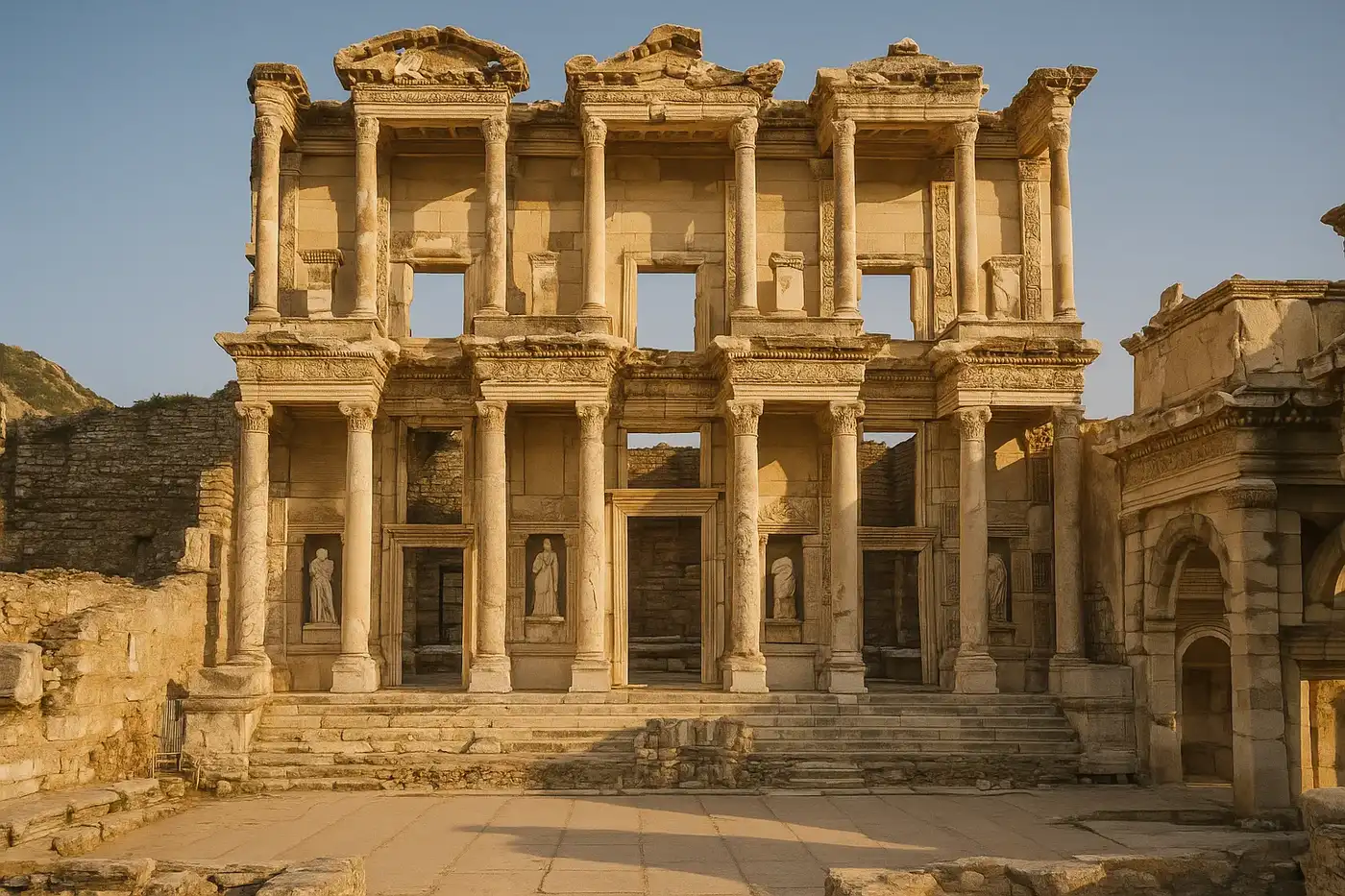
Ephesus Turkey Travel Guide: Library of Celsus & Terrace Houses
Greco-RomanDiscover Ephesus, the best-preserved ancient city in the Mediterranean. Our complete guide covers th...
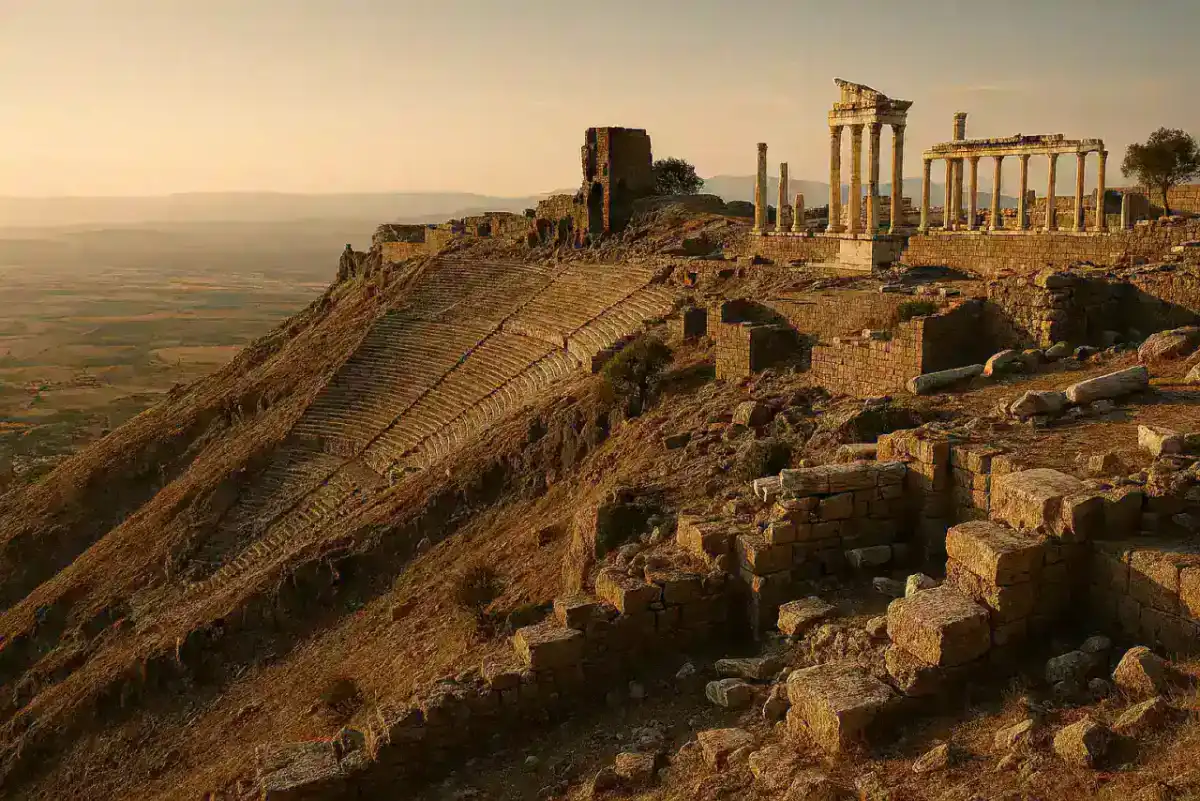
Pergamon Turkey Travel Guide 2026: Acropolis, Altar & Asclepion
Greco-RomanExplore Pergamon's dramatic acropolis, Great Altar, and healing center of Asclepion. Our guide cover...
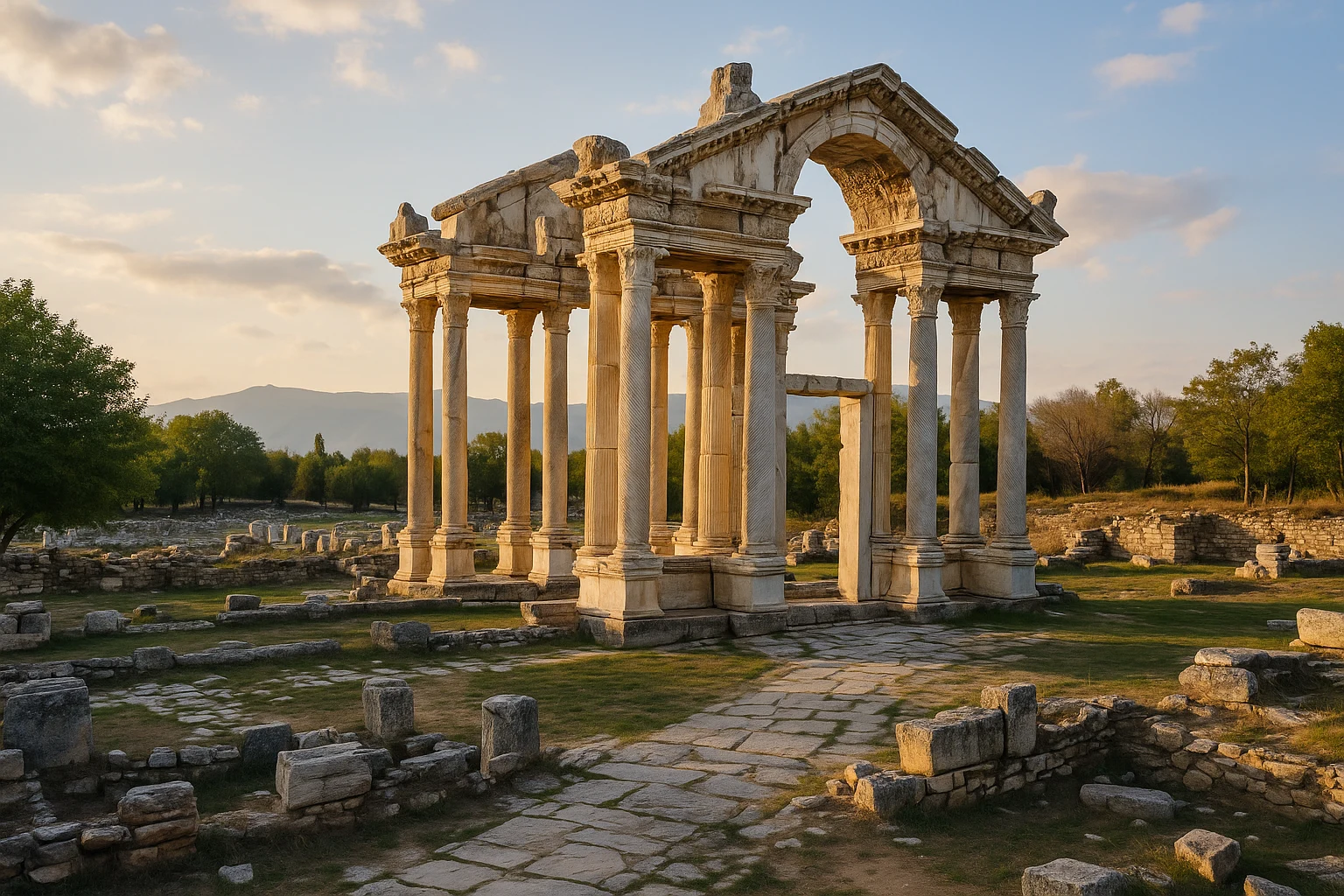
Aphrodisias Turkey Guide 2026: Stadium & Temple of Aphrodite
Carian-Hellenistic-Roman-ByzantinePlan Aphrodisias in Turkey: Roman stadium, Aphrodite temple, museum, transport from Izmir or Pamukka...