Quick Info
Curated Experiences
Segesta Archaeological Park Guided Visit
Segesta and Erice Day Tour from Palermo
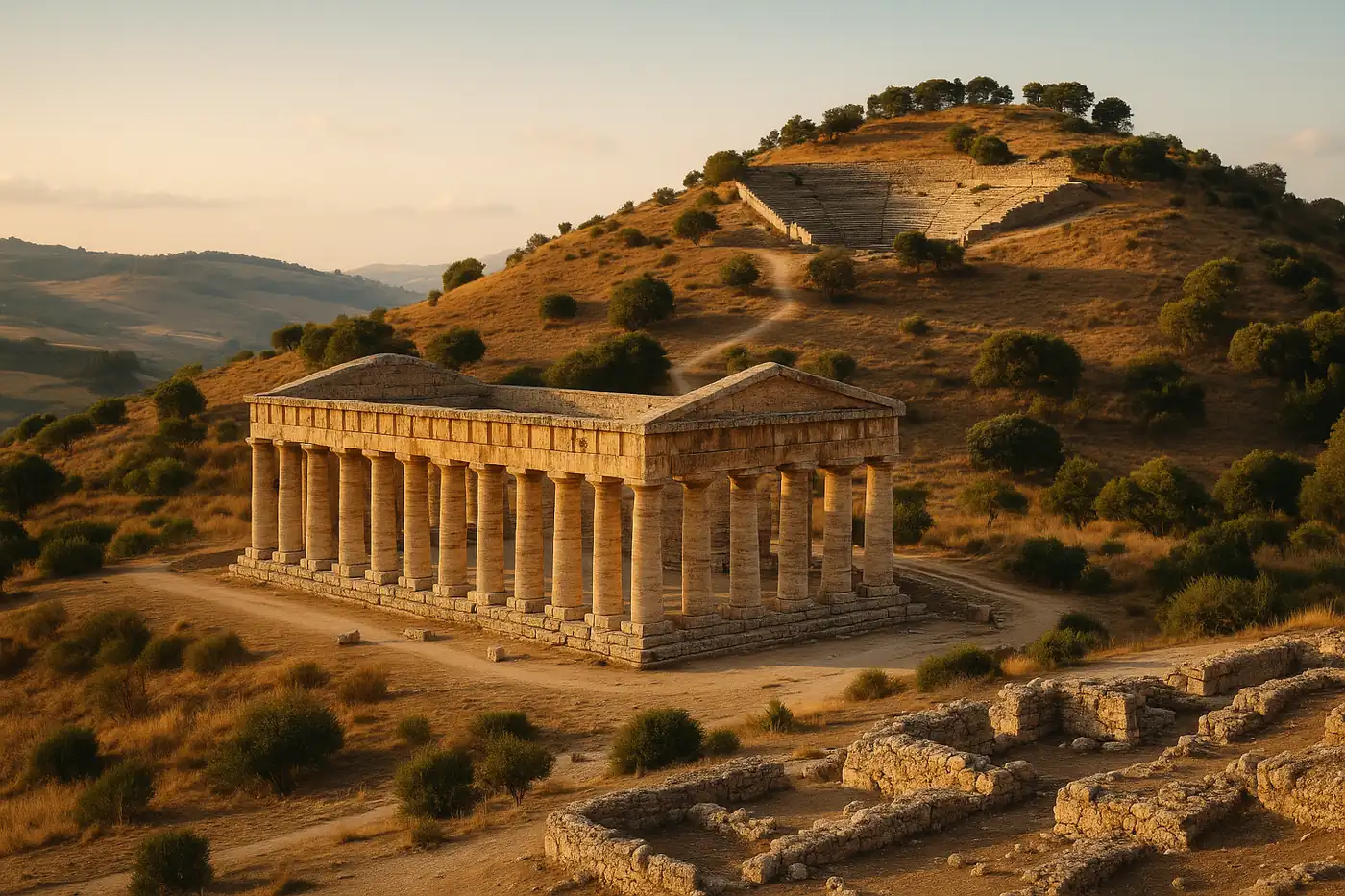
You come around a bend on the road from Palermo and the temple appears without warning: 36 Doric columns standing in a shallow valley between green hills, with no town, no modern sprawl, and no other buildings anywhere in sight. Segesta’s temple is one of those rare ancient monuments that still occupies its landscape the way its builders intended it to, alone and commanding. The absence of everything except grass, stone, and sky is what makes the first encounter so arresting.
But Segesta is more than a photogenic ruin. This was the principal city of the Elymians, a people of western Sicily whose origins ancient writers debated and whose political identity did not fit neatly into the Greek colonial framework that dominated the rest of the island. The temple looks Greek in every formal detail — Doric order, peristyle plan, canonical proportions — yet it was built by a non-Greek community for purposes that scholars still argue about. The building was never finished. No fluting was carved on the columns, no cella was completed inside the peristyle, and the platform shows no evidence of standard ritual furnishings. Whether this represents an interrupted project, a political statement, or something else entirely is one of Sicilian archaeology’s most productive mysteries.
If you want ancient sites that photograph beautifully and also make you think, Segesta delivers on both counts.
Historical Context
The Elymians occupied the western corner of Sicily from at least the archaic period, maintaining a cultural and political identity distinct from both the Greek colonies to the east and the Phoenician settlements along the coast. Ancient sources, including Thucydides, connected the Elymians to Trojan refugees, though modern scholarship treats these origin stories as more mythological than historical. What is clear is that Segesta (called Egesta in some sources) functioned as a major population center with its own diplomatic networks, military capacity, and monumental building traditions.
Segesta’s history is defined by its rivalry with Selinunte, the powerful Greek colony about 50 miles to the southeast. The two cities clashed repeatedly over territory and trade access, and Segesta consistently sought alliances with larger powers to counterbalance Selinunte’s military strength. In 416 BCE, Segestean envoys traveled to Athens and helped persuade the Athenians to launch the catastrophic Sicilian Expedition, one of the pivotal events of the Peloponnesian War. When that gambit failed, Segesta turned to Carthage, and in 409 BCE Carthaginian forces destroyed Selinunte so thoroughly that it never recovered.
Under Carthaginian patronage and later Roman control, Segesta maintained its regional importance. Rome granted the city favorable status, partly based on the shared Trojan ancestry narrative — both Romans and Elymians claimed descent from Aeneas and his companions. The theatre on the hilltop above the temple dates primarily to the 3rd or 2nd century BCE and reflects the city’s continued vitality during this transitional period. By late antiquity, settlement had shifted away from the ancient center, and the monumental buildings were gradually abandoned to the landscape that now frames them so effectively.
The temple itself is usually dated to the 420s BCE, placing it squarely in the period of intense conflict with Selinunte. Some scholars have argued that it was a diplomatic prop — a building meant to look impressively Greek to visiting Athenian ambassadors who needed convincing that Segesta was wealthy and worth defending. Others see it as a genuine sacred project interrupted by war. The physical evidence supports both readings, which is part of what makes the building so endlessly interesting to visitors who pay attention to details.
What to See
The Doric Temple
The temple is the visual and intellectual anchor of the site. Standing on a low hill with views in every direction, it consists of a complete peristyle of 36 unfluted Doric columns supporting an intact entablature and pediment. The proportions are canonical late 5th-century Doric, and the quality of the limestone masonry is high. Walk the full perimeter and note three key anomalies: the columns were never fluted (the lifting bosses on some blocks were never trimmed either), no completed interior cella divides the space inside the colonnade, and the stylobate shows no cuttings for the fixtures you would expect in a functioning Greek sanctuary. These details are what separate a casual admiration of the building from a real engagement with its mysteries.
The setting amplifies the architecture. Depending on the season, the surrounding hills may be covered in wildflowers, golden grain, or dry grass, but in every case the temple reads as a deliberate insertion into a natural amphitheatre of terrain. The builders chose this spot carefully: it is visible from multiple approach routes and dominates the valley floor.
Practical tip: Arrive at the temple within 30 minutes of park opening to have the colonnade largely to yourself. Tour bus groups typically arrive between 10:00 and 11:30 AM.
The Hilltop Theatre
The theatre occupies the summit of Monte Barbaro, about 1,300 feet above sea level and roughly a mile from the temple. It was carved into the northern slope of the hill, with the cavea oriented to frame a spectacular view of rolling countryside and, on clear days, the Gulf of Castellammare. The structure dates primarily to the Hellenistic period (3rd-2nd century BCE) and seats approximately 4,000 spectators in a semicircular arrangement typical of Greek theatre design. The seating is well preserved and the acoustic properties are genuinely impressive — conversation at normal volume on the orchestra floor carries clearly to the upper rows.
Modern performance seasons sometimes schedule classical drama and music events here in summer, which adds another layer of continuity to the space. Even without a performance, sitting in the upper rows and absorbing the panoramic view is one of western Sicily’s finest archaeological experiences.
Practical tip: Take the shuttle from the lower parking area to the theatre ($2 to $3 USD each way, running every 20 to 30 minutes). The walk up is roughly 25 to 30 minutes on a paved road with no shade. In summer, the shuttle saves significant energy and hydration. If you prefer to walk, carry extra water and start early.
The Archaeological Zone and Fortifications
Between the temple and the theatre, traces of the ancient city’s fortification walls, gates, and residential zones are visible at various points along the hillside. These remains are less visually dramatic than the two main monuments, but they add essential context: Segesta was not just a temple and a theatre but a full urban settlement with defensive infrastructure, domestic quarters, and commercial zones. The walls in particular show the engineering investment required to defend a hilltop position against determined enemies. Interpretive signage is present but limited, so reading ahead or hiring a guide significantly improves comprehension of this zone.
Practical tip: If you have 3 or more hours, walk the path between the temple and the theatre rather than taking the shuttle in at least one direction. The archaeological zone along the route rewards the extra time.
Timing and Seasons
Spring (March through May) is the ideal season for Segesta. Temperatures hover between 57 and 75°F (14 to 24°C), the hills are green and often carpeted with wildflowers, and the site feels alive in a way that summer’s scorched landscape cannot match. Crowds are moderate except during Easter week and Italian holidays.
Summer (June through August) brings heat that the exposed site amplifies mercilessly. Expect 82 to 97°F (28 to 36°C) with almost no shade at either the temple or the theatre. If visiting in summer, arrive at opening or come in the last two hours before closing. Carry at least 2 liters of water per person.
Autumn (September through mid-November) is the second-best window, with temperatures in the 61 to 82°F (16 to 28°C) range, thinning crowds, and warm afternoon light that turns the temple’s limestone to gold. Late October can bring occasional rain, but clear days are stunning.
Winter (December through February) is cool and quiet, with highs around 48 to 59°F (9 to 15°C). Wind can be fierce on the exposed hilltop at the theatre. The upside is near solitude at both monuments and a moody, atmospheric quality to the landscape.
The best time of day is the first hour after opening or the last hour before closing. Midday is punishing in any season warmer than winter.
Tickets, Logistics, and Getting There
Admission to Segesta Archaeological Park is approximately $7 to $10 USD (6 to 9 euros). The shuttle between the lower temple area and the hilltop theatre runs an additional $2 to $3 USD each way. Hours are typically 9:00 AM to approximately 5:00 or 6:30 PM, depending on season, with later closing in summer. Always confirm current hours before visiting, as they can shift.
From Palermo: The drive takes approximately 60 to 75 minutes via the A29 motorway toward Trapani, exiting at Segesta. This is the most common approach and the easiest logistically. Rental car is strongly recommended for western Sicily travel.
From Trapani: About 30 to 40 minutes by car, making Segesta an easy pairing with a Trapani-based itinerary.
By public transport: Tarantola bus service runs between Trapani and Segesta with limited frequency (typically a few departures per day). From Palermo, you can take a train to Segesta Tempio station (the Palermo-Trapani line), though the station is about a 20-minute uphill walk from the park entrance and train frequency is limited. A rental car provides far more flexibility.
Parking: Free parking is available at the main park entrance near the temple. The lot fills on busy spring and summer mornings, so arriving early helps.
Pre-booking is not typically required except for organized group tours, but confirming shuttle schedules before arrival is wise, especially in shoulder seasons when service may be reduced.
Practical Tips
- Footwear matters. The temple area is relatively flat, but the path to the theatre and the archaeological zone between the two involves slopes, gravel, and uneven surfaces. Sandals are a poor choice.
- Sun protection is essential in any season except winter. There is effectively no shade at the temple, on the shuttle road, or in the theatre seating area.
- Bring your own water. There is a small refreshment point near the entrance, but nothing along the route between the temple and the theatre.
- Wind can be a factor at the theatre, especially in autumn and winter. Secure hats and lightweight gear, and bring a light jacket for exposed hilltop conditions.
- A telephoto lens or binoculars are useful at the temple for examining the unfluted column details, lifting bosses, and entablature carvings from the fenced perimeter.
- The site is relatively small compared to Agrigento or Syracuse, making it manageable for travelers with moderate fitness. However, the vertical distance between the temple and the theatre is significant if you choose to walk.
Suggested Itinerary
Compact Visit (2 hours): Arrive at park opening. Spend 45 minutes at the temple, walking the full perimeter and examining the unfinished construction details. Take the shuttle to the theatre (10 minutes). Spend 30 minutes in the theatre absorbing the view and acoustics. Shuttle back down and depart.
Full Visit (3 to 3.5 hours): Arrive at opening. Spend a full hour at the temple. Walk the path toward the theatre rather than taking the shuttle, pausing at fortification walls and archaeological zone markers along the way (35 to 45 minutes uphill). Spend 40 minutes at the theatre. Shuttle back down. Check the small visitor center near the entrance for any seasonal exhibit content.
Western Sicily Day (8 to 9 hours from Palermo): Depart Palermo by 8:00 AM. Arrive at Segesta by 9:15 AM and spend 2.5 hours at the site. Drive 40 minutes to Erice for a late lunch and 2 hours in the medieval hill town. Optional stop at Trapani salt flats on the return. Back to Palermo by 6:00 PM. This is one of the strongest day-trip combinations in Sicily.
Nearby Sites
Valley of the Temples, Agrigento is about 2 to 2.5 hours southeast by car. The comparison between Segesta’s solitary, unfinished temple and Agrigento’s monumental ridge of completed sanctuaries is one of the most instructive contrasts in Sicilian archaeology. Plan them on separate days.
Taormina Ancient Theatre is roughly 3.5 hours east across the island. The theatre-to-theatre comparison between Segesta’s pastoral hilltop setting and Taormina’s volcanic-coastal drama reveals how profoundly landscape shaped the ancient performance experience.
Syracuse Archaeological Park is about 4 hours east. Its combination of Greek theatre, Roman amphitheatre, and quarry caves provides urban-scale civic architecture that contextualizes Segesta’s more isolated, frontier character.
Erice, about 40 minutes north, is not an ancient site in the same register but makes the best half-day pairing with Segesta. The medieval hilltop town offers sweeping coastal views, narrow stone streets, and a long history reaching back to a pre-Greek sanctuary of Aphrodite/Astarte.
Final Take
Segesta is the site that reminds you how much we do not know about the ancient Mediterranean. The temple is beautiful enough to stop you in your tracks, but it is the questions it refuses to answer that stay with you: who were the Elymians, really? Why does this building look so perfectly Greek when its builders were not? Why was it never finished? The theatre on the hill above answers none of these questions but adds its own, offering a place where landscape itself becomes architecture, where the view from the seats is as much part of the design as the stone.
In a Sicily overloaded with Greek and Roman monuments that come with clear narratives and confident labels, Segesta stands apart. It is the site that makes you comfortable with ambiguity, and that is a rare and valuable gift for a traveler.
Discover More Ancient Wonders
- Valley of the Temples, Agrigento — Sicily’s most monumental Greek sacred landscape
- Syracuse Archaeological Park — Greek theatre, Roman amphitheatre, and quarry caves in eastern Sicily
- Taormina Ancient Theatre — Dramatic performance architecture overlooking Etna and the Ionian Sea
- Italy Ancient Sites Hub — Plan your complete Italian archaeology itinerary
- Budget Travel Guide — Practical strategies for affordable ancient-world travel
Quick Facts
| Attribute | Details |
|---|---|
| Location | Calatafimi-Segesta, Sicily, Italy |
| Country | Italy |
| Region | Sicily |
| Civilization | Elymian / Greek / Roman |
| Historical Period | 5th century BCE - Roman era |
| Established | 5th century BCE |
| Entry Fee | ~$7-$10 USD (€6-9); shuttle extra |
| Hours | ~9:00 AM to 5:00-6:30 PM (seasonal) |
| Best Time | Spring; early morning or late afternoon |
| Suggested Visit | 2-3.5 hours |
| Coordinates | 37.9429, 12.8332 |
Frequently Asked Questions
Why is the Segesta temple unfinished?
The temple appears never to have been fully completed or dedicated for standard ritual use. Scholars debate whether political conflict, changing priorities, or symbolic intent interrupted final construction.
How much time do you need at Segesta?
Most travelers need 2-3 hours for the temple, museum context, and hilltop theatre shuttle loop. Add time if you want to walk the trails instead of using the shuttle.
Is Segesta worth visiting without a guide?
Yes. Independent visitors can have a strong visit with basic pre-reading, but a guide adds useful context on Elymian identity, temple anomalies, and regional conflict history.
Can you visit Segesta as a day trip from Palermo?
Yes. It is feasible by rental car in roughly an hour each way. Public transit is possible but less flexible, so most travelers pair Segesta with Erice or Trapani by car.
Nearby Ancient Sites
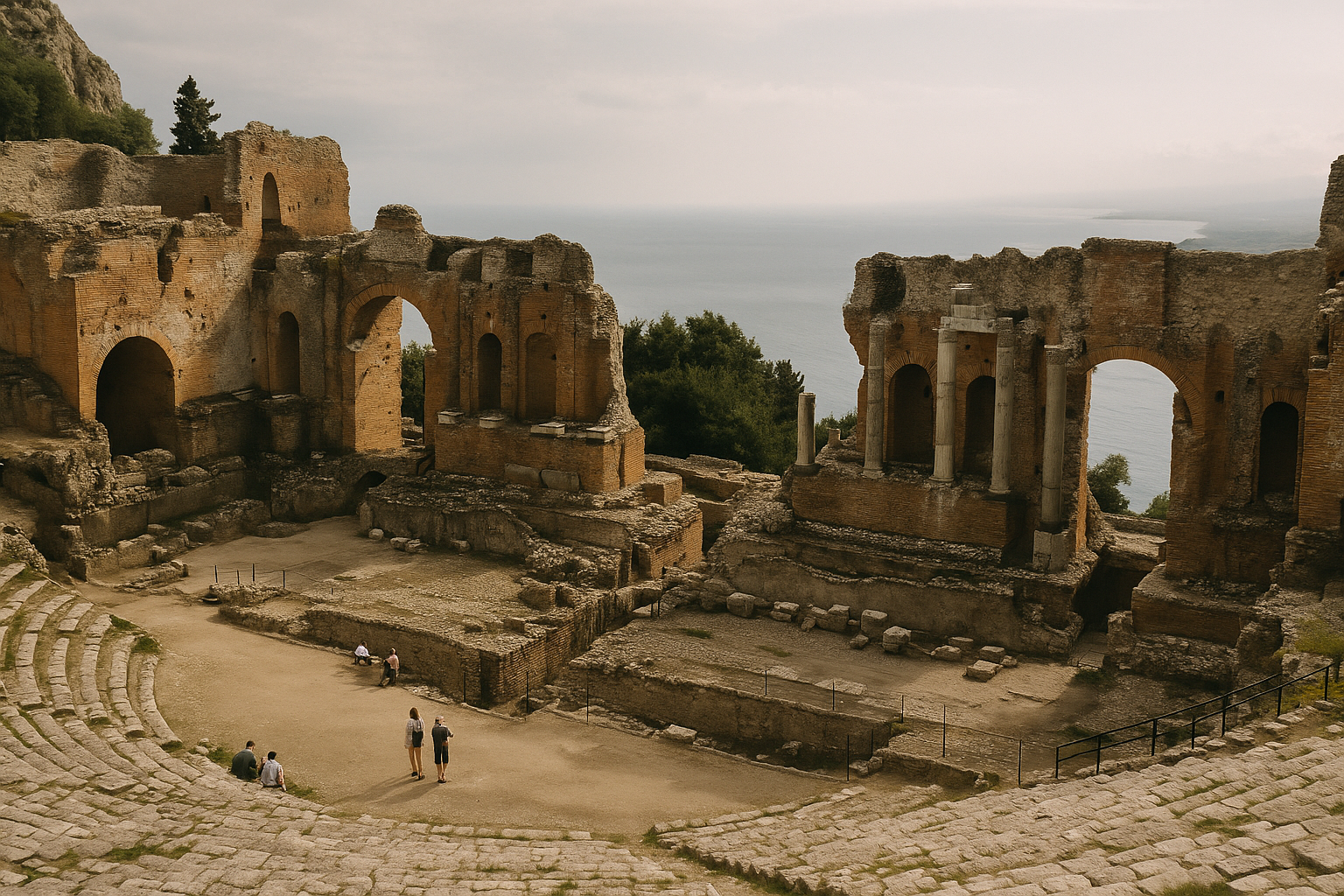
Taormina Ancient Theatre: Sicily’s Greek-Roman Stage Above the Sea
Greek / RomanPlan your visit to Taormina’s ancient theatre: history, views of Etna, tickets, logistics, and what ...
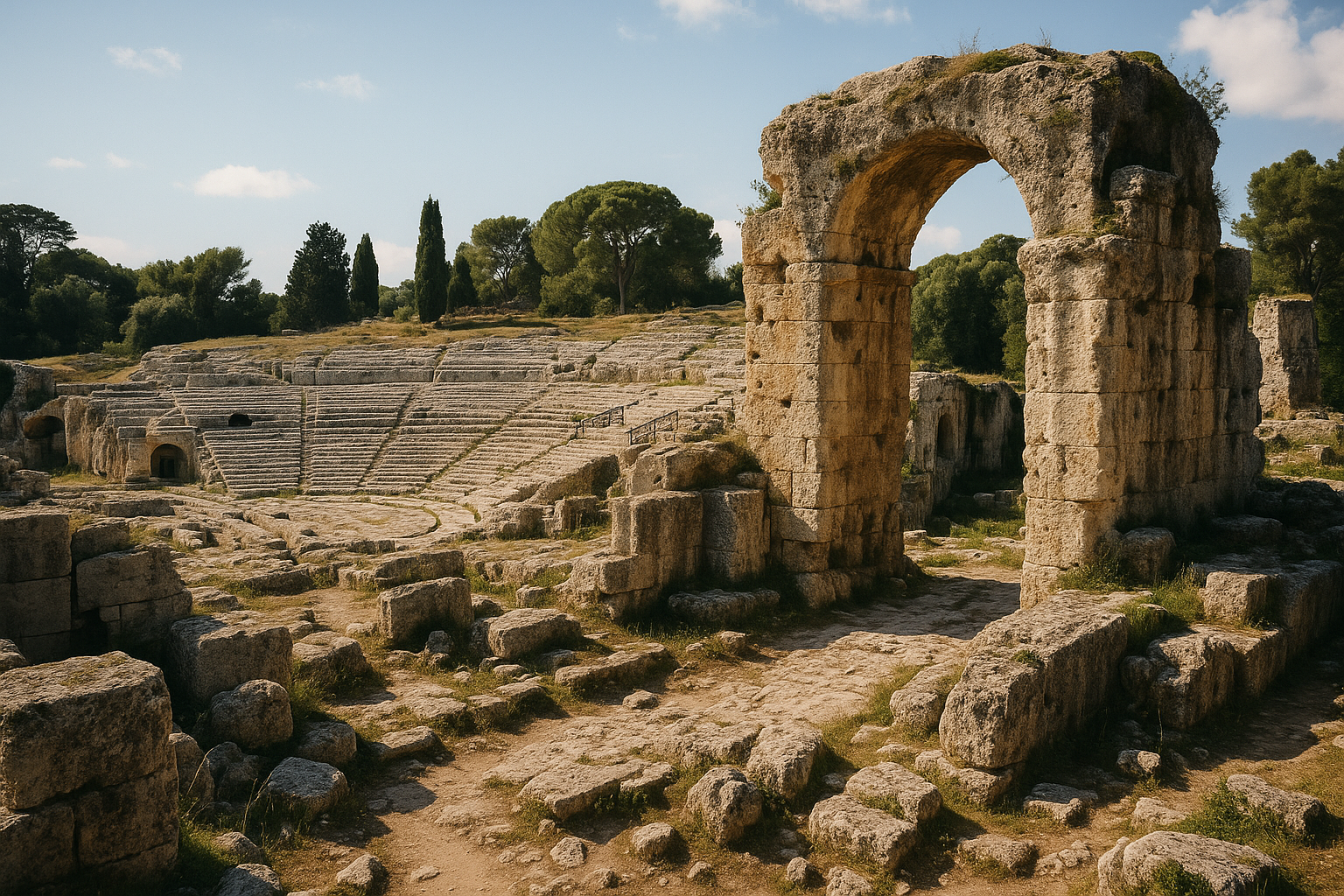
Syracuse Archaeological Park (Neapolis) Guide 2026
Greek-Roman-ByzantinePlan your visit to Syracuse Archaeological Park in Sicily with theatre highlights, Ear of Dionysius ...
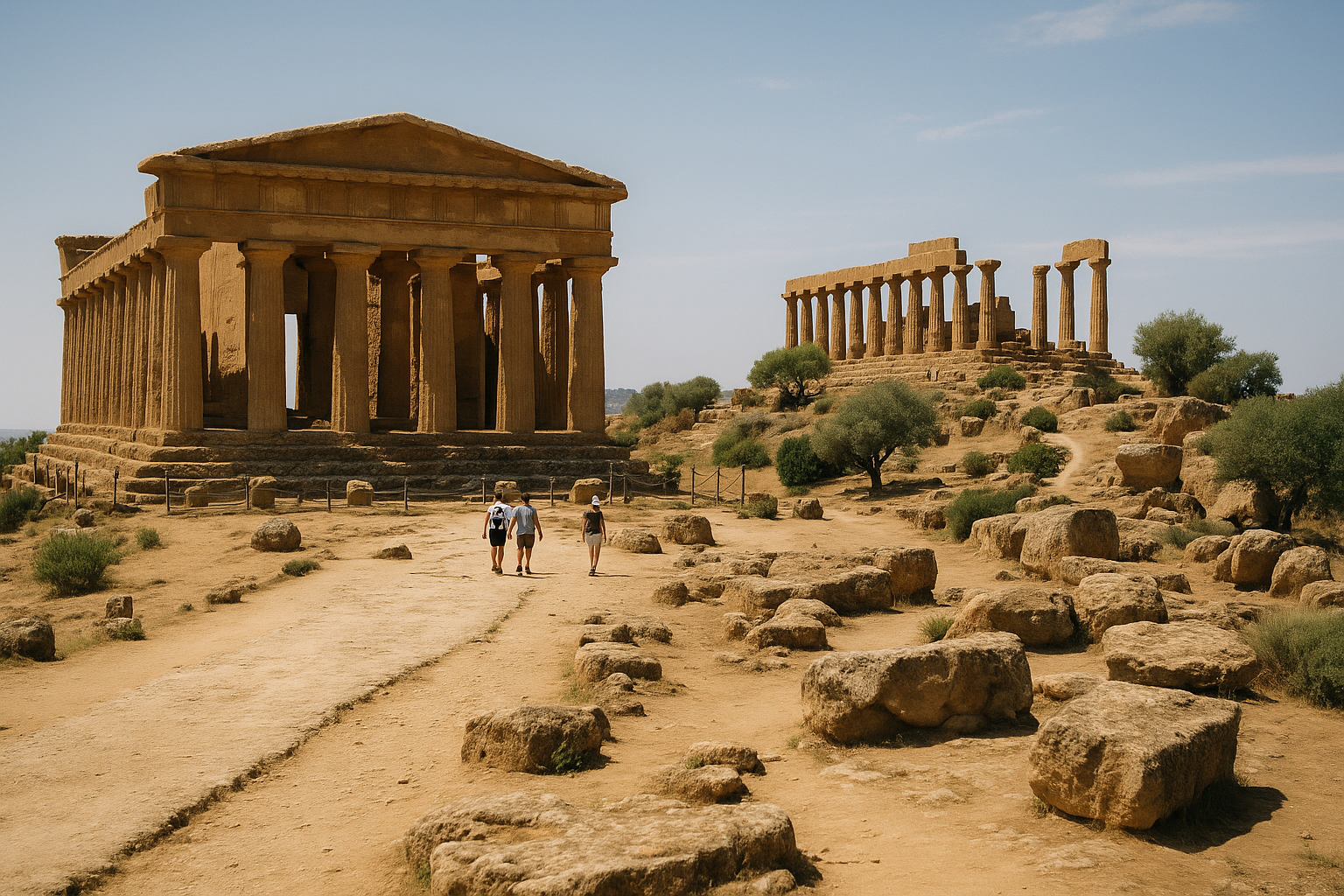
Valley of the Temples Agrigento Guide 2026: Concordia & Juno
Greek-Roman-NormanPlan your Agrigento Valley of the Temples visit with temple highlights, tickets, transport, and prac...
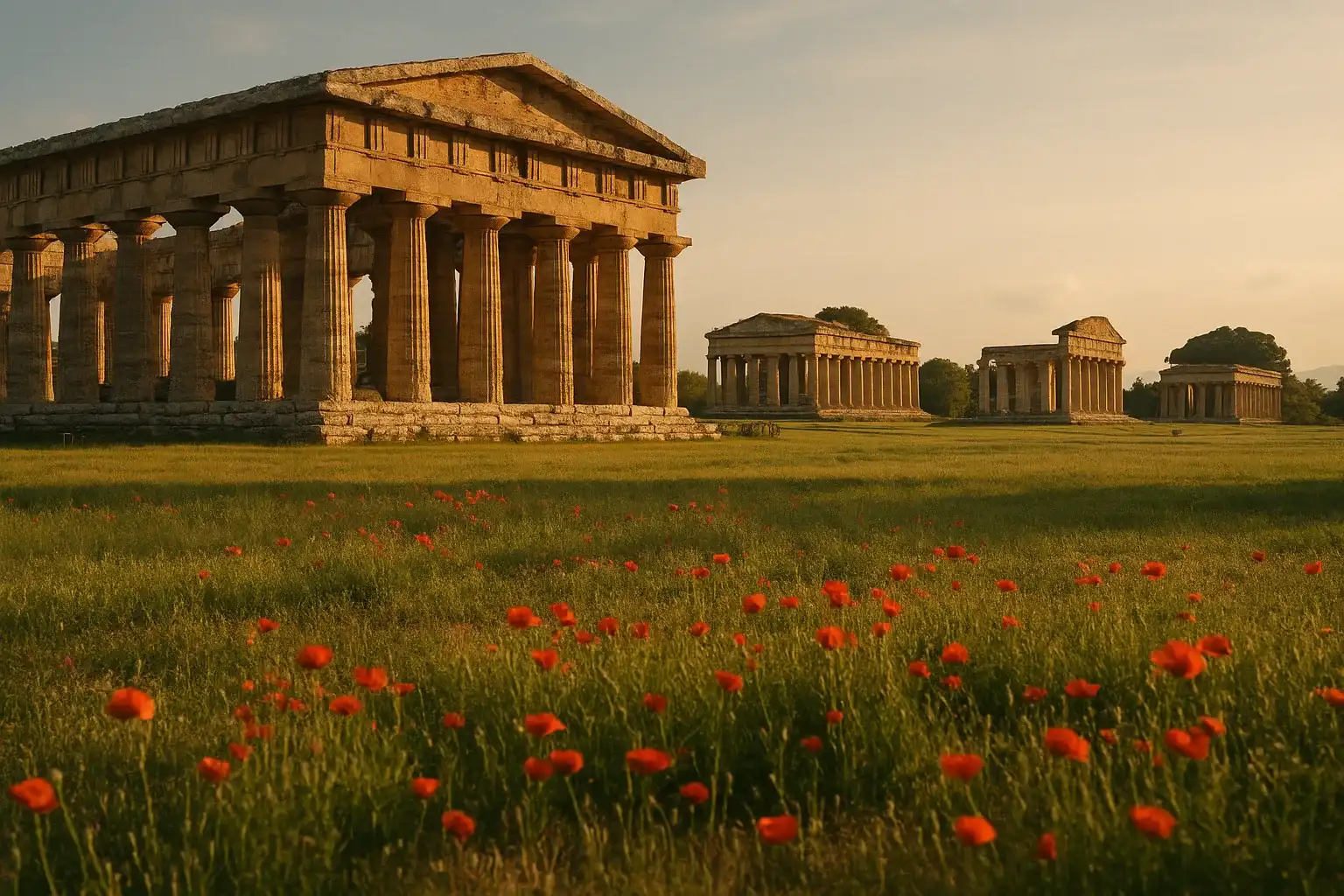
Paestum: Europe's Best-Preserved Greek Temples on Italy's
Ancient Greek / RomanDiscover Paestum's magnificent Greek temples, the Tomb of the Diver, and buffalo mozzarella farms on...