Quick Info
Curated Experiences
Saqqara, Memphis, and Serapeum Private Day Tour from Cairo
Private Guided Tour to the Serapeum of Saqqara and Step Pyramid
Full-Day Ancient Egyptian Necropolis Tour: Saqqara & Serapeum
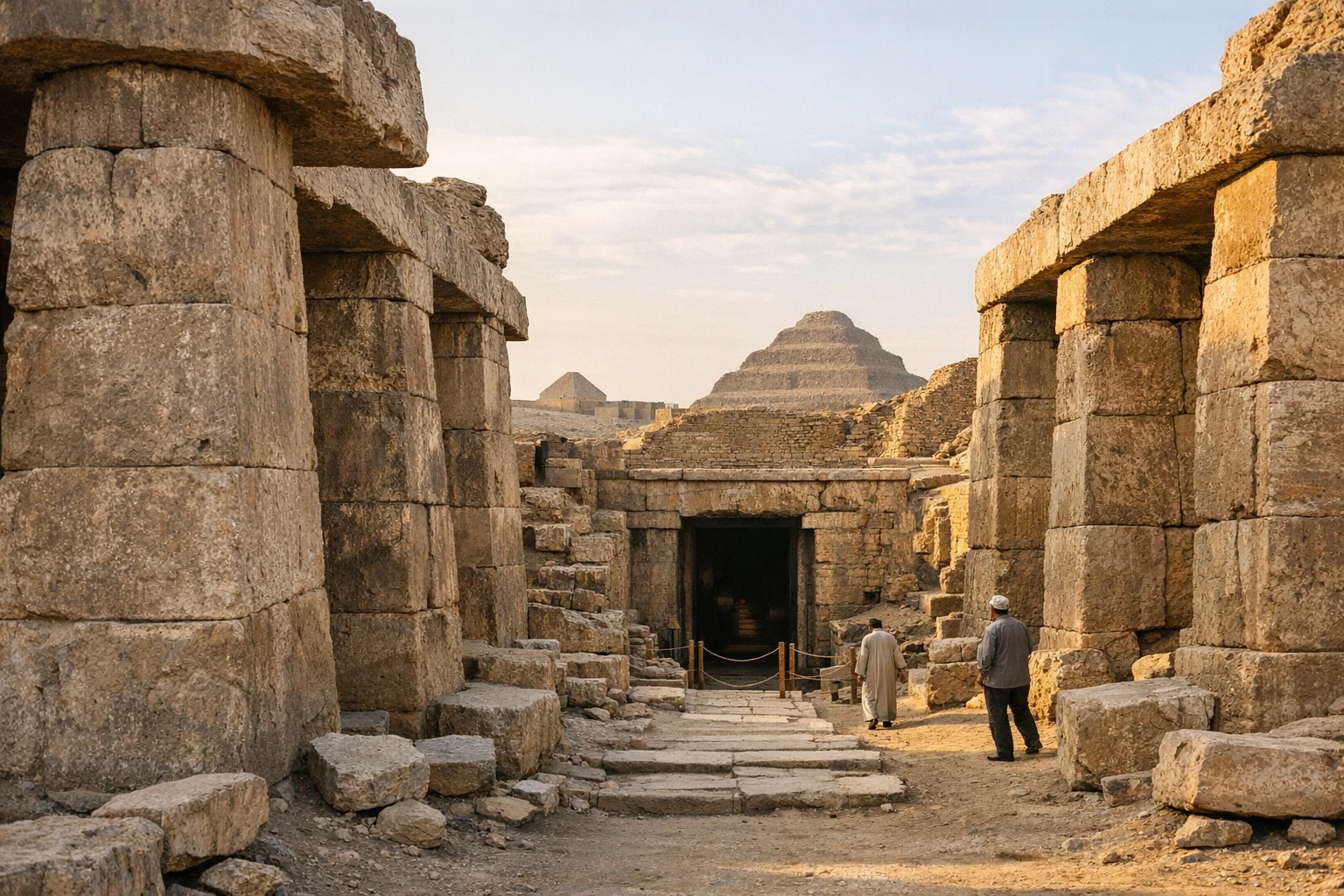
Shadows lengthen beneath an Egyptian sun as you stand on the edge of a plateau southwest of Cairo. The desert here is not empty; it hums with centuries of reverent activity and is marked by ancient monuments rising from the sands. Among these, the Serapeum of Saqqara lies hidden below—one of Egypt’s most remarkable and mysterious burial sites. Visitors arrive from every corner of the globe, drawn to its intrigue and the aura of ancient power it exudes. The Serapeum of Saqqara, in Egypt’s Giza Governorate, is not merely a tomb but a vast underground world hewn into limestone bedrock, its enormous hallways echoing the footsteps of priests and craftsmen, pharaohs and pilgrims alike.
Set below the famous necropolis of Saqqara, this labyrinthine complex once honored the venerated Apis bull, a living manifestation of divinity for ancient Egyptians. Its entrance is humble—no towering obelisks or colossal gateways—but inside, immense granite sarcophagi line shadowed corridors, each built to entomb a sacred animal and imbued with mystery about the process and intention of their makers. Here, the air is dense with history, stillness, and reverence. Descending into the Serapeum is a journey back through time: where monumental architecture, religious devotion, and evolving cultural beliefs meet in one place, drawing together stories of rulers, priests, artisans, and the very soul of Egypt.
For travelers in search of Egypt’s lesser-known marvels, the Serapeum of Saqqara is not only an archaeological wonder but a gateway into the ritual, craftsmanship, and beliefs that shaped dynastic Egypt. It is a place where stone and silence combine to reveal the extraordinary reverence the ancients held for life—and for powers that linked Egypt’s desert earth with the celestial realm.
History
The Birth of the Apis Cult and the Early Necropolis
The ancient Egyptians revered the Apis bull as a living manifestation of the god Ptah, and, after death, as linked with Osiris and the cycle of rebirth. The earliest veneration of the Apis bull stretches back to Egypt’s earliest dynastic periods, but the need for a specialized necropolis arose as the cult gained prominence. By the time of the New Kingdom (16th–11th centuries BCE), the Saqqara region had long served as the burial ground for Memphis, Egypt’s ancient capital.
The construction of the Serapeum is credited to Pharaoh Ramesses II of Dynasty XIX (13th century BCE). Prior to this, Apis bulls were likely interred in smaller, isolated tombs across Saqqara. Ramesses II sought an enduring and centralized location, befitting the status of the Apis bull within the pantheon. Thus began the tradition of entombing these sacred animals, complete with a dedicated subterranean labyrinth cut deep into the bedrock.
Expansion and the Greek Influence
Successive pharaohs, particularly from the Late Period onward, expanded the Serapeum. Gallery after gallery was carved into the stone, each constructed to house the imposing granite sarcophagi destined for the mummified Apis bulls. In time, the cult’s influence even merged with Greek religious ideas, especially after Alexander the Great’s conquest and the subsequent rule of the Ptolemies.
During the Ptolemaic era (323–30 BCE), the complex was further enlarged and the cult of Serapis—the syncretic Greco-Egyptian god—rose into preeminence. The Serapeum’s underground passages and tombs became a place not only of burial but of pilgrimage, visited by both Egyptian devotees and foreigners seeking blessings or cures attributed to this powerful hybrid god.
Rediscovery and Modern Excavations
Centuries later, the memory of the Serapeum faded under sand and memory. By the time of the early 19th century, only tantalizing hints endured in classical texts and local legend. In 1851, the intrepid French archaeologist Auguste Mariette brought the Serapeum back into human awareness. Mariette, guided by textual clues and the reports of local diggers, uncovered its monumental halls and the astonishingly well-preserved sarcophagi within.
Today, the Serapeum’s importance continues to grow as modern Egyptology deciphers the texts, inscriptions, and remains of the site. It is a touchpoint for understanding ancient funerary culture, the merging of native and Hellenistic beliefs, and the ways in which animals could act as sacred intermediaries in Egyptian thought. As more is unearthed, the Serapeum opens new windows into dynastic ideology, cult practices, and the artistry that flourished through centuries of dedication and change.
Key Features
To descend into the Serapeum of Saqqara is to step into a world both stark and awe-inspiring. The winding passageways, hewn directly from limestone bedrock, create a subterranean necropolis unlike any other in Egypt. The most striking features of the Serapeum are its massive sarcophagi chambers, arranged along lengthy galleries that echo with the stories of ancient ceremonies and burials.
Each chamber contains a colossal granite sarcophagus, some weighing as much as 70 tons. These containers were constructed with remarkable precision and built to safeguard the sacred mummies of the Apis bulls for eternity. The walls of certain sarcophagi are inscribed with dedications and prayers from priests and petitioners, blending formal hieroglyphics with the personal appeals of the faithful. Standing beside these mammoth structures, visitors sense the reverence and technological ingenuity of the craftsmen—how they quarried, transported, and set in place such monumental stones with tools that to us appear rudimentary.
As you make your way through the galleries, you’ll notice how the complex reflects changes in Egyptian society over time. Early chambers are simpler, with rougher masonry and more compact design. Later additions by the Saite and Ptolemaic dynasties display more elaborate construction: higher ceilings, better ventilation, and even decorative reliefs that merge Egyptian and Hellenistic motifs.
Beyond its sarcophagi, the Serapeum has yielded countless stelae and votive objects. Many passages were once crowded with offerings left by visitors—amulets, figurines, and inscribed stones intended to invoke healing, blessings, or divine favor. Niches carved into the galleries occasionally held smaller animal burials—perhaps the beloved companions or ritual offerings associated with the Apis cult.
Despite millennia of burial, looting, and environmental wear, the Serapeum retains a somber majesty. Modern lighting and restoration have made it safer to explore, but the air you breathe there is still tinged with the age-old scent of hollow stone and ancient rites. The sense of scale, and the awareness that you are standing amid relics of devotion unseen for thousands of years, ensures that a visit to the Serapeum is an unforgettable experience.
Getting There
Visiting the Serapeum of Saqqara is a relatively straightforward adventure for travelers based in Cairo or Giza, as the site is situated just southwest of Egypt’s bustling capital. The journey takes you from urban sprawl to desert plateau in under an hour, making it possible to visit the Serapeum as a day trip or as part of a broader exploration of the Saqqara necropolis.
Most visitors hire a private car and driver for the day, which is convenient and tailored to your schedule; expect prices to range from 800 to 1200 EGP (roughly $25–40 USD) for a round-trip journey, including waiting time. Many local tour operators and hotels can assist with arrangements or offer bundled tours covering Saqqara, Memphis, and even the Giza Plateau.
Budget-conscious travelers might opt for a combination of public transport and taxi. Start by taking the Cairo Metro to El Monib or Giza station, then a white taxi or a ride-hailing service (Uber/Careem) directly to the Saqqara plateau, with final fares ranging between 200 and 400 EGP ($6–13 USD) one-way, depending on traffic and exact route. Taxis do not reach the site’s doorway due to the necropolis’ security perimeter, so a short walk or additional shuttle ride is often needed.
The Serapeum is located within the Saqqara archaeological zone, about 3 kilometers from the main ticket office. Most tours and guides include ingress and assist with logistics, which can be helpful in the summer heat or if you’d like explanations about what you see. Guided tours often include the Step Pyramid of Djoser, the Imhotep Museum, and smaller tombs in the vicinity.
Group tours, either small-group or coach-based, represent excellent value and come with professional Egyptologists who can unlock the Serapeum’s manifold secrets. Regardless of your travel route, planning ahead, arriving early to avoid crowds, and securing your tickets in advance (especially during high season) will make your visit more comfortable and rewarding.
When to Visit
The Serapeum of Saqqara, like much of Egypt’s ancient history, is best discovered outside the sweltering peak of summer. The optimal times to visit are during the cooler, more temperate months between October and April. During this period, daytime temperatures in the Giza region typically range from 15°C to 25°C (59–77°F), making underground exploration considerably more pleasant and safe.
Winter is especially attractive, as mild sun keeps the plateau comfortable and breezes sweep across the desert sands. These months also attract more visitors, so plan to arrive early in the morning—around 8:00 to 9:00 AM—to enjoy the relative tranquillity and diffuse desert light that filters onto the plateau. Early starts also allow you to explore the broader Saqqara necropolis before the heat and tour groups arrive en masse.
Visiting in the summer months (May through September) can be challenging due to daytime highs exceeding 35°C (95°F). Although underground chambers offer some respite from direct sun, humidity and ventilation remain issues—not to mention the energy needed to traverse the vast complex. If you must visit in summer, plan for the earliest admission slots and bring ample water, sunscreen, and head coverings.
In all seasons, it is wise to check in advance for any holiday closures or conservation work. The Serapeum is subject to regular archaeological studies and may occasionally restrict access for ongoing research or preservation. Check official tourism or Egyptological websites for the most current information and any updates regarding accessibility or ticket sales.
Whether swaddled in desert heat or cooled by winter breezes, the Serapeum maintains a gravitas that transcends weather. With the right planning and seasonal timing, your visit will be both comfortable and mesmerizing—an unforgettable descent into Egypt’s sacred depths.
Quick Facts
| Attribute | Details |
|---|---|
| Location | Saqqara Necropolis, Giza Governorate, Egypt |
| Coordinates | 29.871065° N, 31.215056° E |
| Type | Subterranean burial complex for sacred Apis bulls |
| Construction Period | Initiated under Ramesses II, expanded in Late and Ptolemaic eras |
| Civilization | Ancient Egyptian, later Greek-Egyptian (Ptolemaic) |
| Main Feature | Massive granite sarcophagi for Apis bull mummies |
| Visitor Access | By ticket, often via guided tour |
| Closest Major City | Cairo (approx. 30 km/45 minutes south) |
| Nearby Sites | Step Pyramid of Djoser, Memphis, Imhotep Museum |
| UNESCO World Heritage | Yes (as part of Memphis and its Necropolis) |
Explore the Serapeum of Saqqara for a rare glimpse into the sacred mysteries of animal worship and Egyptian funerary rites, preserved in stone and shadow beneath the sands of Egypt.
Frequently Asked Questions
What is the Serapeum of Saqqara?
The Serapeum of Saqqara is an ancient underground burial complex, primarily used for burying the Apis bulls regarded as sacred in Egyptian religion.
Is the Serapeum of Saqqara open to visitors?
Yes, the Serapeum is open to visitors, though access is generally via guided tours due to its archaeological significance and underground location.
How far is the Serapeum from Cairo?
The Serapeum is about 30 kilometers south of central Cairo, roughly a 45-minute drive depending on traffic.
Do I need a ticket to enter the Serapeum?
Yes, there is an entry fee, usually included in Saqqara necropolis tickets. Pricing can vary for foreigners and locals.
What should I bring when visiting the Serapeum?
Wear comfortable shoes for exploring underground, bring water, and consider a flashlight as some passages are dimly lit.
Nearby Ancient Sites
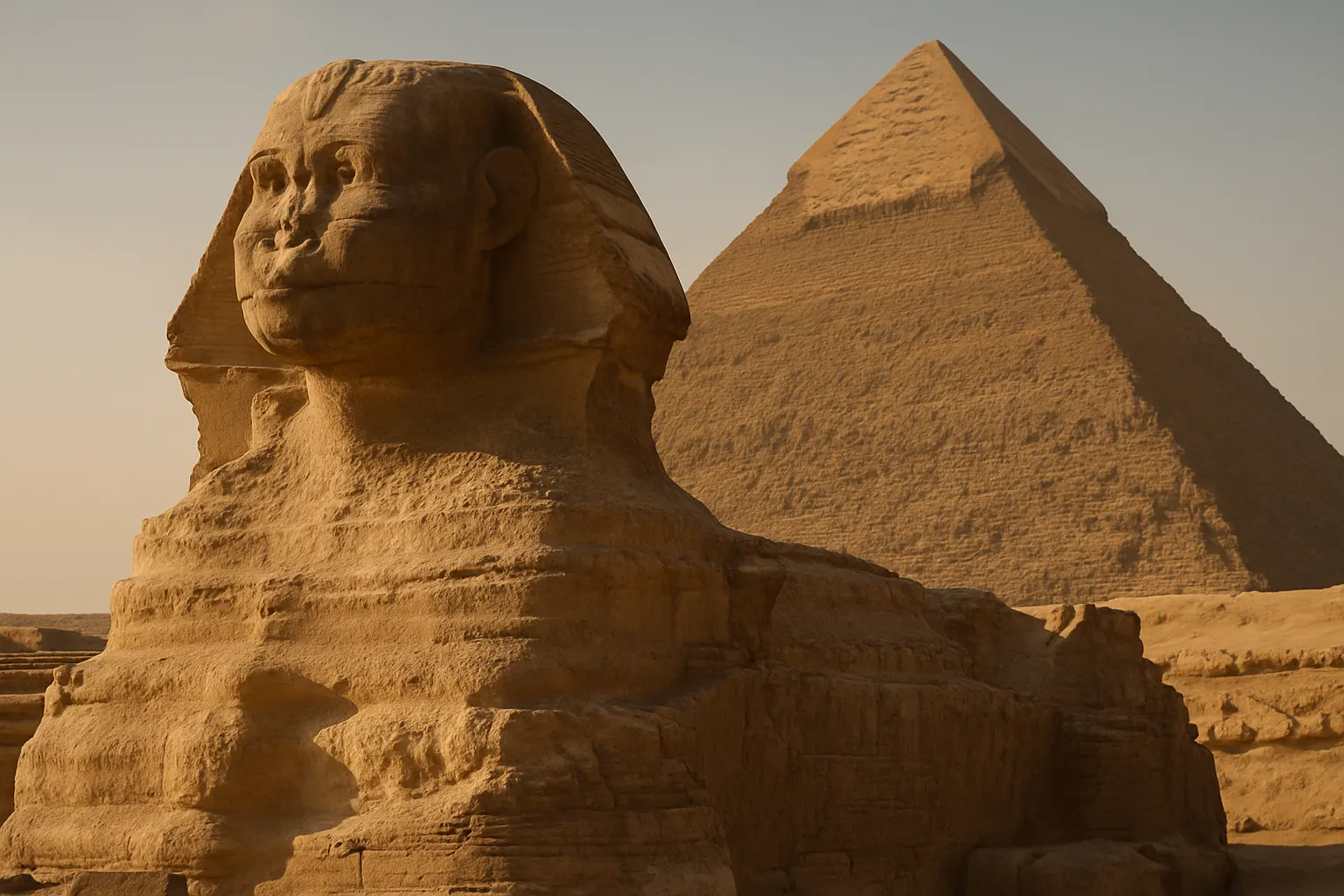
Great Sphinx of Giza Egypt Travel Guide 2026: Guardian of the Pyramids
Ancient EgyptianVisit the Great Sphinx, Egypt's enigmatic limestone guardian. Our guide covers the Sphinx's history,...
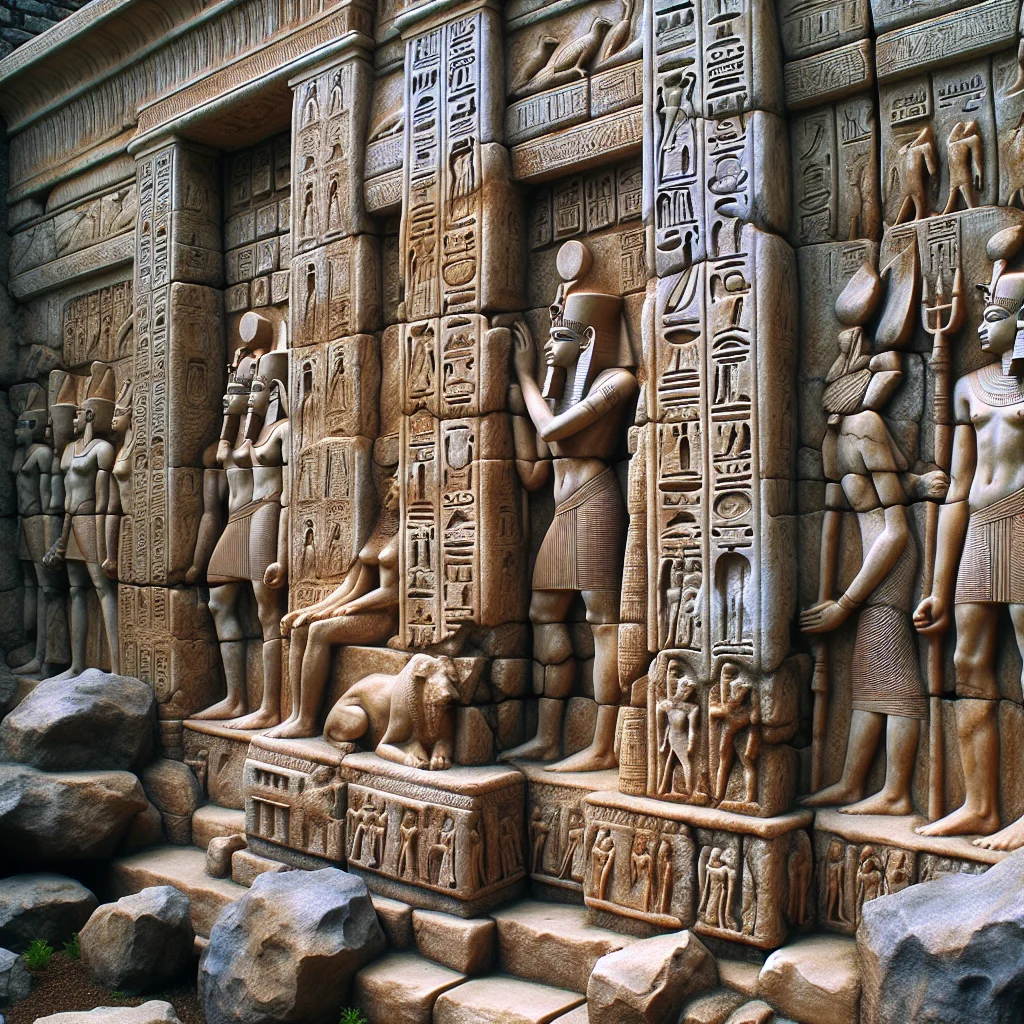
Abydos Temple Egypt Guide 2026: Temple of Seti I & King List
New Kingdom-PtolemaicAbydos Temple near Luxor: magnificent Temple of Seti I with war reliefs, ancient king list, and vibr...
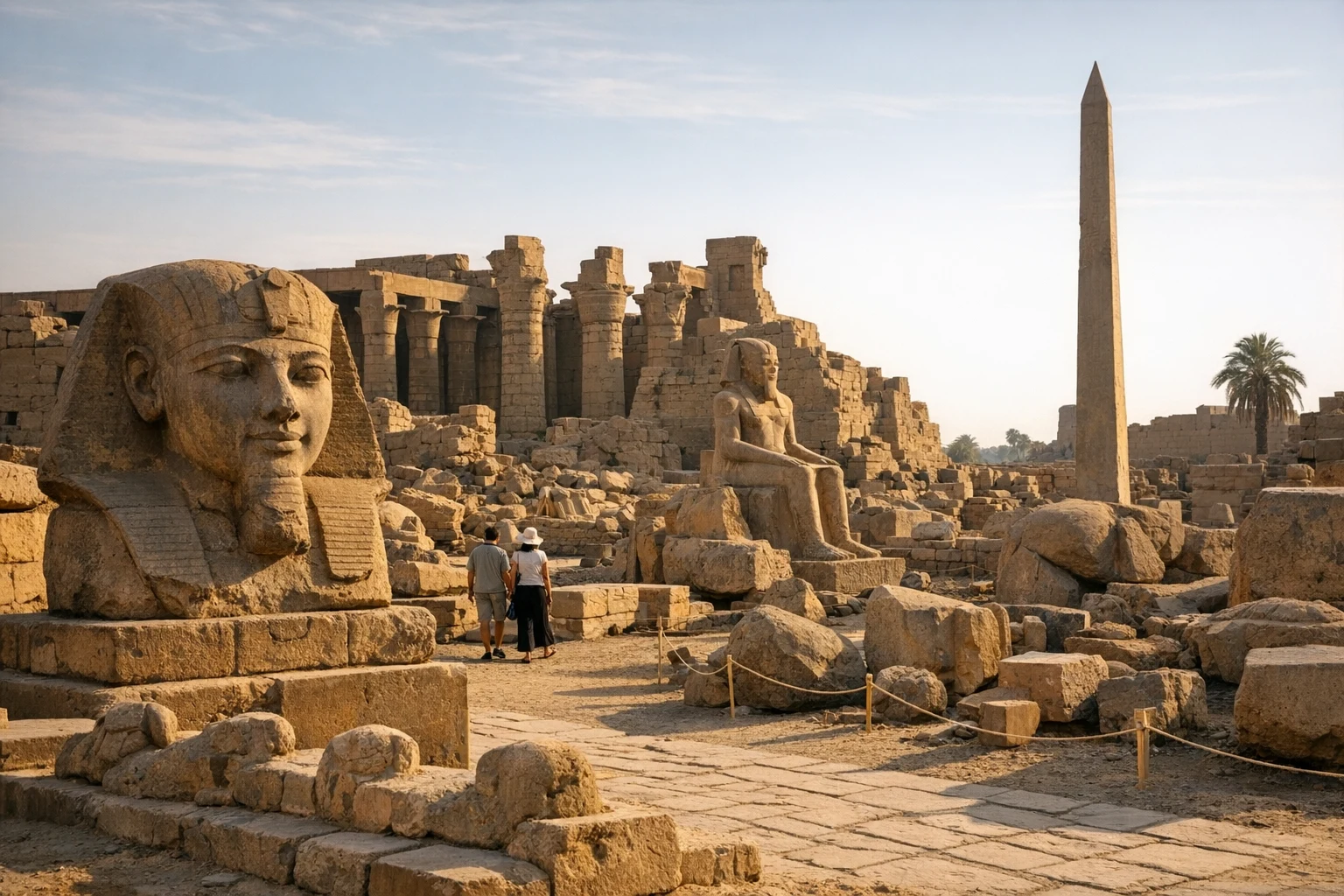
Karnak Open Air Museum
Ancient EgyptianExplore Egypt’s Karnak Open Air Museum, where reconstructed chapels and reliefs reveal hidden layers...