Quick Info
Curated Experiences
Yakushima Shiratani Unsuikyo Ravine Guided Hiking Tour
Princess Mononoke Forest and Yakushima Nature Tour
Full Day Yakushima Hiking Tour to Shiratani Unsuikyo
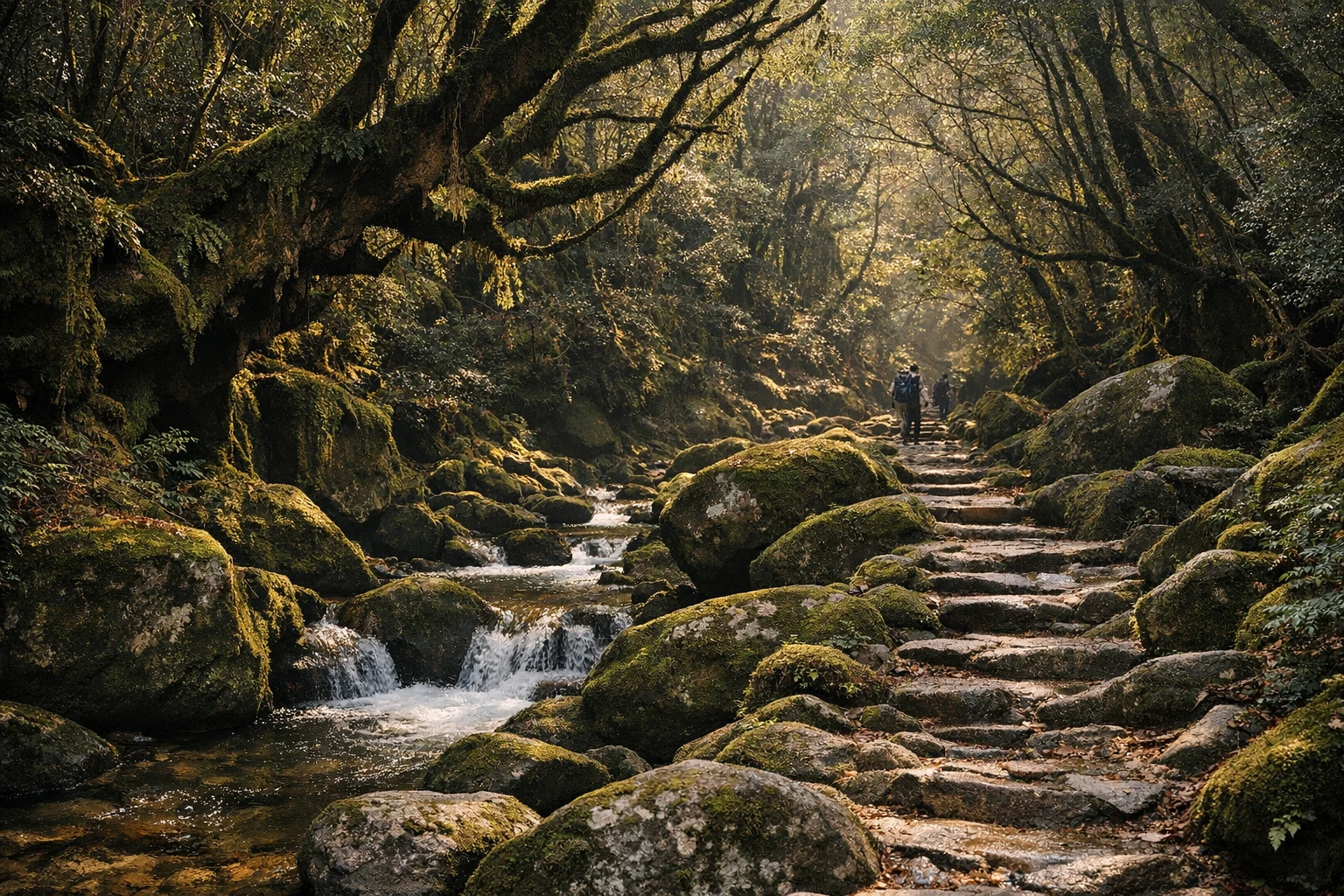
Shiratani Unsuikyo Ravine (Princess Mononoke Forest) in Japan feels less like a scenic attraction than a living threshold into another world. On Yakushima, the island south of Kyushu famed for ancient cedar forests and relentless rain, this ravine opens into a landscape of moss-covered roots, clear mountain streams, enormous boulders, and cryptomeria trees that seem to have been growing since myth was young. Many travelers arrive because they have seen photographs of the so-called Princess Mononoke forest, or because they want to step inside a place that seems to blur the boundary between natural beauty and folklore. What keeps them lingering is the atmosphere: damp earth underfoot, filtered light in shifting green tones, and a silence broken only by water and birdcall.
Unlike a manicured botanical garden or a scenic drive-by viewpoint, Shiratani Unsuikyo is experienced through walking. The ravine asks you to move at the pace of the forest itself. Paths wind over roots and stones, across bridges and past streams, carrying hikers into a dense world where scale changes constantly. One moment you are following a neatly marked trail through cedar and fern; the next, you are standing beneath trunks so old and immense that time stops feeling linear. The connection with Princess Mononoke is real enough to be useful as shorthand, but the place deserves attention beyond cinematic comparison. Shiratani Unsuikyo is one of the most accessible windows into Yakushima’s primeval ecology, and it offers one of Japan’s most memorable forest walks for travelers willing to embrace mud, mist, and awe.
History
Yakushima Before Modern Tourism
Long before Shiratani Unsuikyo became known to hikers and film fans, Yakushima had a reputation for deep forests, difficult terrain, and unusual ecological richness. The island lies off the southern coast of Kyushu and has for centuries stood slightly apart from the better-known historical centers of mainland Japan. Its heavy rainfall, steep mountains, and dense cedar woods made settlement and movement challenging, yet these same conditions helped preserve one of the country’s most extraordinary natural environments. Yakushima’s forests include ancient yakusugi cedar trees, some of which are estimated to be many hundreds or even thousands of years old.
For much of premodern history, the island’s interior remained difficult to access. Communities lived largely around the coast, while the uplands and ravines retained an aura of remoteness and spiritual power. In the broader Japanese cultural imagination, mountains and forests were never merely physical features. They were places of kami, ascetic practice, danger, and purification. Yakushima’s interior landscapes fit easily into that tradition. Even where there were practical reasons to enter the forest, such as gathering timber or other resources, the island’s ancient woods preserved a sense of otherness.
Forestry, Conservation, and the Recognition of Value
Like many forested landscapes in Japan, Yakushima was not untouched by human use. Timber extraction shaped parts of the island’s history, especially in the Edo period and later, when cedar became economically valuable. Yet Yakushima’s terrain also protected large areas from intensive development. The same steep slopes, constant moisture, and logistical difficulty that complicated exploitation helped preserve old-growth zones in places such as Shiratani Unsuikyo.
By the twentieth century, attitudes toward forest landscapes in Japan were changing. Scientific interest in ecology, public appreciation for natural scenery, and growing concern for conservation all contributed to the recognition that Yakushima was exceptional. The island’s forests were increasingly valued not only for resources but also for biodiversity, watershed protection, and cultural meaning. Shiratani Unsuikyo emerged during this period as a place that could introduce visitors to Yakushima’s interior without requiring the most demanding mountaineering routes. Trails, signage, and managed access gradually made the ravine a more established destination.
This shift from remote forest to protected recreation area was not simply about tourism. It reflected a larger change in how the island was understood. Ancient cedar woods once seen mainly through the lens of difficulty or resource use became symbols of ecological continuity and national natural heritage.
UNESCO Recognition and Global Attention
Yakushima’s international profile rose dramatically in the late twentieth century. In 1993, Yakushima was inscribed as a UNESCO World Heritage Site for its outstanding natural value, especially its vertical ecological range and old-growth cedar forests. That designation did not create the forest’s importance, but it did amplify it for travelers, researchers, and conservationists around the world. Shiratani Unsuikyo, as one of the island’s more accessible forest routes, benefited from this wider attention even though UNESCO recognition applies to the broader island environment rather than the ravine alone as a separate historical monument.
At roughly the same time, popular culture gave the ravine a new layer of fame. The mossy landscapes of Yakushima, including Shiratani Unsuikyo, are widely associated with the visual inspiration behind Studio Ghibli’s Princess Mononoke. This connection helped introduce the forest to travelers who might otherwise never have heard of Yakushima. Importantly, Shiratani Unsuikyo did not become popular only because of the film. Rather, the film gave language and imagery to qualities the forest already possessed: mystery, animism, age, and beauty on the edge of the uncanny.
Present-Day Preservation and Visitor Experience
Today, Shiratani Unsuikyo exists at the intersection of conservation and access. It is one of the best-known forest hiking areas on Yakushima, but it remains a real mountain environment rather than a theme-park version of one. Trails require care, weather changes quickly, and the forest’s wetness is not an aesthetic effect but a defining ecological condition. Boardwalks, bridges, route markers, and visitor facilities help manage foot traffic, yet the ravine still feels untamed in the best sense.
Current stewardship reflects a balance familiar in many protected landscapes: encouraging appreciation while limiting damage. Visitors are asked to stay on trails, carry out trash, and prepare properly for changing conditions. The popularity of the Princess Mononoke association has increased interest, but it has also reinforced the need for respectful visitation. In the present, Shiratani Unsuikyo is best understood not as a fantasy location made real, but as a genuine ancient forest whose beauty is strong enough to have inspired fantasy in the first place.
Key Features
The defining feature of Shiratani Unsuikyo is its atmosphere, which is not a vague romantic claim but a tangible product of climate, topography, and old-growth forest ecology. Yakushima is famously wet, and that constant moisture turns the ravine into a world of saturated greens. Moss covers stones, trunks, roots, and fallen branches with such density that the ground seems upholstered rather than wild. This is what makes the forest so visually distinctive. The moss does not appear as an accent. It is the dominant texture, softening edges and giving even massive boulders and cedar roots a dreamlike quality. In mist or light rain, the effect becomes even stronger, as if the forest is perpetually halfway between emergence and disappearance.
The cedar trees are another major draw. Yakushima’s old-growth cedars, known as yakusugi, are among the most famous trees in Japan. In and around Shiratani Unsuikyo, hikers encounter ancient trunks marked by age, irregularity, and scale rather than neat uniformity. Some trees twist, split, or swell in strange forms, shaped by centuries of moisture, storm, and slow growth. They do not resemble plantation forest. They feel individual. Even the younger forest has an unusual richness, with layered undergrowth, ferns, and mixed vegetation that create a dense, almost primeval look. The sense of age here comes not only from single famous trees but from the whole ecosystem.
The trail network is also part of what makes the ravine special. Shiratani Unsuikyo is not one fixed path but a set of walking options that allow visitors to tailor the experience. Shorter loops give a strong impression of the landscape without requiring a full-day commitment, while longer routes lead deeper into mossy sections and toward viewpoints such as Taikoiwa, a dramatic rocky outcrop with sweeping views over Yakushima’s forested mountains. This variety matters because it opens the ravine to travelers with different fitness levels while still preserving the sense that longer walks reveal a more immersive world.
Streams and watercourses shape the experience at every stage. Clear water runs over stone channels, slips under bridges, and gathers in pools that reflect the forest canopy. The sound of water is almost constant, reinforcing the feeling that the ravine is alive and in motion. Unlike dry woodland hikes where the landscape changes mainly by elevation, Shiratani Unsuikyo feels animated by flowing water and humidity. Bridges, stepping stones, and damp crossings create a rhythm of movement that keeps hikers alert and engaged.
Then there is the famous moss forest area itself, often treated as the emotional center of the hike. This section condenses everything visitors imagine when they hear Princess Mononoke Forest: layered moss, ancient trunks, filtered light, and a hush that makes even a crowded day feel strangely intimate. It is photogenic, yes, but in person it is more than that. The scale of roots, stones, and trees, combined with the softness of moss and the complexity of the forest floor, creates a genuine sense of enchantment. The place feels composed, almost too perfectly balanced to be accidental, yet entirely wild.
Getting There
Shiratani Unsuikyo Ravine is located on Yakushima Island in Kagoshima Prefecture, and getting there usually begins with reaching the island itself. Most travelers arrive either by ferry or high-speed jetfoil from Kagoshima on Kyushu, or by a short domestic flight from cities such as Kagoshima, Fukuoka, or Osaka depending on seasonal schedules. A high-speed ferry from Kagoshima to Yakushima often costs roughly ¥12,000 to ¥14,000 one way, while standard ferries can be cheaper but slower. Flights vary widely in price, but one-way domestic fares commonly range from around ¥10,000 to ¥25,000 depending on route and booking time.
Once on Yakushima, most visitors base themselves near Miyanoura or another coastal town. From Miyanoura, Shiratani Unsuikyo is about 30 minutes by car. Bus service usually runs from the port area or nearby stops to the ravine entrance, with one-way fares typically around ¥600 to ¥800 depending on the route and any seasonal adjustments. Car rental is popular on Yakushima and gives the most flexibility, especially if you plan to explore multiple trailheads or start early. Taxis are possible but relatively expensive for a round trip, so they are better as a backup than a primary plan.
At the trailhead, visitors generally pay a conservation or cooperation fee that helps maintain the area. Bring cash, since small facilities may not reliably accept cards. If you are relying on public transport, check return bus times carefully before setting out. Weather can slow hiking more than expected, and missing the last bus is an annoying way to end a magical forest walk.
When to Visit
Shiratani Unsuikyo can be visited year-round, but the best seasons for most travelers are spring and autumn, when temperatures are comfortable and the trails are often easier to enjoy for longer hikes. Spring brings fresh greenery and mild conditions, while autumn offers cooler air and clearer views from higher points such as Taikoiwa. These seasons usually provide the best balance between comfort and atmosphere, although Yakushima is wet in every month and you should never plan around the fantasy of a guaranteed dry day.
Summer can be beautiful, with lush vegetation at its most intense, but it also brings heat, humidity, insects, and the possibility of sudden heavy rain. Winter is quieter and can be wonderfully moody, especially when mist drifts through the trees, but conditions may be colder, wetter, and more slippery. Snow is possible at higher elevations on Yakushima, though Shiratani Unsuikyo itself is generally more temperate than the island’s high mountains.
No matter the season, start early if you want the best experience. Morning hikes tend to be calmer, and earlier departures leave more margin for weather changes, photo stops, and slower trail conditions. Rain gear is essential in every season. Waterproof shoes, a jacket, and extra layers matter more here than trying to find the statistically driest month. Shiratani Unsuikyo is at its most memorable when you accept its wetness as part of the point. Mist, moss, and dripping forest light are not bad luck on Yakushima. They are the ravine becoming itself.
| Quick Facts | Details |
|---|---|
| Location | Yakushima Island, Kagoshima Prefecture, Japan |
| Best Known For | Moss-covered cedar forest linked to the atmosphere of Princess Mononoke |
| Landscape Type | Mountain ravine and ancient forest hiking area |
| UNESCO Context | Part of the broader Yakushima World Heritage natural environment |
| Signature Experience | Walking through the moss forest and cedar trails |
| Typical Visit Length | 2 to 5 hours depending on route |
| Nearby Base | Miyanoura |
| Best Seasons | Spring and autumn |
| Trail Conditions | Wet, root-covered, and often slippery |
| Practical Tip | Wear waterproof shoes and check bus times or weather before starting |
Frequently Asked Questions
What is Shiratani Unsuikyo Ravine best known for?
Shiratani Unsuikyo Ravine is best known for its moss-draped ancient forest on Yakushima and for inspiring the atmosphere associated with Princess Mononoke.
Is Shiratani Unsuikyo Ravine really the Princess Mononoke forest?
It was one of the inspirations for the film’s forest imagery rather than a direct one-to-one filming location, but many visitors come for that unmistakable atmosphere.
How long does it take to hike Shiratani Unsuikyo?
Shorter walks can take around 1 to 2 hours, while longer routes to major viewpoints and mossy forest areas often take 3 to 5 hours depending on pace and weather.
Do you need a guide for Shiratani Unsuikyo Ravine?
A guide is not required, but one can be very helpful in wet conditions or if you want context on Yakushima’s ecology, cedar forests, and trail options.
When is the best time to visit Shiratani Unsuikyo Ravine?
Spring and autumn usually offer the best balance of mild temperatures, manageable rainfall, and comfortable hiking conditions, though the ravine can be visited year-round.
What should you wear to Shiratani Unsuikyo Ravine?
Wear waterproof hiking shoes, a rain jacket, and layers suitable for changing mountain weather, since Yakushima is famously wet and trails can be slippery.
Nearby Ancient Sites
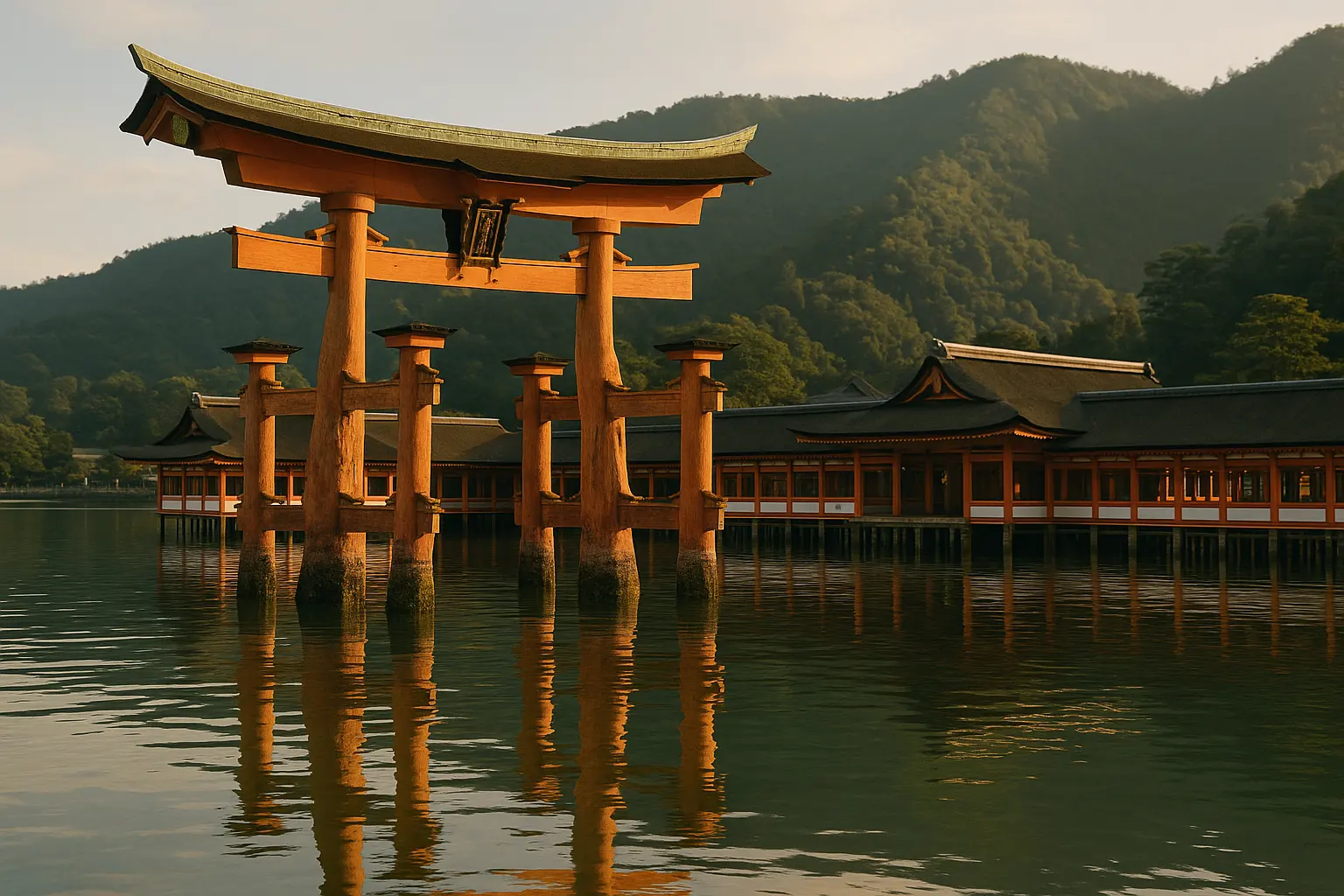
Itsukushima Shrine Japan Travel Guide 2026: The Floating Torii Gate
Japanese ShintoVisit Itsukushima Shrine on Miyajima Island, famous for its floating torii gate. Discover the shrine...

Hiroshima Peace Memorial (A-Bomb Dome)
Modern JapanThe UNESCO-listed A-Bomb Dome preserves the haunting ruins of the 1945 atomic bombing at Hiroshima P...
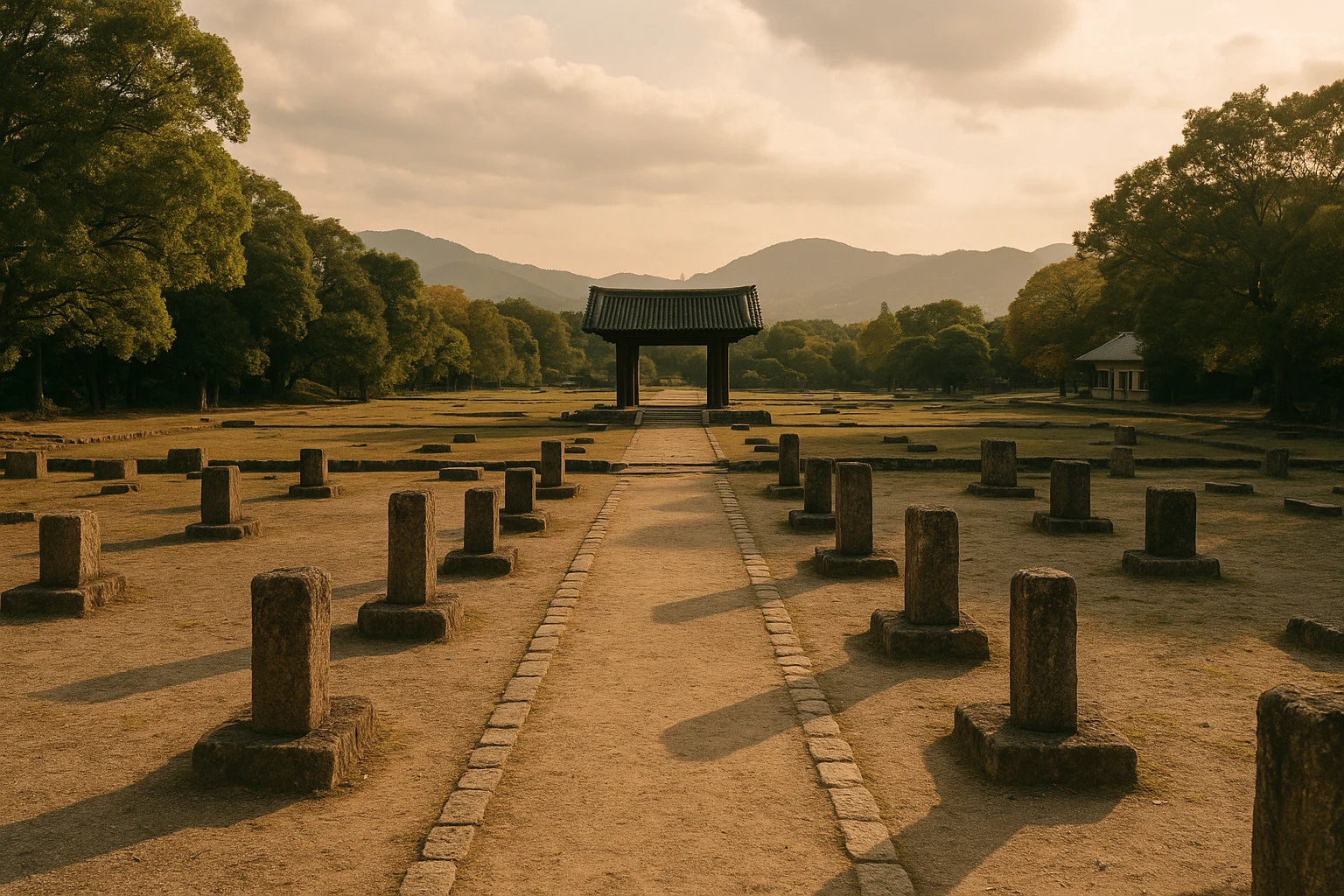
Dazaifu Government Office Ruins
Yamato Japan / Nara–Heian StateAncient administrative heart of Kyushu, the Dazaifu Government Office Ruins preserve Japan's 7th-cen...