Quick Info
Curated Experiences
Okinawa Shuri Castle and Naha City Highlights Tour
Private Okinawa Historical Sites Tour
Naha Full-Day Tour with Kokusai Street and Shuri Castle
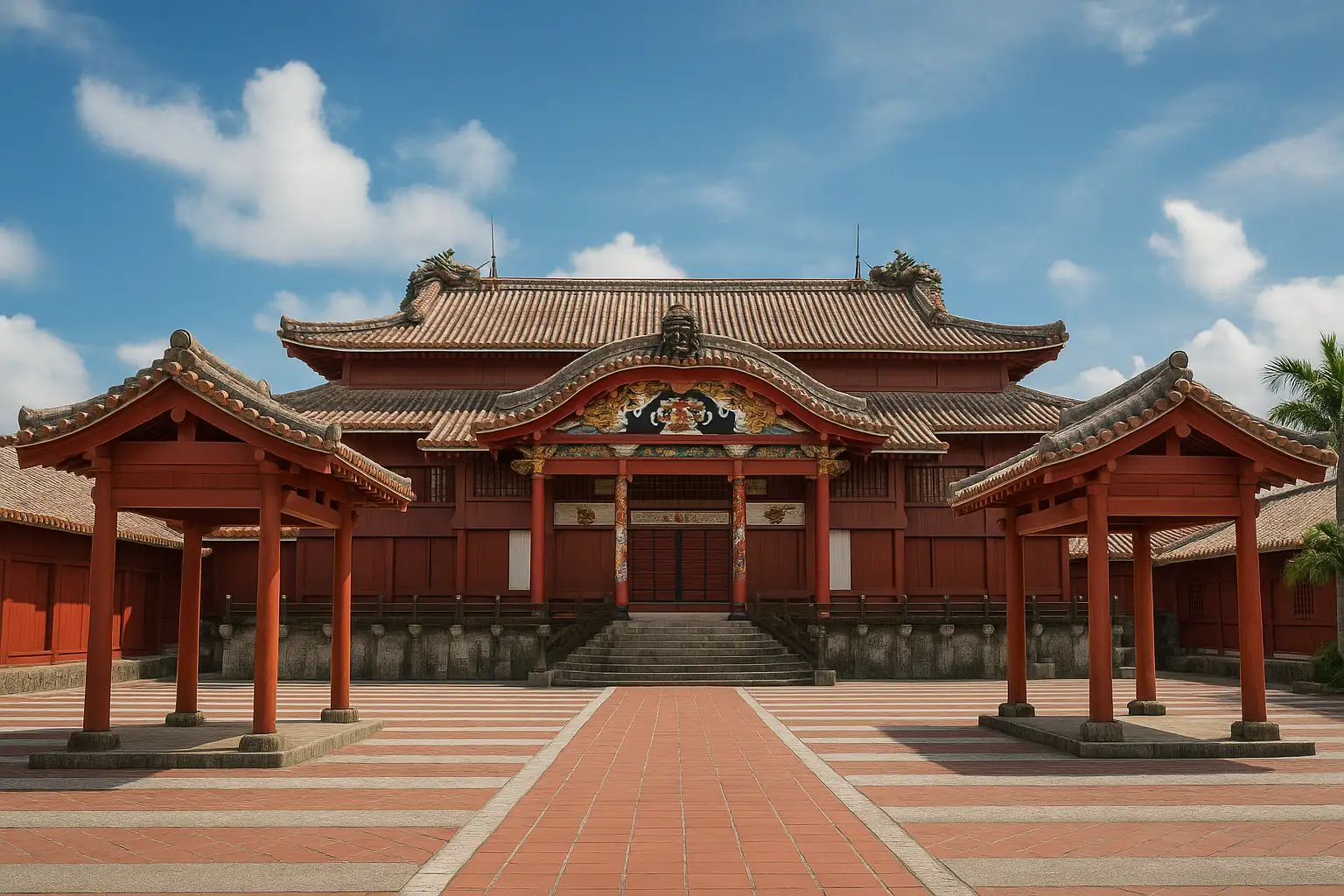
The color hits you before the architecture does. Stepping through the stone gate and up the last rise of the hill, Shuri Castle announces itself in vermilion — not the muted reds of Japanese lacquerwork but a vivid, almost aggressive crimson that covers every wooden surface from columns to eaves. The rooflines sweep upward in curves borrowed from Ming dynasty palaces in Fujian Province. Dragon sculptures guard the staircases with a Chinese iconographic authority that no mainland Japanese castle would display. This is not Japan as most visitors expect it. This is the Ryukyu Kingdom, and Shuri Castle is its physical argument for a distinct civilization that absorbed Chinese ceremony, Japanese craft, and Southeast Asian trade into something that belonged to no one else.
The castle sits on a forested hilltop above Naha, commanding views across the city to the Pacific. For over four centuries it served as the political, cultural, and ceremonial heart of a kingdom that lacked military power and instead mastered diplomacy, maritime commerce, and the art of remaining useful to larger neighbors. The main hall burned in the Battle of Okinawa in 1945, was meticulously reconstructed in 1992, and then burned again in 2019 in a devastating fire. Today the castle is rising for the third time, and visitors who arrive during this reconstruction period find themselves witnessing something that may be more instructive than any finished building: the living transmission of traditional craft skills applied to a structure that history keeps destroying and Okinawans keep rebuilding.
Historical Context
The Ryukyu Islands arc 1,000 kilometers southwest from Kyushu toward Taiwan, a geographic position that made the archipelago impossible for powerful neighbors to ignore and equally impossible for Ryukyuans to defend by force. From this vulnerability emerged one of premodern Asia’s most remarkable polities. Chinese emperors formally invested Ryukyuan kings with political legitimacy, and the kingdom simultaneously dispatched tribute missions to Beijing and trading vessels to every accessible port from Malacca to Hokkaido.
King Sho Hashi unified the three competing kingdoms of Okinawa Island in 1429 and established Shuri as his permanent seat of power. The site had carried fortifications since the 14th century, but Sho Hashi and his successors transformed it from a regional stronghold into a palace complex with genuine imperial aspirations. Each generation added to the ceremonial architecture — new gates marking zones of increasing sanctity, expanded court areas for larger diplomatic occasions, decorative programs of growing sophistication. By the 15th century, Ryukyuan ships were among the most widely traveled in East Asia, and the commercial wealth they generated funded successive expansions of the castle.
In 1609, a samurai force from Japan’s Satsuma Domain overwhelmed the island’s defenses in weeks. The kingdom was not abolished — Satsuma found it more profitable to leave royal government nominally intact while extracting tribute and controlling trade. The kings who continued to inhabit Shuri Castle wielded diminished real authority but retained one indispensable function: performing the elaborate diplomatic rituals that Beijing expected of a loyal tributary state. Japanese annexation in 1879 finally dissolved the pretense, converting Ryukyu into Okinawa Prefecture and dispatching the last king to Tokyo.
The Battle of Okinawa in 1945 — an 82-day campaign that killed over 100,000 combatants and an estimated quarter of the island’s civilian population — destroyed the castle completely. Japanese forces had dug command headquarters into the limestone bedrock beneath Shuri, making the hilltop a primary target. Only in the 1970s, after Okinawa returned from American administration to Japanese sovereignty, did systematic reconstruction efforts begin. The restored Seiden reopened in 1992, and UNESCO recognized the site in 2000. The fire of October 31, 2019, destroyed the main hall and six adjoining structures for the fifth time in the castle’s history. Reconstruction is currently targeted for completion in 2026.
What to See
Shureimon Gate
The most universally recognized structure on the site, Shureimon appears on the 2000 yen banknote and marks the boundary between the ordinary world and the royal precinct. Built in the 16th century, its red-tiled roofs with dramatically curved profiles, massive limestone pillars, and the characters reading Shurei (“propriety” or “observance of the rites”) on the gate’s placard make a Confucian statement of political philosophy displayed as permanent architecture. Shureimon survived the 2019 fire intact and photographs best in early morning light between 8:00 and 10:00 AM, before midday sun bleaches the color from the stone.
The Gate Sequence and Stone Walls
The formal approach to the main hall passes through a deliberate progression of gates — Kankaimon (Gate of Welcome, where Chinese envoys received their official reception), Zuisenmon, and Roukokumon — each marking a transition between zones of increasing sanctity. The stone walls demonstrate distinctive Ryukyuan masonry: large limestone blocks fitted in curved courses without mortar, a technique that has proven remarkably resistant to both earthquake and time. Walk this sequence slowly. The architecture was designed to shift your frame of mind as you approach the throne, and even in its current state the spatial progression works.
The Reconstruction Site
Visiting during the active reconstruction of the Seiden is not a compromise — in some ways it is the most instructive visit the site has offered in thirty years. Viewing platforms allow you to watch traditional carpenters demonstrate timber joinery techniques that hold massive frames together without metal fasteners. Tilers work at kilns replicating prewar firing specifications. Lacquer artists build up the layered coats that will become the castle’s new interior surfaces, applying each by hand according to methods documented in pre-1945 craft records. Exhibition spaces within surviving structures display artifacts recovered from the 2019 fire, documentation from the 1992 reconstruction, and digital modeling showing the castle at different periods. Admission fees during reconstruction directly fund the restoration work.
The Great Court and Panoramic Views
The broad court before the Seiden served the same function as the forecourts of Roman temples and Chinese imperial palaces — a processional space where ceremony was staged and hierarchy made visible through the management of space. Even without the main hall behind it, the court conveys the intended scale. From the eastern overlook, panoramic views stretch across Naha to the Pacific, providing useful orientation for the rest of your time in the city.
Timing and Seasons
Okinawa’s subtropical climate makes Shuri Castle visitable year-round, but comfort varies significantly by season. Spring from March through May is the most rewarding window, with temperatures of 64 to 77°F (18 to 25°C), wildflowers in the castle grounds, and Okinawa’s cherry blossoms, which peak in late January to early February — well before mainland Japan’s season begins. Autumn from September through November offers reliably mild temperatures around 68 to 82°F (20 to 28°C) and excellent afternoon light for photographing vermilion architecture against clear skies.
Summer is genuinely hot, with temperatures exceeding 86°F (30°C) and sustained humidity. Arriving at the 8:00 AM opening is the only practical strategy for comfortable outdoor exploration. Winter from December through February is pleasant by mainland standards at 59 to 68°F (15 to 20°C), with thin crowds and clear winter light that flatters the stone walls and gate profiles.
Hours vary by season: April through June and October through November, 8:00 AM to 7:30 PM (last entry 7:00 PM); July through September, 8:00 AM to 8:00 PM (last entry 7:30 PM); December through March, 8:00 AM to 6:30 PM (last entry 6:00 PM). The site closes the first Wednesday and Thursday of July annually.
Tickets, Logistics and Getting There
Admission is 400 JPY (approximately $2.80 USD) for adults, 300 JPY for high school students, and 160 JPY for elementary and junior high students. The Yui Rail Monorail — Okinawa’s single rail line — runs from Naha Airport directly to Shuri Station in 20 to 25 minutes. From Shuri Station, a 15-minute uphill walk through the stone-walled neighborhood of Kinjo-cho leads to Shureimon Gate. Blue signposts in Japanese and English mark the route throughout. The walk itself rewards attention — the neighborhood preserves red-tiled roofs and fitted limestone walls in a domestic architectural style that has nearly vanished elsewhere in postwar Okinawa.
Taxis from central Naha cost 800 to 1,200 JPY ($5 to $8 USD); from the airport, 1,500 to 2,000 JPY ($10 to $14 USD). Visitors staying in the Kokusai-dori area should ride the monorail two or three stops east to Shuri Station, a total transit time of 25 to 35 minutes. Parking near the castle is limited, and the monorail is substantially preferable to driving.
Practical Tips
- English signage is extensive throughout the grounds, gates, and exhibition spaces. Audio guides in multiple languages are available at the entrance for a supplementary fee.
- Arrive early in the morning for the best combination of cool temperatures, manageable crowds, and warm light on the vermilion surfaces.
- Wear comfortable walking shoes. The approach involves a sustained uphill walk, and the castle grounds cover uneven terrain.
- Bring water, particularly in summer. Shade is limited on the upper terraces and Great Court.
- The exhibition documenting the 1992 restoration and 2019 fire is particularly well presented in English and provides essential context for the construction activity visible around the grounds.
- Photography on the reconstruction viewing platforms is permitted and encouraged. The exposed timber frameworks and craftspeople at work offer images unavailable at any other time in the castle’s modern history.
Suggested Itinerary
8:00 AM — Arrive at opening via Shuri Station. Walk through Kinjo-cho neighborhood, noting the traditional domestic architecture along the stone-walled lanes.
8:20 AM — Reach Shureimon Gate. Photograph the gate and begin the formal approach through the gate sequence: Kankaimon, Zuisenmon, Roukokumon.
8:45 AM — Reach the Great Court and reconstruction viewing platforms. Spend 30 to 45 minutes observing the reconstruction work, watching craftspeople, and exploring the exhibition spaces.
9:30 AM — Walk the stone walls and remaining structures on the castle’s perimeter. Take in panoramic views over Naha from the eastern overlook.
10:00 AM — Descend through the grounds and explore any remaining exhibition spaces or cultural demonstrations.
10:30 AM — Depart the castle. Total visit time: approximately 2.5 hours.
Optional extension: Taxi 15 minutes south to Shikinaen Royal Garden, the Ryukyu kings’ secondary residence and a separate UNESCO World Heritage Site, for a combined half-day focused on Ryukyuan heritage.
Nearby Sites
Itsukushima Shrine — The floating torii gate on Miyajima Island near Hiroshima. Reaching Itsukushima from Okinawa requires a domestic flight to Hiroshima (about 2 hours), but the contrast between Shuri’s Ryukyuan architectural language and Itsukushima’s Shinto aesthetic is striking.
Himeji Castle — Japan’s most beautiful surviving feudal castle represents the mainland Japanese castle tradition that developed in parallel with, and in contrast to, Shuri’s ceremonial palace architecture. Accessible via domestic flight from Naha to Kansai plus shinkansen.
Kiyomizudera Temple — Kyoto’s wooden-stage temple provides yet another architectural vocabulary within the broader Japanese tradition, making for an illuminating three-site comparison with Shuri and Himeji.
Shikinaen Royal Garden — The Ryukyu kings’ secondary residence is a separate UNESCO World Heritage Site, 15 minutes by taxi from the castle. Its Chinese-influenced garden design and traditional Ryukyuan architecture make it the natural companion visit.
A Castle That Refuses to Stay Down
Five times destroyed, five times rebuilt. No other heritage site in Japan carries quite this weight of repeated loss and recovery. The Battle of Okinawa leveled the hilltop. The 2019 fire took back what three decades of painstaking work had restored. And yet the carpenters are here again, fitting timber joints by hand. The tilers are firing clay in kilns built to prewar specifications. The lacquer artists are applying coat after coat of vermilion to surfaces that will need to survive another generation of Okinawan typhoons. Shuri Castle is not a monument to the past. It is a demonstration, updated in real time, that some things are worth rebuilding as often as they need to be rebuilt. The kingdom that built it mastered the art of persistence, and the castle itself has become the most eloquent expression of that lesson.
Discover More Ancient Wonders
- Himeji Castle — Japan’s most beautiful surviving feudal castle, its white towers unchanged since the 17th century
- Itsukushima Shrine — The floating torii gate on Miyajima Island
- Kiyomizudera Temple — Kyoto’s famous wooden stage temple on the eastern hills
- See our guide to photographing ruins for tips on capturing reconstruction sites
- Start with our beginner’s guide to visiting ancient sites
Quick Facts
| Attribute | Details |
|---|---|
| Location | Shuri district, Naha, Okinawa, Japan |
| Country | Japan |
| Region | Okinawa |
| Civilization | Ryukyu Kingdom |
| Historical Period | c. 1429–1879 CE |
| Established | c. 1429 CE |
| Ancient Name | Shuri-jo; Ryukyuan: Sui Gushiku |
| UNESCO Status | World Heritage Site (2000), Gusuku Sites of the Ryukyu Kingdom |
| Entry Fee | 400 JPY adults (~$2.80 USD) |
| Hours | 8:00 AM–6:30 PM to 8:00 PM (varies by season) |
| Best Time | March–May; September–November |
| Elevation | 130 meters (430 feet) |
| Distance from Naha Airport | ~5 km; 20–25 min by Yui Rail |
| Suggested Stay | 2–3 hours; half day with Shikinaen Garden |
| Coordinates | 26.2173, 127.719 |
Frequently Asked Questions
How do I get to Shuri Castle from Naha?
Take the Yui Rail monorail from Naha Airport or downtown to Shuri Station (20-25 minutes from airport). From Shuri Station, it's a 15-minute uphill walk through traditional neighborhoods to Shureimon Gate. Taxis from central Naha cost 800-1,200 JPY ($5-8 USD) and can reach the castle entrance directly.
What happened to Shuri Castle in the 2019 fire?
On October 31, 2019, a devastating fire destroyed the main hall (Seiden) and six other structures. This marked the fifth major destruction in the castle's 600-year history. Reconstruction began in 2020 using traditional methods, with completion targeted for 2026. The site remains open during reconstruction, offering visitors a unique view of traditional Ryukyuan craftsmanship.
How much time should I plan at Shuri Castle?
Allow 2-3 hours for a comprehensive visit. This includes exploring the castle park grounds, viewing reconstruction work, visiting the UNESCO World Heritage gates and walls, and enjoying panoramic views over Naha. Add 30 minutes if you plan to see the museums or attend cultural demonstrations. Combine with nearby Shuri Ryusen textile workshop for a half-day experience.
Is Shuri Castle a UNESCO World Heritage Site?
Yes, Shuri Castle was designated a UNESCO World Heritage Site in 2000 as part of the 'Gusuku Sites and Related Properties of the Kingdom of Ryukyu' inscription. The designation recognizes the castle's unique fusion of Chinese and Japanese architectural styles and its significance as the political center of the Ryukyu Kingdom for over 400 years.
What is the best time to visit Shuri Castle?
Early morning (8-9 AM) offers cooler temperatures, fewer crowds, and beautiful light on the vermilion structures. Spring (March-May) brings cherry blossoms, while November offers pleasant weather. Okinawa's subtropical climate means winter visits are comfortable (15-20°C). Avoid midday in summer when temperatures exceed 30°C with high humidity.
Can you see Shuri Castle during reconstruction?
Yes, the castle park and grounds remain open during reconstruction. Visitors can witness traditional craftsmen at work, explore surviving gates and walls, and view the reconstruction process—a rare opportunity to see traditional Ryukyuan building techniques. Your admission fees directly support the restoration work.
Nearby Ancient Sites
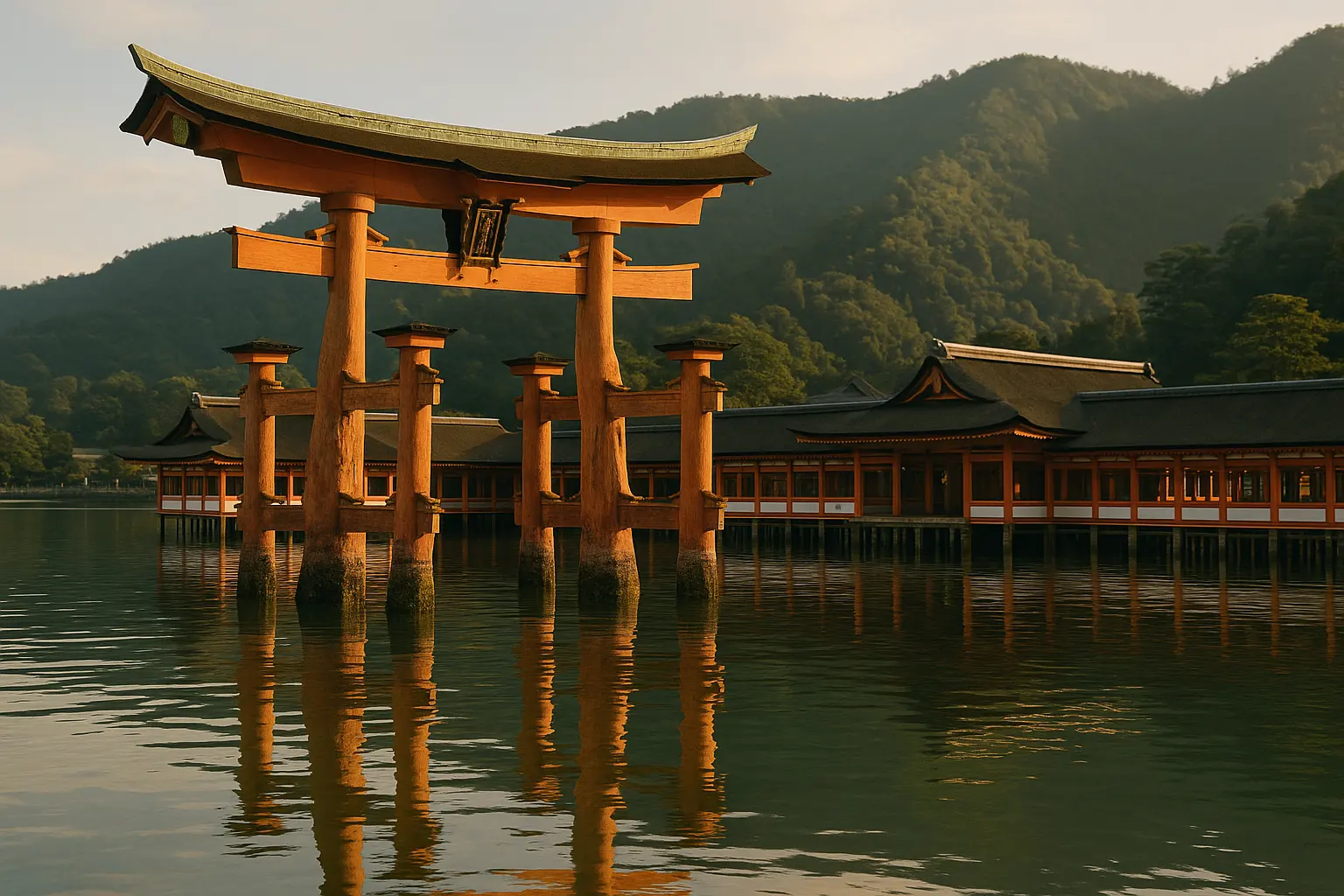
Itsukushima Shrine Japan Travel Guide 2026: The Floating Torii Gate
Japanese ShintoVisit Itsukushima Shrine on Miyajima Island, famous for its floating torii gate. Discover the shrine...
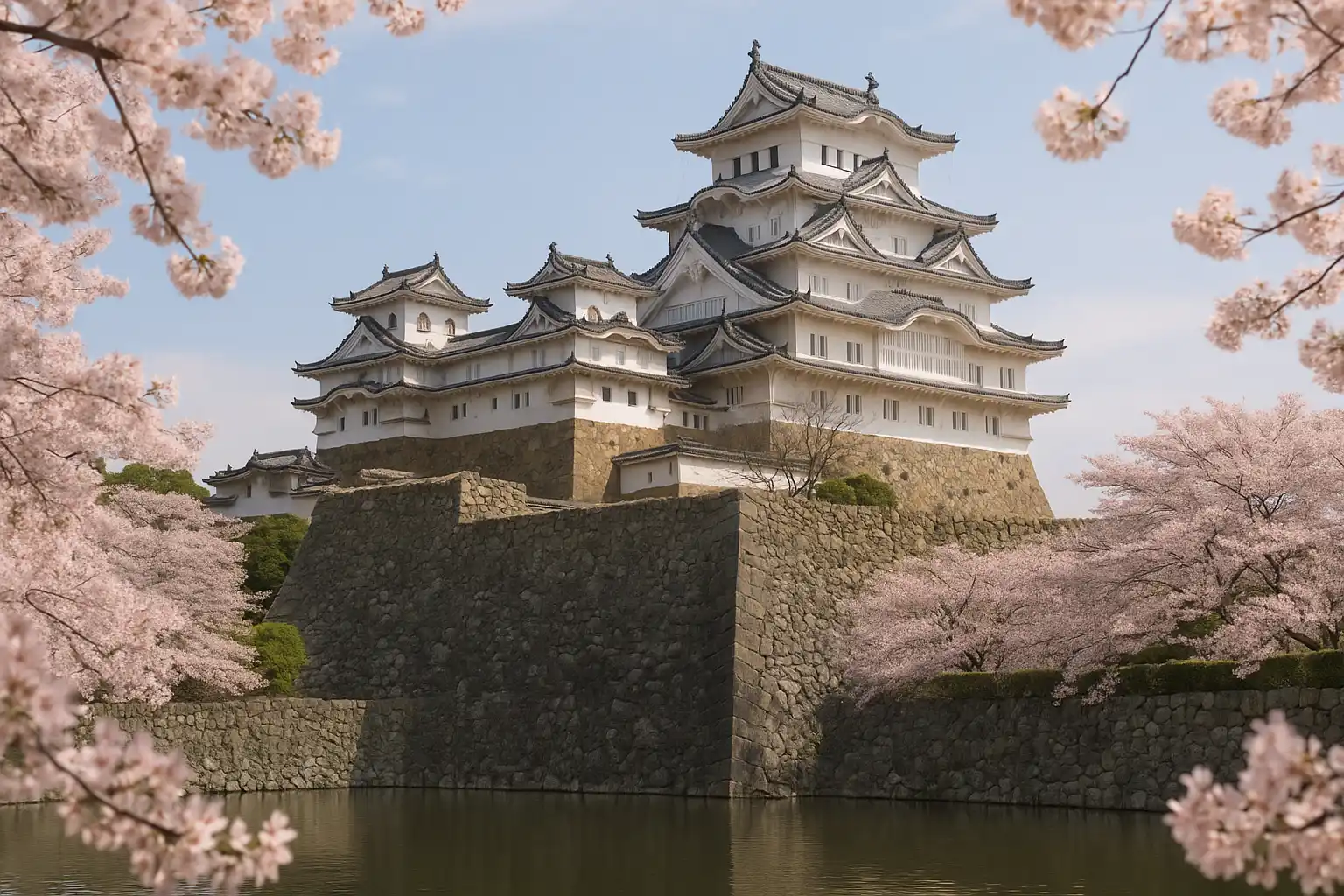
Himeji Castle Japan Travel Guide 2026: The White Heron Castle
Japanese FeudalVisit Himeji Castle, Japan's most beautiful original castle. Explore the White Heron keep, defensive...
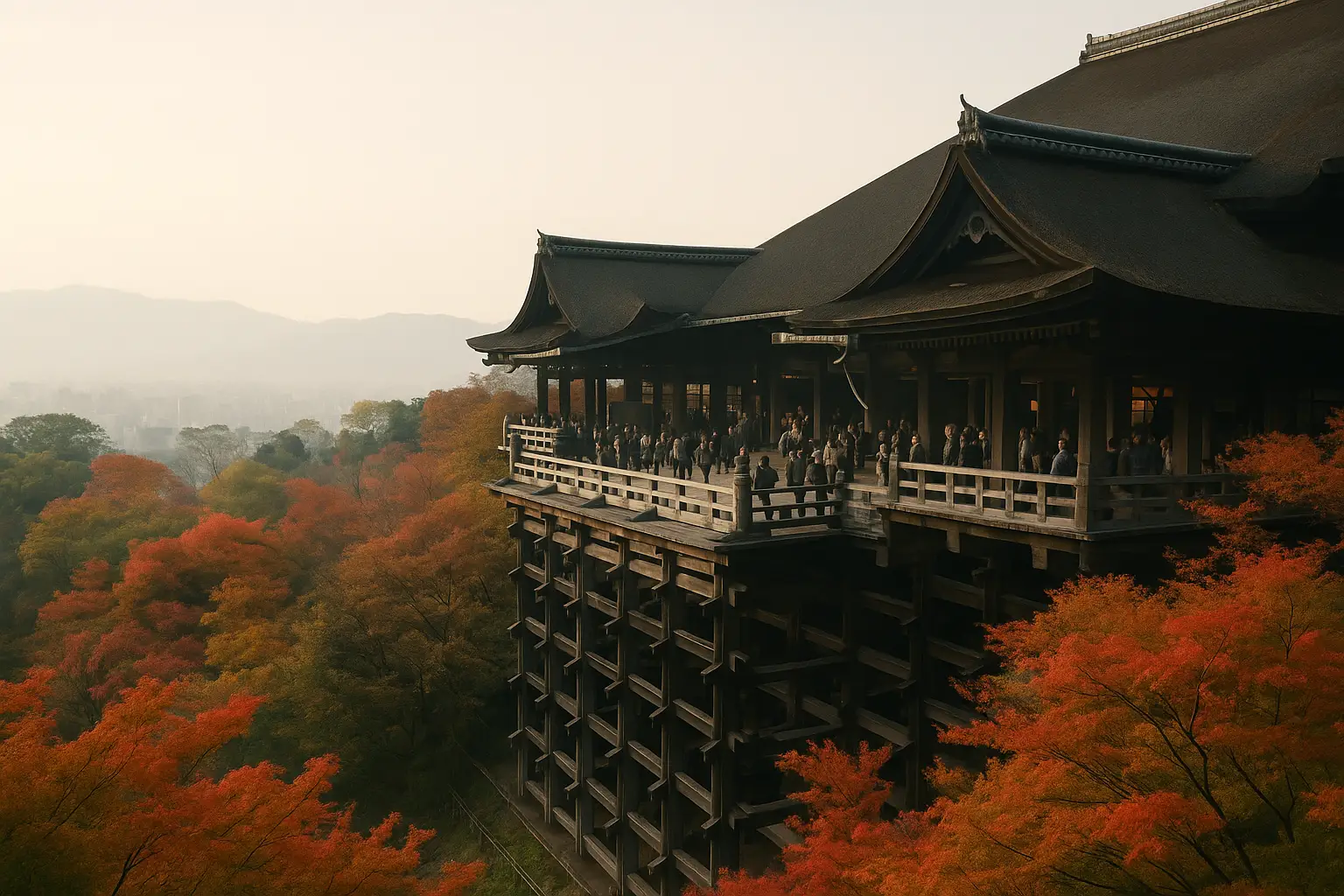
Kiyomizudera Temple Japan Travel Guide 2026: Kyoto's Wooden Stage
Japanese Buddhist (Kita-Hosso)Visit Kiyomizudera, the Pure Water Temple with its famous wooden stage overlooking Kyoto. Explore th...