Quick Info
Curated Experiences
Simena Castle and Lycian Coast Boat Tour
Lycia Clifftop Ruins and Swimming Tour
Turkish Mediterranean Archaeology Sail
Quick Facts
- Location: Clifftop near Kale village on the Lycian coast
- Best for: Castle architecture, dramatic views, swimming combined with archaeology
- When to visit: April-May, September-October
- Entry fee: Around 100 Turkish Lira
- Crowds: Low - remote and spectacular
- What to see: Medieval castle, Lycian harbor, rock-cut tombs, theater ruins
Where Empires Intersect
Simena sits atop a dramatic cliff overlooking the Mediterranean, a location so defensible and beautiful that multiple civilizations chose to build here. The result is a palimpsest of architecture: ancient Lycian city, Roman harbor, medieval Crusader castle—each layer representing a different era’s priorities and defense strategies.
The site is accessed by boat or by hiking steep paths from the small village of Kale. This remoteness has preserved Simena in ways more accessible sites have not. You’re not walking through a museum—you’re climbing into a real place where different historical periods coexist.
The Medieval Castle
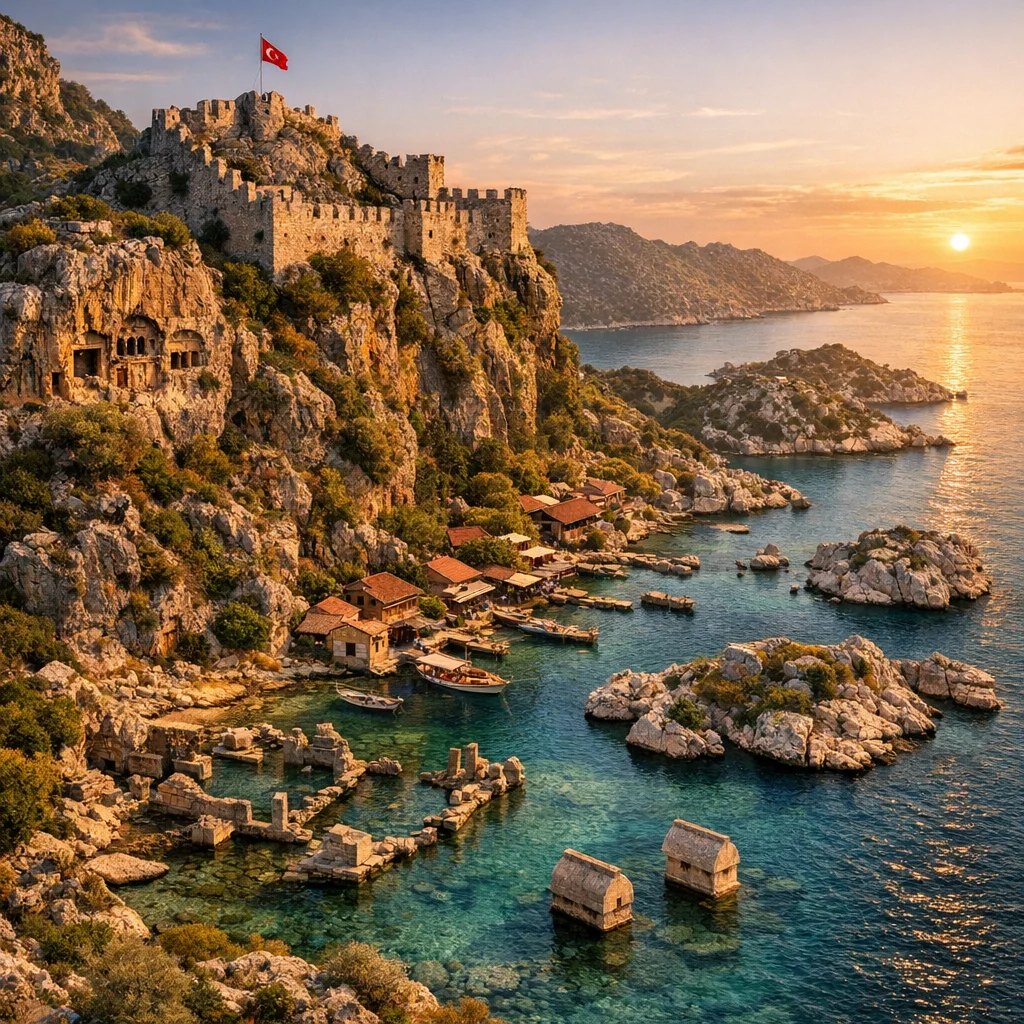
The dominant feature is the medieval castle, built by Crusaders in the 12th-13th centuries. The castle sits at the cliff’s peak, its walls following the rocky contours. Towers command views of the harbor and surrounding coast. The castle was built to project power and defense—visible from the sea, positioned to control the harbor and coastline.
The castle walls are partially preserved, allowing you to trace the structure and understand its defensive logic. The view from the castle is extraordinary—looking down to the harbor, across the Lycian coast, toward distant islands. This was a strategic location worth defending.
Ancient Lycian Foundations
Beneath the medieval castle lie the remains of the ancient Lycian city. Stone foundations indicate buildings, fortifications, and harbor structures. The Lycian harbor—natural and protected—was the reason for settlement. Boats could anchor safely, goods could be loaded and unloaded, trade could happen.
The Lycian population built temples and houses near the harbor. They cut tombs into the cliff face—rock-cut chambers decorated with carved facades. These tombs (visible on the cliff) are among Lycia’s distinctive contributions to Mediterranean funerary architecture. The tomb facades show the craftsmanship and resources of the deceased—often wealthy merchants or civic leaders.
Rock-Cut Tombs and Funerary Architecture
The tombs carved into the cliff face are Simena’s most distinctive feature. Each tomb represents a family or wealthy individual’s investment in afterlife commemoration. The facades are carved to resemble house fronts—indicating that Lycians imagined the afterlife as an extension of earthly domestic life.
Some tombs are simple—rectangular chambers carved into the rock. Others have elaborate facades with carved architectural elements. The size and elaboration of tombs correlates with wealth and status. The presence of numerous tombs indicates a prosperous population whose members had resources for elaborate funerary monuments.
The Harbor and Maritime Life
The harbor below Simena is small but protected. Ancient merchant ships could anchor here, beaching on the sandy shore to load and unload cargo. The natural curve of the coast and the protective effect of nearby islands made the harbor suitable for maritime trade.
The harbor’s small size suggests that Simena was a secondary trading center—important locally but not a major Mediterranean port like Side or Ephesus. The population would have been modest—perhaps a few thousand at peak—supporting themselves through fishing, local trade, and service to ships passing along the coast.
Integration of Periods
What makes Simena distinctive is how different periods coexist without attempting to erase previous eras. The medieval castle was built on top of the ancient city, but ancient structures weren’t demolished—they were incorporated or left standing. Walking through Simena, you move through layers: ancient harbor facilities, Lycian house foundations, medieval fortifications.
This accretion of periods means that Simena reads as a continuous story of occupation and defense, rather than a sequence of discrete archaeological periods.
Visiting Simena
Access: The village of Kale is reached by road, but Simena itself is best accessed by boat from nearby harbors (Kale or Kalkan). Alternatively, steep hiking paths connect the village to the castle.
Best time: April-May or September-October. Summers are hot; winters bring rain.
Duration: 2-3 hours to explore the castle, harbor, and tombs. Many visitors combine Simena with boat tours along the Lycian coast.
Swimming: Multiple coves near Simena are suitable for swimming.
Crowds: Very low—one of Lycia’s least-visited major sites.
Boat tours: Many operators offer boat tours from nearby villages that include Simena as a stop.
Accessibility: The hike is steep; boat access is easier.
Guides: Local guides (available in Kale village) provide context for the Lycian and medieval periods.
Connecting to Lycian Sites
Simena should be experienced as part of broader Lycian exploration. Visit Myra for elaborate rock-cut tombs. See Xanthos for political center. Tlos shows clifftop acropolis fortifications. Together, they reveal how Lycia was organized: coastal trading cities with interior defensive settlements.
What Simena Teaches
Simena demonstrates how natural geography determines settlement patterns and economic function. The harbor was why people settled here. The cliff defensibility was why they remained. Medieval crusaders recognized the same strategic advantages that Lycians did centuries earlier.
The integration of medieval castle with ancient city tells a story of continuity: certain locations remain strategic and valuable across long historical periods. Geography trumps politics—the same location matters to different civilizations for the same fundamental reasons.
Swimming in the harbor below medieval fortifications, surrounded by rock-cut tombs, you experience how history layers—not erasing previous eras but building upon them.
The Lycian Federation and Naval Power
Simena’s strategic position reflects broader patterns in Lycian history and geography. The Lycian people controlled the southwestern coast of Anatolia from roughly the 15th century BCE until their incorporation into the Roman Empire. Unlike the great empires of Mesopotamia or Egypt, Lycia remained a confederation of independent cities, each maintaining political autonomy while cooperating on matters of common defense and trade.
This political structure shaped Lycian maritime strategy. Individual cities like Simena built harbors, maintained fleets, and defended coastal trade routes. The natural harbor at Simena was valuable precisely because it provided shelter and trading facilities for merchant ships moving along the Mediterranean coast. Control of harbors meant control of commerce, and commerce generated the wealth that funded public works and sustained populations.
The Lycian naval tradition was particularly strong. Lycian ships appear in Egyptian records and in Greek literature. Lycia was not a great empire, but it was a maritime power, and cities like Simena profited from this identity. The presence of harbor infrastructure, warehouses, and defensive fortifications all testify to the economic importance of maritime trade.
Rock-Cut Tombs and Social Hierarchy
The distinctive rock-cut tombs at Simena tell stories about Lycian society and values. These tombs were expensive to construct—carving chambers into cliff faces required skilled labor and time. Only wealthy individuals and families could afford such monuments. The presence of numerous tombs therefore indicates a prosperous population with significant inequality of wealth.
The tomb facades often incorporate architectural elements mimicking house fronts. This suggests that Lycians conceived of the afterlife as a continuation of domestic life. The tomb was the deceased person’s eternal home, and its architectural treatment reflected this spiritual geography. A wealthy merchant’s tomb would be larger and more elaborately decorated than that of a farmer or craftsperson.
Inscriptions on the tombs provide names, titles, and sometimes details of accomplishment. Some tombs honor merchants, others military leaders or civic officials. The diversity of tomb types and decorations demonstrates the social complexity of Lycian cities like Simena. Society was hierarchical, but there was also room for individual achievement and social mobility. A successful merchant could accumulate wealth sufficient to commission an impressive tomb—a form of immortality available to those with resources.
Medieval Occupation and Cultural Continuity
The Crusader castle at Simena was built in the 12th century during the period of Crusades and Byzantine-Latin interaction in the eastern Mediterranean. The castle’s location was not random—it occupies the highest point of the Simena peninsula, the same location that earlier civilizations had fortified. Geography trumps politics and culture. The same defensible location that mattered to Lycians in antiquity mattered to Crusaders in the medieval period.
The medieval castle incorporates stones and materials from earlier periods. Medieval builders didn’t construct entirely new settlements; they built upon existing foundations, reused stones from older buildings, and adapted the landscape to their needs. This practice of reuse and adaptation means that medieval structures at Simena are literally built upon and intertwined with Lycian remains.
The castle’s defensive logic reflects medieval military thinking. Towers command views of the harbor and surrounding coastline. Walls follow the rocky contours to maximize natural defensibility. The castle was designed to project power, control harbor traffic, and defend against potential attackers. That medieval Crusaders chose the same location as ancient Lycians demonstrates the timelessness of strategic geography.
Visiting Simena Today
Access requires either boat or hiking, which has preserved Simena in ways more accessible sites have not. Tourism is present but limited. The site feels less like a museum and more like an active place where different historical periods coexist. Walking through Simena, you move through layers of time—ancient harbor facilities, medieval fortifications, modern fishing boats anchored in the same harbor that served ancient merchant ships.
Nearby Ancient Sites
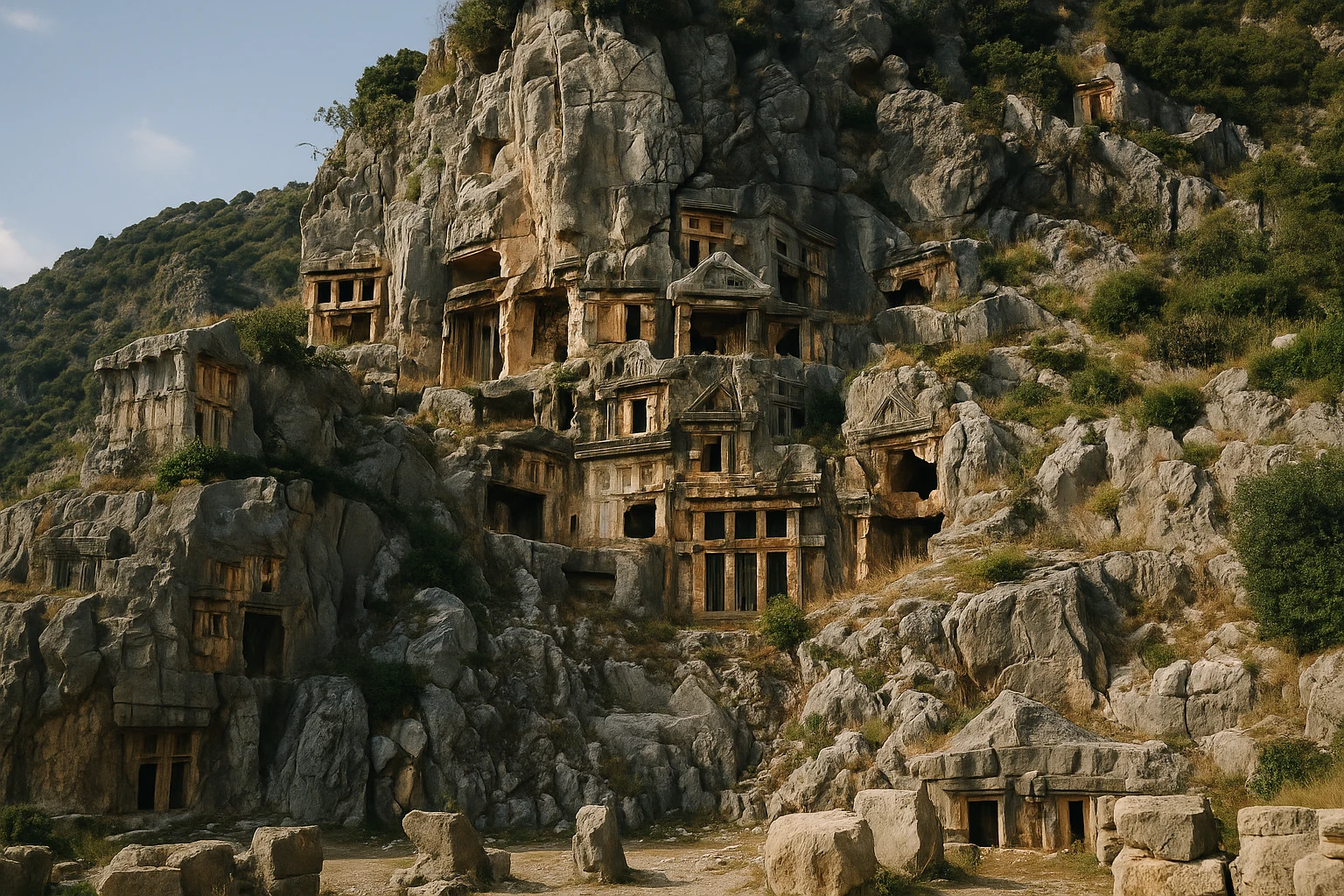
Myra Turkey Guide 2026: Lycian Tombs & Roman Theatre
Lycian-Roman-ByzantinePlan your Myra, Turkey visit with rock-cut Lycian tombs, a Roman theatre, tickets, hours, and transp...
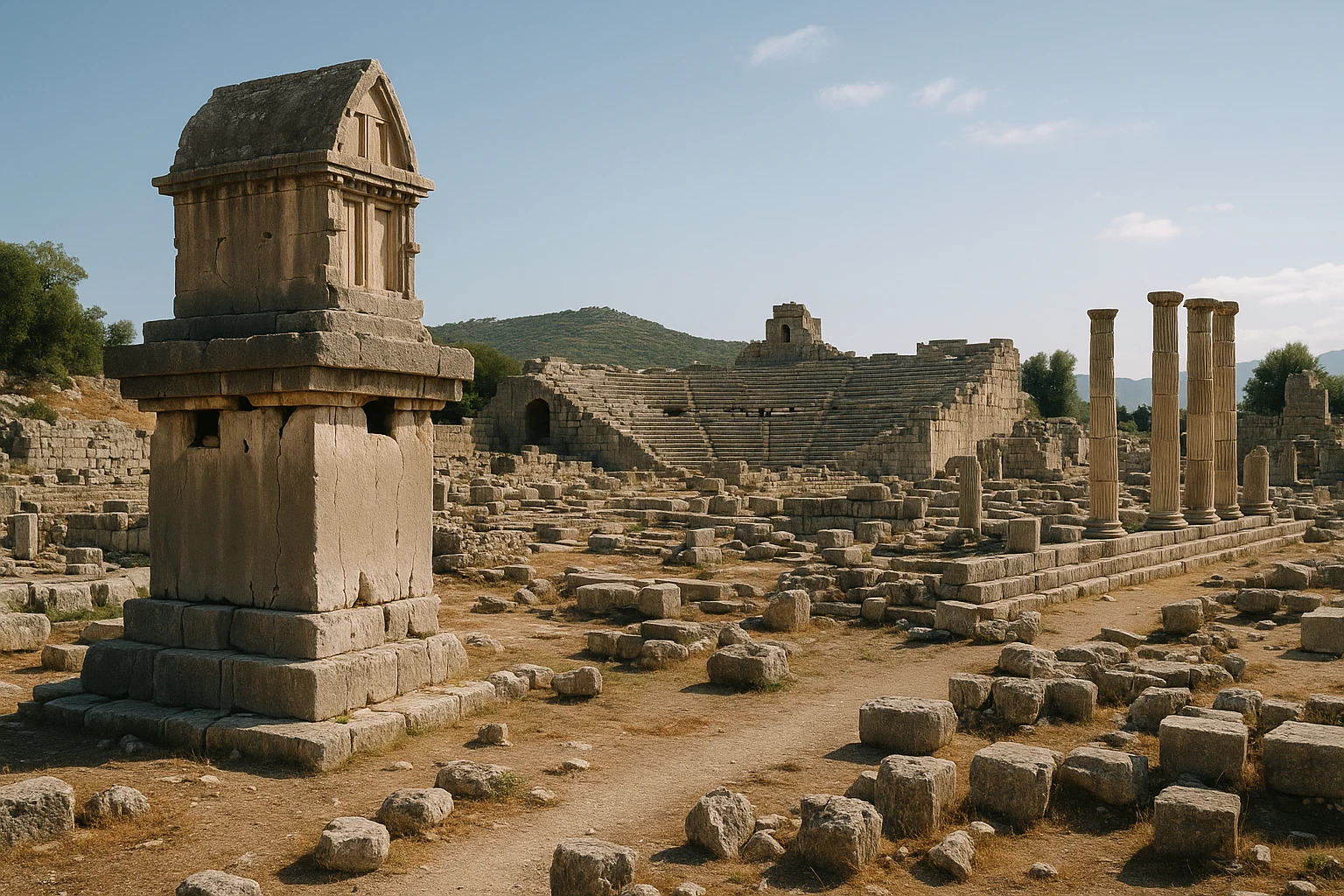
Xanthos Letoon Turkey Guide 2026: Lycian Tombs & Sanctuary
Lycian-Hellenistic-Roman-ByzantineVisit Xanthos and Letoon in Turkey for Lycian tombs, theater ruins, and sacred temples, with practic...