Quick Info
At a glance
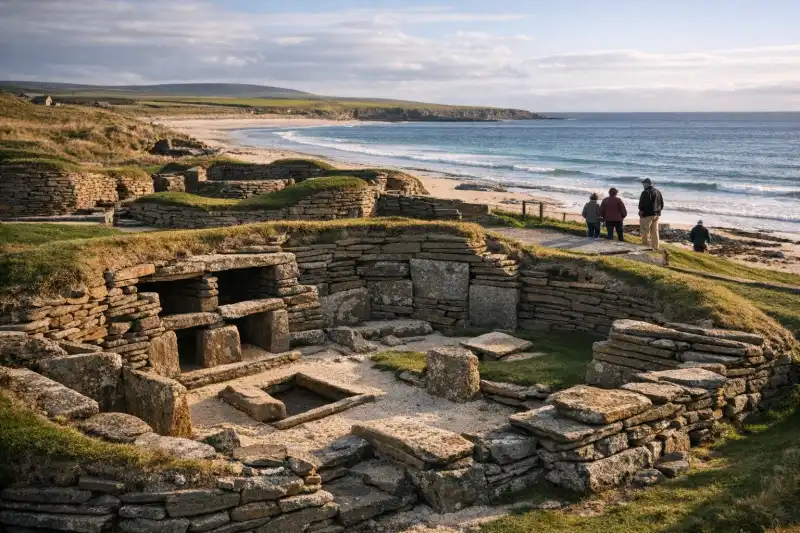
Skara Brae in the United Kingdom feels less like a ruin and more like a conversation with deep time. On Orkney’s wind-shaped western coast, the village sits low against the land near the Bay of Skaill, its stone rooms tucked into the earth as if the island itself has been carefully folded around them. The sea is never far away here. Waves move beyond the dunes, light shifts rapidly across the grass, and the air carries that clean northern sharpness that makes every wall, hearth, and passage seem especially vivid. Unlike many ancient sites where imagination must do most of the work, Skara Brae offers something rare: domestic life made visible.
This is one of Europe’s most extraordinary prehistoric settlements, a place where you can trace the outlines of homes built more than 5,000 years ago and still recognize the logic of everyday living. Beds were framed in stone. Dressers faced doorways. Central hearths anchored the rooms. Covered passages linked one house to the next. The effect is astonishingly intimate. You are not looking at a temple, fortress, or monument to rulers, but at a community. That sense of human scale is what makes Skara Brae so powerful. Standing above the excavated village, with Atlantic weather rolling in and seabirds circling overhead, you do not just see the Neolithic past—you glimpse how people organized warmth, shelter, work, and family life on the edge of the North Sea.
History
Discovery after the storm
For most of its long existence, Skara Brae lay hidden beneath sand and turf. The village survived precisely because it was buried, protected from centuries of weather and human disturbance. Its modern story began in the winter of 1850, when a severe storm battered the Bay of Skaill and stripped away part of the dune system known locally as “Skerrabra.” What emerged were stone walls and ancient structures unlike anything local residents expected to find. William Watt of Skaill House, the nearby laird, took an early interest in the exposed remains and began a basic excavation.
Those first investigations revealed several houses, but archaeological methods at the time were limited. Even so, it quickly became clear that the site was special. The structures were not random ruins or isolated burials; they formed an organized settlement. Later work would show that this was one of the best-preserved prehistoric villages ever found in northern Europe.
Excavation and early interpretation
The major scientific excavation took place between 1928 and 1930, led by Professor V. Gordon Childe after additional coastal erosion threatened the site. Childe’s work defined Skara Brae for the wider public. He identified a compact village of stone-built houses connected by low covered passages, each containing built-in furniture and hearths. Because the material culture seemed relatively simple compared with later prehistoric societies, Childe originally thought the site dated to the Iron Age.
That interpretation changed with the development of radiocarbon dating in the twentieth century. New evidence pushed the settlement dramatically further back in time, placing it in the Neolithic period, roughly between 3100 and 2500 BCE. This discovery transformed Skara Brae from an intriguing northern ruin into a foundational site for understanding prehistoric Britain and Atlantic Europe. It was not late and marginal; it was early, sophisticated, and part of a thriving Neolithic world.
Life in a Neolithic village
Skara Brae was occupied for several centuries, long enough for generations to adapt their homes and routines to local conditions. Its residents were farmers, fishers, and gatherers living in a landscape already marked by ceremonial and domestic complexity. Nearby sites such as Maeshowe and the Ring of Brodgar show that Orkney in this era was anything but remote in cultural terms. It was a major center of Neolithic life.
The houses at Skara Brae were dug partly into midden material—accumulated household waste rich in organic matter—which helped insulate the interiors against Orkney’s harsh climate. The village appears to have been carefully planned. Standardized architectural features recur from house to house: a central hearth, stone bed platforms to either side, and a dresser opposite the entrance. This regularity suggests shared building traditions and a stable social structure.
Artifacts recovered at the site include pottery, stone tools, bone implements, beads, and carved objects, including the enigmatic carved stone balls associated with Neolithic Scotland. The absence of abundant timber on Orkney encouraged stone construction, and that geology is a major reason the village survives so clearly today. Where wood would have rotted, stone remained.
Abandonment, preservation, and world recognition
Why Skara Brae was abandoned remains uncertain. One older story imagined a sudden catastrophe, perhaps a great storm driving inhabitants away. Modern archaeology suggests a more complex picture. Environmental pressures, changing coastlines, shifts in settlement patterns, or broader cultural change may all have played a part. Rather than a dramatic final night, the village may have been left gradually as communities reorganized.
What happened next was crucial. Windblown sand covered the site, sealing the houses for millennia. In modern times, conservation became a major priority because the same coast that revealed Skara Brae also threatens it. The Atlantic edge is beautiful but relentless, and erosion, storms, and climate-related pressures remain serious concerns.
Today, Skara Brae is protected as part of the Heart of Neolithic Orkney UNESCO World Heritage Site. That designation recognizes not only the exceptional state of preservation but also the broader significance of Orkney’s prehistoric landscape. Skara Brae matters because it captures ordinary life with extraordinary clarity. It reminds us that prehistory was not abstract or primitive. It was made up of households, choices, routines, and communities whose traces still endure at the edge of the sea.
Key Features
What first distinguishes Skara Brae is its completeness. Many archaeological sites preserve walls, foundations, or a few scattered artifacts. Here, the village plan is legible almost at a glance. The houses are clustered together in a compact arrangement, linked by narrow covered passageways that suggest both shelter from the weather and a close-knit community. As you move along the viewing paths, you begin to understand the settlement not as isolated buildings but as an intentional, functioning whole.
The houses themselves are the site’s greatest revelation. Each main room centers on a stone hearth, where heat, light, and cooking would have shaped the rhythm of daily life. Opposite the entrance sits a stone dresser, one of Skara Brae’s most famous details. Its position seems deliberate, perhaps serving as a place to display valued objects as soon as someone entered. On either side of the room are stone bed platforms, often unequal in size, which archaeologists have sometimes interpreted as sleeping places for different household members. Whether or not every interpretation is certain, the layout is instantly comprehensible. You are looking at domestic architecture arranged around comfort, status, and routine.
Another striking feature is the use of furniture built directly into the architecture. At Skara Brae, beds, shelves, cupboards, and storage spaces were not added later but formed part of the stone design. This gives the interiors a remarkable sense of permanence. These were not temporary shelters. They were homes built with care and intended for long-term use. Even after 5,000 years, the rooms feel structured and purposeful.
The passageways between houses add another layer of character. Low, narrow, and protected, they hint at how people moved through the settlement during rough weather. Orkney’s climate can be severe even today, and these covered links speak to practical adaptation. In places, stone slabs and thresholds remain visible, making the village feel less like a ruin and more like a paused environment.
House 8 stands out for its differences from the others. It lacks some of the standard domestic fittings and may have served a specialized purpose, perhaps as a workshop. Finds from this structure included tools and debris suggesting craft activity. Such variation complicates any overly simple image of Skara Brae and reminds visitors that prehistoric communities, like later ones, likely included multiple roles and uses of space.
The drainage system is another often-mentioned but genuinely impressive aspect. Skara Brae’s builders created a settlement that handled water with intelligence, and some houses appear to have had arrangements for waste disposal unusual in such early contexts. While modern descriptions should be careful not to overstate the comparison to contemporary plumbing, there is no question that the inhabitants engineered their environment thoughtfully.
A reconstructed house near the visitor center helps make these details easier to grasp. Because the original structures must be protected, access inside the excavated rooms is limited. The reconstruction provides a full-scale sense of height, enclosure, and atmosphere. For many visitors, this is where Skara Brae becomes emotionally immediate. The low entrance, the central hearth, the close walls, and the heavy use of stone create a vivid impression of Neolithic domestic life.
The wider setting also matters. Skara Brae lies beside Skaill House and near a sweeping Atlantic shoreline, and the landscape contributes greatly to the experience. The village is not an inland museum piece detached from its environment; it remains in dialogue with wind, surf, and weather. Looking out from the site, you understand both why people could thrive here and why survival demanded resilience. The sea offered food, movement, and orientation, but it also brought the storms that eventually buried and later re-exposed the settlement.
Finally, Skara Brae’s greatest feature may be its emotional scale. Grand monuments inspire awe, but this village inspires recognition. A dresser facing a doorway, a bed beside a wall, a fire in the center of the room: the arrangement is ancient, yet deeply familiar. The genius of Skara Brae lies in that intimacy. It allows visitors to encounter prehistory not only through dates and artifacts, but through the architecture of everyday life.
Getting There
Most travelers reach Skara Brae via Kirkwall, the main town on Orkney’s Mainland. To get to Orkney itself, you can either fly or take a ferry from mainland Scotland. Flights from cities such as Aberdeen, Inverness, or Edinburgh to Kirkwall are the fastest option, though prices vary widely by season and booking time; one-way fares often start around £80 to £180. Ferries are slower but scenic. NorthLink services from Scrabster to Stromness are popular, with adult foot passenger fares commonly starting around £20 to £35, while taking a car costs significantly more. Pentland Ferries and other regional links may also operate seasonally or on nearby routes.
From Kirkwall to Skara Brae, the journey by car takes roughly 30 minutes. Rental cars are often the simplest choice for exploring Orkney’s scattered archaeological sites, and daily rates frequently begin around £45 to £80 in warmer months, rising in peak season. Public buses do serve western Mainland, but schedules can be limited, especially on Sundays or outside summer. A single fare may be only a few pounds, typically around £3 to £7 depending on the route, but check timetables carefully because services may not align neatly with your sightseeing plans.
Taxis from Kirkwall to Skara Brae are convenient but more expensive, usually in the region of £35 to £55 each way. Many visitors instead join guided day tours from Kirkwall, which often combine Skara Brae with the Ring of Brodgar, Maeshowe area stops, or other Neolithic highlights. These tours can be excellent value if you do not want to drive and generally cost from around £50 upward depending on duration and inclusions. However you arrive, leave extra time for weather, as Orkney conditions can affect transport even in summer.
When to Visit
The best time to visit Skara Brae is generally from late spring to early autumn, when Orkney enjoys longer daylight hours, milder temperatures, and the easiest travel conditions. May and June are particularly attractive. The landscape turns greener, birdlife is active, and the light can feel almost endless as midsummer approaches. These months often offer a good balance between pleasant weather and manageable visitor numbers.
July and August are the busiest months. This is when families, cruise passengers, and self-drive travelers are most likely to be on the islands, and accommodation across Orkney can book up well in advance. The upside is convenience: more transport options, fuller visitor services, and generally more forgiving road and ferry conditions. The downside is that popular sites can feel less tranquil, especially during peak midday hours. If you visit in high summer, arriving early or later in the afternoon can improve the experience.
September is an excellent shoulder-season choice. The crowds thin, but many services are still running, and the lower sun can give the stonework and coastline a beautiful clarity. Autumn weather can become more changeable, however, with stronger winds and rain arriving more often.
Winter visits are possible and can be atmospheric, but they require flexibility. Orkney’s storms are part of the site’s identity, and seeing Skara Brae under dramatic skies can be memorable. Yet ferry crossings may be rough, daylight is limited, and windchill on the coast can be intense. If you come in colder months, pack waterproof layers, sturdy shoes, and expect plans to shift. In any season, the key is to dress for exposure. Even on a bright day, the Atlantic breeze can be far colder than it looks.
| Quick Facts | Details |
|---|---|
| Location | Bay of Skaill, Mainland Orkney, Scotland, United Kingdom |
| Type | Neolithic stone-built village |
| Date | c. 3100–2500 BCE |
| UNESCO Status | Part of the Heart of Neolithic Orkney World Heritage Site |
| Best Base | Kirkwall |
| Time Needed | 1.5 to 3 hours |
| Nearest Major Transport Hub | Kirkwall Airport |
| Suitable For | History lovers, families, archaeology travelers, photographers |
| Main Appeal | Exceptionally preserved prehistoric homes with built-in stone furniture |
| Weather Note | Coastal winds can be strong year-round, so waterproof layers are recommended |
Skara Brae rewards the traveler who is willing to go a little farther north, brave a little wind, and slow down enough to notice details. It is not a place of towering columns or monumental facades. Its power lies in proportion, preservation, and humanity. Here, the prehistoric world is not represented by kings or battles, but by homes—carefully made spaces where people slept, cooked, worked, and gathered around the fire. That is why the site stays with visitors long after they leave Orkney.
Seen within the wider Neolithic landscape of the islands, Skara Brae becomes even more impressive. It belongs to a world of tombs, standing stones, and ritual monuments, yet it offers something those sites cannot: the intimate architecture of daily life. If you want to understand how ancient people actually lived, few places in Europe are more eloquent. On a clear day, with the sea beyond and the stone rooms below, Skara Brae feels both astonishingly distant and unexpectedly familiar.
Guided tours: worth it?
Most travelers can visit Skara Brae independently. Compare a tour only if you want a tighter history-focused visit, easier logistics, or a guide who can answer questions on the spot.
Best for
- Short visits where a planned route saves time
When to go self-guided
Go independently if you prefer setting your own pace, reading as you go, and checking official hours or ticket rules directly before you arrive.
What I’d avoid
Skip paid tours that bundle unrelated stops you do not actually want. The best option should either save meaningful planning time or add historical context you would miss on your own.
Orkney Day Tours from Kirkwall
Useful when: transport or pickup logistics matter
Skara Brae and Ring of Brodgar Tours
Useful when: you want to compare guided formats before deciding
Orkney Neolithic Sites Tours
Useful when: you want to compare guided formats before deciding
Some tour links are affiliate links, which may earn Ancient Travel a small commission at no extra cost to you. I try to surface options that make practical sense for the site—not just anything bookable.
Frequently Asked Questions
What is Skara Brae?
Skara Brae is a remarkably well-preserved Neolithic stone-built village on the Orkney Islands in Scotland, dating to around 3100–2500 BCE.
How do you get to Skara Brae?
Most visitors reach Orkney by ferry or flight to Kirkwall, then drive or take a local bus across Mainland Orkney to the site near the Bay of Skaill.
How much time should I allow for visiting Skara Brae?
Allow around 1.5 to 3 hours to see the visitor centre, walk the coastal path, and explore the reconstructed house and viewpoints over the ancient settlement.
Is Skara Brae suitable for families?
Yes, it is popular with families thanks to the engaging visitor centre, reconstructed dwelling, and short, manageable visit length.
When is the best time to visit Skara Brae?
Late spring through early autumn usually offers the mildest weather and longest daylight, though conditions in Orkney can change quickly in any season.
Can you go inside the ancient houses at Skara Brae?
Visitors normally view the excavated houses from designated paths and platforms to protect the remains, but a full-scale replica house allows a closer sense of the interiors.
Nearby Ancient Sites
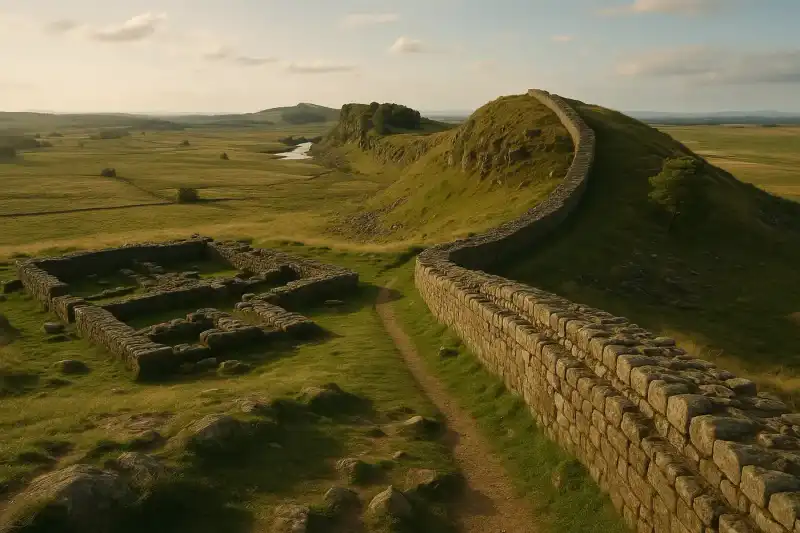
Hadrian's Wall Travel Guide 2026: Best Sections, Roman History, and Practical Planning
Roman BritainPlan a UK frontier-heritage day at Hadrian's Wall with clear section priorities, practical one-day r...
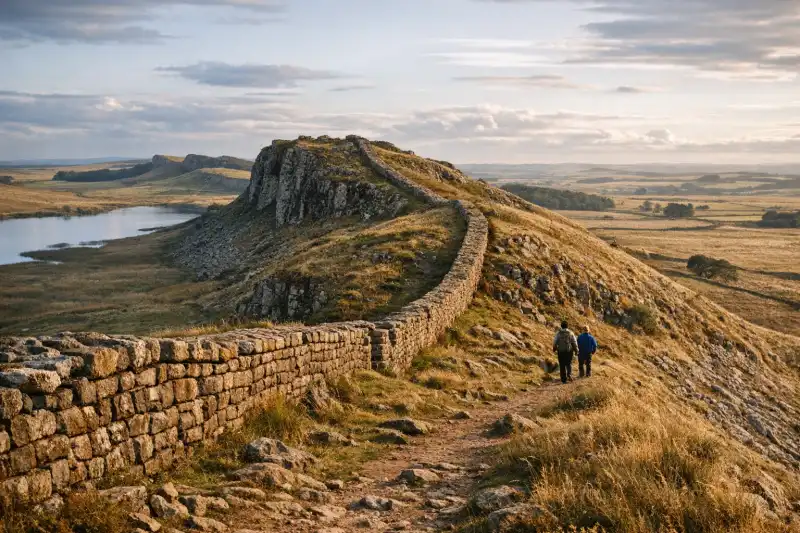
Hadrian's Wall
RomanExplore Hadrian’s Wall in the United Kingdom, Rome’s great northern frontier of forts, milecastles, ...
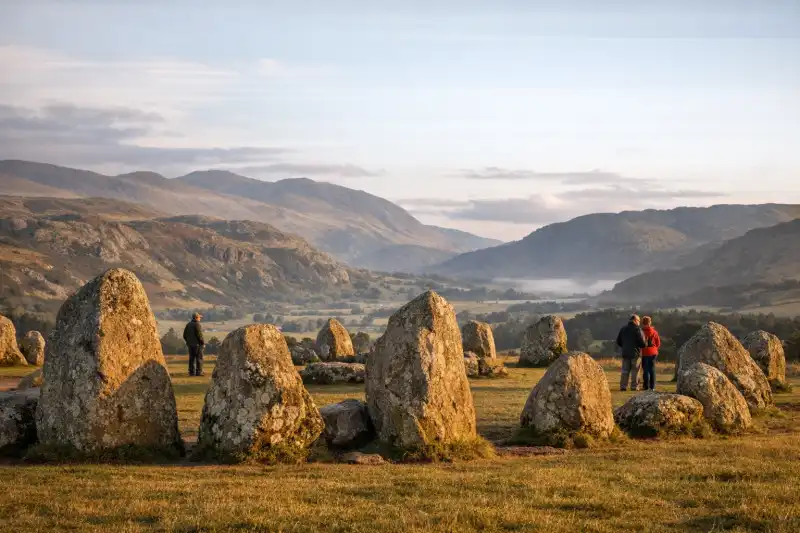
Castlerigg Stone Circle
Neolithic BritainAncient stone circle near Keswick in the United Kingdom, famed for dramatic mountain views and one o...