Quick Info
Curated Experiences
Skellig Michael Landing and Monastery Tour
Skellig Islands Cruise and Wildlife Experience
Ring of Kerry and Skellig Coast Day Tour
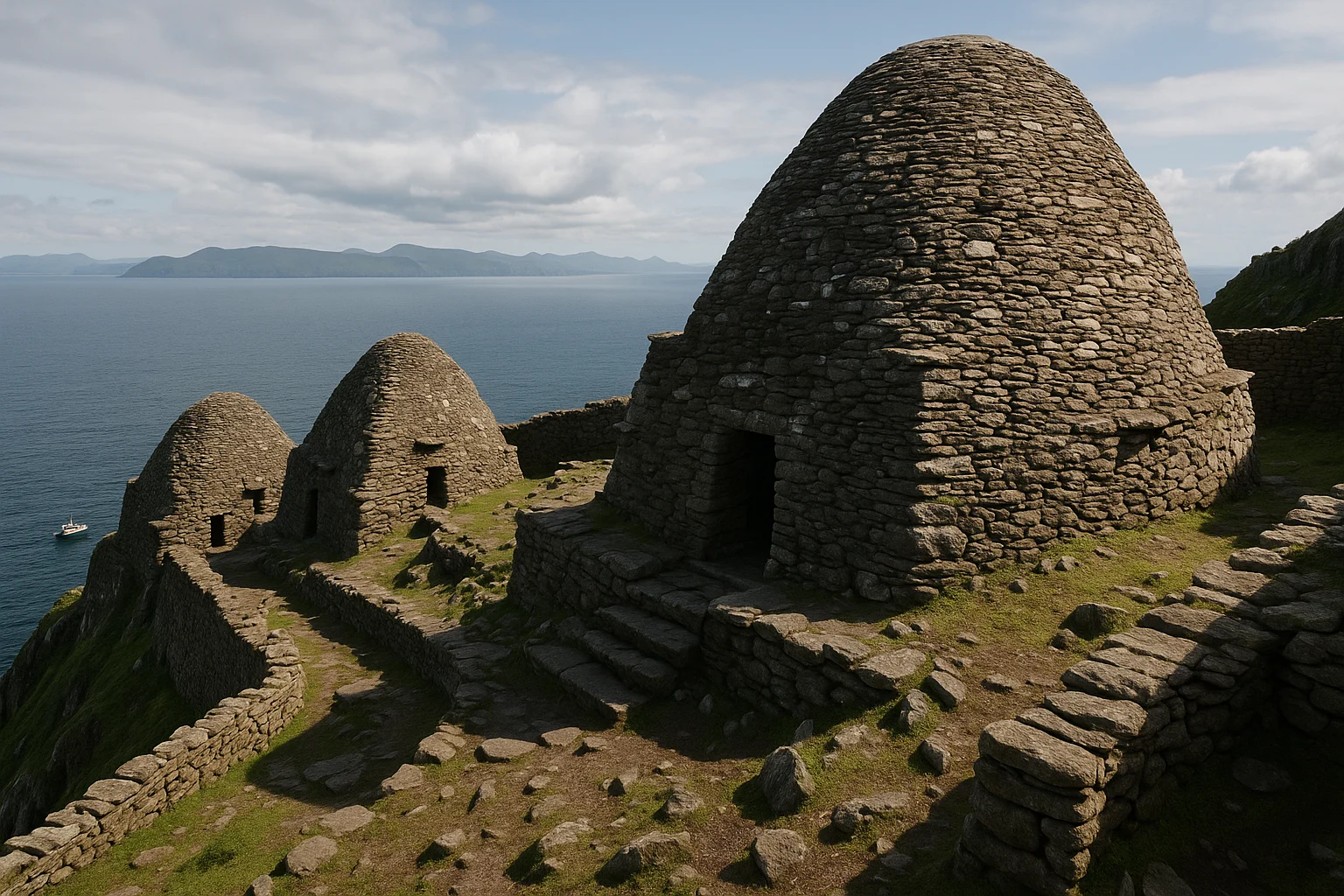
Skellig Michael is a pyramidal rock eight miles off the Kerry coast where, sometime around the 6th century, a small community of monks built a monastery on a ledge six hundred feet above the Atlantic. They hauled stone up cliff faces, corbelled it into beehive huts without mortar, carved crosses into exposed rock, and stayed for roughly six hundred years. The structures they left behind are still there — exposed to wind, salt, and seabirds, yet structurally intact after more than a millennium.
Getting here requires a boat, a calm sea, and a willingness to climb 618 uneven stone steps with no handrail. That effort is the filter. Skellig Michael does not accommodate casual visits, and the result is one of the most undiluted encounters with early medieval monasticism anywhere in Europe. There are no gift shops on the summit, no audio guides, no reconstructed interiors. Just stone, sky, and the Atlantic pressing in from every side.
For travelers who have visited mainland monastic sites like Glendalough or Clonmacnoise, Skellig Michael resets the scale entirely. Those settlements thrived on accessibility and trade. This one thrived on the deliberate rejection of both. Understanding that difference is what makes the crossing worthwhile.
Historical Context
The earliest monastic activity on Skellig Michael likely dates to the 6th or 7th century, though precise dating is difficult because the monks left no contemporary written records of the foundation. The settlement belongs to the same impulse that drove early Irish Christians to seek out remote, inhospitable locations for contemplation and penance — a tradition known as peregrinatio, or voluntary exile for Christ. While other monks chose river islands or forest clearings, the Skellig community chose a North Atlantic rock face, and the extremity of that choice defines everything about the site.
The monastery was built on a series of artificially terraced platforms roughly 600 feet above sea level on the island’s northeastern shoulder. Six beehive huts (clochans), two oratories, a cemetery, and a series of cross slabs constitute the surviving settlement, all constructed using drystone corbelling — a technique in which each successive course of stone is angled slightly inward until the walls close into a dome. The huts have shed Atlantic storms for over a thousand years through sheer engineering precision, without a gram of mortar.
Viking raids reached Skellig Michael in the 9th century. The Annals of the Four Masters record an attack in 824 CE in which the abbot, Etgal, was carried off and subsequently died of starvation. Despite such assaults, the community persisted. The monks may have maintained a dual presence, keeping the island as a place of retreat while operating a more accessible base at Ballinskelligs on the mainland. By the 12th century, monastic reform and changing religious practice led to the community’s final relocation to the mainland, and Skellig Michael became a place of pilgrimage rather than permanent habitation.
UNESCO inscribed the site as a World Heritage Site in 1996, recognizing it as an exceptionally well-preserved example of early Christian monastic life in an extreme environment. The inscription notes not just the architecture but the monastery’s relationship to its setting — the way the monks shaped the rock itself into a habitable space while leaving the island’s broader geology and ecology largely intact.
More recently, Skellig Michael gained a second wave of fame as a filming location for Star Wars: The Force Awakens (2015) and The Last Jedi (2017). The filmmakers were drawn by exactly the qualities that drew the monks: isolation, verticality, and an otherworldly quality that no studio set could replicate.
What to See
The Climb
The 618 stone steps are not a hike. They are part of the experience, built by the monks themselves, cut into the rock and maintained over centuries. The stairway rises steeply from the landing pier through three distinct sections, each with its own character — sheltered cliff path, exposed rock face, and open ridge. Pace yourself, stop often to look back at the ocean below, and understand that every supply, every building stone, every manuscript arrived by this route. The physical effort connects you to the daily reality of monastic life on this rock in a way that no exhibition panel or audiovisual could.
Beehive Huts (Clochans)
The cluster of six corbelled beehive huts at the summit is the heart of the monastery. These drystone structures are engineering marvels — each stone carefully shaped and placed so that rainwater runs outward along the corbelled courses rather than penetrating to the interior. Step inside one and register the scale: these are small, deliberate spaces, barely tall enough to stand in, built for survival and devotion rather than comfort. The walls are thick enough to block Atlantic wind, and the interiors stay remarkably dry even in heavy rain. After more than a thousand years, they still function as shelters.
Oratories and Cross Slabs
Two stone oratories — small boat-shaped churches built using the same corbelling technique as the huts — mark the spiritual center of the settlement. The larger oratory has a distinctive inverted-keel roofline that echoes the shape of the curraghs the monks would have used to reach the island. Nearby cross slabs, carved with simple but elegant designs, serve as grave markers and devotional objects. The cemetery, with its small enclosure and rough stone markers, grounds the site in human terms: people lived, prayed, worked, and died on this rock for generations.
Christ’s Saddle and the South Peak
For those with sufficient fitness and nerve, the ridge path beyond the monastery leads to Christ’s Saddle, a narrow pass between the island’s two peaks. The South Peak, accessible by an extremely exposed and unguided path, holds the remains of a hermitage even more remote than the main monastery — a single hut and garden terrace on a knife-edge ridge roughly 700 feet above the ocean. Access to the South Peak requires separate permission and is limited to very small numbers. Even reaching Christ’s Saddle provides views that expand the sense of the island’s scale and the monks’ extraordinary relationship with the landscape.
Atlantic Views and Wildlife
On a clear day, the panorama from the monastery terrace stretches across the Kerry coast, out to Little Skellig (home to roughly 30,000 pairs of gannets, one of the largest colonies in the North Atlantic), and south toward the Blasket Islands. Puffins nest on Skellig Michael from April through August, and you may see them along the lower path sections. The isolation is total and immediate — there is nothing between you and the open ocean, and the sound of the waves reaches the summit as a constant low roar.
Timing and Seasons
The landing season runs from approximately mid-May through late September or early October, weather permitting. Within that window, June through August offers the best combination of calm seas, long daylight, and puffin-nesting activity, with temperatures around 55-63°F (13-17°C). June is often considered the optimal month: seas are generally calmer than later summer, daylight extends past 10 PM, and puffin numbers are at their peak.
Crossings are entirely weather-dependent. Atlantic swells, high winds, and fog can cancel boats on any day in any week, and cancellation rates vary year to year. The most reliable windows are typically mid-June through mid-August, but even in this period, at least one or two cancellation days per week are normal. Boats depart early, usually between 8:00 and 10:00 AM, and the full excursion (crossing, island time, return) takes 5 to 6 hours.
The single most important planning decision is flexibility. Do not schedule Skellig Michael as a one-day, no-alternative stop. Build two or three possible sailing days into your Kerry itinerary, and treat a successful landing as a gift rather than a guarantee.
Tickets, Logistics, and Getting There
Access to Skellig Michael is controlled by a system of licensed boat operators, and daily landing numbers are capped at approximately 180 visitors. Boats depart from Portmagee, Ballinskelligs, and Caherdaniel on the Iveragh Peninsula. Crossing time is roughly 45 minutes to an hour depending on sea conditions and departure point.
Boat costs vary by operator but typically range from $80-110 per person for a landing trip, including the crossing and approximately 2 to 2.5 hours on the island. Advance booking is essential — popular operators fill weeks or even months ahead during peak season (July and August). Book as early as possible and confirm cancellation policies.
A non-landing cruise around both Skellig Michael and Little Skellig is available for roughly $50-60 per person and provides stunning views of the islands, the gannet colony, and the monastery from sea level. This is a strong alternative if seas prevent landing or if the climb is not feasible for your group.
Portmagee is the most common departure point and is located on the Iveragh Peninsula, roughly 80 kilometers (about 1.5 hours) from Killarney and 50 kilometers (about 1 hour) from Cahersiveen. There is no public transport to Portmagee; a rental car is necessary. The village has a handful of B&Bs, pubs, and a restaurant (The Moorings is the best dinner option). Staying in Portmagee the night before your scheduled crossing minimizes travel stress on departure morning.
There are no facilities on Skellig Michael — no toilets, no food, no shelter, no drinking water. Everything you need must be carried with you and carried back.
Practical Tips
- Book your boat transfer as far in advance as possible. Licensed operators fill quickly, and daily visitor numbers are strictly capped.
- Build flexibility into your Kerry schedule. Keep at least two and ideally three possible sailing days open, and have alternative activities planned for cancellation days (the Ring of Kerry drive, Valentia Island, or the Skellig Experience Centre on Valentia).
- Wear sturdy footwear with excellent grip. The stone steps are uneven, narrow, and can be slippery with sea spray or rain. Hiking boots are the right choice; anything less is risky.
- Carry water (at least 1 liter), sun protection, a windproof layer, and a compact rain jacket. There is no shade or shelter on the island.
- Visitors with significant fear of heights or limited mobility should seriously consider the non-landing cruise option. The steps are steep, fully exposed, and have no handrails. The climb is demanding even for fit walkers.
- Leave nothing on the island. The site’s preservation depends on visitors treating it as a wilderness, not a tourist attraction.
- Motion-sickness medication is worth considering if you are prone to seasickness. The crossing can be rough even on days when landings are permitted.
Suggested Itinerary
Arrive in Portmagee the evening before your scheduled crossing and check weather conditions with your boat operator. Depart Portmagee between 8:00 and 10:00 AM (exact time set by the operator). The crossing takes 45 minutes to an hour. On landing, you have approximately 2 to 2.5 hours on the island.
Begin the 618-step climb immediately. Pace yourself — the ascent takes 30 to 45 minutes depending on fitness and stops for photography. Spend 45 minutes to an hour at the monastery, exploring the beehive huts, oratories, cross slabs, and cemetery. Walk to Christ’s Saddle if time and energy permit (15 to 20 minutes additional). Descend carefully (30 minutes) and return to the landing pier for the boat back.
Return to Portmagee by early to mid-afternoon. The remainder of the day is best spent recovering: a late lunch at The Moorings in Portmagee, a drive to the Skellig Experience Centre on Valentia Island for additional interpretive context, or simply watching the islands from the mainland viewpoints along the coast road.
Nearby Sites
Clonmacnoise on the River Shannon shows how a monastery thrived at a river crossroads rather than on an ocean cliff. The two sites represent radically different responses to the same religious impulse — communal scholarship versus solitary withdrawal — and visiting both gives you the fullest possible picture of early medieval Irish monasticism. Clonmacnoise is roughly 4 hours northeast by car.
Glendalough in County Wicklow bridges the extremes, offering a glacial-valley monastic settlement that combined isolation with relative accessibility. The round tower, cathedral ruins, and lakeside setting represent a middle ground between Skellig’s Atlantic exposure and Clonmacnoise’s river-plain prosperity. Glendalough is about 4.5 hours northeast.
Rock of Cashel follows the story forward into the era when ecclesiastical and royal power merged on a Tipperary hilltop. The contrast between Skellig’s ascetic cliff ledge and Cashel’s politically charged cathedral complex illuminates how Irish Christianity evolved from withdrawal to authority. Cashel is roughly 3 hours east.
Within Kerry, the Skellig Experience Centre on Valentia Island provides interpretive context without requiring the crossing. The Blasket Islands (accessible by boat from Dunquin) offer a secular counterpart — an island community that survived into the 20th century before final evacuation in 1953.
Discover More Ancient Wonders
- Clonmacnoise — River Shannon monastic center with high crosses and cathedral ruins
- Glendalough — Glacial-valley monastery bridging Skellig’s isolation and mainland prosperity
- Rock of Cashel — Hilltop cathedral where Irish ecclesiastical power consolidated
- Newgrange — Neolithic passage tomb reaching back to Ireland’s deepest prehistory
- Our guide to early medieval monastic sites in Ireland
Final Take
Skellig Michael is not a ruin you visit on a schedule. It is a place you reach if conditions allow, climb because the monks climbed, and stand in because the scale of what they built — and where they built it — only registers in person. The beehive huts are not artifacts behind glass. They are functional structures on an exposed Atlantic ledge, still shedding rain after a thousand years, still holding the shape their builders gave them.
The crossing is uncertain, the climb is demanding, and the weather is unreliable. None of that diminishes the experience. If the sea cooperates, Skellig Michael is among the most powerful heritage encounters not just in Ireland but anywhere in Europe. The monks chose this rock for its difficulty and its distance from the ordinary world. Getting there still requires both.
Quick Facts
| Attribute | Details |
|---|---|
| Location | Portmagee, County Kerry, Ireland |
| Country | Ireland |
| Region | County Kerry |
| Civilization | Early Medieval Ireland |
| Historical Period | 6th century CE — 12th century CE |
| Established | c. 6th century CE |
| UNESCO Status | World Heritage Site (1996) |
| Boat Cost | ~$80-110 landing; ~$50-60 cruise |
| Landing Season | Mid-May through early October |
| Time on Island | ~2-2.5 hours |
| Steps to Monastery | 618 |
| Coordinates | 51.7710, -10.5385 |
Frequently Asked Questions
How do you get to Skellig Michael?
Access is by licensed boat from Portmagee or nearby harbors on the Iveragh Peninsula. Crossings take roughly 45 minutes to an hour and depend entirely on sea conditions. Advance booking is essential as daily landing numbers are limited.
How much time do you need on Skellig Michael?
Most landings allow around 2 to 2.5 hours on the island. That is enough to climb the 618 stone steps to the monastery, explore the beehive huts, and return to the landing point.
When is Skellig Michael open to visitors?
The landing season generally runs from mid-May through early October, weather permitting. Boats may be cancelled at short notice due to Atlantic swells, so build flexibility into your schedule.
Nearby Ancient Sites
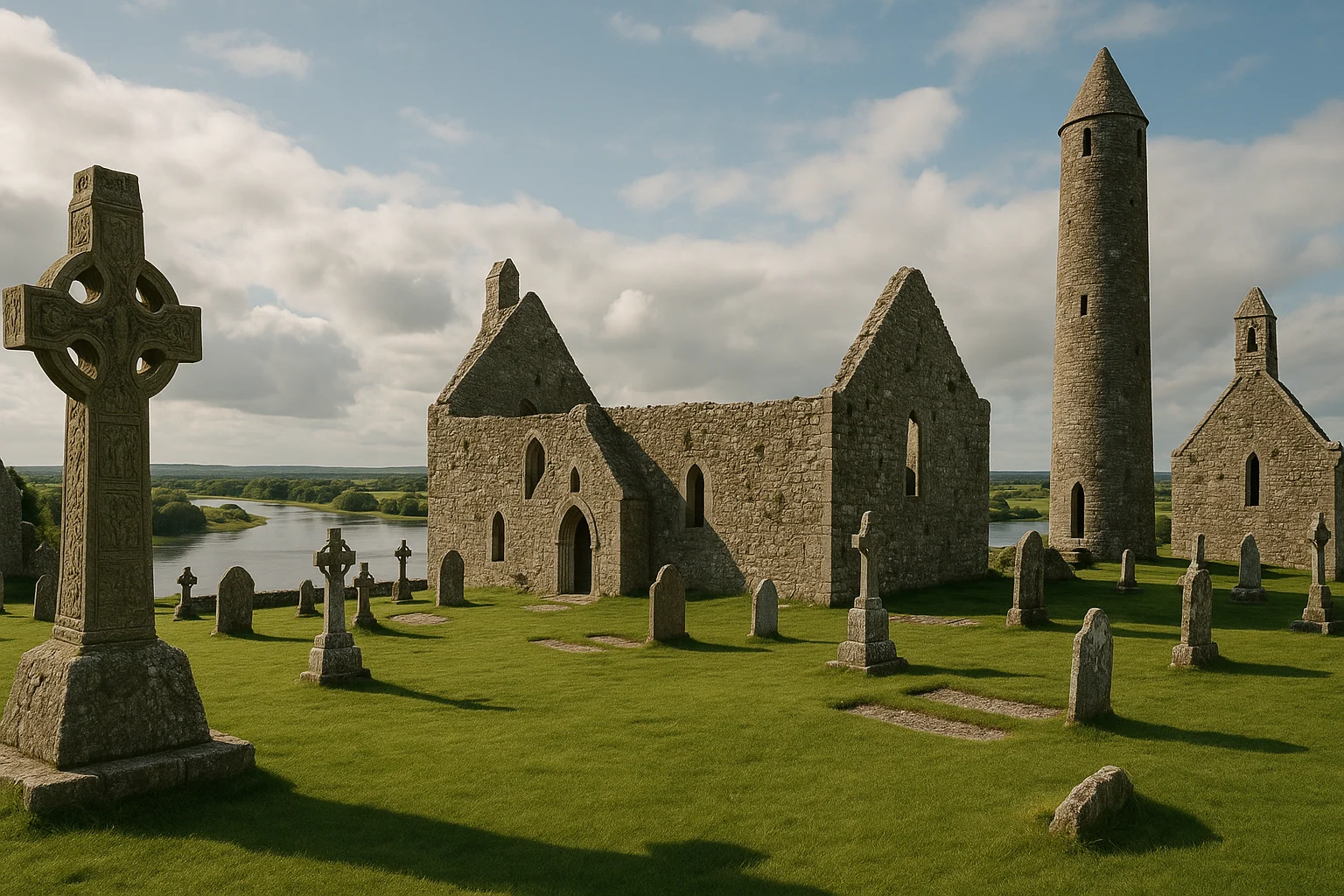
Clonmacnoise Travel Guide 2026: Monastic Ruins, High Crosses, and River Shannon Context
Early Medieval IrelandPlan a first visit to Clonmacnoise with practical timing, monastic-site context, and clear route adv...
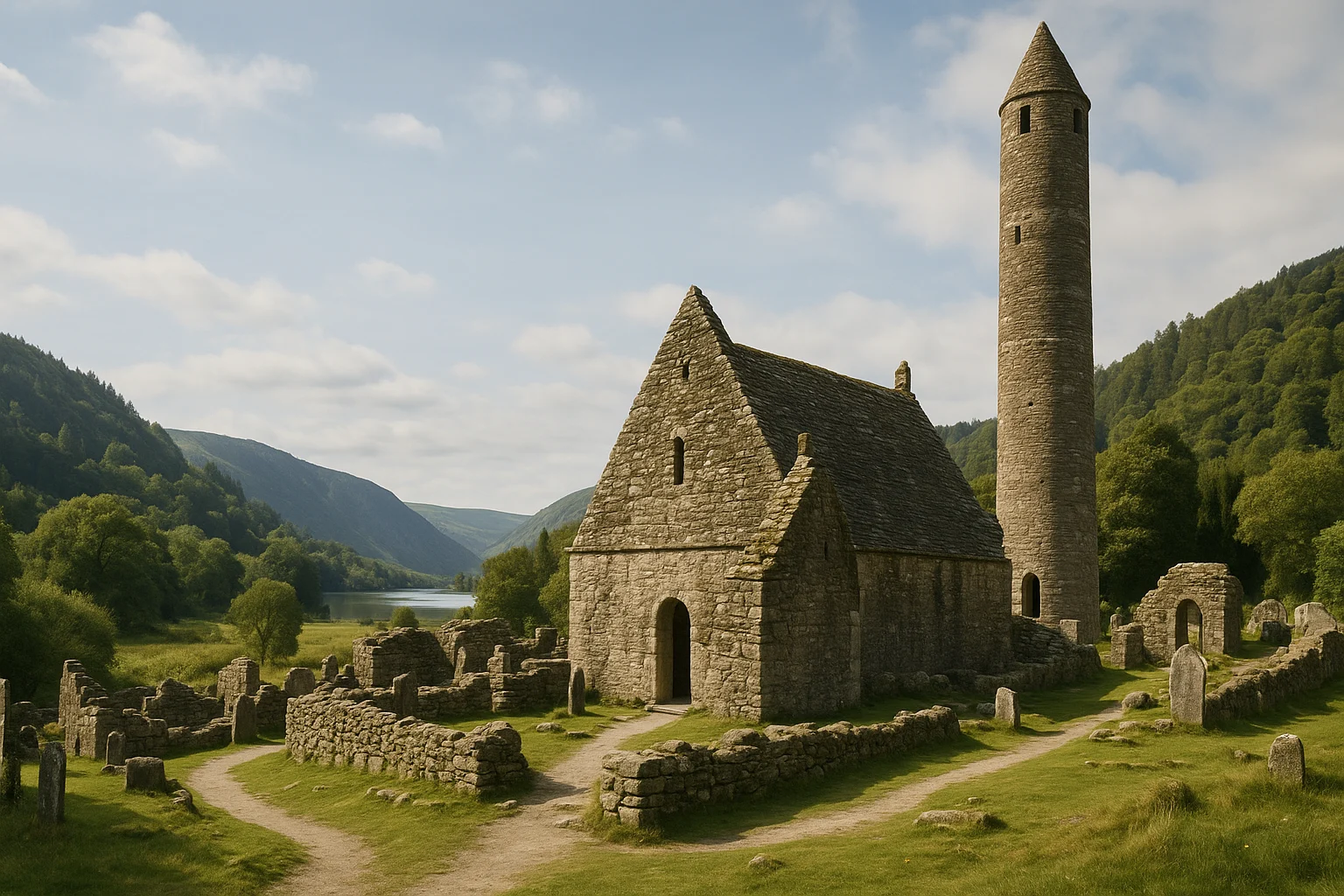
Glendalough Travel Guide 2026: Monastic Ruins, Lakes, and Wicklow Day-Trip Plan
Early Medieval IrelandPlan a clear first visit to Glendalough with route advice, monastic-site context, and practical timi...
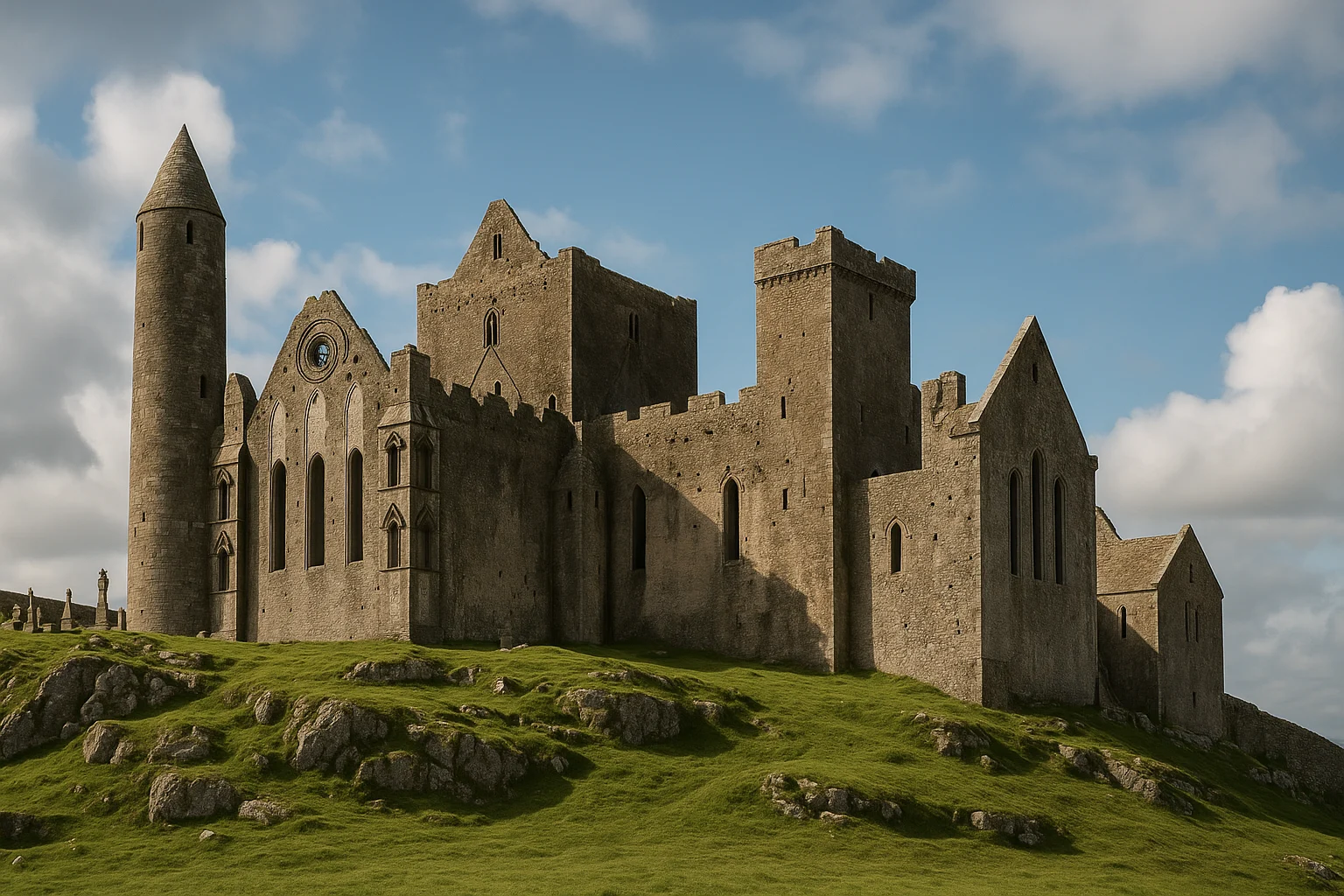
Rock of Cashel Travel Guide 2026: Cathedral Hill Timing, Access, and County Tipperary Plan
Medieval IrelandPlan your first visit to the Rock of Cashel with practical timing, hilltop route priorities, and eas...