Quick Info
Curated Experiences
Step Pyramid of Djoser, Memphis, and Dahshur Tour from Cairo
Private Saqqara Tour with Step Pyramid of Djoser
Cairo Day Trip to Saqqara and the Step Pyramid of Djoser
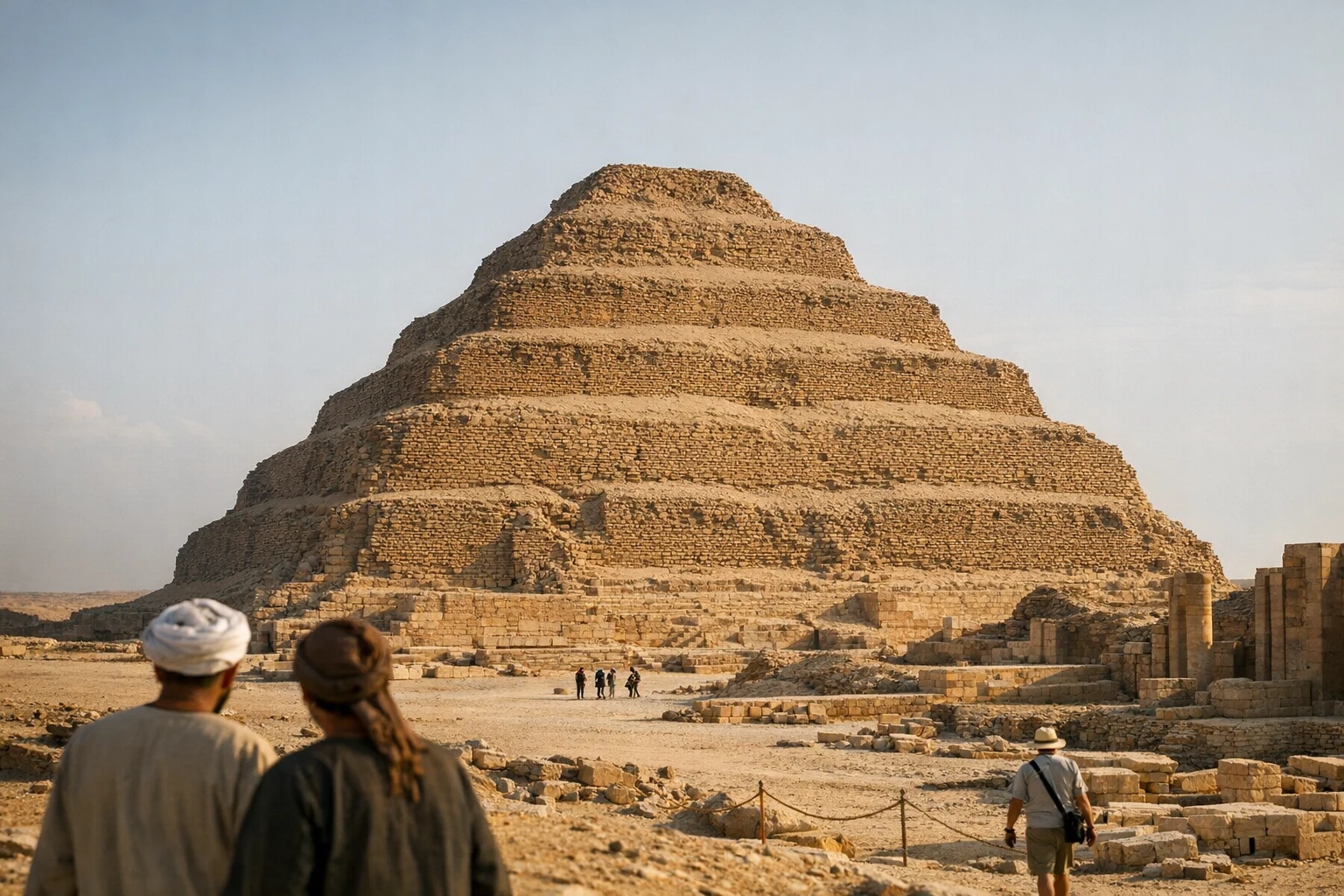
The Step Pyramid of Djoser in Egypt rises above the Saqqara plateau with the force of a beginning. South of Cairo, in the desert necropolis of ancient Memphis, this six-tiered monument marks one of the most important turning points in world architecture. At first glance, it can seem less polished than the later pyramids at Giza. It does not have their sleek geometry or smooth finished faces. But that is precisely what gives it such power. The Step Pyramid still shows an idea in motion. Its stacked levels make visible the transition from the low rectangular mastaba to the fully monumental pyramid, preserving the moment when Egyptian builders stretched burial architecture into a new dimension. To stand before it is to see not just an old monument, but the birth of a tradition.
For modern travelers, the Step Pyramid is compelling because it is both famous and strangely intimate. It is a world-historical monument, yet it sits within a larger sacred complex that rewards walking, looking, and thinking rather than simply taking a photograph and moving on. Built for King Djoser in the 3rd Dynasty and traditionally attributed to the architect Imhotep, the monument stands inside a huge ceremonial precinct of enclosure walls, courtyards, chapels, and underground chambers. It was designed not merely to cover a burial, but to stage the eternal continuation of royal power. That wider setting turns a visit into more than a stop at an ancient landmark. It becomes a way of understanding how Egyptians linked stone, kingship, ritual, and eternity in one of the earliest monumental landscapes ever created.
History
Before the Pyramid: Saqqara and the Mastaba Tradition
Before Djoser’s monument transformed the skyline, Saqqara was already the burial ground of Memphis, one of the earliest and most politically significant cities in ancient Egypt. In the Early Dynastic Period, elite burials here typically took the form of mastabas, rectangular superstructures built above burial shafts and underground chambers. These tombs established many of the key ideas that would remain central to Egyptian funerary architecture: the tomb as a permanent house for the dead, the importance of offering spaces, and the placement of burials in the western desert, where the setting sun symbolized passage into the afterlife.
Saqqara’s location mattered deeply. It stood on the edge of cultivation but remained tied to the capital, allowing the dead to remain symbolically connected to the center of royal power. The dry desert conditions also favored preservation and permanence. By the time Djoser came to the throne, Saqqara was already a prestigious necropolis. The Step Pyramid did not appear in an empty landscape. It emerged from a centuries-old burial tradition that was ready for dramatic expansion.
Djoser, Imhotep, and the Leap into Stone Monumentality
The Step Pyramid was built in the 27th century BCE for King Djoser, ruler of Egypt’s 3rd Dynasty. The monument is traditionally attributed to Imhotep, the king’s architect, priest, and advisor, whose later fame grew so great that he was remembered as a sage and semi-divine figure. Whether every aspect of the design can be assigned to one individual is impossible to prove, but the association survives for good reason. The complex represents a radical architectural breakthrough.
Evidence suggests that the monument began as a mastaba and was enlarged several times into the six-stepped form visible today. That sequence matters because it reveals the experimental nature of the project. Rather than executing a familiar type, Djoser’s builders were inventing something new and refining it as they went. The decision to use cut stone on such a scale was equally revolutionary. Stone had appeared in earlier contexts, but here it became the primary material of royal eternity. This shift changed Egyptian architecture permanently.
The Step Pyramid was only the center of a much larger funerary complex. Enclosed by a monumental wall and entered through a colonnaded passage, the precinct contained courts, shrines, and symbolic buildings that translated royal ritual into permanent architecture. The project was not just about burial. It was about preserving kingship beyond death through carefully ordered space.
The First Pyramid and the Future of Egyptian Royal Tombs
Djoser’s monument opened the path toward the pyramid age. Later kings would experiment with different forms and construction methods at sites such as Meidum and Dahshur before the smooth-sided pyramids of Giza reached their monumental peak. Yet the basic leap had already happened at Saqqara. The Step Pyramid proved that a royal tomb could be both a massive landscape statement and a theological machine, combining scale, symbolism, and durable material in one design.
Its influence extended beyond the visible form of the pyramid. The idea of a ruler’s tomb as the center of an organized ritual precinct, with processional movement, symbolic architecture, and carefully controlled access, became central to later funerary planning. In this sense, the Step Pyramid was not merely the first pyramid. It was the prototype of a whole architectural language of divine kingship. Later monuments became smoother and larger, but Djoser’s complex remained foundational.
Decline, Rediscovery, and Modern Preservation
Like all exposed monuments in the Egyptian desert, the Step Pyramid suffered from time, weather, seismic stress, and the reuse of ancient stone. Still, it never disappeared from view. Saqqara remained active as a necropolis in later periods, and the ancient Egyptians themselves continued to treat the area as a place of sacred memory. In the modern era, archaeological work revealed the full importance of the Step Pyramid complex, showing how its enclosure, underground chambers, and ceremonial spaces fit together into a coherent design.
Conservation has played a major role in the monument’s recent history. Structural restoration was necessary to stabilize parts of the pyramid and preserve access. These efforts have not been free from debate, but they have ensured that one of the earliest monumental stone structures on earth remains legible and accessible to visitors. Today, the Step Pyramid stands not just as a relic of Djoser’s reign, but as a monument continuously reinterpreted by archaeology, preservation, and public fascination. Its story is ancient, but it is not over.
Key Features
The Step Pyramid itself is the site’s defining feature, and in person it has a presence that photographs rarely capture. Its six receding levels create a strong upward rhythm that is almost architectural narration: the mastaba rising step by step into a new form. Later pyramids conceal their developmental logic beneath finished geometry, but Djoser’s monument shows its structure openly. That visual honesty makes it uniquely compelling. It feels less like the perfected end of a tradition and more like the dramatic beginning of one. The limestone shifts in tone with the light, from warm beige to pale gold, and its scale becomes clearer the longer you stand with it.
The surrounding enclosure is equally important. The Step Pyramid does not stand in isolation. It belongs to a vast ceremonial complex once defined by a great limestone wall. This enclosure created a sacred interior world set apart from the wider necropolis. Entering through the colonnaded passage still gives a strong sense of ritual movement. The columns, the narrowing approach, and the sudden opening into larger spaces suggest a carefully staged encounter with royal power. Even in ruin, the design retains its authority.
The ceremonial courts inside the complex reveal how closely architecture and kingship were linked. These spaces are often associated with the Heb-Sed festival, a royal jubilee meant to renew the ruler’s vigor and legitimacy. At Saqqara, those rituals were translated into permanent stone so they could continue forever for Djoser in the afterlife. Some buildings in the complex were less practical structures than symbolic ones, standing in for the institutions and sacred settings required by kingship. This makes the Step Pyramid complex intellectually rich as well as visually impressive. It is not just a tomb precinct. It is a material theory of divine rulership.
Beneath the visible monument lies an extensive subterranean network of shafts, corridors, and chambers. Much of this is not fully accessible to casual visitors, but it is crucial to the meaning of the site. The pyramid is only the upper, public face of a larger funerary system. The hidden world below ground held the burial chamber, storage areas, and symbolic elements that supported the king’s transformation in death. This contrast between open ceremonial space above and concealed funerary space below gives the site much of its depth.
The wider Saqqara setting adds another dimension. Nearby mastaba tombs, museums, and later pyramids provide context that enriches the visit. Reliefs in the tombs of nobles show scenes of agriculture, craft production, and ritual, revealing the human world that surrounded royal monument building. The Step Pyramid may be the headline, but the surrounding necropolis turns it into a complete cultural experience rather than a single object of admiration.
Getting There
The Step Pyramid of Djoser is located within the Saqqara archaeological zone, roughly 30 to 35 kilometers south of central Cairo. For most travelers, Cairo is the obvious base, whether you are staying downtown, in Giza, or near the airport. The easiest way to reach the site is by taxi, rideshare, or private driver. One-way fares from Cairo generally range from around 350 to 700 EGP, depending on traffic, pickup point, and vehicle type. If you arrange for a driver to wait and continue with you to Memphis or Dahshur, a half-day or full-day hire usually costs between 1,200 and 2,500 EGP.
Organized day tours are common and often practical. Many combine the Step Pyramid with nearby sites such as Memphis and Dahshur, and some add Giza for a larger pyramid-themed itinerary. Group tours can be relatively affordable, while private tours offer more control over timing and allow you to spend longer in the wider Saqqara necropolis. Because the site has so much historical depth, a guide can add real value beyond transport alone.
Public transportation is possible only in an improvised way and is generally less convenient than it appears on a map. If you travel independently, make sure you have a clear return plan before entering the complex. Bring cash for admission, drinks, tips, and small purchases, as card payment may be inconsistent. Wear sturdy shoes and carry water, since even a focused visit involves more walking than many first-time visitors expect.
When to Visit
The best time to visit the Step Pyramid of Djoser is from October through April, when Egypt’s cooler season makes the open Saqqara plateau much more comfortable. Winter is especially pleasant, with clear skies and moderate temperatures that allow for a longer, more thoughtful visit. In good weather, the site becomes easier to appreciate not just visually but spatially. You can walk the enclosure, explore nearby tombs, and stand back to understand the monument’s relationship to the wider necropolis without battling intense heat.
Morning is the ideal time to arrive in any season. Early light gives the limestone stronger texture, and the site is often quieter before larger tour groups appear. The Step Pyramid benefits from this softer atmosphere. It is a monument that repays close attention, and early hours make that easier. If you are pairing Saqqara with Memphis or Dahshur, starting here usually creates the best rhythm for the day.
Summer visits remain possible, but from June through August the heat can be severe. Shade is limited, and the reflected brightness from sand and limestone adds to fatigue. If you go in summer, start as early as possible, bring more water than you think you need, and wear a hat with strong sun protection. Spring and autumn often provide the best balance of manageable temperatures and lighter crowds. Wind and dust can occur at any time, so sunglasses and a light scarf can be useful. However you plan your visit, the Step Pyramid is best experienced slowly, with enough time to appreciate that you are standing at the beginning of the pyramid age.
| Quick Facts | Details |
|---|---|
| Location | Saqqara, south of Cairo, Giza Governorate, Egypt |
| Type | Step pyramid and royal funerary complex |
| Built For | King Djoser |
| Architect Traditionally Credited | Imhotep |
| Date | c. 2667-2648 BCE |
| Historical Significance | Earliest monumental stone pyramid in Egypt |
| Archaeological Setting | Part of the wider Saqqara necropolis of ancient Memphis |
| Recommended Visit Length | 2 to 3 hours, longer with nearby tombs |
| Best Time to Visit | October to April, ideally early morning |
| Common Day Trip Pairings | Memphis, Dahshur, and Giza |
Frequently Asked Questions
What is the Step Pyramid of Djoser famous for?
The Step Pyramid of Djoser is famous as the earliest monumental stone pyramid in Egypt and one of the most important turning points in architectural history.
Where is the Step Pyramid of Djoser located?
The pyramid stands at Saqqara in Egypt, south of Cairo, within the necropolis of ancient Memphis.
Who designed the Step Pyramid of Djoser?
It is traditionally attributed to Imhotep, the architect, priest, and advisor who served King Djoser during the 3rd Dynasty.
Can you visit the Step Pyramid of Djoser on a day trip from Cairo?
Yes, it is one of the most popular day trips from Cairo and is often combined with Memphis and Dahshur.
How long should you spend at the Step Pyramid of Djoser?
Most visitors should plan for at least two to three hours, with extra time if they want to explore nearby tombs in the wider Saqqara necropolis.
Is the Step Pyramid of Djoser worth visiting after Giza?
Absolutely. Giza shows the mature pyramid form, while the Step Pyramid reveals where pyramid building began and how Egyptian stone architecture first evolved.
Nearby Ancient Sites
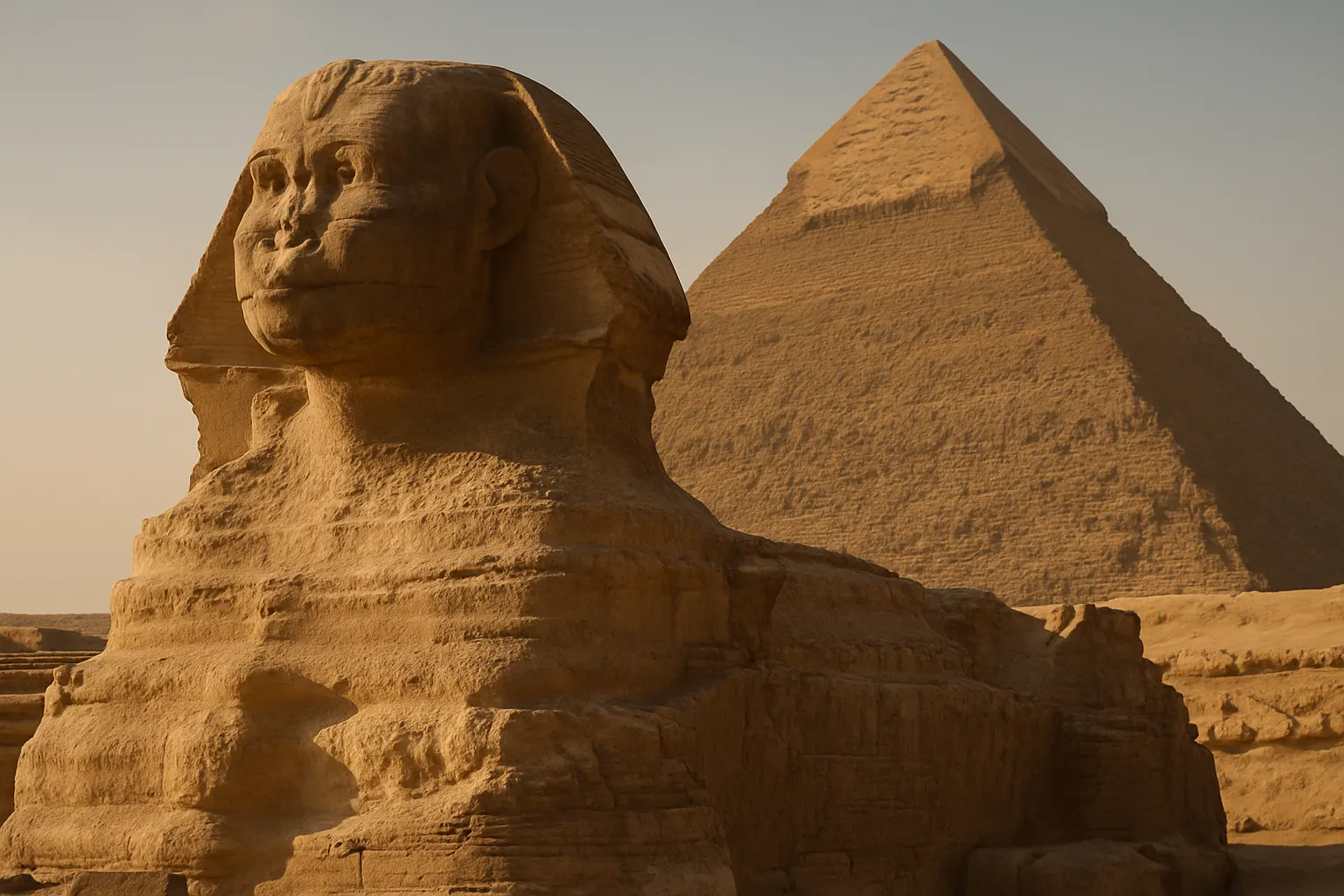
Great Sphinx of Giza Egypt Travel Guide 2026: Guardian of the Pyramids
Ancient EgyptianVisit the Great Sphinx, Egypt's enigmatic limestone guardian. Our guide covers the Sphinx's history,...
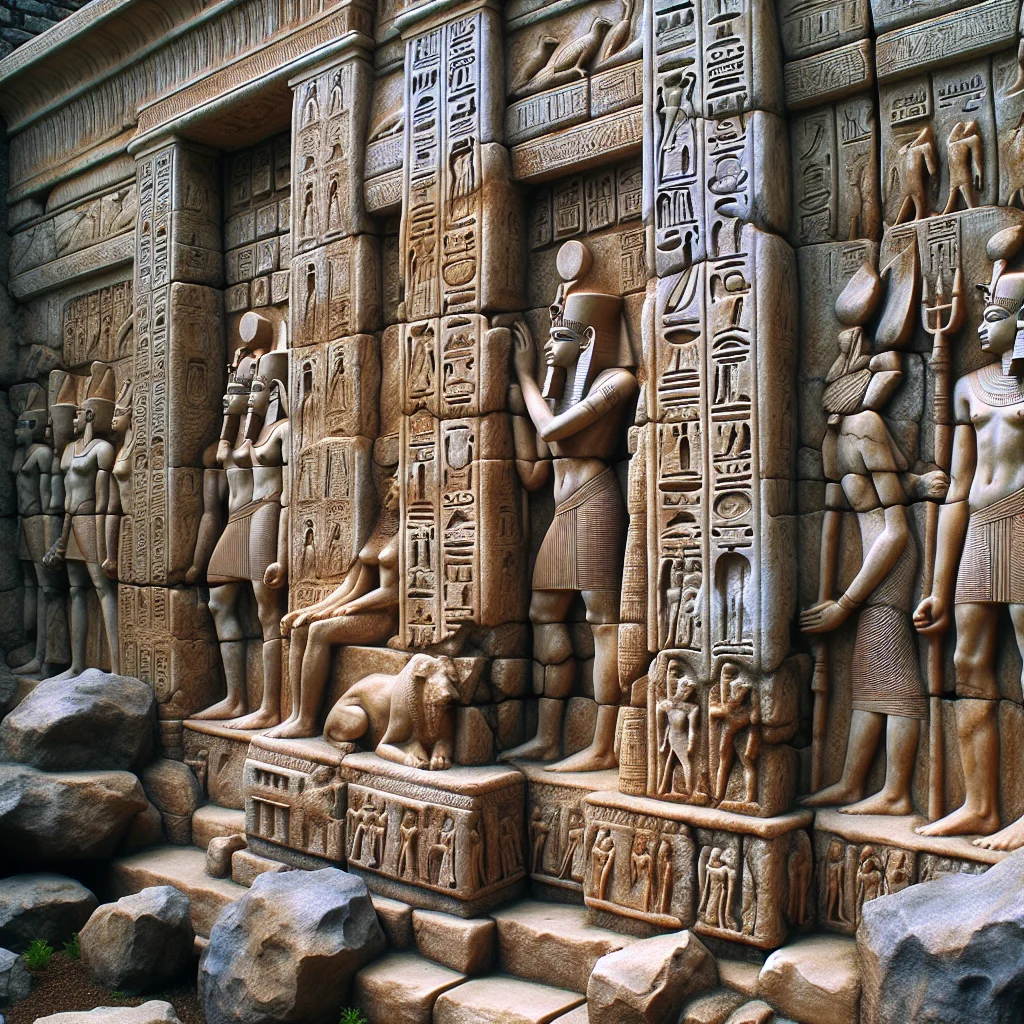
Abydos Temple Egypt Guide 2026: Temple of Seti I & King List
New Kingdom-PtolemaicAbydos Temple near Luxor: magnificent Temple of Seti I with war reliefs, ancient king list, and vibr...
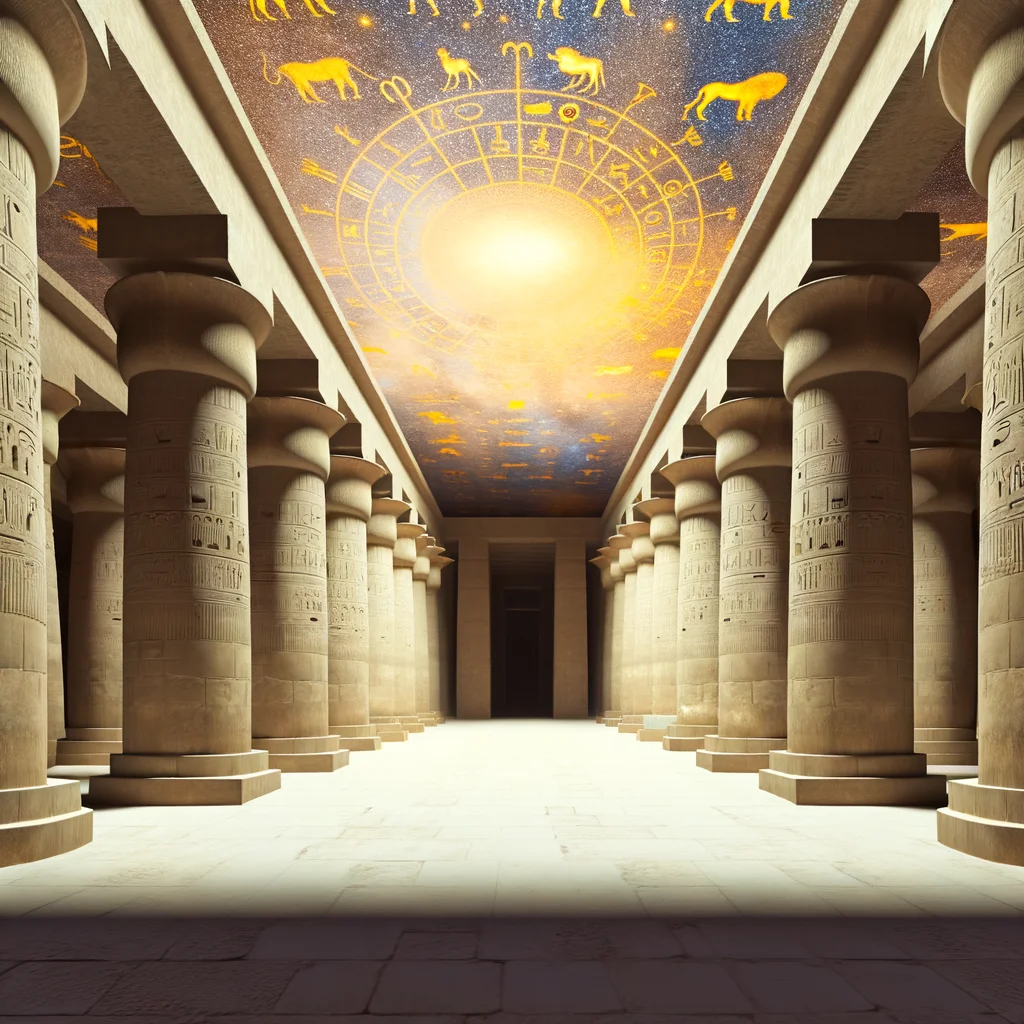
Dendera Temple Complex Egypt Guide 2026: Temple of Hathor & Zodiac Ceiling
Ptolemaic-RomanExplore Dendera's magnificent Temple of Hathor near Luxor. Star-mapped zodiac ceiling, Ptolemaic arc...
Edfu Temple Egypt Guide 2026: Temple of Horus & Dramatic Battle Reliefs
PtolemaicEdfu Temple near Aswan: Temple of Horus with stunning battle scenes, ritual texts, and the best-pres...