Quick Info
Curated Experiences
Stratonikeia Ancient City Tour from Karpuzlu
Caria Hellenistic Cities Regional Tour
Southwest Anatolia Remote Sites Tour
Quick Facts
- Location: Valley near Karpuzlu in southwestern Caria
- Best for: Theater architecture, civic planning, off-the-beaten-path experience
- When to visit: April-June, September-October
- Entry fee: Around 80 Turkish Lira
- Crowds: Very low - rarely visited
- What to see: Theater, baths, agora, civic buildings, stadium remnants
A Carian Success Story
Stratonikeia was founded by the Seleucid king Antiochus II in the 3rd century BCE and named after his wife Stratonice. The city was built as a colonial project—an attempt to establish Seleucid power in the Carian region. The strategy worked. Stratonikeia prospered, becoming a significant city with substantial civic infrastructure and commercial activity.
The city sat on the trade routes connecting the Aegean coast to interior Anatolia. Goods moved through Stratonikeia constantly. The prosperity derived from this position supported civic building projects that demonstrated the city’s wealth and integration into the broader Hellenistic world.
The Theater and Civic Ambition
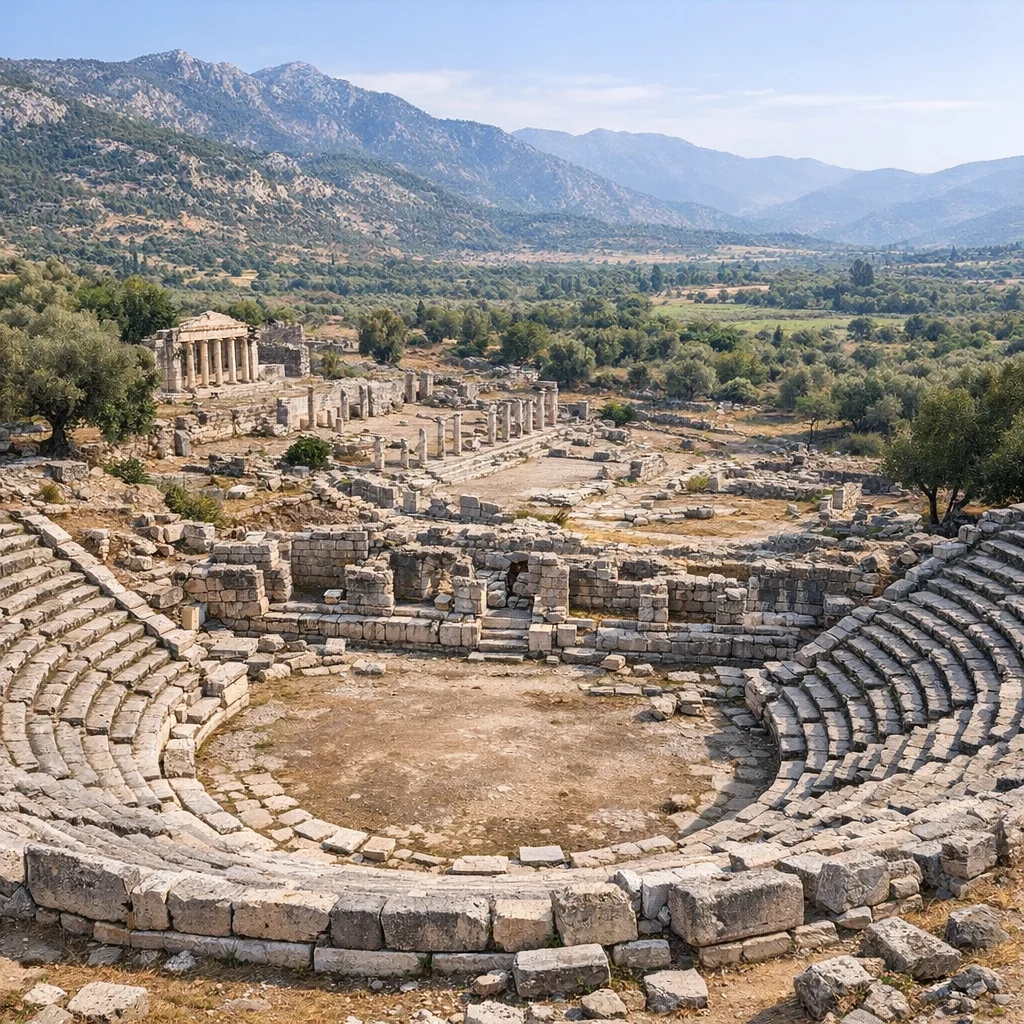
Stratonikeia’s most impressive monument is its theater, built into a hillside with capacity for approximately 8,000. The theater shows the architectural sophistication of Hellenistic design: precise geometry, excellent sightlines, elaborate stage building with multiple tiers of columns.
The theater was not simply an entertainment venue but a civic institution. The assembly gathered here for political decisions. Theatrical productions demonstrated the city’s cultural sophistication. The theater’s size and quality announced to the broader Mediterranean world that Stratonikeia was a city of consequence.
The stage building (scaena) survives in reasonable condition, with its tiered columns and sculptural decoration partially preserved. You can stand on the stage and imagine actors performing for thousands, political decisions being made, civic identity being affirmed.
Baths and Public Infrastructure
The thermal complex demonstrates Stratonikeia’s prosperity and investment in public well-being. The baths feature hypocaust heating, multiple chambers for different temperatures, and decorative veneering with marble. The scale and quality suggest that bathing facilities were valued as expressions of civic pride.
The infrastructure required to maintain such baths—aqueducts bringing water from distant sources, heating systems, maintenance—represents substantial community investment. Only prosperous cities maintained such facilities.
The Agora and Civic Center
The agora served as marketplace and civic gathering space. It was surrounded by colonnaded porticos and administrative buildings. The organization of the agora reveals how civic space was designed: markets for commerce, gathering areas for political assembly, administrative structures for governance.
The agora is not as well-preserved as some sites, but foundations allow you to read the original organization. The site plan shows a city designed with civic planning as a priority—not haphazard growth but deliberate urban design.
Stadium and Athletic Tradition
A stadium provided space for athletic competitions and training. Athletics were central to Hellenistic civic life—competitions attracted visitors, demonstrated physical culture, and served as venues for civic display. The presence of a stadium indicates that Stratonikeia participated in broader Mediterranean athletic culture.
Decline and Abandonment
Stratonikeia declined as trade routes shifted and the Roman empire consolidated power. The basis for the city’s prosperity—its position on important trade networks—became less significant as Rome reorganized commercial patterns. By the medieval period, the city had been largely abandoned. The inland location made defense difficult, and the economic justification for settlement declined.
The result is that Stratonikeia survives largely unexploited. Modern destruction has been minimal. The ruins remain much as they were when abandoned—a relatively complete picture of a Hellenistic and Roman city.
Visiting Stratonikeia
Access: Stratonikeia is reached from Karpuzlu, a town on the road between Muğla and Milas. The site is about a 20-minute drive from Karpuzlu on rough roads.
Best time: April-June or September-October.
Duration: 2-3 hours to explore the main monuments.
Physical demands: Moderate—the site is on a hillside with uneven terrain.
Crowds: Very low—you may be alone at the site.
Facilities: None at the site. Bring water and supplies.
Guides: Local guides from Karpuzlu can provide context but are not always available.
Connecting to Other Carian Sites
Stratonikeia should be experienced with other Carian cities like Magnesia and Euromos to understand regional diversity. All three were important Carian cities with significant civic infrastructure, but each developed distinct character based on geography and local circumstances.
What Stratonikeia Teaches
Stratonikelia demonstrates how colonial cities could succeed by integrating into broader economic networks and establishing themselves as civic centers. Founded as a royal project, it succeeded through investment in infrastructure, cultural institutions, and civic life.
The abandonment of Stratonikeia shows how even prosperous cities depend on broader circumstances—trade networks, empire structures, security conditions—that can shift beyond a city’s control. When those conditions changed, Stratonikeia, despite its quality infrastructure, could not sustain settlement.
Walking through the theater and agora, you encounter the material evidence of Hellenistic civic ambition—the belief that cities should invest in shared space, public facilities, and cultural institutions as expressions of communal identity.
The Seleucid Colonial Strategy
Stratonikeia was founded by Antiochus II as part of an expansionist Seleucid strategy in the 3rd century BCE. The Seleucid Empire, founded in the aftermath of Alexander the Great’s conquest, stretched across the eastern Mediterranean and into Central Asia. Maintaining control over such vast territories required establishing new cities that could serve as administrative centers, military garrisons, and economic hubs.
The naming of Stratonikeia after Antiochus II’s wife suggests personal investment in the project and highlights the political importance of the city. Royal cities often received preferential treatment—investment in infrastructure, tax advantages, and administrative authority. Stratonikeia was built as a statement of Seleucid power and permanence in the Carian region.
The strategy worked, at least initially. Stratonikeia became prosperous, suggesting that Antiochus II’s vision was sound. The city sat on important trade routes, and its civic infrastructure attracted merchants, craftspeople, and administrators. For several centuries, Stratonikeia was a significant urban center, though it never rivaled the prominence of the region’s oldest cities or the emerging power of Rhodes and other Aegean maritime states.
Civic Institutions and Daily Life
The scale of Stratonikeia’s civic infrastructure reflects a sophisticated understanding of urban life. The theater was not merely entertainment—it was central to political decision-making and religious ceremony. The agora served commerce and governance. The baths were not luxury but expected amenity. Together, these facilities created an environment where civic identity was reinforced through shared space and collective experience.
Scholars studying Stratonikeia have excavated significant amounts of domestic debris—pottery, coins, inscriptions—that reveal details of daily life. Families lived in houses arranged along streets. Shops opened onto the agora. Workshops produced goods for local consumption and export. The material record shows a city where ordinary life went on amid grand public monuments, where families navigated shared space and participated in collective institutions.
Inscriptions found at the site record individual lives: a widow dedicating a statue, a merchant recording a transaction, a civic official announcing decisions. These inscriptions ground the abstract civic ideals in specific human experience. They remind us that cities are not just physical structures but communities of individuals pursuing livelihoods, family relationships, and social standing.
The Decline of Interior Cities
Stratonikeia’s abandonment reflects broader patterns in Mediterranean history. When trade routes shifted, when economic systems changed, when political authority reorganized, cities that depended on specific geographic advantages could find themselves marginalized. Stratonikeia’s inland location, which once seemed strategically valuable, became a liability as maritime trade grew more important and piracy threatened interior supply lines.
The shift from Hellenistic to Roman authority contributed to this process. Romans developed their own system of favored cities, often preferring established centers or strategically important coastal locations. While Stratonikeia was incorporated into the Roman provincial system, it never achieved the prominence it had enjoyed in the Hellenistic period. Investment declined, population dwindled, and eventually the site was abandoned.
Yet Stratonikelia’s abandonment is also its gift to archaeologists. Because the city was no longer occupied and rebuilt, its remains lie relatively undisturbed. Unlike cities that were continuously inhabited and reconstructed multiple times, Stratonikeia preserves a more complete picture of Hellenistic urban life. The theater, agora, and civic buildings offer material evidence of how ancient people organized shared space and civic life.
The Theatre as Historical Record
The theater at Stratonikeia is particularly valuable for understanding ancient civic life. Unlike theaters built purely for entertainment, this theater was explicitly designed to accommodate political assembly. The seating capacity of 8,000 suggests a city population of perhaps 20,000-30,000 at peak—substantial for an inland Carian city. The infrastructure for dramatic performances coexisted with infrastructure for political gatherings, demonstrating how entertainment and governance were intertwined in Hellenistic society.
The theater’s architectural sophistication reflects professional design and substantial resources. The stage building originally featured elaborate architectural framing for scenic effects. The seating areas were engineered for optimal acoustics and sightlines. These practical considerations indicate that theater was taken seriously as a civic institution deserving investment and expertise.
Reconstructing life at Stratonikeia means imagining citizens gathering in this theater for political deliberation, for festivals and dramatic competitions, for religious ceremonies. The physical space survived 2,000 years of abandonment, decay, and weathering. Standing in the theater today, visitors can experience the spatial relationships that shaped civic life in antiquity.
Nearby Ancient Sites
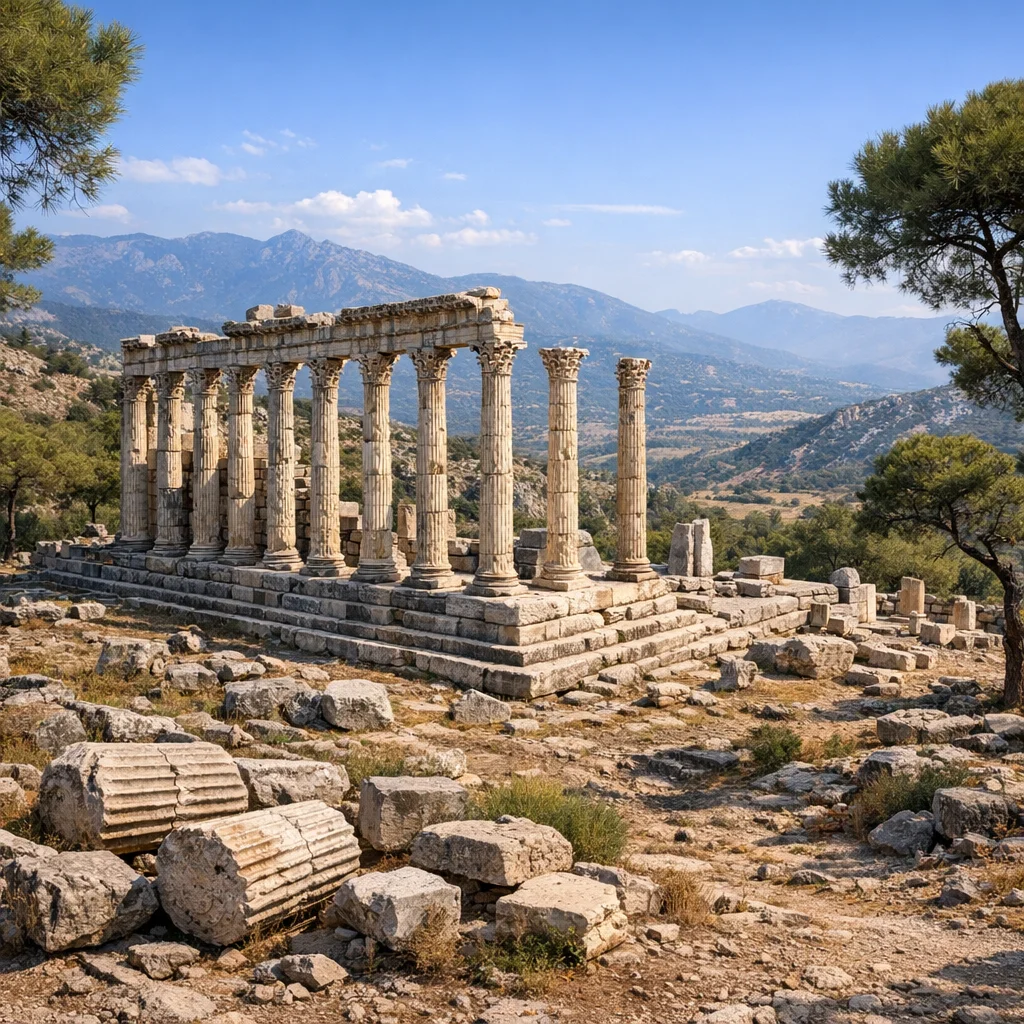
Magnesia Turkey Travel Guide: Mountain Sanctuary & Hellenistic Temple
Greek, Carian, HellenisticExplore Magnesia (Magnesia ad Maeandrum), a remote Carian city with a stunning Hellenistic temple to...
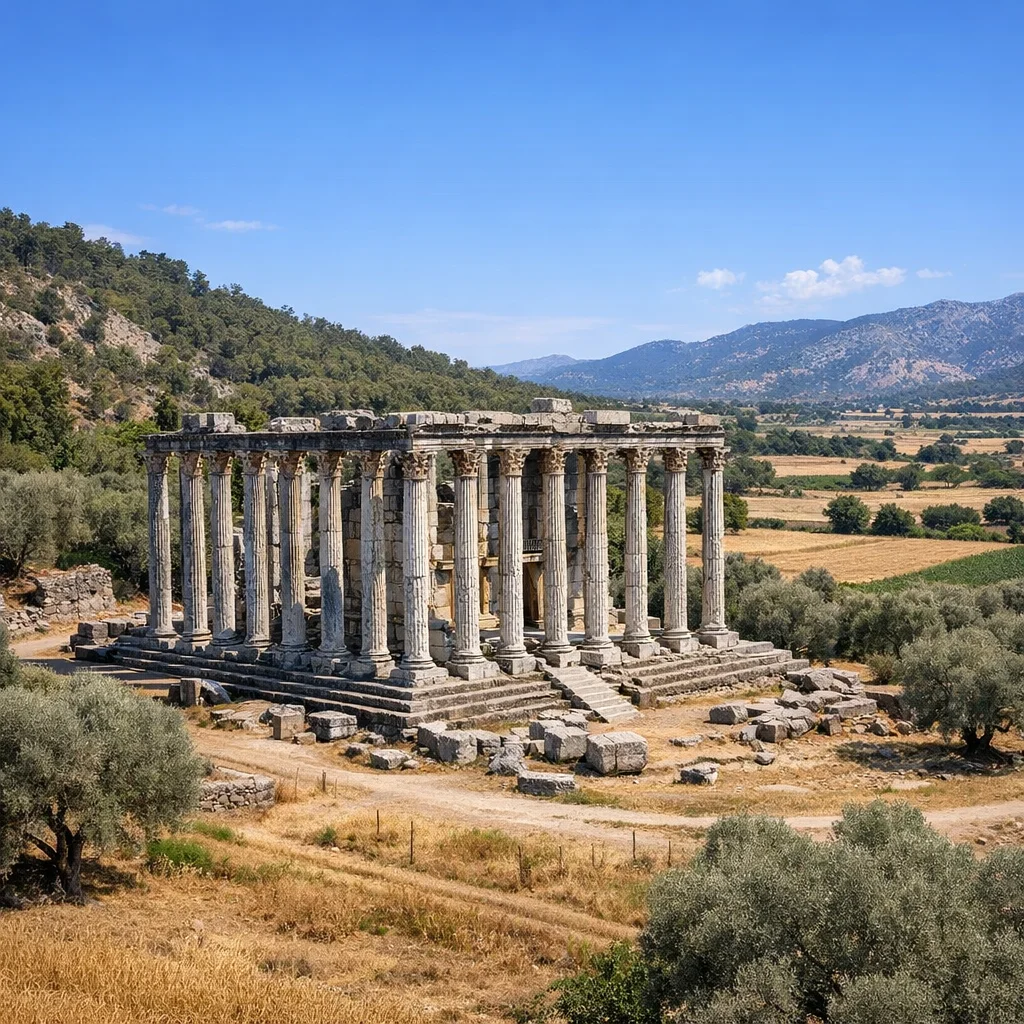
Euromos Turkey Travel Guide: Marble Temple in the Wilderness
Carian, Hellenistic, RomanDiscover Euromos, a remote Carian city with one of Turkey's finest standing marble temples in the mi...
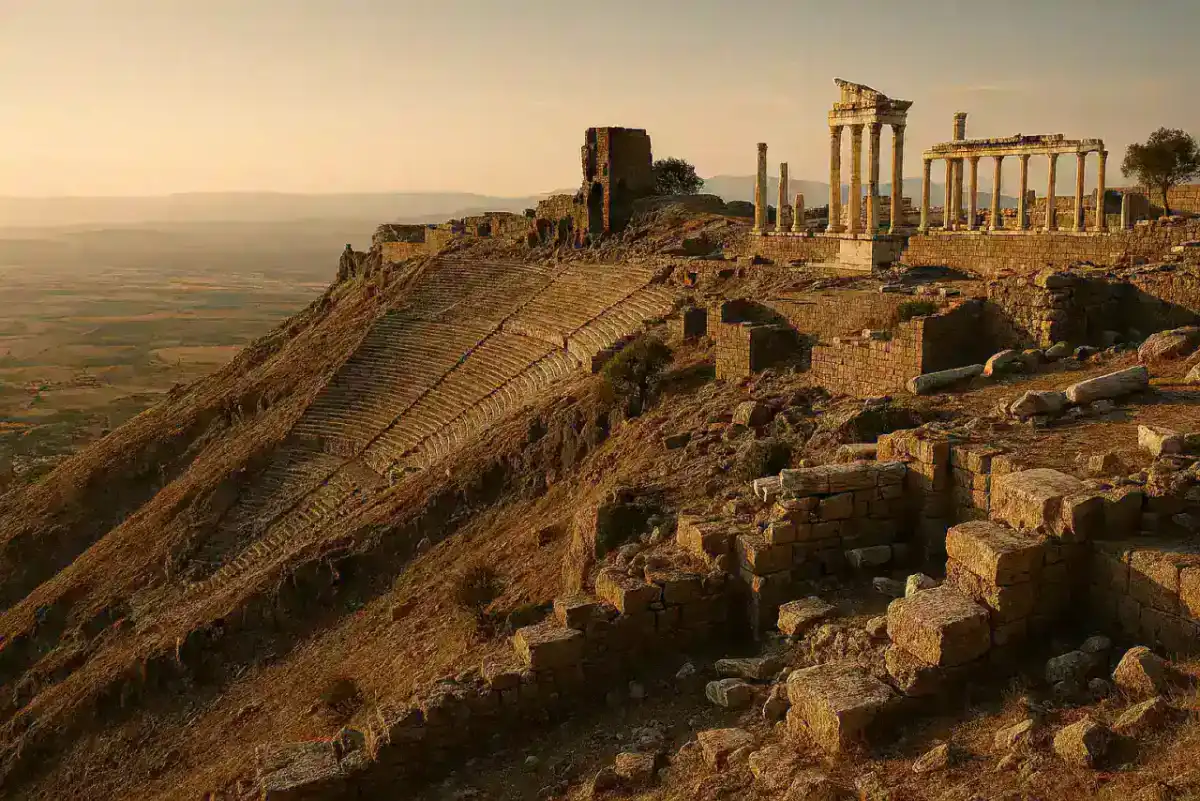
Pergamon Turkey Travel Guide: Ancient Acropolis & Library
Explore Pergamon, one of Turkey's greatest ancient cities. A hilltop acropolis with temples, theater...