Quick Info
Curated Experiences
Guided Sukhothai Historical Park Cycling Tour
Sukhothai and Si Satchanalai Day Trip from Chiang Mai
Cultural Experience: Sukhothai Temples and Local Village
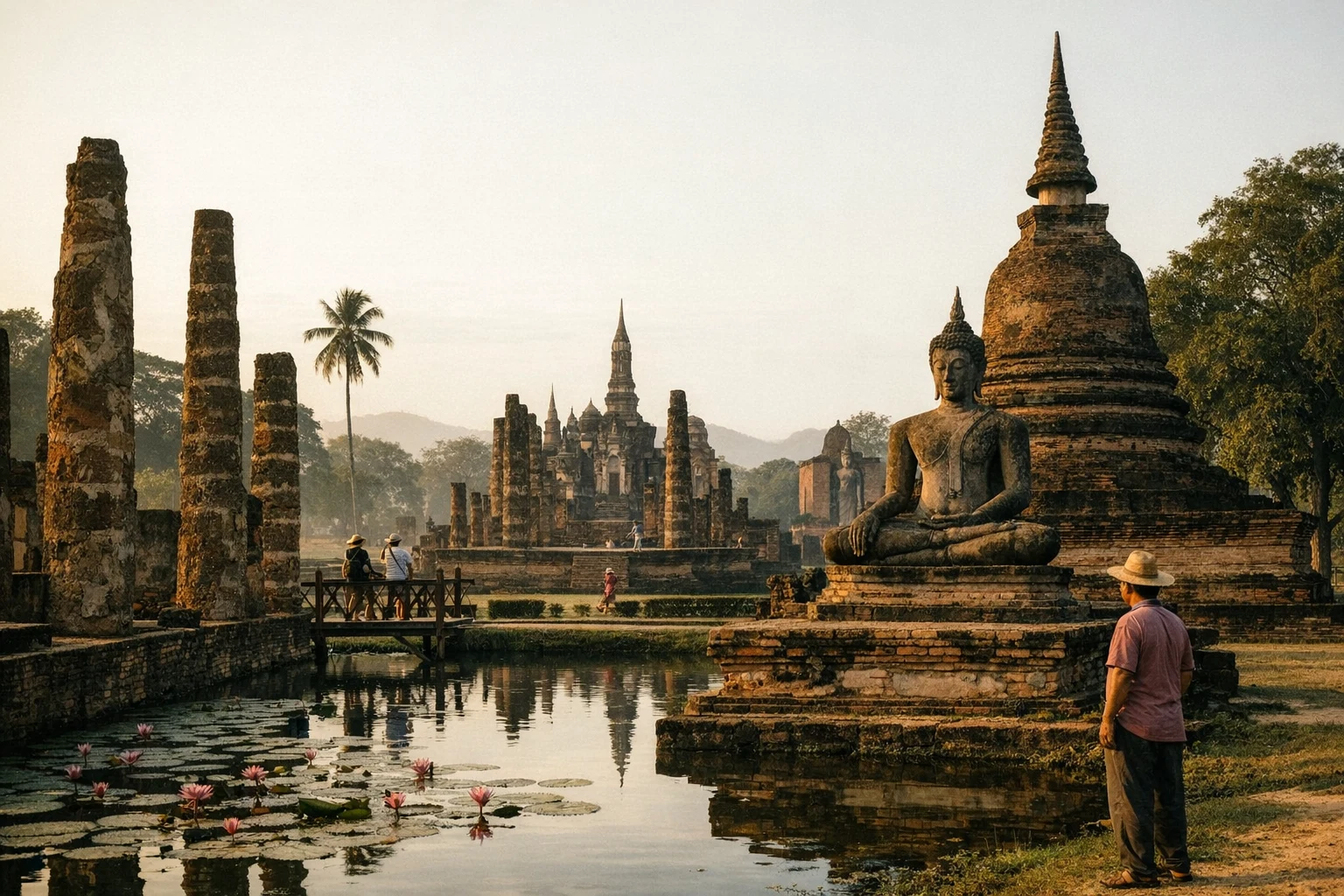
Set amid the tranquil landscapes of northern Thailand, Sukhothai is a name etched deeply into the heart of Thai history. Revered as the cradle of Thai civilization, this ancient city in Sukhothai Province stands as a testament to the era when independence, art, religion, and politics coalesced in an unprecedented flowering of Thai culture. Sukhothai, meaning “Dawn of Happiness,” is more than just a collection of elegant ruins; it is the site where linguistic, architectural, and spiritual traditions were first established and would go on to shape the trajectory of the Thai nation. Arriving in Sukhothai, visitors are greeted by the timeless silhouettes of lotus-bud chedis and serene Buddha figures, all set against a backdrop of shimmering lakes, lotus ponds, and tranquil rice fields. Early morning mists drift quietly between crumbling towers, evoking a sense of profound antiquity and sacredness as the rising sun bathes the old stones in golden hues.
Walking the ancient brick avenues of Sukhothai Historical Park, one can almost hear the ghostly rhythms of a city that sparked the golden age of Thai culture. The site, now a UNESCO World Heritage Site, extends over 70 square kilometers and is dotted with more than 190 historical ruins, offering an awe-inspiring field of exploration for travelers, historians, artists, and spiritual seekers alike. The fusion of tranquil natural beauty with meticulously crafted monuments creates an atmosphere uniquely conducive to reflection and wonder. It is here that the modern Thai alphabet was first conceived, Theravada Buddhism took root as the state religion, and the greatest kings of Siam left an indelible mark.
For those seeking an immersive encounter with the bedrock of Thai identity, Sukhothai is not merely a destination—it is a journey through time, a place where the echoes of ancient wisdom and artistry continue to resonate. Easy to reach by bus, train, or plane, this evocative site offers not only splendid ruins and sacred spaces but also connections to local villages and traditional ways of life that have remarkably endured. Whether you arrive in the hush of dawn or linger until lanterns light up the night, Sukhothai’s serenity and grandeur offer memories to last a lifetime.
History
The Rise of Sukhothai: Founding and the Golden Age
Before Sukhothai rose to prominence, the region that would become the heart of the Thai nation was a patchwork of Mon and Khmer settlements. By the early 13th century, the once-mighty Khmer Empire’s hold in the area was beginning to wane, and local chieftains began to assert their independence. In 1238 CE, two such leaders, Khun Bang Klang Hao and Khun Pha Muang, overthrew the Khmer governor at Sukhothai and declared their own sovereignty. Thus began the Sukhothai Kingdom, regarded as the first truly independent Thai state.
Sukhothai’s true golden age was shaped by King Ramkhamhaeng the Great (reigned 1279–1298 CE), the most illustrious ruler of the kingdom. Renowned as a wise and just monarch, Ramkhamhaeng expanded his realm across much of the northern peninsula, established diplomatic and trade ties stretching to China and Sri Lanka, and introduced Theravada Buddhism as the state religion. He is credited with creating the Thai writing system, on which today’s Thai script is still based—a revolutionary advance that helped unify administration, religion, and culture.
The city flourished as a center of Buddhist learning, art, and architecture. Monks and scholars from across Asia visited, and Sukhothai’s codification of religious teachings would form the backbone of Thai spiritual life for centuries. Royal patronage fostered the creation of majestic temples, serene Buddha images, and graceful chedis that blended indigenous Thai, Khmer, and Sinhalese influences into a unique architectural style.
Decline and Transition
Over time, however, the fortunes of Sukhothai began to change. Subsequent kings, while still devoted to religion and the arts, lacked the dynamism of Ramkhamhaeng, and regional rivalries grew fiercer. By the mid-14th century, the rise of the Ayutthaya Kingdom to the south presented a formidable challenger. Through political alliances, intermarriage, and eventual subjugation, Sukhothai came under Ayutthaya’s influence around 1378 CE, marking the end of its independence.
Despite its political decline, Sukhothai continued to serve as an important religious and cultural center for several centuries. Its temples were maintained and revered, while Ayutthayan kings drew inspiration from the Sukhothai legacy and incorporated its models of governance, religious institutions, and artistic expression into the broader Thai state.
Rediscovery and Preservation
By the 18th and 19th centuries, Sukhothai was largely abandoned and reclaimed by forests, its old brick monuments inhabited only by monks and villagers. Western explorers and local scholars rediscovered the remnants of the ancient capital in the late 19th century, and archaeological attention throughout the 20th century led to sustained efforts at restoration and protection. Thanks to these modern interventions and UNESCO’s recognition in 1991, Sukhothai has survived as an exceptionally preserved site, offering visitors a vivid glimpse into the birth of a nation. Today, Sukhothai stands as a symbol of national pride and the enduring legacy of one of Southeast Asia’s formative civilizations.
Key Features
Exploring Sukhothai is akin to wandering through an open-air museum, where every turn reveals another chapter in the story of early Thai civilization. The focal point for visitors is Sukhothai Historical Park, which includes the remains of the ancient walled city and a surrounding outlying area filled with stunning temples, gates, reservoirs, and moats.
At the heart of the park lies Wat Mahathat, Sukhothai’s spiritual and ceremonial nexus. This sprawling temple complex, with its central lotus-bud chedi, is the finest example of Sukhothai religious architecture. Flanked by graceful standing Buddha images and ringed with dozens of satellite chedis, Wat Mahathat overwhelms with its scale and artistry. Visitors can trace the evolution of design from the Khmer-influenced base to delicate Sukhothai stucco ornamentation and serene faces of the principal Buddha images.
Nearby, the waterside pavilions and laterite columns of Wat Sa Si present one of the most photogenic vistas in the park, particularly at sunset when the light ripples off the lotus-strewn pond. The statue of the walking Buddha here not only illustrates a profound understanding of artistic anatomy but also encapsulates the Sukhothai style’s emphasis on grace, spiritual detachment, and inner peace—a major departure from the more formal, static images of earlier Khmer art.
Another unmissable highlight is Wat Si Chum, famed for its colossal seated Buddha known as Phra Achana. The massive white figure gazes serenely out from a narrow slit in the chapel, the subject of countless legends. Locals will point to whispers about secret passageways within the monument once used by kings to deliver oracles, adding a layer of enigmatic reverence to the already awe-inspiring structure. The site’s standing columns and chedis, some covered in ancient stucco and adorned with celestial figures, further underscore Sukhothai’s artistic achievements.
Many of Sukhothai’s monuments are set among verdant groves and tranquil pools. Stone bridges crisscross the complex, seasoning the ruins with harmonies of water, lotus blooms, and bird song. Slightly farther afield, Wat Si Sawai, with its trio of Khmer-style prangs, reflects the era of overlap between Hindu and Buddhist ritual, while the remains of the old city gates and sturdy walls evoke the grandeur of a once-great metropolis adapting to both war and spiritual devotion.
Sukhothai’s innovative infrastructure also merits attention. The complex system of ponds, canals, and moats—known locally as “traphang”—demonstrates not just aesthetic refinement but advanced hydraulic engineering that sustained city life, ensured agricultural prosperity, and provided for spiritual purification rituals. The seamless integration of natural and man-made elements remains one of Sukhothai’s most defining characteristics.
Beyond the central park, the outer zones—called North, West, and East—hide lesser-known treasures. Wat Phra Phai Luang dates to the city’s original Mon-Khmer settlement, offering a fascinating glimpse into the religious evolution prior to the Sukhothai style. Wat Chetupon and Wat Phra Bat Noi, while more modest in scale, are equally steeped in the sense of discovery that permeates this World Heritage site.
Getting There
Reaching Sukhothai is straightforward and offers several options to suit different travel preferences and schedules. The ancient city sits just under 450 kilometers north of Bangkok in Sukhothai Province and is easily accessible by bus, train, or plane, with onward connections to the historical park and the nearby modern city.
Perhaps the simplest option is to fly directly from Bangkok. Sukhothai Airport (THS), located about 30 kilometers from the historical park, is served by regular flights from Bangkok’s Suvarnabhumi Airport (BKK) operated by Bangkok Airways. The flight itself lasts around 1 hour and 15 minutes, and fares typically start from 1800 to 3000 Thai Baht ($55–$90 USD) depending on season and availability. From Sukhothai Airport, convenient shuttle buses or taxis can transport you to Old Sukhothai and the park’s entrance within 30-40 minutes.
For budget travelers, long-distance buses are a popular and economical alternative. Express and VIP buses depart frequently from Bangkok’s Mo Chit Bus Terminal for Sukhothai. The journey takes about 7 to 8 hours, with fares ranging from 400 to 800 Thai Baht ($12–$25 USD) for air-conditioned coaches with reclining seats. Most buses arrive at the New Sukhothai bus station; from there, songthaews (local shared trucks), tuk-tuks, or taxis are available for the short ride to Old Sukhothai and the historical park.
Another scenic route is by rail, though Sukhothai does not have its own train station. Travelers can take a train from Bangkok to Phitsanulok, which is a significant regional hub and located approximately 60 kilometers from Sukhothai. The journey by train takes 5 to 7 hours depending on the class of service and costs between 350 and 1000 Thai Baht ($10–$30 USD). From Phitsanulok, regular buses and vans operate all day to Sukhothai, offering an additional hour’s ride for a fare of around 60–100 Baht ($2–$3 USD).
Once in Sukhothai, bicycles and electric carts are available for hire at the historical park entrance, offering a relaxed and carbon-friendly way to traverse the expansive site. Private guide services, available in multiple languages, can be arranged in advance or on site, catering to a range of historical and cultural interests.
When to Visit
Sukhothai enjoys a warm tropical climate, with weather patterns that can significantly influence the travel experience. The most popular time to visit coincides with the cool season, running from November through February. During these months, daily temperatures are comfortable, generally ranging between 18°C to 28°C (64°F to 82°F), and humidity is lowest. Early mornings in particular are pleasantly cool and often shrouded in mist, creating atmospheric conditions perfect for exploring the historical park and photographing ruins in the soft, golden light. The cool season is also when the park is at its most vibrant, with lush greenery and abundant lotus blossoms.
The hot season, stretching from March to May, witnesses temperatures frequently soaring above 35°C (95°F). While fewer visitors mean quieter monuments and less crowded paths, the midday heat can be intense, making exploration during early morning or late afternoon essential. Protective clothing, hats, sunscreen, and hydration become absolute necessities for those visiting at this time.
Sukhothai’s rainy season runs from June through October. The monsoon brings short, heavy showers—most often in the late afternoon or night—refreshing the landscape and turning rice fields a brilliant green. While the rain can momentarily disrupt outdoor plans, the waterfalls around Sukhothai are at their fullest, and the air feels fresher. The historical park is open year-round, and visitor numbers during the rainy months are generally lower, offering a more contemplative and solitary experience among the ruins.
A particularly magical time to visit Sukhothai is during the Loy Krathong Festival, usually celebrated in November. Thousands of lanterns and beautiful floating offerings illuminate the ponds and ancient monuments, creating an unforgettable ambiance rooted in centuries-old tradition. It is wise to book accommodations well in advance during festival dates as the city draws large crowds from across Thailand and beyond.
In summary, each season offers its own distinct rewards. Whether your preference is photography, local culture, peacefulness, or lush scenery, Sukhothai is ready to welcome travelers all year long.
Quick Facts
| Feature | Details |
|---|---|
| Location | Sukhothai Province, northern Thailand |
| UNESCO World Heritage | Inscribed in 1991 |
| Founded | 1238 CE (Sukhothai Kingdom established) |
| Era | 13th–15th centuries (peak during King Ramkhamhaeng, c. 1279–1298) |
| Area | Historical park covers 70+ square kilometers |
| Main Attractions | Wat Mahathat, Wat Si Chum, Wat Sa Si, ancient city gate |
| State Religion | Theravada Buddhism |
| Architectural Style | Sukhothai style (fusion of Thai, Khmer, Sinhalese) |
| Entrance Fees | 100 Baht (per zone for foreigners, as of 2024) |
| Best Visiting Months | November to February |
| Nearby City | New Sukhothai (12 km from historical park) |
| Getting Around | Bicycle, electric cart, tuk-tuk, private guide |
| Notable Festival | Loy Krathong (November, illuminated park celebrations) |
| Language | Thai |
| Airport | Sukhothai Airport (THS), 30 km from historical park |
| Safety | Generally very safe and tourist-friendly |
Frequently Asked Questions
What is the best way to explore Sukhothai Historical Park?
Bicycling or renting an electric cart are popular ways to explore the park at your own pace and cover the large area comfortably.
Are there entrance fees for Sukhothai Historical Park?
Yes, entrance fees are charged per zone, typically around 100 Thai Baht per zone for foreigners, with three main zones in the park.
Is Sukhothai accessible for travelers with limited mobility?
Some main ruins and pathways are wheelchair accessible, but grassy sections and uneven ground may pose challenges, so plan ahead.
Can I see traditional festivals in Sukhothai?
The Loy Krathong Festival in November offers spectacular illuminated displays and traditional celebrations within the historical park.
How much time should I allocate to visit Sukhothai?
A full day allows for a thorough visit to the historical park and surrounding sites, while two days enables a deeper cultural immersion.
Nearby Ancient Sites
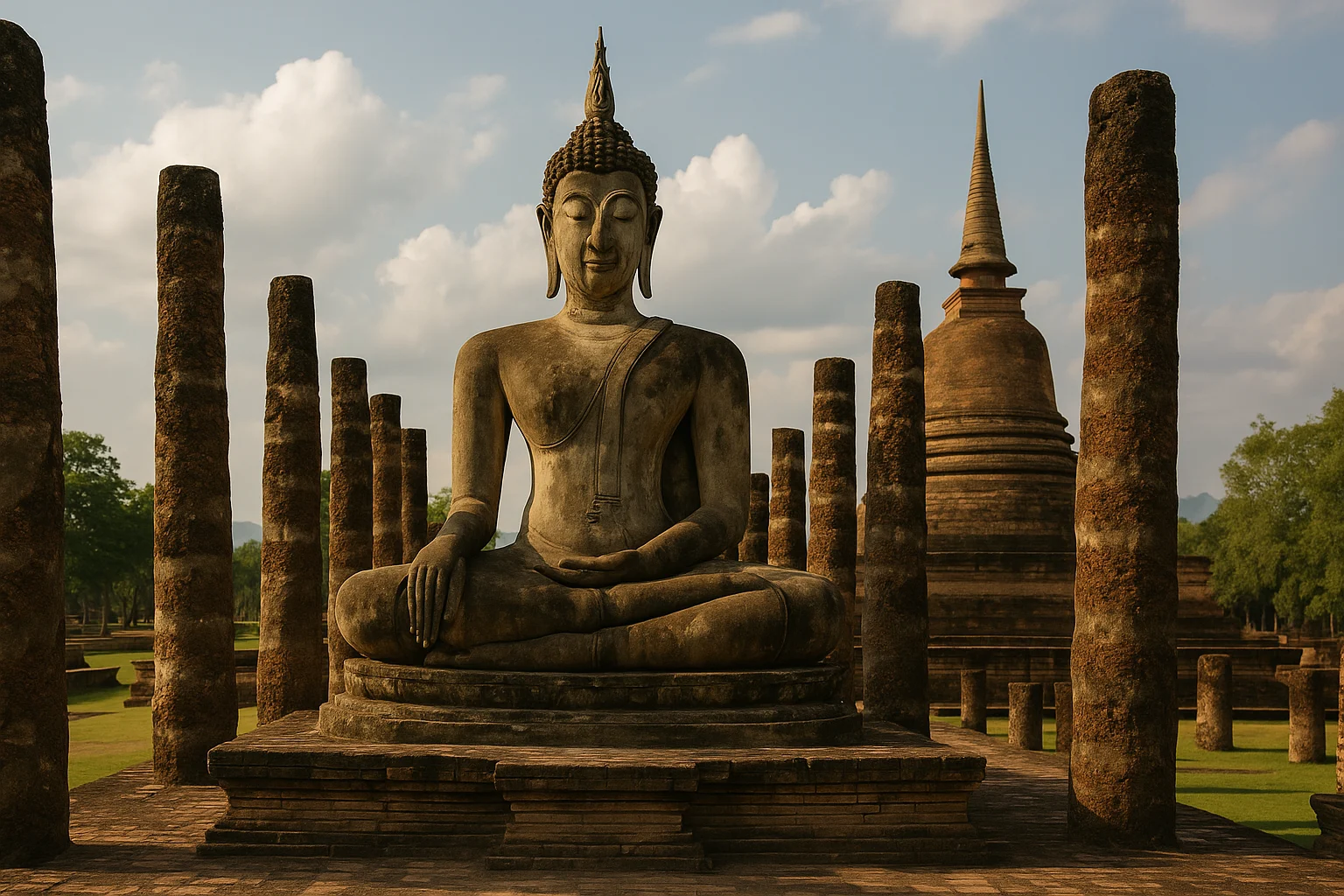
Sukhothai Historical Park Travel Guide 2026: Thailand’s First Capital Without the Crowds
Sukhothai KingdomPlan a smarter Sukhothai Historical Park visit with route tips, key ruins, and practical timing for ...
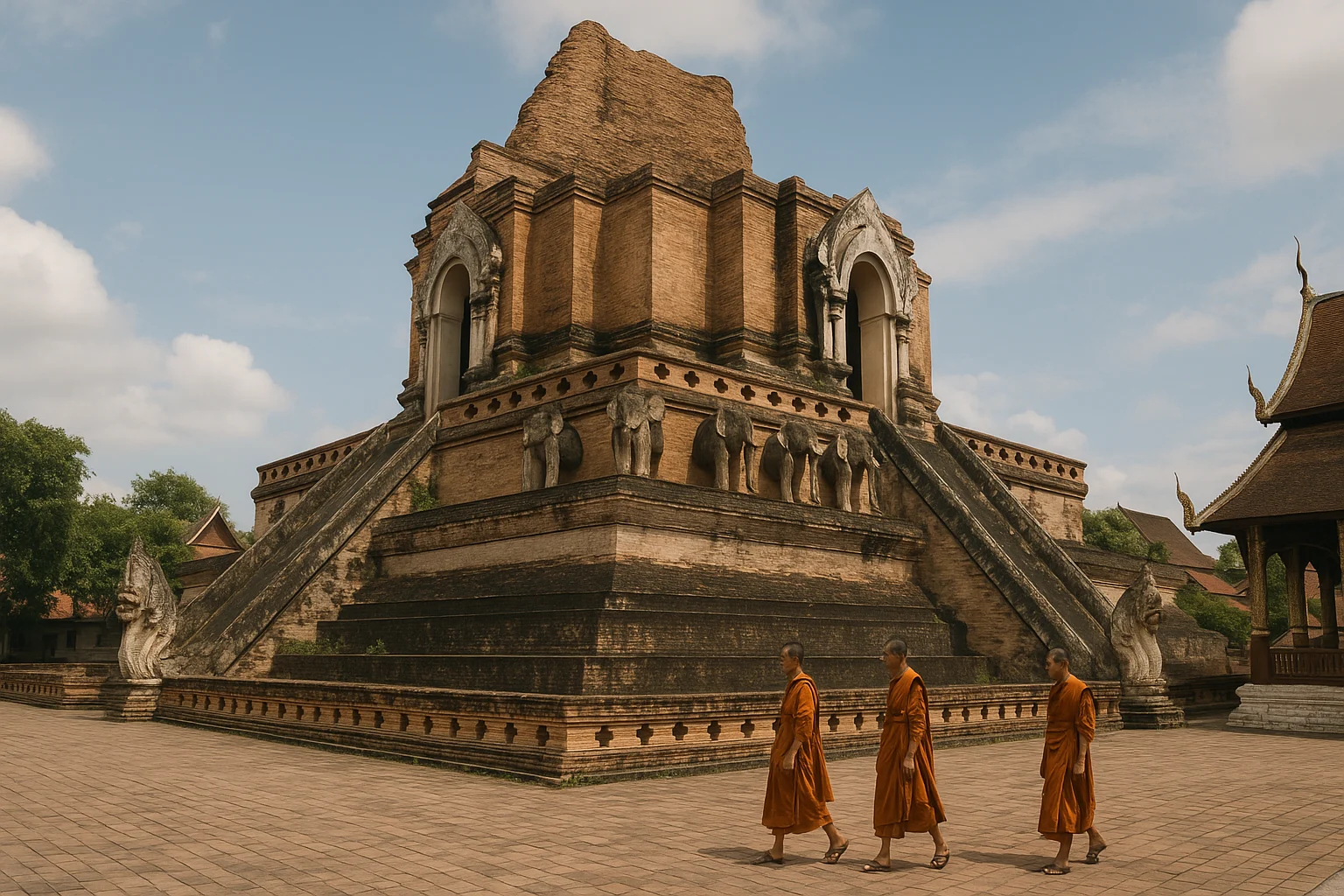
Wat Chedi Luang Travel Guide 2026: Chiang Mai's Ruined Stupa, Monks, and Visit Timing
Lanna KingdomPlan a focused Wat Chedi Luang visit with practical timing, temple etiquette, and old-city route tip...
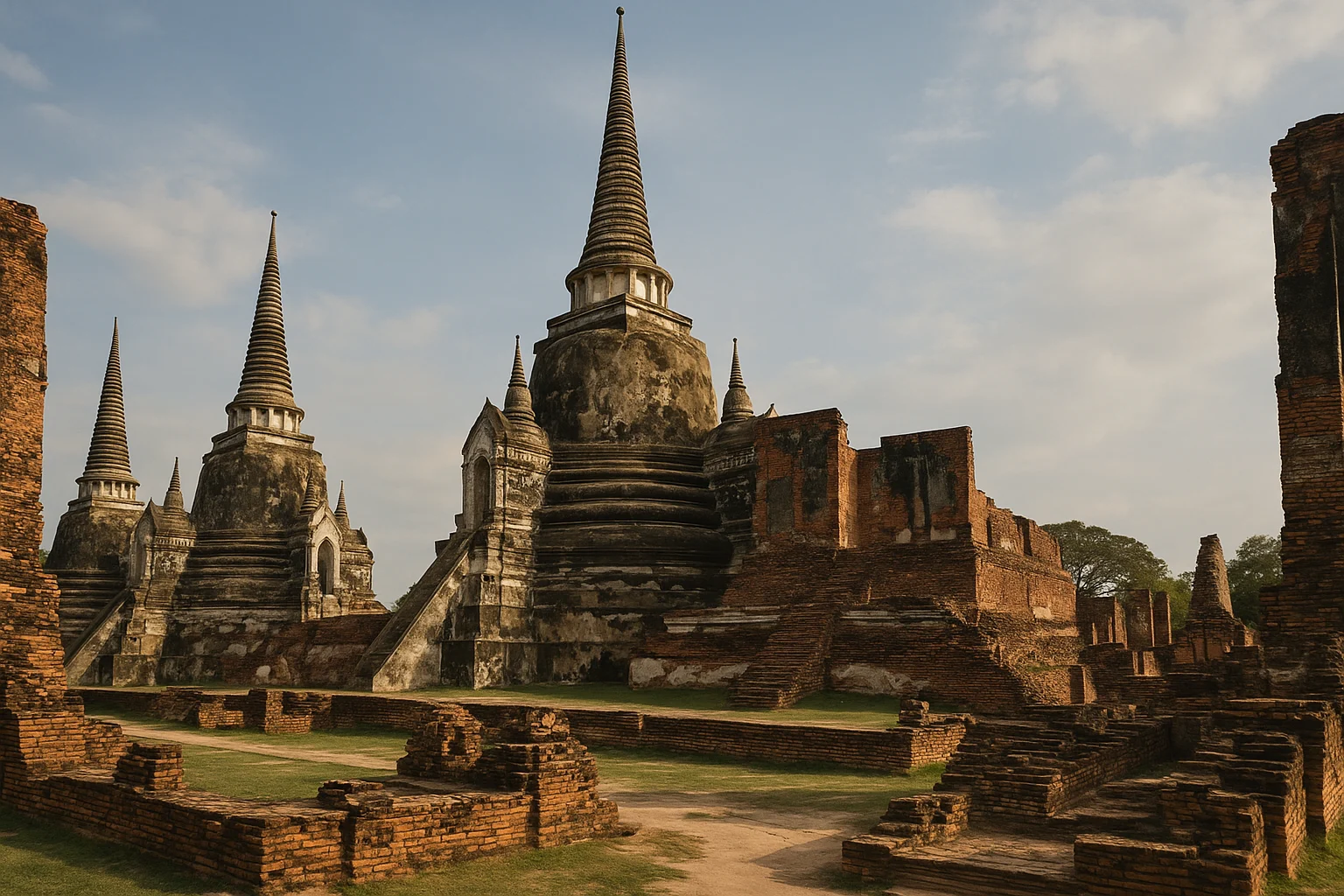
Ayutthaya Travel Guide 2026: Temple Ruins, Day Trip Planning, and What to Prioritize
Ayutthaya KingdomPlan a focused Ayutthaya visit with practical temple routing, timing, and transport guidance from Ba...