Quick Info
Curated Experiences
Sukhothai Historical Park Guided Cycling Tour
Sukhothai Historical Park is where Thailand’s national story shifts from legend to archaeology. Spread across 70 square kilometers of flat lowland northwest of modern Sukhothai city, the park preserves the remains of the kingdom that first unified the Tai-speaking peoples into a coherent state - complete with a writing system, a Buddhist governance model, and a capital designed to project both spiritual authority and hydraulic control. Unlike Ayutthaya’s dense urban ruins or Bangkok’s gilded reconstructions, Sukhothai gives you open space, deep sight lines, and the rare chance to read a medieval Southeast Asian city plan at walking (or cycling) pace.
UNESCO inscribed the park in 1991 alongside the associated sites of Si Satchanalai and Kamphaeng Phet, recognizing all three as evidence of the first Thai kingdom’s architectural and urban achievements. For travelers moving through Thailand’s historical corridor, Sukhothai is not optional context - it is the starting point.
Why Sukhothai Historical Park Matters
Most visitors to Thailand encounter its history backwards: Bangkok first, then perhaps Ayutthaya, and rarely anything earlier. Sukhothai reverses that sequence. This was the capital of the first major Tai polity, the place where the Thai script was codified, where Theravada Buddhism became the organizing principle of state life, and where a distinctive architectural vocabulary - the lotus-bud chedi, the walking Buddha, the axial temple compound - was developed before spreading south and east across the region.
What makes the park genuinely valuable for visitors (as opposed to merely important on paper) is legibility. The ruins sit in open parkland with restored moats and reservoirs. You can stand at Wat Mahathat and trace sight lines to secondary temples, city walls, and water features without buildings or traffic blocking the view. That spatial clarity is rare at major archaeological sites anywhere in Southeast Asia.
Historical Context
The Sukhothai Kingdom emerged around 1238 CE when local Tai leaders consolidated control over a region previously under Khmer influence. The kingdom reached its political and cultural peak under King Ramkhamhaeng (r. c. 1279-1298), who is traditionally credited with creating the Thai alphabet and establishing diplomatic ties with China. His famous 1292 inscription - now housed in Bangkok’s National Museum - describes a prosperous, merit-driven kingdom where citizens could trade freely and petition the king directly.
Sukhothai’s architecture reflects this transitional moment. You can see Khmer-influenced prang towers alongside the distinctly Thai lotus-bud stupas that would define later periods. The city’s layout followed a concentric plan: a walled inner city containing the most important temples and royal structures, surrounded by outer zones with monasteries, kilns, and satellite communities connected by roads and waterways.
By the mid-14th century, Sukhothai’s influence was waning as Ayutthaya rose to the south. The kingdom was gradually absorbed, and the capital’s population declined. But the ruins were never fully lost - local communities continued using some temple sites - and formal restoration began in the 1960s under Thailand’s Fine Arts Department.
What to Prioritize Onsite
Central Zone: The Core Reading
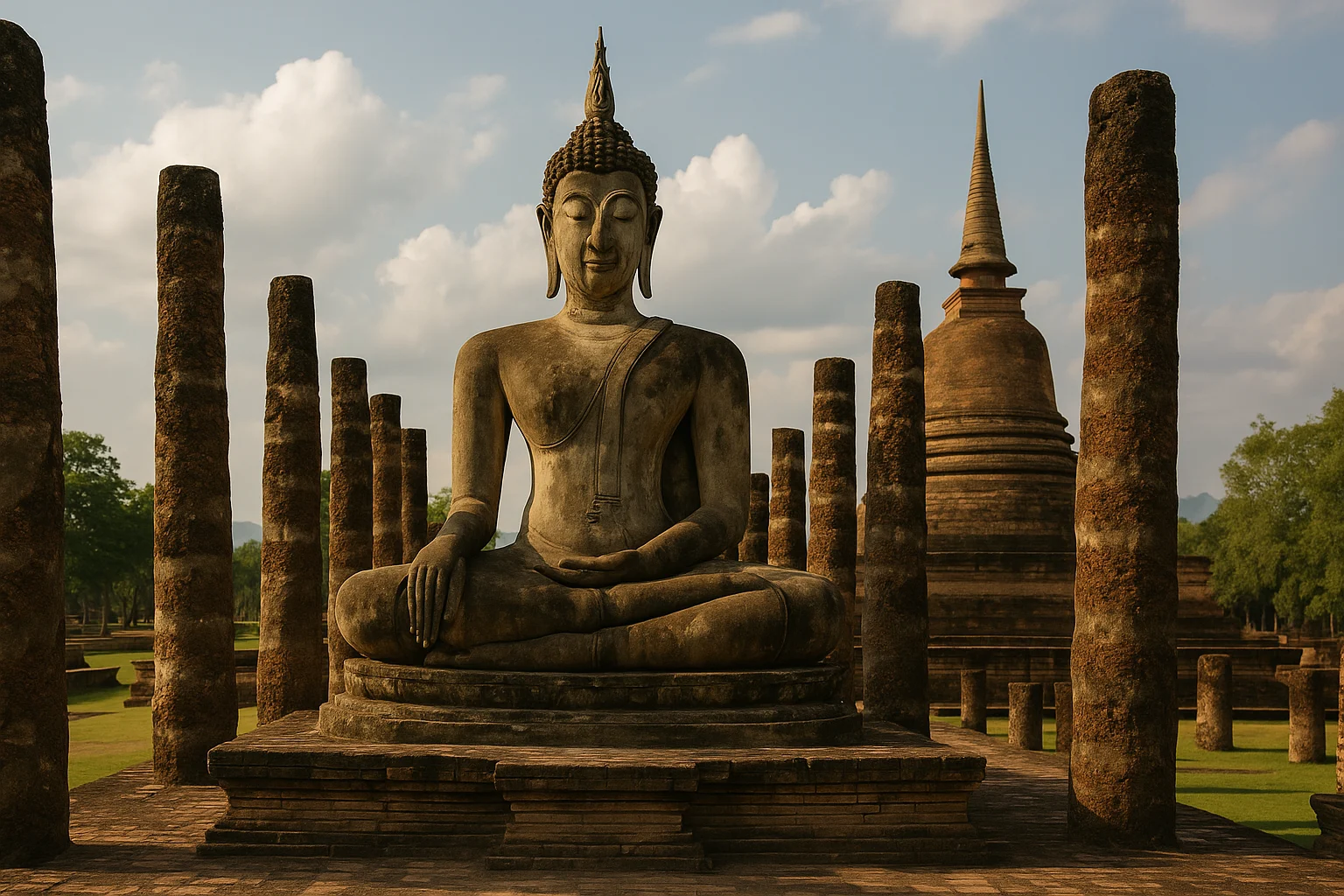
The walled central zone contains Sukhothai’s most important ruins and should anchor any visit. Wat Mahathat is the spiritual and geographic center - a vast compound with nearly 200 chedis, a principal viharn, and the iconic seated Buddha framed by columns. Spend real time here. Walk the full perimeter rather than just approaching the main image, and note how subsidiary structures radiate outward in a mandala-like arrangement.
From Wat Mahathat, move to Wat Si Sawai, a compact Khmer-style prang temple that predates the Thai period and shows clearly how the Sukhothai builders adapted existing sacred sites. Wat Sa Si, set on an island in a reservoir, offers one of the park’s most photographed compositions - but more importantly demonstrates how water features were integrated into the sacred landscape.
Northern and Western Zones: Scale and Variation
If you have four or more hours, add at least one outer zone. The northern zone contains Wat Si Chum, home to a massive seated Buddha enclosed in a narrow mondop - an effect that is both architecturally dramatic and spiritually intentional. The walls of the passage behind the image originally held engraved jataka tales, making this a teaching structure as much as a devotional one.
The western zone is hillier and quieter, with forest-set temples that give a completely different character from the open central lawns. Wat Saphan Hin sits on a ridge with a standing Buddha overlooking the plain - a worthwhile climb for the perspective it provides on the city’s relationship to its surrounding terrain.
The Ramkhamhaeng National Museum
Located just outside the central zone entrance, this museum provides essential context on Sukhothai-era ceramics, sculpture, and inscriptions. Visit it either before entering the park (for orientation) or after (to reinforce what you saw). The replica of the Ramkhamhaeng Inscription alone is worth the stop.
Practical Visit Strategy
Timing
The best months are November through February, when temperatures are cooler and rain is unlikely. Within any given day, arrive by 6:30 AM if possible - the park opens at 6:00, and the first two hours offer soft light, empty grounds, and manageable heat. A second window opens after 4:00 PM, but the central zone closes at 6:00, limiting your range. Avoid a midday-heavy itinerary, especially if you plan to bike the outer zones.
Getting There
Sukhothai Historical Park is 12 kilometers west of New Sukhothai town. Songthaews (shared trucks) run the route regularly for 30 baht. Alternatively, rent a motorbike in town for the day, which gives you flexibility for the outer zones. The nearest airport is Sukhothai (THS), served by Bangkok Airways from Suvarnabhumi, though many travelers arrive by bus from Chiang Mai (five to six hours) or Phitsanulok (one hour).
Onsite Logistics
Rent a bicycle at the shops near the central zone entrance (30-50 baht/day). The park is flat and distances between zones are manageable but too far for comfortable walking in heat. Each zone charges a separate admission fee (100 baht per zone for foreigners), so budget accordingly if visiting multiple areas. Bring a refillable water bottle, sunscreen, and a hat - shade is limited in the central zone. Small cash is essential; card acceptance is minimal.
Duration
A focused visit covering the central zone and one outer zone takes four to six hours. To see all five zones with museum time, plan a full day or split across two mornings.
Route Pairing and Nearby Sites
Sukhothai sits at the beginning of Thailand’s historical chronology, which makes it a natural first stop in a north-to-south sequence. Si Satchanalai Historical Park, 55 kilometers north, preserves a sister city with impressive kiln sites and hilltop temples in a less-visited setting - a strong half-day addition.
Moving south, Ayutthaya is the essential chronological next step, showing how the successor kingdom built on Sukhothai’s foundations with denser urban planning and more eclectic architectural influences. Within Ayutthaya, prioritize Wat Phra Si Sanphet for its royal compound parallels and Wat Mahathat Ayutthaya for its iconic tree-root Buddha head and ceremonial core.
If you are arriving from the north, Wat Chedi Luang and Wat Phra That Doi Suthep in Chiang Mai offer Lanna-period contrast - a parallel Thai Buddhist tradition that developed independently of the Sukhothai-Ayutthaya line.
Final Take
Sukhothai Historical Park is not Thailand’s most dramatic ruin, and that is precisely its strength. Without the crowds of Ayutthaya or the spectacle tourism of Bangkok’s grand palaces, it offers something harder to find: the space and legibility to actually understand how an early Southeast Asian capital was conceived, built, and organized around water, merit, and power. Start early, rent a bike, resist the urge to rush through zones for coverage, and pay attention to spatial relationships between temples, reservoirs, and walls. The story Sukhothai tells is foundational to everything that came after it in Thai history - and it tells it quietly, in open air, to anyone willing to slow down.
Quick Facts
| Attribute | Details |
|---|---|
| Location | Sukhothai, Lower Northern Thailand, Thailand |
| Country | Thailand |
| Region | Lower Northern Thailand |
| UNESCO Status | World Heritage Site (1991) |
| Civilization | Sukhothai Kingdom |
| Historical Period | 13th to 15th century CE |
| Established | c. 1238 CE |
| Entry Fee | 100 THB per zone (foreigners) |
| Opening Hours | 6:00 AM - 6:00 PM daily |
| Coordinates | 17.0154, 99.7034 |
Frequently Asked Questions
How much time do I need at Sukhothai Historical Park?
Most travelers need at least half a day for the central zone. A full day works better if you want to include outlying temple groups by bike or tuk-tuk.
Is Sukhothai better by bike or on foot?
Biking is usually the best balance of speed and flexibility because the ruins are spread out. Walking works for the central cluster but feels limiting in heat.
Can I visit Sukhothai as a day trip from Bangkok?
It is possible but long and inefficient. Most travelers get a better experience by staying one night near the park and visiting early morning or late afternoon.
Nearby Ancient Sites
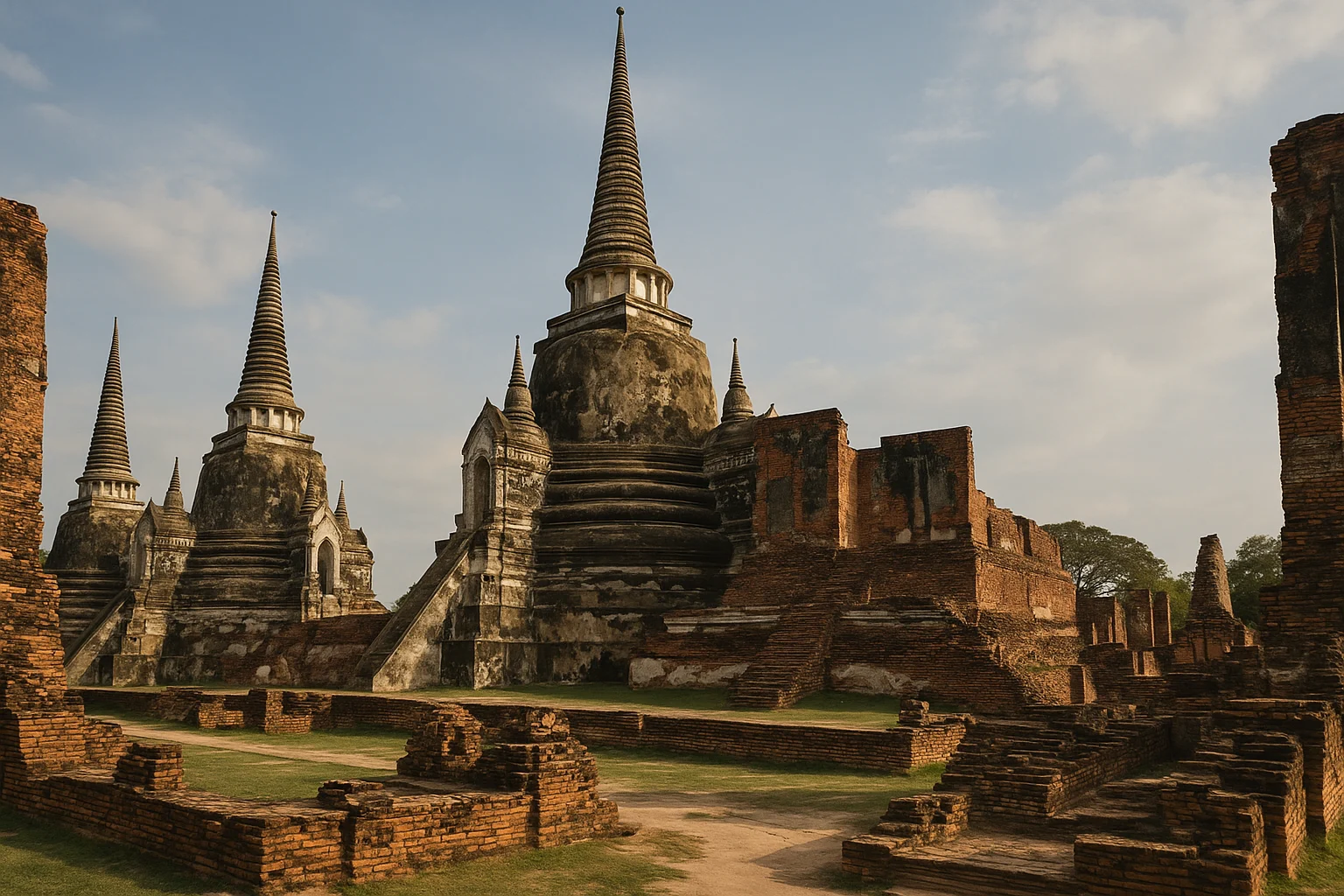
Ayutthaya Travel Guide 2026: Temple Ruins, Day Trip Planning, and What to Prioritize
Ayutthaya KingdomPlan a focused Ayutthaya visit with practical temple routing, timing, and transport guidance from Ba...
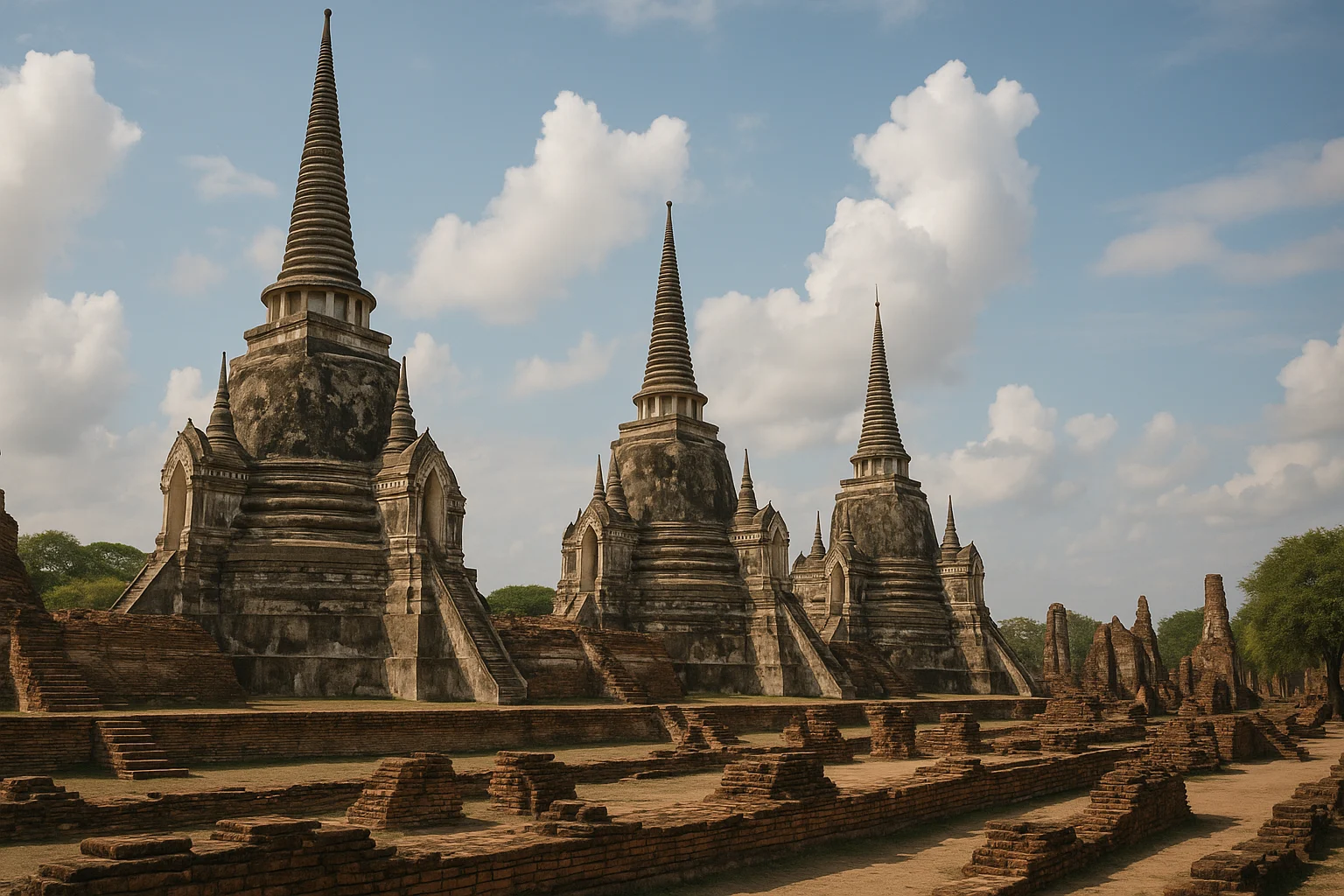
Wat Phra Si Sanphet Travel Guide 2026: Ayutthaya's Royal Temple Without Monks
Ayutthaya KingdomPlan a smarter Wat Phra Si Sanphet visit with timing tips, temple context, and practical Ayutthaya r...
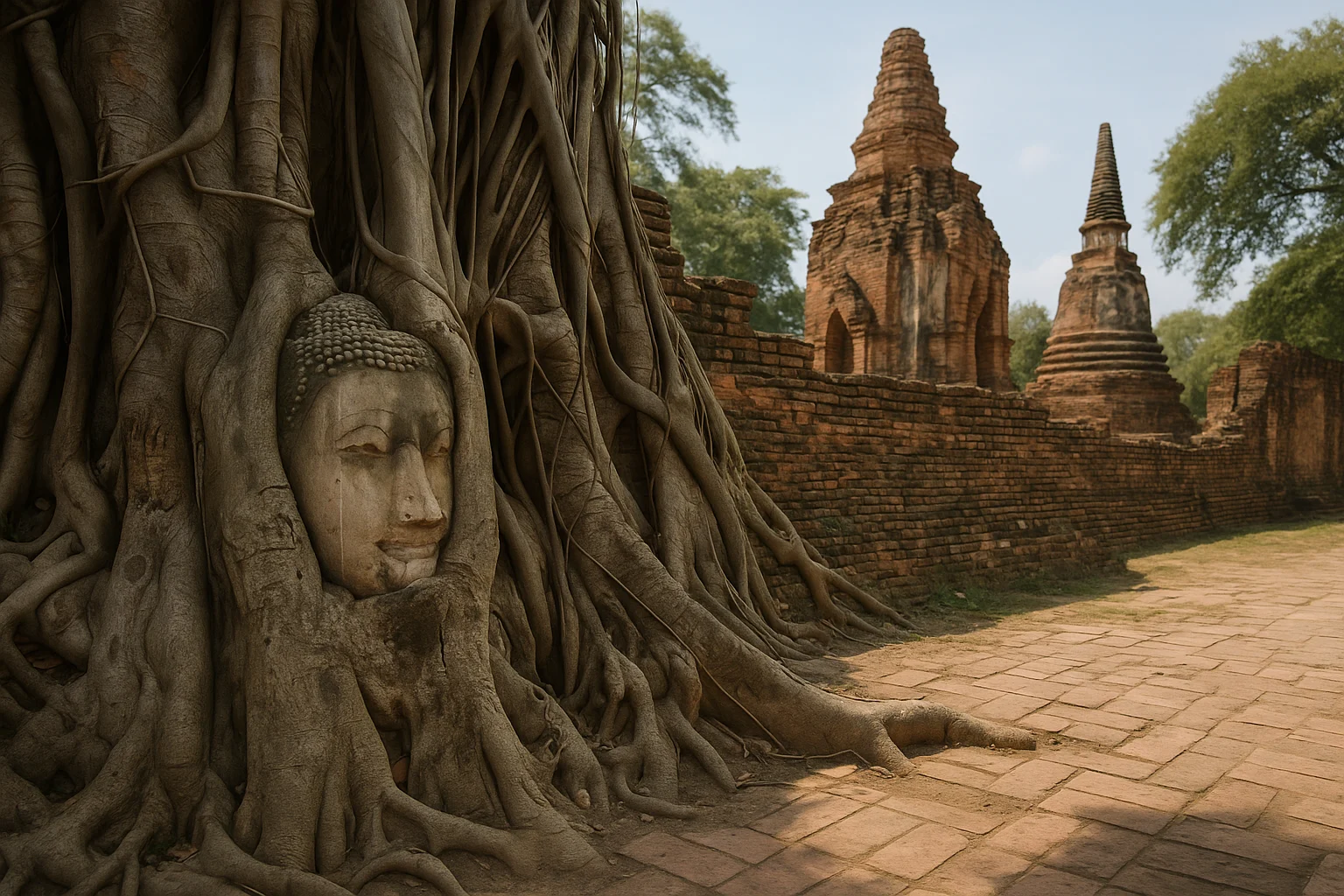
Wat Mahathat Ayutthaya Travel Guide 2026: The Tree-Root Buddha Head, Timing, and What to Know
Ayutthaya KingdomPlan a focused Wat Mahathat visit with practical timing, photography etiquette, and routing tips ins...