Quick Info
Curated Experiences
Summer Palace and Temple of Heaven Full-Day Tour
Summer Palace Half-Day Tour with Boat Ride
Private Summer Palace and Hutong Tour
Where Poetry Meets Power on Kunming Lake
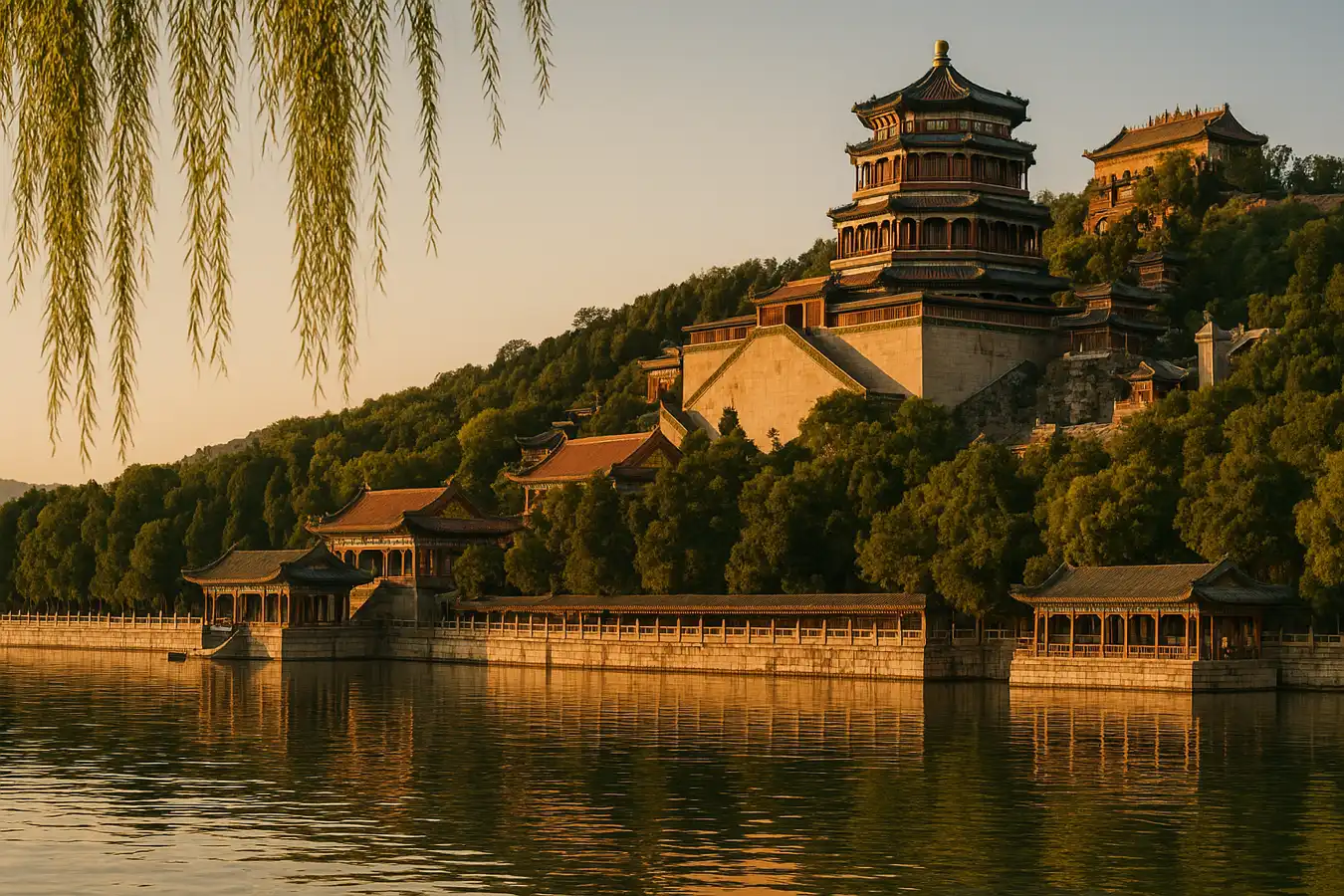
Where the Forbidden City represents imperial authority through overwhelming symmetry and stone, the Summer Palace offers something more intimate and ultimately more enduring—the refined artistry of Chinese landscape design at its absolute zenith. This 290-hectare masterpiece of sculpted nature and architecture encompasses the shimmering expanse of Kunming Lake, the pine-forested slopes of Longevity Hill, the world’s longest painted corridor, and countless pavilions, temples, and marble bridges that together create what UNESCO has called “a masterpiece of Chinese landscape garden design.” For emperors who spent their working lives in the Forbidden City’s ceremonial grandeur, this was the place where they could breathe—where court formality dissolved into birdsong, water reflections, and the gentle movement of willow branches. For modern visitors, it remains the most beautiful park in all of Beijing, a place where every pathway offers a composed view as carefully arranged as a classical landscape painting.
The Summer Palace carries weight beyond its beauty. Its 1860 burning by British and French troops during the Second Opium War left scars that endure in Chinese national memory. Its reconstruction by Empress Dowager Cixi—funded partly with money appropriated from China’s modernizing navy—stands as both a monument to imperial excess and a symbol of the dynasty’s fatal priorities. Walking through these gardens, visitors traverse layers of history: Qing imperial confidence at its height, the humiliation of foreign occupation, the complex legacy of a remarkable and controversial woman who shaped China’s final imperial decades, and the contemporary pride of a nation that has restored these gardens to their original magnificence.
The Garden of Clear Ripples: Origins in Imperial Ambition
The gardens now called the Summer Palace began as the “Garden of Clear Ripples” (Qingyi Yuan), constructed beginning in 1750 under Emperor Qianlong to celebrate his mother’s 60th birthday. The project consumed fifteen years of imperial resources and thousands of workers, transforming what had been a modest reservoir and hillside into the most elaborate garden in China’s long tradition of imperial landscape design. Qianlong looked south for his inspiration: Hangzhou’s legendary West Lake, widely considered China’s most beautiful natural setting, provided the template that his engineers would recreate and amplify on the outskirts of Beijing.
The design philosophy was deliberate and sophisticated. Chinese garden aesthetics had developed over centuries the idea that gardens should create the experience of nature rather than merely decorate it—that water, stone, and planted hills should work together to evoke the emotional resonance of mountains, lakes, and wild landscapes. At the Summer Palace, Qianlong’s architects extended Kunming Lake artificially and used the excavated earth to raise Longevity Hill, creating the complementary relationship between water and elevated ground that lies at the heart of classical Chinese landscape composition. Northern architectural grandeur met southern delicacy in the design, combining the imposing scale appropriate to an emperor with the refined elegance of the Jiangnan garden tradition.
Destruction and Reconstruction: The Price of Luxury
In October 1860, as British and French forces advanced on Beijing during the Second Opium War, Lord Elgin ordered the destruction of the imperial summer retreats as punishment for Chinese mistreatment of Western prisoners. Soldiers spent three days burning and looting the Garden of Clear Ripples and the adjacent Old Summer Palace (Yuanmingyuan). What had taken generations to build was reduced to scattered ruins and scorched earth in 72 hours—a deliberate act of cultural violence whose memory China has not forgotten.
The devastation stood for nearly thirty years until Empress Dowager Cixi, the formidable woman who effectively ruled China from 1861 until her death in 1908, oversaw the complex’s reconstruction beginning in 1888. Cixi renamed the restored gardens “Yiheyuan”—the Summer Palace—and made them her preferred residence for much of the year, conducting state affairs from its lakeside pavilions. The reconstruction’s funding became one of history’s more consequential decisions: money appropriated for the Beiyang Fleet, China’s modernizing navy, was redirected to the palace restoration instead. When Japan defeated that undermanned, poorly equipped fleet in 1895, the connection between imperial indulgence and national humiliation became undeniable. The marble pavilion on Kunming Lake’s shore that Cixi called the Marble Boat—a whimsical stone recreation of a steamship that could never move—became an enduring symbol of misplaced priorities.
The gardens suffered again in 1900, when Boxer Rebellion suppression brought foreign troops through Beijing once more. But the Summer Palace survived substantially intact, and when the Qing Dynasty fell in 1924, its gates opened to the public for the first time. Today, it attracts millions of visitors annually, fully restored to the splendor Cixi demanded.
The Long Corridor: A Gallery Without Walls
No single feature of the Summer Palace is more celebrated than the Long Corridor (Changlang), the 728-meter covered walkway that stretches along Kunming Lake’s northern shore between the East Gate and the Marble Boat. Walking its length takes fifteen to twenty minutes at a leisurely pace, but few visitors move quickly—the ceiling and beams overhead demand attention. More than 14,000 individual painted scenes cover every surface, depicting subjects drawn from Chinese mythology, history, poetry, and natural beauty: episodes from Journey to the West and Dream of the Red Chamber, battle scenes from the Three Kingdoms period, landscapes reproducing the scenery of famous Chinese sites, and endless arrangements of birds, flowers, and classical symbols. No two scenes repeat. The corridor functions as a continuous outdoor museum, sheltering the imperial family from summer sun and autumn rain while surrounding them with the accumulated imagery of Chinese cultural tradition.
The corridor’s practical genius mirrors its aesthetic ambition. Walking between garden and lake, framing views through its columns and railings, it creates a sequence of composed perspectives that reveal the garden incrementally—a bridge here, a pavilion there, the great mass of Longevity Hill gradually emerging above the lakeside trees. The designers understood that great gardens are experienced through movement as much as through static views, and the Long Corridor orchestrates that movement with the care of a film director controlling what an audience sees and when.
Kunming Lake: Where Emperors Drifted on Reflected Sky
Covering 220 of the palace’s 290 hectares, Kunming Lake is the Summer Palace’s defining element—the vast reflective surface around which everything else is organized. The lake’s excavation and expansion under Qianlong was a feat of hydraulic engineering: workers dug out the existing reservoir, extending and deepening it to match the West Lake proportions Qianlong desired, then used the excavated material to construct Longevity Hill to the north. The resulting relationship—broad water below, forested hill above—gives the Summer Palace its distinctive spatial character, a landscape of complementary opposites that Chinese aesthetics prizes above all other arrangements.
Several structures punctuate the lake and its shores, each placed with compositional care. The Seventeen-Arch Bridge connects the east causeway to South Lake Island, its 150-meter span adorned with 544 stone lions, each carved with a unique expression. The Bronze Ox stands on the east bank, cast in 1755 to serve as a symbolic flood guardian; Qianlong inscribed an 80-character poem on its back. South Lake Island holds a temple complex and functions as a middle ground in the lake’s composition, breaking the expanse and providing a destination for the dragon boats and paddle craft that have carried emperors—and now tourists—across the water for centuries.
Today visitors can rent paddle boats, electric boats, or traditional dragon boats to experience the lake from its surface, drifting beneath the gaze of Longevity Hill while the Long Corridor recedes behind them. The experience of looking back toward shore from the water’s center—with the hill’s temples rising above their forested slopes and the corridor’s red pillars reflected in the lake—reveals why Qianlong chose this configuration. Some views can only be properly seen from the water.
Longevity Hill: Temples Above the Trees
Longevity Hill rises 60 meters above Kunming Lake’s northern shore, its slopes covered in ancient pines and studded with temples, pavilions, and ceremonial gateways that climb toward the summit in a composition visible from every point in the garden. The hill’s axial arrangement organizes the sacred structures along a central line running from the lakeside to the summit, creating a procession that moves from the mundane to the divine—from garden pleasures to Buddhist contemplation.
The Tower of Buddhist Incense (Foxiang Ge) dominates this arrangement, an octagonal three-story structure rising 41 meters from its hilltop terrace. Built on the site of an incomplete ten-story pagoda that Qianlong ordered demolished when its design displeased him, the tower has become the Summer Palace’s most recognizable landmark—visible from the lake, from the corridor, and from much of the garden. The climb to the tower’s platform rewards the effort with panoramic views over the full extent of Kunming Lake and, on clear days, across Beijing’s western districts to the distant mountains.
Above the Tower of Buddhist Incense, near the hill’s summit, the Sea of Wisdom Temple presents a different architectural character: its exterior walls covered in glazed ceramic niches, each containing a seated Buddha figure, creating a shimmering surface that changes appearance with the light and the season. The temple was designed without wooden structural elements—unusual for Chinese religious architecture—to make it fireproof, a precaution that proved only partly effective against determined looters. The Virtue and Harmony Garden (Dehe Yuan) at the hill’s eastern foot preserves the elaborate three-story opera house where Cixi watched performances from her private viewing box, the building’s intricate woodwork and mechanical stage equipment representing the height of Qing theatrical staging.
The Marble Boat: Stone Dreams on the Water
At the western end of the Long Corridor, where the covered walkway meets the lake’s shore, stands the Summer Palace’s most photographed and most debated structure. The Marble Boat (Shifang) is not, despite its name, made entirely of marble—the base is stone, while the two-story superstructure is wood painted to resemble marble, decorated with mirrors, stained glass, and intricate carvings. The original wooden pavilion on this site dated to 1755; Cixi ordered it rebuilt in stone in 1893, a project completed using the naval funds whose diversion would contribute to China’s defeat two years later.
The boat’s symbolism has been read in multiple ways over the decades. Cixi reportedly declared that stone boats cannot sink, suggesting the dynasty’s permanence; critics noted that a boat that cannot move cannot sail. The structure has become shorthand for the Qing court’s detachment from the practical demands of modernization—a monument to imperial indulgence at the expense of national defense. Yet standing beside it on a clear autumn afternoon, watching the lake’s surface catch the late light, it is possible to understand what Cixi saw here: a place of beauty, whimsy, and theatrical imagination that offered respite from the unrelenting pressures of ruling an empire in crisis. The Marble Boat is both folly and masterpiece, and the Summer Palace contains space for both readings.
Suzhou Street: Emperors Playing at Commerce
Behind Longevity Hill, facing the palace’s back lake, a reconstructed commercial street offers the Summer Palace’s most theatrical experience. Suzhou Street (Suzhou Jie) recreates an idealized version of the canal-side commercial districts of Suzhou, China’s most refined southern city, translated to the imperial garden for the court’s amusement. The concept was straightforward: emperors and their companions would “play merchant” and “play customer” along this waterside street, browsing shops and stalls operated by court servants in appropriate costumes—a form of imperial role-playing that satisfied curiosity about common life without requiring actual contact with it.
The original street was burned along with the rest of the garden in 1860 and rebuilt during recent restoration campaigns. Today its traditional shop fronts and canal bridges provide a quieter alternative to the main garden circuits, attracting visitors seeking the Summer Palace’s less-visited corners. The architecture reproduces the distinctive whitewashed walls and dark timber framing of Jiangnan canal towns, transporting visitors momentarily from Beijing’s northwestern outskirts to the aesthetic world of the Yangtze Delta.
Practical Guide: Tickets, Getting There & Seasonal Timing
Essential Planning FAQs
How do I get to the Summer Palace from Beijing?
The Summer Palace lies 15 km northwest of central Beijing. Metro Line 4 to Beigongmen Station (North Gate) is the most direct public transit option; Xiyuan Station requires a ten-minute walk to the East Gate. Buses 330, 331, 332, and 346 all serve the site. Taxis and Didi rides from central Beijing cost 40–60 CNY ($6–9 USD). Organized tours ($55–75) include transport, guided commentary, and sometimes boat rides. Choose your entrance based on priorities: the North Gate is closer to Longevity Hill and its temples; the East Gate places you at the start of the Long Corridor.
What does admission cost?
General entry (park only) costs 30 CNY ($4 USD) April–October, 20 CNY ($3 USD) November–March. The through ticket is strongly recommended at 60 CNY ($8.50 USD) peak season, 50 CNY ($7 USD) off-season—it includes the Tower of Buddhist Incense, Dehe Garden opera house, and Wenchang Hall. Boat rides across Kunming Lake run 20–40 CNY ($3–6 USD) depending on vessel type. Budget approximately 80–150 CNY ($11–21 USD) total per person including park entry, a boat ride, and the Tower of Buddhist Incense.
When is the best time to visit?
Autumn (September–October) is arguably the finest season: Beijing’s skies clear to an intense blue, the maples and ginkgos on Longevity Hill turn gold and orange, and lotus seed pods create sculptural interest on the lake. Spring (April–May) brings peach blossoms, willows leafing out along the shore, and wisteria flowering on the Long Corridor. Summer (June–August) showcases lotus flowers at peak bloom in July but brings heat (30–35°C) and the year’s largest crowds. Winter is cold but transforms the palace into a classical ink painting, especially after rare snowfall. Visit on weekdays whenever possible; weekends and Chinese national holidays bring severe crowding.
What is the recommended route through the complex?
Enter via the East Gate for the classic sequence: walk the Long Corridor slowly toward the Marble Boat, pause for views across Kunming Lake, then board a boat to South Lake Island and walk the Seventeen-Arch Bridge back to shore. Climb Longevity Hill to the Tower of Buddhist Incense for panoramic views over the full garden, then descend through the temples to exit via the North Gate. This circular route covers the major highlights in approximately 3–4 hours; a full day allows time for Suzhou Street, the Virtue and Harmony Garden, and a second boat excursion.
What are the opening hours?
April–October: Gates open 6:00 AM, close 6:00 PM (park closes 8:00 PM). November–March: Gates open 6:30 AM, close 5:00 PM (park closes 7:00 PM). Early morning visits (7:00–9:00 AM) offer the most peaceful experience; late afternoon (4:00–6:00 PM) provides golden light for photography with fewer tour groups.
Quick Facts
| Attribute | Details |
|---|---|
| Location | Beijing, Beijing, China |
| Country | China |
| Region | Beijing |
| Civilization | Chinese Imperial |
| Historical Period | 1750–1903 CE |
| Established | 1750 CE |
| Coordinates | 39.9999, 116.275 |
Explore More of China’s Imperial Legacy
- Forbidden City: The imperial palace at the center of Beijing’s power
- Temple of Heaven: Where the Son of Heaven communed with the cosmos
- Great Wall: China’s monumental northern fortification
|-----------|---------| | Location | Haidian District, 15 km northwest of central Beijing | | Chinese Name | 颐和园 (Yíhéyuán, “Garden of Nurtured Harmony”) | | UNESCO Status | World Heritage Site (1998) | | Original Construction | 1750 CE (Qianlong Emperor) | | Area | 290 hectares (717 acres); Kunming Lake covers 220 hectares | | Peak Period | Qing Dynasty, 1750–1908 | | Best Season | Autumn (September–October); Spring (April–May) | | Entry Fee | 30–60 CNY ($4–8.50 USD) depending on season; through ticket 50–80 CNY | | Suggested Stay | Half day (3–4 hours) to full day |
Frequently Asked Questions
How do I get to the Summer Palace from Beijing?
The Summer Palace is 15 km northwest of central Beijing. Take Metro Line 4 to Beigongmen Station (North Gate) or Xiyuan Station (East Gate). Buses 330, 331, 332, and others serve the site. Taxis cost 40-60 CNY ($6-9 USD) from the city center. Organized tours ($55-75) include transport. The site is large—choose your entrance based on what you want to see first (North Gate for Longevity Hill, East Gate for the Long Corridor).
How much time do I need at the Summer Palace?
Plan 3-4 hours for a comprehensive visit covering the main garden areas, Longevity Hill, Kunming Lake, and key buildings. A full day (5-6 hours) allows relaxed exploration including all temples, pavilions, and a boat ride. The complex covers 290 hectares—much larger than the Forbidden City—so prioritize if time is limited. Combine with the Old Summer Palace (Yuanmingyuan) nearby for a full day of imperial garden exploration.
What is the best route through the Summer Palace?
Enter via East Gate (Donggongmen) for the classic route: Long Corridor → Marble Boat → boat across Kunming Lake → South Lake Island → return boat or walk along lake → climb Longevity Hill → Foxiang Pavilion → descend to North Gate. Alternatively, enter North Gate to start with Longevity Hill views, then descend to the lake. The site is designed for circular exploration—there's no single 'correct' route.
When is the best time to visit the Summer Palace?
Spring (April-May) offers blooming flowers and willows. Summer (June-August) showcases the lotus flowers but is hot and crowded. Autumn (September-October) provides clear skies and colorful foliage—arguably the most beautiful season. Winter (November-March) is cold but peaceful with snow-dusted pavilions. Weekends and Chinese holidays are crowded year-round; visit on weekdays when possible.
What is the Long Corridor?
The Long Corridor (Changlang) is a 728-meter covered walkway connecting the East Gate to the Marble Boat. Its beams and ceilings are painted with over 14,000 intricate scenes from Chinese mythology, history, and landscapes—making it the longest painted corridor in the world. Built so the imperial family could enjoy garden views protected from sun and rain. It's the Summer Palace's most famous feature after Kunming Lake itself.
How much does it cost to visit the Summer Palace?
General entry is 30 CNY ($4 USD) November-March, 60 CNY ($8.50 USD) April-October. The through ticket (recommended) costs 50 CNY ($7 USD) off-season, 80 CNY ($11 USD) peak season and includes entry to additional paid attractions like the Dehe Garden, Tower of Buddhist Incense, and Wenchang Hall. Boat rides are 20-40 CNY ($3-6 USD) depending on route. Total budget 80-150 CNY ($11-21 USD) per person.
Nearby Ancient Sites
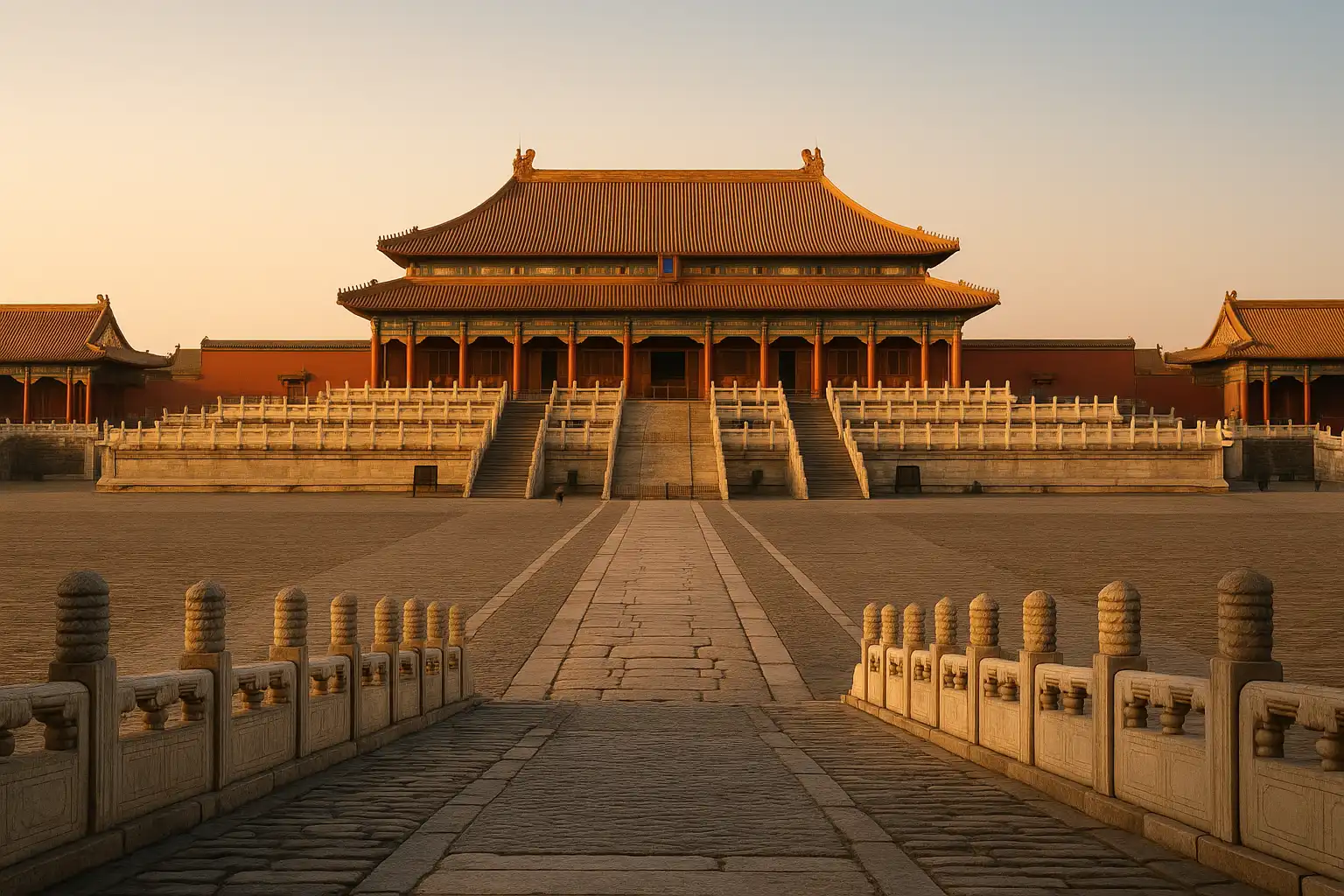
Forbidden City China Travel Guide 2026: Imperial Palace of Beijing
Chinese ImperialExplore the Forbidden City, China's imperial palace for 500 years. Discover the Hall of Supreme Harm...
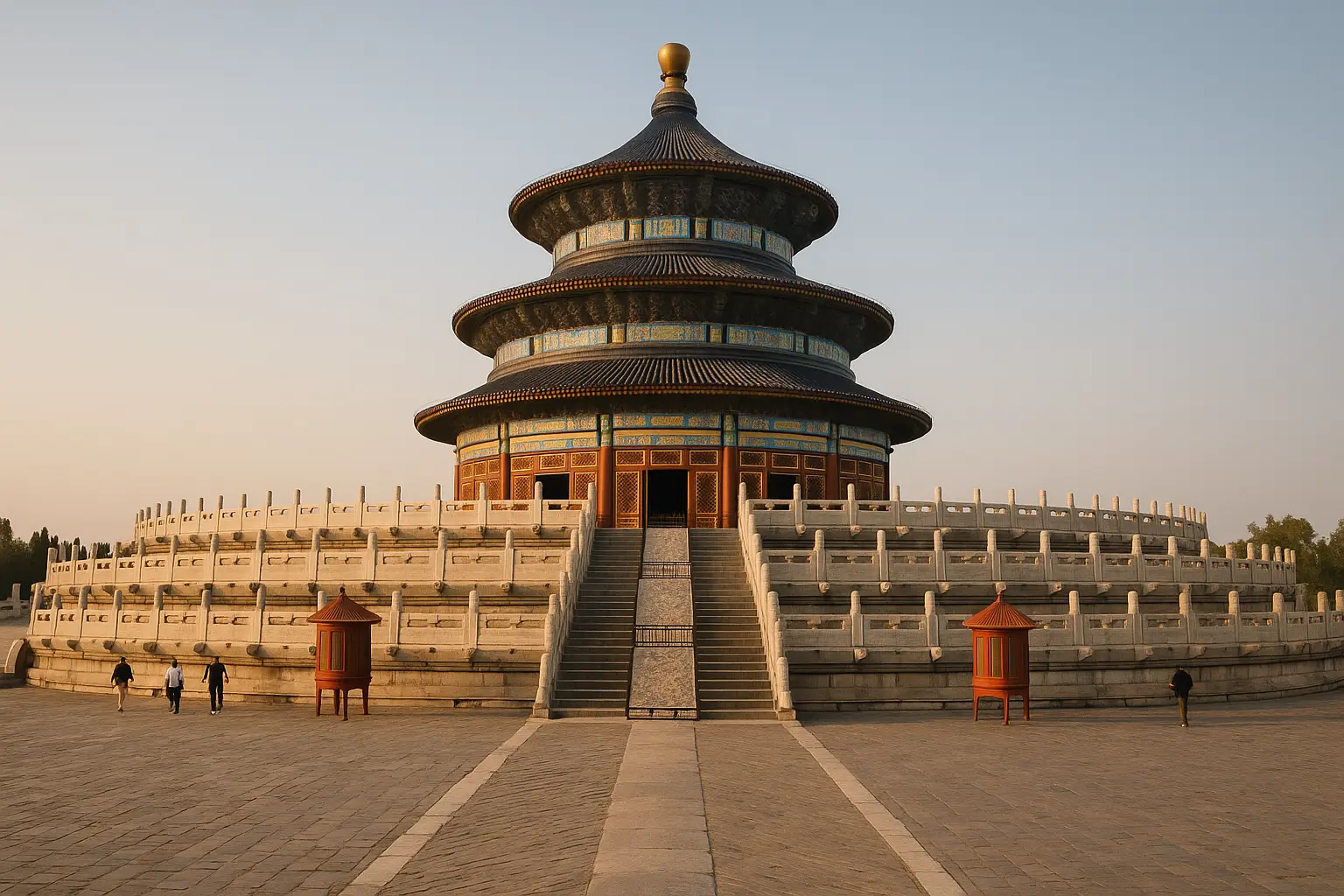
Temple of Heaven China Travel Guide 2026: Where Emperors Prayed
Chinese ImperialVisit the Temple of Heaven where Ming and Qing emperors prayed for good harvests. Explore the Hall o...
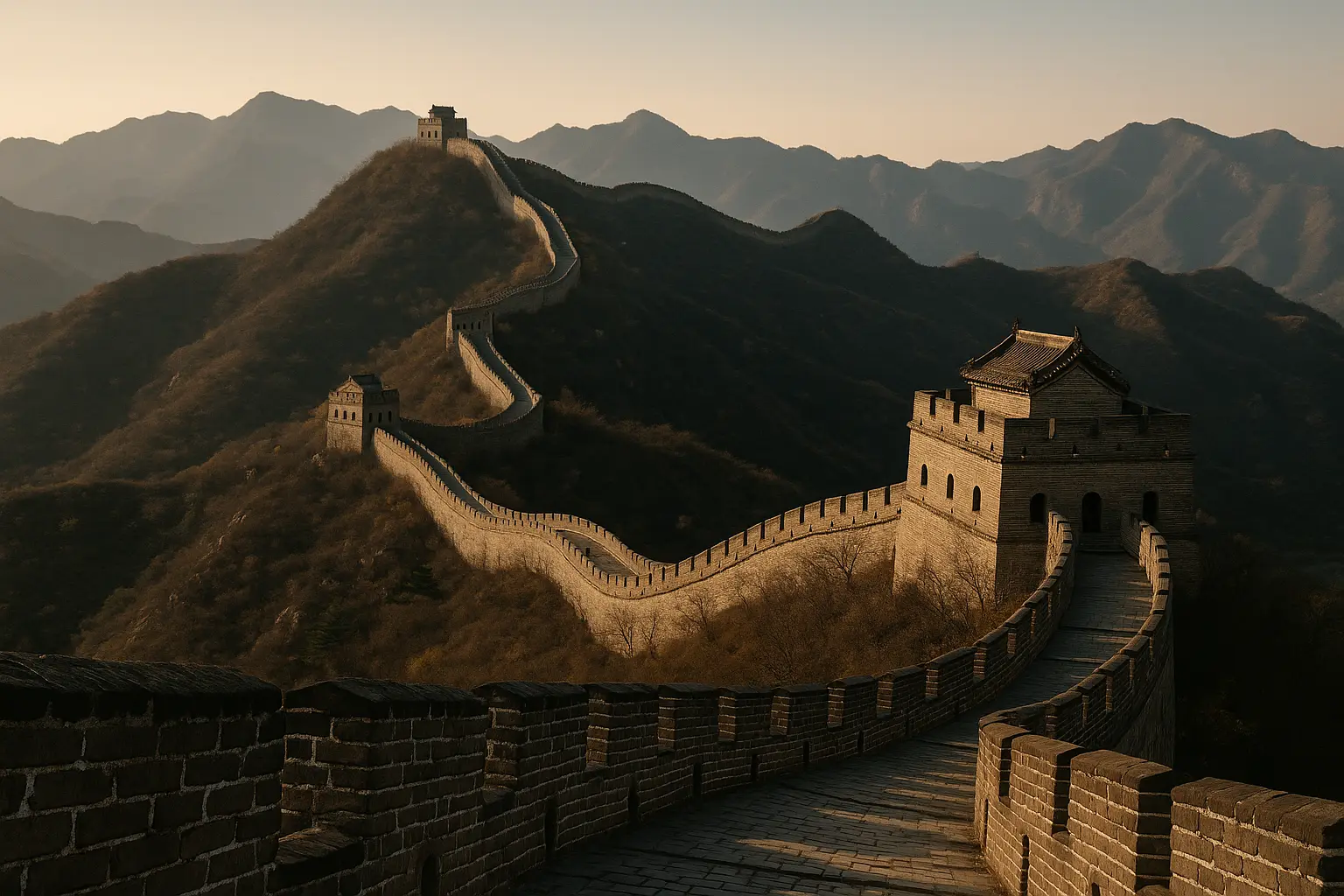
Great Wall of China Badaling Travel Guide 2026: Iconic Fortification
Chinese ImperialVisit Badaling, the most famous section of the Great Wall of China. Our guide covers tickets, cable ...