Quick Info
At a glance
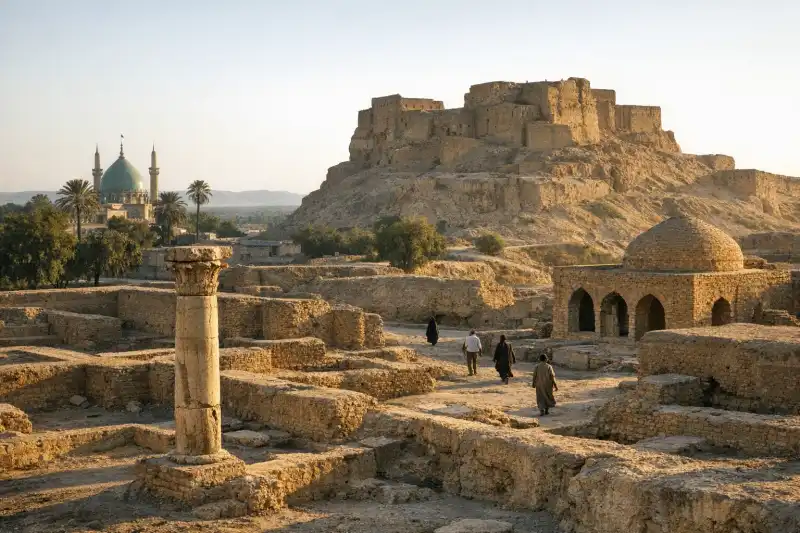
Susa in Iran is one of the oldest continuously important urban centers in the ancient world, a place where royal ambition, administrative power, and sacred tradition overlapped for thousands of years. Near the modern town of Shush in Khuzestan Province, the site rises from the plains in a series of archaeological mounds that do not immediately overwhelm by sheer monumentality, but instead reveal their greatness through depth: layer upon layer of cities, dynasties, and empires built over one another. This is not a ruin defined by a single age. It is a long conversation between Elamite rulers, Persian kings, Hellenistic administrators, Parthian elites, and later communities who continued to inhabit and reshape the landscape.
What makes Susa especially compelling is that it stands at a crossroads of worlds. It belonged to southwestern Iran, yet it was also tied closely to Mesopotamia. It was deeply local and unmistakably imperial. One era remembers it as an Elamite capital; another associates it with the Achaemenid court and the great building programs of Darius I. Biblical, classical, and archaeological traditions all meet here, but none fully contain it. Visiting Susa means stepping into a site where administrative tablets, glazed bricks, royal inscriptions, and broad earthen platforms together tell the story of one of the ancient Near East’s defining cities. Even in its fragmented state, the place carries the weight of long memory.
History
Early settlement and the rise of Elam
Susa emerged in the late 5th and 4th millennia BCE as one of the earliest major settlements of the Iranian plateau’s southwestern lowlands. Its location was strategic: close enough to the rich agricultural plain to sustain urban life, yet also connected to routes leading east into Iran and west toward Mesopotamia. Archaeologists have uncovered some of the earliest painted ceramics and administrative materials from the site, showing that Susa was not a marginal settlement but an early center of organized social and economic life.
By the 3rd millennium BCE, Susa had become one of the principal cities of Elam, the civilization that flourished in what is now southwestern Iran. The city’s political status shifted over time, but it repeatedly served as a dynastic and administrative heart. Elam was never a static kingdom with unchanging borders; it was a complex regional power, sometimes fragmented and sometimes expansive. Through these centuries, Susa developed as a place of palaces, temples, archives, and elite residences. Its rulers interacted with Mesopotamian powers as rivals, allies, and targets. Those relationships brought prestige and wealth, but also vulnerability.
Conflict, conquest, and renewal
The history of Susa is marked by repeated cycles of destruction and rebuilding. Mesopotamian kings campaigned against Elam, and Elamite rulers pushed back in turn. Inscriptions from outside powers describe attacks on the city, while excavated remains show long sequences of occupation that continued despite political shocks. This pattern is essential to understanding Susa: it was rarely defined by a single collapse. Instead, it adapted and endured.
One of the most famous episodes came in the 7th century BCE, when the Assyrian king Ashurbanipal boasted of devastating Susa after campaigns against Elam. His inscriptions portray the event in dramatic terms, emphasizing royal vengeance and the humiliation of a long-time rival. Yet archaeology also demonstrates continuity and later revival. Susa did not vanish. Like many great ancient cities, it outlived the empires that claimed to have erased it.
Susa under the Achaemenid Persians
Susa entered a new phase of world significance with the rise of the Achaemenid Empire in the 6th century BCE. Under Cyrus the Great and his successors, the Persian Empire brought together a vast territory stretching from the eastern Mediterranean to Central Asia. Susa became one of its principal capitals, alongside sites such as Persepolis, Pasargadae, and Babylon. Its importance was not merely symbolic. It was a functioning seat of government, administration, and ceremony.
Darius I in particular transformed the city through major construction. He built a grand palace complex decorated with finely crafted glazed bricks, stone columns, and reliefs that blended imperial ideology with technical sophistication. Royal inscriptions emphasize the multinational nature of the project, naming materials and artisans drawn from across the empire. Susa thus became a visible statement of Achaemenid rule: a place where imperial diversity was organized under the authority of the king.
The city’s role in administration was equally crucial. Archives and tablets point to bureaucratic activity, movement of goods, and communication across imperial networks. Susa was a capital not only because kings resided there, but because the empire’s machinery functioned through it.
Hellenistic to late antique Susa
After Alexander’s conquest of the Persian Empire in the late 4th century BCE, Susa entered the Hellenistic world. It retained strategic and administrative importance under the Seleucids, though its character changed with new political structures and cultural influences. Greek and local traditions interacted here, as they did across many cities of the former Achaemenid realm.
Later, under the Parthians and Sasanians, Susa continued as a regional center. Its ancient prestige likely contributed to its endurance. Though no longer the singular imperial capital it had been under Darius, it remained inhabited and active. Religious life, local administration, and trade all sustained the city over the centuries. By late antiquity, the urban landscape had evolved considerably, but the site still carried the imprint of its long political history.
Modern archaeological work, especially from the 19th century onward, revealed the extraordinary depth of the site. Excavations uncovered palatial remains, inscriptions, ceramics, architecture, and decorative fragments now central to understanding Elamite and Persian history. Today, Susa’s significance lies not only in what survives above ground, but in the way its strata preserve one of the longest urban stories in the ancient Near East.
Key Features
The first thing many visitors notice about Susa is that it is a landscape rather than a single monument. Unlike sites dominated by one standing temple or one intact palace, Susa spreads across mounds and excavation zones that represent different parts of the ancient city. This can make the experience more interpretive than immediate, but it is also what gives the site its unusual power. You are not looking at one building frozen in time; you are looking at the accumulated remains of multiple cities.
The Apadana area is among the most important zones associated with the Achaemenid period. Here stood the palace complex of Darius I, one of the defining royal constructions of ancient Persia. Though much of the superstructure has disappeared, the surviving foundations and layout still communicate the scale of the undertaking. This was a setting for audiences, royal display, and imperial administration. The site is especially meaningful when understood alongside the decorative fragments recovered from it, including the famous glazed bricks depicting archers, griffins, and vegetal motifs. Many original pieces are now in museums, but their association with Susa helps visitors imagine the brilliance of the palace in its prime.
The great archaeological mounds are themselves key features. They preserve evidence of long occupation stretching back into prehistory and the earliest urban phases. Walking around them, visitors can appreciate the physical reality of stratified history: each rise in the landscape is a man-made accumulation of centuries of building, destruction, leveling, and rebuilding. For travelers familiar with more visually complete classical ruins, these mounds may initially seem understated. Yet they are among the most authentic indicators of Susa’s antiquity. Their scale reflects not one era, but millennia.
Another essential element of a visit is the local museum, which helps bridge the gap between foundations on the ground and the richer material world of the ancient city. Ceramics, inscriptions, architectural fragments, and small finds give context to the site’s historical sweep. For many visitors, the museum is where Susa becomes most vivid. Administrative tablets hint at bureaucracy and daily management; artistic fragments reveal elite taste; inscriptions connect the city to named rulers and political events. The museum experience is particularly important because so much of Susa’s significance lies in archaeology rather than in towering standing walls.
The wider setting around Shush also matters. Susa was not isolated; it belonged to an inhabited and cultivated plain. The surrounding environment helps explain why the city could thrive for so long. Access to water, agricultural land, and communication routes made sustained occupation possible. Even today, the contrast between the open lowland landscape and the raised archaeological zones helps visitors understand how ancient urban centers stood out within broader regional systems.
Susa’s importance is also intellectual as much as visual. It is a site that rewards travelers willing to think comparatively. Here, Elamite heritage meets Persian imperial history. The city’s remains speak to relations between Iran and Mesopotamia, to the transformation of local capitals into imperial centers, and to the survival of urban places through political upheaval. This is why Susa is often so memorable for travelers interested in the ancient Near East: it demands that you imagine continuity across enormous spans of time. The features are not merely ruins; they are evidence of one of humanity’s long-lived civic landscapes.
Getting There
Susa is reached via the modern town of Shush in Khuzestan Province, southwestern Iran. The nearest major transport hub is Ahvaz, which has an airport with domestic connections from Tehran and other large Iranian cities. From Ahvaz to Shush, the overland distance is roughly 115 kilometers, and the journey by car or taxi usually takes about 1.5 to 2 hours depending on traffic and road conditions. A private taxi from Ahvaz can cost roughly 8,000,000 to 15,000,000 IRR depending on vehicle type, waiting time, and negotiation. Shared taxis and local intercity services are often cheaper.
Rail travelers can look into services connecting major cities to the broader Khuzestan region, though schedules vary and may not always be the most convenient for direct access to Shush. Buses are often the most practical budget option. Intercity buses from Ahvaz to nearby towns are inexpensive, commonly in the range of 1,000,000 to 3,000,000 IRR, with onward taxi connections to the archaeological zone if needed. If you are already touring the province, hiring a driver for a full day can be the easiest way to combine Susa with other nearby historical and cultural stops.
Within Shush itself, local taxis are the simplest means of reaching the site entrance and museum. Fares are usually modest for short urban rides, often around 500,000 to 1,500,000 IRR depending on distance and whether the service is shared or private. Because pricing in Iran can shift with inflation and currency fluctuations, confirm current costs locally. For international visitors, the smoothest plan is usually a pre-arranged driver from Ahvaz or a guided regional tour that includes Susa.
When to Visit
The best time to visit Susa is from late autumn to early spring, especially between November and March. Khuzestan can become extremely hot in late spring and summer, with daytime temperatures that make exposed archaeological landscapes tiring and, at times, uncomfortable. Since much of the visit involves walking outdoors across open ground with limited shade, mild weather greatly improves the experience.
Winter is generally the most pleasant season for exploring. Days are often cool to mild, making it easier to move slowly through the site, pause for photographs, and spend time in both the ruins and the museum without feeling rushed by the heat. Early spring is also attractive, with relatively comfortable conditions and clearer light across the plains. These months are ideal for travelers who want to combine Susa with other destinations in southwestern Iran.
Summer visits are possible, but they require planning. If traveling between May and September, begin early in the morning, carry plenty of water, wear sun protection, and keep expectations realistic for walking duration. Midday heat can be intense. Autumn can be a good compromise, especially later in the season when temperatures have begun to drop but visitor numbers remain manageable.
For photographers, low-angle morning or late-afternoon light often works best, giving the mounds and foundations more texture than the harsh overhead sun. If your main interest is careful historical exploration rather than simply checking off a UNESCO site, choose the cooler months and allow enough time to move at a reflective pace.
| Quick Facts | |
|---|---|
| Location | Shush, Khuzestan Province, Iran |
| Ancient significance | Major Elamite center and Achaemenid royal capital |
| UNESCO status | World Heritage Site |
| Best visit length | Half day to full day |
| Best season | November to March |
| Nearest major hub | Ahvaz |
| Famous period | Reign of Darius I and the Achaemenid Empire |
| Known for | Royal palace remains, archaeological mounds, museum collections |
| Terrain | Open lowland plain with excavated mounds |
| Visitor tip | Pair the site visit with the museum for essential context |
Susa is not the sort of destination that overwhelms through preservation alone. Its greatness lies in endurance, influence, and archaeological depth. For travelers interested in the ancient Near East, that makes it one of Iran’s most rewarding places to explore. Here, the remains of palaces and settlement layers preserve a story far larger than any one dynasty: the story of a city that mattered for thousands of years, survived conquest and transformation, and still anchors the memory of empires.
Guided tours: worth it?
Self-guided works here, but a guide can add real value if you want the ruins explained as a living place rather than just a sequence of monuments.
Best for
- First-time visitors who want context, not just photos
- Short visits where a planned route saves time
When to go self-guided
Go independently if you prefer setting your own pace, reading as you go, and checking official hours or ticket rules directly before you arrive.
What I’d avoid
Skip paid tours that bundle unrelated stops you do not actually want. The best option should either save meaningful planning time or add historical context you would miss on your own.
Susa Iran Tours
Useful when: you want to compare guided formats before deciding
Khuzestan Archaeological Sites Tours
Useful when: you want to compare guided formats before deciding
Ahvaz to Susa Day Trips
Useful when: transport or pickup logistics matter
Some tour links are affiliate links, which may earn Ancient Travel a small commission at no extra cost to you. I try to surface options that make practical sense for the site—not just anything bookable.
Frequently Asked Questions
Where is Susa located?
Susa is in Khuzestan Province in southwestern Iran, near the modern town of Shush.
Why is Susa historically important?
Susa was one of the great cities of the ancient Near East and served at different times as an Elamite center and an Achaemenid Persian royal capital.
Is Susa a UNESCO World Heritage Site?
Yes. The archaeological site of Susa was inscribed on the UNESCO World Heritage List for its exceptional importance across multiple ancient civilizations.
How much time should I plan for visiting Susa?
Most travelers should allow at least half a day to see the main archaeological area and local museum, while history enthusiasts may want a full day.
What can visitors see at Susa today?
Visitors can explore archaeological mounds, remains of monumental structures linked to royal occupation, the nearby museum, and the wider historic landscape around Shush.
What is the best season to visit Susa?
The most comfortable months are generally late autumn through early spring, when Khuzestan's temperatures are milder.
Nearby Ancient Sites
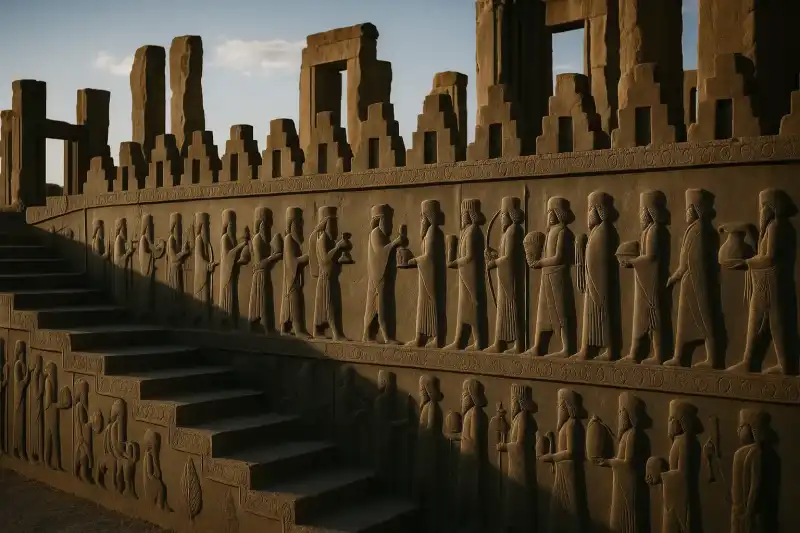
Persepolis: The Glorious Capital of the Persian Empire
Achaemenid Persian EmpireExplore Persepolis, the magnificent ceremonial capital of the Achaemenid Empire. Walk among towering...
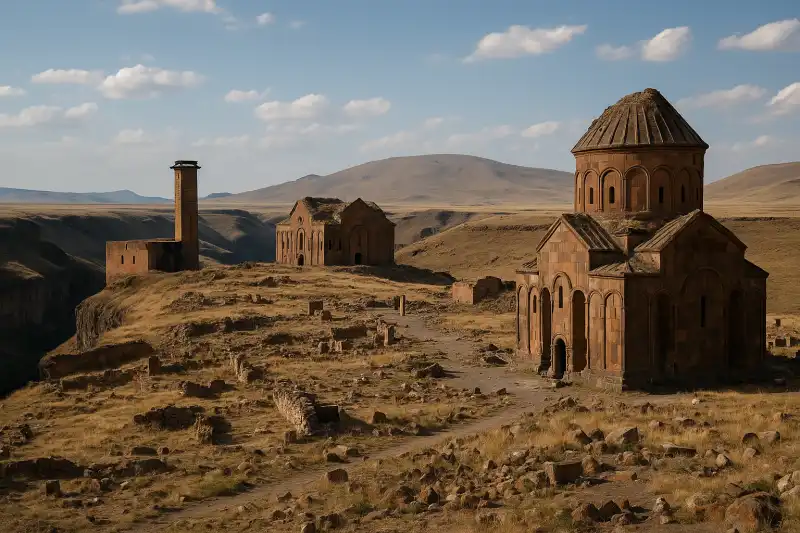
Ani Turkey Guide 2026: Cathedral of Ani & Lion Gate
Armenian-Bagratid-Byzantine-Seljuk-GeorgianPlan your visit to Ani in eastern Turkey: explore the Cathedral, churches, and Silk Road walls with ...
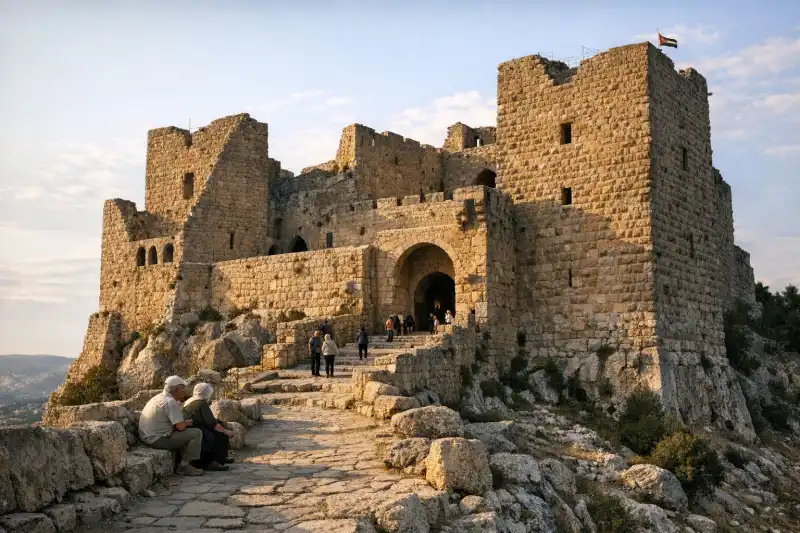
Ajloun Castle
Ajloun Castle in Jordan is a 12th-century Muslim fortress renowned for its strategic hilltop locatio...