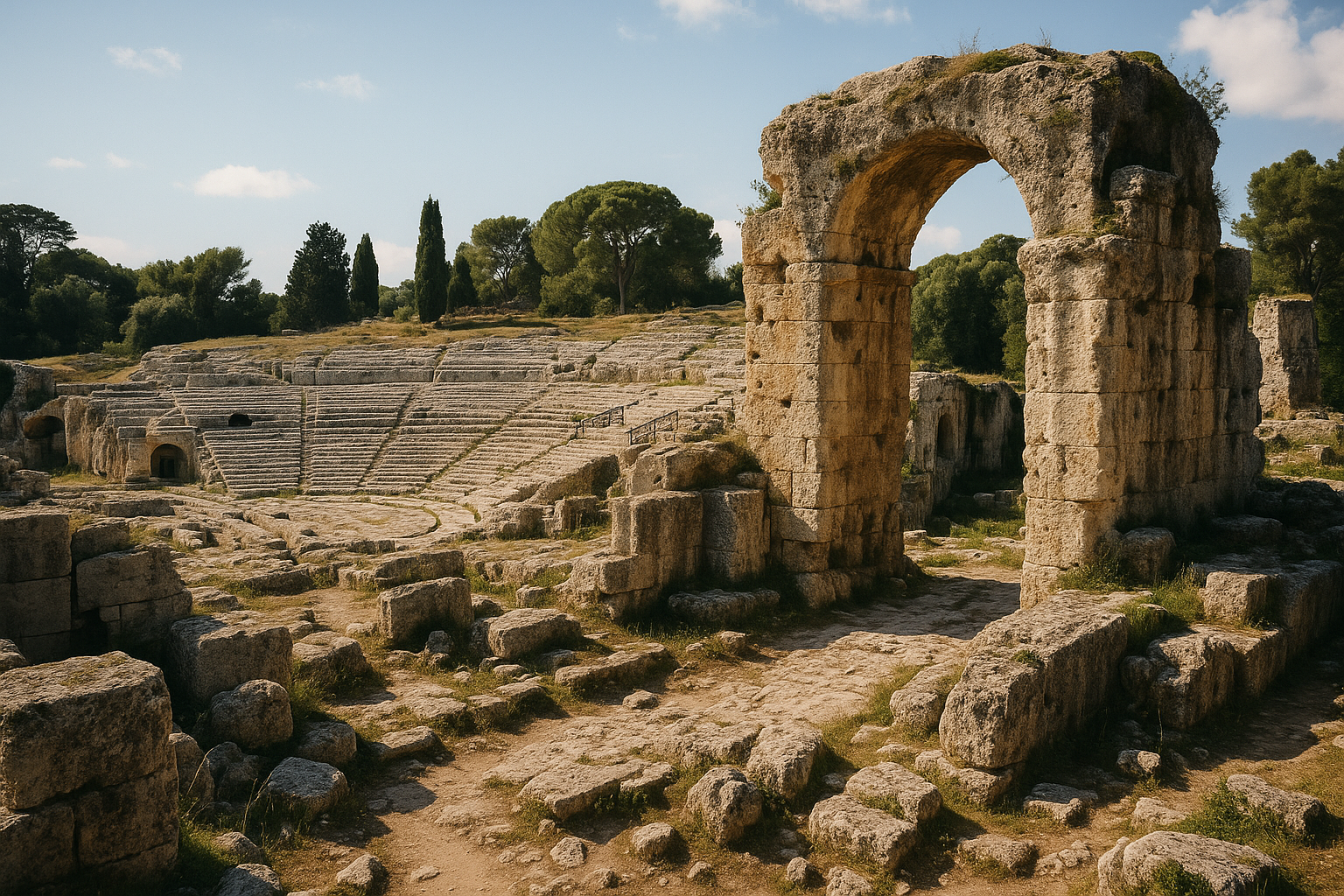
Quick Info
Curated Experiences
Syracuse Neapolis Archaeological Park Guided Tour
Syracuse Archaeology and Ortigia Half-Day Experience
The Greek Theatre at Syracuse is carved into a hillside that faces southeast toward the Ionian Sea, and when you stand at the top row of seats on a clear morning, you can feel the breeze that carried across this cavea while Aeschylus himself staged premieres here in the 5th century BCE. This is not a claim made loosely. Syracuse was one of the major theatrical centers of the ancient Greek world, and the Neapolis Archaeological Park preserves the physical evidence of that status in stone you can walk across, sit on, and hear your own voice bounce off.
But the park is not just a theatre. Within its boundaries you will find a Roman amphitheatre built for a different kind of spectacle, the famous Ear of Dionysius carved into a limestone quarry with uncanny acoustics, the massive altar platform of Hieron II, and the latomie — deep quarry pits that served as both construction material sources and open-air prisons. Together, these monuments document how one of the Mediterranean’s great city-states organized public life across nearly a thousand years of Greek, Roman, and Byzantine control.
For travelers who want to understand ancient Sicily as something more than scenic temple ruins, Syracuse is where the civic machinery becomes visible.
Historical Context
Syracuse was founded by Corinthian colonists around 733 BCE on the island of Ortigia, and within two centuries it had grown into the most powerful Greek city in the western Mediterranean. At its height in the 5th and 4th centuries BCE, Syracuse rivaled Athens in population, military capability, and cultural output. The city produced or attracted some of the ancient world’s most consequential figures: the playwright Aeschylus staged works here, Pindar composed odes for Syracusan patrons, and Archimedes was born and worked in the city.
The tyrants of Syracuse — Gelon, Hieron I, Dionysius I, and later Hieron II — channeled the city’s wealth into monumental building programs that transformed the Neapolis district into a concentrated zone of civic architecture. The Greek Theatre was the centerpiece, built in the 5th century BCE and expanded multiple times. The Altar of Hieron II, constructed in the 3rd century BCE, was one of the largest sacrificial altars in the Greek world, capable of accommodating the ritual slaughter of hundreds of animals in a single ceremony. These were not modest provincial buildings. They were statements of a city that considered itself a peer of Athens, Corinth, and Sparta.
Roman conquest in 212 BCE, during which Archimedes was killed despite orders to spare him, ended Syracuse’s era of independence but not its importance. The Romans adapted the city to their own civic needs, building an amphitheatre for gladiatorial combat alongside the existing Greek theatrical infrastructure. The coexistence of Greek theatre and Roman amphitheatre within the same archaeological park makes Neapolis unusually useful for understanding how these two cultures organized public spectacle differently.
Byzantine control brought Christian adaptation, and the medieval period saw the usual pattern of stone reuse and gradual silting. Systematic excavation from the 18th century onward revealed the monumental scale of the ancient city, and today the Neapolis park preserves what is arguably the densest concentration of major Greek and Roman public architecture on the island.
What to See
Greek Theatre of Syracuse
The Greek Theatre is the park’s centerpiece and one of the largest surviving Greek theatres anywhere. The cavea, carved directly into the Temenite hill, originally held an estimated 15,000 to 16,000 spectators in roughly 67 rows divided into nine wedge-shaped sections. The stone seating is original in its lower and middle tiers, though the upper sections have suffered from centuries of quarrying and erosion. The stage area was rebuilt during the Roman period, which complicates the archaeological picture but adds interpretive interest.
Climb to the top tier for the full spatial experience. From the highest rows, you can see the entire geometry of the cavea, the orchestra circle below, and — if you look past the trees and modern rooftops — the distant glint of the harbor that made Syracuse wealthy. This vantage point also reveals the rock-cut channels above the theatre that carried water from the hillside aqueduct, feeding both the city and the theatrical space itself.
Seasonal classical drama festivals (the INDA cycle) stage productions in the theatre from mid-May through late June, using the ancient space for its original purpose. If your dates align, attending a performance here ranks among the finest archaeological-cultural experiences in Italy.
Practical tip: Visit the theatre first, immediately at park opening (usually 9:00 AM or 8:30 AM in summer). Tour groups arrive by 10:00 AM and the seating area becomes crowded. Morning light is also best for photography, illuminating the cavea’s eastern face.
Ear of Dionysius (Orecchio di Dionisio)
The Ear of Dionysius is an artificial cave carved into the limestone cliff of the Latomia del Paradiso, the “Quarry of Paradise.” The cave extends roughly 75 feet high and 200 feet deep into the rock, with a distinctive S-shaped plan and a pointed, ear-like cross section that gives it its name. The acoustics are extraordinary: a whisper at the cave’s deepest point can be heard clearly at the entrance, and a clap produces a reverberating echo that takes several seconds to decay.
The name comes from the painter Caravaggio, who visited in 1608 and reportedly suggested that the tyrant Dionysius I used the cave to eavesdrop on prisoners held in the quarry. The story is almost certainly apocryphal, but the acoustic phenomenon is real and impressive. What the cave actually demonstrates is the scale of limestone extraction that supplied ancient Syracuse’s building programs — the quarry faces throughout the Latomia show the systematic removal of enormous volumes of stone.
The cave floor can be slippery, especially in damp conditions. The interior is cool even on hot days, providing a welcome thermal break.
Practical tip: Arrive early or wait for a gap between tour groups. The acoustic effect is best appreciated in relative quiet. Bring a small flashlight or use your phone light to examine the tool marks on the cave walls.
Roman Amphitheatre
The Roman Amphitheatre, dating to the 3rd century CE, is one of the largest in Sicily and demonstrates the shift in spectacle culture that came with Roman administration. The elliptical arena is partially rock-cut and partially constructed, with visible entrance corridors and the central channel that allowed the arena floor to be flooded or used for animal and equipment staging. The cavea is less well preserved than the Greek Theatre’s, but the plan is clearly readable and the scale is impressive.
What makes this structure particularly interesting is its proximity to the Greek Theatre. Standing between the two, you can literally see two different civilizations’ approaches to public entertainment: the Greek semicircular theatron designed for dramatic performance and civic assembly versus the Roman elliptical arena designed for combat and spectacle. The architectural comparison is one of the most compact and instructive in Mediterranean archaeology.
Practical tip: The Roman Amphitheatre receives fewer visitors than the Greek Theatre and is often relatively quiet. Use it as a pace-setter — a place to slow down, sit on the upper perimeter, and absorb the spatial differences between Greek and Roman entertainment architecture.
Altar of Hieron II and the Latomie
The Altar of Hieron II survives mostly as an enormous rock-cut foundation platform, roughly 650 feet long and 75 feet wide. The scale is difficult to process until you walk the full length and realize that this single sacrificial altar was longer than a modern city block. Built in the mid-3rd century BCE under the reign of Hieron II, the altar could accommodate massive public rituals including the simultaneous sacrifice of 450 oxen. Almost nothing of the superstructure survives, but the foundation alone communicates the ceremonial ambitions of Hellenistic Syracuse.
The surrounding latomie (quarries) add a more visceral layer. These deep, steep-walled pits were used as extraction sites for building stone, and later as prisons. After the defeat of the Athenian expedition in 413 BCE, thousands of Athenian prisoners were reportedly held in the latomie under horrific conditions. The Latomia del Paradiso, where the Ear of Dionysius is located, has been transformed over centuries into a lush garden with citrus trees, tropical plants, and dramatic cliff walls. The contrast between the beauty of the current garden and the brutality of its historical use is one of the park’s most affecting experiences.
Practical tip: Walk the full perimeter of the Latomia del Paradiso garden rather than just visiting the Ear of Dionysius and leaving. The quarry walls, with their distinctive extraction scars, tell a story of industrial-scale construction that complements the monumental buildings above.
Timing and Seasons
Spring (April through June) is the best season for visiting the park. Temperatures range from 61 to 82°F (16 to 28°C), with comfortable walking conditions and manageable crowds outside Italian holidays. The INDA classical drama season (mid-May to late June) adds the possibility of seeing performances in the Greek Theatre, though this also increases foot traffic around performance days.
Summer (July through August) is hot, regularly 86 to 97°F (30 to 36°C), with limited shade throughout the park. The exposed stone seating of the Greek Theatre and the open arena of the Roman Amphitheatre amplify the heat. Visit at opening time or in the last two hours before closing. Midday visits in July and August are strongly discouraged.
Autumn (September through November) offers excellent conditions: temperatures in the 64 to 84°F (18 to 29°C) range, thinning crowds, and warm afternoon light. October is particularly pleasant for unhurried exploration.
Winter (December through February) is mild, with highs around 52 to 61°F (11 to 16°C). Rain is possible but rarely prolonged. The park can feel quite empty in winter, which suits travelers who want time and space to read the archaeology carefully.
The best time of day in any season is the first 90 minutes after opening. By late morning, school groups and organized tours fill the Greek Theatre and Ear of Dionysius.
Tickets, Logistics, and Getting There
Admission to the Neapolis Archaeological Park is approximately $15 to $18 USD (13 to 16 euros). Combined tickets including the Paolo Orsi Archaeological Museum, located a short walk from the park, are sometimes available for roughly $20 to $24 USD. The museum holds artifacts from the park excavations and provides essential context, particularly for the Greek Theatre and the latomie, and is well worth the additional cost.
Park hours: Typically 8:30 or 9:00 AM to approximately 5:00 or 6:30 PM depending on season. Longer hours in summer. Always confirm before visiting, as schedules can shift around performance seasons and holidays.
From Ortigia/central Syracuse: The park is about 1.5 miles northwest of Ortigia. Taxis cost approximately $8 to $12 USD and take 10 to 15 minutes. Local buses run regularly for about $1.50 USD. Walking from Ortigia takes roughly 25 to 35 minutes through the modern city, which is pleasant in cool weather but tiring in summer heat.
From Catania: About 1 hour by car or 1 hour 15 minutes by train (direct service available). This is the most common arrival route for travelers based in eastern Sicily.
From Agrigento: Allow 2.5 to 3 hours by car. Direct public transport connections are limited; most travelers use a rental car for this route.
Parking: Limited street parking near the park entrance. A small paid lot is available nearby, typically $3 to $5 USD. Arriving early helps secure a spot close to the entrance.
Pre-booking is not always necessary but is recommended during the INDA performance season and Easter/summer holiday periods.
Practical Tips
- Footwear should be sturdy and closed-toe. The park includes uneven stone paths, quarry terrain, and potentially slippery cave surfaces.
- Carry at least 1.5 liters of water. There is a small refreshment point near the entrance, but nothing within the park itself.
- Sun protection is critical from April through October. The Greek Theatre seating and the walk between monuments are fully exposed.
- A printed or downloaded park map helps orient you between the scattered monuments. On-site signage exists but can be sparse between major stops.
- If attending an INDA performance, book well in advance. Tickets typically range from $30 to $80 USD depending on seating. Performances begin in the evening and the atmosphere is extraordinary.
- Binoculars are useful for examining the rock-cut water channels above the Greek Theatre and the quarry-face details in the latomie from ground level.
Suggested Itinerary
Morning Park Visit (2.5 to 3 hours): Enter at opening and head directly to the Greek Theatre. Spend 45 minutes exploring the cavea from bottom to top, examining the rock-cut channels and the stage area. Walk to the Latomia del Paradiso and the Ear of Dionysius (30 minutes). Continue through the quarry garden to the Altar of Hieron II platform (20 minutes). Finish at the Roman Amphitheatre (30 minutes). Exit and walk or taxi to the Paolo Orsi Museum for artifact context (45 to 60 minutes).
Afternoon Ortigia Extension (2 to 3 hours): After the museum, transfer to Ortigia for lunch in the old town. Walk through the Temple of Apollo ruins near the bridge (the oldest Doric temple in Sicily, now heavily ruined but historically significant). Continue to the Piazza Duomo, where the cathedral incorporates the columns of a 5th-century BCE Temple of Athena into its walls — a remarkable example of architectural continuity. End at the waterfront near the Fonte Aretusa spring.
Full Syracuse Day (7 to 8 hours): Combine the morning park visit, midday museum stop, and afternoon Ortigia walk for a comprehensive day that covers the full range of Syracuse’s ancient, medieval, and modern layers.
Nearby Sites
Taormina Ancient Theatre is roughly 1 hour and 15 minutes north by car. The theatre there offers a completely different setting — perched above the coast with Mount Etna as a backdrop — and the comparison between the two Greek-era theatres reveals how profoundly site selection shaped the ancient performance experience.
Valley of the Temples, Agrigento is about 2.5 to 3 hours west by car. Agrigento’s monumental sacred ridge provides the best temple architecture in Sicily, while Syracuse provides the best civic and entertainment architecture. Together they represent the two essential stops for Greek archaeology on the island.
Villa Romana del Casale is approximately 2 hours west in central Sicily. Its extraordinary mosaic floors offer a window into elite Roman private life that complements the public monuments at Neapolis. The combination works well as a two-day central Sicily detour.
Paestum is across the Strait of Messina and up the Italian mainland coast, roughly 5 to 6 hours from Syracuse. For travelers continuing north, its three standing Doric temples form the strongest Greek colonial comparison available outside Sicily.
Final Take
Syracuse Archaeological Park earns its reputation not through a single iconic monument but through density. Within a compact walkable area, you move from one of the ancient world’s great theatres to a Roman combat arena, from an industrial quarry turned prison to a sacrificial altar the length of a city block. Each monument tells a different story about how power was exercised, how labor was organized, and how public life was staged. Taken together, they make Neapolis the most complete lesson in ancient civic architecture that Sicily offers.
Ortigia, a short ride away, makes the picture even richer. The Greek temple columns embedded in the cathedral walls are a fitting metaphor for Syracuse itself: a city where nothing is ever fully lost, just absorbed into the next layer.
Discover More Ancient Wonders
- Taormina Ancient Theatre — Dramatic coastal-volcanic theatre setting in eastern Sicily
- Valley of the Temples, Agrigento — Monumental Greek sacred architecture at its finest
- Villa Romana del Casale — Extraordinary Roman mosaics in central Sicily
- Italy Ancient Sites Hub — Plan your complete Italian archaeology route
- Budget Travel Guide — Practical strategies for affordable Sicily travel
Quick Facts
| Attribute | Details |
|---|---|
| Location | Syracuse (Siracusa), Sicily, Italy |
| Country | Italy |
| Region | Sicily |
| Main Area | Neapolis Archaeological Park |
| Civilization | Greek-Roman-Byzantine |
| Historical Period | 5th century BCE-Roman Imperial era |
| Established | c. 5th century BCE monumental phase |
| Entry Fee | ~$15-$18 USD (€13-16) |
| Hours | ~8:30/9:00 AM to 5:00-6:30 PM (seasonal) |
| Best Time | Spring or autumn; early morning any season |
| Suggested Visit | 2.5-3 hours (park); add 1 hour for museum |
| Key Monuments | Greek Theatre, Ear of Dionysius, Roman Amphitheatre, Altar of Hieron II |
| Coordinates | 37.0755, 15.2852 |
Frequently Asked Questions
How long should I spend at Syracuse Archaeological Park?
Most travelers need 2 to 3 hours to see the Greek Theatre, Ear of Dionysius, Roman Amphitheatre, and key quarry areas at a comfortable pace.
Is this the same place as Ortigia?
No. Neapolis Archaeological Park is inland from Ortigia. They are often paired in one day, but they are separate areas with different access points.
Do I need a guided tour to understand the site?
A guide adds real value because monuments are spread out and interpretation on-site can feel brief. Independent visits still work well if you read ahead and follow a clear route.
When is the best time to visit?
Early morning or late afternoon is best in warm months. Midday summer heat in Syracuse can be intense, and shade is limited in several sections.
Can I combine Syracuse with Taormina in one day?
It is technically possible by car, but rushed. Most travelers get a better experience by giving Syracuse and Taormina separate days.
Nearby Ancient Sites
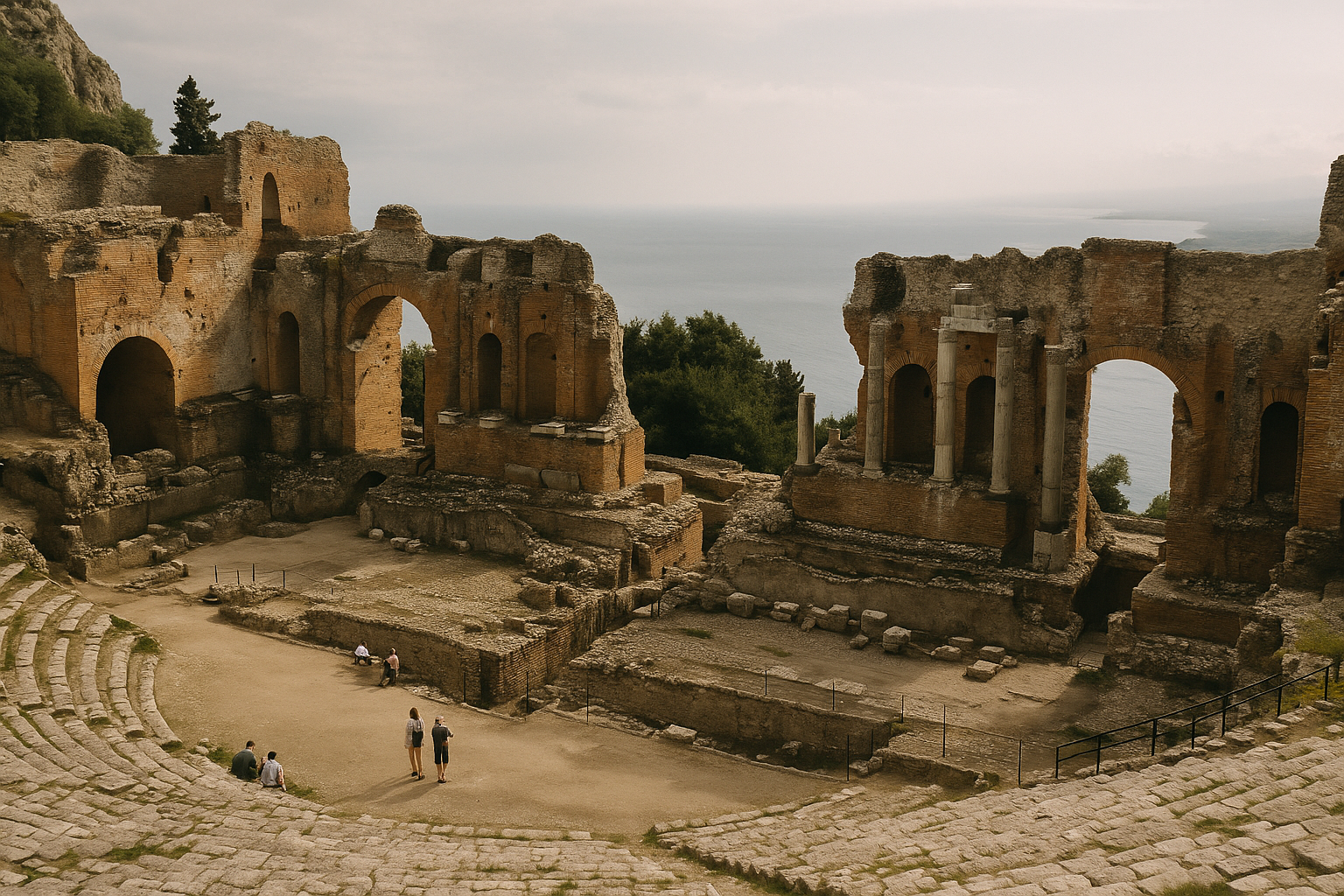
Taormina Ancient Theatre: Sicily’s Greek-Roman Stage Above the Sea
Greek / RomanPlan your visit to Taormina’s ancient theatre: history, views of Etna, tickets, logistics, and what ...
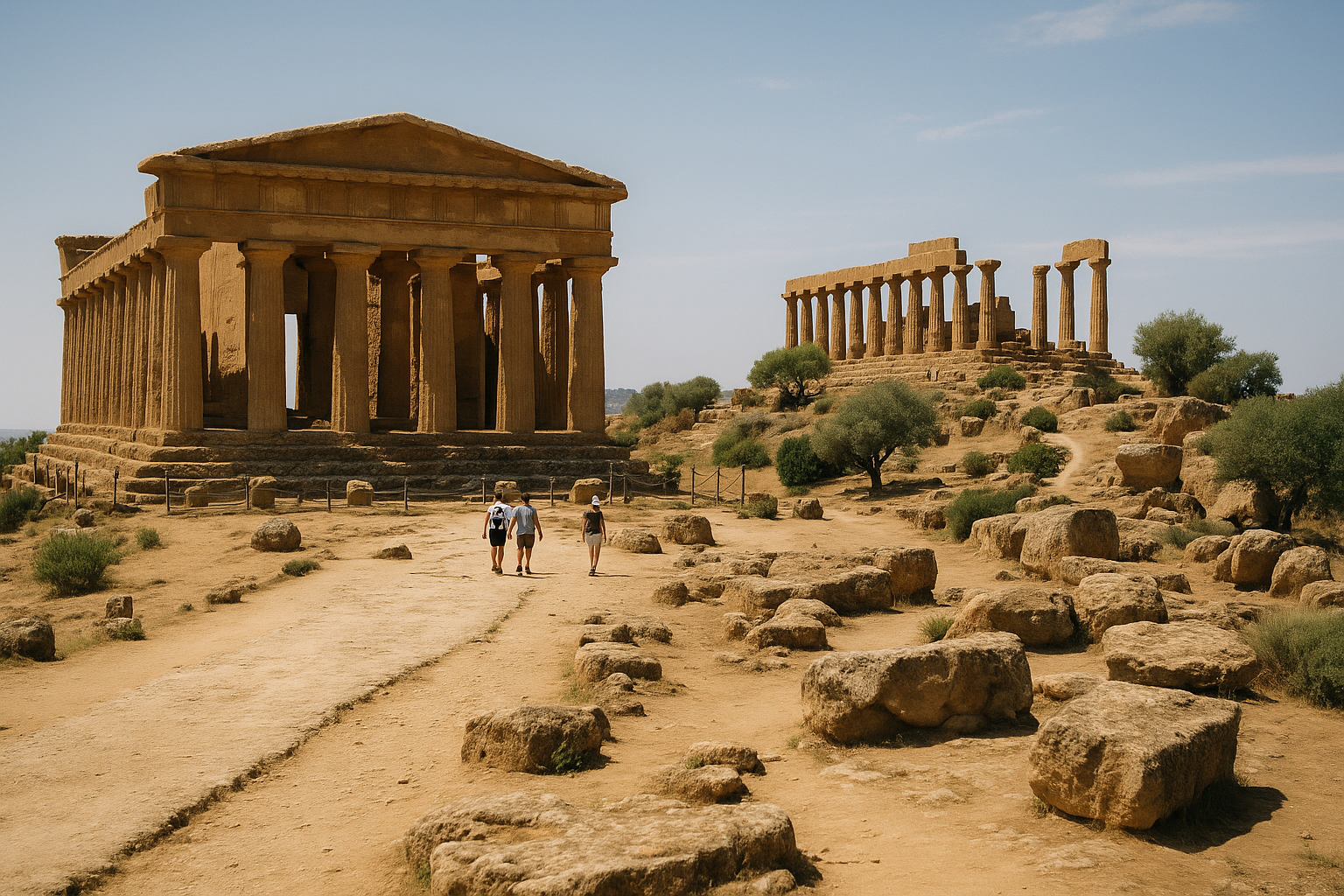
Valley of the Temples Agrigento Guide 2026: Concordia & Juno
Greek-Roman-NormanPlan your Agrigento Valley of the Temples visit with temple highlights, tickets, transport, and prac...
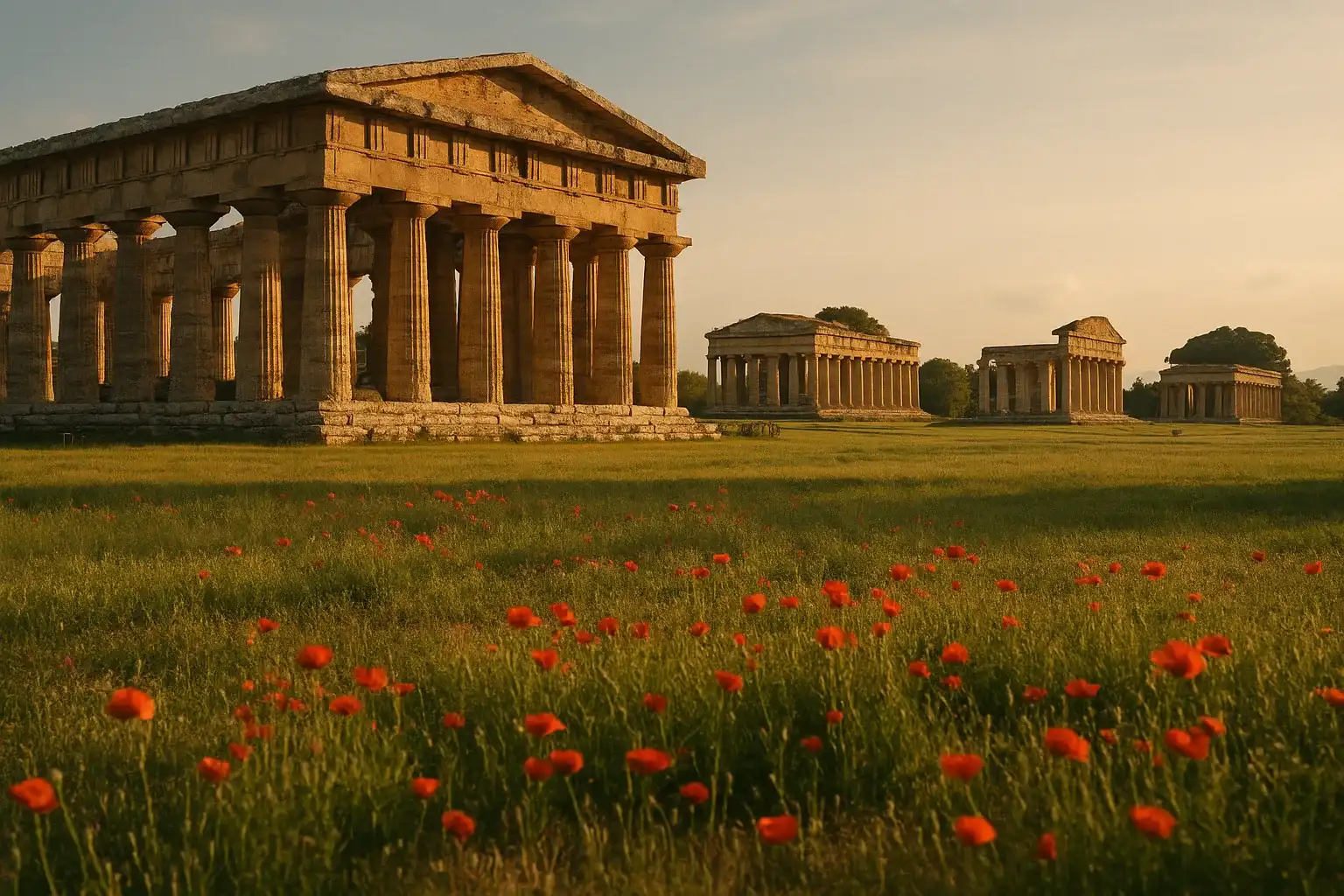
Paestum: Europe's Best-Preserved Greek Temples on Italy's
Ancient Greek / RomanDiscover Paestum's magnificent Greek temples, the Tomb of the Diver, and buffalo mozzarella farms on...
Pompeii Italy Travel Guide: Frozen in Time, Complete 2026
Roman EmpireWalk the streets of ancient Pompeii with our complete guide. Discover the best routes, must-see hous...