Quick Info
Curated Experiences
Full-Day Angkor Wat, Ta Prohm, and Ta Keo Temple Tour
Private Angkor Temples Tour: Bayon, Ta Keo & More
Angkor Grand Circuit Day Tour Including Ta Keo
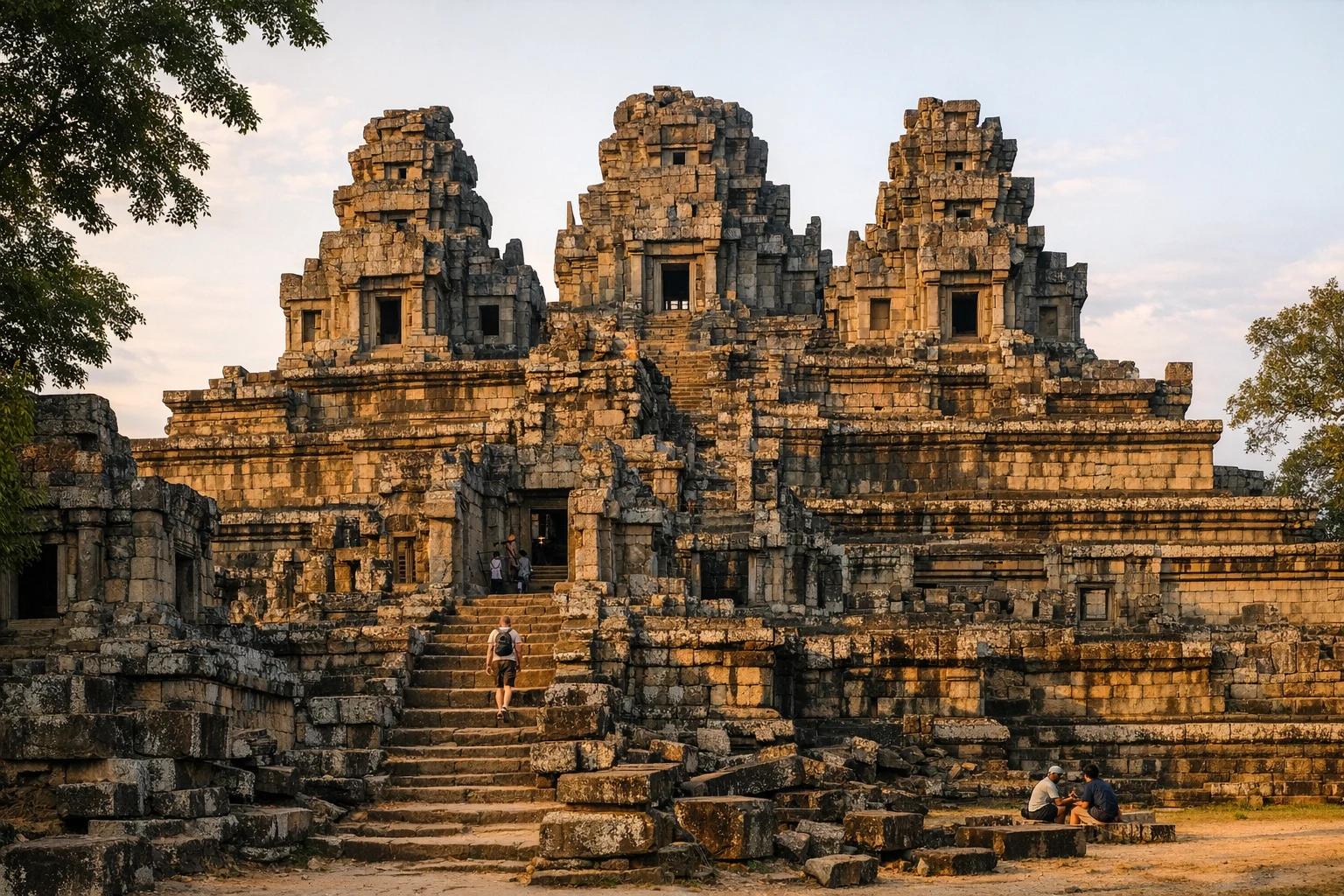
In the heart of Cambodia’s legendary Angkor Archaeological Park rises an ancient sandstone pyramid, its massive tiers etched with centuries of tropical weather and mystique. This is Ta Keo, an iconic yet unfinished Hindu temple-mountain, whose formidable symmetry and vertiginous stairways draw curious travelers, archaeologists, and seekers of wonder. Northern Siem Reap Province envelopes the ruins in a thrumming emerald sea of vegetation, providing an atmospheric backdrop for quiet contemplation or thrilling exploration. Unlike its famed peers, Angkor Wat and Bayon, Ta Keo is stripped of much of its decorative flourish, commanding the landscape with raw, monumental dignity. Its severe, almost modern geometry draws the eye skyward, inviting visitors to ascend through history as they tackle the famously steep steps to its five sanctuaries.
Built at the turn of the first millennium by King Jayavarman V, Ta Keo stands as testament to both the spiritual ambitions and human vulnerabilities of the Khmer Empire. The temple is dedicated to Shiva, reflecting ancient Cambodia’s intricate relationship with Hinduism, and has been revered as “the mountain with golden peaks.” Yet, unlike the intricately carved surfaces of other Angkorian temples, Ta Keo is striking for its plainness—an aesthetic born of circumstance rather than choice. Construction, once full of promise and royal intent, abruptly ceased, leaving the temple unfinished and inviting endless speculation over the centuries. Today, as visitors traverse its monumental stairways beneath shifting jungle light, Ta Keo offers vibrant echoes of a civilization whose architectural visions continue to awe the world.
History
The Reign of Jayavarman V and the Genesis of Ta Keo
Ta Keo’s story begins at a transformative moment in Angkor’s history. Jayavarman V ascended the throne of the Khmer Empire as a boy and ruled from 968 to roughly 1001 CE. His reign marked a period of ambitious temple-building activities, characterized by a fervent desire to assert divine legitimacy and rival the grandeur of his predecessors. Around the year 975 CE, Jayavarman V commissioned Ta Keo as his state temple; the monument was intended as both a spiritual anchor and a bold demonstration of royal authority.
The choice of site was deliberate: Ta Keo was constructed on a natural mound east of Angkor Thom, close to the ancient capital’s ceremonial heart. Carved from dense sandstone blocks, the temple was conceived as a temple-mountain—a symbolic representation of Mount Meru, the mythological axis of the universe in Hindu cosmology. Its planned completion would have made it one of Angkor’s most imposing structures at the time, a worthy successor to earlier edifices like Pre Rup and the now-lost Bakong.
The Mysterious Halt: Interrupted Ambitions
In the annals of Cambodia’s ancient architecture, few tales are as enigmatic as the unfinished state of Ta Keo. Architectural evidence and inscriptions suggest a sudden cessation of work. Legend and scholarly debate converge on a dramatic incident: lightning was said to have struck the temple mid-construction—a dire omen believed, in Khmer cosmology, to signal divine displeasure. Whether due to this portent, shifts in royal succession, or broader societal stresses, construction screeched to a halt around the time of Jayavarman V’s death.
Unlike later temples layered with historical overlays, Ta Keo’s abrupt halt left it almost in its “raw” state, its planned decorative schemes etched only as traces on the stone. Subsequent kings appear to have abandoned the project, possibly out of respect for royal omens or preoccupation with their own grand designs. What survives is a unique time capsule—an unparalleled window into the architectural methods, priorities, and even engineering quandaries of Angkor’s apex.
Later Use and Rediscovery
Despite never being finished, Ta Keo did not fade into obscurity. Some inscriptions and archaeological remnants point to sporadic usage or veneration during later centuries, possibly by local ascetics or priests who maintained small shrines within its precincts. Overgrown by jungle after the decline of the Khmer Empire, Ta Keo was “rediscovered” by early French explorers and scholars in the late 19th and early 20th centuries. Restoration efforts in the modern era have focused on stabilizing its precarious slopes and ensuring safe visitor access rather than reconstructing lost elements. Thus, today’s Ta Keo is cared for largely in the state it was left centuries ago—unfinished, yet supremely compelling.
Key Features
Approaching Ta Keo is a lesson in arrested grandeur. Its central sanctuary rises 21.5 meters above the upper terrace and sits atop a five-tiered pyramid measuring nearly 50 meters on each side. Unlike many Angkorian temples, the monument is almost completely devoid of detailed bas-reliefs or ornamentation. The effect is one of stark, geometric power: vast, rectilinear blocks of sandstone—some weighing several tons—stacked in an unfussy, terraced formation. The architectural style, often described as “early temple-mountain,” stands as a prototype for later, more elaborate constructions across Angkor.
Visitors immediately confront the temple’s most daunting feature: its steep, narrow staircases, oriented to the cardinal points. The experience of climbing these steps—some at a dizzying 70-degree angle—is at once physically demanding and exhilarating, echoing the symbolic journey from earth to the summit of mythic Mount Meru. The climb rewards with panoramic jungle vistas and the prospect of solitude, as the relative difficulty deters large crowds, especially compared to Angkor’s more photogenic sites.
At the summit sit five sanctuary towers arranged in a quincunx, the signature design choice of Khmer “mountain temples.” The central tower, once dedicated to Shiva, is surrounded by four corner towers—each intended as an abode for the gods. Though unfinished, the towers still radiate creative intent. Small holes dot their surfaces, hinting at decorations never carved. The sun-bleached stone, unsoftened by narrative reliefs, accentuates the monumentality of scale and stark planning.
The terraces themselves tell stories via their layout: a square moat (now mostly dry) once defined the outer limits of the complex, while remnants of guardian lions and nagas hint at the spiritual protectors intended for the structure. Elsewhere, sparse traces of lintel carvings—some displaying only rough outlines—provide tantalizing evidence of what might have been. What the temple lacks in surface ornament, it makes up for in presence: the interplay of angles, shadows, sun, and stone creates an almost meditative, timeless atmosphere.
The unfinished but functional state of Ta Keo means visitors are granted a rare intimacy with ancient construction methods. Without distracting detail, the sheer labor of carving, hoisting, and aligning thousands of stone blocks is visible everywhere. Many modern architects and engineers marvel at the site as an instructional resource—one providing insight into Khmer stone-working techniques and the spiritual symbolism driving their monumental ambitions.
Getting There
Ta Keo’s central location within Angkor Archaeological Park—just east of Angkor Thom and roughly mid-way between Angkor Wat and the Eastern Baray—makes it easily accessible from Siem Reap, the gateway city for temple exploration. Most visitors begin their journey from Siem Reap, located about 7 kilometers to the southwest. The city’s bustling tourism infrastructure offers several options for reaching Ta Keo.
The most popular means of transport is by tuk-tuk, which can be hired privately for a day. A standard day-rate for a tuk-tuk driver is between $18 and $25 USD, often covering multiple temples on a tailored itinerary. For small groups or those seeking a cooler ride, air-conditioned cars or minivans are also available at slightly higher prices ($35–$50 USD per day, depending on group size and negotiating skills). For the adventurous, bicycle rental is an economic and eco-friendly alternative—most shops in Siem Reap rent bikes for $3–$10 per day, and the ride offers scenic glimpses of rural Cambodia, passing through ancient gates and silent forest corridors.
Entry to Ta Keo (and all major Angkor temples) requires possession of an Angkor Pass, available at the official ticket center just outside Siem Reap. The current fees (as of 2024) are $37 for a 1-day pass, $62 for 3 days, and $72 for 7 days. The pass is checked at various entrances throughout the park, so be sure to carry it at all times. Once inside the park, wayfinding is straightforward: Ta Keo’s location on the “Grand Circuit” ensures clear signposts, or a knowledgeable tuk-tuk driver can guide you seamlessly between temples.
For guided experiences, numerous tour companies in Siem Reap offer half-day or full-day tours incorporating Ta Keo alongside other Angkor landmarks. Prices for group tours range from $25–$45 USD per person, including transportation and an English-speaking guide; private tours cost more but offer greater flexibility and expert insights into the monument’s history and architecture.
When to Visit
The evocative ambiance of Ta Keo evolves dramatically with Cambodia’s marked tropical seasons, influencing not only the visual experience but also comfort and crowd size. The best months for visiting are generally from November through March—the cool, dry season. During this period, daytime temperatures range from 22°C to 30°C (72°F to 86°F); the skies are clear and humidity is lower, making stair-climbing and lingering atop the temple pleasant. The late-afternoon sun casts beautiful shadows across the temple’s blocks and illuminates the jungle with a golden sheen, making it ideal for photography.
By contrast, the hot season (April to early June) brings higher temperatures, often exceeding 35°C (95°F). While the park is open, the sweltering heat can make Ta Keo’s steep stairs more strenuous. Early morning visits are advisable to avoid the midday sun; the temple opens at 7:30 am, and arriving early provides both cooler temperatures and a greater sense of solitude, as fewer large tour groups are on-site at this hour.
The rainy season (late May through October) brings frequent but usually brief downpours. While this deters some visitors, the freshly washed jungles and moats take on a lush vibrancy; abundant greenery envelops the sandstone, and crowds thin to a minimum. The stairs can become slippery, so sturdy shoes are essential, but the reward is experiencing Ta Keo in atmospheric solitude, with the evocative sound of rain on ancient stone.
National holidays such as Khmer New Year (April) and religious festivals can sometimes increase domestic travel and park traffic, but Ta Keo rarely suffers from the dense crowding seen at Angkor Wat. Whether braving the heat or embracing the rainy hush, the site delivers a profound window into the splendor and mysteries of Angkor’s golden age year-round.
Quick Facts
| Feature | Details |
|---|---|
| Location | Angkor Archaeological Park, near Siem Reap, Cambodia |
| Construction Period | Late 10th – early 11th century CE |
| Built By | King Jayavarman V |
| Architectural Style | Early Khmer temple-mountain, sandstone |
| Religious Use | Hindu shrine dedicated to Shiva |
| Height | 21.5 meters (from upper terrace to central tower summit) |
| Number of Levels | 5 stepped terraces |
| Unfinished? | Yes—construction halted abruptly, little surface decoration completed |
| Entry Fee | Included with Angkor Pass ($37/day, $62/3 days, $72/7 days) |
| Accessibility | Steep, narrow stairs; not suitable for those with limited mobility |
| Best Time to Visit | November – March (dry season), early morning or late afternoon for coolest conditions |
| Nearby Sites | Angkor Wat, Angkor Thom, Bayon Temple, Banteay Kdei, East Mebon |
| Tours Available | Yes—group and private tours from Siem Reap, often with guide, transport, and multi-temple routes |
Frequently Asked Questions
How much does it cost to visit Ta Keo?
Ta Keo is included in the Angkor Archaeological Park pass, which costs $37 for a one-day pass, $62 for three days, or $72 for a week.
Are there steep stairs at Ta Keo?
Yes, the stairs are extremely steep and narrow, requiring careful climbing. Comfortable, non-slip shoes are recommended.
Can I visit Ta Keo as part of a guided tour?
Yes, many guided tours of Angkor include Ta Keo, often as part of a broader itinerary covering several major temples.
Is Ta Keo accessible for people with mobility issues?
Unfortunately, due to the steep steps and uneven surfaces, Ta Keo is not easily accessible for travelers with limited mobility.
How much time should I allow for visiting Ta Keo?
Plan to spend around 30–45 minutes at Ta Keo to climb the steps, explore the terraces, and soak in the views.
Nearby Ancient Sites
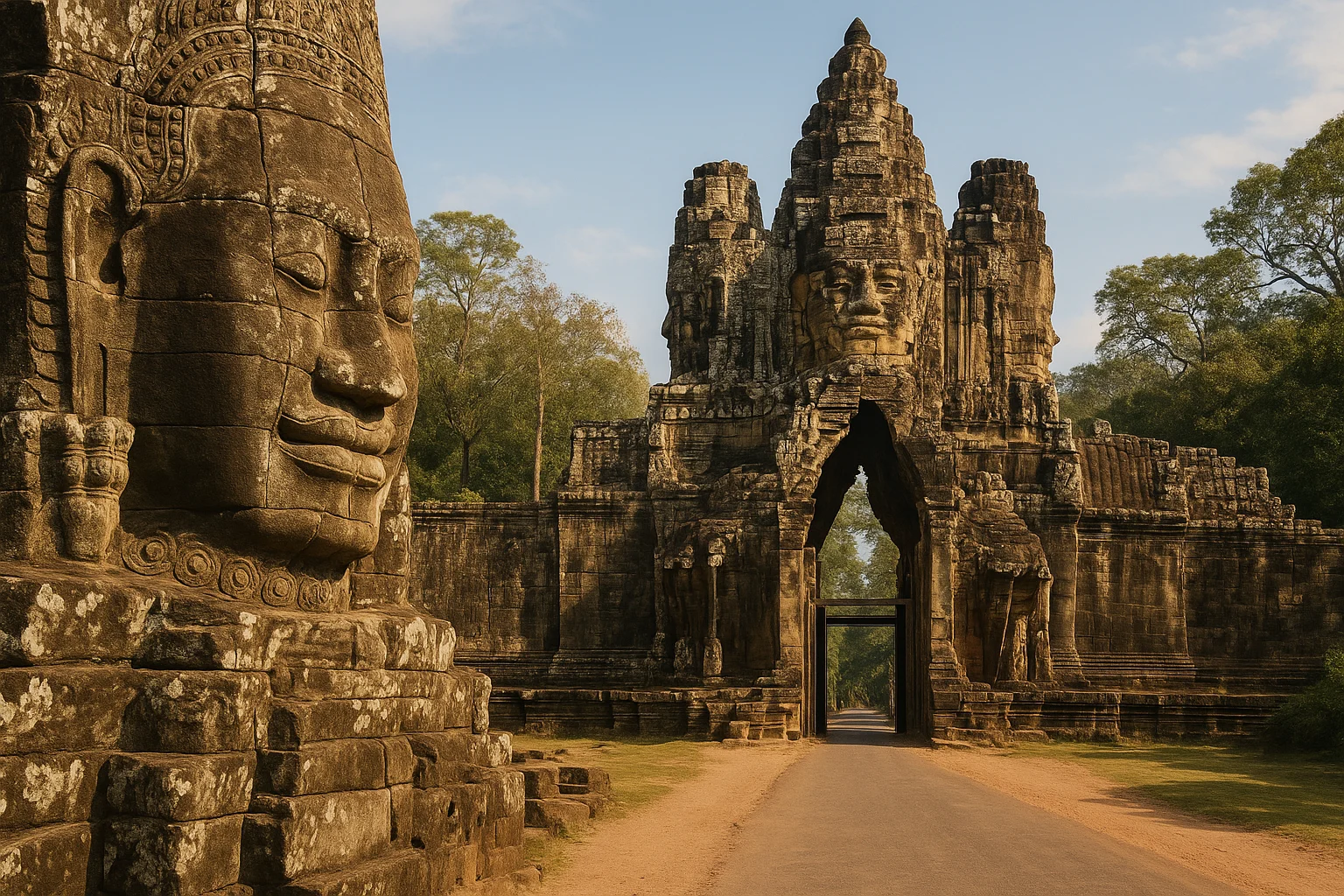
Angkor Thom Travel Guide 2026: Bayon Faces, Gates, and the Khmer Royal City
KhmerAngkor Thom was the last great capital of the Khmer Empire. This guide covers how to visit Bayon, th...
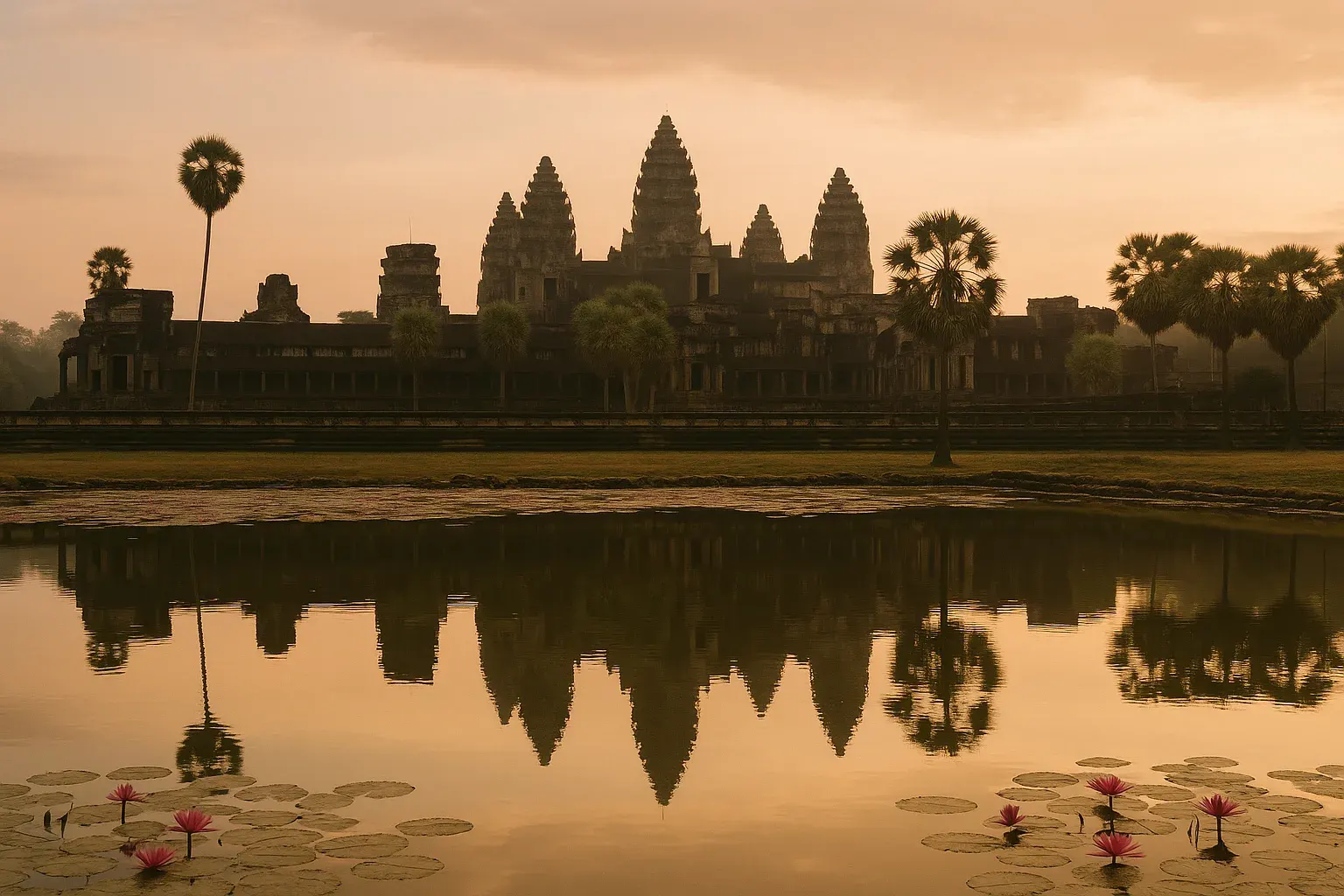
Angkor Wat Travel Guide 2026: Everything You Need to Know
KhmerAngkor Wat, the world's largest religious monument, spans over 400 acres in the heart of Cambodia. T...
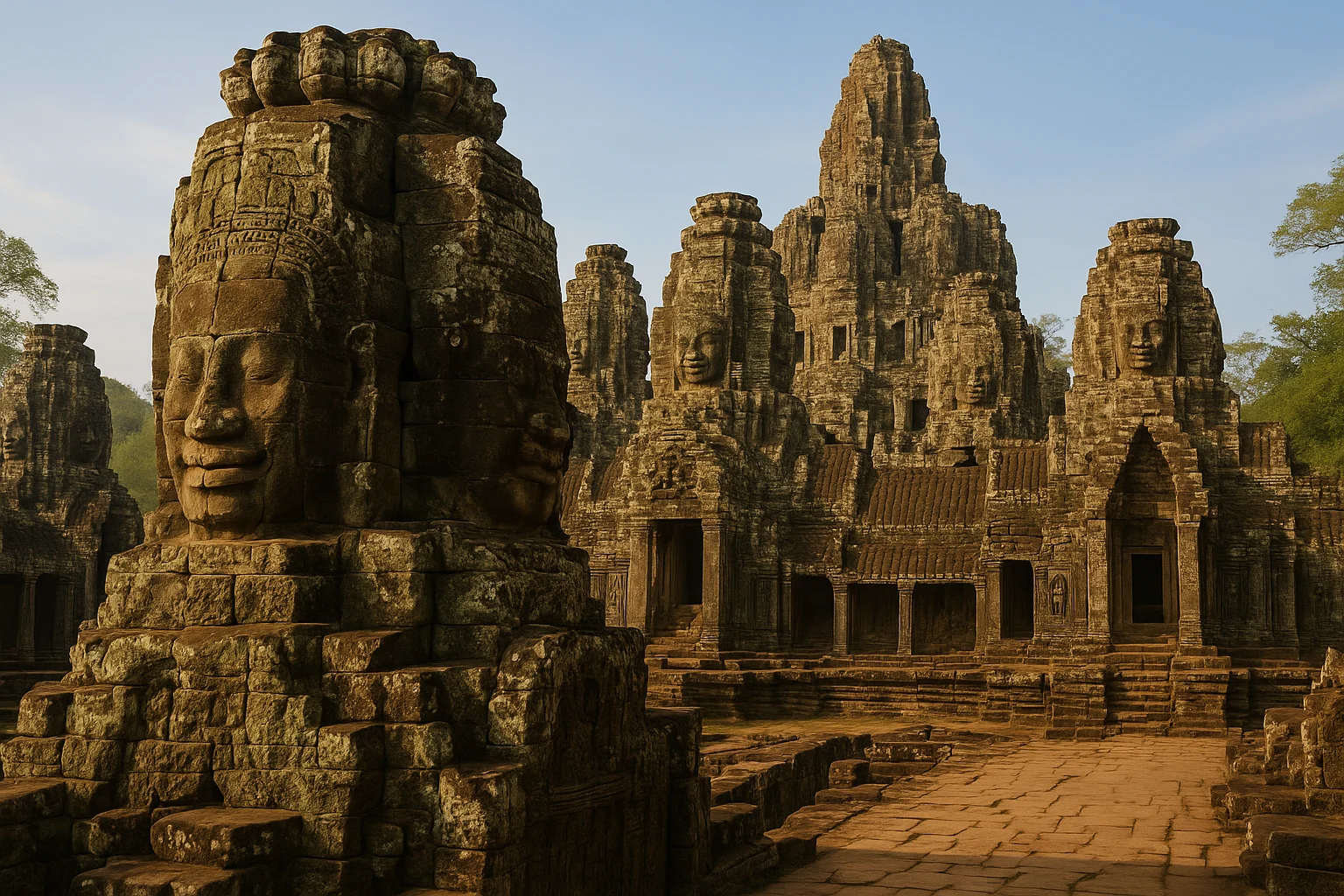
Bayon Temple Travel Guide 2026: Face Towers, Bas-Reliefs, and Best Visit Timing
KhmerBayon Temple sits at the center of Angkor Thom and is famous for its carved stone faces. This guide ...
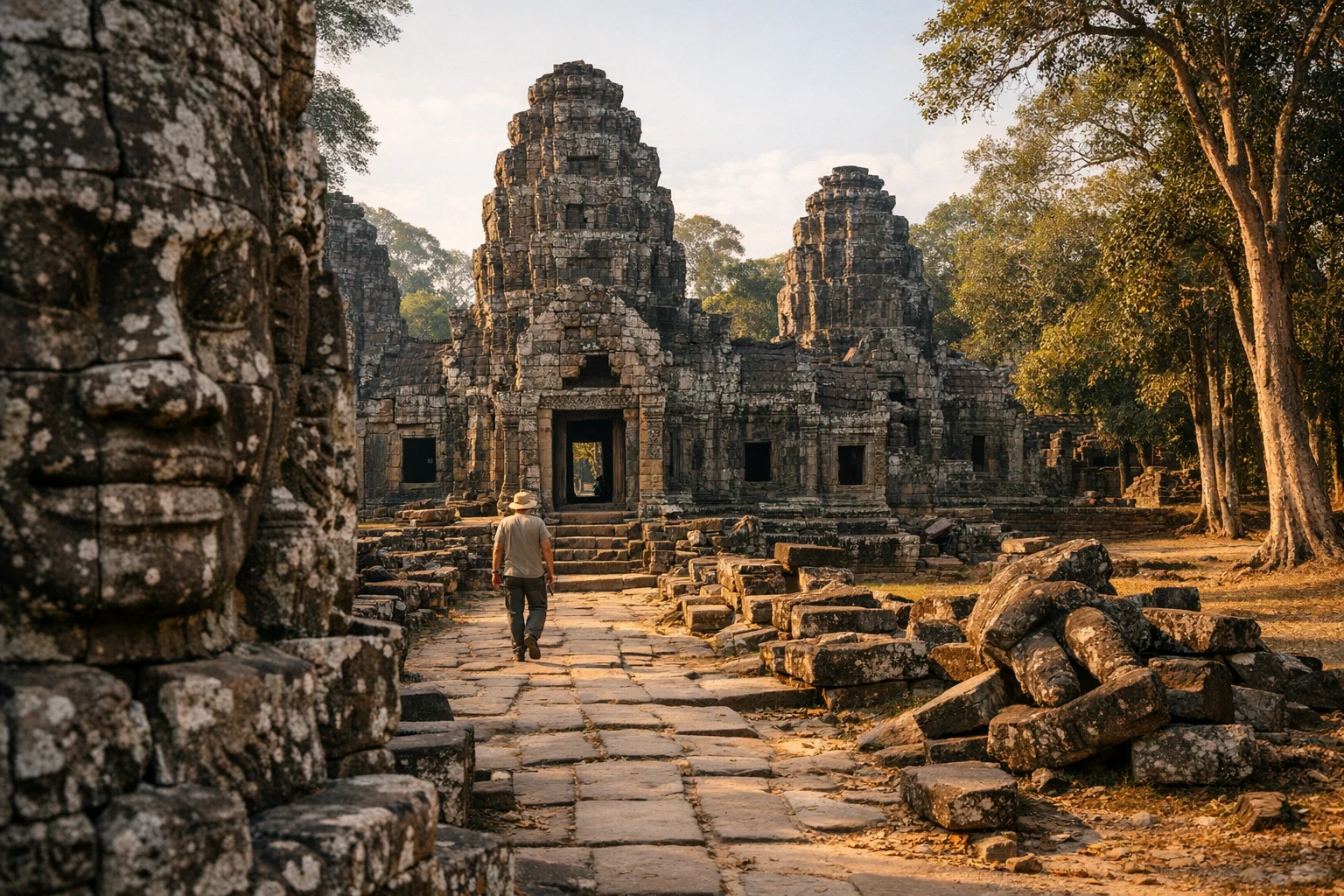
Banteay Kdei
KhmerExplore Cambodia’s Banteay Kdei, a atmospheric Angkor temple-monastery of quiet courtyards, worn car...
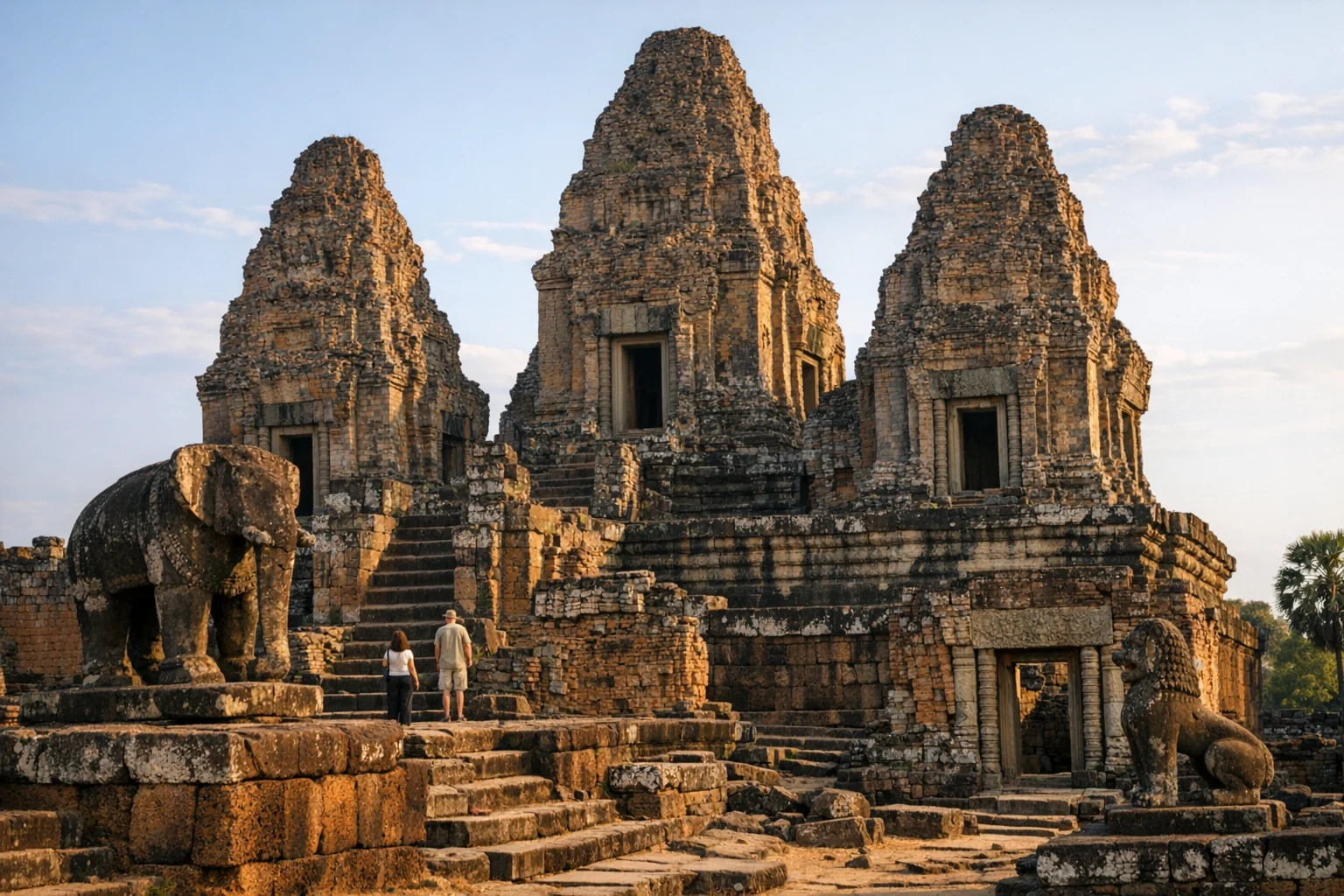
East Mebon
KhmerExplore Cambodia’s East Mebon, a striking 10th-century Angkor temple once standing on an island in t...