Quick Info
Curated Experiences
Angkor Small Circuit Tour Including Ta Prohm
Private Angkor Archaeological Park Day Trip
Full-Day Angkor Thom, Bayon and Ta Prohm Guided Tour
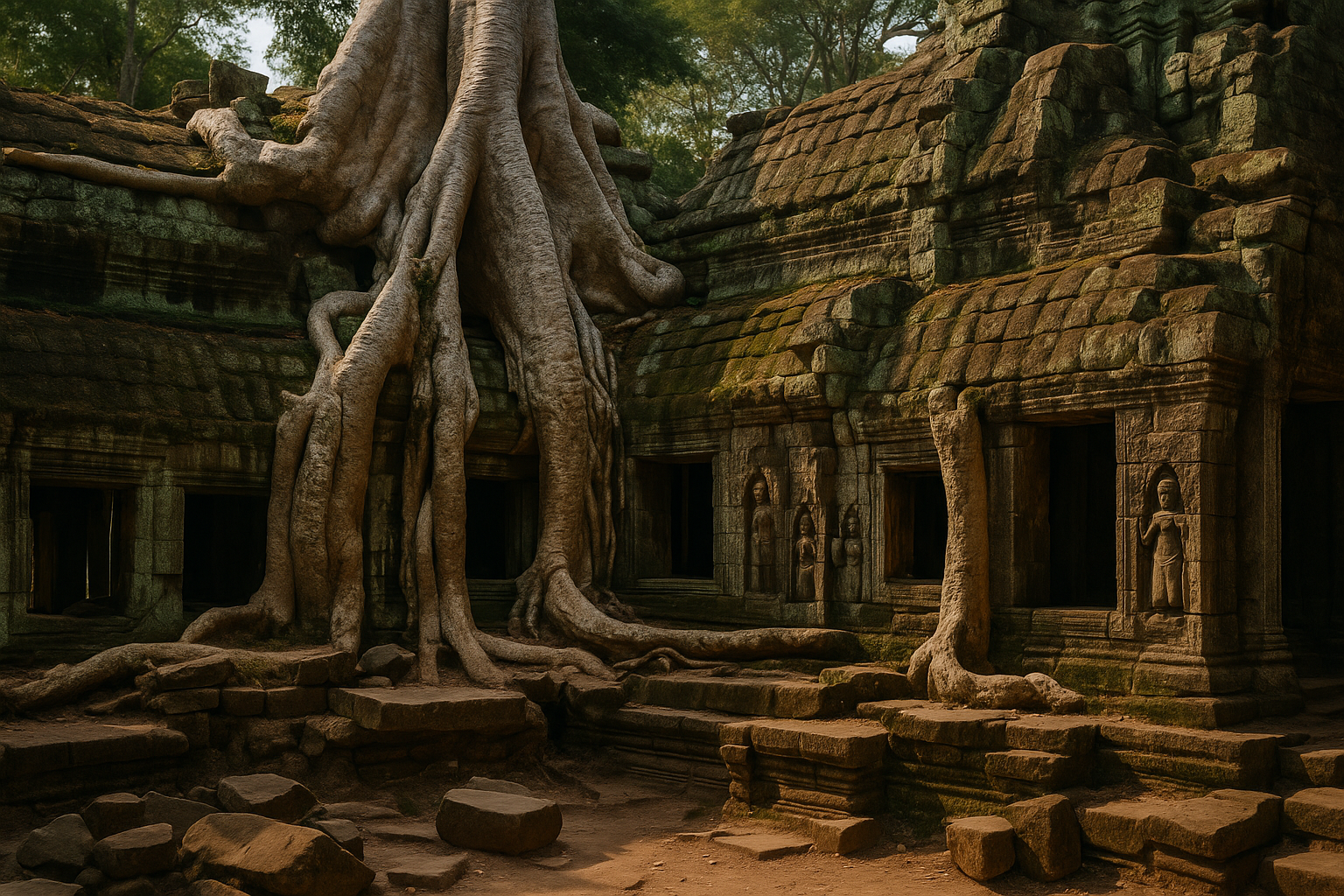
Ta Prohm is where Angkor stops feeling like a museum and starts feeling like a place the forest never quite let go. Instead of symmetrical towers rising above cleared plazas, you get root-wrapped galleries, half-collapsed corridors, and the constant sense that the jungle is still negotiating with the stonework. It is one of the most photographed temples in Southeast Asia, but it rewards patience far more than it rewards a quick lap with a phone.
Most visitors know the temple from film (it stood in for a fictional lost temple in the first Tomb Raider movie), but its real significance runs deeper. Ta Prohm offers the clearest picture at Angkor of what happens when tropical forest reclaims monumental architecture over centuries - and why the conservation choices here are some of the most debated in the region.
Why Ta Prohm Matters
Ta Prohm fills a role in the Angkor circuit that no other temple can. Where Angkor Wat delivers architectural scale and Bayon Temple delivers sculptural intensity, Ta Prohm delivers atmosphere. The relationship between tree and stone is not decorative. It is structural. Silk-cotton and strangler fig trees have grown through walls, over lintels, and around doorframes to the point where removing the trees would risk collapsing the structures they now support.
For travelers, this creates a site that reads differently depending on how you approach it. Walk through quickly and you get a series of dramatic photo moments. Move slowly and you start to see the layered conversation between human construction and tropical biology that makes Ta Prohm genuinely distinct among the world’s archaeological sites.
Historical Context
Ta Prohm was founded in 1186 CE by King Jayavarman VII, the most prolific builder in Khmer history. He dedicated the temple to his mother, and its original name - Rajavihara, meaning “royal monastery” - reflects its function as a Mahayana Buddhist institution rather than a Hindu state temple. Jayavarman VII built on a massive scale across his reign, and Ta Prohm was one node in a network that included Angkor Thom, Bayon, and Preah Khan.
Temple inscriptions describe an operation of striking size: over 12,000 people serving the complex, nearly 80,000 workers in surrounding villages supporting it, and inventories listing gold, pearls, and silk among its holdings. Whether these numbers are precise or aspirational, they confirm Ta Prohm as a major institution within the late Angkor period, not a minor chapel.
After the decline of the Khmer Empire in the 15th century, Ta Prohm was gradually absorbed by the surrounding forest. When French researchers began documenting the Angkor complex in the 19th and early 20th centuries, they made a deliberate decision: leave Ta Prohm largely as found, with the forest growth intact, as a record of how all of Angkor once looked before restoration. That decision - controversial then, iconic now - is what gives the temple its character today.
What to Prioritize Onsite
The Root-and-Stone Intersections
The signature views at Ta Prohm are the points where massive tree roots drape across stone walls or press through corridor rooflines. The most famous are near the central sanctuary and along the eastern galleries. These spots draw the heaviest foot traffic, so expect to wait or share the frame. But smaller root features scattered throughout the complex are often just as photogenic and far less crowded.
Inner Galleries and Doorways
Ta Prohm’s plan stacks concentric enclosures with repeated doorframes that create strong visual depth. Light enters unevenly through gaps in the canopy and through collapsed roof sections, which means the same corridor can look moody and cool at 7:30 AM and washed out by 11:00 AM. If photography matters to you, timing matters more here than at most Angkor sites.
Watch your footing in the tighter sections. The stone floors are uneven, often damp, and occasionally slippery where moss gathers in shaded areas.
The Conservation Contrast
One of the most interesting aspects of Ta Prohm is the visible range of conservation approaches within a single complex. Some sections have been stabilized with modern supports and cleared pathways. Others retain the “as found” condition that gives the temple its reputation. Walking between these zones gives you a practical understanding of the tradeoffs at play: how much do you restore, and how much do you preserve of the ruin itself? It is the same tension playing out at sites from Pompeii to Bagan, and Ta Prohm makes it unusually legible.
Bas-Reliefs and Carved Details
Ta Prohm is less celebrated for its carvings than Bayon or Banteay Srei, but look carefully and you will find devata figures, Buddhist motifs, and decorative lintels in good condition among the overgrowth. These are easy to miss if you are focused only on the tree roots.
Practical Visit Strategy
Timing
Ta Prohm gets crowded fast. Large tour groups arrive after sunrise sessions at Angkor Wat, typically flooding the small circuit temples by 9:00 AM.
- Best window: 7:00 to 8:30 AM, when the light is soft, the air is cooler, and the crowds have not peaked
- Secondary window: after 3:30 PM, when tour groups thin out and the light warms through the canopy
- Worst window: 10:00 AM to 2:00 PM, when heat and crowd density are both at their highest
Getting There
Ta Prohm sits within Angkor Archaeological Park, roughly 25 to 40 minutes from central Siem Reap by tuk-tuk or car. Access is included with the standard Angkor pass (1-day, 3-day, or 7-day). No separate ticket is required.
What to Bring
- Water (there is limited shade once you leave the inner galleries)
- Shoes with real grip (sandals are a bad idea on worn, mossy stone)
- A compact camera bag if you are carrying gear (narrow corridors make large backpacks awkward)
- Sun protection for the walk between the parking area and the temple entrance
Visit Duration
Plan 1.5 to 2 hours to see the temple properly. Speed-runners do it in 45 minutes, but they miss most of what makes the place worth visiting.
Route Pairing and Nearby Sites
Ta Prohm sits on the small circuit route through Angkor, which makes it easy to combine with other major sites in a single day.
A strong morning sequence: start at Ta Prohm at 7:00 AM, then move to Angkor Thom and Bayon Temple as the light rises. This keeps you ahead of the largest tour groups at each stop.
For a full-day plan, pair the morning circuit with Banteay Srei in the afternoon (about 35 minutes north of the main park area). Banteay Srei’s intricate sandstone carvings offer a sharp visual contrast to Ta Prohm’s rougher, forest-dominated character.
The Terrace of the Elephants inside Angkor Thom is also a natural addition if you are already moving through the walled city after Ta Prohm.
Final Take
Ta Prohm is not the biggest temple at Angkor, not the most elaborately carved, and not the most historically significant. What it offers instead is irreplaceable: the clearest view of what centuries of tropical forest do to imperial architecture, preserved deliberately so visitors can see the process rather than only the product. If you rush through it, you get a handful of good photos. If you slow down, you get one of the most layered and atmospheric experiences in Southeast Asian travel.
Quick Facts
| Attribute | Details |
|---|---|
| Location | Siem Reap, Cambodia |
| Country | Cambodia |
| Region | Siem Reap |
| Civilization | Khmer |
| Historical Period | Late Angkor period (12th-13th centuries CE) |
| Founded | 1186 CE by Jayavarman VII |
| Original Name | Rajavihara |
| Angkor Pass Required | Yes (1-day, 3-day, or 7-day) |
| Coordinates | 13.4347, 103.8890 |
Frequently Asked Questions
How much time do you need at Ta Prohm?
Most travelers spend 60 to 120 minutes at Ta Prohm, depending on crowd levels and how long they stay for photography and side galleries.
Why is Ta Prohm famous?
Ta Prohm is known for giant tree roots growing through temple structures, creating one of Angkor’s most dramatic and recognizable archaeological landscapes.
Is Ta Prohm included in the Angkor pass?
Yes. Ta Prohm is inside Angkor Archaeological Park and is covered by the standard Angkor entry pass.
Nearby Ancient Sites
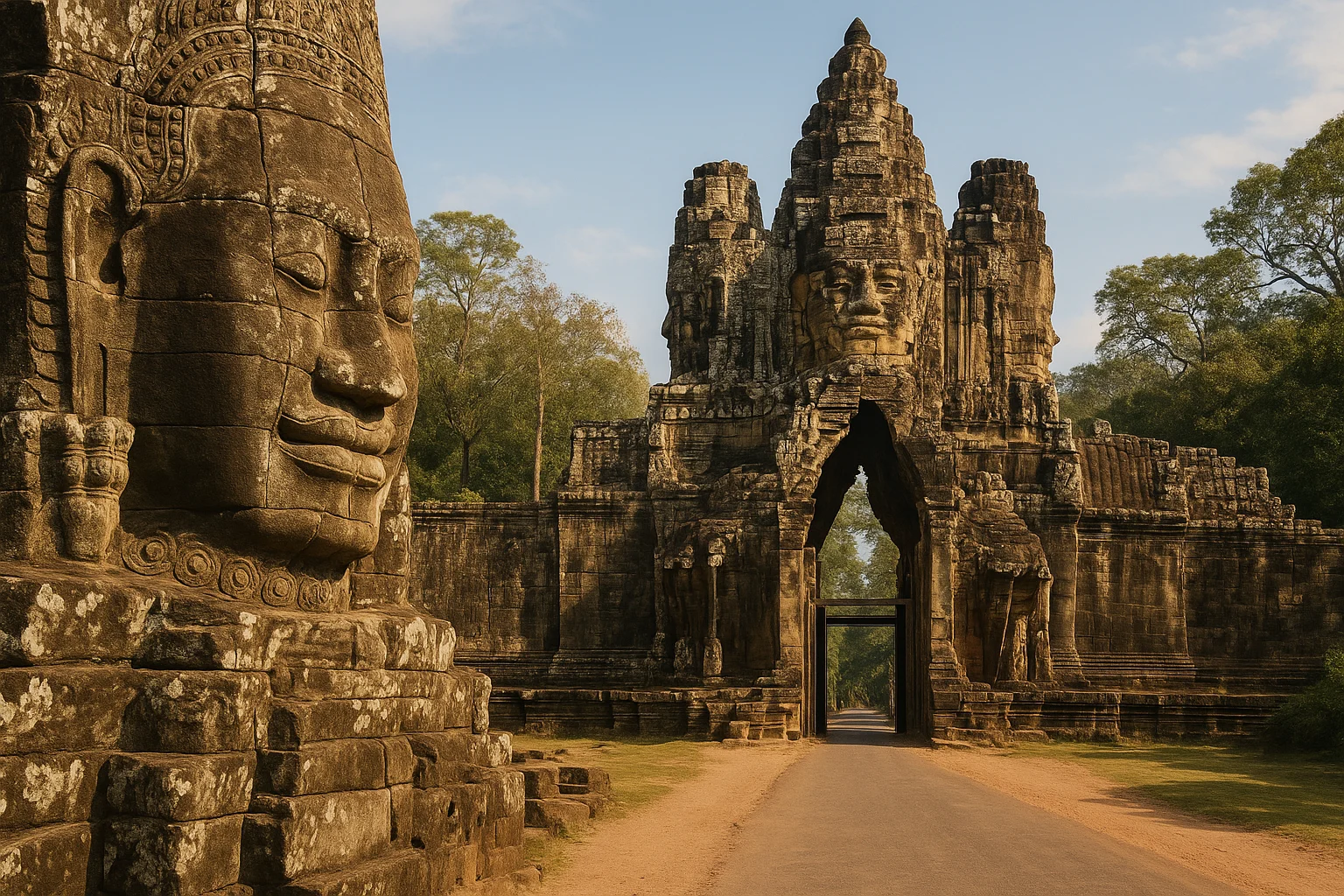
Angkor Thom Travel Guide 2026: Bayon Faces, Gates, and the Khmer Royal City
KhmerAngkor Thom was the last great capital of the Khmer Empire. This guide covers how to visit Bayon, th...
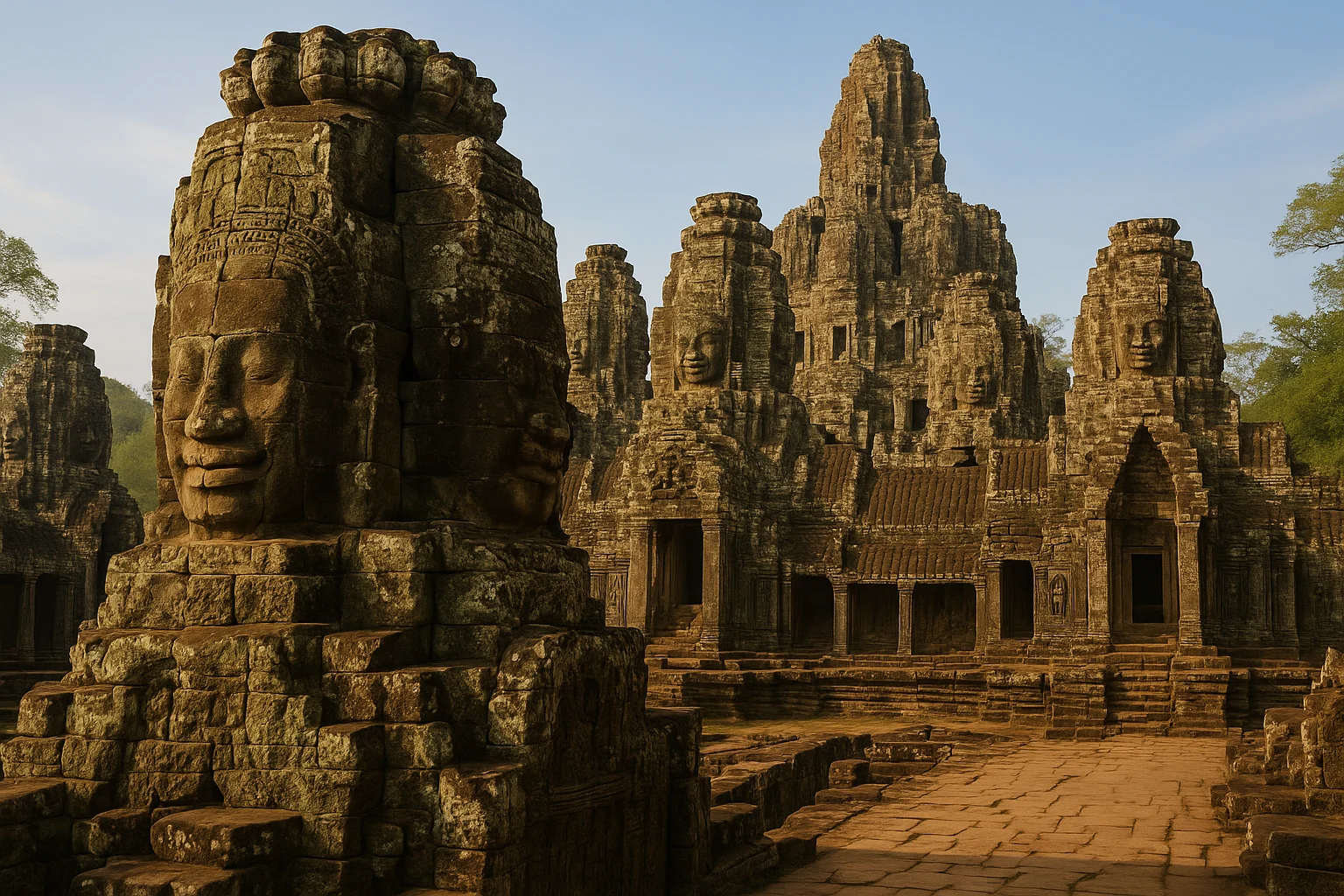
Bayon Temple Travel Guide 2026: Face Towers, Bas-Reliefs, and Best Visit Timing
KhmerBayon Temple sits at the center of Angkor Thom and is famous for its carved stone faces. This guide ...
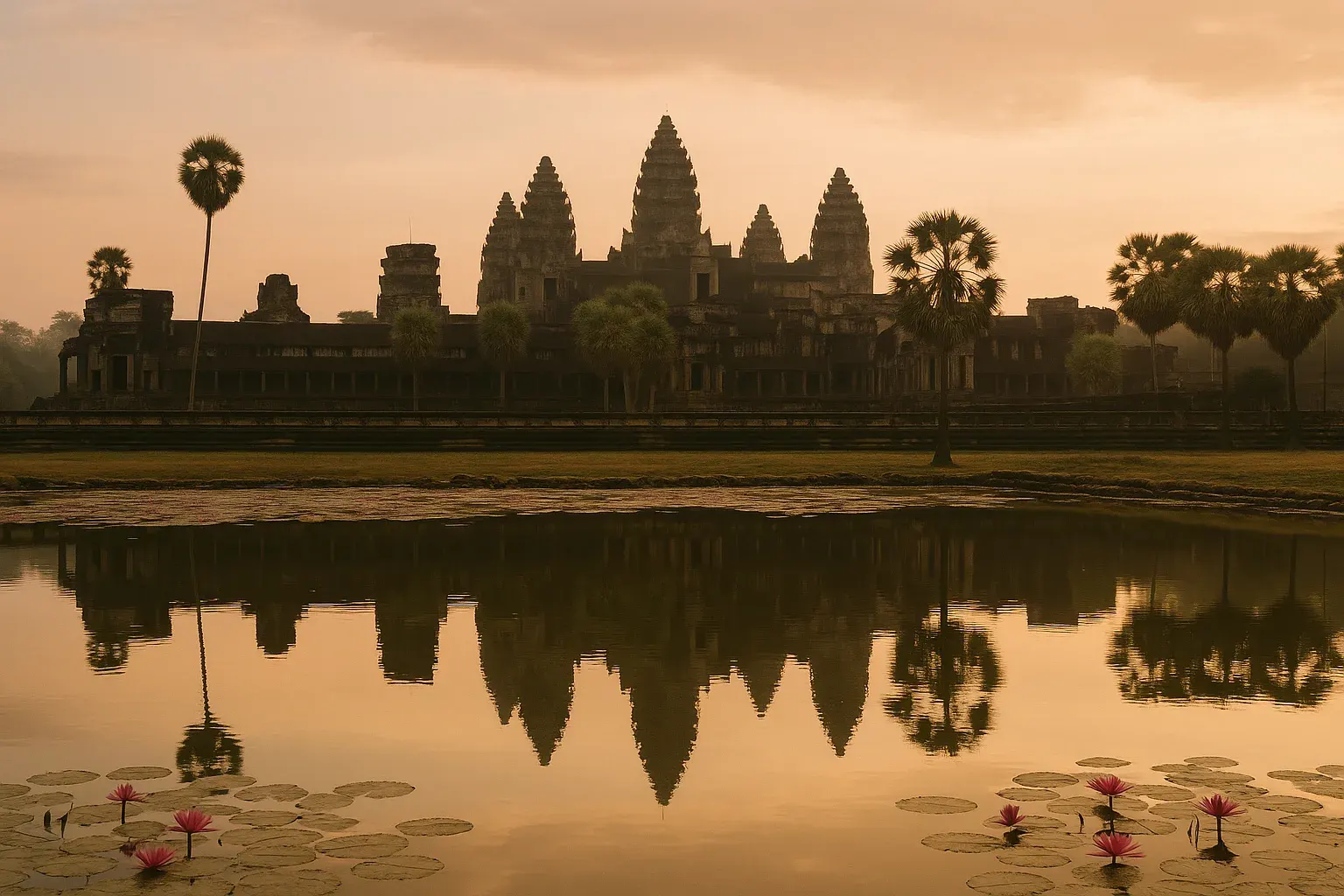
Angkor Wat Travel Guide 2026: Everything You Need to Know
KhmerAngkor Wat, the world's largest religious monument, spans over 400 acres in the heart of Cambodia. T...