Quick Info
Curated Experiences
Angkor Temples Sunrise Tour including Ta Som
Private Guided Angkor Wat and Ta Som Tour
Angkor Small Circuit by Tuk-Tuk featuring Ta Som
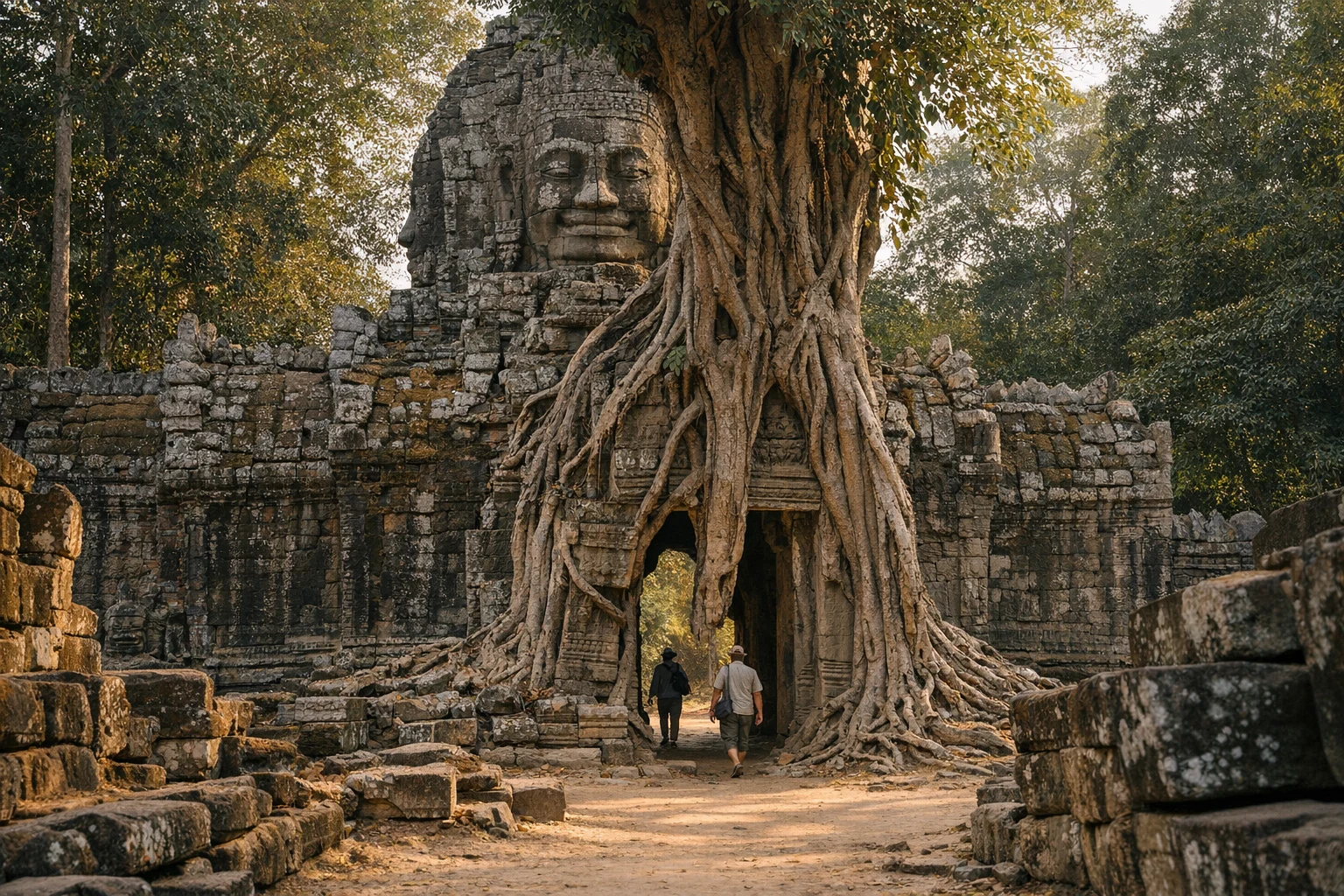
Nestled deep in Cambodia’s lush Siem Reap Province, Ta Som is one of the enduring jewels of the Angkor Archaeological Park. Unlike the grandiosity and crowds of Angkor Wat, Ta Som offers a quieter, almost meditative space for travelers to step back into the 12th century. Entering this ancient Khmer site, shaded under broad trees and framed by toppled stone and encroaching jungle, the scents of moss and earth fill the air. Sunlight scattered through leaves dapples centuries-old carvings, while the gentle hush is broken only by the calls of birds or the distant murmur of fellow travelers. Ta Som’s most memorable feature—a temple gate entangled in sinewy tree roots—has, for many, become the very symbol of nature’s unstoppable reclaiming power and the precariousness of human achievement.
Ta Som was built during the height of the Khmer Empire, under the patronage of King Jayavarman VII, whose legacy of monumental architecture still defines much of Cambodia’s cultural landscape. In modern times, Ta Som’s manageable scale and iconic beauty have made it a favored stop for travelers seeking resonance with ancient history without the bustle found at the park’s hallmark attractions. For both the first-time explorer and the temple aficionado, the site sings with an enigmatic energy: it invites you to wander, to pause, and to reflect among its tranquil towers and smiling bodhisattva faces. Here, in the dappled light of old stone, is a portal not just into Cambodia’s past, but into the very heart of its cultural identity.
History
The Reign of Jayavarman VII and the Rise of Ta Som
Ta Som’s origins are intimately tied to one of the most revered Khmer monarchs, King Jayavarman VII. Ascending the throne in the late 12th century, Jayavarman VII was a dynamic leader and devout Buddhist who drove the expansion of Angkor’s urban and sacred landscape. Around 1190 AD, as Cambodia’s fate oscillated between war and peace, Jayavarman VII initiated the construction of Ta Som. The temple was built as a dedication to the memory of his father, Dharanindravarman II, an important motif recurring throughout Jayavarman’s temples, including nearby Preah Khan and the mighty Bayon.
Jayavarman VII’s reign marked a pivot from the Hinduism of earlier Angkorian kings to Mahayana Buddhism, reflected in both the iconography and layout of Ta Som. Rather than the depictions of Hindu deities typical of earlier eras, carvings at Ta Som predominantly feature Lokeshvara—a gentle-faced bodhisattva associated with compassion. This shift was not merely religious but also political: Jayavarman VII sought to unify his empire through wide-reaching public works, temple-building, and the assertion of his divine kingship.
Flourishing, Forgotten, and Rediscovered
Throughout the late 12th and early 13th centuries, Ta Som thrived as a functioning temple, surrounded by a supporting village and cultivated lands. The temple complex, though smaller than some of Jayavarman’s other foundations, was an important religious site for both local worshippers and those journeying between Angkor’s distant corners. However, as the Khmer Empire waned throughout the period of regional instability and shifting trade routes, Ta Som, like many of Angkor’s lesser temples, gradually fell into neglect.
By the time French explorers and archaeologists entered Cambodia in the late 19th century, Ta Som had long been claimed by the jungle. The encroachment of large strangler figs and silk-cotton trees concealed much of the structure, their roots prying apart sanctuaries and galleries while also holding the ruins in precarious balance.
Preservation in the Modern Era
Interest in Ta Som and the wider Angkor Archaeological Park surged in the twentieth century, prompting renewed efforts to preserve and restore these architectural masterpieces. In the early decades after rediscovery, Ta Som was left mostly unrestored—intentionally so, to allow visitors to appreciate the romantic allure of temple and jungle entwined. Iconic photographs from this era capture its famous eastern gate, choked by a singular fig tree whose roots cascade like stone-seeking waterfalls—an image as beloved as any at Ta Prohm.
Since the early 2000s, conservation initiatives led by APSARA (the Authority for the Protection and Management of Angkor and the Region of Siem Reap) have sought to stabilize Ta Som’s structures, secure dangerous sections, and improve visitor access, all while leaving trees and other natural elements in place. Today, the temple is safe to explore, its most famous root-cloaked gateway preserved as a testament to both human ingenuity and the inexorable advance of nature.
Key Features
Ta Som is a compelling blend of built grandeur and natural reclamation, with every corner yielding subtle echoes of both artistry and entropy. Entering through the west gopura—its broad, tower-topped gateway—the visitor first encounters gentle stone faces peering through lichen-patched walls. These serene countenances, modeled on Lokeshvara, mirror the designs found at Bayon temple and were intended to project a watchful, benevolent presence over all who pass beneath them.
Beyond the entrance, the temple unfolds as a graceful cruciform sanctuary, with three concentric enclosures built from laterite, sandstone, and brick. Along the first and second enclosure walls, weathered stencil carvings depict apsaras (celestial dancers), intricate floral patterns, and Buddhist iconography, their details faded but unmistakably elegant. Many of the galleries are open to the sky, their roofs collapsed in ages past, letting shafts of sunlight illuminate the stonework in ever-changing patterns.
Perhaps the single most enduring feature of Ta Som lies at its eastern gopura. Here, a magnificent chokehold of tree roots coils around and through the crumbling gateway, their tactile strands separated only by the mossy stone. It is both a dramatic photo opportunity and a potent symbol: the embrace of time and wilderness over human ambition. This spectacle is often likened to Ta Prohm, but Ta Som’s more modest footprint and lesser crowds create a deeply personal encounter with this natural marvel.
Within Ta Som’s central sanctuary, visitors still find fragments of original Buddhist statuary set within small shrines. While many have been lost to time or theft, enough remains to convey the site’s religious function. The compact central tower, once gilded and visible from the far corners of the Angkor heartland, now offers intimate spaces for reflection. Benches, shaded by the protective shadows of centuries-old trees, invite travelers to linger and listen to the stories contained in every stone.
Scattered throughout the enclosures are narrative bas-reliefs—some faint, some nearly intact—portraying scenes from Buddhist lore, local mythology, and moments of royal ritual. Ta Som’s scale makes it easy to absorb these details without feeling rushed, and the near-constant interplay of sunlight and shade gives the site an ethereal atmosphere. At times, vines and roots entwined beneath windows create living frames for the ancient vistas beyond, while the enveloping forest tunes the senses to the region’s cyclical dance of growth and decay.
Ta Som’s charm is in its harmony: the seamless conversation between the created and the reclaimed, the gentle commingling of legend, stone, and root. For many visitors, it is this equilibrium—more than any one monument or carving—that lingers most vividly after the visit has ended.
Getting There
Ta Som lies in the northeastern sector of Angkor Archaeological Park, approximately 8 kilometers (5 miles) from Angkor Wat and about 17 kilometers (10.5 miles) by road from central Siem Reap city. Most visitors reach the temple as part of a tour circuit that also includes neighboring East Mebon, Pre Rup, and Neak Pean, making for a diverse exploration of Angkor’s architectural variety.
Tuk-tuks are the most popular means of visiting Ta Som from Siem Reap. A day’s hire, encompassing major sites and distances, typically costs between $20 and $30 USD, depending on the route and level of negotiation. These vehicles are breezy, comfortable, and offer close interaction with the region’s landscapes and villages. Tuk-tuks can be easily arranged via hotels, guesthouses, or at the official transportation stand outside the Angkor Park entrance.
For visitors preferring a more active or immersive approach, cycling is both practical and rewarding. Well-maintained rental bikes are widely available in Siem Reap, with daily rates around $5–$10 USD for a standard bike or $15–$25 USD for a quality mountain bike. The ride to Ta Som, while a bit long for beginners, meanders along flat, shady park roads, passing rice paddies, forest, and other remarkable ruins. Ample roadside vendors offer cold drinks and snacks en route.
Alternatively, private taxis or air-conditioned cars can be hired for a more comfortable ride, especially during peak heat. Many tour companies pair Ta Som with other temples, providing guides who weave context and storytelling into the day’s exploration. Expect rates of $35–$60 USD per day for private car tours, with higher costs for expert guides or premium vehicles.
Ta Som is not directly served by public buses; all access routes pass through Angkor Park’s ticketed checkpoints, so ensure you have your Angkor Pass ready before setting out. The road network within the park is well-signed and maintained, making navigation straightforward regardless of transport mode.
When to Visit
Ta Som, like the rest of Angkor, is subject to the Khmer region’s distinctive tropical climate. The most favorable months for visiting are from November to February, during Cambodia’s cool and dry season. During these months, temperatures typically range from 20°C to 28°C (68°F to 82°F), humidity is moderate, and skies are largely clear—perfect for temple hopping, photography, and unrushed explorations. Mornings and late afternoons bring the softest light and most comfortable temperatures, as well as a pleasing hush before larger tour groups begin to filter through the complex.
From March to early May, the climate transitions into the hot dry season. Afternoons can be swelteringly hot, with temperatures regularly climbing above 35°C (95°F). If you visit during this period, plan for early morning arrivals, wear sun protection, carry ample water, and rest frequently in the shade cast by Ta Som’s ancient trees.
The monsoon season sweeps in from June through October, transforming the surrounding landscape into a lush green tapestry. Afternoon rains are frequent and occasionally intense, but mornings are often dry, and the vegetation is at its most vibrant. While access to some distant temples may be hampered by muddy trails, the main park roads remain open and passable. The monsoon months also bring fewer tourists, rewarding the intrepid with moments of genuine solitude—just be sure to bring a light rain jacket and waterproof your belongings.
No matter the season, Ta Som is generally less crowded than Angkor Wat or Bayon. For the most atmospheric experience, aim to arrive early—by 8 a.m.—or later in the day, when the play of light and shadow is at its most dramatic. Avoiding local public holidays and major festivals will further minimize the chance of encountering large groups. Ultimately, Ta Som’s timeless ambiance is present year-round, whether in sun, mist, or rain.
Quick Facts
| Feature | Information |
|---|---|
| Location | Angkor Archaeological Park, Siem Reap Province, Cambodia |
| Construction Date | Late 12th century (c. 1190 AD) |
| Founder | King Jayavarman VII |
| Religious Affiliation | Mahayana Buddhism |
| Notable Features | Tree-grown east gopura, serene Lokeshvara faces, tranquil setting |
| Entry Fee | Included with Angkor Pass ($37/$62/$72 for 1/3/7 days) |
| Opening Hours | 7:30 am – 5:30 pm |
| Accessibility | Tuk-tuk, bicycle, private car from Siem Reap |
| Nearby Major Temples | Preah Khan, Neak Pean, East Mebon, Banteay Kdei |
| UNESCO World Heritage | Yes, as part of the Angkor complex (since 1992) |
Frequently Asked Questions
What is the best way to visit Ta Som?
Ta Som is best visited as part of a tuk-tuk or cycling tour of the Angkor Archaeological Park, often included in circuit tours with other temples.
How much does it cost to enter Ta Som?
Access to Ta Som is included in the Angkor Pass, which costs $37 for one day, $62 for three days, and $72 for seven days (prices as of 2024).
How much time do I need to explore Ta Som?
Most visitors spend between 30 minutes and 1 hour at Ta Som, as the site is smaller and quieter compared to major temples like Angkor Wat.
Is Ta Som suitable for families with children?
Yes, Ta Som is relatively compact and shaded, making it friendly for families with children. Supervise kids around uneven stones and tree roots.
Can Ta Som be visited at sunrise or sunset?
Ta Som opens at 7:30 am and closes at 5:30 pm, so sunrise is possible during certain times of year, but it is less crowded later in the morning.
Nearby Ancient Sites
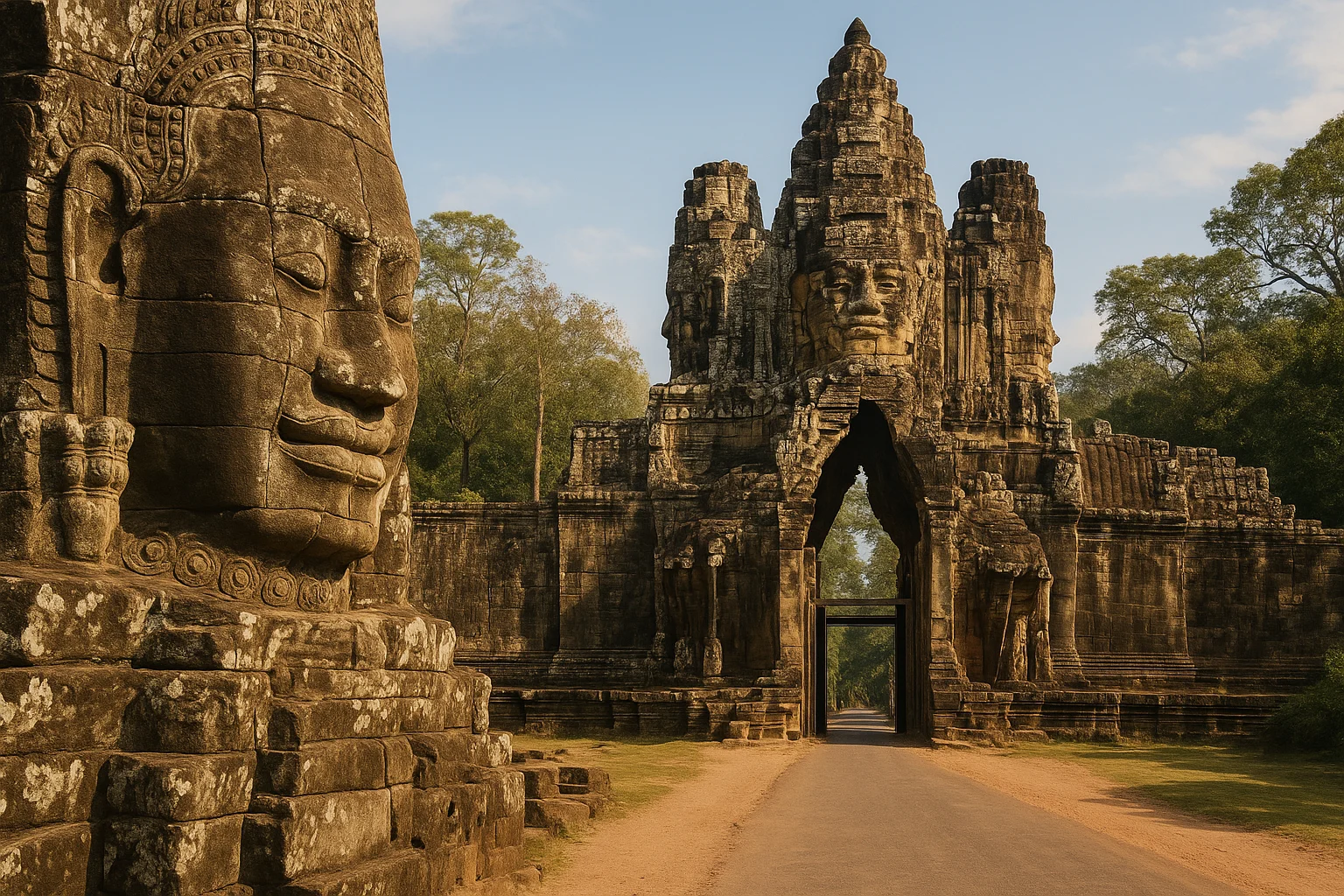
Angkor Thom Travel Guide 2026: Bayon Faces, Gates, and the Khmer Royal City
KhmerAngkor Thom was the last great capital of the Khmer Empire. This guide covers how to visit Bayon, th...
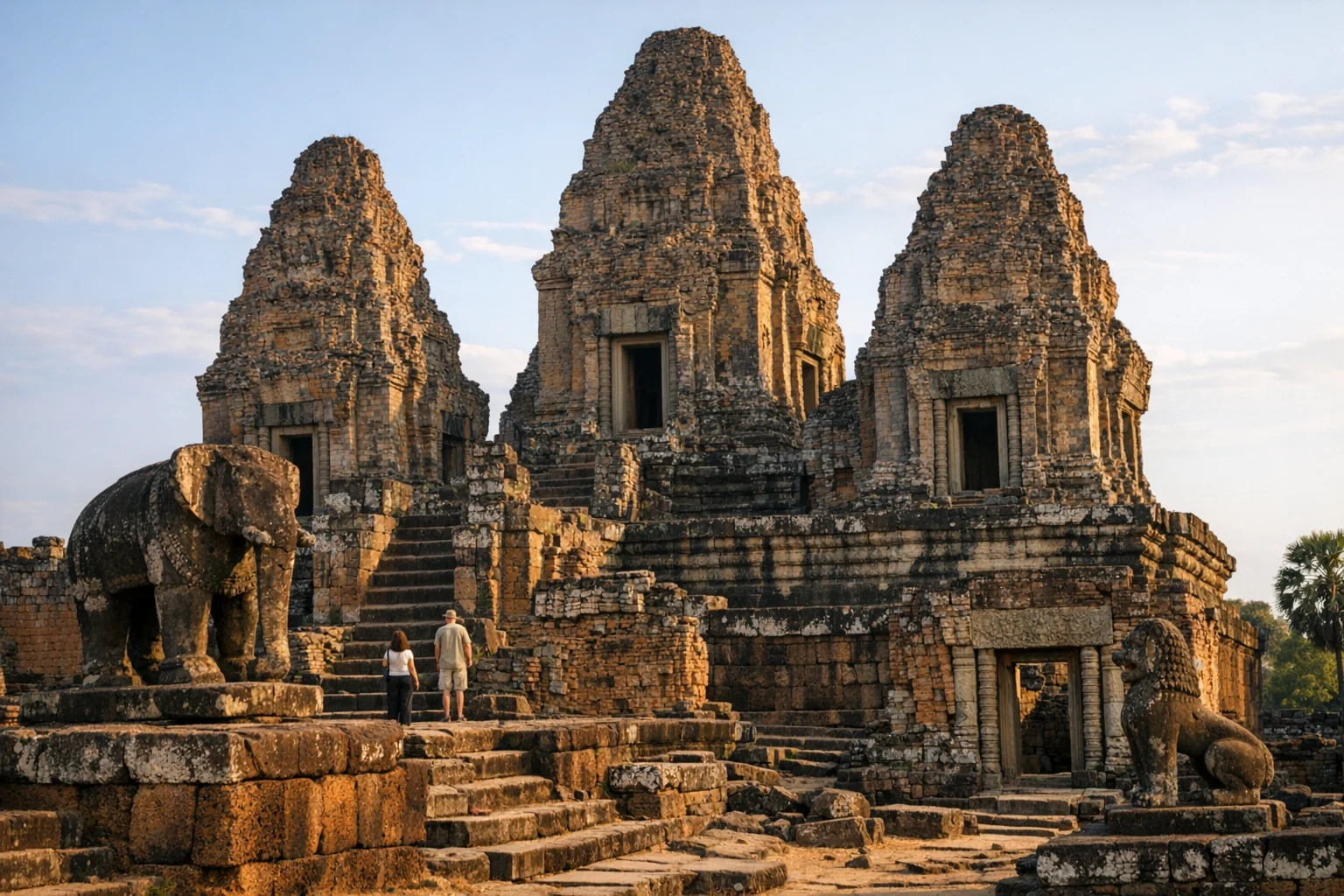
East Mebon
KhmerExplore Cambodia’s East Mebon, a striking 10th-century Angkor temple once standing on an island in t...
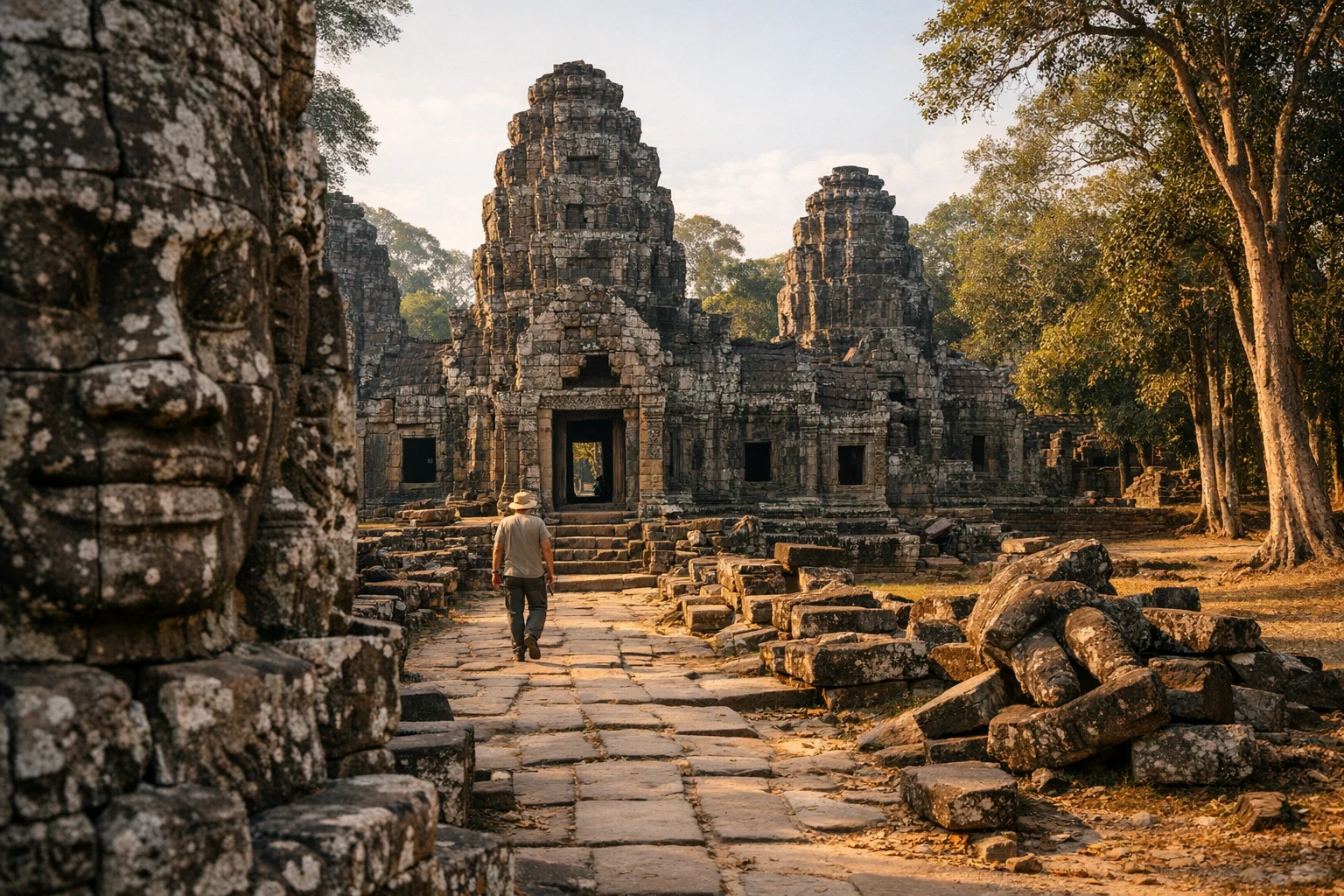
Banteay Kdei
KhmerExplore Cambodia’s Banteay Kdei, a atmospheric Angkor temple-monastery of quiet courtyards, worn car...
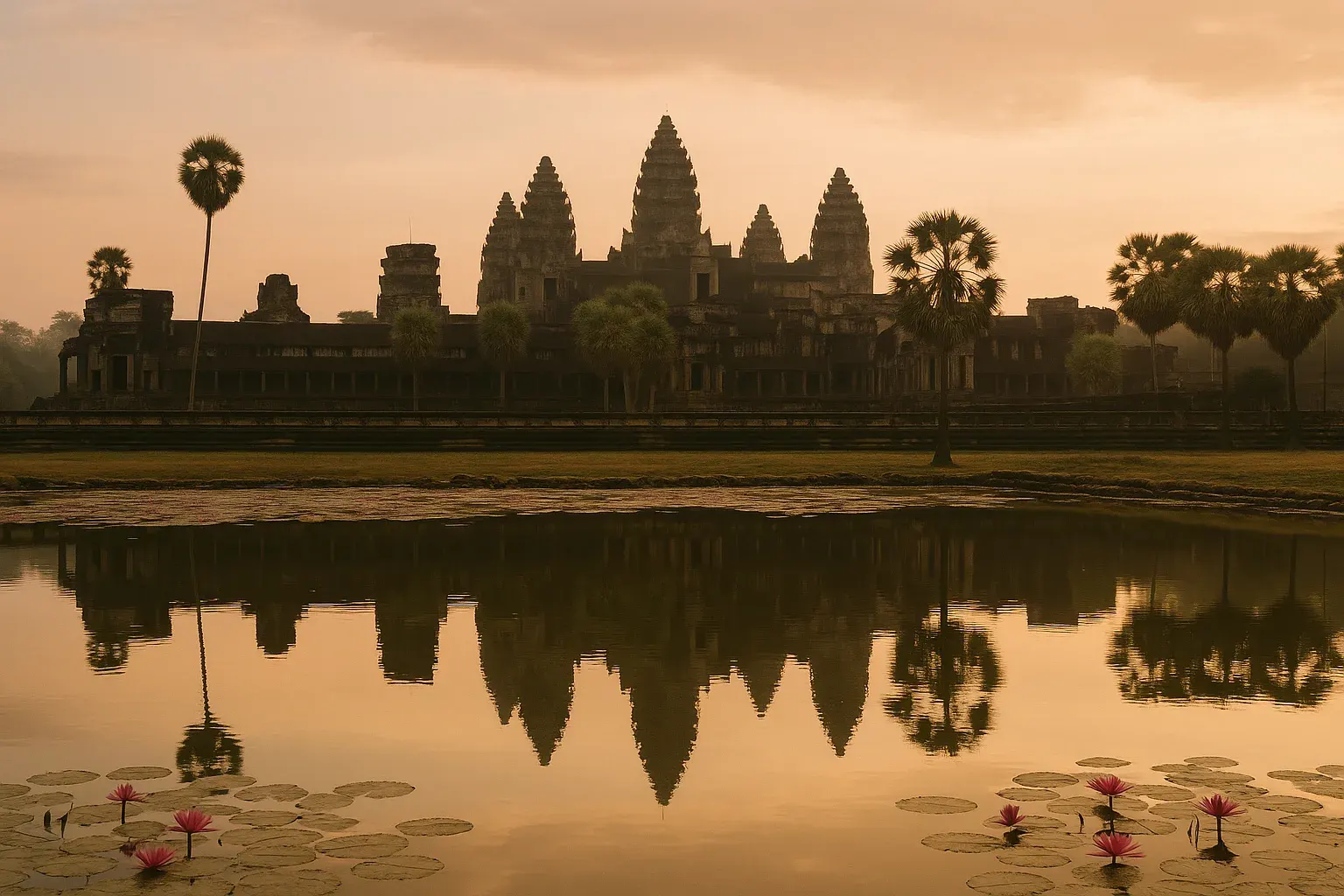
Angkor Wat Travel Guide 2026: Everything You Need to Know
KhmerAngkor Wat, the world's largest religious monument, spans over 400 acres in the heart of Cambodia. T...
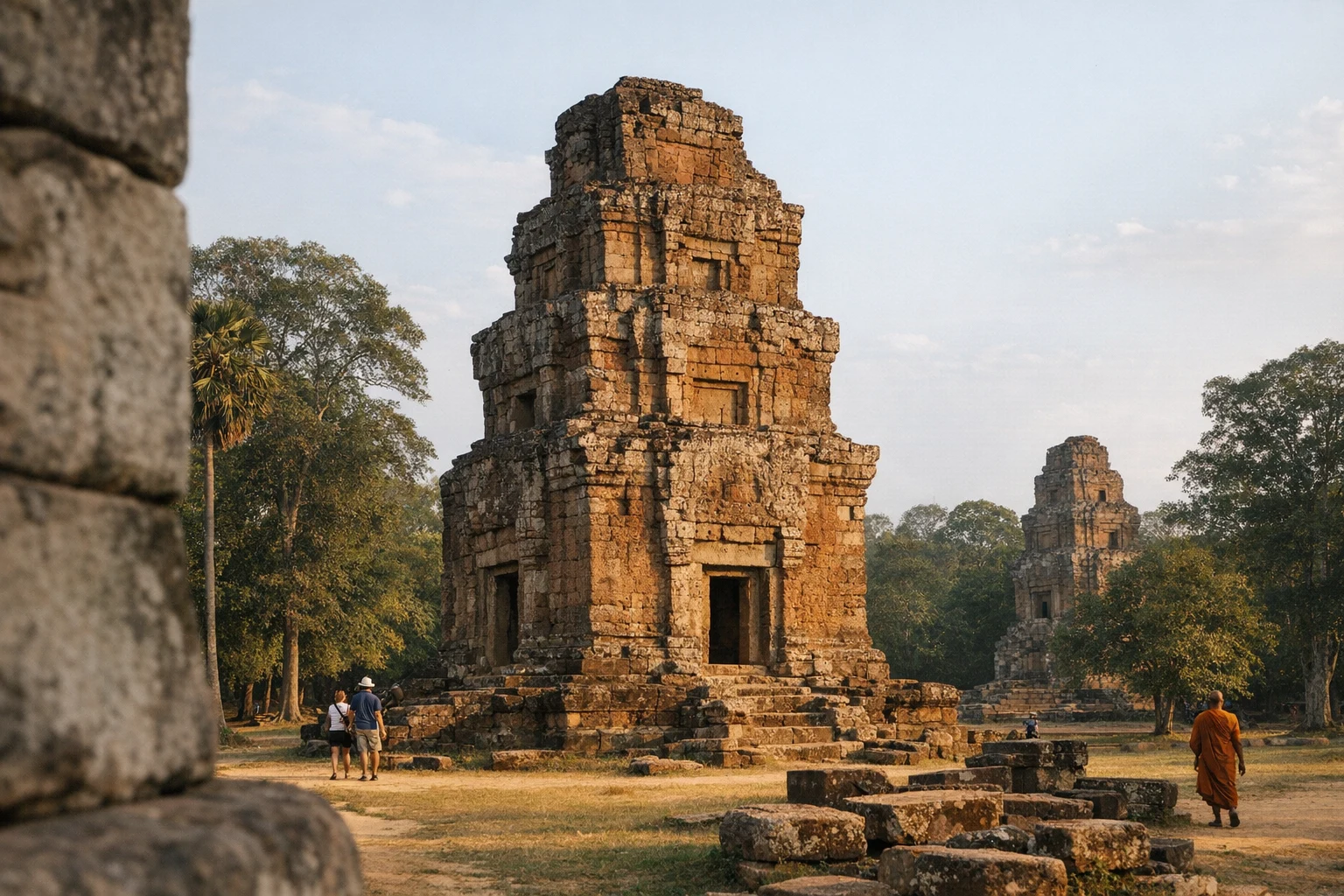
Prasat Suor Prat
KhmerExplore Cambodia’s Prasat Suor Prat, a line of enigmatic towers in Angkor Thom facing the royal squa...