Quick Info
Curated Experiences
Dendera and Abydos Full-Day Tour from Luxor
Dendera Temple Tour from Luxor
Dendera Temple Complex and Nile Cruise
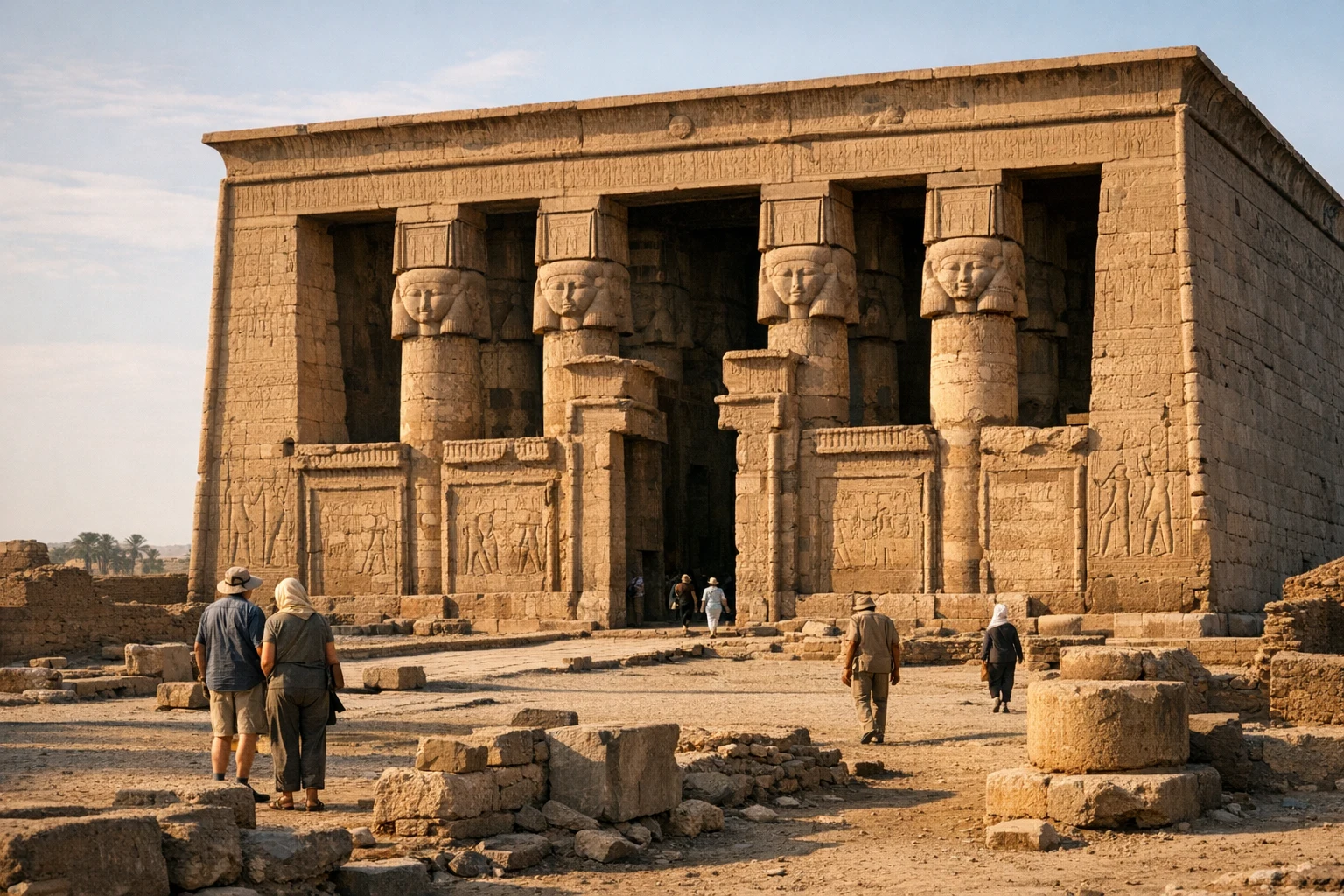
Standing proudly in the lush heart of Egypt’s Qena Governorate, the Temple of Hathor at Dendera is one of Egypt’s most captivating and best-preserved ancient monuments. Just moments away from the banks of the Nile, this stunning sanctuary welcomes travelers into a world of mystical deities, vivid hieroglyphs, and architectural marvels—a testament to the rich cultural tapestry that has woven itself through this land for millennia. The Temple of Hathor (Dendera) lies approximately 60 kilometers north of Luxor, in a tranquil rural setting where palm groves and sugar cane fields stretch toward the horizon. Framed by a vast courtyard and monumental gateways, its grand facade instantly transports visitors back to the Ptolemaic era, when Egypt was a center of intellectual, spiritual, and artistic life. With its vibrant blue ceilings, spectacular astronomical carvings, and aura of sacred power, the temple invites you not just to step into history, but to feel it reverberate beneath your feet.
From the first moments within the outer walls, the Temple of Hathor amazes with its riot of colors and intricate reliefs. The site holds a unique appeal among Egypt’s many ancient sites, in part due to its exceptional state of conservation. Unlike the wind-worn and sun-bleached facades of some monuments, the painted columns, ceilings, and hidden chapels of Dendera retain an almost surreal vibrancy. Here, mythology and science meet: the temple is home to Egypt’s most famous ancient zodiac, astronomical ceilings, and representations of the goddess Hathor, revered as a symbol of music, fertility, joy, and maternity. Visit in the hush of early morning or under the intense midday sun, and you’ll encounter a place that still pulses with the energy of rituals performed thousands of years ago.
Whether you’re an intrepid adventurer, a seeker of ancient mysteries, or simply an admirer of timeless art and engineering, the Temple of Hathor offers one of the most immersive windows into the world of pharaohs and gods. Step inside, and discover how this sacred place became a nexus for adoration, astronomy, and art—an enduring gem of Egypt’s incomparable past.
History
Beginnings in Ancient Egyptian Civilization
The story of the Temple of Hathor in Dendera begins deep in the mists of Egyptian prehistory. Evidence points to the site’s use as a place of worship since at least the Old Kingdom (c. 2686–2181 BCE), long before the grand temple that stands today was built. Early chapels dedicated to Hathor and other local deities once dotted the landscape here, their stones and mud-brick foundations submerged by later construction, but their spiritual essence set the tone for centuries of devotion that followed.
Hathor, the bovine-headed goddess, was a central figure in Egyptian religion: symbolizing motherhood, fertility, love, beauty, dance, and music. Locals and pilgrims from across Egypt journeyed to Dendera to seek her blessings—making the site one of the most important cult centers in the ancient world. The earliest traces of temples at Dendera date back at least as far as Pharaoh Pepi I of the 6th Dynasty, but like so many Egyptian monuments, the surviving structure is largely the result of later reconstructions and expansions.
The Ptolemaic Revival
The temple visible today owes its existence primarily to the Ptolemaic Dynasty—a period of Greek rule in Egypt following Alexander the Great’s conquest in 332 BCE. Ptolemaic rulers established themselves as pharaohs and patrons of traditional Egyptian religion in order to gain the loyalty of their new subjects. Under this policy, they launched a wave of temple building across the country, including the awe-inspiring construction at Dendera.
Major construction of the Temple of Hathor began under Ptolemy XII Neos Dionysos (the father of the famous Cleopatra VII) around 54 BCE, although some historians believe that earlier Ptolemaic rulers initiated the project. Work continued for decades, spanning several reigns. Successive additions and enhancements were made, with the hypostyle hall completed during the Roman period, specifically under the reign of Emperor Tiberius (14–37 CE). The result was a masterpiece of temple architecture: harmonizing traditional Egyptian elements with the grandeur and detail favored by the Greeks and Romans.
Roman Influence and Continuation of Worship
The Roman emperors not only continued the Ptolemaic program but added their own distinctive touches. Emperors Augustus, Tiberius, Claudius, and Nero all left their mark through inscriptions and minor additions. The surviving structure stands as a testament to religious continuity through political upheaval—reflecting a society adept at blending the ancient and the new.
Dendera’s role as a religious center continued well into the Roman period, with monumental festivals and ceremonies celebrating Hathor’s marriage to Horus of Edfu. These symbolic unions, celebrated annually, connected the temples along the Nile in a ritual journey, affirming divine order and fertility throughout the land.
Decline, Rediscovery, and Preservation
With the spread of Christianity and the decline of the old gods, the Temple of Hathor was eventually abandoned as a center of active worship sometime in the late Roman or early Christian era. Its isolated location helped preserve the structure: rather than being quarried for building stone, the temple was gradually buried beneath sand and Nile mud, protecting its vivid polychrome reliefs and inscriptions.
The temple’s rediscovery by 19th-century adventurers and Egyptologists initiated a new era of exploration and preservation. Today, careful excavation, cleaning, and conservation work allow visitors to experience the site much as it might have appeared to an ancient worshiper—alight with color, symbol, and the living memory of its people.
Key Features
The Temple of Hathor at Dendera is remarkable not only for its scale but also for the intricate artistry and scientific sophistication of its many chambers. Unlike many other pharaonic temples whose color has faded or disappeared entirely, a substantial portion of Dendera’s hieroglyphic and pictorial decoration survives in startling clarity. Deep within its halls, the dusky light falls across walls festooned with scenes of music, dance, offerings, and sacred processions. Hathor herself—depicted as a woman with a sun disk between cow’s horns—appears in hundreds of forms throughout, often accompanied by pharaohs, gods, and cosmic symbols.
Entering through the massive gateway, visitors are immediately struck by the temple’s façade: a row of columns topped with Hathor-headed capitals, their faces serene and enigmatic. Each capital is unique, echoing the goddess’s duality as both nurturing mother and powerful protector. The first hypostyle hall is a spectacle of color, with 18 immense columns covered top-to-bottom in reliefs. Overhead, the ceiling soars in blue and gold, illustrated with mythic scenes of the sky goddess Nut, the decanal stars, and the celestial barque of the sun god Ra. Ornate astronomical images abound, including depictions of the stars, lunar cycles, zodiacal signs, and time-keeping devices that point to the Egyptians’ advanced understanding of astronomy.
Perhaps the most celebrated feature is the so-called “Dendera Zodiac,” once housed in a small chapel on the temple’s roof. This intricately carved circular relief represents the heavens filled with constellations—unlike any other found in Egypt. While the original zodiac resides today in the Louvre Museum in Paris, visitors can see a fine replica in the temple, as well as the atmospheric space where ancient priests and astronomers once made their calculations and rituals under open skies.
The temple’s subterranean crypts are yet another marvel. Accessible via narrow, twisting staircases, these chambers were used to store ritual implements, sacred texts, and possibly oracular objects. Their walls are covered in esoteric scenes—including images of the mysterious “Dendera lightbulb,” an enigmatic motif interpreted variously as a symbol of creation or as evidence of advanced ancient technology.
Above ground, the temple complex includes the mammisi (birth house), a sacred lake, and a Roman-era sanatorium where pilgrims sought healing under the watchful gaze of Hathor. Sculpted reliefs detail the divine birth of the child god Ihy, reinforcing the temple’s reputation as a place of fertility and rejuvenation.
In every space lies a synthesis of art, religion, and science. From shadowy sanctuaries to sunlit rooftops, the Temple of Hathor at Dendera is not just a witness to history, but a living encyclopedia of ancient Egyptian spiritual and intellectual life.
Getting There
Visiting the Temple of Hathor at Dendera is both accessible and rewarding for travelers keen to explore ancient Egypt beyond the main tourist trails. The site is situated near the modern town of Qena, about 60 kilometers (37 miles) north of Luxor, placing it within easy reach of the Nile Valley’s major hubs.
The most convenient way to reach Dendera is by private car or organized tour from Luxor or Qena. Numerous tour operators run day trips that include transportation, entrance fees, and often a licensed Egyptologist guide. These tours typically cost between $40 and $80 USD per person, depending on group size and inclusions. Private taxis from Luxor can also be hired for around 800–1,200 EGP (approximately $26–$40 USD), with the journey taking about 1–1.5 hours each way. It’s advisable to agree on a price beforehand, especially for round trips including waiting time at the site.
For independent travelers, it’s possible to reach Dendera by train from Luxor or Cairo to Qena, followed by a short 6.5 km taxi or tuk-tuk ride to the temple itself. Local fares from Qena to Dendera are typically 30–50 EGP (less than $2 USD). Trains between Luxor and Qena run regularly, with second-class tickets costing around 30–50 EGP. While public minibuses also serve the route, they may lack comfort and are best left to those with experience navigating Egypt’s local transport networks.
As Dendera is located in a relatively rural region, amenities at the site are basic but adequate. Modest refreshment stalls, toilets, and a small visitor center are available, but it’s wise to bring water, snacks, and sun protection. Most visitors combine Dendera with a visit to Abydos or return to Luxor in the afternoon, as the area becomes very quiet after midday.
Regardless of your approach, the journey through the Egyptian countryside is an experience in itself—passing fields irrigated by canals, donkey carts on village roads, and the ever-present green ribbon of the Nile. Visiting the Temple of Hathor offers not only a vivid glimpse into Egypt’s ancient past but also a taste of its enduring rural traditions.
When to Visit
The ideal time to visit the Temple of Hathor at Dendera is from October to April, when Egypt’s climate is at its most pleasant. During these cooler months, daytime temperatures range from 20°C to 28°C (68°F to 82°F), making exploration comfortable and enjoyable. The temple’s relatively low tourist traffic compared to sites in Luxor or Cairo means that even in peak season, crowds are rarely overwhelming. Early mornings are especially atmospheric, with soft sunlight illuminating the painted reliefs and shadowy interiors emerging from the cool dawn.
Visiting between May and September is also possible but comes with the caveat of fierce Upper Egyptian heat. Summer temperatures routinely reach 35°C (95°F) or more, especially from June through August, and the temple’s large stone structures absorb and radiate heat as the day progresses. If you plan to visit in summer, arrive as early in the day as possible, bring plenty of water, wear a hat, and use sunblock. On-site shade is limited, and extended midday visits can be physically taxing.
Dendera rarely faces the crowds of Karnak, Giza, or Abu Simbel, so photography and quiet contemplation are possible year-round. Religious festivals and public holidays can see a slight uptick in local visitors, adding to the site’s lively sense of place. Given the temple’s rural setting, sunsets over the Nile and nearby fields can be breathtaking—linger a little longer in the afternoon to catch the changing light, but ensure you arrange return transportation before dusk, especially if venturing back to Luxor or Qena.
It’s also worth considering local events or special opening hours, which are sometimes offered as part of heritage days or cultural programs. These occasions may feature lectures, music, or guided walks focusing on the temple’s most intriguing aspects.
| Quick Facts | Details |
|---|---|
| Location | Dendera, Qena Governorate, Egypt |
| Closest Major City | Luxor (approx. 60 km south) |
| Main Deity | Hathor |
| Construction Period | c. 54 BCE – 20 CE (Ptolemaic to Roman era) |
| Architectural Highlights | Hathor-headed columns, astronomical ceilings, crypts |
| Entrance Fee (2024) | ~200 EGP for adults, discount for students |
| Opening Hours | 8:00 AM – 5:00 PM (subject to seasonal changes) |
| Accessibility | Basic; some stairs and uneven floors |
| Facilities | Toilets, small café, souvenir shop |
| Notable Nearby Sites | Abydos, Edfu, Dendera Temple Complex |
| Famous Artifacts | Dendera Zodiac (replica on-site, original in Louvre) |
| Best Time to Visit | October to April (cooler and more comfortable) |
| Guided Tours Available | Yes, from Luxor and Qena |
With its unique blend of artistry, mystical history, and tranquil rural atmosphere, the Temple of Hathor at Dendera stands as one of Egypt’s hidden jewels—a resonant echo of ancient devotion, now open to all who seek the secrets of the Nile.
Frequently Asked Questions
What is the Temple of Hathor at Dendera famous for?
The Temple of Hathor is renowned for its beautifully preserved reliefs, spectacular astronomical ceiling, and the famous zodiac of Dendera.
How far is the Temple of Hathor from Luxor?
The Temple of Hathor is about 60 km (37 miles) north of Luxor and takes approximately 1.5 hours to reach by car.
Are guided tours available at the Temple of Hathor?
Yes, guided tours are widely available both from Luxor and local tour operators, providing insight into the temple’s rich history and symbolism.
Is there an entrance fee to visit the Temple of Hathor?
Yes, as of 2024, the entrance fee for foreign visitors is around 200 EGP, with discounts for students with valid ID.
Can I visit other sites near the Temple of Hathor?
Absolutely, sites such as Abydos and the wider Dendera Temple Complex can be combined with a visit to the Temple of Hathor.
Nearby Ancient Sites
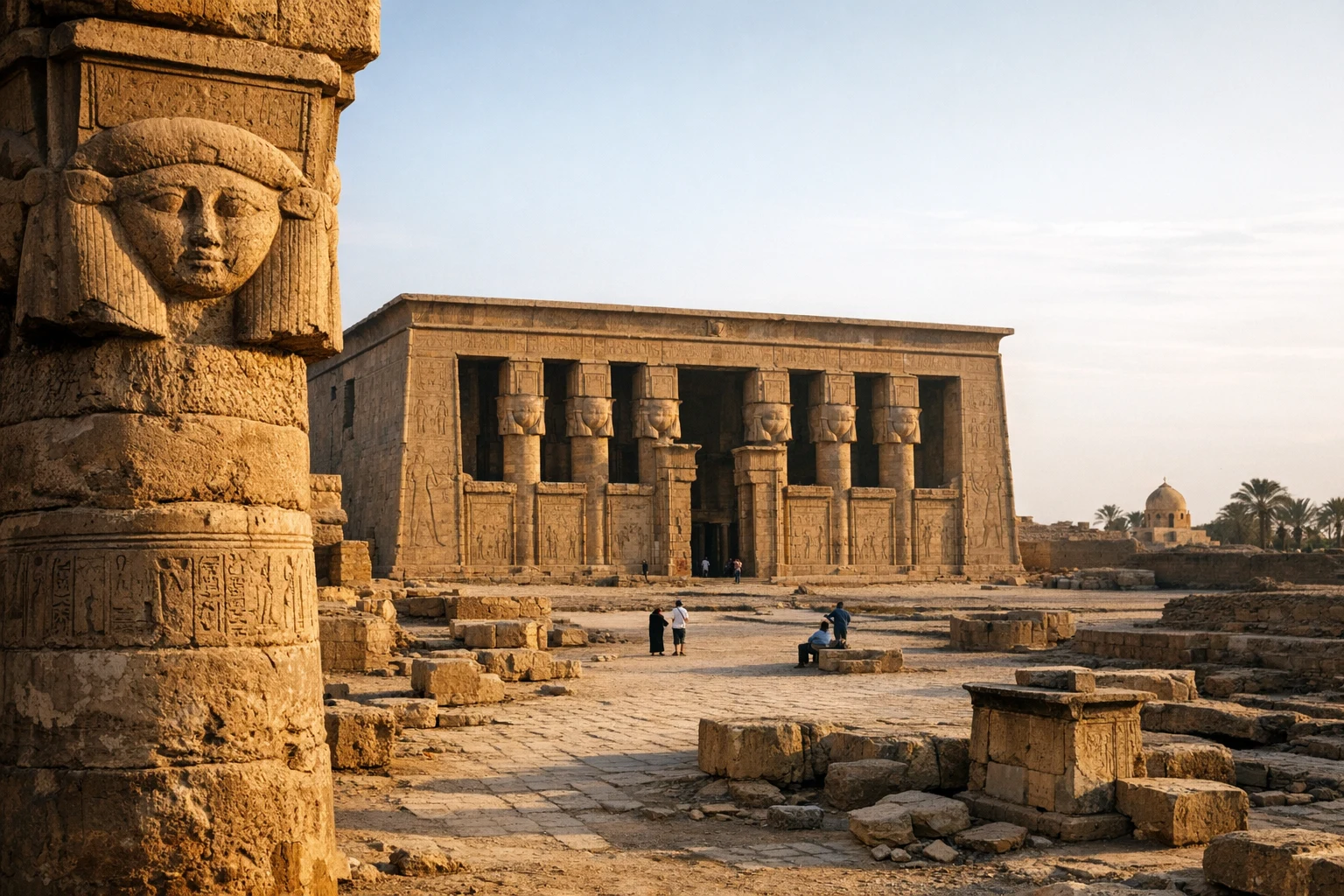
Dendera Temple Complex
The Dendera Temple Complex in Egypt is a remarkably preserved ancient site renowned for its grand Te...
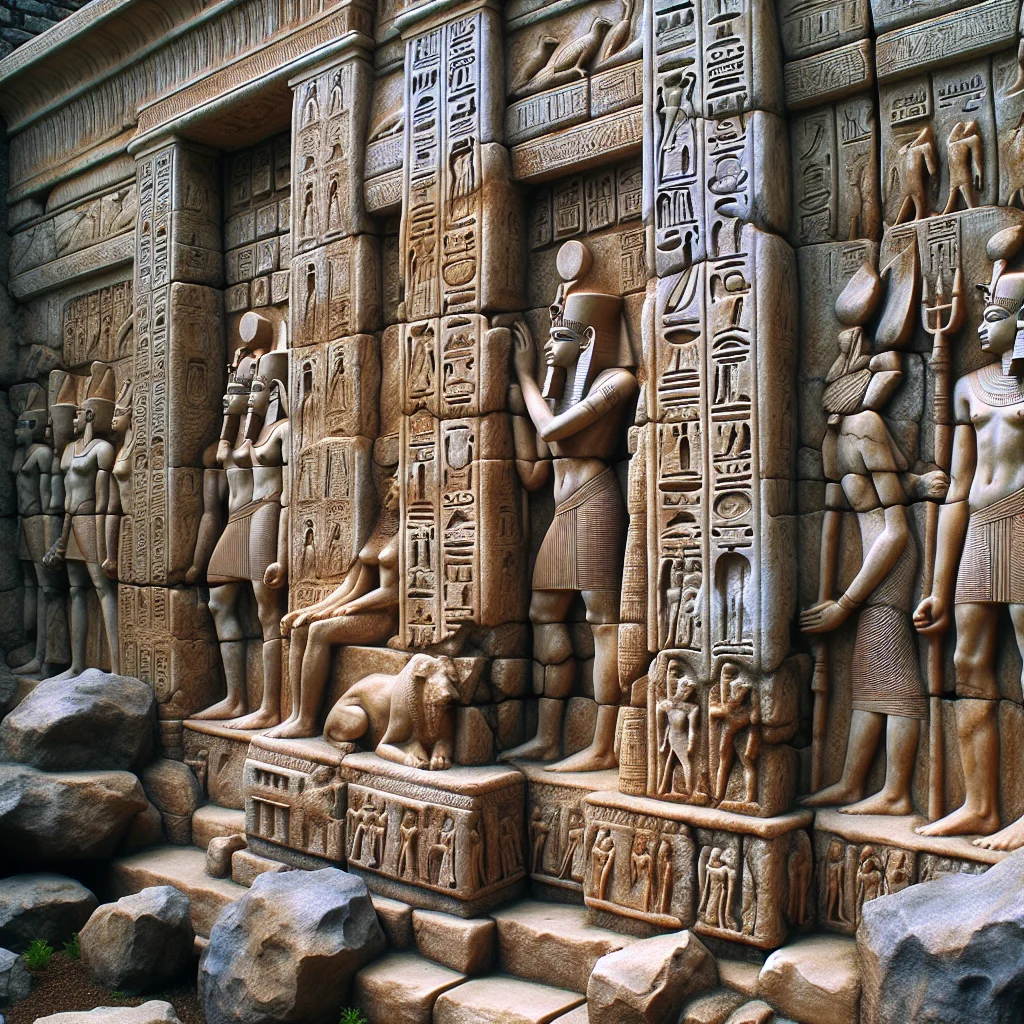
Abydos Temple Egypt Guide 2026: Temple of Seti I & King List
New Kingdom-PtolemaicAbydos Temple near Luxor: magnificent Temple of Seti I with war reliefs, ancient king list, and vibr...
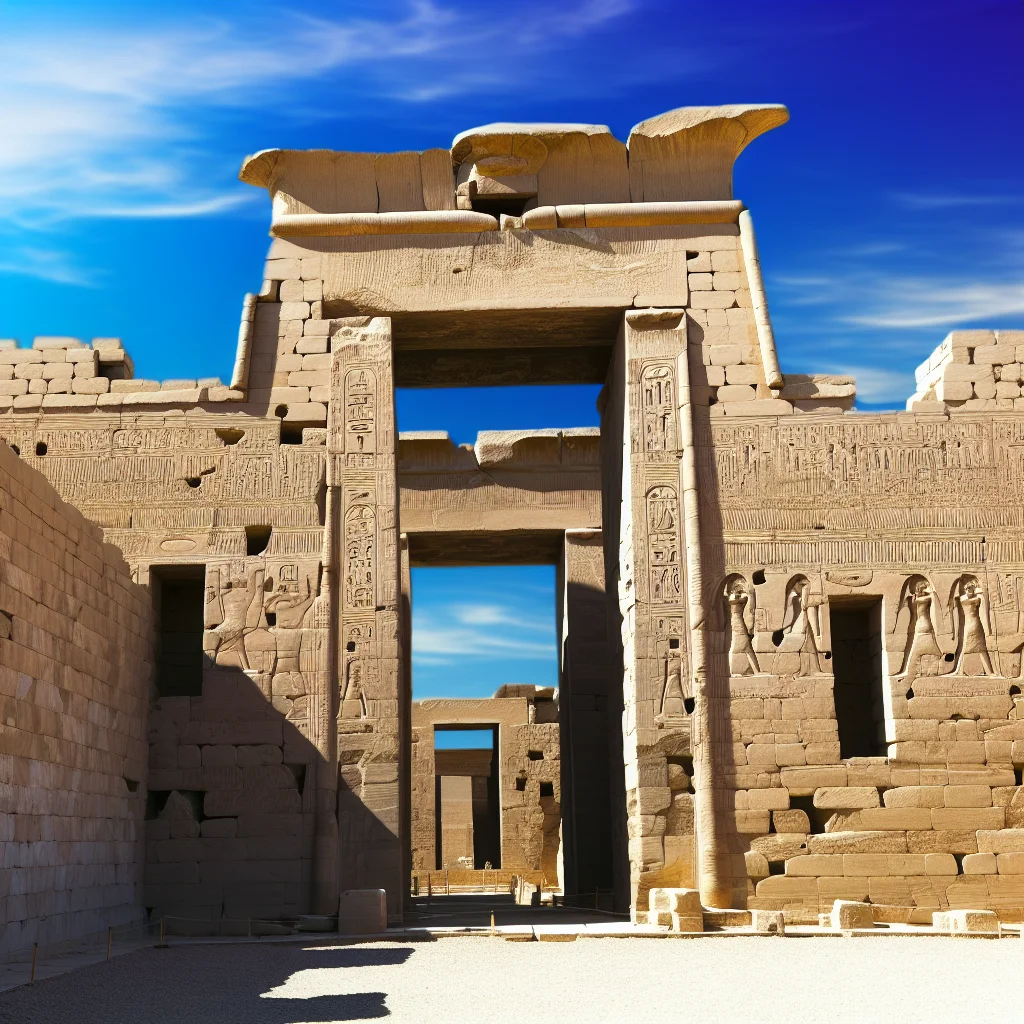
Edfu Temple Egypt Guide 2026: Temple of Horus & Dramatic Battle Reliefs
PtolemaicEdfu Temple near Aswan: Temple of Horus with stunning battle scenes, ritual texts, and the best-pres...