Quick Info
Curated Experiences
Valley of the Kings & Temple of Hatshepsut Half-Day Tour
West Bank Luxor Full-Day Tour with Hatshepsut Temple
Luxor by Hot Air Balloon over Deir el-Bahari
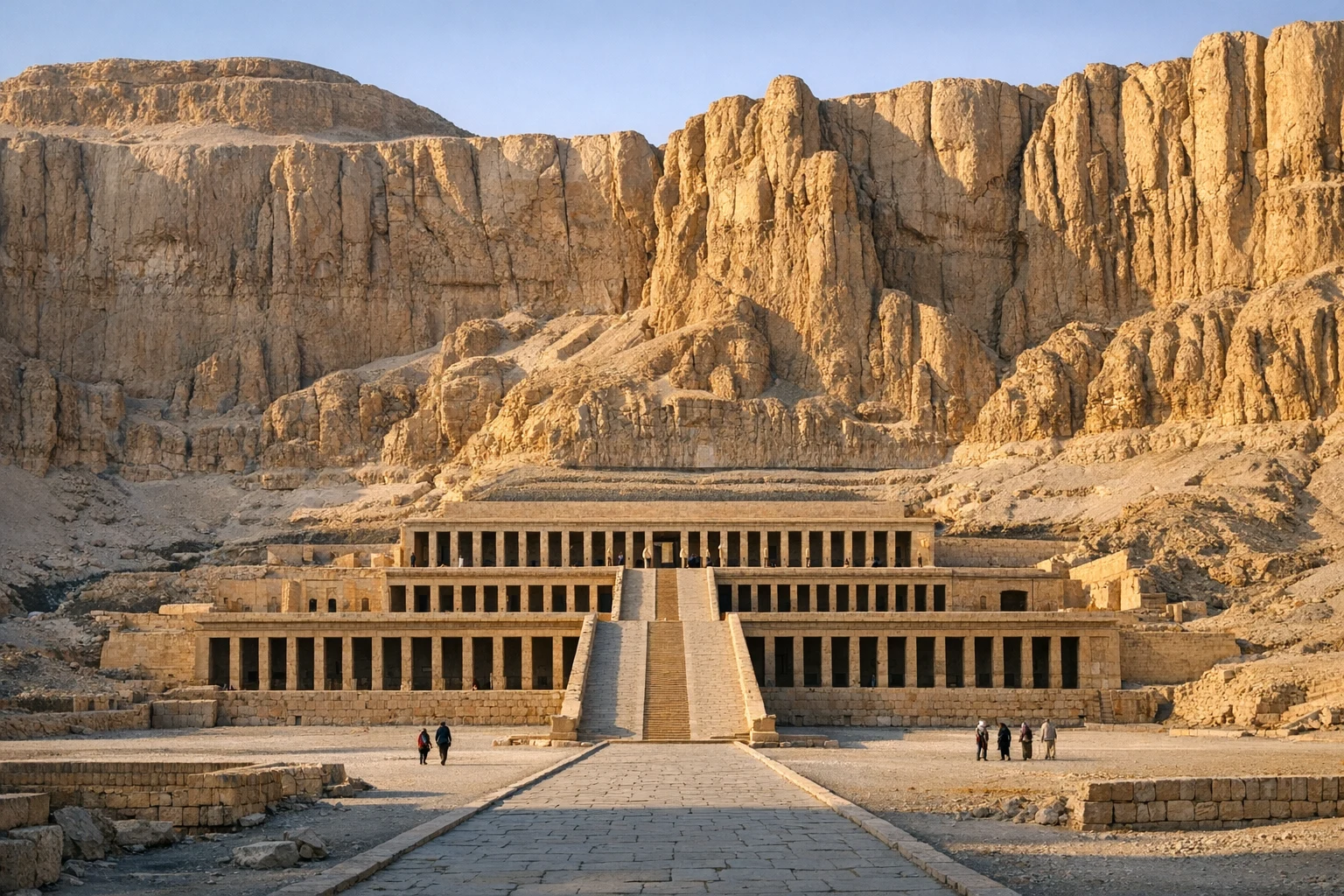
Carved into the face of the Theban cliffs on the west bank of the Nile, the Temple of Hatshepsut at Deir el-Bahari is one of the most visually arresting monuments ancient Egypt ever produced. Known to its builders as Djeser-Djeseru — “Holy of Holies” — the temple rises in three broad colonnaded terraces from the desert floor to the base of a sheer golden limestone escarpment, its clean horizontal lines a deliberate echo of the natural strata behind it. Stand at the lower forecourt and look up: the geometry feels almost impossible for a civilisation working three and a half thousand years ago. Egypt holds no shortage of sacred architecture, but Deir el-Bahari has a quality of controlled drama that sets it apart. Where temples at Karnak accumulate grandeur through mass, Hatshepsut’s monument achieves it through proportion, light, and the breathtaking accident of its setting. For visitors arriving from Luxor across the river, the walk from the ticket gate toward the facade is itself a slow revelation, the colonnades growing taller with every step while the cliffs above shift from pale gold to fiery ochre as the morning advances.
History
The Woman Who Became King
Hatshepsut’s ascent to power was, by any standard, extraordinary. Born around 1507 BCE to Pharaoh Thutmose I and his Great Royal Wife Ahmose, she was groomed as a royal daughter and later married to her half-brother Thutmose II. When he died after a short reign around 1479 BCE, the throne passed to his young son Thutmose III — born of a lesser wife — with Hatshepsut serving as regent. Within two or three years, however, she had claimed full pharaonic titles, wearing the double crown and the ceremonial beard, depicted on temple walls as a male king while simultaneously described in inscriptions with feminine grammatical forms. For roughly twenty years she ruled Egypt not as queen-consort but as co-pharaoh, one of the longest-reigning female monarchs in Egyptian history.
Commissioning Djeser-Djeseru
Construction of the mortuary temple began around 1479 BCE and occupied much of Hatshepsut’s reign. The architect credited with its design was Senenmut, her chief steward and closest confidant, a man of non-royal birth who rose to enormous influence. Senenmut chose the natural amphitheatre of Deir el-Bahari with deliberate care: Mentuhotep II, a Middle Kingdom pharaoh who had reunified Egypt five centuries earlier, had already built his own mortuary temple at the same site, and placing Hatshepsut’s monument beside it telegraphed dynastic continuity and divine favour. The new temple was oriented so that at the Festival of the Valley — when the cult image of Amun crossed the Nile from Karnak to visit the west bank dead — the god would process directly into its innermost sanctuary. Decoration included painted reliefs recording a legendary trading expedition to the land of Punt, believed to be somewhere on the Horn of Africa coast, as well as a mythological account of Hatshepsut’s divine birth from the union of her mother Ahmose and the god Amun himself.
Erasure and Rediscovery
Hatshepsut died around 1458 BCE under circumstances that remain unknown. Thutmose III, now ruling alone, would go on to become one of Egypt’s greatest military pharaohs. At some point — scholars debate whether immediately after her death or decades later — a systematic campaign erased her image from monuments across Egypt. At Deir el-Bahari the damage was thorough but not total: her Osiride statues on the upper terrace were dismantled and buried in a pit below the forecourt. Her cartouches were chiselled away. Her face was gouged from painted reliefs. The reasons remain debated; modern Egyptology leans away from simple revenge narratives toward explanations involving succession politics and the desire to consolidate Thutmose III’s own legacy.
The temple was later used by Christian monks who converted it into a Coptic monastery, lending the Arabic site name Deir el-Bahari — “Northern Monastery.” Serious archaeological investigation began in the 1890s when the Egypt Exploration Fund cleared debris that had accumulated for millennia. Polish archaeologists from the University of Warsaw have led restoration and documentation work at the site continuously since 1961, one of the longest-running excavation partnerships in Egyptology.
Key Features
The Three Terraces
The temple’s defining structural achievement is its three ascending terraces, each fronted by a double row of square limestone columns and connected by a central ramp. The lowest terrace was originally a garden: tree pits cut into the bedrock once held myrrh saplings brought back from Punt, living evidence of the trading expedition celebrated inside. The middle terrace is the most richly decorated, its colonnades sheltering two important chapels. The uppermost terrace, approached by a final ramp flanked by Osiride statues of Hatshepsut (now mostly reconstructed from the buried fragments), contains the main sanctuary cut directly into the cliff face and dedicated to Amun. The cumulative effect of the ascending geometry, framed by the cliff behind and open desert in front, creates a theatricality unlike any other temple in the Nile Valley.
The Punt Colonnade
Running along the south half of the middle terrace, the Punt Colonnade preserves one of the most celebrated relief sequences in all of Egyptian art. Carved and painted scenes document the naval expedition Hatshepsut dispatched to Punt, recording the goods brought back — ebony, ivory, gold, live animals, and the precious myrrh trees — with a naturalism unusual for official royal art. A particularly famous scene depicts the Queen of Punt, rendered with exaggerated proportions that Egyptologists interpret as a medical condition rather than artistic convention. The expedition is presented not as mere commerce but as divine command: Amun himself ordered the voyage, and Hatshepsut is shown receiving divine approval at every stage.
The Chapel of Hathor
At the south end of the middle terrace, the Chapel of Hathor is one of the best-preserved and most atmospherically painted spaces in the temple. Hathor, goddess of love, music, and the western horizon — and thus protector of the dead — receives elaborate veneration here. Column capitals are carved as sistrum heads, the ritual rattle associated with Hathor worship. Inner chamber walls retain vivid colours: deep reds, blues, and the characteristic Egyptian green-blue that oxidised turquoise and malachite pigments produce. Scenes show worshippers playing music, sailing, and presenting offerings, giving the chapel a warmth that contrasts with the formal grandeur of the exterior colonnades.
The Chapel of Anubis
Mirroring the Hathor chapel on the north end of the middle terrace, the Chapel of Anubis is dedicated to the jackal-headed god of embalming and the dead — an appropriate patron for a mortuary temple. Its painted reliefs are in outstanding condition, retaining some of the best-preserved colour on the entire site. Ceiling panels in an astronomical pattern and offering scenes along the walls create an intimate space that rewards slow examination. The quality of detail here offers a sense of what the entire temple would have looked like before centuries of damage, Coptic modification, and the deliberate erasure campaign stripped much of the upper terrace.
The Solar Court and Sanctuary
At the highest level, beyond the Osiride colonnade, a solar court once open to the sky preceded the innermost sanctuary carved into the living rock. This sanctuary was reused and modified by later pharaohs, including Thutmose III himself, who added reliefs after Hatshepsut’s erasure. The deep interior spaces, cool and dim even on the hottest days, give a tangible sense of the progression from bright desert exterior to sacred darkness that underpinned Egyptian temple theology: the move from the visible world toward the divine mystery at the mountain’s heart.
Getting There
The Temple of Hatshepsut lies on the west bank of the Nile, roughly five kilometres west of central Luxor. Most visitors cross the river by one of the public ferries that depart from the dock near Luxor Temple, a ten-minute crossing costing around EGP 5–10 per person. From the west bank ferry landing, the standard approach is to hire a local taxi or tuk-tuk for the remaining four kilometres to Deir el-Bahari; expect to pay EGP 50–100 for a return trip with waiting time, negotiated in advance.
Organised minibus tours from Luxor hotels are widely available and typically bundle the temple with the Valley of the Kings and the Colossi of Memnon, departing around 6 a.m. to beat the worst heat. A half-day private car with guide arranged through a reputable operator in Luxor costs roughly USD 30–60 depending on group size. Cruise ship passengers docked at Luxor can arrange shore excursions through their vessel, though independent hiring is often cheaper and more flexible.
Electric tourist shuttles run along the main west bank road during peak season, connecting the ferry dock with Deir el-Bahari at low cost. Cycling is possible for the experienced: the flat road from the ferry becomes a gentle uphill as it approaches the temple, manageable in the early morning before temperatures climb. The site opens at 6 a.m. and closes at 5 p.m. (4 p.m. in winter). Tickets are purchased at the west bank ticket office near the Colossi of Memnon, not at the temple itself.
When to Visit
The Temple of Hatshepsut is an open-air site in the Eastern Sahara, which means temperature management governs everything. October through February offers the most comfortable conditions: daytime highs of 22–28 °C, cool mornings, and clear skies that make the limestone cliffs glow spectacularly in angled light. December and January can feel chilly before 9 a.m., but a light jacket suffices. This is peak tourist season, so arrival before 7 a.m. is strongly advised to have the colonnades largely to yourself before tour groups from Nile cruises descend around mid-morning.
March and April sit in a sweet spot — crowds begin to thin as school holiday groups depart, temperatures are rising pleasantly, and the light quality remains excellent. From May through September, midday temperatures regularly exceed 40 °C and the site can feel punishing between 10 a.m. and 4 p.m. Summer visitors should restrict their visit to the first two hours after opening, carry significant water, and wear sun protection. The interior chapels offer welcome shade even in summer and are worth prioritising in the heat.
The Festival of Abu el-Haggag, Luxor’s Islamic celebration held in the month of Sha’ban, brings the city alive with processions that echo — consciously or otherwise — the ancient Festival of the Valley that once filled these same streets. Visiting Luxor during this period adds a layer of living continuity to the ancient monuments, though accommodation books up quickly.
| Quick Facts | |
|---|---|
| Official name | Djeser-Djeseru (Mortuary Temple of Hatshepsut) |
| Location | Deir el-Bahari, Luxor Governorate, Egypt |
| Coordinates | 25.7381° N, 32.6066° E |
| Built | c. 1479–1458 BCE |
| Civilisation | Ancient Egyptian, 18th Dynasty |
| Commissioned by | Pharaoh Hatshepsut |
| Architect | Senenmut (attributed) |
| UNESCO status | Part of Ancient Thebes with its Necropolis (1979) |
| Opening hours | 6:00 a.m. – 5:00 p.m. (4:00 p.m. in winter) |
| Entry ticket | West Bank combined ticket (~EGP 700–900, subject to change) |
| Nearest city | Luxor (~5 km east, across the Nile) |
| Best season | October – February |
Frequently Asked Questions
Where is the Temple of Hatshepsut located?
The temple sits at Deir el-Bahari on the west bank of the Nile, roughly 5 kilometres west of central Luxor and directly below the towering limestone escarpment of the Theban hills.
How much does it cost to enter the Temple of Hatshepsut?
Admission to the Hatshepsut temple is included in the West Bank antiquities ticket, which costs approximately EGP 700–900 for foreign visitors (prices subject to change). A combined Valley of the Kings ticket can be purchased separately.
What is the best time of day to visit?
Arrive as early as possible — the site opens around 6 a.m. The morning light on the colonnades is spectacular, temperatures are cooler, and tour buses have not yet arrived in force. By 10 a.m. in summer the heat can be intense.
Who built the Temple of Hatshepsut and why?
Pharaoh Hatshepsut, who ruled Egypt from approximately 1479 to 1458 BCE, commissioned the temple as her mortuary complex. Designed by her chief steward Senenmut, it was intended to honour the god Amun and secure her divine legacy after death.
Was Hatshepsut's image deliberately destroyed?
Yes. After her death, her successor Thutmose III — possibly decades later — ordered her images, cartouches, and statues systematically hacked from walls throughout Egypt. At Deir el-Bahari, many of her Osiride statues were smashed and buried in a pit nearby, where archaeologists later recovered fragments.
How long does a visit to the temple take?
Allow 1.5 to 2 hours to walk all three terraces, view the painted reliefs in the Chapel of Hathor and the Punt Colonnade, and take in the panoramic view across the Nile Valley. Combining it with the Colossi of Memnon and one Valley of the Kings tomb makes a full morning.
Is the Temple of Hatshepsut a UNESCO World Heritage Site?
The temple is part of the Ancient Thebes with its Necropolis, inscribed as a UNESCO World Heritage Site in 1979, which encompasses Luxor, Karnak, the Valley of the Kings, and the entire west bank necropolis.
Nearby Ancient Sites
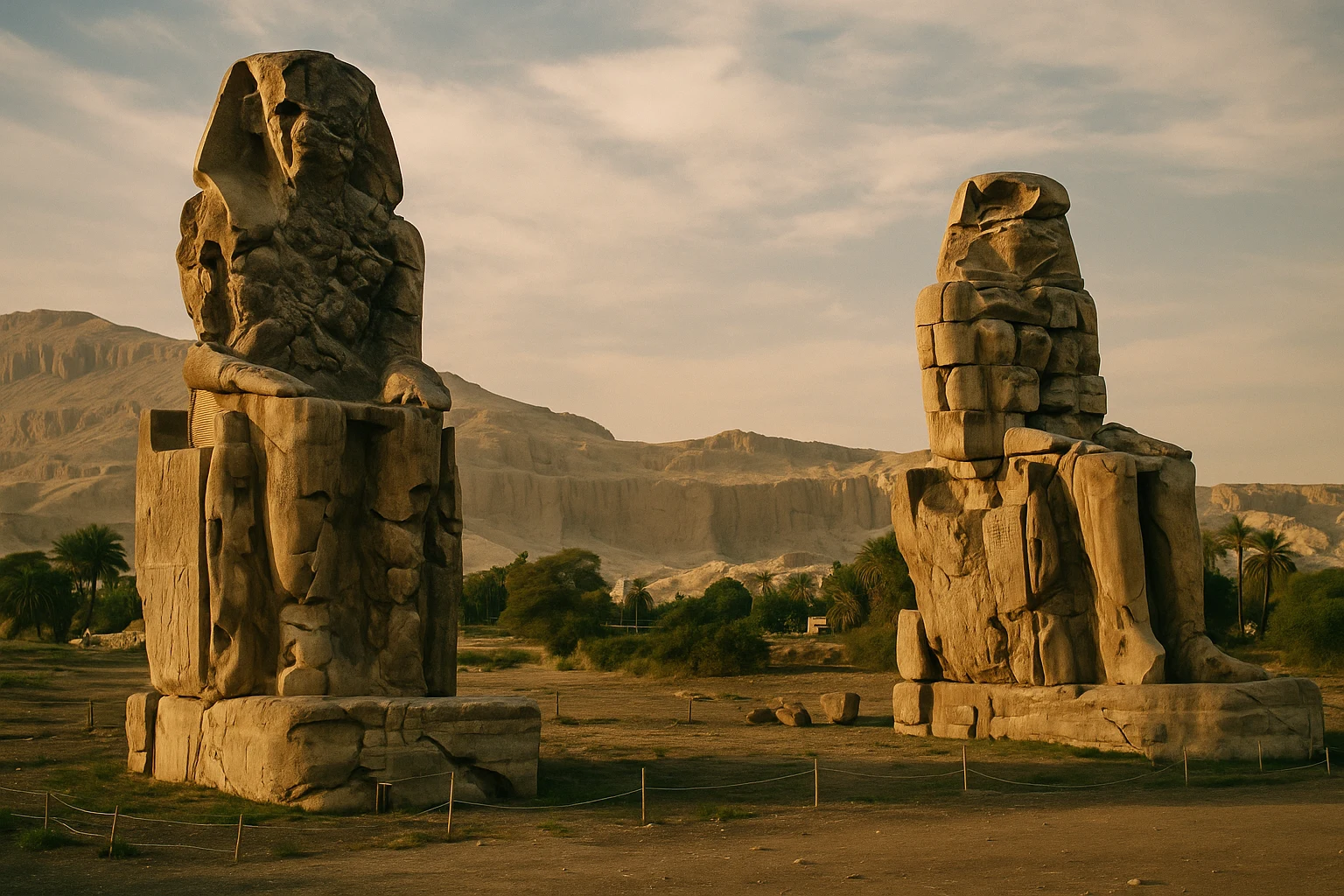
Colossi of Memnon
Ancient Egypt (New Kingdom)Twin colossal statues of Pharaoh Amenhotep III guarding the Theban necropolis on Luxor's West Bank, ...
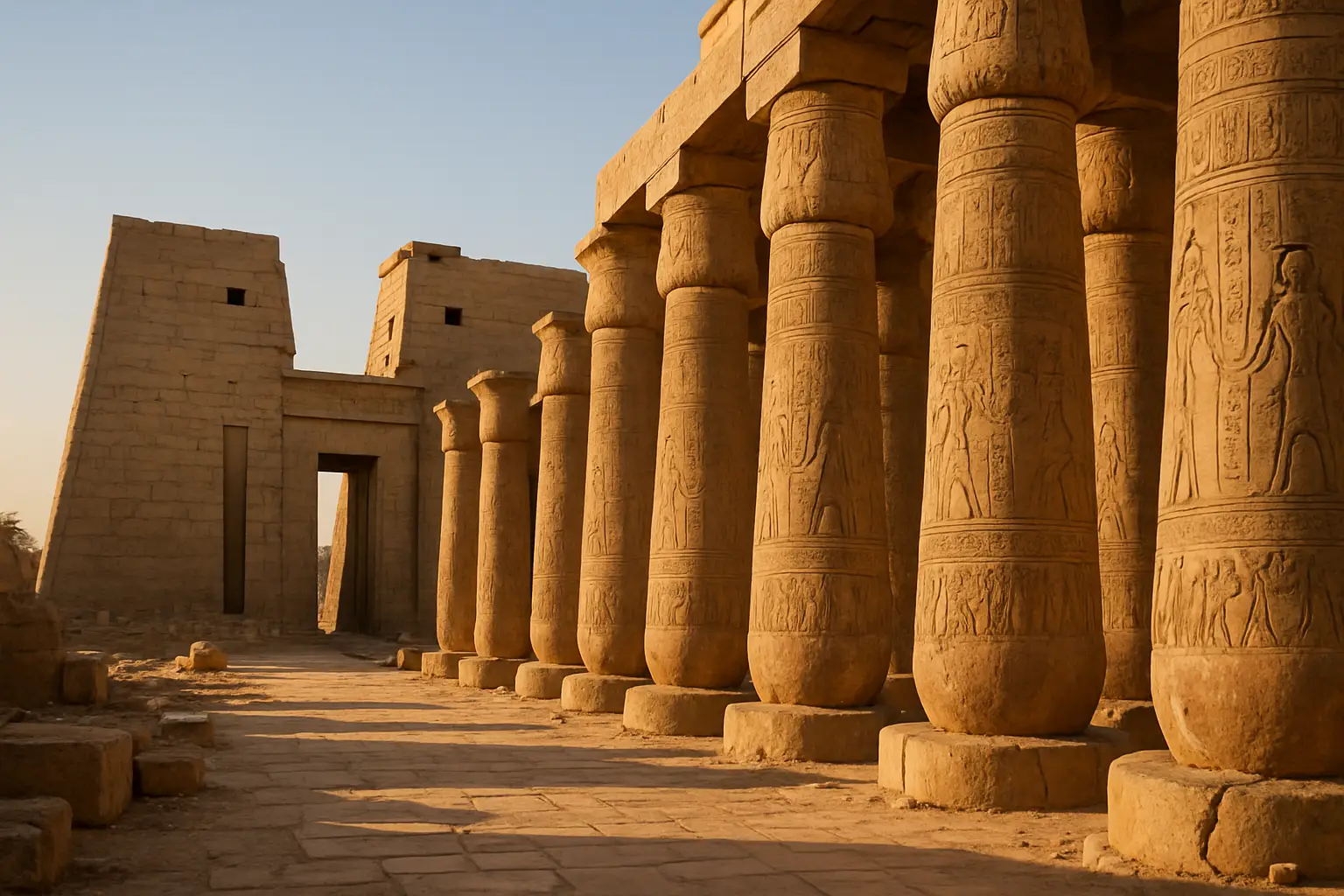
Karnak Temple Complex Egypt Travel Guide 2026: Egypt's Greatest Temple
Ancient EgyptianExplore Karnak, the world's largest ancient religious complex. Discover the Hypostyle Hall, Sacred L...
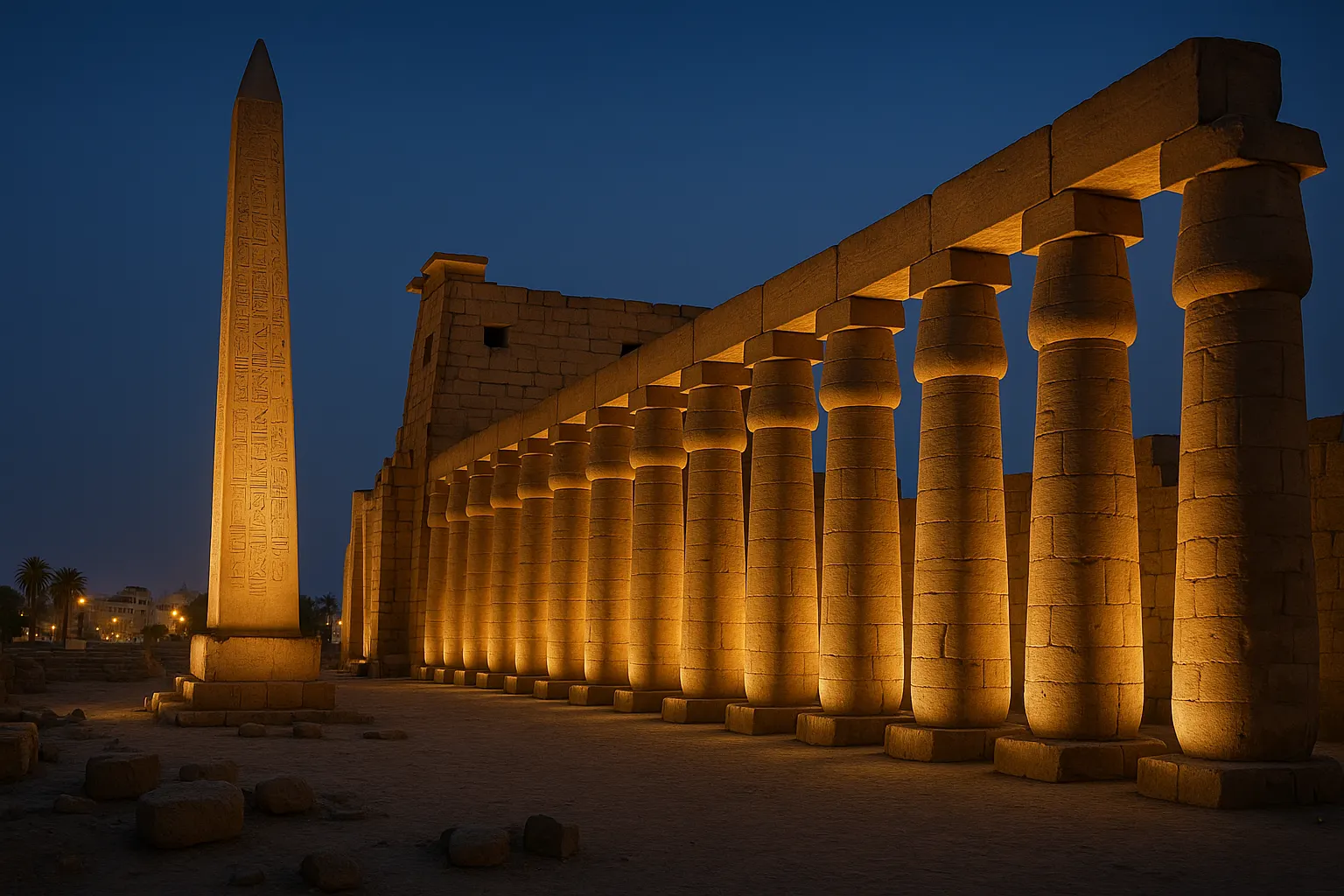
Luxor Temple Egypt Travel Guide 2026: The Elegant Temple of Luxor
Ancient EgyptianVisit Luxor Temple, the most elegant temple in Egypt. Discover the Avenue of Sphinxes, Colonnade of ...
Dendera Temple Complex Egypt Guide 2026: Temple of Hathor & Zodiac Ceiling
Ptolemaic-RomanExplore Dendera's magnificent Temple of Hathor near Luxor. Star-mapped zodiac ceiling, Ptolemaic arc...
Abydos Temple Egypt Guide 2026: Temple of Seti I & King List
New Kingdom-PtolemaicAbydos Temple near Luxor: magnificent Temple of Seti I with war reliefs, ancient king list, and vibr...