Quick Info
Curated Experiences
Edfu Temple and Kom Ombo Day Tour from Aswan
Full-Day Private Tour to Edfu and Kom Ombo Temples
Temple of Horus Edfu and Luxor West Bank Tour
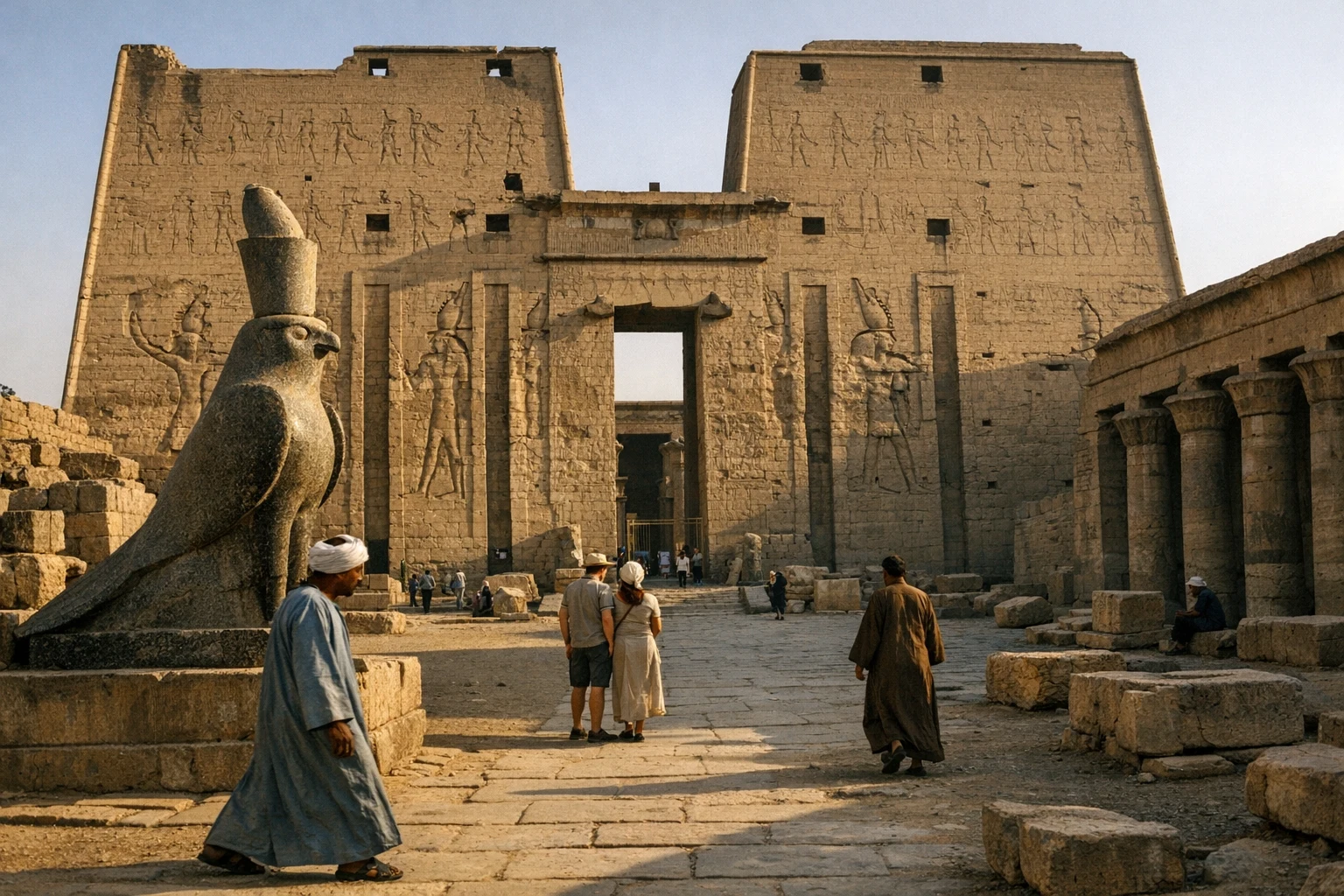
The silence of the desert is broken only by the distant calls of boatmen on the Nile as you approach the monumental pylons of the Temple of Horus at Edfu, Egypt. As one of the most spectacular and best-preserved temples from the Ptolemaic period, this sacred site rises from the sands of the Aswan Governorate like a stone testament to thousands of years of religious devotion and architectural prowess. Walking beneath soaring gateways and stepping into vast hypostyle halls adorned with intricate carvings, visitors embark on a journey deep into the world of ancient Egyptian gods and their myths. Here, Horus—the falcon-headed sky god—was worshipped with elaborate annual festivals and rituals, his story etched into the very stones that still tower overhead. In the shadows and sunlight that dance across the detailed hieroglyphs, one finds a living record of the beliefs, artistry, and politics of one of history’s most fascinating civilizations.
Set on the west bank of the Nile, halfway between Luxor and Aswan, Edfu has long been a crossroads of cultural and commercial exchange. The Temple of Horus, built over a century by successive Ptolemaic rulers, remains a beacon for travelers, scholars, and spiritual seekers. Its striking state of preservation offers an unrivaled glimpse into Egypt’s monumental building tradition, complete with original ceilings, colossal walls, detailed sanctuaries, and even traces of vibrant paintwork. As the second largest temple in Egypt, it outshines many other sites in both scale and completeness—making it a must-see destination for anyone with an interest in ancient history or the evolution of sacred places. From awe-inspiring processional avenues to secret chambers shrouded in myth, Temple of Horus at Edfu stands as a bridge between the ancient and the present, inviting modern visitors to imagine the world as it once was, and as it strove to be.
History
Origins in the Ptolemaic Era
The origins of the Temple of Horus at Edfu are rooted in the tumultuous period following Alexander the Great’s conquest of Egypt in 332 BCE. As the Ptolemaic dynasty—Greek rulers established after Alexander’s death—took power, Egypt entered a new era of cross-cultural synthesis and prosperity. Determined to assert their legitimacy and maintain harmony with the deeply rooted traditions of the land, the Ptolemies invested heavily in the construction of grand temples, of which Edfu would become a crowning achievement.
Work on the Temple of Horus commenced in 237 BCE during the reign of Ptolemy III Euergetes. Unlike many earlier religious complexes that rose, fell, and were rebuilt atop older ruins, Edfu’s temple was constructed almost entirely anew, on land near an earlier, less grandiose structure. Its strategic location on the Nile’s west bank ensured a steady influx of pilgrims, traders, and supplicants, as well as access to abundant sandstone from nearby quarries. Laborers, artisans, and priests all contributed their expertise, following strict religious layouts and architectural formats encoded in traditions reaching back to the dawn of pharaonic civilization.
The Completion and Ptolemaic Rule
More than a century would pass before the temple was completed—a testament to its monumental scale and the political complexities of the era. Construction spanned the reigns of several Ptolemaic kings, with Ptolemy IV, V, and finally Ptolemy XII Neos Dionysos witnessing the finishing touches around 57 BCE. Despite the external façade of stability, Egypt during this period was plagued by internal strife, dynastic feuds, and challenges from foreign ambitions. Yet the continued investment in Edfu’s temple not only speaks to the site’s religious importance but also to the evolving syncretism of Greek and Egyptian cultures under the Ptolemies.
Roman, Coptic, and Islamic Periods
The coming of the Romans in 30 BCE, and later the rise of Christianity in the region, signaled significant changes. Some structures at Edfu were repurposed for Christian worship, while others fell into disrepair or were buried by shifting sand. Over the centuries, villagers built their homes atop the once-sacred grounds, the temple’s vast pylons poking from the earth like the bones of a mythic beast. Islamic era chroniclers remarked on its grandeur, and pilgrims continued to associate the site with ancient legends of Horus, whose story of triumph over evil resonated across faiths and generations.
Rediscovery and Modern Times
It was not until the nineteenth century that Edfu’s temple was finally liberated from centuries of sand and obscurity. The French Egyptologist Auguste Mariette led the charge in 1860, organizing ambitious excavations that revealed the temple’s exceptional state of preservation. Since then, the site has stood as one of Egypt’s most celebrated monuments, drawing visitors from across the globe and inspiring new generations of historians and archaeologists. Today, meticulous conservation efforts and increasing accessibility have transformed the Temple of Horus into an essential stop on any Nile itinerary—a living monument to the enduring power of myth and memory.
Key Features
The Temple of Horus at Edfu captivates visitors not just for its scale and beauty, but for the richness of the cultural and religious stories encoded in every stone block and carved relief. From the moment one crosses the temple’s majestic entrance pylons, a journey through both space and time unfolds.
The entrance itself is framed by two colossal towers, or pylons, stretching nearly 36 meters high. Carved upon the sandstone are dramatic images of Horus in triumph, brandishing royal scepters and dispatching enemies of ma’at (cosmic order). Flanking the gateway, massive granite statues of the falcon-god stand guard, their features still sharp after two millennia, casting long shadows across the forecourt at dawn and dusk.
Inside, the main courtyard opens to a hypostyle hall filled with 32 towering columns, each crowned with exquisitely detailed capitals. Here, the walls are adorned with scenes depicting the “Feast of the Beautiful Meeting,” the festival celebrating the annual journey of Hathor from Dendera to join Horus—a union that reaffirmed the cosmic order and fertility of the land. Hieroglyphic texts, remarkably undamaged, run in neat rows along the columns, recording ritual sequences and prayers.
Moving deeper into the temple, visitors find a series of increasingly sacred spaces. The inner sanctuary, reserved for the priests and the statue of Horus himself, remains one of the rare ancient chambers to still house its original naos—a granite shrine that once cradled the divine image. Surrounding chapels and storage rooms, including the “Chamber of Consecration,” allow modern explorers to grasp the logistical and spiritual complexities of daily ritual in ancient Egypt.
One of the most atmospheric features is the “Laboratory,” a chamber where priests concocted sacred oils and perfumes, its walls inscribed with ancient recipes and ritual instructions. The “Hall of Offerings” served as a central point for gifts brought by devotees—dates, bread, wine, and more—all meticulously recorded and tallied on the surrounding walls.
The temple also boasts secret passages, stairways to the roof, and reliefs portraying boat processions along the Nile, linking Edfu to a wider religious landscape. Even the soot-stained ceilings, blackened by centuries of habitation, tell stories: Coptic villagers once made the temple their home, their fires illuminating a space that had echoed with chants and rites long before.
Every surface at Edfu seems to carry narrative weight—whether it is the depiction of mythical battles between Horus and Seth, scenes of kings presenting offerings, or the subtle artistic touches showcasing the fusion of Egyptian and Greek styles. Vivid traces of original pigment linger beneath the lintels, hinting at the riot of color that would once have dazzled visitors. In all, the Temple of Horus encapsulates the grandeur, mystery, and enduring relevance of ancient Egypt’s temple architecture.
Getting There
Reaching Edfu and its marvelous Temple of Horus has never been easier, thanks to Egypt’s expanding infrastructure and the site’s central location on the Nile corridor. The town of Edfu sits roughly midway between Luxor and Aswan, making it a perfect stopover for travelers exploring Upper Egypt’s constellation of historic sites.
Many visitors arrive as part of a Nile cruise, with daily boat departures from both Luxor and Aswan (luxury cruise rates vary from $100 to $250+ per night, typically including accommodations and guided tours). Nile cruise ships dock just a short distance from the temple—the local fleet of horse-drawn carriages, or “caleches,” waits to ferry visitors on the five- to ten-minute ride through Edfu’s bustling streets directly to the temple gates (expect to pay around 100–150 EGP per carriage for a return journey; always negotiate in advance).
Those preferring independent travel have several options. Edfu is served by the main Cairo–Luxor–Aswan railway, with regular trains connecting all major cities. From Luxor, the journey takes about 2 hours, and from Aswan, about 1.5 hours, with ticket prices ranging from 50 to 120 EGP depending on class and schedule. Local minibuses also ply the route for budget travelers, with fares typically under 50 EGP.
If arriving by private vehicle or taxi, the temple is clearly signposted, and parking is available nearby for a nominal fee. Organized day tours, often combining Edfu with the nearby Temple of Kom Ombo, pick up passengers from major hotels and cruise docks, offering air-conditioned comfort and expert narration (full-day group tour prices range from $50–$100 per person).
No matter your mode of travel, it’s wise to set out early in the day to avoid crowds and midday heat. The journey itself, hugging the banks of the Nile and passing palm groves and modern villages, offers a taste of the timeless landscapes that have drawn travelers to Egypt for centuries.
When to Visit
For the most comfortable and rewarding experience at the Temple of Horus, timing your visit is key. Egypt’s Upper Nile region is characterized by pronounced seasons, each bringing its own atmosphere and challenges for visitors.
The best time to visit Edfu is during the cooler winter months, from late October through April. During this period, daytime temperatures range from a pleasant 20°C to 28°C (68°F to 82°F), making exploration enjoyable and allowing visitors to linger over the site’s intricate reliefs. Early mornings and late afternoons are especially magical, with soft sunlight illuminating the carvings and casting dramatic shadows along the pylons. Winter is also peak tourist season, so expect moderate crowds, particularly when Nile cruise groups arrive.
Summer months between May and September see temperatures soar, often reaching 40°C (104°F) or higher. While the temple is open year-round, the searing midday heat can pose challenges, especially for those sensitive to high temperatures. If visiting during summer, plan for a very early morning arrival, bring ample water, sun protection (hat, sunscreen, sunglasses), and rest in the shaded sections of the temple whenever possible. Crowds are much thinner in summer, so those who brave the heat may find themselves nearly alone amid the grandeur.
Major Egyptian holidays, including Coptic Christmas and Eid al-Fitr, can affect opening schedules and visitor patterns, though the site typically remains accessible. Regardless of the season, Friday mornings (the Egyptian weekend) can be busier with local visitors, while the afternoon often brings a lull.
Lastly, consider timing your visit to coincide with the annual “Beautiful Meeting” festival—re-enacted on rare occasions—which celebrates the mythic union of Horus and Hathor. While not held every year, such events offer a spectacular window into Egypt’s living traditions, with processions, music, and communal celebrations linking modern Egypt to its ancient roots.
Quick Facts
| Attribute | Details |
|---|---|
| Location | Edfu, Aswan Governorate, Egypt |
| Civilization | Ptolemaic Egypt |
| Construction Started | 237 BCE (Ptolemy III Euergetes) |
| Completed | 57 BCE (Ptolemy XII Neos Dionysos) |
| Main Deity | Horus (the falcon-headed sky god) |
| Architectural Style | Ptolemaic Egyptian |
| Notable Features | Giant entry pylons, hypostyle hall, inner sanctuary with original naos |
| State of Preservation | Among the best-preserved ancient temples in Egypt |
| Opening Hours | Daily, 7:00 AM to 5:00 PM |
| Entry Fee | ~200 EGP (discounts for students/locals) |
| Nearby Sites | Kom Ombo, Dendera, Abydos, Karnak, Luxor |
| Recommended Visit Duration | 1.5 – 2.5 hours |
| Accessibility | Partial (main courtyard accessible, some steps in inner sections) |
| Photography | Allowed (no flash/tripods in some areas) |
| Closest City | Edfu |
Frequently Asked Questions
What are the Temple of Horus (Edfu) opening hours?
The Temple of Horus is open daily from 7:00 AM to 5:00 PM. During special events or religious holidays, times may vary, so check ahead.
How much is the entry fee for Temple of Horus?
The entrance fee is typically around 200 EGP (Egyptian Pounds) for adults. Children, students, and Egyptian nationals may receive discounts.
Can you visit the Temple of Horus independently or do you need a guide?
You can visit independently, but hiring a guide is recommended to fully appreciate the temple's art, symbolism, and unique history.
Is the Temple of Horus accessible for people with limited mobility?
While the main forecourt is accessible, the temple was not designed for modern mobility needs. Some thresholds and steps may present challenges.
Are photos allowed inside the Temple of Horus?
Yes, photography is permitted for personal use. However, flash use and tripods may be restricted in some areas.
Nearby Ancient Sites
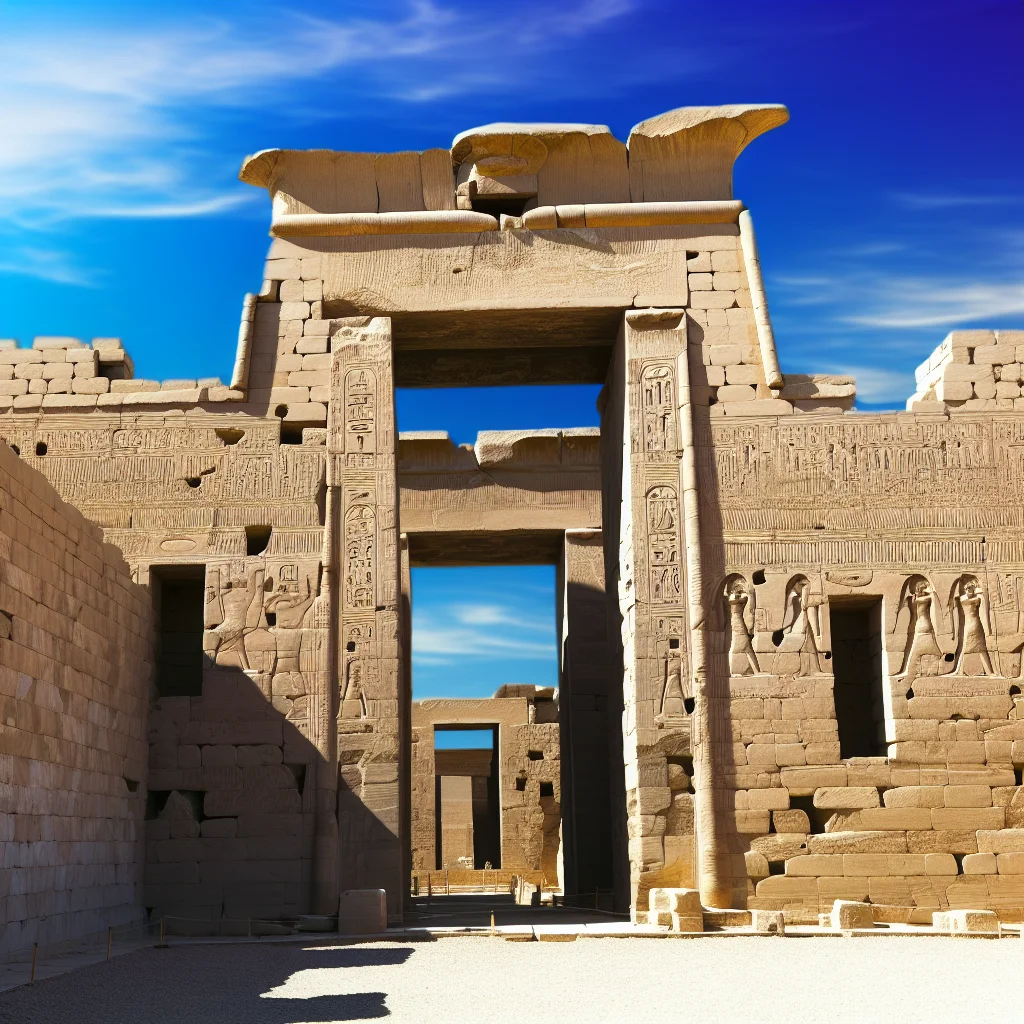
Edfu Temple Egypt Guide 2026: Temple of Horus & Dramatic Battle Reliefs
PtolemaicEdfu Temple near Aswan: Temple of Horus with stunning battle scenes, ritual texts, and the best-pres...
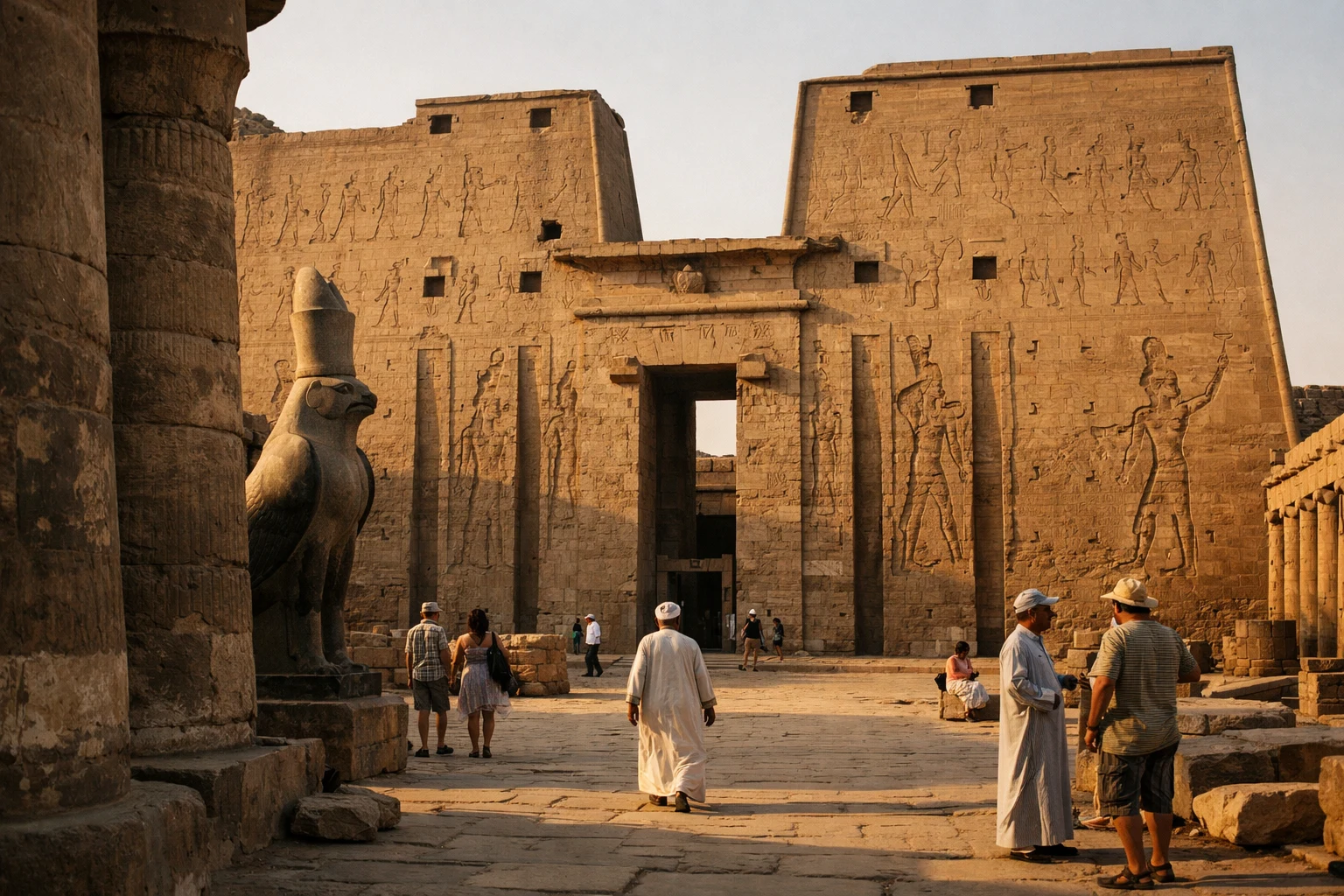
Edfu Temple
Ancient EgyptianVisit Egypt’s Edfu Temple, one of the best-preserved ancient sanctuaries, dedicated to Horus and ric...
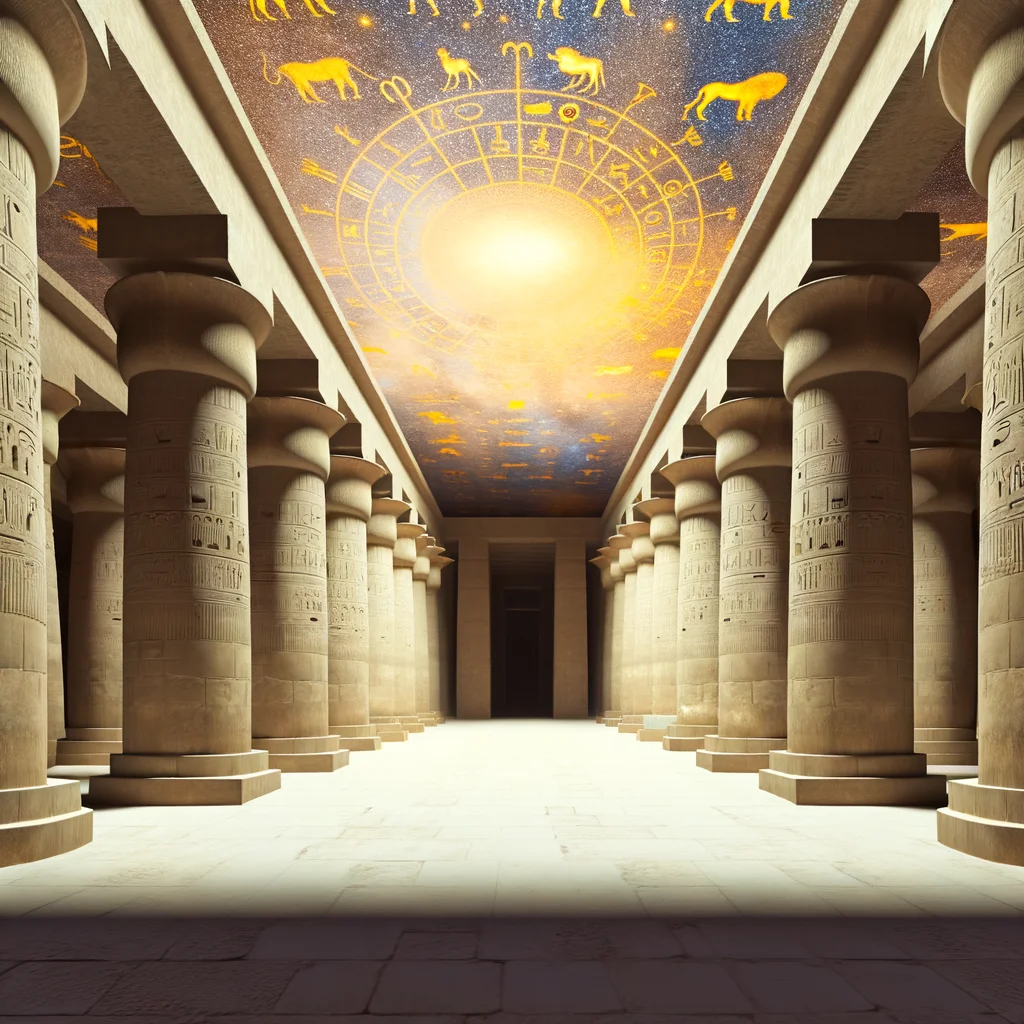
Dendera Temple Complex Egypt Guide 2026: Temple of Hathor & Zodiac Ceiling
Ptolemaic-RomanExplore Dendera's magnificent Temple of Hathor near Luxor. Star-mapped zodiac ceiling, Ptolemaic arc...
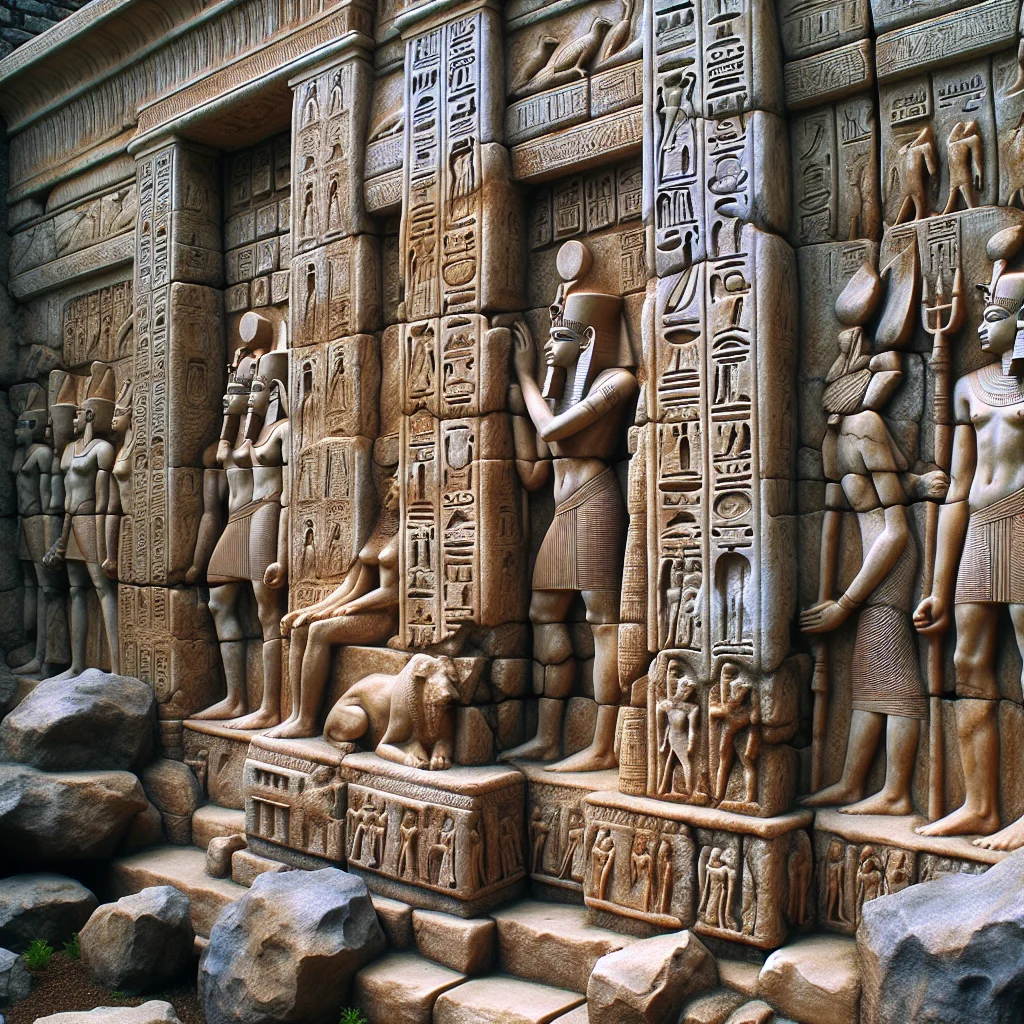
Abydos Temple Egypt Guide 2026: Temple of Seti I & King List
New Kingdom-PtolemaicAbydos Temple near Luxor: magnificent Temple of Seti I with war reliefs, ancient king list, and vibr...
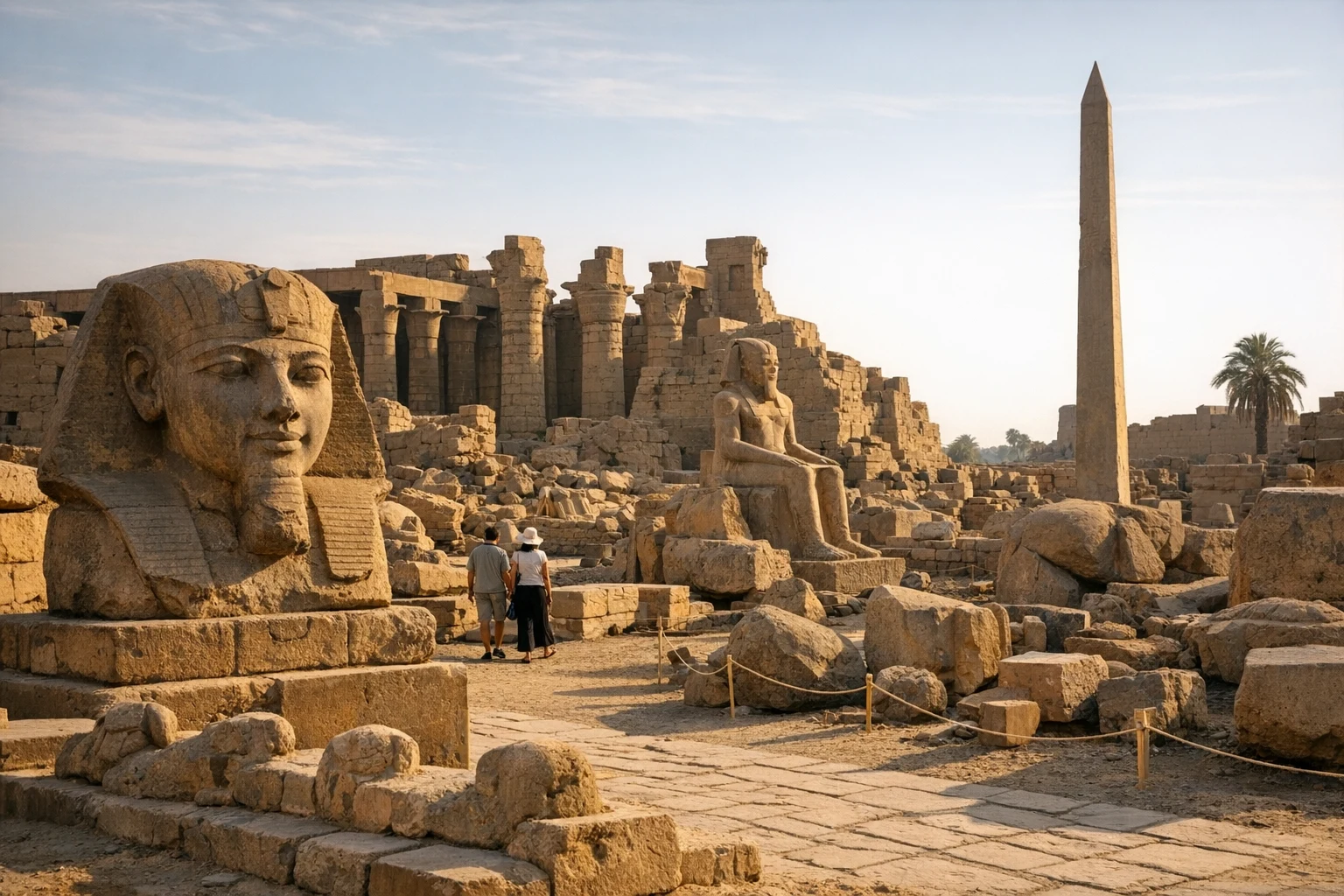
Karnak Open Air Museum
Ancient EgyptianExplore Egypt’s Karnak Open Air Museum, where reconstructed chapels and reliefs reveal hidden layers...