Quick Info
Curated Experiences
Temple of Luxor Evening Sound and Light Show
Full-Day Luxor East and West Bank Tour
Karnak and Luxor Temple Guided Walking Tour
At the edge of the Nile in Upper Egypt, where the sacred river bends and the city of Luxor crowds the eastern bank, one of the ancient world’s most breathtaking religious monuments rises from the earth in almost unbroken splendour. The Temple of Luxor, known to the ancient Egyptians as Ipet Resyt — the Southern Sanctuary — has stood on this spot for more than three thousand years, its massive pylons and towering columns enduring the rise and fall of pharaohs, the arrival of Alexander the Great, the spread of Christianity, and the long centuries of Islam. To arrive here at dusk, when the setting sun turns the sandstone a deep amber and the first floodlights begin to trace the outlines of colossal statues, is to understand why ancient people built in stone and meant it to last forever.
Unlike the sprawling religious city of Karnak a few kilometres to the north, Luxor Temple is compact and navigable — a monument that rewards the patient visitor who slows down to read the walls. Pharaohs carved their greatest victories here in painstaking detail, Roman legionaries converted a hall into a chapel, and a medieval mosque still sits inside the complex, its minaret rising above columns the ancient Egyptians raised to celebrate their gods. Nowhere else in Egypt can you trace so many layers of continuous human devotion in a single space.
History
The New Kingdom Foundation
The origins of the Temple of Luxor lie in the early New Kingdom, when Thebes — modern Luxor — emerged as Egypt’s dominant religious and political capital. Earlier structures on this site date to the Middle Kingdom, but the monument visitors see today was shaped primarily by the vision of Amenhotep III, who ruled from approximately 1390 to 1352 BCE and was arguably the most prolific builder in Egyptian history before Ramesses II.
Amenhotep III commissioned the temple’s inner sanctuary, the magnificent colonnade hall, and the peristyle court that bears his name. His architects laid out a structure aligned on a slightly different axis than the older shrines it replaced, running broadly north-south from the great entrance pylon toward the inner sanctuary. The purpose was theological as much as architectural: the temple served as the earthly setting for the Opet Festival, an annual celebration lasting several weeks in which statues of Amun, Mut, and Khonsu were carried in golden barques from Karnak downriver to Luxor and back, symbolically renewing the divine power of the reigning pharaoh.
Ramesses II and the Great Pylon
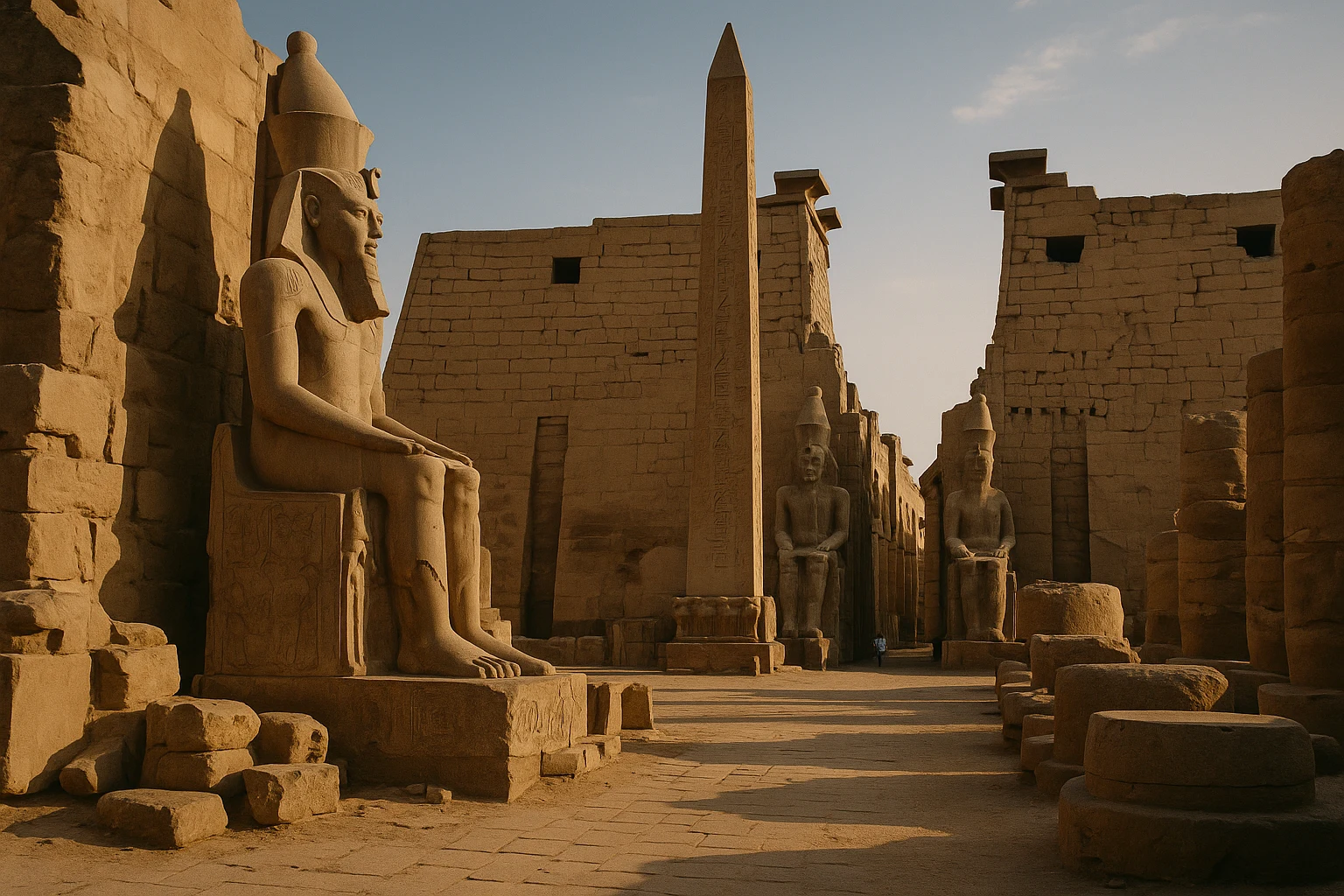
The temple’s most dramatic visual statement — the pair of towering entrance pylons — was the work of Ramesses II, who ruled from 1279 to 1213 BCE and left his mark on virtually every major monument in Egypt. He added a large colonnaded court bearing his name and erected six colossal statues of himself flanking the pylon entrance, along with two obelisks. One of those obelisks remains in place today; the other was given to France in 1829 and now stands at the centre of the Place de la Concorde in Paris.
Ramesses covered the pylon’s exterior with vast relief carvings depicting his supposed victory at the Battle of Kadesh against the Hittites — a propaganda exercise that appears on temple walls across Egypt, though historians now regard the engagement as a strategic stalemate. The reliefs are still vivid, the hieroglyphs deep-cut and commanding even after three millennia of desert wind.
Later Periods: Alexander, Rome, and Islam
After the New Kingdom’s decline, later rulers continued to add to and adapt the temple. The Nubian pharaohs of the Twenty-fifth Dynasty carried out restorations, and Alexander the Great, visiting Egypt in 332 BCE after his conquest, reportedly ordered a new sanctuary shrine built around the inner holy of holies — a small granite chapel that still survives and bears his cartouche, making it one of the few monuments in Egypt where Alexander’s name appears in hieroglyphs.
The Romans transformed the colonnaded hall of Amenhotep III into a chapel dedicated to the imperial cult, painting over the Egyptian reliefs with Christian imagery and building an apse into the ancient architecture. When Christianity gave way to Islam in Egypt, the area around the temple filled with the houses of the medieval city, and a mosque was built directly atop one of the hypostyle rooms. The Mosque of Abu Haggag, still an active place of worship, rises incongruously — and magnificently — above the ancient columns of Ramesses II’s court, a monument to the layered history of a living city.
Modern archaeological work, including extensive excavations carried out in the twentieth century and a major restoration of the Avenue of Sphinxes completed in 2021, has continued to reveal the depth of this site’s history.
Key Features
The Entrance Pylon and Ramesses Statues
The first impression of Luxor Temple is overwhelming. The entrance pylon of Ramesses II stands roughly twenty-four metres high and sixty-five metres wide, its faces covered in battle reliefs that stretch from ground to cornice. Two seated colossal statues of Ramesses II guard the left and right sides of the gateway, their features worn but unmistakable in their regal composure. A third colossal statue of the pharaoh in a standing pose occupies the forecourt. The single remaining obelisk of Ramesses, rising about twenty-five metres from its base, is tapered to a pyramidion that would once have been capped in electrum — an alloy of gold and silver — to catch and reflect the first rays of the morning sun.
The Court of Ramesses II
Passing through the pylon, visitors enter the open-air forecourt added by Ramesses II, a broad rectangular court enclosed by a double row of papyrus-bud columns on three sides. The walls carry further battle scenes and offering tableaux, and the standing colossi of the pharaoh punctuate the space with an authority that has lost none of its force. This court is also where the Mosque of Abu Haggag sits elevated above the colonnades on what was once the medieval street level, its whitewashed walls and minaret a striking reminder that the site was buried under centuries of accumulated urban settlement before excavations in the nineteenth and twentieth centuries brought it back to light.
The Colonnade of Amenhotep III
Beyond the court of Ramesses lies one of the most beautiful architectural spaces in Egypt: the great Colonnade of Amenhotep III, a processional hall fourteen columns wide and flanked by paired papyrus-cluster columns that soar to over fifteen metres. The walls of this hall were decorated during the reign of Tutankhamun with detailed scenes from the Opet Festival — priests carrying the sacred barques, musicians playing, crowds pressing forward to receive the blessings of the passing gods. The reliefs are painted in places where ancient pigment has survived, giving a rare sense of the vivid colour that would have saturated every surface of a working Egyptian temple.
The Peristyle Court and Inner Sanctuary
The colonnade opens into the Peristyle Court of Amenhotep III, a large ceremonial courtyard enclosed by thirty-two papyrus-bundle columns arranged in a double colonnade. This court originally served as the antechamber to the innermost sacred spaces, and the quality of the stonework here — the precision of the column shafts, the elegance of the capitals — reflects the wealth and ambition of its builder. Beyond the court lie a series of hypostyle halls, vestibules, and side chapels that lead to the inner sanctuary, including the small granite shrine added by Alexander the Great. The sanctuary rooms are dimly lit and intimate after the expansive outer courts, giving a sense of the ritualised progression from public spectacle to private mystery that characterised Egyptian religious life.
The Avenue of Sphinxes
No visit to Luxor Temple is complete without walking at least a portion of the newly restored Avenue of Sphinxes that extends northward from the temple entrance toward Karnak. The avenue, lined with human-headed sphinx statues on low pedestals, was used for religious processions during festival seasons and represents one of the grandest ceremonial approaches in the ancient world. The full 2.7-kilometre length was reopened in November 2021 after years of excavation, restoration, and relocation of modern structures that had obscured it. Walking the avenue at twilight, with the city on either side and the sphinxes stretching into the distance, is among the most evocative experiences Luxor offers.
Getting There
The Temple of Luxor occupies a central position on the Corniche el-Nil, Luxor’s main waterfront boulevard, making it unusually accessible for a major ancient site. Most hotels in central Luxor are within comfortable walking distance — the journey from the Sofitel Winter Palace, one of the city’s landmark hotels just north of the temple, takes under five minutes on foot.
From Luxor International Airport, located about eight kilometres east of the city centre, a metered taxi costs between 60 and 100 Egyptian pounds (roughly $2–$3 USD at current rates) and takes fifteen to twenty minutes depending on traffic. Rideshare apps including Uber and Careem operate in Luxor and offer a fixed-price alternative.
Luxor Train Station is situated about one kilometre north of the temple, also walkable, and is served by frequent trains from Cairo (approximately ten hours), Aswan (roughly three hours), and other cities along the Nile Valley. For travellers arriving from Aswan by Nile cruise, most boats dock within a short walk or a brief taxi ride of the entrance.
Horse-drawn calèches (open carriages) are a traditional and atmospheric way to travel between the temple and Karnak or between the temple and the Luxor Museum nearby. Agree on a price before boarding — EGP 50–100 is typical for short journeys within the city.
Admission to the Temple of Luxor costs EGP 200 for foreign adults (approximately $4 USD) and EGP 100 for foreign students with valid identification. The complex is open daily from 6 AM to 10 PM, with evening admission sold until 9 PM.
When to Visit
Luxor sits deep in Upper Egypt’s desert climate, where summer temperatures regularly exceed 42°C (108°F) and humidity remains low year-round. The tourist high season runs from October through April, when daytime temperatures hover between 20°C and 30°C (68–86°F) — warm but manageable, especially in the mornings and evenings.
November through February is considered the optimal window for visiting. Days are sunny and mild, nights are cool enough to require a light jacket after sunset, and the open-air courts of the temple are comfortable to explore at any hour. December and January bring the largest crowds, particularly around Christmas and New Year, so booking accommodation and guided tours in advance is advisable during these weeks.
March and April offer excellent weather with slightly fewer visitors than the peak winter months, though Easter holiday periods can bring temporary surges. May marks the beginning of the transition to summer heat, and by June the midday temperature makes outdoor exploration genuinely uncomfortable. If you must visit in summer, arrive at opening time (6 AM) and finish by 9 AM to avoid the worst of the heat; the evening hours from 7 PM onward are also viable.
Ramadan, which shifts through the calendar according to the Islamic lunar calendar, affects opening hours and the energy of the city significantly. The temple itself remains open, but some facilities and restaurants around it may have reduced hours during daylight hours of the holy month. Evening visits during Ramadan can be unusually festive, as local families gather on the Corniche after the fast is broken.
| Quick Facts | |
|---|---|
| Location | Luxor, Luxor Governorate, Egypt |
| Coordinates | 25.6996° N, 32.6392° E |
| Built By | Amenhotep III (primary), expanded by Ramesses II |
| Civilisation | Ancient Egyptian (New Kingdom) |
| Period | c. 1400–1200 BCE (core construction) |
| Dedicated To | Amun-Ra; renewal of divine kingship |
| UNESCO Status | Part of Ancient Thebes World Heritage Site (1979) |
| Opening Hours | Daily 6 AM – 10 PM |
| Admission | EGP 200 (foreign adults) |
| Nearest Airport | Luxor International Airport (LXR), ~8 km |
| Best Time to Visit | October – February |
Frequently Asked Questions
What is the Temple of Luxor and why is it significant?
The Temple of Luxor is a large ancient Egyptian temple complex on the east bank of the Nile in modern Luxor. Built primarily by Pharaoh Amenhotep III around 1400 BCE and later expanded by Ramesses II, it served as the site of the Opet Festival, the most important annual religious celebration of the New Kingdom. Unlike most Egyptian temples dedicated to a single deity, Luxor Temple was devoted to the rejuvenation of kingship and was where many pharaohs were ritually crowned.
How long does it take to visit the Temple of Luxor?
Most visitors spend between one and two hours exploring the temple complex. An evening visit during the illuminations can stretch to two or three hours, especially if you attend the sound and light show. To absorb the details of the reliefs and chapels fully, budget at least ninety minutes.
What is the best time of day to visit the Temple of Luxor?
The temple is spectacular at two opposite ends of the day. Early morning (before 9 AM) offers cool air and soft light with far fewer crowds. Evening visits after sunset are equally popular — the floodlit colonnades and pylons create one of the most dramatic spectacles in Egypt. Midday in summer should be avoided due to intense heat.
Is the Temple of Luxor different from Karnak Temple?
Yes. Although they are connected by the ancient Avenue of Sphinxes and were both central to Theban religion, they are distinct complexes about three kilometres apart. Karnak is far larger and was the primary state temple dedicated to the god Amun. Luxor Temple was more intimate in function, focused on the mystery of divine kingship and the annual Opet Festival procession that linked the two sites.
How do I get to the Temple of Luxor?
The temple sits directly on the Corniche el-Nil, Luxor's main riverside road, making it one of the easiest ancient sites in Egypt to reach. It is walkable from most hotels in central Luxor. Taxis and horse-drawn calèches are available throughout town, and the temple's entrance is clearly signposted. The nearest train station is Luxor Station, roughly a ten-minute walk north.
What is the Avenue of Sphinxes?
The Avenue of Sphinxes is a 2.7-kilometre processional road lined with over 1,000 sphinx statues that once connected Luxor Temple to Karnak Temple. Originally built under Nectanebo I and restored by Ramesses II and later rulers, the avenue was used during the Opet Festival for religious processions. A major archaeological restoration project completed in 2021 re-excavated and reopened the full length of the avenue to visitors.
Can I visit the Temple of Luxor at night?
Yes. The Temple of Luxor is open in the evening and hosts a popular sound and light show several nights per week. Even without the show, the complex is beautifully floodlit after dark, and evening tickets are sold at the same price as daytime admission. Many visitors prefer the night visit for the dramatic atmosphere and cooler temperatures.
Nearby Ancient Sites
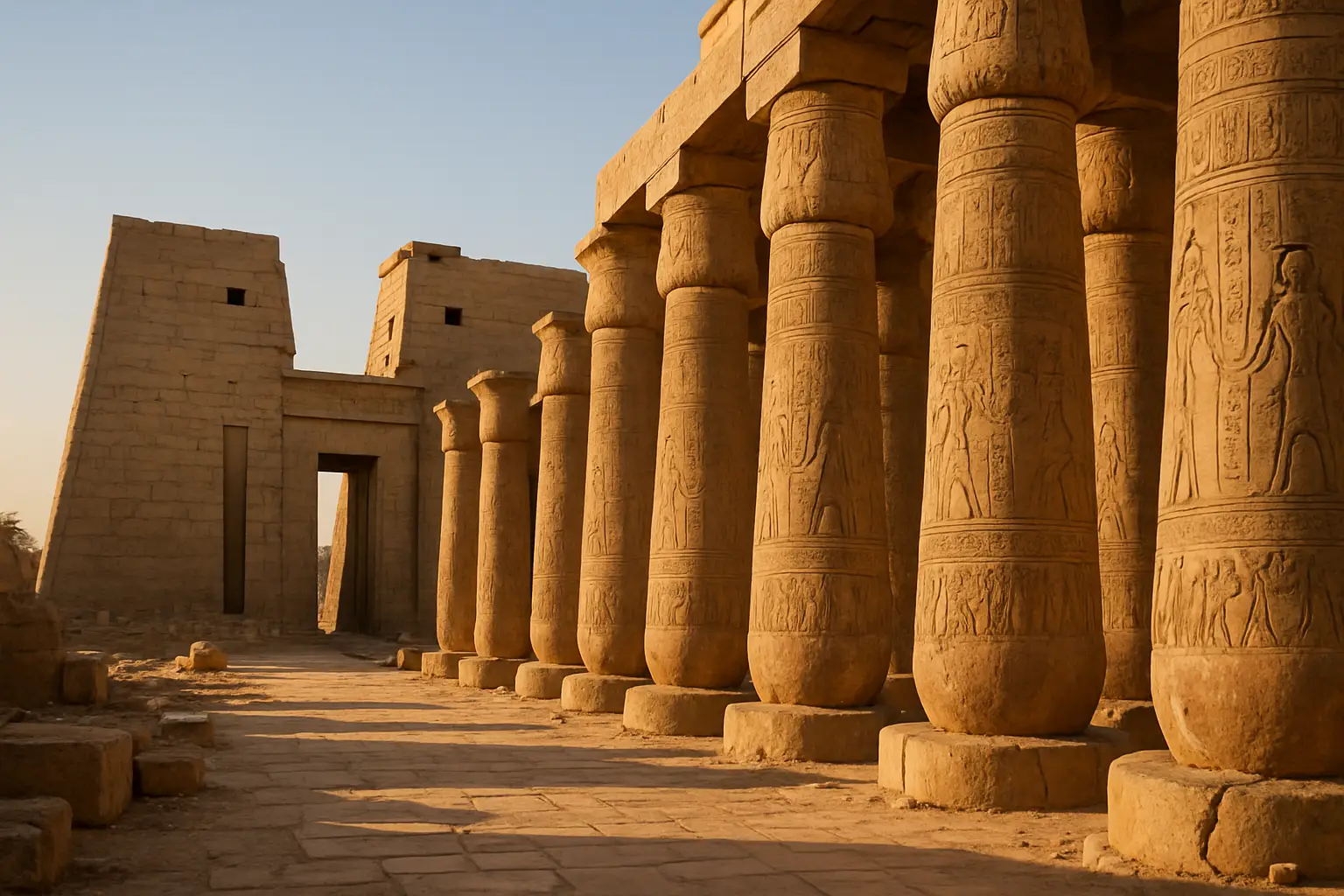
Karnak Temple Complex Egypt Travel Guide 2026: Egypt's Greatest Temple
Ancient EgyptianExplore Karnak, the world's largest ancient religious complex. Discover the Hypostyle Hall, Sacred L...
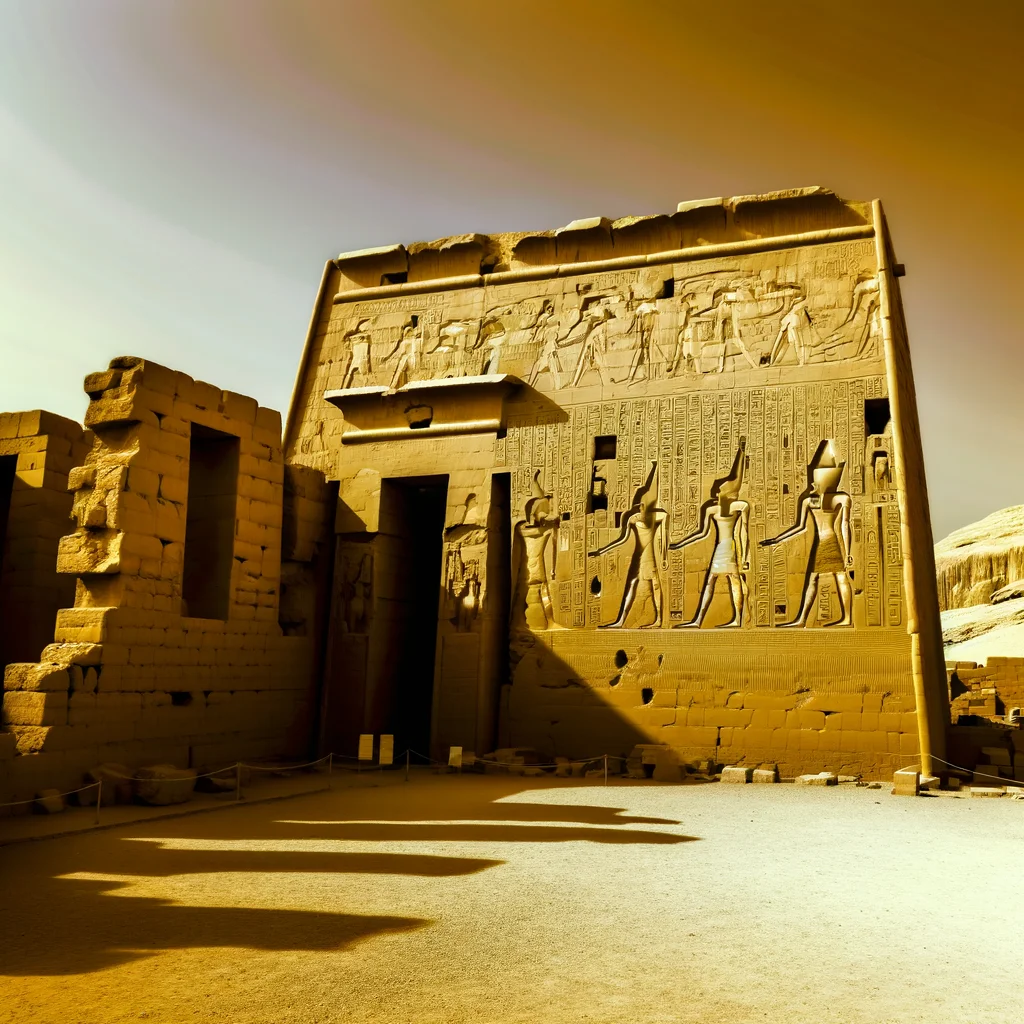
Medinet Habu Temple Egypt Guide 2026: Ramesses III & War Reliefs
New Kingdom-RamessideMedinet Habu mortuary temple near Luxor: Ramesses III's colossal monument with sea people battle sce...
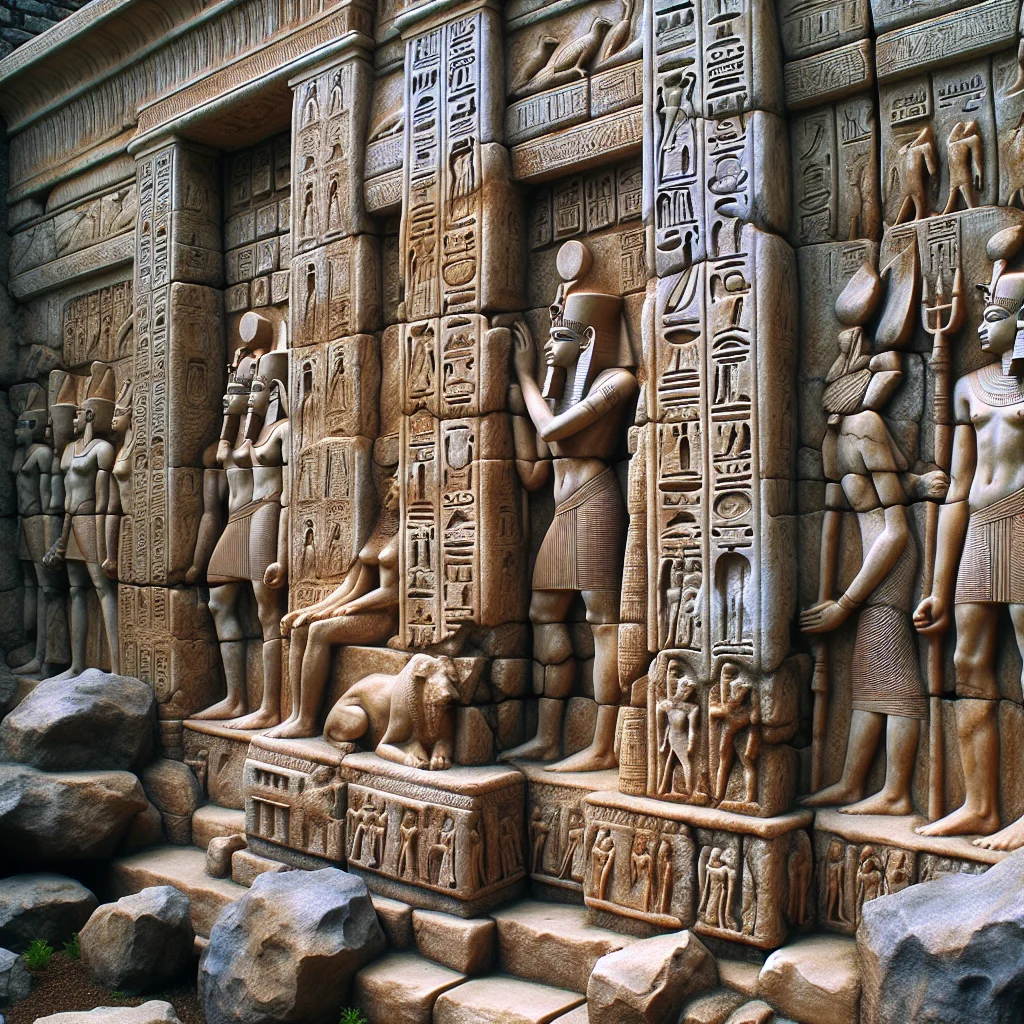
Abydos Temple Egypt Guide 2026: Temple of Seti I & King List
New Kingdom-PtolemaicAbydos Temple near Luxor: magnificent Temple of Seti I with war reliefs, ancient king list, and vibr...
Dendera Temple Complex Egypt Guide 2026: Temple of Hathor & Zodiac Ceiling
Ptolemaic-RomanExplore Dendera's magnificent Temple of Hathor near Luxor. Star-mapped zodiac ceiling, Ptolemaic arc...
Edfu Temple Egypt Guide 2026: Temple of Horus & Dramatic Battle Reliefs
PtolemaicEdfu Temple near Aswan: Temple of Horus with stunning battle scenes, ritual texts, and the best-pres...