Quick Info
Curated Experiences
Valley of the Kings, Luxor Temple & Temple of Mut Day Trip
Ancient Luxor: Karnak, Temple of Mut & Nile Cruise
Full-Day Luxor Temples Tour: Karnak, Mut, and More
The Temple of Mut stands as a magnificent relic of Ancient Egypt, quietly presiding over the southern precincts of Karnak in modern-day Luxor, Egypt. Nestled on the east bank of the Nile River, the temple’s weathered columns and scattered statues evoke a sense of timeless grandeur, inviting travelers far and wide to step back into a world shaped by the pharaohs, gods, and the sands of centuries. As the sun rises over Luxor’s palm-fringed skyline, its golden rays illuminate the colossal remains of this temple, once resplendent with the devotion of countless priests and worshippers. The Temple of Mut has held a place of reverence for millennia. Today, it captures the imagination of visitors as a tranquil, less-crowded alternative to the grand avenues of Karnak and Luxor Temples, while revealing its own unique narratives in Egyptian history and spirituality.
Wander through its courtyards and you’ll encounter silent statues of sphinxes and vestiges of towering columns. These ruins, long shrouded in sacred mystery, were dedicated to Mut, the powerful mother goddess and consort of Amun, chief deity of the Theban Triad. The temple’s location in Luxor Governorate, among the most fertile and storied lands along the Nile, marks it as not only a religious site but a cultural and architectural treasure. Though time and excavation have worn away much of the original splendor, the resonance of ancient rituals and artistic achievement lingers palpably in the desert air. Whether you are a seasoned Egyptophile or a curious first-time visitor, the Temple of Mut promises an evocative journey through the mythic soul of ancient Egypt.
History
Birth and Early Reverence (Middle Kingdom to New Kingdom)
The origins of the Temple of Mut trace back to the Middle Kingdom period, likely around the 12th dynasty (circa 1991–1802 BCE), although evidence suggests the earliest structures were modest shrines rather than imposing temples. Mut was a mother goddess, an important figure in Egyptian theology whose very name means “mother.” Her primary cult center became established in Thebes (now Luxor), and by the New Kingdom, particularly the 18th Dynasty (circa 1550–1292 BCE), the temple complex dedicated to her began to flourish in earnest.
The true expansion came under Pharaoh Amenhotep III (circa 1390–1352 BCE), one of Egypt’s most prolific builders. Amenhotep III dramatically enlarged the temple precinct, commissioning grand processional ways lined with statues and sphinxes. He inaugurated the construction of the much-celebrated Sacred Lake—a symbol of primordial waters and rebirth. The temple soon became the centerpiece of Mut’s cult, and significant additions were made by his successors, most notably during the reigns of Ramesses II and Ramesses III. Inscriptions and stelae from these periods bear witness to the elaborate ceremonies and offerings that took place here, particularly during the Opet Festival, which connected the temples of Karnak, Luxor, and Mut in a grand procession of mutual sanctification.
Zenith and Decline (Late Period to Roman Times)
For centuries, the Temple of Mut thrived as a crucial center of worship, its halls echoing with hymns in honor of the goddess. It wasn’t merely a religious site: it was a hub of economic and administrative activity, surrounded by villages of priests, artisans, and laborers. The Ptolemaic Dynasty (305–30 BCE) and subsequent Roman rule saw continued veneration of Mut, although architectural additions were more modest. Temples and cults across Egypt gradually transitioned under Hellenistic and Christian influences, and the Temple of Mut began to see a gradual decline. By the late Roman period, its religious importance waned, its sacred statues desecrated or repurposed, and its divine precincts left to the encroaching sands.
Yet, vestiges of devotion remained. Archaeological findings from the early Christian period indicate that locals sometimes reused temple stones for new churches or dwellings, intertwining the past with the present in the evolving religious landscape of Egypt.
Rediscovery and Modern Excavation
Modern archaeological interest in the Temple of Mut began in the late 19th and early 20th centuries, coinciding with a renewed fascination in all things Ancient Egyptian. Early European Egyptologists, notably Margaret Benson and Janet Gourlay, carried out detailed excavations in the 1890s, uncovering statues of lion-headed Sekhmet, elaborate columns, and the outlines of sanctuaries and courts. Their work laid the groundwork for successive investigations, which revealed layer after layer of temple history, including Greco-Roman modifications and traces of ancient gardens.
Present-day work often involves cooperation between Egyptian authorities and international teams, who strive to stabilize, restore, and interpret the remnants. Each season brings new discoveries: foundation deposits, fragments of ritual vessels, and unexpected architectural marvels that enhance our understanding of ancient religious practice and temple design. As a result, the Temple of Mut is not only a site to visit, but a living laboratory of Egyptology, offering new insights with every careful scrape of the trowel.
Key Features
Upon entering the precinct of the Temple of Mut, visitors are greeted by a landscape awash with both grandeur and serenity. The temple’s most striking features testify to the evolving artistry and ritual importance of the site, inviting close examination and contemplation.
Perhaps the most evocative aspect of the temple is its impressive avenue of sphinxes, many of which once bore the lion-headed likeness of Sekhmet, fierce aspect of Mut. These statues, carved from hard diorite and granite, formed an imposing procession leading from the outer courts toward the sanctuary. Despite the passage of millennia and bouts of looting, dozens of these statues have survived, many now organized on-site or displayed in museums. Their enigmatic expressions and formidable presence conjure the protective power they once symbolized.
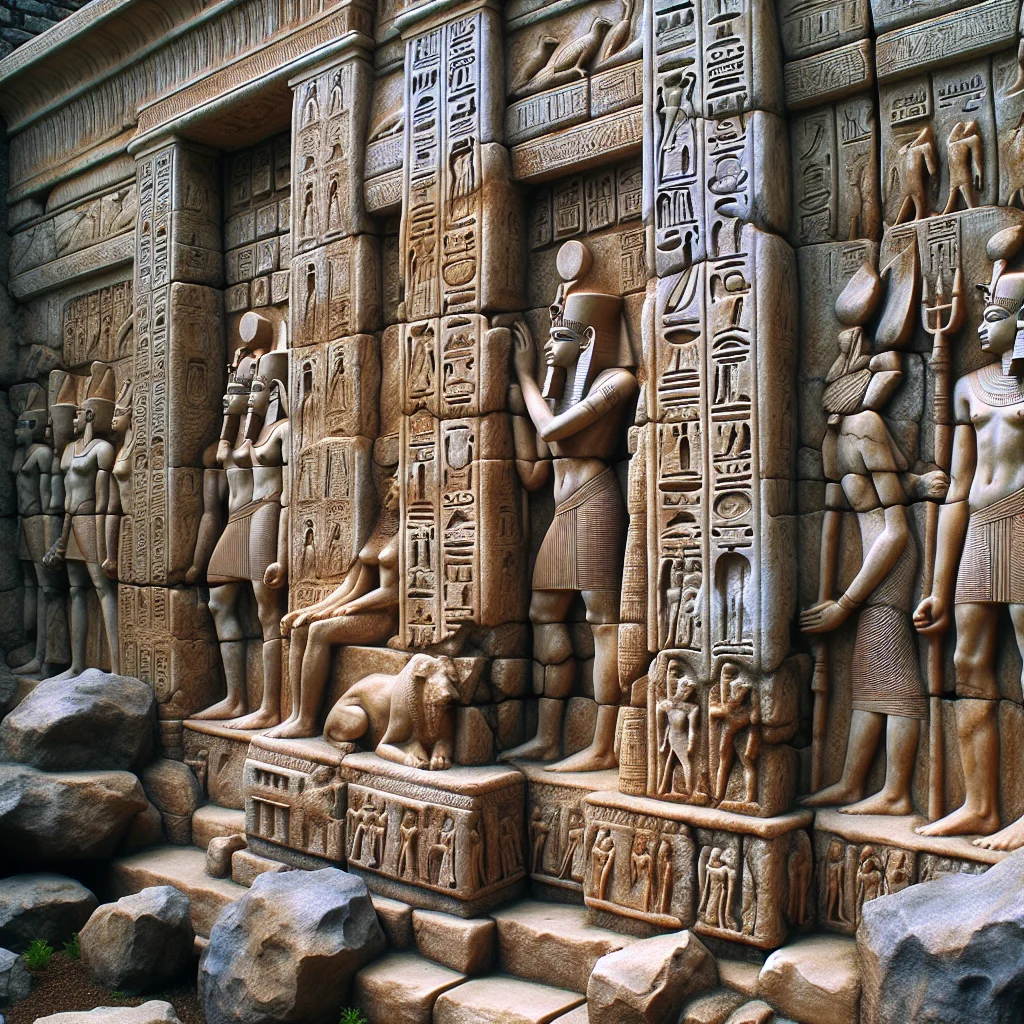
The heart of the temple lies in its central courtyard and main sanctuary. Here, broken columns—some still standing tall against the desert sky—signal the scale and aesthetic ambition of New Kingdom architects. Inscriptions on the walls, though weathered by time, contain dedications to Mut and hymns recited during important festivals. These reliefs articulate not only the divine attributes of the goddess but also the interconnectedness of the Theban Triad: Mut, Amun, and their son Khonsu.
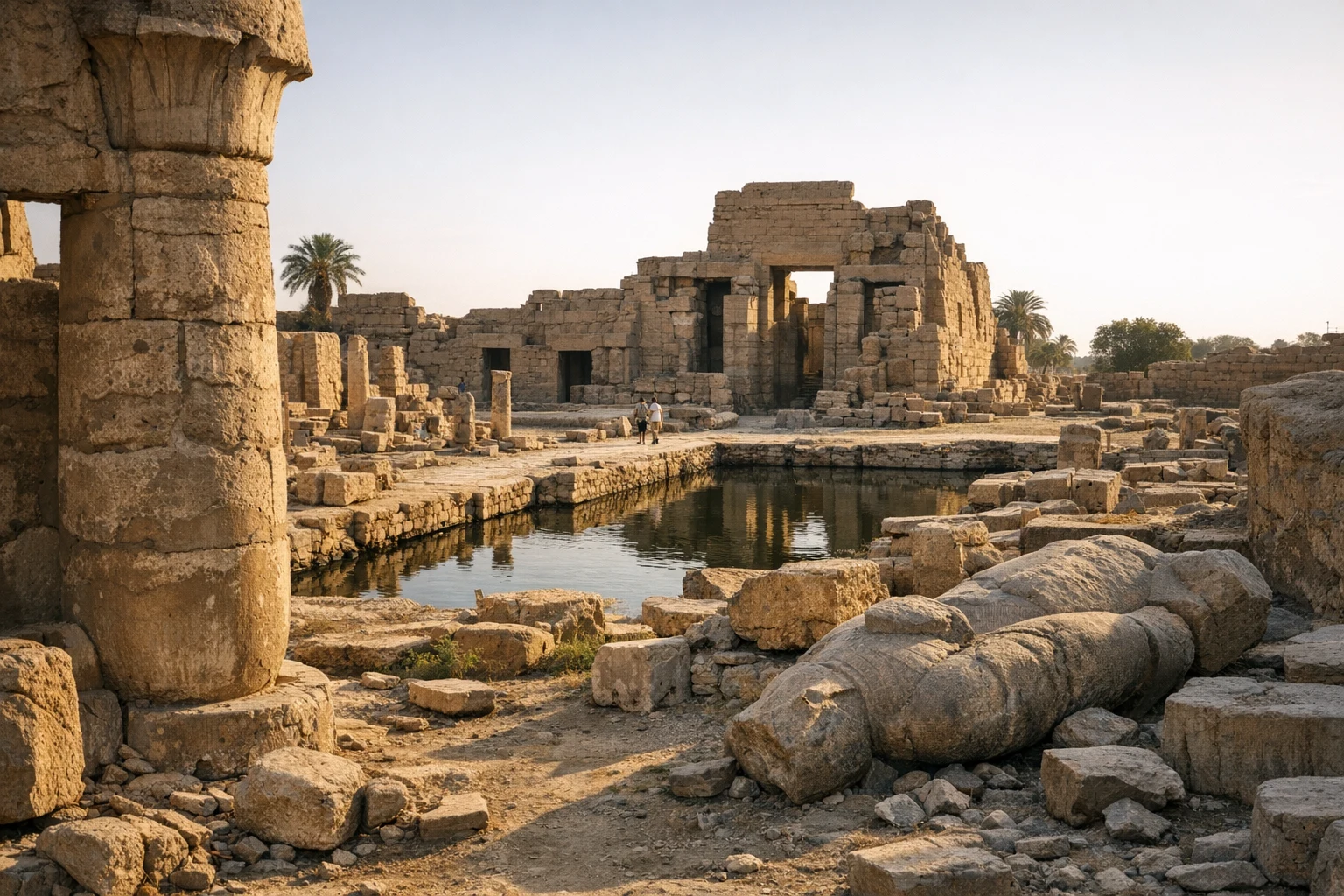
One cannot overlook the Sacred Lake, a hallmark of Egyptian temple complexes and particularly significant at Mut’s temple. With its irregular, crescent-like form, the lake was used for ritual immersions and purification ceremonies. During the annual Opet Festival, processional boats would gather here before embarking along avenues toward the Karnak complex, forging a sacred bond between the goddess and her consort Amun.
Another key feature is the subsidiary shrines and chapels found within the temenos, or sacred enclosure. Pharaohs from the Ramesside and Ptolemaic periods added their own dedications, sometimes layering their cartouches atop older inscriptions. These chapels document more than royal piety; they offer insight into shifts in religious fashion and the perennial reworking of holy architecture throughout Egyptian history.
Scattered throughout the precinct are the remains of pylons, gateways, and processional paths—all bearing silent testimony to centuries of ritual. Although much of the stonework has crumbled, the temple’s layout and surviving features reward careful exploration. The interplay of sunlight on ancient reliefs and the tranquil reflection of the palm trees in the Sacred Lake add to the meditative atmosphere, making the Temple of Mut not only a historical destination, but a place of enduring beauty.
Getting There
Reaching the Temple of Mut is a straightforward affair thanks to its location within the wider Karnak Temple complex in Luxor, one of Egypt’s most accessible and well-visited cities. For international travelers, the journey typically begins with a flight into Luxor International Airport, which welcomes direct connections from Cairo and various European hubs. From the airport, it is a short 10-kilometer taxi ride to Karnak, with typical fares ranging from 100 to 200 EGP (3–7 USD), depending on time of day and haggling skills.
Alternatively, visitors already in Luxor city can access the temple via a variety of transportation modes. Local taxis and ride-hailing services like Uber and Careem operate throughout Luxor, offering convenient and relatively inexpensive rides to the temple precinct. For a more atmospheric approach, horse-drawn carriages—known as caleches—provide a slow-paced, traditional ride through the heart of Luxor for about 150–250 EGP (5–9 USD). Bicycles can also be rented for the day from many hotels and shops (50–100 EGP, or 2–4 USD), allowing for a leisurely ride along the riverside.
Entrance to the Temple of Mut is included with a general Karnak Temple complex ticket, currently priced at 220 EGP (approximately 7 USD) for adults (prices as of 2024). Guided tours, easily arranged online or at local agencies in Luxor, often combine visits to Karnak, Mut, Luxor Temple, and other sites in a single itinerary. Most tours provide transportation in an air-conditioned minivan complete with a knowledgeable Egyptologist, ranging from 500 to 1,000 EGP (16–33 USD), depending on group size and inclusions.
For the independent traveler, public minibuses are an option running between Luxor’s downtown (near the railway station) and Karnak for just a few Egyptian pounds, though these can be crowded and limited by language barriers. However you choose to arrive, the approach toward Karnak and the Temple of Mut is itself a journey through time, passing bustling markets, historic quays, and the eternal sweep of the Nile.
When to Visit
Egypt’s climate is defined by its sun-drenched desert landscapes, and the best time to visit the Temple of Mut falls between late autumn and early spring (October–April). During these months, Luxor enjoys mild daytime temperatures averaging between 20°C and 28°C (68°F to 82°F), making exploration both comfortable and rewarding. The crisp winter mornings transform the sandstone and water of the Sacred Lake into a painter’s palette of golden hues, perfect for photography and quiet reflection.
Peak tourist season aligns with the winter months, particularly December through February. While this brings larger crowds to major sites such as Karnak and Luxor, the precinct of Mut remains relatively tranquil, even in high season—a delight for travelers seeking contemplative space away from the throng. Early mornings and late afternoons are the ideal windows: the temperature is pleasant, and the low angle of sunlight brings the ancient reliefs to dramatic life.
Summers (May–September) can be intensely hot, with temperatures commonly exceeding 40°C (104°F) under a relentless sun. During this period, visits should be planned for the earliest possible hour, and precautions—such as wide-brimmed hats, sunscreen, and ample water—are especially vital. Ramadan and other local festivities may affect opening times and availability of on-site services, so a quick check with your accommodation or guide is advised before setting out.
Regardless of season, weekends (Friday and Saturday) tend to be busier with Egyptian visitors and domestic travelers. If your schedule allows, a midweek visit offers the greatest peace, ensuring you can savor the Temple of Mut’s quiet majesty almost undisturbed. As with all sites in Egypt, respect for the preservation of ancient materials and the spiritual legacy of the place should always guide your actions—leaving only footprints and taking away memories and photographs.
Quick Facts
| Attribute | Detail |
|---|---|
| Location | Southern precinct of the Karnak Temple complex, Luxor, Egypt |
| Governing Authority | Supreme Council of Antiquities (Egypt) |
| Civilization | Ancient Egyptian |
| Primary Deity | Mut (mother goddess of the Theban Triad) |
| Established | Middle Kingdom origins (c. 2000 BCE), major expansion under Amenhotep III (18th Dynasty) |
| Architectural Highlights | Avenue of Sphinxes, Sacred Lake, central sanctuary, columned courts |
| Ticket Price (2024) | 220 EGP (approx. 7 USD; included with Karnak Temple entry) |
| Opening Hours | 6:00 AM – 5:30 PM daily |
| Accessibility | Walking paths; partially restored; some uneven terrain |
| Nearby Sites | Karnak Temple, Luxor Temple, Colossi of Memnon, Deir el-Medina, Dendera, Abydos |
| Best Visiting Season | October to April |
The Temple of Mut remains one of Luxor’s quieter, yet profoundly significant, gateways into Egypt’s sacred past. As you walk among its statues and through its sunlit courtyards, you walk in the footsteps of those who once shaped the faith, power, and artistic genius of an ancient civilization.
Frequently Asked Questions
Where exactly is the Temple of Mut located?
The Temple of Mut is located within the Karnak Temple complex in Luxor, in the Luxor Governorate of southern Egypt, on the east bank of the Nile.
What is the Temple of Mut famous for?
It is renowned for being one of the principal temples dedicated to the goddess Mut, wife of Amun, and is notable for its historical statues and sacred lake.
Can I visit the Temple of Mut independently?
Yes, the temple can be accessed as part of the Karnak Temple complex, and visitors may either join a guided tour or explore independently with an entry ticket.
What should I wear when visiting the Temple of Mut?
Modest clothing and comfortable walking shoes are recommended due to the sun exposure, uneven surfaces, and cultural norms.
Are there facilities such as restrooms and cafes nearby?
Facilities are available at the entrance of the Karnak Temple complex, including restrooms, cafes, and gift shops for visitors.
Nearby Ancient Sites
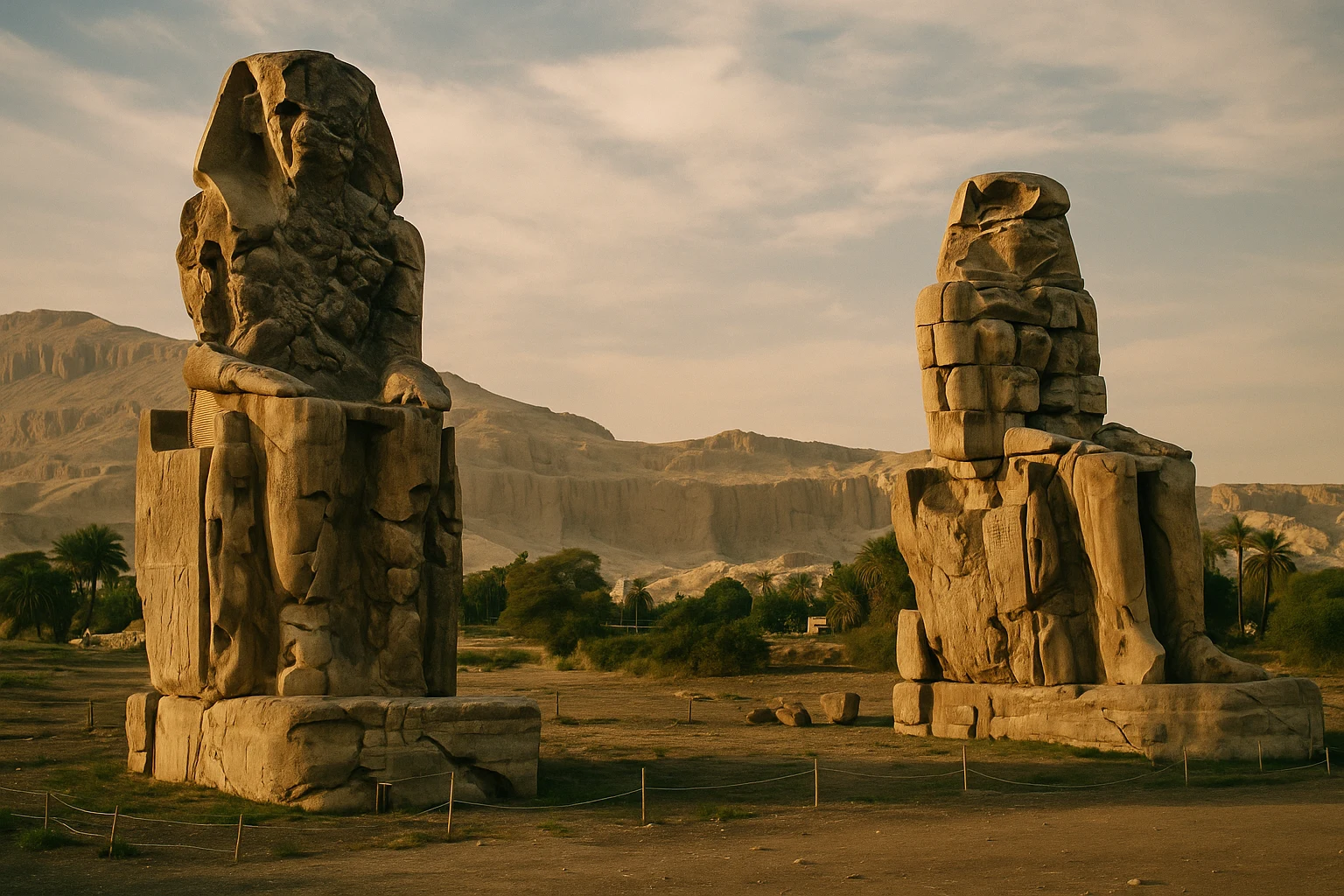
Colossi of Memnon
Ancient Egypt (New Kingdom)Twin colossal statues of Pharaoh Amenhotep III guarding the Theban necropolis on Luxor's West Bank, ...
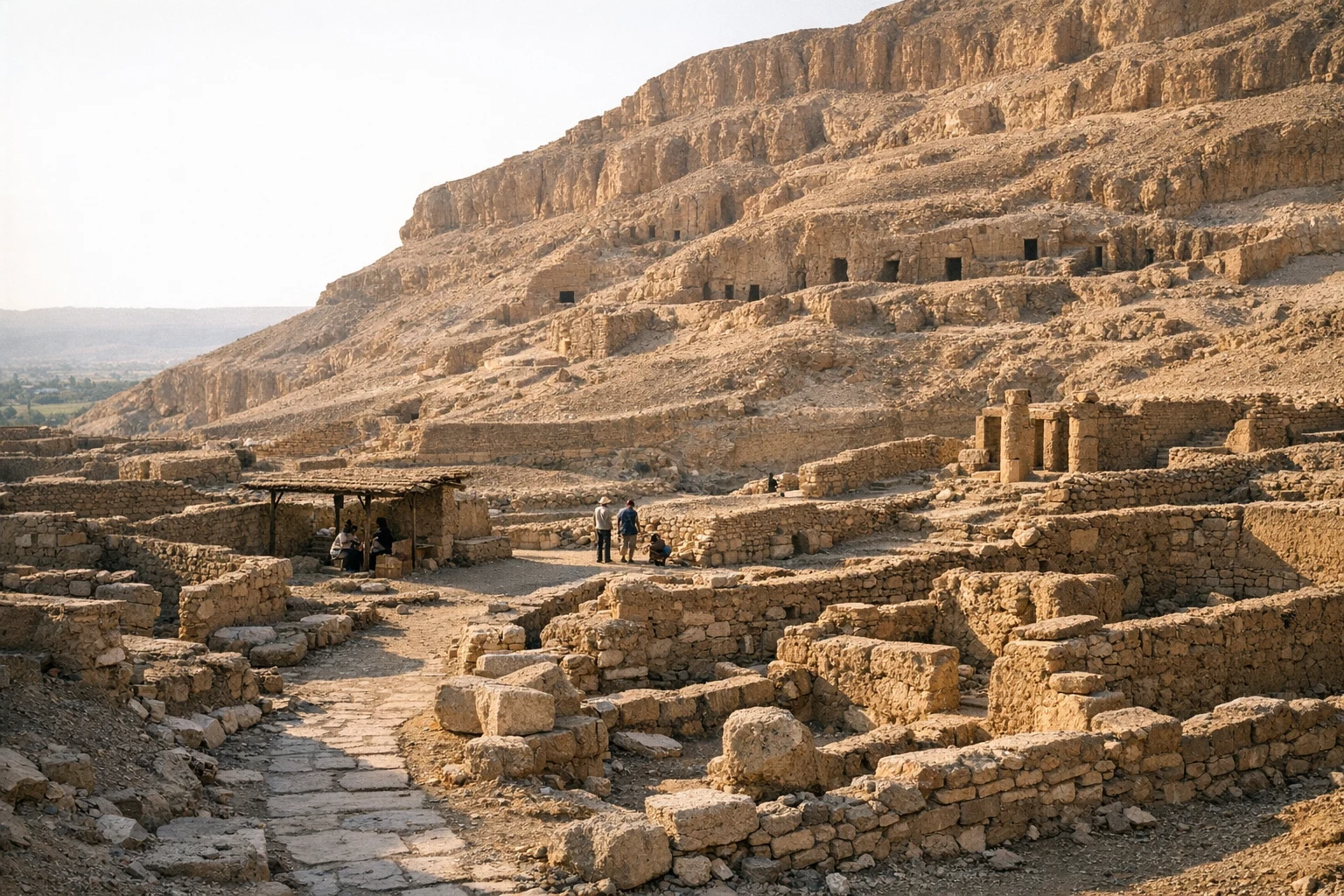
Deir el-Medina
Deir el-Medina is an ancient Egyptian workers’ village near Luxor, renowned for its remarkably prese...
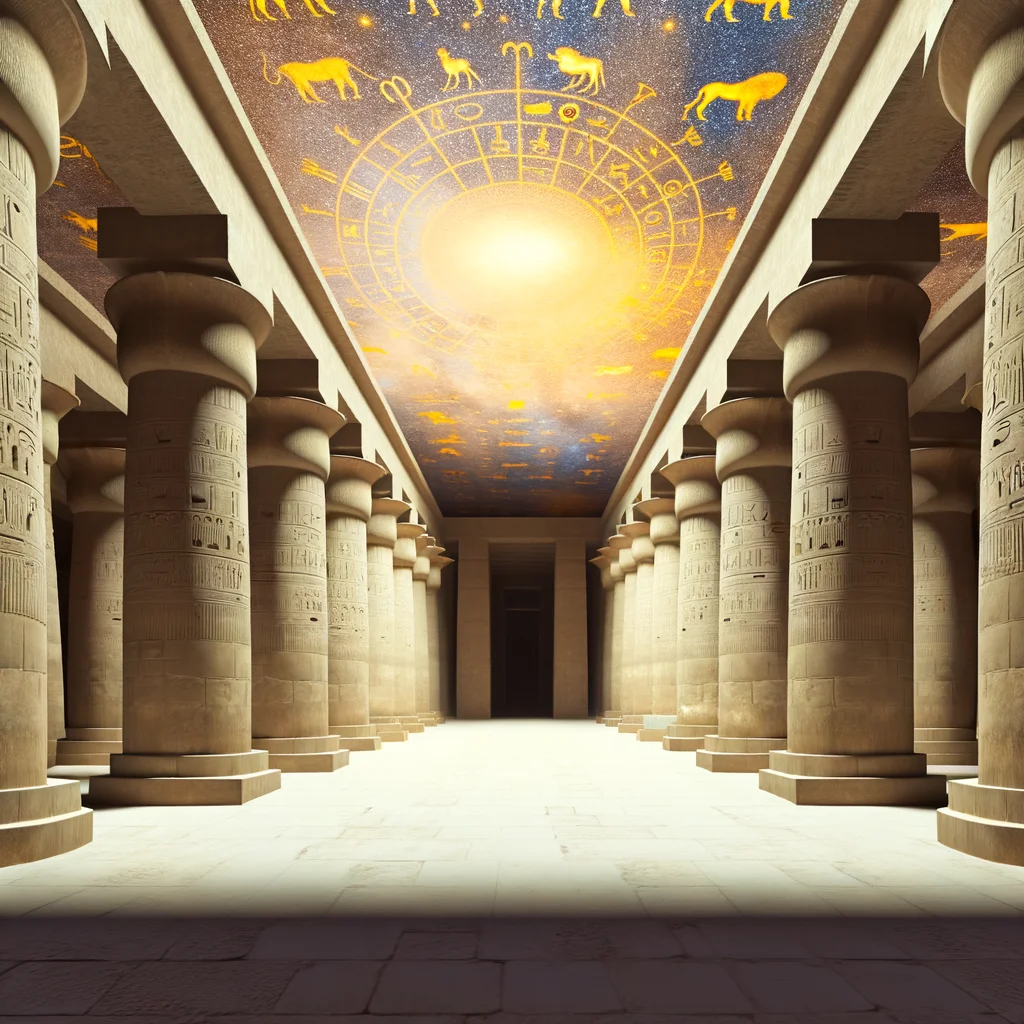
Dendera Temple Complex Egypt Guide 2026: Temple of Hathor & Zodiac Ceiling
Ptolemaic-RomanExplore Dendera's magnificent Temple of Hathor near Luxor. Star-mapped zodiac ceiling, Ptolemaic arc...
Abydos Temple Egypt Guide 2026: Temple of Seti I & King List
New Kingdom-PtolemaicAbydos Temple near Luxor: magnificent Temple of Seti I with war reliefs, ancient king list, and vibr...