Quick Info
Curated Experiences
Karnak Temple Complex and Luxor Highlights Tour
Guided Ancient Thebes and Karnak Exploration
Ancient Temples of Luxor Private Tour
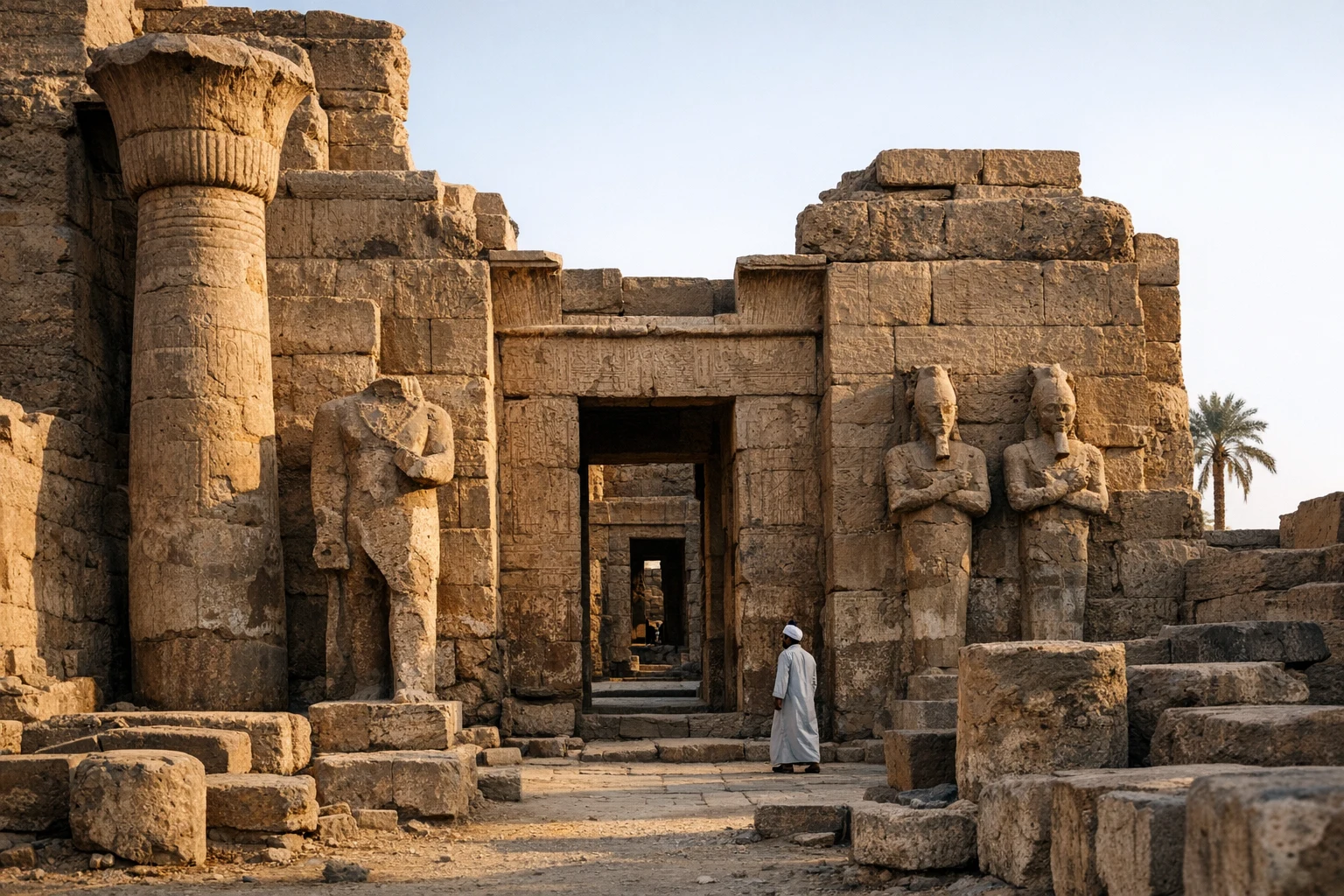
Tucked quietly amid the monumental sprawl of Karnak Temple’s precinct in Luxor, Egypt, the Temple of Opet is a sanctuary that many visitors discover only after the imposing pylons and grandiose hypostyle halls have stolen their breath away. Egypt is a nation defined by its ancient wonders, and yet within its crown of stone, some of its finest jewels glimmer almost unnoticed. Among them, the Temple of Opet offers an intimate, richly atmospheric experience—an oasis of subtlety and splendor within the larger Karnak complex. Bathed in filtered sunlight and shadow, its painted walls tell stories of fertility, cosmic renewal, and the complex interplay between royal power and divine assurance.
Luxor itself is a city built upon the bones of antiquity, and Karnak Temple is its beating heart. Yet, while visitors are drawn to the colonnaded processional avenues and immense temple platforms, those who linger near the southern sector are often rewarded with access to this unique structure. The temple is dedicated to the goddess Opet (also known as Ipet or Taweret in later mythology), symbolizing fertility, childbirth, and rejuvenation. With tales reaching back to the New Kingdom, the Temple of Opet was a vital spiritual locus during the annual Opet Festival, when the gods would leave their hidden sanctuaries to parade among mortals—carrying not just the weight of statues, but the hopes of all Egypt. Today, the temple’s vibrant colors and deep silence invite visitors not just to observe relics, but to step sideways into a world spared from the passing of centuries.
History
The Birth of the Temple
The Temple of Opet’s story unfolds in the later chapters of ancient Egypt’s golden age, with construction primarily attributed to Ptolemy VIII Euergetes II in the 2nd century BCE. Situated within the southern reaches of Karnak’s grand complex, it was part of an ongoing effort by the Greek-speaking Ptolemaic rulers to assert legitimacy by intertwining themselves with the ancient and deeply Egyptian religious traditions. While massive monuments elsewhere spoke of the grandeur of Ramesses, Seti, and Thutmose, the Temple of Opet reflects a more intimate phase of Egyptian religious architecture—a chapel for private rituals and ceremonies laden with symbolism.
This era, often seen as the twilight before Egypt succumbed to Roman rule, was marked by a renewal of interest in local cults whose roots stretched millennia into the past. The goddess Opet herself was an enigmatic figure. Her name means ‘the harem,’ and she appears as a hippopotamus—an animal associated with protection, fecundity, and the primal chaos from which creation emerged. While earlier references to Opet can be found in New Kingdom spells and hymns, the settings of the Ptolemaic age—characterized by multicultural administrators and bustling cosmopolitan centers—made her cult newly significant. The temple’s walls were therefore not just a statement of piety, but of political savvy, presenting the new rulers as rightful heirs to Egypt’s most hallowed traditions.
Religious Rituals and the Opet Festival
The crowning event in Opet’s liturgical calendar was the Opet Festival, reinvigorated by the Ptolemies to knit the fabric of tradition and royal authority. Each year, in a spectacle rivaling anything in the ancient world, statues of the Theban Triad—Amun, Mut, and Khonsu—would travel from Karnak to Luxor Temple, traversing the ‘Avenue of Sphinxes’ amid throngs of chanting worshippers.
The Temple of Opet played a central role as its own sacred locus along this processional route. Rituals of fertility and rebirth would be enacted within its decorated chambers, imbuing not only the land but the king with cosmic potency. Reliefs depict the goddess in her characteristic form, blessing the pharaoh and ensuring the equilibrium between order (Ma’at) and chaos. For elite priests and initiates, the sanctity of this temple was profound: a place where earth and the divine met in the liminal space of myth and ritual.
From Ptolemaic to Roman Era
With the advent of Roman rule in Egypt, most temples shifted function—gradually falling under the weight of history or being repurposed for new deities or administrative uses. Yet remarkably, the Temple of Opet remained a locus of devotion. The Romans, eager to ingratiate themselves to their new subjects, provided limited patronage to such cult sites—even as Christianity began to sweep the Nile Valley in later centuries.
By Late Antiquity and well into the medieval era, the temple fell into obscurity, its accessways buried or blocked by debris and shifting urban landscapes. Rediscovered by early European travelers and, later, by systematic excavations in the 19th and 20th centuries, it has since emerged as a near-pristine example of Ptolemaic religious art and architecture—its wall paintings still vivid, its inscriptions a window onto a vanished world.
Key Features
The Temple of Opet invites close contemplation, as much for what it does not reveal as for what it boldly displays. In contrast to the sprawling, sunlit spaces of Karnak’s hypostyle hall, this temple is compact, enveloping visitors in a succession of low-lit interior chambers. Each space is adorned with exquisitely rendered reliefs—a riot of color in blue, red, and ochre, defying the sands of time.
Upon entering, one is enveloped by an air of ritual secrecy. The portico, supported by slender columns incised with lotus capitals, provides the first clues of the temple’s unique identity. Scenes celebrate the power and nurturing aspects of the goddess Opet, rendered as a pregnant hippopotamus with protective emblems. The style is distinctly Ptolemaic: elegant, slightly mannered, yet brimming with carefully coded symbolism.
Proceeding deeper, a series of sanctuaries open up, each smaller and more sacred than the last. The walls burst with processional depictions—priests bearing torches and offerings, heralds reciting hymns, magistrates anointing statues. The goddess herself appears in both serene and fierce guises, flanked by the king in scenes of purification and coronation. These images are powerful both artistically and spiritually: each line and hue calculated to elicit awe and reaffirm the reciprocal bond between gods and humans.
Of particular note are the preservation of the polychrome reliefs—among the best in Karnak—including rare mythological vignettes portraying the cyclical renewal of kingship and fertility. The ceilings are dappled with stars and symbolic waters, reinforcing the temple’s role as not just an earthly edifice, but a miniature model of the cosmos. Small niches hint at the storage of sacred objects, while the battered stone altar at the core recalls the hum of ancient offerings once consumed in fire and incense.
Though modest in footprint compared to Karnak’s major shrines, the Temple of Opet possesses an atmosphere wholly its own—intimate, mysterious, and powerfully evocative. For lovers of Egyptology or seekers of spiritual resonance, each step within its walls can be transformative, merging the ancient with the eternal in a hush broken only by the footsteps of fellow pilgrims.
Getting There
Visiting the Temple of Opet is made seamless by its prime location within the Karnak Temple Complex, which itself sits at the northern edge of modern Luxor. Luxor is easily accessed from Cairo, Alexandria, and other major Egyptian cities by air, rail, and road. Daily flights from Cairo International Airport to Luxor International Airport are swift and affordable, averaging 1 hour in duration, with fares typically ranging from $60–$150 USD each way, depending on the season and booking time.
Luxor’s railway station, a stately 19th-century building, receives overnight and daytime trains from Cairo and Aswan, with tickets costing between $10–$40 USD depending on class and time of booking. For those preferring overland adventures, air-conditioned buses and private cars also connect Luxor to Egypt’s great urban centers, though travel times may stretch to 8–10 hours from Cairo.
Once in Luxor, the Karnak complex is swiftly reachable. Taxis and ride-hailing services are readily available, with a trip from most city hotels to Karnak costing around 60–100 EGP ($2–$4 USD). Tour buses and guided excursions often include hotel pick-up and drop-off, which provides added convenience—especially in the cooler mornings. Karnak Temple’s main entrance is a short walk from the drop-off point; after entering, the Temple of Opet is located toward the southern precinct. On busy days, clearly marked signs and knowledgeable site staff can assist with directions.
For the intrepid, hiring a bicycle or taking a traditional horse-drawn carriage—known locally as a caleche—offers a leisurely, picturesque route to Karnak. Admission to the entire temple precinct is 220 EGP (about $7 USD) for adults, with discounts available for students. While the Temple of Opet itself is included in the general Karnak ticket, note that access to the interior may be occasionally restricted for conservation—check in advance or inquire at the entrance.
When to Visit
The Temple of Opet, like all of Luxor’s celebrated ruins, is best experienced in the quieter, cooler months between October and April. During this period, daytime temperatures average a pleasant 20–28°C (68–82°F), and the Nile Valley’s notorious midday heat recedes, allowing for leisurely exploration without discomfort. Early mornings are particularly enchanting: the low angle of the sun bathes Karnak’s stones in warm light and the crowds are at their thinnest—a godsend for those hoping to experience the intimate sanctity of the Temple of Opet in relative solitude.
If you must visit in the summer (May to September), prepare for extreme heat: temperatures regularly soar above 40°C (104°F). Exploring Karnak under such conditions is best done at opening time, with hats, sunscreen, and ample bottled water as essentials. Luxor’s dry desert air, while less humid than Cairo or Alexandria, can also be fatiguing during the height of summer.
The period of the modern Opet (“Beautiful Feast of Opet”) Festival—held in late summer or early autumn—occasionally sees special events, reenactments, and increased local interest in Karnak. Festival days offer unique cultural experiences, though they also see more visitors and limited access to certain temples due to ceremonial use.
Public holidays and local school vacation periods mean larger crowds throughout Egypt’s major monuments. For an optimal visit, consider arriving just as Karnak opens (typically at 6:00 am) or in the late afternoon, when tour groups begin to thin and the slanting light brings the carved reliefs into enchanting relief. Regardless of the season, the Temple of Opet stands ready to welcome those who seek to connect with Egypt’s enduring mysteries.
Quick Facts
| Aspect | Detail |
|---|---|
| Location | Within the Karnak Temple Complex, Luxor, Egypt |
| Established | 2nd century BCE, primarily under Ptolemy VIII |
| Dedicated To | Goddess Opet (Ipet/Taweret), symbol of fertility and renewal |
| Known For | Exquisitely preserved Ptolemaic reliefs, intimate sanctuary, role in Opet Festival |
| Admission Fee | ~220 EGP ($7 USD), included with general Karnak entrance |
| Access | Open to visitors; interior access may be limited during conservation |
| Architectural Style | Ptolemaic Egyptian, with vivid wall paintings and compact sanctuary layout |
| Visiting Hours | Typically 6:00 am – 5:00 pm daily |
| Photography | Permitted (no flash); check restrictions at entry |
| Nearby Sites | Luxor Temple, Colossi of Memnon, Deir el-Medina, Dendera Temple Complex |
Frequently Asked Questions
What is the Temple of Opet?
The Temple of Opet is a small, beautifully decorated sanctuary dedicated to the goddess Opet (Ipet), located within the Karnak Temple Complex in Luxor, Egypt.
Can I visit the Temple of Opet?
Yes, the Temple of Opet is open to visitors as part of the Karnak complex, though access can be limited during conservation efforts.
How long does it take to see the Temple of Opet?
A thorough visit to the Temple of Opet and surrounding chapels generally takes 30–45 minutes.
Are guided tours available?
Many tours of Karnak include the Temple of Opet. Guided tours enhance understanding of its reliefs and significance.
Is photography allowed inside?
Photography is generally permitted though flash is not allowed due to preservation protocols. Always confirm onsite for updated regulations.
Nearby Ancient Sites
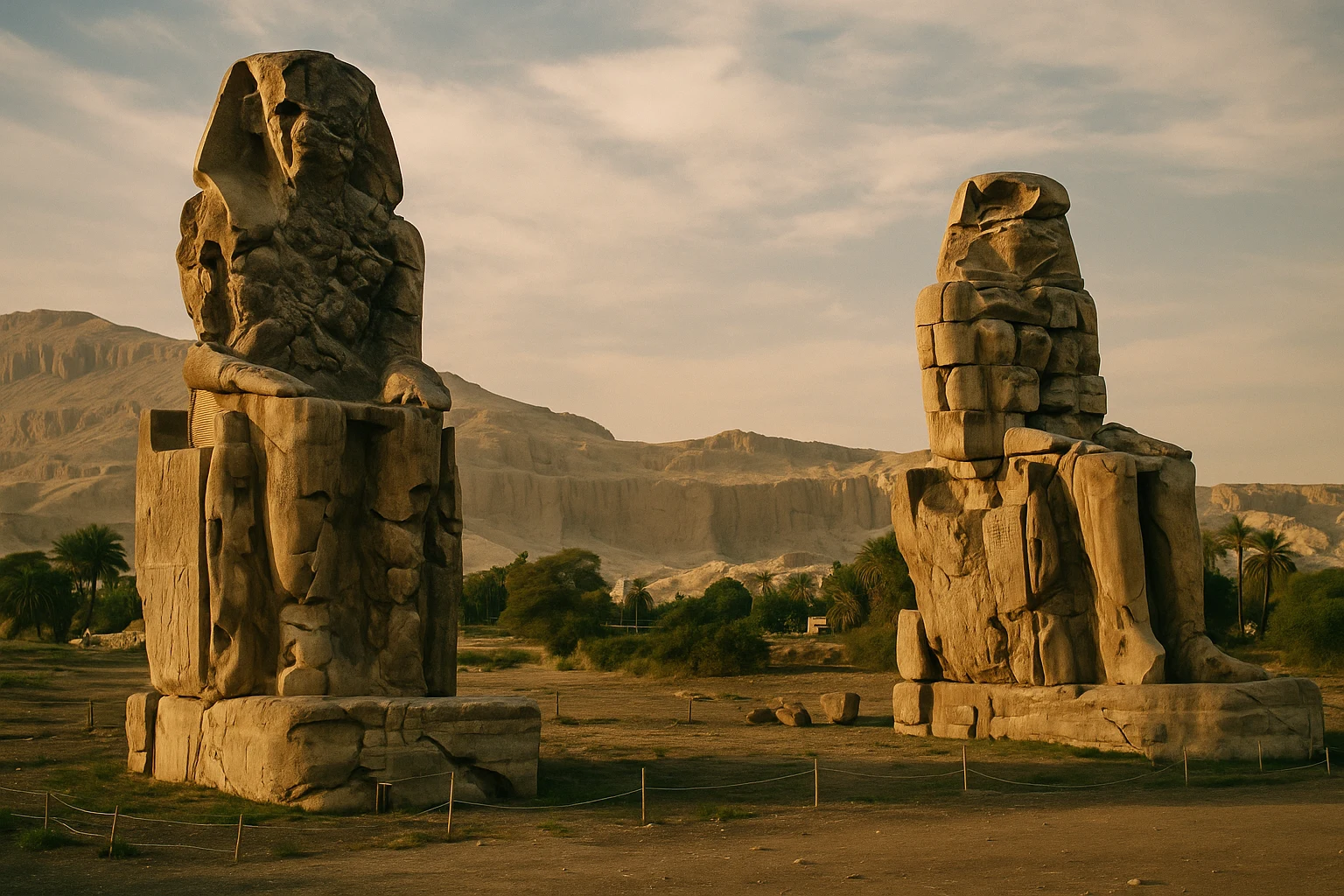
Colossi of Memnon
Ancient Egypt (New Kingdom)Twin colossal statues of Pharaoh Amenhotep III guarding the Theban necropolis on Luxor's West Bank, ...
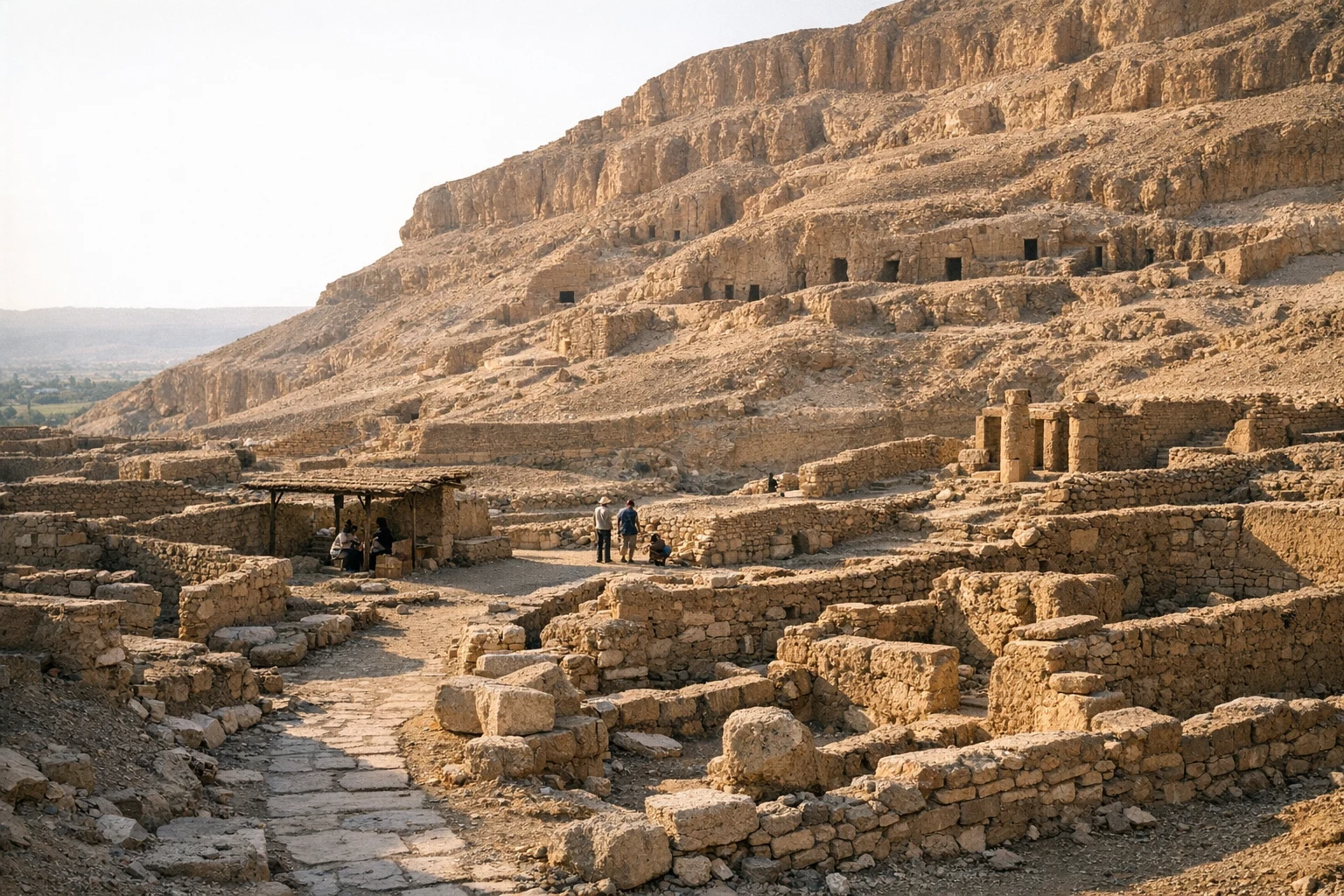
Deir el-Medina
Deir el-Medina is an ancient Egyptian workers’ village near Luxor, renowned for its remarkably prese...
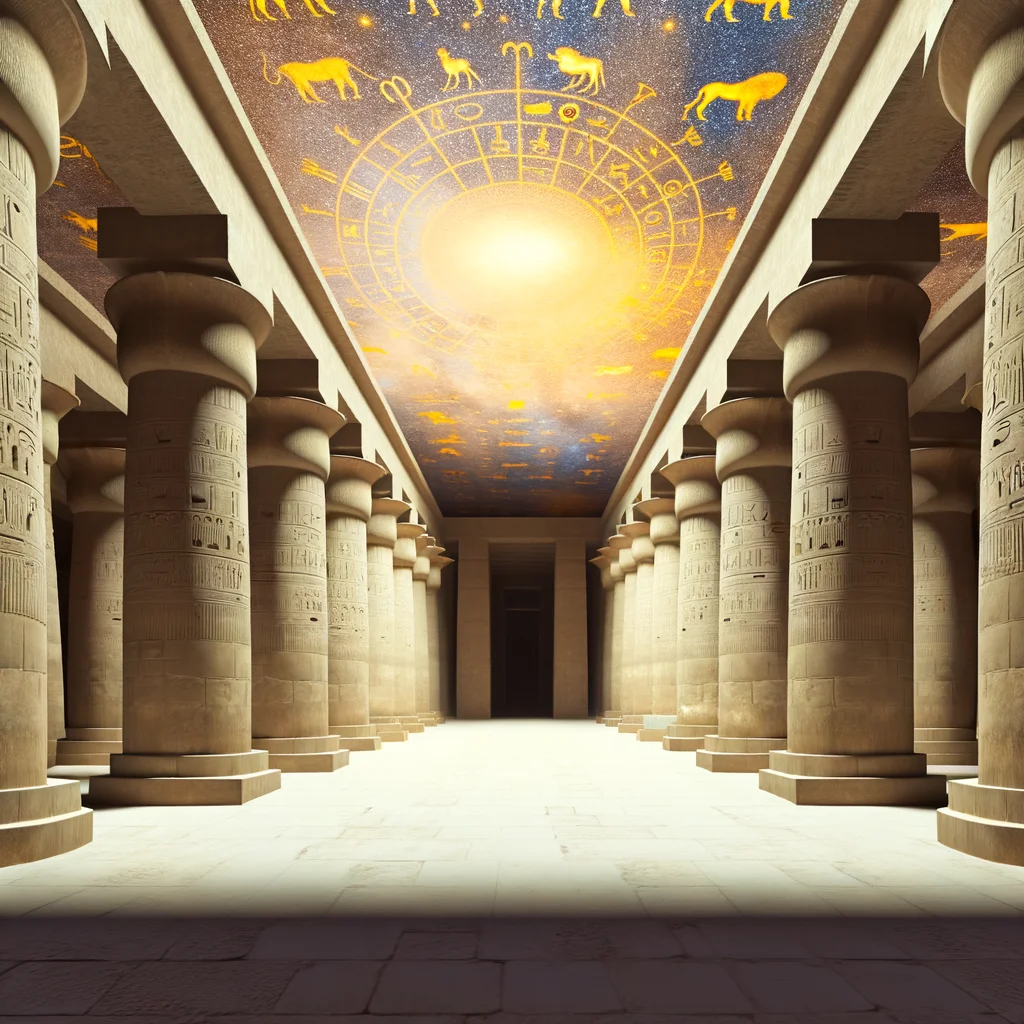
Dendera Temple Complex Egypt Guide 2026: Temple of Hathor & Zodiac Ceiling
Ptolemaic-RomanExplore Dendera's magnificent Temple of Hathor near Luxor. Star-mapped zodiac ceiling, Ptolemaic arc...