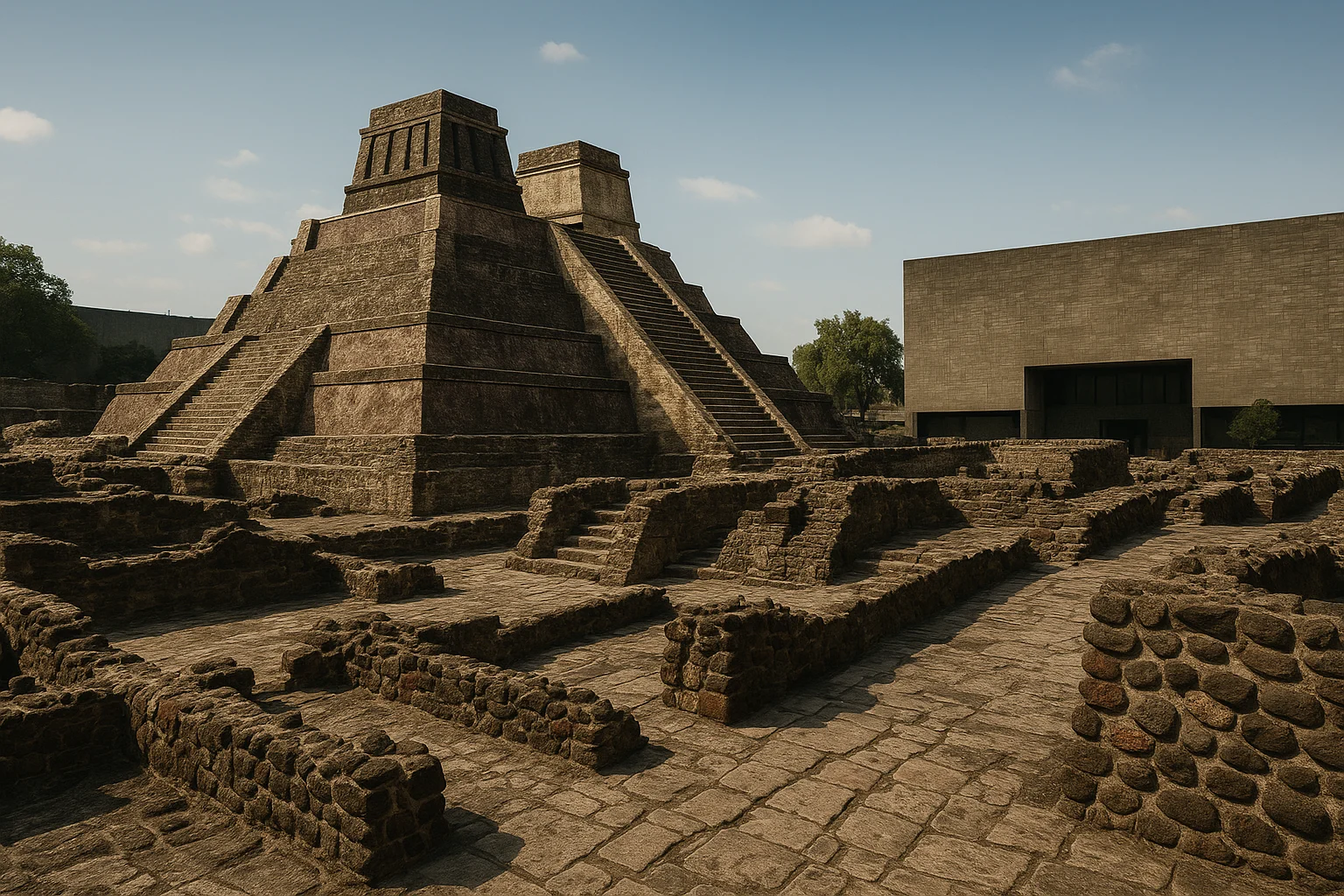
Quick Info
Curated Experiences
Mexico City Historic Center and Templo Mayor Tour
In February 1978, electrical workers digging a utility trench beneath a Mexico City street struck carved stone at a depth that should have been empty earth. What they uncovered was an eight-ton disc depicting Coyolxauhqui, the dismembered Aztec moon goddess, her body carved in high relief with a precision that had been sealed underground for over four centuries. That accidental strike cracked open the buried center of the Aztec empire. Beneath the colonial grid and the modern traffic noise of the Centro Historico lay the ceremonial heart of Tenochtitlan — the capital that Hernan Cortes described as the most beautiful city he had ever seen, just before he leveled it.
Templo Mayor is not a ruin in the countryside. It is an open excavation in the middle of a living capital of 22 million people, surrounded on every side by functioning streets, a 16th-century cathedral, and the presidential palace. You reach it by walking through the Zocalo, one of the largest public squares in the world, built directly on top of the Aztec sacred precinct it replaced. The tension between what is buried and what is built over it — between the Mexica city that was and the Spanish city that consumed it — is the defining experience of the visit. There is nothing else quite like it in global archaeology.
The site is compact. You can walk the exposed foundations in under an hour. But what those foundations represent is staggering: the axis mundi of the Aztec world, the point where the gods touched the earth, the structure that anchored an empire of five to six million people stretching from coast to coast across central Mexico. When the pyramid stood at its full height, it rose over 45 meters above the surrounding plaza — taller than any building in the colonial city that replaced it, taller than the cathedral that now stands next door. You have to supply that height in your imagination, looking at the foundation layers and projecting upward, to understand what Cortes saw when he entered the city in 1519.
Historical Context
According to Mexica tradition, the city of Tenochtitlan was founded in 1325 CE on an island in Lake Texcoco, at the spot where an eagle was seen perching on a cactus and devouring a serpent — an image that now appears on the Mexican flag. The Templo Mayor was the first structure the Mexica built, and every subsequent expansion of the temple was layered directly over its predecessor. Archaeologists have identified seven major construction phases spanning two centuries, each one encasing the last like ceremonial nesting dolls, each one larger and more ambitious than the one before.
The twin shrines at the pyramid’s summit served Huitzilopochtli, god of war and sun, and Tlaloc, god of rain and agricultural fertility. The dual dedication was not symbolic hedging. It expressed the Mexica understanding of cosmic order: the world was sustained by the complementary forces of warfare and agriculture, sacrifice and sustenance, and the Templo Mayor stood at the precise point where those forces intersected. Everything radiated from here. The city’s four great causeways extended from the temple precinct to the cardinal directions. Tribute from conquered territories flowed inward along those causeways. The entire political, economic, and spiritual architecture of the Aztec empire was organized around this single structure.
When Cortes and his soldiers first entered Tenochtitlan in November 1519, they described the Templo Mayor as a massive pyramid topped by blood-stained shrines, visible from every direction across the lake city. Bernal Diaz del Castillo, who climbed the pyramid alongside Cortes, recorded his horror at the sacrificial blood coating the temple walls and the skulls displayed on the nearby tzompantli (skull rack). Within two years, the Spanish had razed the temple to its foundations, scattered the stones, and used the materials to build the Metropolitan Cathedral and other colonial structures that still stand next door. The buried remains lay undisturbed for 457 years, until a utility worker’s shovel struck the Coyolxauhqui stone and set the modern excavation in motion.
The excavation that followed, led by archaeologist Eduardo Matos Moctezuma beginning in 1978, demolished an entire city block of colonial and modern buildings to expose the temple foundations. The decision was controversial — inhabited buildings were cleared, businesses displaced, and a functioning neighborhood dismantled to reveal what lay beneath. But the archaeological significance was beyond dispute, and the project has continued in phases since then. New discoveries are still being made. In 2017, archaeologists identified what may be a royal burial — the first Aztec emperor’s tomb ever found — beneath the platform adjacent to the main pyramid. In 2020, a circular tower composed entirely of cemented human skulls was fully exposed, confirming the accounts of the skull rack that Spanish chroniclers had described. The dig is ongoing. Templo Mayor is not a completed excavation but a living archaeological project in the center of a modern city, where every trench cut into the earth may reveal something that reshapes our understanding of the Aztec world.
What to See
The Excavation Layers
The exposed foundations reveal multiple construction phases stacked directly on top of each other, each visible as a distinct layer of stone, stucco, and sculptural decoration. Phase II, dating to approximately 1390 CE, is the earliest visible layer and retains original painted surfaces in remarkable condition: bright red and blue stucco, stone sculptures of reclining Chac Mool figures, and sacrificial stones positioned at the threshold of Tlaloc’s shrine. These objects sit roughly where they were placed over six centuries ago, undisturbed by the destruction above.
Later phases (III through VII) are visible as progressively larger foundation walls encircling the earlier core, each representing a new ruler’s expansion of the temple and, by extension, of imperial ambition. The growth is quantifiable: Phase II measured roughly 15 meters per side; by the time the Spanish arrived, the final phase covered an area exceeding 80 meters per side and rose over 45 meters in height. Walk the perimeter walkways slowly and look for the transitions between phases — the color and quality of the stone changes noticeably from one layer to the next, and the sculptural elements embedded in the walls shift from the simpler forms of the early phases to the elaborate carved serpent heads and standard-bearers of the late imperial period.
The Coyolxauhqui Stone
The massive carved disc that triggered the entire excavation rests near its original position at the base of Huitzilopochtli’s stairway. The myth it depicts is the foundational narrative of Mexica identity: Coyolxauhqui, goddess of the moon, conspired with her 400 brothers to kill their mother Coatlicue, but the war god Huitzilopochtli burst fully formed from the womb, slew his sister, and hurled her dismembered body down the side of a mountain. The relief carves this moment with extraordinary anatomical detail — each severed limb, each joint, each ornament on the goddess’s body rendered with a precision that makes the violence both mythic and visceral. The placement of the stone at the pyramid’s base was deliberate: captives sacrificed at the summit were thrown down the stairs to land where Coyolxauhqui lay, reenacting the myth in physical space. This single artifact ranks among the most important objects in Mesoamerican archaeology.
The Tzompantli (Skull Rack)
Excavations beginning in 2015 uncovered a portion of the great skull rack described by Spanish chroniclers — a structure displaying thousands of human skulls arranged on wooden poles. The archaeological discovery confirmed what the texts reported and then exceeded them: the tzompantli held skulls of men, women, and children, embedded in a circular tower of lime mortar that stood several meters high. The skulls are displayed in their excavated context, and their presence forces an encounter with the ritual violence that sustained the Mexica state. This is not easy viewing. However uncomfortable, skipping this section means skipping the reality of what the Templo Mayor was built to do. The tzompantli is located in a separate excavation area just north of the main platform and is accessible from the main visitor pathway.
The Eagle Warriors Temple
Adjacent to the main pyramid, this smaller structure preserves two life-size ceramic sculptures of eagle warriors — Mexica elite soldiers depicted in full ceremonial regalia, their arms extended and their eagle-helmet beaks open. These are among the most striking Mexica sculptures surviving, and they stand in their original positions flanking the temple entrance. The quality of the ceramic work is exceptional, with fine details in the feather patterns and facial features that remain crisp after six centuries underground. The Eagle Warriors (cuauhtli) formed one of the two highest military orders in Aztec society, and their temple at the Templo Mayor precinct reflects the intimate connection between military achievement and religious authority in the Mexica state. The benches lining the interior walls of the temple are carved with processions of warriors, each depicted in the act of drawing blood from their earlobes as an offering to the gods.
The Offering Deposits
Throughout the excavation, archaeologists have uncovered more than 200 sealed offering deposits — ritual caches buried within the pyramid’s construction layers during expansion phases. These deposits contain an astonishing range of objects: crocodile skulls, jaguar skeletons, sacrificial obsidian knives, jade masks, Mezcala stone figurines (some dating to centuries before the Mexica existed, collected as antiquities), coral, seashells from both the Pacific and Gulf coasts, and gold ornaments. The deposits map the reach of the Aztec tributary network in physical objects: every ecological zone in Mesoamerica is represented, from tropical lowland to arid highland to Pacific coast. Many of the most significant deposits are now displayed in the adjacent museum, but understanding that they were found embedded within the pyramid’s own construction adds a layer of meaning the museum alone cannot provide.
The Museum: Do Not Skip This
The Templo Mayor Museum, designed by architect Pedro Ramirez Vazquez and located adjacent to the excavation, is not a supplement to the archaeological zone. It is the other half of the experience, and arguably the more revelatory one. Eight thematic galleries display over 7,000 artifacts recovered from the excavation, organized to build from context to meaning.
Room 3 (Tribute and Trade) displays offerings sourced from across the Mexica empire — jade from Guatemala, shells from the Gulf Coast, turquoise from what is now the American Southwest — mapping the extraordinary reach of Aztec tributary networks in physical objects. Room 4 (Huitzilopochtli) contains sacrificial knives, skull masks, and eagle warrior sculptures that provide unflinching context for the temple’s ritual function. Room 6 (Flora and Fauna) is unexpectedly powerful: thousands of animal remains deposited as offerings — jaguars, eagles, pumas, sharks, swordfish, crocodiles — each transported from distant ecological zones to the temple precinct as gifts for the gods. The logistics of bringing a live jaguar from the Veracruz jungle to a lake island in the Valley of Mexico, solely to sacrifice it at the temple, says more about imperial reach than any tribute list.
Plan at least 60 to 90 minutes for the museum. Rushing through it means losing the interpretive depth that the excavation alone cannot provide. The museum’s ground-floor bookshop carries academic publications on the excavation, including Eduardo Matos Moctezuma’s definitive site guides, that are difficult to find elsewhere.
Timing and Seasons
The site and museum are open Tuesday through Sunday, 9:00 AM to 5:00 PM. Closed Mondays. Last entry is at 4:30 PM. Arrive at opening on a Tuesday through Friday morning for the best combination of cooler conditions and thinner crowds. Saturday and Sunday draw significantly more visitors, particularly around midday. School holiday periods (late July through mid-August, two weeks around Easter, and December) bring additional crowds.
Mexico City’s climate is mild year-round at 2,240 meters (7,350 feet) elevation, with daytime temperatures typically between 65-80°F (18-27°C). However, the excavation zone offers minimal shade, and the high-altitude sun intensifies quickly after 10:00 AM. Bring sunscreen even on overcast days — the altitude amplifies UV exposure beyond what the temperature suggests. The rainy season from June through October brings afternoon showers that rarely last more than an hour but can make the outdoor walkways slippery. Morning visits are optimal under any conditions.
The best single day of the week for visiting is Tuesday or Wednesday morning — these are consistently the quietest times. Friday mornings are also good. Avoid the first week of November (Dia de los Muertos celebrations draw additional crowds to the Centro Historico) and the two weeks around Christmas and New Year.
Budget 2.5 to 3.5 hours total: 60 to 90 minutes for the archaeological zone and 60 to 90 minutes for the museum.
Tickets, Logistics, and Getting There
Admission is 90 pesos (approximately $4.50 USD) and covers both the archaeological zone and the museum. Mexican nationals and residents enter free on Sundays, which means larger crowds. Students with valid ID, children under 13, and seniors over 60 receive free admission. Cash is most reliable at the entrance, though card readers are increasingly available. There is no advance online booking system — tickets are purchased at the gate.
Templo Mayor sits on Seminario Street, directly northeast of the Zocalo in the Centro Historico. The closest Metro station is Zocalo (Line 2, Blue), a two-minute walk from the entrance. From Reforma or Condesa neighborhoods, a taxi or rideshare costs 50-80 pesos ($2.50-4 USD) and takes 15-25 minutes depending on traffic. From the Roma or Polanco neighborhoods, budget 20-30 minutes by taxi. If staying in the Centro Historico, the site is walkable from virtually any hotel in the area.
Photography is allowed without flash in the museum. Tripods are prohibited. Backpacks larger than a daypack must be stored in free lockers at the museum entrance. There is no food or drink allowed inside either the excavation or the museum.
Audio guides are available in Spanish and English at the museum entrance for 50 pesos. They provide solid interpretive commentary but are not essential if you plan to spend time reading the bilingual gallery labels, which are thorough and well-written.
Practical Tips
- Start with the archaeological zone, then move to the museum. The physical remains establish the spatial reality that the museum artifacts interpret.
- A guided tour adds genuine value here. The exposed foundations are legible but not self-explanatory, and the construction phases require interpretation to distinguish. On-site guides are available at the entrance for roughly 500-800 pesos ($25-40 USD) for a group of up to 5 people.
- Wear comfortable walking shoes for the site’s uneven surfaces and the surrounding cobblestone streets.
- Bring water. Options inside the complex are limited, and the high-altitude sun dehydrates faster than most visitors expect.
- Do not stack too many Centro Historico stops on the same day as Templo Mayor. The site deserves focus, and cramming the cathedral, Palacio Nacional, and three museums into one afternoon dilutes everything.
- The Centro Historico around Templo Mayor has excellent food options. For a post-visit meal, Cafe de Tacuba (four blocks west) has been serving traditional Mexican cuisine since 1912, and the taquerias on Republica de Guatemala street offer some of the best street tacos in the neighborhood.
- If you have a particular interest in Mexica culture, consider hiring a guide who specializes in Aztec history rather than a generalist Mexico City tour guide. The difference in depth is substantial, and the site rewards expertise.
- The area around the Zocalo can experience street closures for political demonstrations, particularly on weekdays. Check local news or ask your hotel before heading out.
- Pickpocketing occurs in the crowded areas around the Zocalo, particularly on weekends. Keep valuables secure and be aware of your surroundings in the plaza.
Suggested Itinerary
Focused visit (2.5 hours):
Arrive at 9:00 AM on a weekday. Enter the archaeological zone and walk the full perimeter of the exposed foundations, following the marked pathway (45 minutes). Pay particular attention to the Phase II structures with their original painted surfaces, the Coyolxauhqui stone, the Eagle Warriors Temple, and the tzompantli excavation. Cross to the museum and work through galleries 1-8 in sequence (75 minutes), prioritizing Rooms 3, 4, and 6 if time is short. Exit by 11:30 AM and walk to a nearby Centro Historico cafe for a late breakfast while the impressions are fresh.
Extended half-day (4 hours):
Follow the focused route but allow more time in the archaeological zone for the offering deposits, the smaller excavated structures around the main platform, and the interpretive signage that maps the construction phases. Spend a full 90 minutes in the museum, including the bookshop. After exiting, walk five minutes to the Metropolitan Cathedral and step inside — the building sits directly on the filled foundations of the Aztec sacred precinct, and its visibly tilted floors and walls are a physical consequence of building a colonial church on unstable pre-Columbian fill. The subsidence is visible in the nave’s columns, which lean at slightly different angles. Continue to the Palacio Nacional to see Diego Rivera’s murals depicting the Aztec market of Tlatelolco — the artistic interpretation of what Templo Mayor’s world looked like when it was alive.
Nearby Sites
For the civilization that preceded and profoundly influenced the Mexica, spend a day at Teotihuacan, 45 minutes northeast of Mexico City by car or tour bus. The Aztecs revered Teotihuacan as the birthplace of the gods — its name, which the Aztecs themselves coined, means “the place where the gods were created.” They modeled aspects of their own architecture on its ruins, which were already a thousand years old when they found them. The two sites form the essential archaeology pairing in central Mexico, and seeing both gives you the full arc of pre-Hispanic power in the Valley of Mexico.
For the broader sweep of Mesoamerican power beyond the Valley of Mexico, extend your itinerary to Monte Alban in Oaxaca, a Zapotec mountaintop capital that predates Tenochtitlan by nearly two millennia and offers a dramatically different model of pre-Hispanic urban ambition. Monte Alban is reachable from Mexico City by a one-hour flight or a six-hour drive.
Chichen Itza in the Yucatan provides the Maya counterpoint — a different civilization, a different architectural tradition, and a different relationship between religious power and public space. The contrast with the Mexica capital is stark and instructive, and reaching Chichen Itza from Mexico City requires only a two-hour domestic flight to Cancun or Merida.
Within Mexico City itself, do not overlook Tlatelolco — the Aztec market city that Bernal Diaz described as larger than any European market of his time. The excavated temple platform at the Plaza de las Tres Culturas, a 20-minute taxi ride north of the Zocalo, shows an Aztec pyramid base, a colonial church, and a modern government building all occupying the same square — a physical compression of Mexico’s three cultural eras that echoes the layering at Templo Mayor. The National Museum of Anthropology in Chapultepec Park, which houses the largest collection of Mesoamerican artifacts in the world, deserves a full separate day and provides the broadest possible context for what you see at Templo Mayor.
Final Take
Templo Mayor compresses an extraordinary density of history into a compact visit. The archaeological zone gives you the bones of the Aztec capital — literal foundation layers of an empire that ruled five million people. The museum gives you the meaning, filling in the trade networks, ritual practices, and ecological ambition that the ruins alone cannot communicate. Together, they form the single strongest archaeology stop in Mexico City and one of the most efficient ways to understand the world the Spanish encountered and destroyed. You are standing in the middle of that destruction, surrounded by the city that was built on top of it. No other site in the Americas makes you feel the weight of what was lost quite so viscerally.
Discover More Ancient Wonders
- Teotihuacan: The ancient metropolis the Aztecs revered, 45 minutes from Mexico City
- Monte Alban: Zapotec mountaintop capital in Oaxaca, two millennia of pre-Hispanic power
- Chichen Itza: The iconic Maya-Toltec city, the other pole of Mesoamerican civilization
- Explore more destinations in our Mexico Ancient Sites Guide
Quick Facts
| Attribute | Details |
|---|---|
| Location | Mexico City, Mexico City, Mexico |
| Country | Mexico |
| Region | Mexico City |
| Civilization | Mexica (Aztec) |
| Historical Period | 14th-16th century CE |
| Established | c. 1325 CE |
| Admission | 90 pesos (~$4.50 USD) |
| Hours | Tue-Sun, 9:00 AM - 5:00 PM (closed Mon) |
| Time Needed | 2.5 - 3.5 hours |
| Coordinates | 19.4352, -99.1310 |
Frequently Asked Questions
How long should I spend at Templo Mayor?
Plan 1 to 2 hours for the archaeological zone and 1 to 1.5 hours for the museum if you want a full visit.
Is Templo Mayor worth visiting if I only have one day in Mexico City?
Yes. It gives high historical value in a compact footprint and pairs well with other Centro Historico stops.
Can you visit Templo Mayor and Teotihuacan on the same day?
It is possible but rushed. Most travelers get a better experience splitting them across two days.
Nearby Ancient Sites
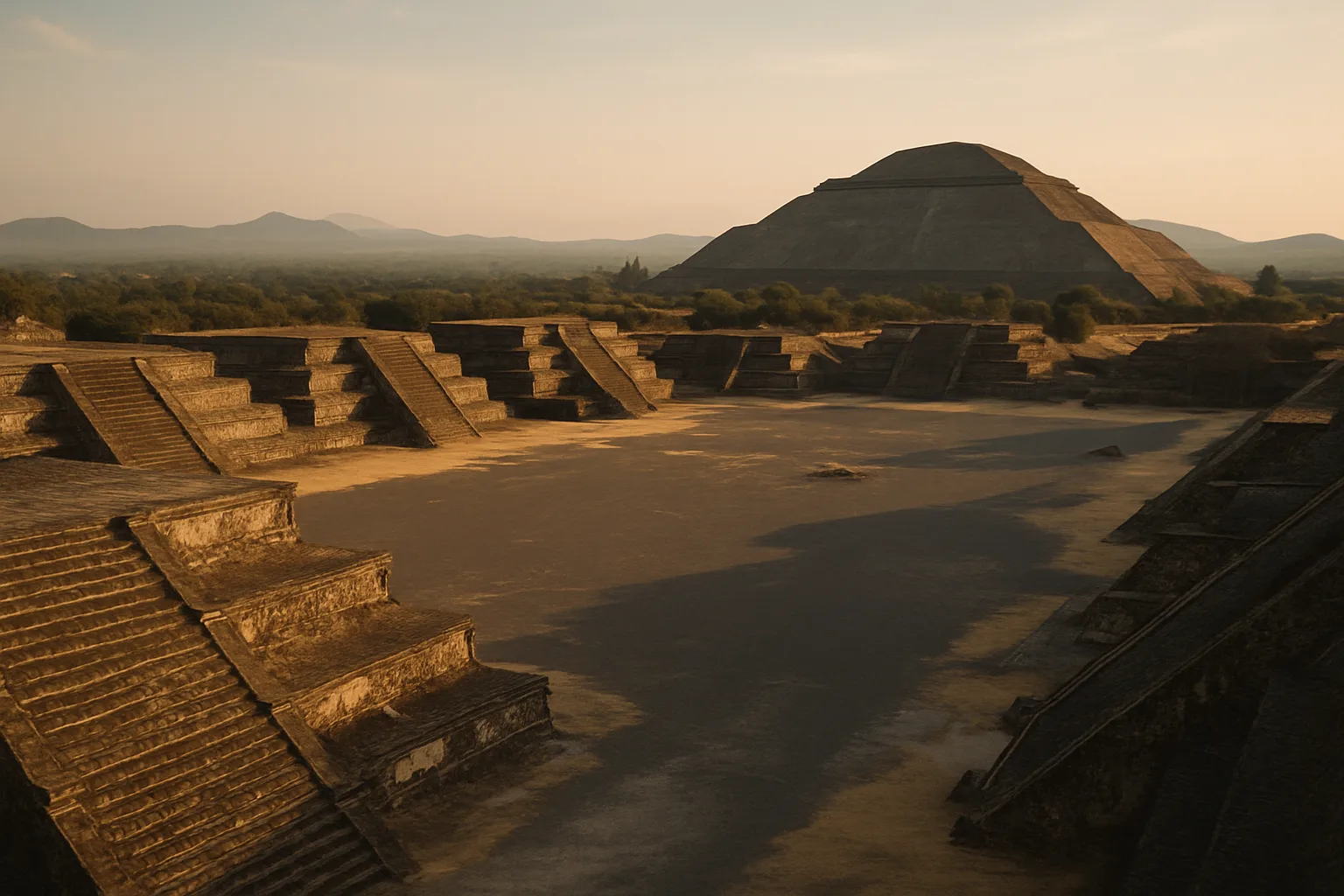
Teotihuacan Mexico Travel Guide 2026: Pyramids, Mysteries & Day Trips
TeotihuacanoTeotihuacan, the 'birthplace of the gods,' remains Mesoamerica's most influential ancient city. This...
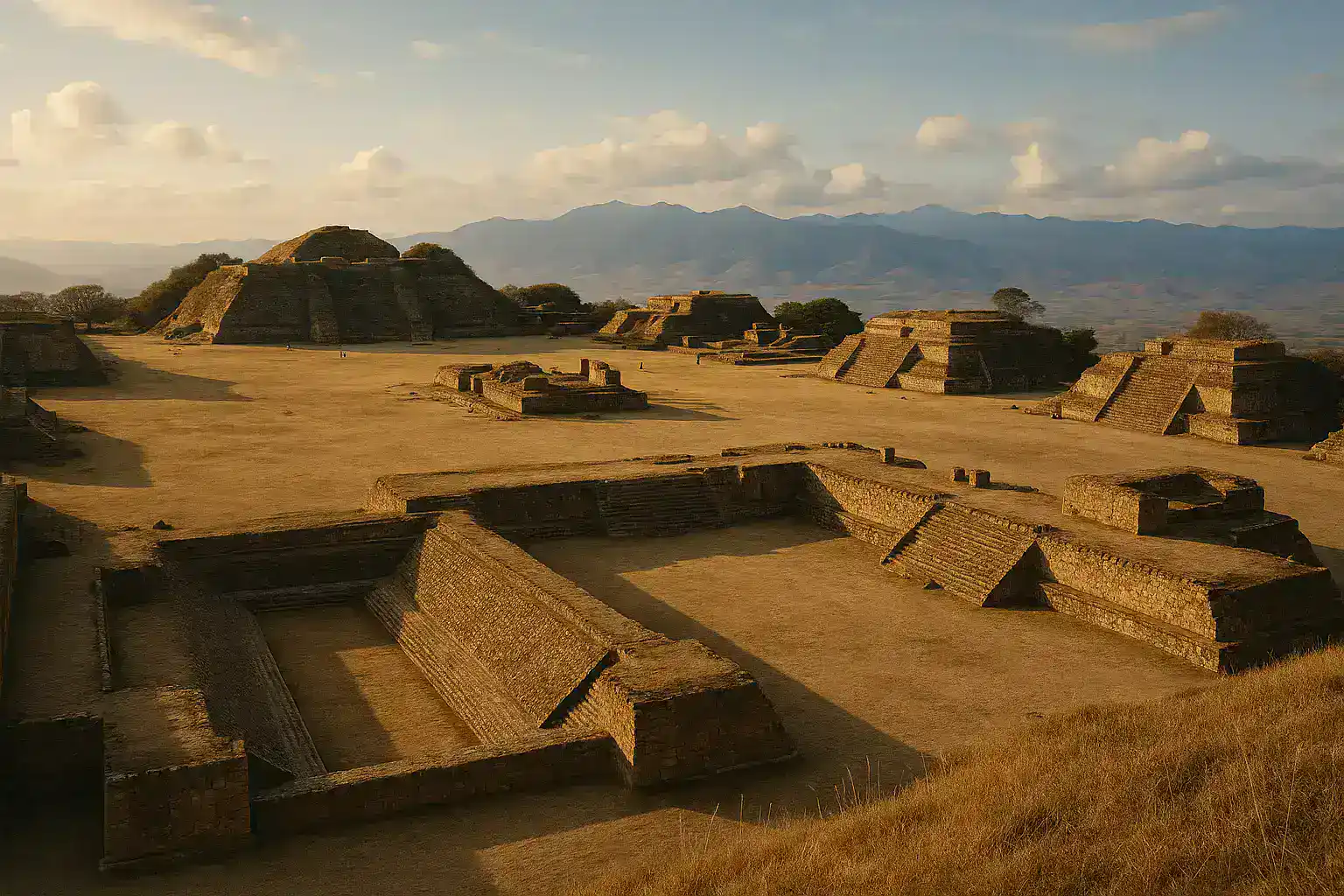
Monte Albán Mexico Travel Guide 2026: Zapotec Capital Above Oaxaca
ZapotecExplore Monte Albán, the ancient Zapotec capital perched above Oaxaca. Discover the Grand Plaza, bal...
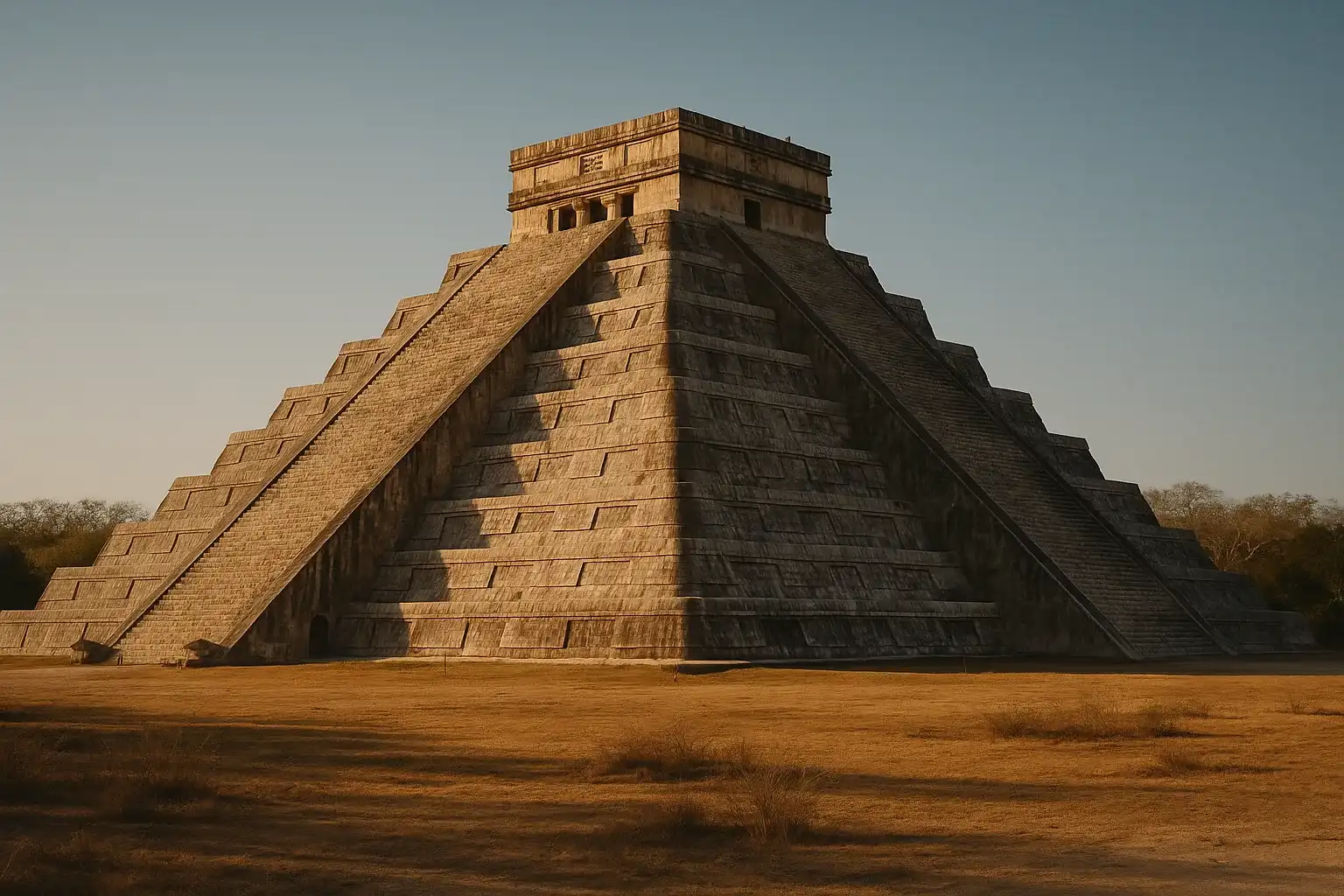
Chichen Itza Travel Guide 2026: Maya Secrets, Sacred Cenote, and Smart Timing
MayaChichen Itza stands as the most visited ancient site in Mexico, showcasing the architectural genius ...