Quick Info
Curated Experiences
Teotihuacan Private Tour from Mexico City
Teotihuacan Hot Air Balloon Flight from Mexico City / Volare
Teotihuacan Tour from Mexico City
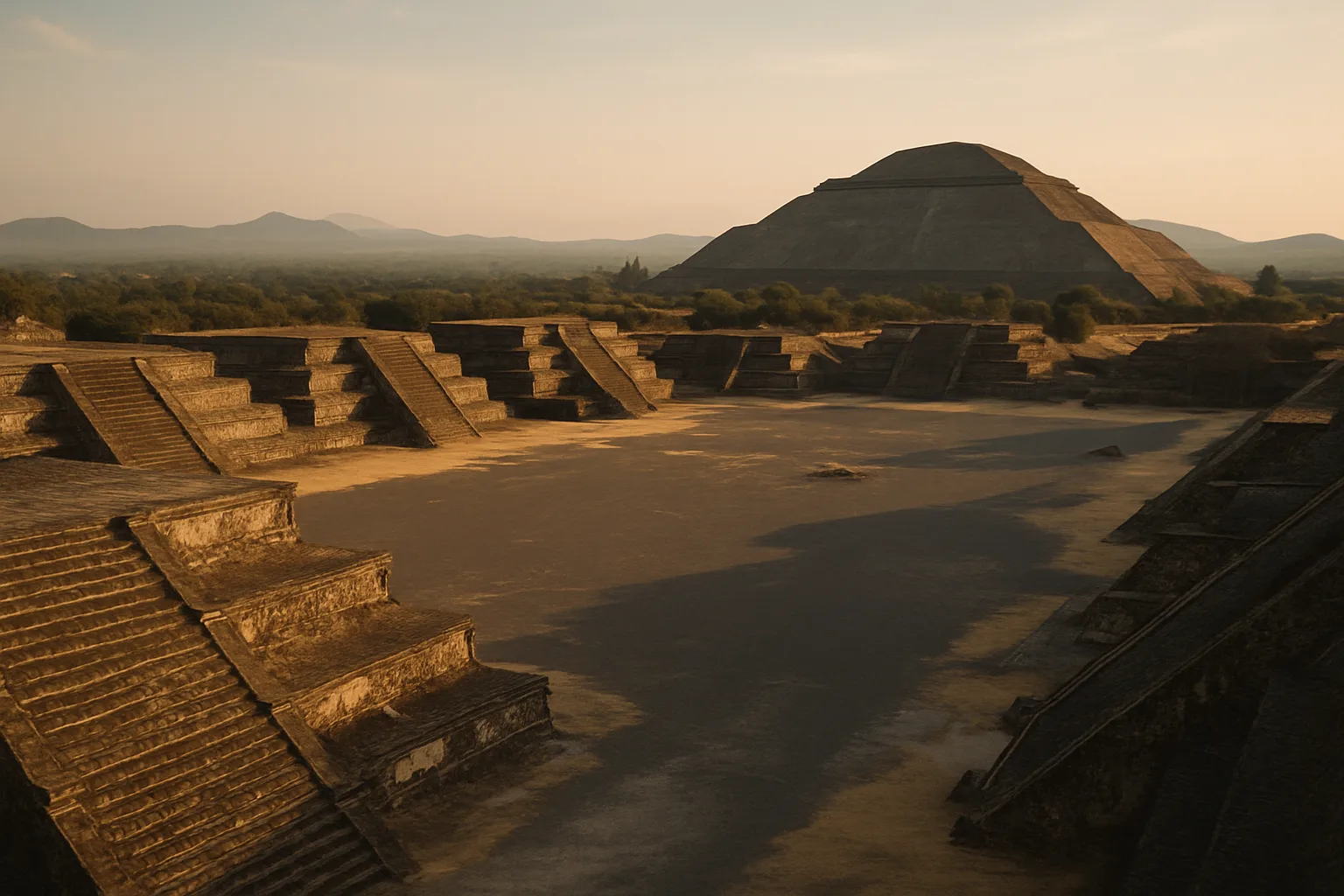
The Avenue of the Dead runs straight as a surveyor’s line for more than two kilometers, flanked by platform foundations that once supported temples and elite residences, and the effect at 7:00 AM on a clear morning is unlike anything else in the Americas. The Pyramid of the Sun looms to your right, its mass filling the peripheral vision in a way that photographs consistently fail to convey. The Pyramid of the Moon closes the northern horizon. Between them, the avenue creates a sense of directed movement so powerful that you understand immediately: this city was designed to make you feel small, reverent, and oriented toward something larger than yourself.
Teotihuacan sits 50 km northeast of Mexico City in the Valley of Mexico, and it poses the most persistent archaeological mystery in the Western Hemisphere. At its peak around 450 CE, this metropolis housed approximately 125,000 people — making it one of the six largest cities on earth, contemporary with Rome and Constantinople. Its influence shaped civilizations across Mesoamerica for centuries. Yet we do not know who built it. No writing system has been conclusively identified. No king’s name survives. When the Aztec encountered these ruins centuries after the city’s collapse, they named it Teotihuacan — “the place where the gods were created” — because they could not imagine that humans alone had built something of this scale.
That mystery is part of what makes a visit here so compelling. You are walking through the largest archaeological site in the Americas, climbing pyramids whose builders remain anonymous, and the absence of certainty forces you to see the architecture on its own terms rather than through a narrative of rulers and conquests. Teotihuacan is a city that speaks through geometry, alignment, and scale. It speaks loudly.
Historical Context
Teotihuacan began as a modest settlement in the Valley of Mexico around 100 BCE, but its growth over the following centuries was explosive and historically unprecedented. By 1 CE, the city had already begun construction on the Pyramid of the Sun — one of the largest structures in the ancient world. By 200 CE, the urban grid was established, the Avenue of the Dead laid out, and the population had swelled beyond anything the region had previously supported. What drove this concentration of people remains debated: volcanic eruptions displacing nearby populations, control of obsidian trade routes, religious pilgrimage to a sacred cave beneath the Pyramid of the Sun, or some combination of forces that archaeology has not yet untangled.
The city’s urban planning was remarkable by any standard. Teotihuacan was organized on a precise grid aligned 15.5 degrees east of true north — an orientation that may reference the setting point of the Pleiades or the alignment of the surrounding mountains. Residential compounds housed extended families in apartment-like complexes with interior courtyards, drainage systems, and plastered walls painted with murals. Neighborhoods were organized by craft specialization and ethnicity: archaeologists have identified Oaxacan, Maya, and Gulf Coast enclaves within the city, suggesting a cosmopolitan population drawn from across Mesoamerica.
At its apex between 300 and 450 CE, Teotihuacan controlled obsidian production across the central highlands and projected military and cultural influence as far as Guatemala. Maya inscriptions at Tikal and Copan reference Teotihuacan as a political force that installed rulers and reorganized dynasties hundreds of kilometers away. The city’s trademark artistic motifs — the talud-tablero architectural profile, the feathered serpent, the goggle-eyed storm god — appeared on buildings from Oaxaca to Honduras, carried by trade, diplomacy, or conquest.
The collapse came with startling violence around 550 CE. Archaeological evidence shows that the city’s ceremonial center was deliberately burned — temples along the Avenue of the Dead set ablaze in what appears to have been an internal uprising rather than an external attack. The population dispersed over the following decades, the residential compounds fell into ruin, and the jungle and agave began their slow reclamation. But Teotihuacan’s cultural gravity outlasted the city itself. Eight centuries after the fires, the Aztec emperor Montezuma made regular pilgrimages to the ruins, treating the site as sacred ground where the current world had been created.
What to See
Pyramid of the Sun
The dominant structure at Teotihuacan and the third-largest pyramid in the ancient world, the Pyramid of the Sun rises 65 meters above the valley floor on a base larger than Egypt’s Great Pyramid of Giza. Its mass is staggering — an estimated 1.2 million cubic meters of stone, earth, and rubble assembled without metal tools, wheeled transport, or draft animals. The pyramid was built in a single massive construction effort around 100 CE, making it one of the earliest structures at the site and suggesting that the entire city grew around it as an organizing principle.
The climb is 248 steep steps to a flattened summit platform. The pitch is aggressive, particularly on the final tier, and the ascent qualifies as genuine physical exertion. Handrails exist but are intermittent. At the top, the reward is a 360-degree panorama across the entire archaeological zone: the Avenue of the Dead stretching north to the Pyramid of the Moon, the Ciudadela complex to the south, and the ring of mountains that frame the valley. On clear winter mornings, Mexico City’s skyline appears on the southern horizon, a distant reminder of how close the modern world sits to this ancient one.
Beneath the pyramid, archaeologists discovered a natural cave system that extends to a chamber directly below the structure’s center. Caves held immense cosmological significance in Mesoamerican religion — they were entrances to the underworld, places of emergence and creation. The discovery strongly suggests that the pyramid was built to sanctify a pre-existing sacred site, not placed arbitrarily.
Practical note: Climb early, before the sun reaches full intensity. The ascent takes 15-20 minutes at a moderate pace. Bring water — there is no shade and no vendor access on the pyramid itself. The descent is harder on the knees than the ascent.
Pyramid of the Moon
Smaller than the Pyramid of the Sun but arguably more powerful in its spatial effect, the Pyramid of the Moon closes the northern terminus of the Avenue of the Dead. Its position was chosen with precision: the pyramid’s profile, when viewed from the avenue, echoes the silhouette of Cerro Gordo, the mountain rising directly behind it. The building becomes an extension of the landscape, a man-made peak nested within a natural one. This is not coincidence. It is design at a geographic scale.
The climb reaches a platform partway up the structure (not the full summit), but the view southward along the entire Avenue of the Dead is the most photographed perspective at Teotihuacan and one of the most dramatic vistas at any archaeological site anywhere. The avenue stretches toward the Pyramid of the Sun and beyond, flanked by platforms and plazas, and the designed alignment of the entire city becomes legible from this single vantage point.
Excavations beneath the Pyramid of the Moon have revealed sacrificial burials of extraordinary complexity: bound human figures, wolves, eagles, jaguars, and greenstone figurines arranged in symbolic patterns that archaeologists are still working to decode. The findings suggest that the pyramid was not only a temple but a cosmological anchor where the most important rituals of the Teotihuacan state were performed.
Practical note: The climb is shorter than the Pyramid of the Sun (roughly half the steps) but steep. The summit platform is small and can become crowded. Visit here first if you want the classic avenue photograph without dozens of climbers on the Pyramid of the Sun in your frame.
The Ciudadela and Temple of the Feathered Serpent
At the southern end of the Avenue of the Dead, the Ciudadela (Citadel) is a massive sunken plaza enclosed by platforms on all four sides. Its scale suggests a political and ceremonial function: this may have been where the state addressed its population, conducted markets, or performed the large-scale rituals that maintained the city’s cosmological order.
The star of the complex is the Temple of the Feathered Serpent (Templo de Quetzalcoatl), a seven-tiered pyramid whose facades carry the most elaborate sculptural program at Teotihuacan. Stone heads of the feathered serpent — the deity the Aztec would later call Quetzalcoatl — alternate with goggle-eyed figures that may represent Tlaloc (the storm god) or a fire serpent. The carvings retain traces of original paint and demonstrate a level of sculptural ambition found nowhere else at the site. In 2003, archaeologists discovered a tunnel beneath the temple leading to chambers containing offerings of greenstone, pyrite mirrors, and seashells — a sealed ritual deposit untouched for nearly two millennia.
Practical note: The Ciudadela is at the site’s southern end, farthest from the Pyramid of the Moon. Many visitors run out of energy before reaching it. If the sculptural detail interests you, consider starting your visit here and working north.
Palace of Quetzalpapalotl
On the western side of the Plaza of the Moon, this restored palace complex provides the closest look at how Teotihuacan’s elite actually lived. Carved stone pillars depict the quetzal-butterfly (quetzalpapalotl), a mythological creature whose eyes once held obsidian insets that would have glittered in firelight. The pillars support a partially reconstructed roof, giving visitors a rare sense of enclosed interior space at a site where most architecture survives only as open platforms.
Adjacent rooms contain original painted murals featuring jaguars, plumed serpents, and ritual scenes in the characteristic Teotihuacan palette of red, green, and ochre. These murals are among the best-preserved at the site and provide crucial evidence of the artistic program that once covered most of the city’s buildings.
Practical note: Located directly west of the Pyramid of the Moon plaza. Most visitors rush past en route to the pyramids. Allow 15-20 minutes — the carved pillars and murals here exceed anything visible on the pyramids themselves.
The On-Site Museum
The Museo de Sitio, located near the Pyramid of the Sun’s base, houses artifacts that transform the ruins from impressive geometry into a record of human life: obsidian tools and weapons, ceramic vessels, carved stone masks, jade ornaments, and the famous anthropomorphic figurines that populate Teotihuacan’s archaeological record. The collection provides essential context for a civilization that left no written records — every object is an inference, every display case a partial answer to questions the architecture alone cannot resolve.
Practical note: Entry is included with site admission. Allow 30-45 minutes. The museum is air-conditioned, making it a welcome midday refuge from the heat.
Timing and Seasons
Teotihuacan is an exposed, high-altitude site (2,300 meters / 7,500 feet) with virtually no shade. Timing is everything.
Best months: November through March. Clear skies, mild temperatures (15-24°C / 59-75°F), and minimal rain create ideal conditions. December holidays and Semana Santa bring Mexican domestic tourists, but weekday mornings remain manageable.
Hottest period: April and May, when temperatures regularly exceed 32°C (90°F) and the valley bakes under cloudless skies. If visiting during these months, arrive at the 7:00 AM opening and plan to finish by noon.
Rainy season: June through October brings afternoon thunderstorms that can be sudden and intense. The valley turns vivid green, and rain clears crowds dramatically. Mornings are usually dry. Waterproof shoes are essential — the stone surfaces become treacherous when wet.
Best time of day: Gates open at 7:00 AM, and arriving then gives you the Avenue of the Dead nearly to yourself. Morning light creates long shadows across the pyramids that reveal architectural detail invisible at midday. By 10:30 AM, tour buses from Mexico City arrive in force. Weekdays see dramatically fewer visitors than weekends.
Spring equinox warning: March 21 draws enormous crowds — tens of thousands of visitors dressed in white performing New Age ceremonies at the Pyramid of the Sun. Unless you specifically want this experience, avoid the site for several days around the equinox.
High altitude note: At 2,300 meters, Teotihuacan sits above many travelers’ acclimatization comfort zone. If you arrived in Mexico City within the last 24 hours, the pyramid climbs will feel harder than expected. Hydrate aggressively and pace yourself.
Tickets, Logistics and Getting There
Admission: 90 pesos (approximately $5 USD) for non-Mexican adults. An additional 65 pesos for video camera use. Cash only — card payment is unreliable at the entrance gates. Mexican nationals enter free on Sundays, which also means Sunday crowds are significantly larger.
Hours: Open daily 7:00 AM to 5:00 PM. Last entry at 4:00 PM. The ticket offices can develop lines after 9:00 AM on busy days.
By public bus from Mexico City: Take the Metro to Autobus del Norte station (Line 5, yellow), then walk into the adjacent bus terminal. At Gate 8, find the “Piramides” counter and purchase a ticket for approximately 100 pesos ($5 USD) one-way. Buses are air-conditioned and depart every 20 minutes starting around 6:00 AM. The ride takes about 1 hour depending on traffic. Return buses run until approximately 5:00 PM — purchase your return ticket upon arrival to guarantee a seat, as afternoon departures fill quickly.
By rideshare or taxi: Uber or DiDi from central Mexico City costs approximately $40-60 USD each way and takes 45 minutes to 1 hour. Many drivers will wait at the site for an hourly rate (negotiate in advance). This option offers flexibility but may require Spanish for coordination.
By organized tour: Small-group tours ($40-80) include hotel pickup, round-trip transport, and a licensed guide. Private tours ($100-200) offer flexible timing and personalized commentary. Most tours include a stop at a mezcal or obsidian workshop, which ranges from genuinely interesting to thinly veiled sales pitch depending on the operator.
By hot air balloon: Sunrise balloon flights over the pyramids ($150-200) launch from fields adjacent to the site and include round-trip transport from Mexico City, a flight of approximately 45-60 minutes, and breakfast afterward. The aerial perspective of the Avenue of the Dead is extraordinary. Book at least two weeks in advance — flights sell out consistently.
Entrance gates: The site has multiple entrance gates. Gate 1 (Puerta 1) at the Ciudadela is the main entrance used by buses. Gate 2 is near the Pyramid of the Sun. Gate 5 is near the Pyramid of the Moon. If arriving by car, choosing your gate strategically can reduce backtracking.
Practical Tips
- Bring at least 1.5 liters of water per person. The combination of altitude, sun exposure, and physical exertion from pyramid climbing creates rapid dehydration.
- Sun protection is non-negotiable: wide-brimmed hat, sunglasses, and SPF 50+ sunscreen. There is virtually no shade anywhere on the site.
- Wear sturdy shoes with good grip. The pyramid steps are steep, uneven, and occasionally slippery. Sandals are a genuine safety hazard on the climbs.
- Bring snacks. Food options inside the site are limited to vendors selling drinks and basic items at elevated prices. The Restaurant La Gruta, located in an actual cave near the Pyramid of the Sun, serves decent Mexican cuisine and makes a memorable lunch stop — reservations recommended on weekends.
- Cash is king. Bring pesos in small denominations for entrance fees, parking, food, and the inevitable obsidian souvenir vendors.
- A light jacket or sweater is useful in winter months, especially for early morning arrivals when the valley can be cool before the sun reaches full strength.
- The parking lot vendor gauntlet between your car and the entrance can be persistent. A polite but firm “no, gracias” works. Do not engage with pricing discussions unless you genuinely intend to buy.
- Photography tip: the classic shot of the Avenue of the Dead is taken from the Pyramid of the Moon platform, looking south. Arrive before 9:00 AM for the best light and fewest people on the avenue below.
Suggested Itinerary
6:00 AM — Depart Mexico City. Take the metro to Autobus del Norte or arrange a rideshare for a 6:00-6:30 AM departure.
7:00 AM — Arrive at the site as gates open. Enter through Gate 5 (Pyramid of the Moon) if driving, or Gate 1 (Ciudadela) if arriving by bus.
7:15 AM — If entering from the north, climb the Pyramid of the Moon first for the iconic southward view along the Avenue of the Dead. The early light and empty avenue make this the single best moment of the day. Allow 30-40 minutes.
8:00 AM — Walk south along the Avenue of the Dead. Stop at the Palace of Quetzalpapalotl for the carved pillars and murals. Allow 15-20 minutes.
8:30 AM — Climb the Pyramid of the Sun. The ascent takes 15-20 minutes at a moderate pace. Spend 15-20 minutes at the summit absorbing the panorama. Descend carefully. Total: 45 minutes to 1 hour.
9:30 AM — Visit the on-site museum near the Pyramid of the Sun base. Allow 30-45 minutes for the collection.
10:15 AM — Continue south along the avenue to the Ciudadela complex. Explore the Temple of the Feathered Serpent and its sculptural facades. Allow 30-40 minutes.
11:00 AM — Optional: lunch at Restaurant La Gruta (cave restaurant) or at the food vendors near the Pyramid of the Sun.
12:00 PM — Exit the site. Return to Mexico City by bus (1 hour) or rideshare (45 minutes).
Total site time: 4 to 5 hours. Add 2 hours for round-trip transportation.
Nearby Sites
Templo Mayor — Back in Mexico City’s historic center, the excavated foundations of the Aztec Great Temple sit directly adjacent to the cathedral. The accompanying museum is outstanding. Visiting Templo Mayor after Teotihuacan creates a powerful chronological sequence: the anonymous city that shaped Mesoamerican civilization, followed by the Aztec capital that revered it as sacred ground. Allow 2-3 hours.
Chichen Itza — The Yucatan’s iconic Maya-Toltec city is a domestic flight away (Mexico City to Merida or Cancun), but the architectural connections between Teotihuacan and Chichen Itza — the feathered serpent, the talud-tablero profile, the warrior imagery — make the pairing intellectually rewarding.
Monte Alban — The Zapotec hilltop capital in Oaxaca is a 5-hour drive or 1-hour flight from Mexico City. Archaeological evidence of a Teotihuacan diplomatic enclave at Monte Alban makes the connection between these sites more than thematic.
Tikal — In Guatemala’s Peten jungle, Tikal’s inscriptions reference Teotihuacan’s direct political intervention in Maya affairs. The two sites, separated by over 1,000 km, were linked by trade, war, and dynastic politics in ways that archaeology is still uncovering.
Final Take
Teotihuacan is one of those rare places where the scale of what humans built and the depth of what we do not understand about them converge into something genuinely humbling. The pyramids are not beautiful in the way that Uxmal is beautiful or refined in the way that Palenque is refined. They are massive, unadorned, and arranged with a geometric discipline that communicates power without needing to explain itself. The builders did not sign their work. They did not leave an inscription naming their king or their god. They left a city that shaped an entire hemisphere’s civilization, then vanished into the historical record so completely that eight centuries later, the Aztec could only conclude that gods had built it.
Stand at the top of the Pyramid of the Sun at 7:30 on a clear morning and watch the valley fill with light. The Avenue of the Dead stretches below like a spine, the Pyramid of the Moon holds the northern horizon, and the mountains ring the valley in a bowl that feels purposefully enclosed. Something extraordinary happened here. We may never fully understand what. That uncertainty is not a limitation of the visit. It is the visit.
Discover More Ancient Wonders
- Chichen Itza — The Yucatan’s iconic Maya-Toltec city with the Pyramid of Kukulkan
- Tikal — Guatemala’s magnificent jungle metropolis and Classic Maya powerhouse
- Palenque — Jungle temples and Pakal’s tomb in the Chiapas highlands
- Monte Alban — The Zapotec capital on a leveled mountaintop above Oaxaca
- Explore our complete Mexico Ancient Sites Guide for full itinerary planning
Quick Facts
| Attribute | Details |
|---|---|
| Location | San Juan Teotihuacan, Mexico State, Mexico |
| Country | Mexico |
| Region | Mexico State |
| Civilization | Teotihuacano |
| Historical Period | c. 100 BCE-550 CE |
| Established | c. 100 BCE |
| UNESCO Status | World Heritage Site (1987) |
| Entry Fee | 90 pesos (~$5 USD); cash only |
| Hours | 7:00 AM - 5:00 PM daily |
| Best Time | November-March; arrive at 7:00 AM opening |
| Distance from Mexico City | 50 km (31 miles); ~1 hour by bus |
| Elevation | 2,300 meters (7,500 feet) |
| Coordinates | 19.6925, -98.8438 |
Frequently Asked Questions
How much are tickets to Teotihuacan?
General admission is approximately 90 MXN (~$5 USD) for non-Mexican adults. Additional fees apply for video cameras. Cash only—card payment isn't reliable at site entrances.
Do you need a full day for Teotihuacan?
Plan 4-6 hours for a thorough visit including Avenue of the Dead, both pyramids, the Ciudadela, and the museum. Add 2 hours for round-trip transportation from Mexico City. Most visitors find this comfortably fills one day.
Nearby Ancient Sites
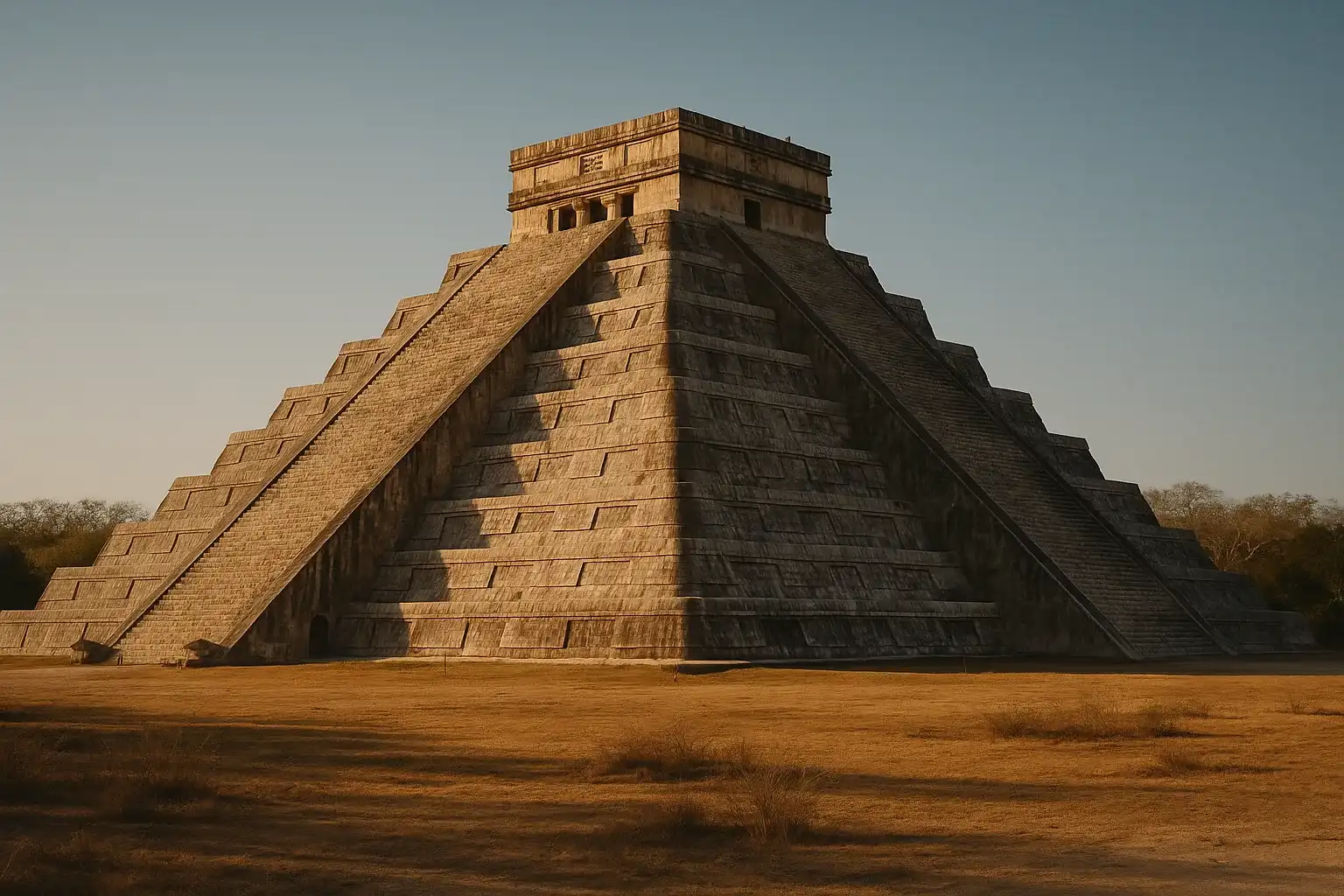
Chichen Itza Travel Guide 2026: Maya Secrets, Sacred Cenote, and Smart Timing
MayaChichen Itza stands as the most visited ancient site in Mexico, showcasing the architectural genius ...
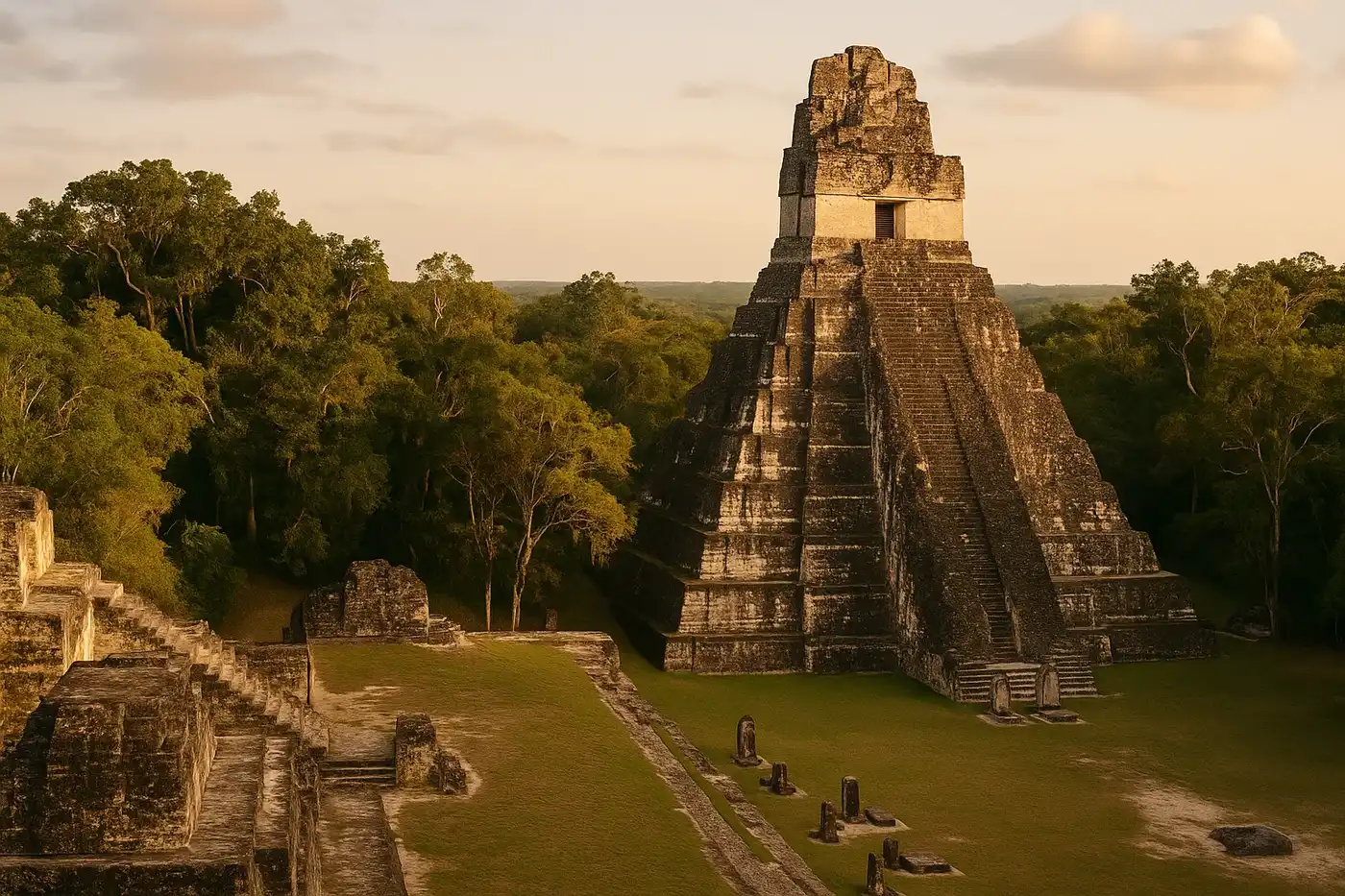
Tikal Guatemala: The Lost City of the Maya
Classic MayaDiscover Tikal, the magnificent Maya metropolis rising from the Guatemalan rainforest. Explore soari...