Quick Info
Curated Experiences
Angkor Thom and Bayon Small-Group Tour
Private Angkor Thom Historical Walking Route
Full-Day Angkor Archaeological Park Highlights
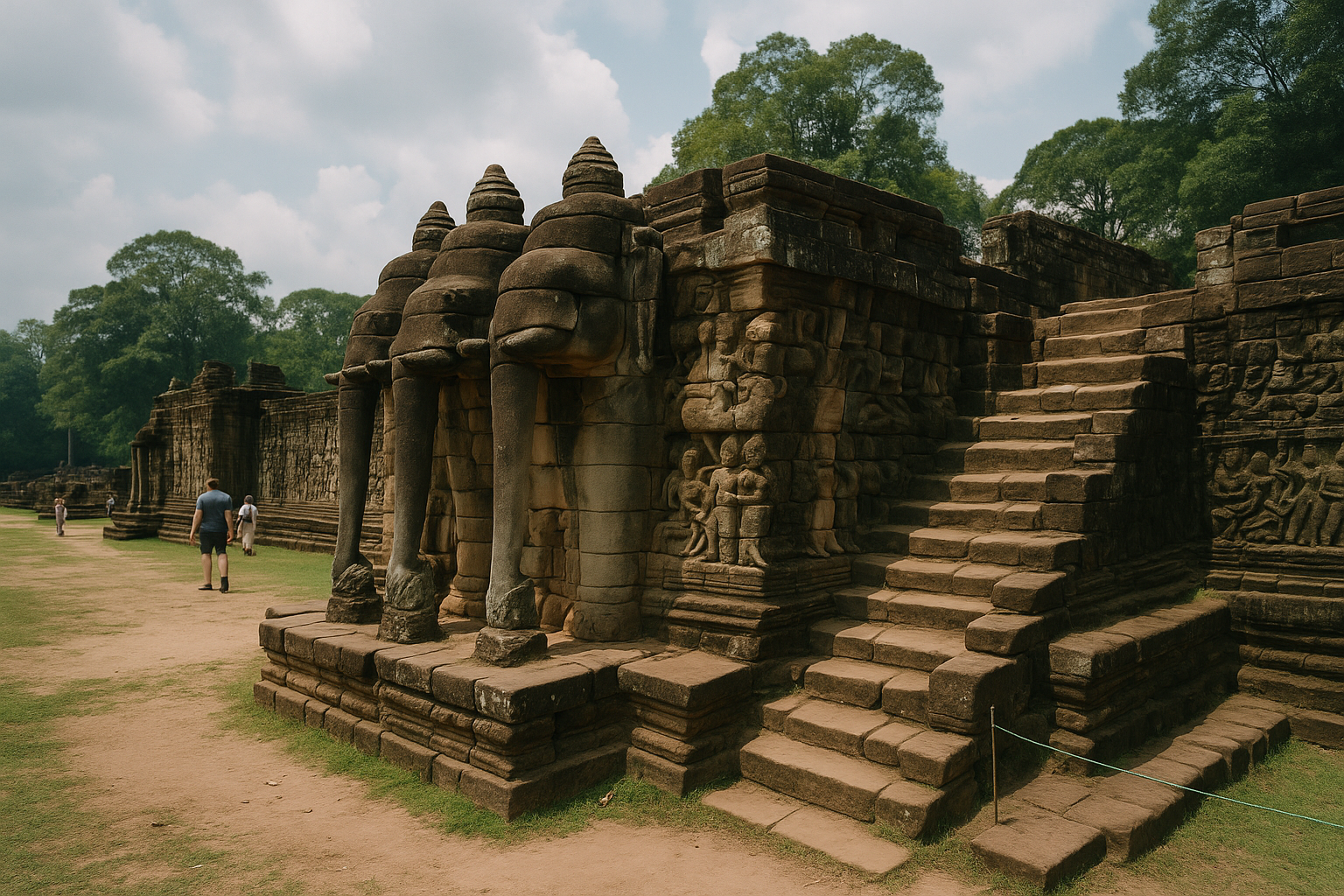
The Terrace of the Elephants stretches 350 meters along the eastern edge of Angkor Thom’s royal plaza, a monumental viewing platform that once anchored the ceremonial heart of the Khmer Empire. This is not a temple. There are no towers, no enclosed sanctuaries, no dim corridors. What survives is something rarer in Angkor: a piece of civic architecture built to project royal authority outward, toward crowds, armies, and visiting dignitaries.
For travelers moving through Angkor’s temple circuit, the terrace offers a critical shift in perspective. Most Angkor monuments turn inward, drawing visitors into sacred enclosures. This one faces out. Standing on the platform, you occupy the same vantage point as Khmer kings who reviewed troops, presided over festivals, and staged the spectacles that held a sprawling empire together.
Why This Site Matters
The Terrace of the Elephants is the best surviving example of Angkor’s secular ceremonial architecture. While Bayon Temple and Ta Prohm dominate most itineraries with their spiritual weight, the terrace reveals how the Khmer capital functioned as a political stage. The Royal Square it overlooks was the empire’s largest public gathering space, comparable in purpose to Rome’s Forum or Beijing’s Forbidden City forecourts.
The site also carries some of Angkor’s most vivid narrative sculpture. The carved elephants that give the terrace its name are not decorative afterthoughts. They are detailed depictions of war elephants in formation, complete with riders, handlers, and battle regalia, carved at near life-size scale across the retaining walls. These panels communicate military power in a way that temple iconography does not.
For anyone trying to understand how the Khmer Empire actually operated rather than just how it worshipped, this terrace is essential.
Historical Context
Construction and Purpose
Jayavarman VII, the empire’s most prolific builder, constructed the terrace in the late 12th century as part of his massive rebuilding of Angkor Thom following the Cham invasion of 1177. The platform served as the royal reviewing stand for the Grand Royal Plaza, an open expanse that stretched east from the palace enclosure.
Archaeological evidence suggests the terrace was not built in a single phase. Jayavarman VII laid the core structure, but subsequent rulers, particularly Jayavarman VIII, expanded and modified sections during the 13th century. The result is a layered monument where different carving styles and construction techniques overlap.
Function in Khmer Court Life
The terrace anchored a ceremonial axis. During major events, the king and court would occupy the elevated platform while processions, military reviews, and public rituals unfolded below. Zhou Daguan, the Chinese diplomat who visited Angkor in 1296, described elaborate royal processions through the capital that almost certainly passed before this structure. His account mentions elephants, cavalry, ministers, and musicians in ordered ranks, exactly the kind of spectacle the terrace was designed to frame.
The platform also connected to the Royal Palace compound behind it (now largely vanished, as the palace was built from perishable materials) and to the adjacent Terrace of the Leper King, which likely served related ceremonial functions.
What to Prioritize Onsite
The Elephant Bas-Reliefs
The signature carvings run along the eastern retaining wall and deserve a slow, full-length walk. The elephants are depicted in hunting and military scenes, tusks raised, riders armed, with garudas and lion figures filling the registers between them. Pay attention to the varying depth and condition of the carvings. Some sections show remarkably crisp detail, while others have weathered significantly, giving you a visual record of the monument’s exposure history.
The southern section near the main staircase features the most elaborate panels, including three-headed elephants pulling lotus flowers, a motif linked to the Hindu god Indra.
The Five Projecting Staircases
Five monumental staircases punctuate the terrace, each flanked by carved guardian figures and multi-headed nagas. The central staircase aligns with the main axis of the Royal Palace and was likely reserved for the king. Walk up at least one to experience the elevation change and the way sightlines open across the plaza.
Hidden Inner Walls
Less visited but worth seeking out: sections of the terrace’s inner retaining walls are visible where later construction phases were added over earlier ones. These hidden walls contain some of the site’s best-preserved carvings, including garudas and mythological scenes protected from centuries of weather exposure. Look for access points near the northern end of the terrace.
The Royal Plaza Perspective
After walking the platform itself, cross the open ground to the east and look back at the full facade. From this distance, the terrace reads as a unified wall of carved stone stretching the length of three football fields. This is the view that arriving processions and foreign envoys would have encountered, and it communicates the intended effect of the architecture far better than close-up inspection alone.
Practical Visit Strategy
Timing
The terrace is entirely open-air with no shade cover on the platform itself. Morning visits between 6:30 and 9:00 AM give you the best light on the east-facing carvings and tolerable temperatures. Late afternoon (after 4:00 PM) works as a secondary window, though the facade falls into shadow earlier than you might expect.
Avoid midday. The exposed stone radiates heat, and the experience of walking the full 350-meter facade in direct equatorial sun is genuinely punishing.
Logistics
- Access: Within Angkor Thom, typically reached via the South Gate. Tuk-tuk or private car from central Siem Reap takes 25-40 minutes.
- Pass requirement: Standard Angkor Archaeological Park pass (1-day, 3-day, or 7-day).
- Time needed: 45-90 minutes for a thorough visit. Budget toward the longer end if you want to photograph the full facade and explore the hidden inner walls.
What to Bring
Water is non-negotiable. Bring at least a liter per person. A hat and sunscreen matter more here than at shaded temple sites. Comfortable walking shoes with grip help on the stone staircases, which can be slick after rain. A zoom lens or binoculars are useful for examining upper-register carvings that are difficult to see from ground level.
Route Pairing and Nearby Sites
The Terrace of the Elephants sits at the center of Angkor Thom’s royal precinct, making it a natural pivot point for a half-day walking circuit.
Recommended sequence: Start at the South Gate of Angkor Thom for the iconic causeway approach, then walk to Bayon Temple (the precinct’s spiritual centerpiece, roughly 400 meters south). From Bayon, head north to the Terrace of the Elephants and continue to the adjacent Terrace of the Leper King. This route builds logically from sacred to civic architecture and covers Angkor Thom’s essential monuments in a single loop.
Extended pairings: After completing the royal precinct, head to Ta Prohm for a dramatic tonal shift from open ceremonial space to jungle-wrapped ruins. If your Angkor pass covers multiple days, save Banteay Srei for a separate morning trip to compare the terrace’s large-scale political carving with Banteay Srei’s refined devotional sculpture.
Final Take
The Terrace of the Elephants does not compete with Angkor’s great temples for atmosphere or spiritual weight. It does something different and, for understanding the Khmer Empire, something necessary. This is where royal power was performed publicly, where the machinery of empire was made visible to its subjects. Skipping it leaves a gap in the Angkor story that no number of temple visits can fill.
Give it a full morning hour, walk the entire facade at least once, and let the scale of the thing register before moving on to the next stop.
Quick Facts
| Attribute | Details |
|---|---|
| Location | Royal Plaza, Angkor Thom, Siem Reap, Cambodia |
| Country | Cambodia |
| Region | Siem Reap |
| Civilization | Khmer Empire |
| Historical Period | Angkor period, late 12th - 13th century CE |
| Builder | Jayavarman VII (primary construction) |
| Length | Approximately 350 meters |
| Coordinates | 13.4417, 103.8589 |
| Park Pass Required | Yes - Angkor Archaeological Park pass |
Frequently Asked Questions
What is the Terrace of the Elephants used for?
Historians generally interpret the terrace as a royal platform used for public ceremonies, military reviews, and state processions in Angkor Thom.
How long should you spend at the Terrace of the Elephants?
Most travelers spend 30 to 60 minutes here, especially when combining it with Bayon, Baphuon, and other Angkor Thom monuments.
Is the Terrace of the Elephants included in the Angkor pass?
Yes. It is inside Angkor Archaeological Park and covered by the standard Angkor entry pass.
Nearby Ancient Sites
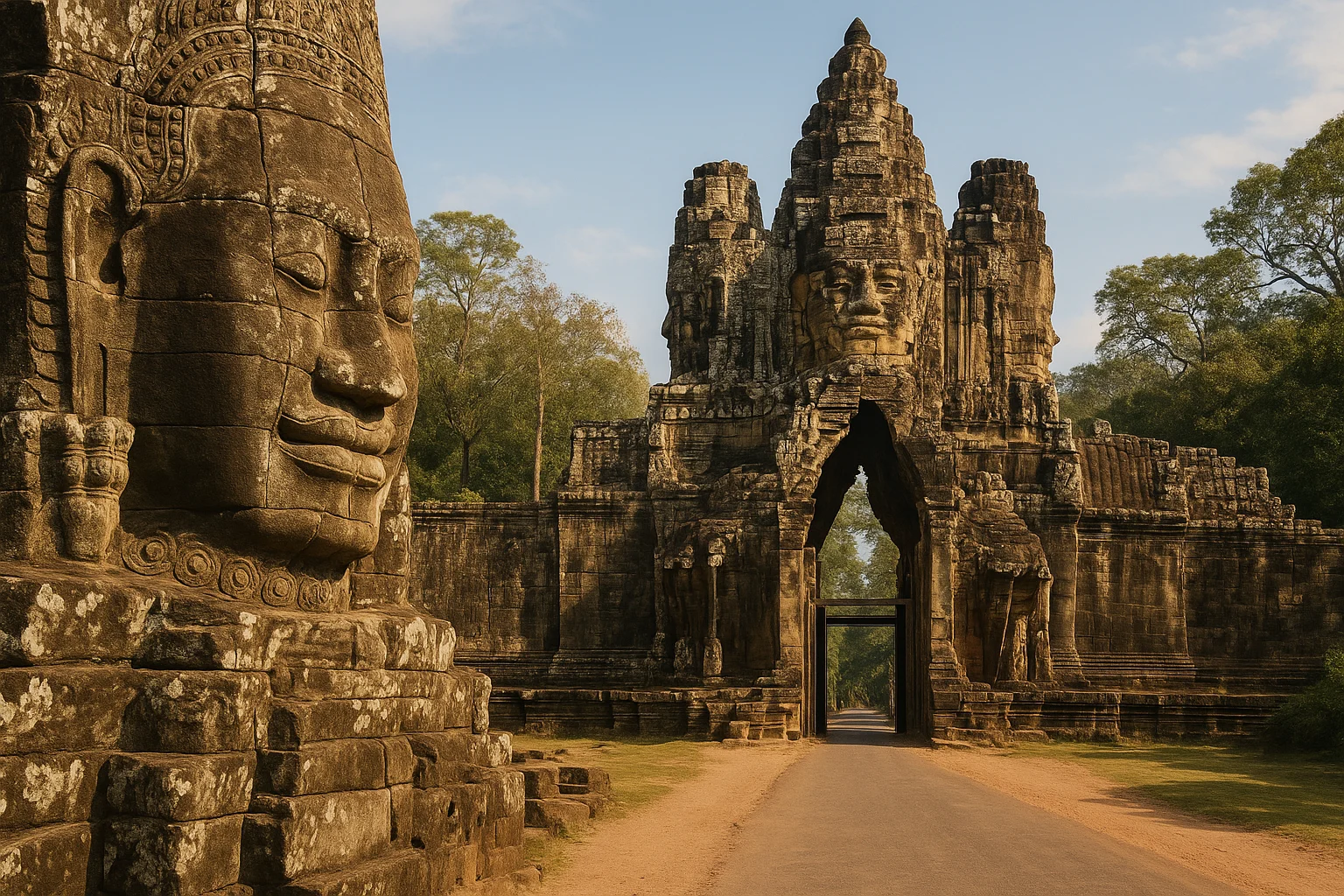
Angkor Thom Travel Guide 2026: Bayon Faces, Gates, and the Khmer Royal City
KhmerAngkor Thom was the last great capital of the Khmer Empire. This guide covers how to visit Bayon, th...
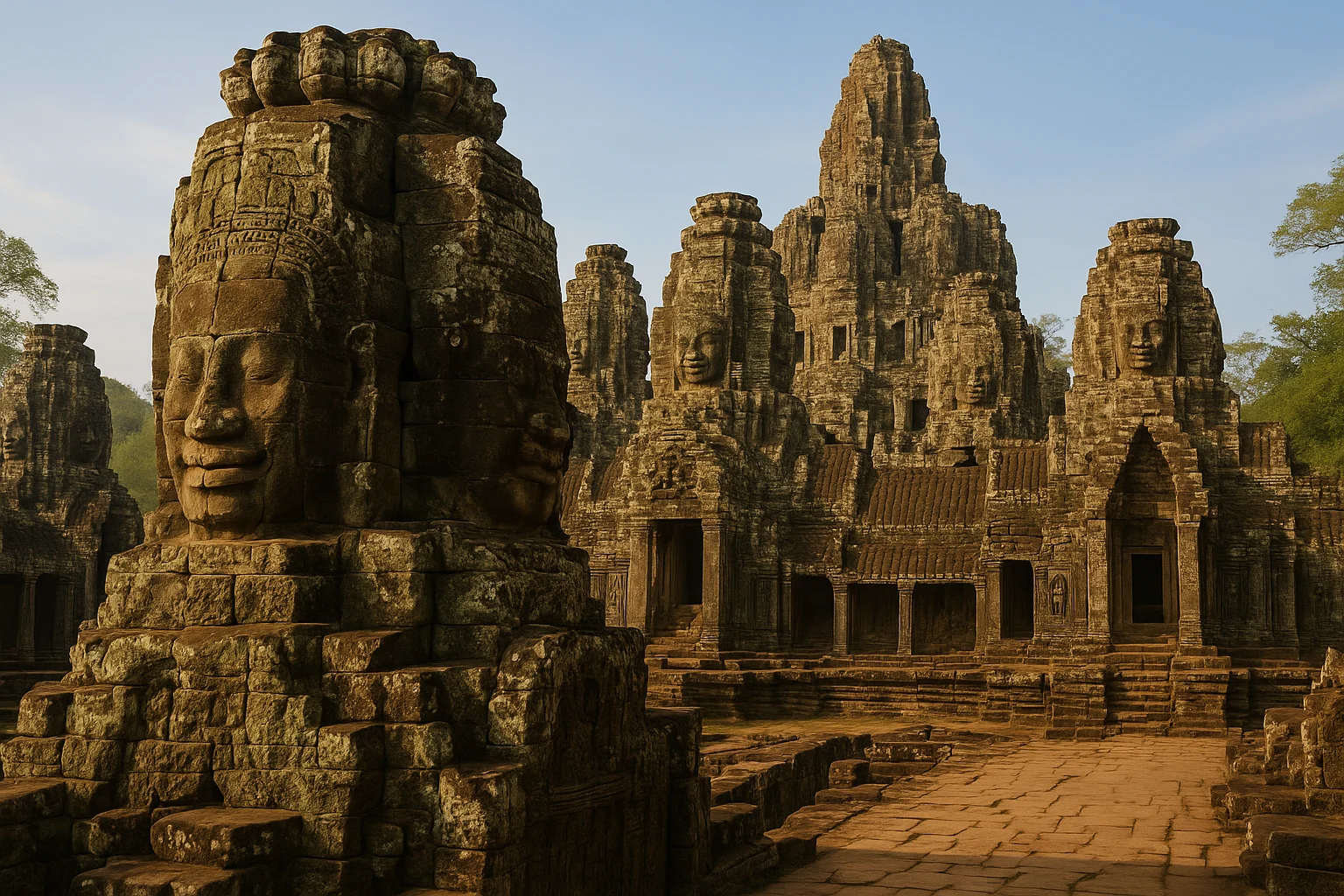
Bayon Temple Travel Guide 2026: Face Towers, Bas-Reliefs, and Best Visit Timing
KhmerBayon Temple sits at the center of Angkor Thom and is famous for its carved stone faces. This guide ...
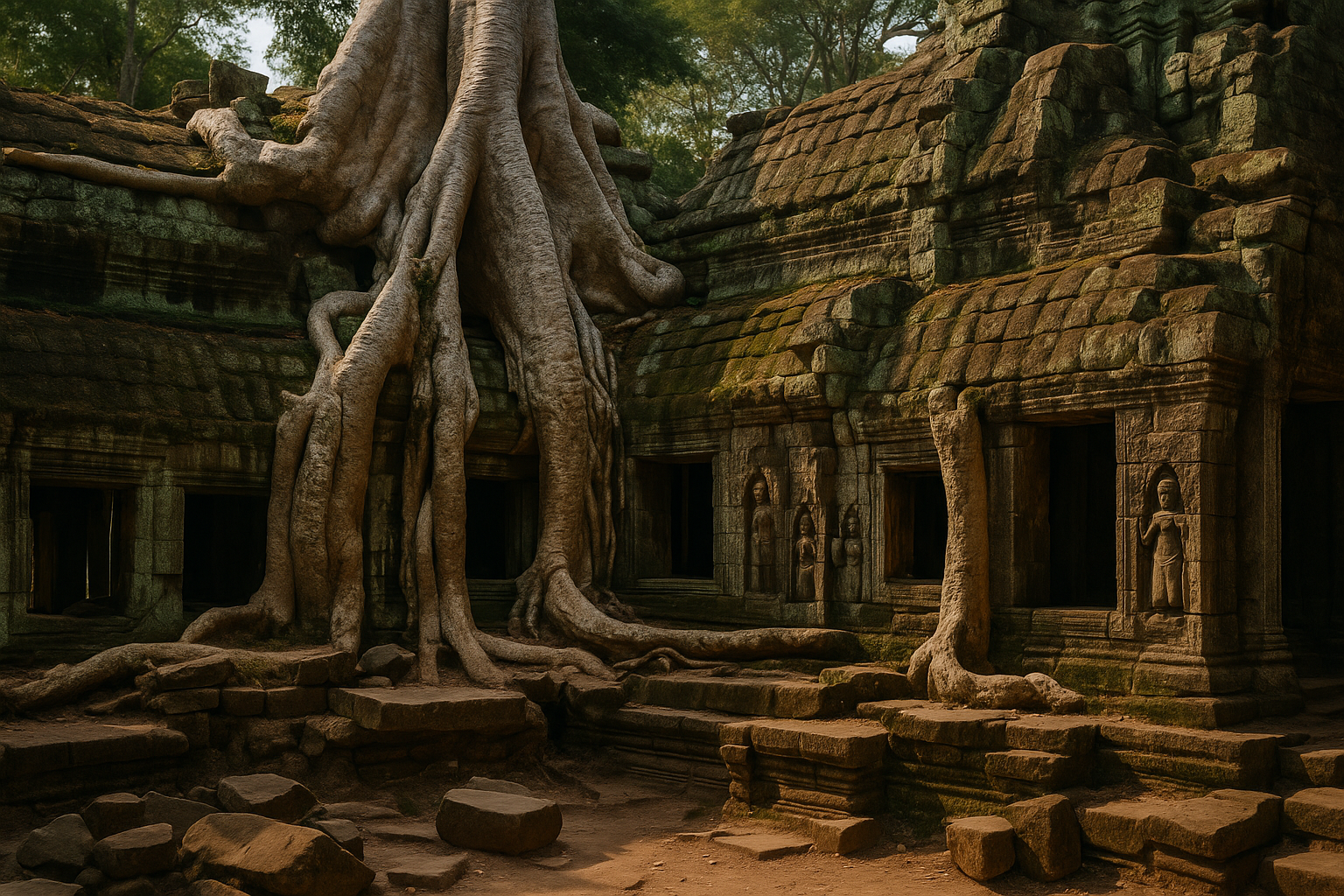
Ta Prohm Travel Guide 2026: Temple of the Trees, Routes, and Photo Timing
KhmerTa Prohm is one of Angkor’s most atmospheric temples, where giant roots and sandstone galleries merg...