Quick Info
Curated Experiences
Angkor Thom Small Circuit Guided Tour
Sunset Angkor Wat and Angkor Thom Day Tour
Private Angkor Archaeological Park Full-Day Tour
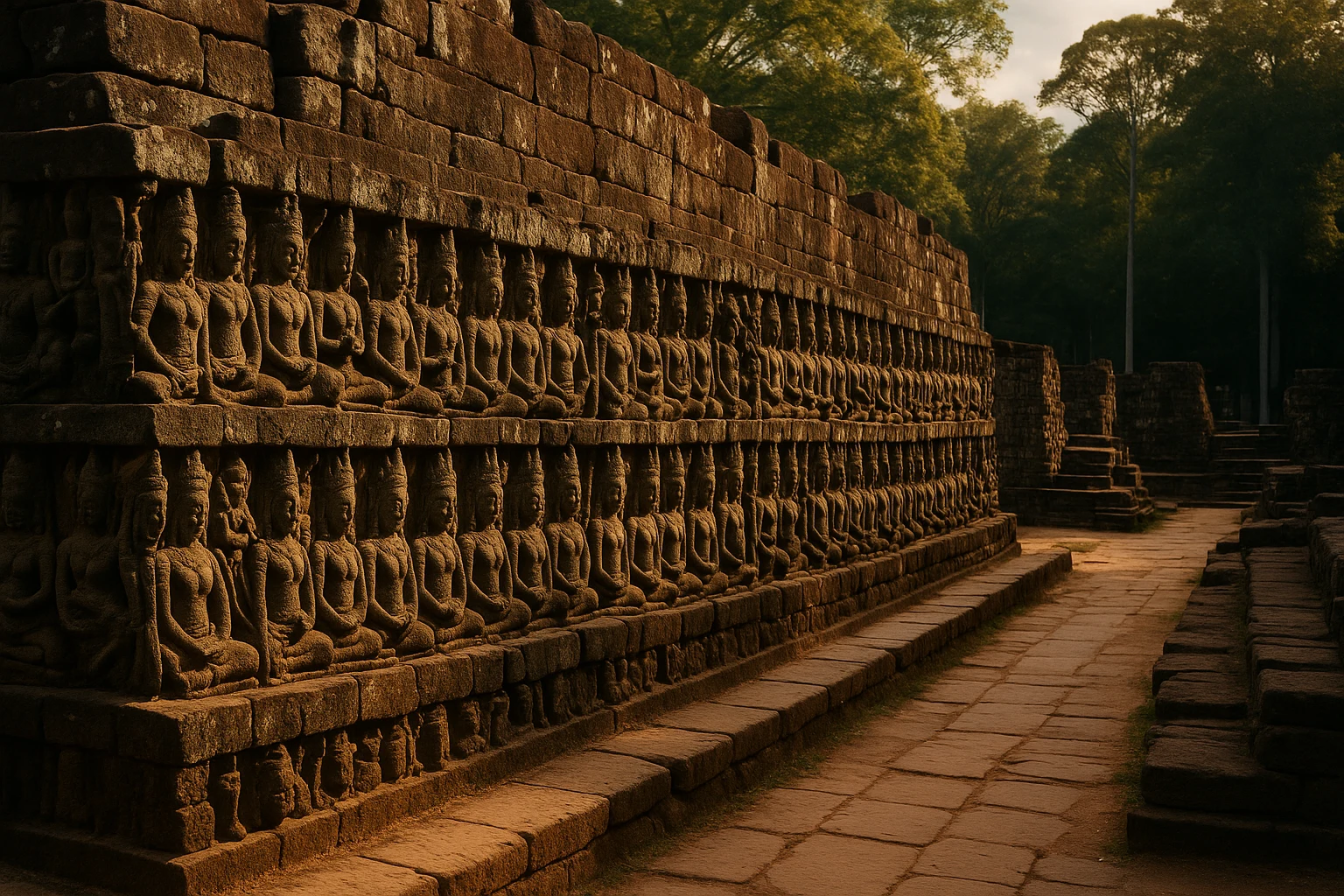
At the northern end of the Royal Plaza inside Angkor Thom, a stone platform rises in seven tiers above the Cambodian forest floor, its walls alive with hundreds of carved figures frozen in procession, combat, and devotion. This is the Terrace of the Leper King, one of the most evocative monuments in the entire Angkor Archaeological Park. Named after a moss-encrusted sandstone statue discovered at its summit — a figure so weathered that early observers mistook the lichen coating for leprous skin — the terrace stands as one of the finest expressions of Khmer decorative carving that has survived nine centuries of jungle, monsoon, and upheaval. Unlike the soaring towers of Angkor Wat or the face-studded gateways of Angkor Thom itself, this structure is low and horizontal, its drama unfolding not in height but in the relentless density of imagery pressed into every surface. For any traveller in Cambodia with a serious interest in the Khmer Empire, the Terrace of the Leper King offers something rarer than spectacle: the sensation of deciphering a mythological world inscribed in stone, layer upon layer, with a hidden inner gallery still waiting just around the corner.
History
The Reign of Jayavarman VII
The Terrace of the Leper King was constructed during one of the most ambitious building campaigns in Southeast Asian history. When Jayavarman VII consolidated power and was crowned king of the Khmer Empire around 1181 CE, he inherited a capital devastated by Cham invasion and set about rebuilding Angkor on a scale that would dwarf anything attempted before him. His urban project, Angkor Thom — literally “Great City” — enclosed an area of roughly nine square kilometres behind stone walls and filled it with temples, hospitals, reservoirs, and ceremonial infrastructure. The Terrace of the Leper King was part of the ensemble that defined the western edge of the Royal Plaza, a ceremonial parade ground stretching north from the Baphuon along the main avenue of the city.
The terrace served as a platform for royal cremations. Scholars believe it functioned as a place where the bodies of Khmer monarchs were prepared and consecrated before being interred elsewhere, and the imagery carved along its walls — particularly the repeated presence of nagas, garudas, and figures of the dead — supports an association with funerary ritual and the passage between the living world and the realm of the ancestors.
The Statue and Its Name
The enigma at the heart of the terrace’s modern identity is the statue discovered at its summit. The seated figure, carved from sandstone and roughly a metre in height, depicts a cross-legged individual with a damaged right hand and a body surface so pitted and irregular that early French scholars associated it with leprosy. This gave rise to the popular identification of the figure as a “Leper King,” with various Khmer monarchs proposed as candidates — including Yasovarman I, who is said in chronicle sources to have died of the disease.
Modern scholarship has largely abandoned the leprosy theory. The irregular surface of the statue almost certainly reflects centuries of moss and lichen growth rather than any intended representation of diseased skin. Most Khmer art historians now identify the figure as Yama, the Hindu deity who presides over the dead and judges souls in the afterlife — an interpretation consistent with the funerary function of the terrace and with iconographic details including the position of the hands and the serpentine forms carved at the base. The original statue is kept at the National Museum of Cambodia in Phnom Penh; the figure currently standing atop the terrace is a cement replica.
The Hidden Gallery
For centuries the terrace was assumed to be a simple, if elaborately decorated, raised platform. When the École française d’Extrême-Orient began systematic restoration work in the post-independence era, and particularly during the major archaeological campaign of the 1990s led by the EFEO in partnership with Cambodian authorities, excavations around the terrace’s base revealed something unexpected: a buried interior retaining wall that represented an earlier, smaller version of the platform.
When Jayavarman VII or his successors decided to enlarge the terrace, they built new outer walls around the original structure rather than tearing it down. The older inner wall, sealed off from light and weather, survived in near-pristine condition. Today visitors can enter a narrow passage cut through the fill to walk alongside this inner gallery, where carvings retain much of their original sharpness — including processions of naga-crowned deities, multi-headed serpents rising from the sea, and rows of female divinities that were never exposed to the erosion that has softened the outer reliefs.
Key Features
The Outer Bas-Relief Walls
The most immediately striking feature of the Terrace of the Leper King is the sheer vertical expanse of carved imagery covering its outer retaining walls. Seven tiers of bas-relief rise from ground level, each register packed with figures arranged in horizontal bands. The imagery is drawn from both Hindu and Buddhist cosmology, reflecting the syncretic religious world of late Khmer culture, and organised around recurring visual themes: rows of apsaras — celestial female dancers — separated by lotus garlands; multi-armed deities in martial poses; nagas (serpents) whose scaled bodies undulate across entire courses of stone; and garudas, the eagle-like divine vehicles of Vishnu, shown supporting the platform from below as though bearing the weight of the royal dead on their wings.
What makes these carvings exceptional is not just their quantity but their quality of execution. The figures retain a fluidity and softness of contour that distinguishes the best Khmer carving of the Jayavarman VII period from the stiffer formality of earlier monuments. Faces are individualised, hands rendered with careful attention to gesture, and the dense compositional logic of each register rewards close study.
The Hidden Inner Gallery
The buried inner wall is the site’s best-kept secret and, for many visitors, its most memorable feature. Accessed through a narrow passage at the northern end of the terrace, the inner gallery preserves carvings in a state of clarity unavailable anywhere on the outer face. The reliefs here appear almost freshly cut: the naga-king figures still display their ornamental headdresses in fine detail, the beaded jewellery of the devata figures retains its three-dimensional modelling, and the mythological sea creatures that populate the lower registers can be read without squinting or guesswork.
The passage is tight — two adults can barely walk side by side — and somewhat claustrophobic, with stone walls rising on both sides and the compressed atmosphere of an enclosed archaeological space. This physical intimacy with nearly nine-century-old carving is an experience unlike anything available at Angkor’s larger temples.
The Summit Platform and Replica Statue
The flat summit of the terrace is reached by a staircase on the eastern face. The replica of the Leper King statue sits here on a low base, giving visitors a sense of the original spatial relationship between the figure and its platform. From the top, the Royal Plaza spreads to the south and east, and the roofline of the Bayon appears through the tree canopy. The summit affords a useful vantage point for understanding how the terrace related to the Terrace of the Elephants immediately to its south and to the main processional axis of Angkor Thom.
Relationship to the Royal Plaza
The Terrace of the Leper King does not stand in isolation. It forms the northern anchor of a pair of royal terraces — the other being the larger and more famous Terrace of the Elephants — that together created a ceremonial platform along the western edge of the plaza. Visiting both in sequence, walking from the elephants’ procession carvings at the south to the funerary imagery of the Leper King at the north, gives a clearer sense of how Angkor Thom functioned as a staged ceremonial city rather than simply an architectural collection.
Getting There
The Terrace of the Leper King lies inside Angkor Thom, approximately 9 kilometres north of central Siem Reap. The most comfortable and practical way to reach it is by tuk-tuk. Drivers waiting near the Old Market in Siem Reap typically charge $15–20 USD for a half-day small circuit that covers Angkor Thom (including the Bayon, Baphuon, and both terraces), and $25–35 USD for a full-day circuit that extends to Angkor Wat and Ta Prohm. Agree on the price and itinerary before departing.
Bicycles can be rented from guesthouses and shops throughout Siem Reap for $2–5 USD per day. The road to Angkor Thom is flat and well-paved, making cycling a pleasant option during the cooler months (November through February). In the heat of March through May, cycling is demanding and most visitors prefer motorised transport.
Private cars with drivers are available from hotels and agencies for $40–60 USD per day and offer the most flexibility, particularly for those wanting to visit more remote temples beyond the main circuits.
All visitors must purchase an Angkor Archaeological Park pass at the official ticket office near Angkor Wat before entering. A one-day pass costs $37 USD, three-day $62 USD, and seven-day $72 USD. Passes are checked at the entrance to every monument. The terrace itself requires no additional fee and can be reached on foot from the main Angkor Thom south gate, following the Royal Plaza road north past the Baphuon.
When to Visit
Siem Reap’s climate divides into a dry season (November–April) and a wet season (May–October). For most visitors, the dry season offers the most comfortable conditions: temperatures range from 22°C to 32°C, humidity is lower, and access to temple sites is uninterrupted by rain. November through February is the peak tourist season, when temperatures are at their coolest and the landscape is still green from the preceding rains.
The hot season (March–May) brings temperatures above 35°C and can make extended temple walking exhausting, though the Terrace of the Leper King’s bas-relief walls provide some shade along the inner gallery passage. The wet season (June–October) sees afternoon downpours that cool the air but can make stone paths slippery and some temple areas temporarily flooded. The upside of visiting during the shoulder wet season months — particularly September and October — is significantly reduced crowds and lower hotel rates throughout Siem Reap.
For the terrace itself, arrival between 7 and 9 AM captures the soft morning light on the carvings and beats the tour group rush that typically builds from mid-morning onward. The low-angle morning light also rakes across the relief surfaces, throwing carved details into sharper contrast and making photography more rewarding. The site is partially exposed to direct sun in the late morning and afternoon, so sun protection and water are advisable regardless of the season.
Quick Facts
| Detail | Information |
|---|---|
| Location | Angkor Thom, Siem Reap Province, Cambodia |
| Coordinates | 13.4434° N, 103.8585° E |
| Civilization | Khmer Empire |
| Built | c. 1181–1220 CE |
| Commissioned by | Jayavarman VII (and possibly successors) |
| Function | Royal funerary platform and cremation terrace |
| UNESCO Status | Part of Angkor World Heritage Site (inscribed 1992) |
| Admission | Included in Angkor Archaeological Park pass ($37/1-day, $62/3-day, $72/7-day) |
| Opening Hours | 5:00 AM – 6:00 PM daily |
| Nearest City | Siem Reap (~9 km south) |
| Best Season | November–February (dry and cool) |
| Recommended Visit Duration | 20–40 minutes (as part of Angkor Thom circuit) |
Frequently Asked Questions
What is the Terrace of the Leper King?
The Terrace of the Leper King is a late 12th-century royal platform at Angkor Thom, built during the reign of Jayavarman VII. It is named after a sandstone statue discovered at the site, long assumed to represent a leprous king, though scholars now believe it depicts Yama, the Hindu god of death.
Who was the Leper King?
The identity of the Leper King remains debated. The statue found here — now a replica, with the original at the National Museum of Cambodia in Phnom Penh — shows a seated figure covered with what appear to be lichen-like markings. Some historians linked these markings to leprosy and associated the figure with King Yasovarman I or Jayavarman VII, but most modern scholars identify the statue as Yama, lord of the underworld.
Is there a hidden gallery inside the Terrace of the Leper King?
Yes. When the terrace was partially excavated and restored in the 1990s, archaeologists discovered an inner retaining wall that had been buried when the terrace was enlarged. This hidden gallery preserves an older and exceptionally well-maintained set of bas-relief carvings, including nagas, apsaras, and mythological sea creatures. Visitors can walk a narrow passage along this inner wall.
How do I get to the Terrace of the Leper King from Siem Reap?
The terrace is located inside the Angkor Thom complex, about 9 kilometres north of central Siem Reap. Tuk-tuks are the most popular way to reach Angkor Thom, costing roughly $15–20 USD for a half-day circuit. Bicycles can be rented in town for around $2–5 USD per day. The terrace sits directly north of the Terrace of the Elephants along the Royal Plaza's western edge.
Do I need a separate ticket for the Terrace of the Leper King?
No. The Terrace of the Leper King is included in the standard Angkor Archaeological Park pass. A one-day pass costs $37 USD, a three-day pass $62 USD, and a seven-day pass $72 USD. Tickets are purchased at the official Angkor Enterprise ticket office near Angkor Wat and must be shown at every monument.
When is the best time to visit the Terrace of the Leper King?
The terrace is best visited early in the morning between 7 and 9 AM, before tour buses arrive. The dry season from November to April offers the most comfortable temperatures. The site is partially shaded, making it tolerable even in the midday heat of the hot season (March–May), though the hidden inner gallery can feel humid and warm.
How long does a visit to the Terrace of the Leper King take?
Most visitors spend 20–40 minutes at the terrace itself. Because it sits directly adjacent to the Terrace of the Elephants and within walking distance of the Bayon, it is almost always visited as part of a broader Angkor Thom loop, which typically takes two to three hours in total.
Nearby Ancient Sites
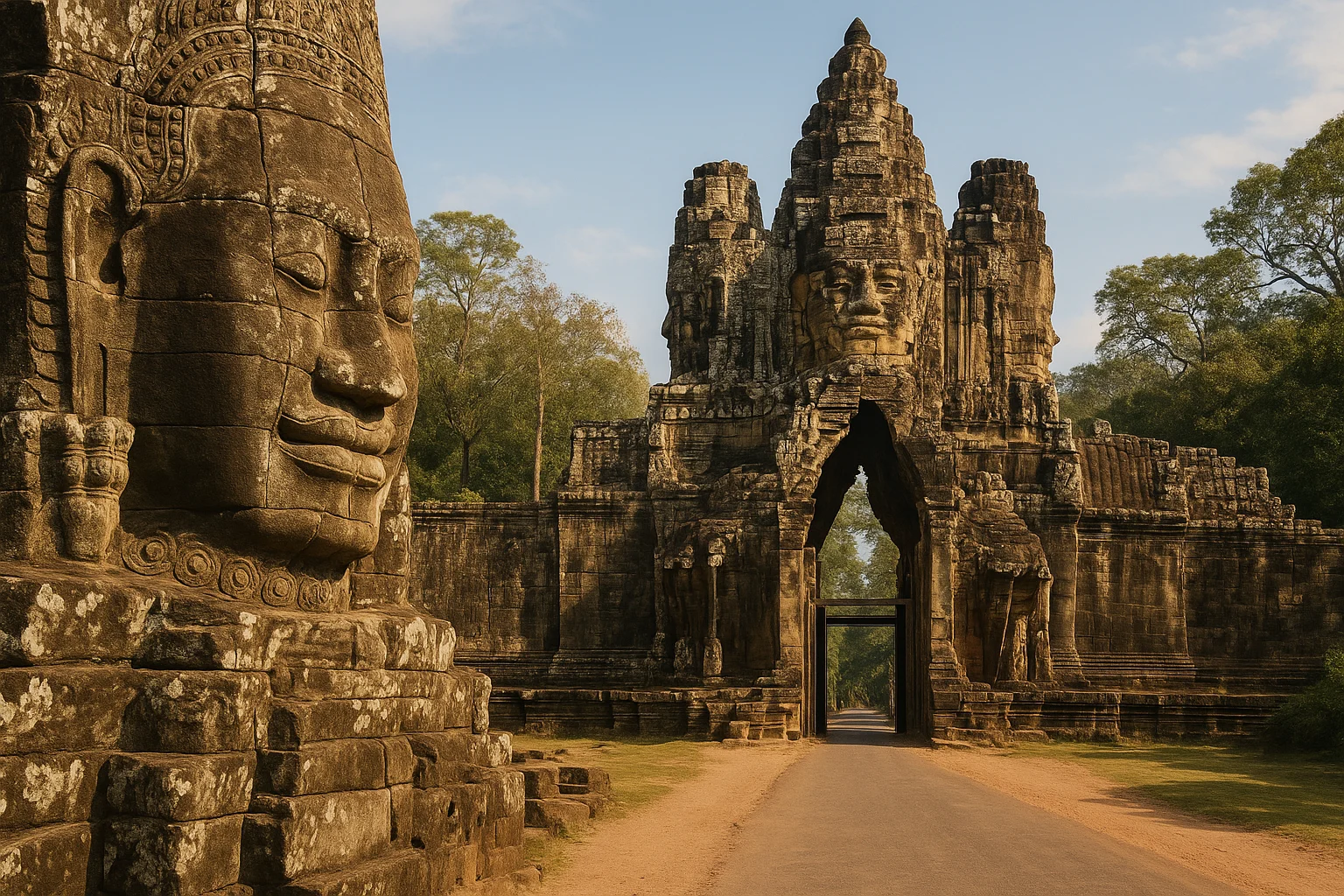
Angkor Thom Travel Guide 2026: Bayon Faces, Gates, and the Khmer Royal City
KhmerAngkor Thom was the last great capital of the Khmer Empire. This guide covers how to visit Bayon, th...
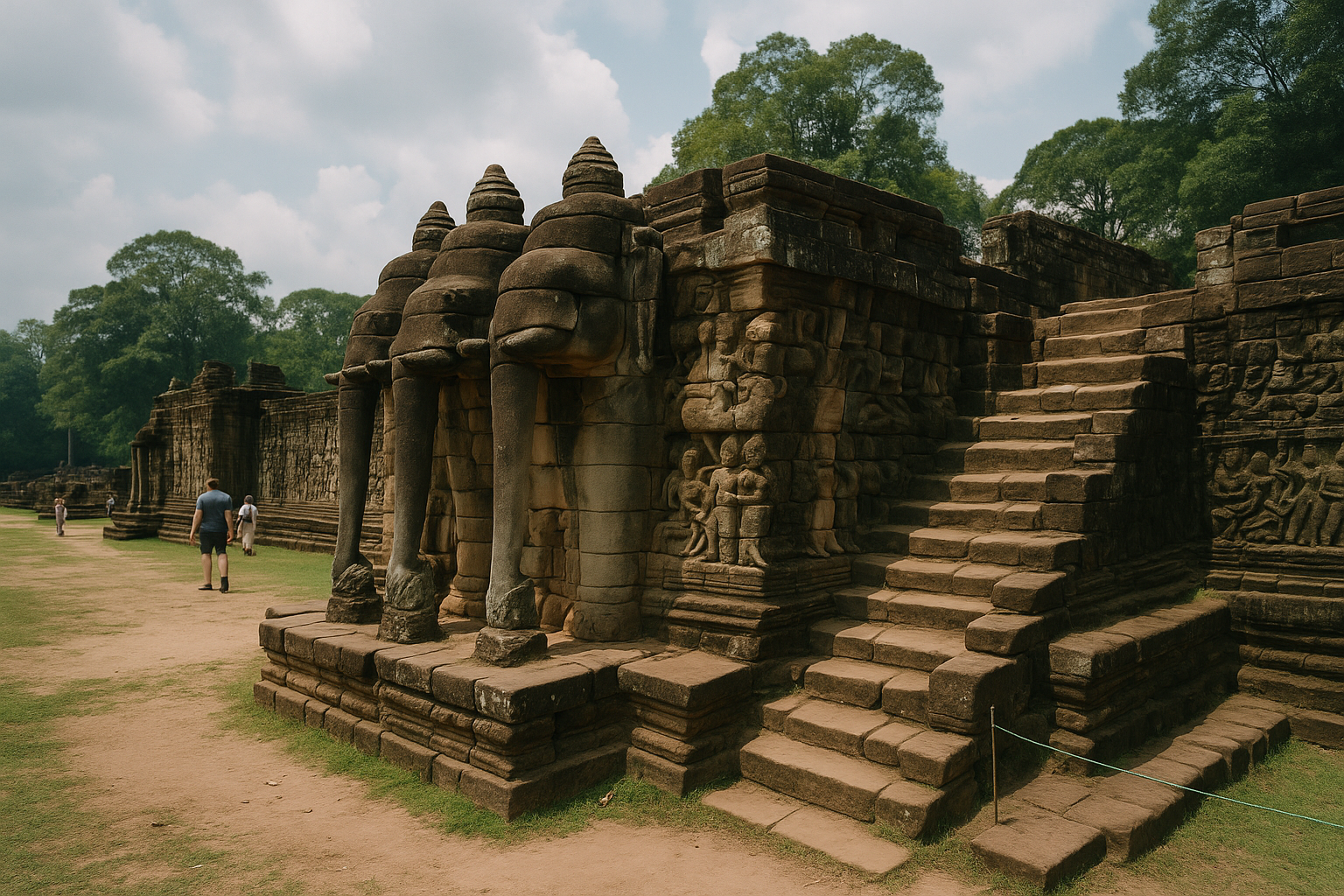
Terrace of the Elephants Travel Guide 2026: Angkor Thom’s Royal Viewing Platform
KhmerThe Terrace of the Elephants in Angkor Thom was a ceremonial platform used for royal events. This gu...
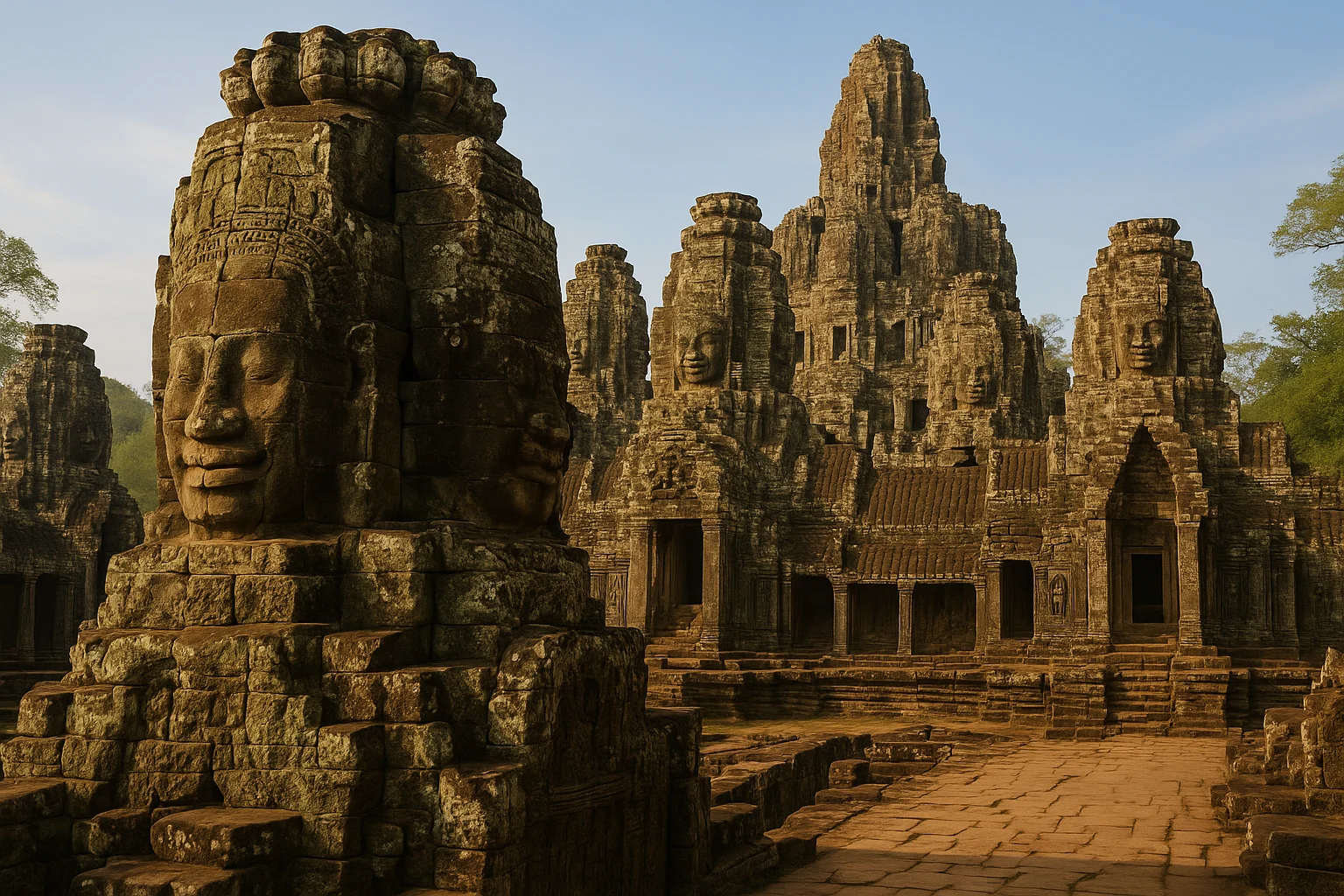
Bayon Temple Travel Guide 2026: Face Towers, Bas-Reliefs, and Best Visit Timing
KhmerBayon Temple sits at the center of Angkor Thom and is famous for its carved stone faces. This guide ...
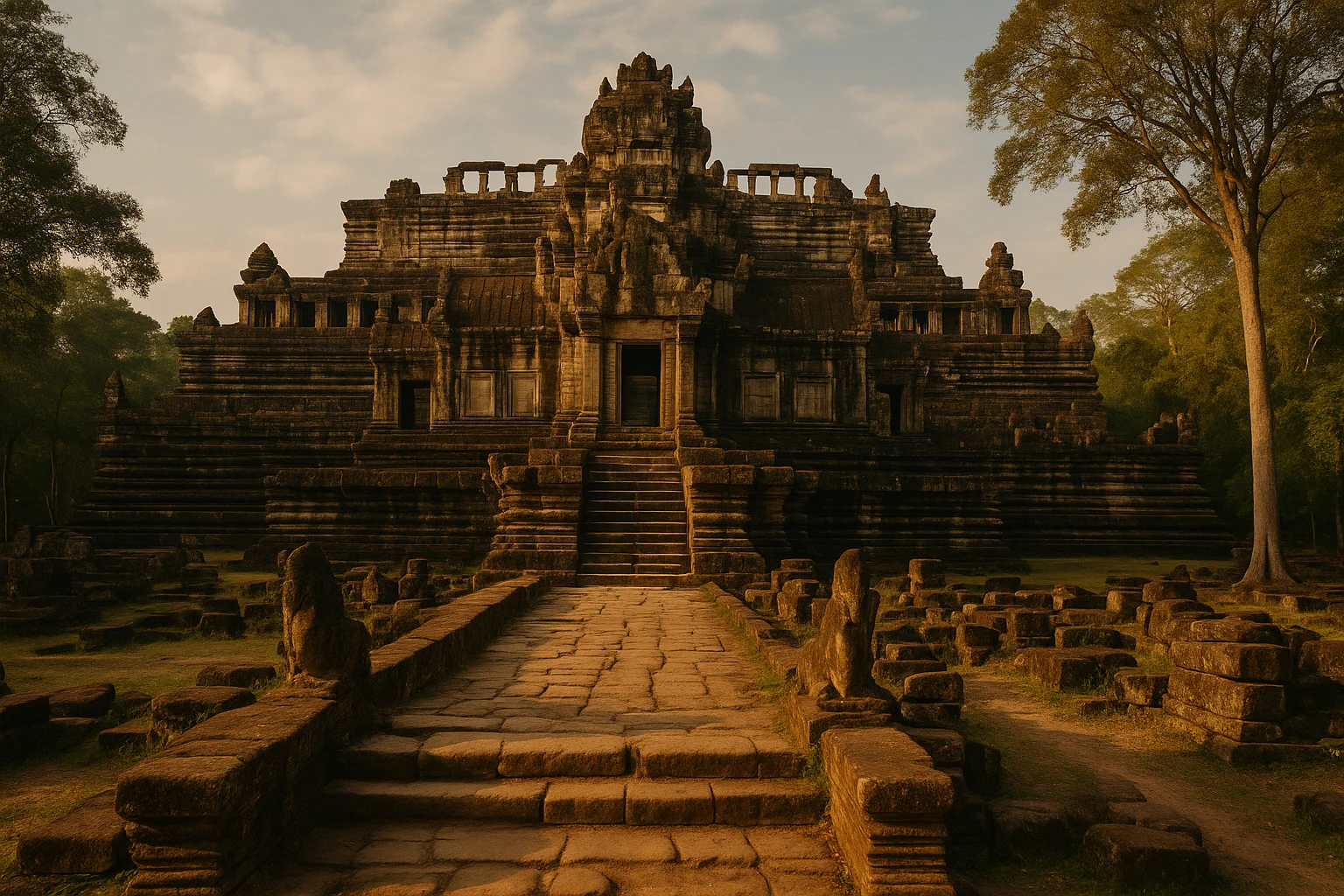
Baphuon
Khmer EmpireAn 11th-century sandstone temple mountain in Angkor Thom, Cambodia, renowned for its monumental recl...
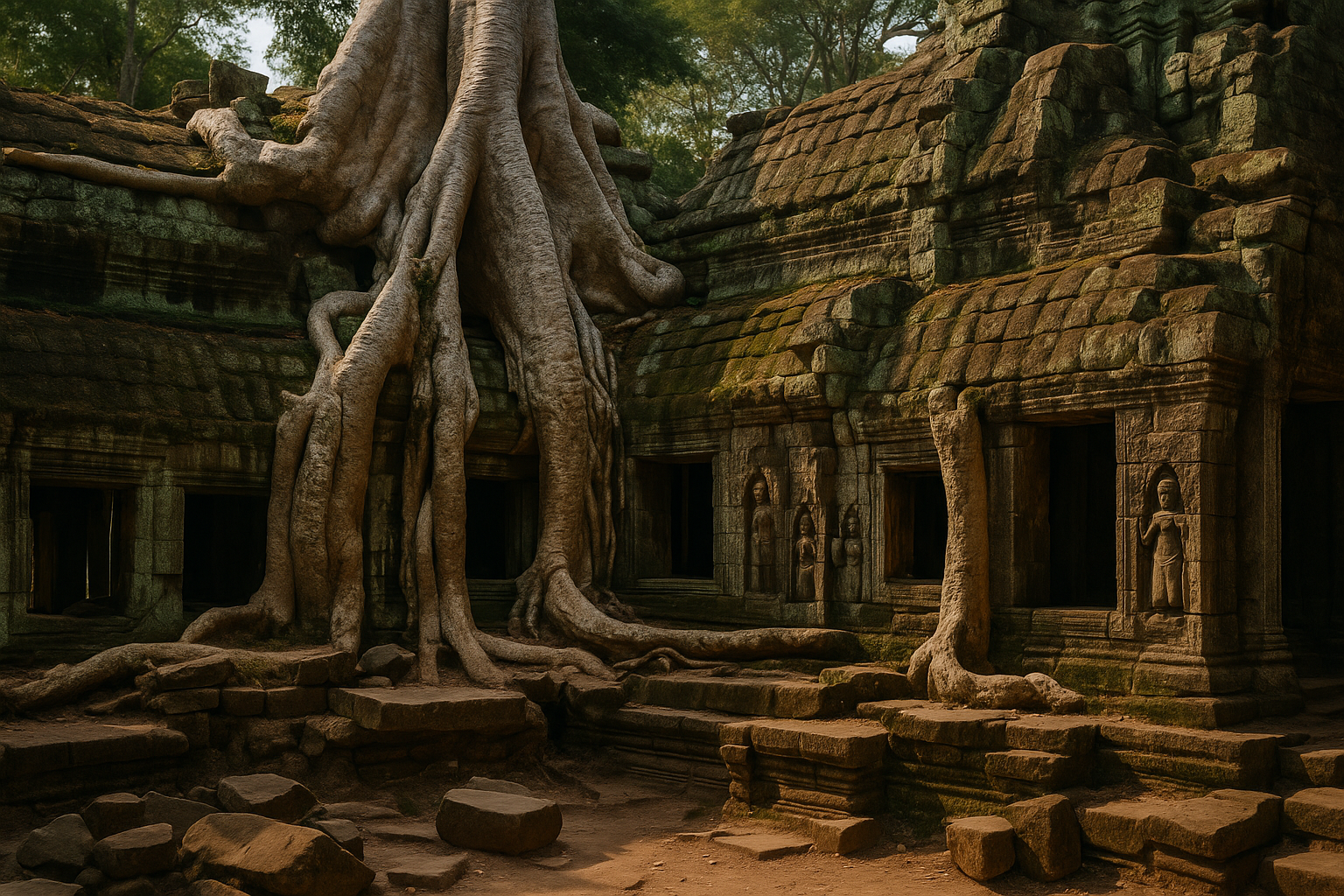
Ta Prohm Travel Guide 2026: Temple of the Trees, Routes, and Photo Timing
KhmerTa Prohm is one of Angkor’s most atmospheric temples, where giant roots and sandstone galleries merg...