Quick Info
Curated Experiences
Angkor Wat Entrance Pass and Guided Temple Tour
Full-Day Angkor Temples Small-Group Tour
Private Guided Angkor Temples Tour
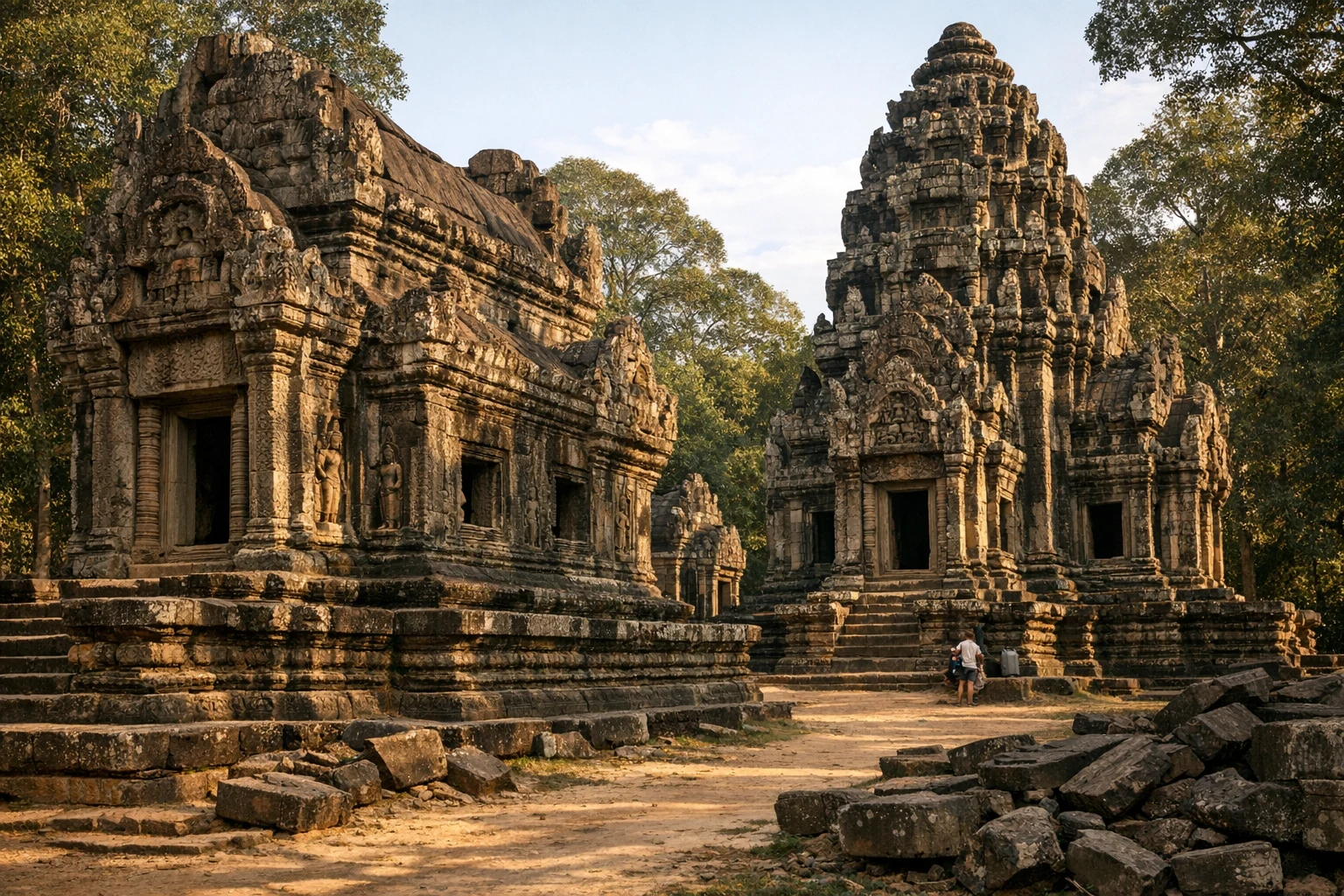
Amid the lush forests and storied stones of Siem Reap’s Angkor Archaeological Park, Thommanon stands as a jewel of Cambodia’s cultural heritage. This 12th-century Hindu temple might not boast the immense scale of Angkor Wat or Bayon, but it captivates with its elegance, distinct sandstone carvings, and tranquil atmosphere. From the moment you step through its weathered gopura (entrance pavilion), you’re transported back nearly 900 years to the reign of King Suryavarman II—the very same visionary who commissioned Angkor Wat. The Khmer Empire’s golden age echoes along the temple’s meticulously carved lintels, its sculpted devatas (female deities), and the timeworn blocks shaded by towering trees. Though modest in size, Thommanon’s artistry and preservation tell powerful stories of devotion, architectural ambition, and the enduring spiritual currents that shaped Southeast Asia. It’s a site where ancient history feels astonishingly close, especially in the quiet, contemplative hours after sunrise or as the late afternoon sun burnishes the temple’s creamy sandstone.
Thommanon’s appeal lies in its detail, harmony, and intimacy—a contrast to the grandeur of nearby Angkor Thom and Angkor Wat. Visitors often linger in its graceful sanctuaries, admiring the stone apsaras, listening to cicadas and distant birdsong, and picturing the vibrant ceremonies that once animated these halls. The temple stands as a testament to skillful Khmer stonework and Hindu devotion, providing an accessible yet enchanting glimpse into Cambodia’s storied past.
History
Foundations of a Sacred Sanctuary
The foundation of Thommanon dates to the opening decades of the 12th century, a time when the Khmer Empire flourished under the powerful rule of King Suryavarman II (reigned 1113–1150 CE). During his reign, the kingdom experienced vast territorial expansion, economic prosperity, and a flowering of monumental architecture. Thommanon was constructed as part of the ambitious temple-building program that gave rise to Angkor Wat, symbolizing both royal authority and religious devotion.
The precise year of Thommanon’s completion is uncertain, but scholars generally agree it was finished by the mid-12th century. Its layout, iconography, and architectural details powerfully mirror those at Angkor Wat, revealing a close chronological and stylistic kinship. Thommanon was dedicated to Shiva and Vishnu, two of the principal deities of the Hindu pantheon, which reflects the syncretic nature of imperial Khmer religion—blending Shaivism and Vaishnavism in both high ritual and design.
Khmer Empire and Religious Syncretism
At this point in Khmer history, the empire’s rulers were cementing their religious legitimacy through spectacular stone temples, constructed as earthly representations of Mount Meru, the home of the gods in Hindu cosmology. Temples like Thommanon were not simply places for prayer; they functioned as cosmic diagrams, establishing the king’s central role as both secular and divine intermediary.
What distinguishes Thommanon is how it encapsulates the religious duality of the period. Carvings of Vishnu and Shiva appear alongside evocative devata sculptures, signifying a period when rival Hindu sects were unified under royal patronage. The temple’s compact plan mirrors a shift toward more intimate shrine spaces, while retaining the vast, symbolic mountain form seen in larger temples.
Abandonment, Rediscovery, and Restoration
The gradual decline of the Angkor region, hastened by political instability, resource pressures, and climate fluctuations, eventually led to the abandonment of Thommanon in the late 15th century, as the Khmer capital moved south. The forests reclaimed the temple for centuries, concealing its beauty beneath thick foliage. It was not until French explorers and archaeologists rediscovered Angkor in the 19th century that Thommanon, along with dozens of other temples, returned to the world’s awareness.
Initial restoration efforts at Angkor prioritized larger sites, but Thommanon’s remarkable state of preservation eventually drew the attention of archaeologists. In the 1960s, École française d’Extrême-Orient (EFEO) experts undertook sensitive restoration, carefully reconstructing the temple’s central shrine and porticoes using original or matching stone blocks. This work has left Thommanon among the best-preserved, smallest temples of the Angkor era, its fine details largely intact, offering vivid insights into the skills and aesthetics of Khmer artisans.
Key Features
Approaching Thommanon, visitors are struck first by its balance and symmetry—a single central sanctuary tower flanked by two elegant libraries and approached through gopuras to the east and west. Set on a modest platform, the temple stands as a model of the so-called “Angkor Wat style,” where proportions are harmonious and decoration is lavish yet never overwhelming.
The central sanctuary, the tallest point of the temple, is crowned with a lotus-shaped spire—symbolizing enlightenment and the sacred mountain of Hindu lore. If you step inside, you’ll notice the interior walls still bear faint traces of ancient blackened lichen, contrasting with the creamy sandstone that dominates the site. Step outside again, and it is the details that become mesmerizing: intricate lintels and pediments depict scenes from Hindu mythology, including glimpses of devas (gods), asuras (demons), and episodes from the Ramayana and Mahabharata epics.
Among Thommanon’s most celebrated features are its devata and apsara carvings. Though the temple is smaller than many neighbors, the quality and preservation of these female figures are extraordinary. The devatas’ graceful postures, elaborate jewelry, and distinct hairstyles not only symbolize spiritual beauty but also reveal details of Khmer costume and aesthetics of the 12th century. Each figure—some smiling serenely, others lost in contemplation—is framed by floral motifs, curling vines, or even stylized flames.
The libraries, located directly north and south of the central sanctuary, were used to house sacred scriptures or ritual objects. These subsidiary structures echo the overall temple design but feature smaller doors and less ornate decoration, emphasizing the sacred hierarchy leading up to the central shrine. Many original doorways remain, and the temple’s windows are decorated with balusters—rows of ornamental columns carefully carved from solid sandstone.
Perhaps most striking about Thommanon, especially for visitors coming from Angkor Wat or Bayon, is its sense of seclusion and serenity. Large tour groups are uncommon, so it’s often possible to explore the temple almost alone, absorbing the patterns of light and shadow cast across the ancient stone. The surrounding forest provides shade and amplifies the tranquil ambiance, making this a truly special spot to linger and photograph.
The proximity of Chau Say Tevoda—a twin temple of similar vintage and design, separated from Thommanon by the avenue that once led to the heart of Angkor Thom—adds yet another layer of historical interest. Archaeological comparisons between the two temples help specialists understand how religious and architectural trends spread rapidly across the Angkor region at its zenith.
Getting There
Thommanon is conveniently situated just east of Angkor Thom’s Victory Gate and is easily accessible from Siem Reap, the lively tourist hub for Angkor’s temples. The distance from Siem Reap to Thommanon is approximately 8 kilometers, making it an ideal stop on any Angkor temple circuit.
Most visitors reach Thommanon as part of a broader tour of the Angkor Archaeological Park, often combined with Angkor Thom, Angkor Wat, and Bayon. Local tuk-tuks are a quintessential way to travel the park: expect to pay around $15–$20 USD for a half-day circuit covering several smaller temples, or $25–$30 USD for a full day exploring wider-ranging highlights. Tuk-tuks can be hired easily in central Siem Reap, and most drivers are familiar with the layout and will wait while you explore.
For a more active approach, cycling is a popular and budget-friendly option. Bicycles can be rented in Siem Reap for as little as $2–$5 USD per day. The ride from town to Thommanon is relatively flat and scenic, especially in the early morning when traffic is light and the air is cool. Be sure to carry water and sun protection if cycling, as midday temperatures soar, and shade may be sparse at certain times of year.
Private cars or minivans offer a comfortable, air-conditioned alternative, particularly for families or small groups. These can be arranged through hotels or tour operators and usually cost $40–$60 USD for a full-day, customizable itinerary. All visitors require a valid Angkor Pass (available at the main Angkor Ticket Office), which covers entry to Thommanon along with all other temples within the park.
Thommanon sits conveniently near other key temples, so it’s easy to include as part of the “small circuit” or “grand circuit” loops widely offered by local guides. Most guided tours provide insightful historical commentary and help bring the temple’s carvings to life; consider booking in advance if you prefer a dedicated guide or want to join a group experience.
When to Visit
Cambodia’s climate is dominated by two seasons: the dry (November to April) and the wet (May to October). When planning a visit to Thommanon, timing is everything for both comfort and atmosphere.
The peak dry season, running from November through February, offers cooler temperatures (20–30°C/68–86°F), lower humidity, and little rain. This is the ideal period for exploring Thommanon and neighboring temples: skies are generally clear, mornings and late afternoons are mild, and the site’s sandstone glows in golden sunlight. However, this is also the busiest season in Angkor as international tourism surges, so consider visiting early in the morning (from opening at 7:30am) or later in the afternoon to avoid crowds. Because Thommanon is less famous than Angkor Wat, you’re still likely to enjoy relative quiet.
The hot season (March to early May) brings higher temperatures, sometimes exceeding 35°C (95°F), and can make temple exploration physically challenging. Bring extra water, wear a hat, and take advantage of the shade offered by Thommanon’s trees.
During the rainy season (May to October), daily afternoon showers are common, especially in September and October, but mornings may remain dry. While the heat is less intense, humidity rises and paths around the temple can become muddy. The upside: Angkor’s famous moats and ponds refill, the surrounding jungle is lush and green, and visitor numbers drop dramatically. Rainy season light can be beautiful for photography, with dramatic skies and soft reflections.
Regardless of time of year, Thommanon is open from 7:30am to 5:30pm daily. Early morning remains the best time to visit for cool air and beautiful light, and a midday break from the crowds is a good idea, especially during peak seasons.
Quick Facts
| Attribute | Details |
|---|---|
| Location | Angkor Archaeological Park, Siem Reap Province, Cambodia |
| Coordinates | 13.4456° N, 103.8771° E |
| Established | Early to mid-12th century (c. 1113–1150 CE) |
| Civilization | Khmer Empire |
| Main Deities | Shiva and Vishnu (Hindu) |
| Architectural Style | Angkor Wat-style, single-tower plan |
| Major Materials | Sandstone |
| Distinctive Features | Intricate devata and apsara carvings, harmonious design |
| UNESCO World Heritage | Part of Angkor Archaeological Park (listed 1992) |
| Entry Fee | Included with valid Angkor Pass (1-day: $37, 3-day: $62, 7-day: $72 USD) |
| Opening Hours | Daily, 7:30am–5:30pm |
| Accessibility | Some uneven paths and steps; partial shade |
| Nearby Key Sites | Angkor Thom, Angkor Wat, Bayon Temple |
| Best Season to Visit | November–February (cool and dry) |
| Recommended Visit Time | 30–60 minutes |
Frequently Asked Questions
Where is Thommanon located?
Thommanon is situated just east of Angkor Thom and north of Angkor Wat in the Angkor Archaeological Park, Siem Reap Province, Cambodia.
What is the best way to visit Thommanon?
Most visitors explore Thommanon as part of a guided tour or tuk-tuk circuit of Angkor’s smaller temples from Siem Reap.
What are the temple opening hours and fees?
Thommanon is open daily from 7:30am to 5:30pm. Access is included with the Angkor Archaeological Park pass (1-, 3-, or 7-day options).
Is Thommanon accessible for those with limited mobility?
The terrain around Thommanon is uneven and involves stairs; limited mobility access is challenging.
What should I wear when visiting Thommanon?
Dress modestly with knees and shoulders covered, as Thommanon is a sacred site and part of Angkor’s heritage regulations.
Nearby Ancient Sites
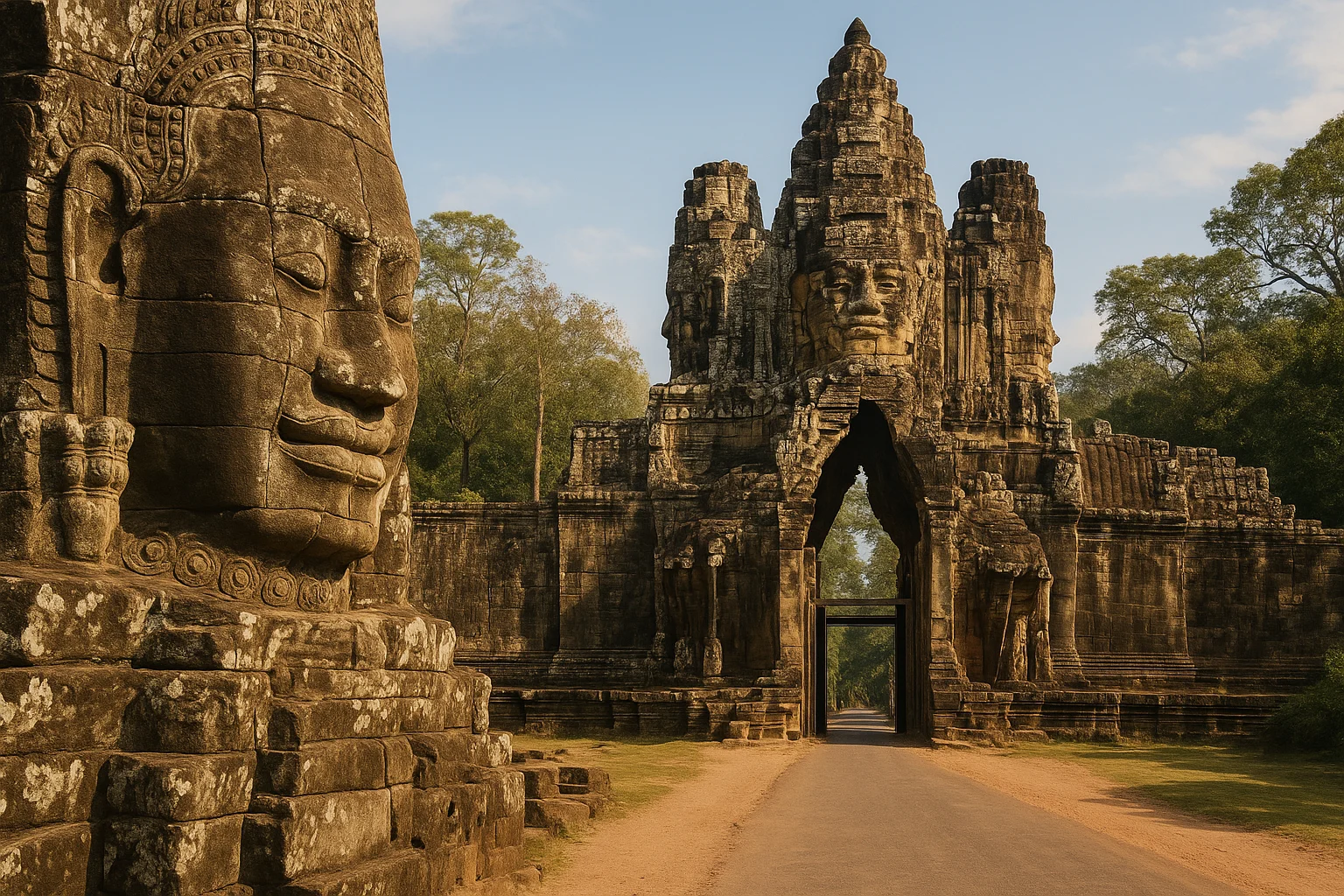
Angkor Thom Travel Guide 2026: Bayon Faces, Gates, and the Khmer Royal City
KhmerAngkor Thom was the last great capital of the Khmer Empire. This guide covers how to visit Bayon, th...
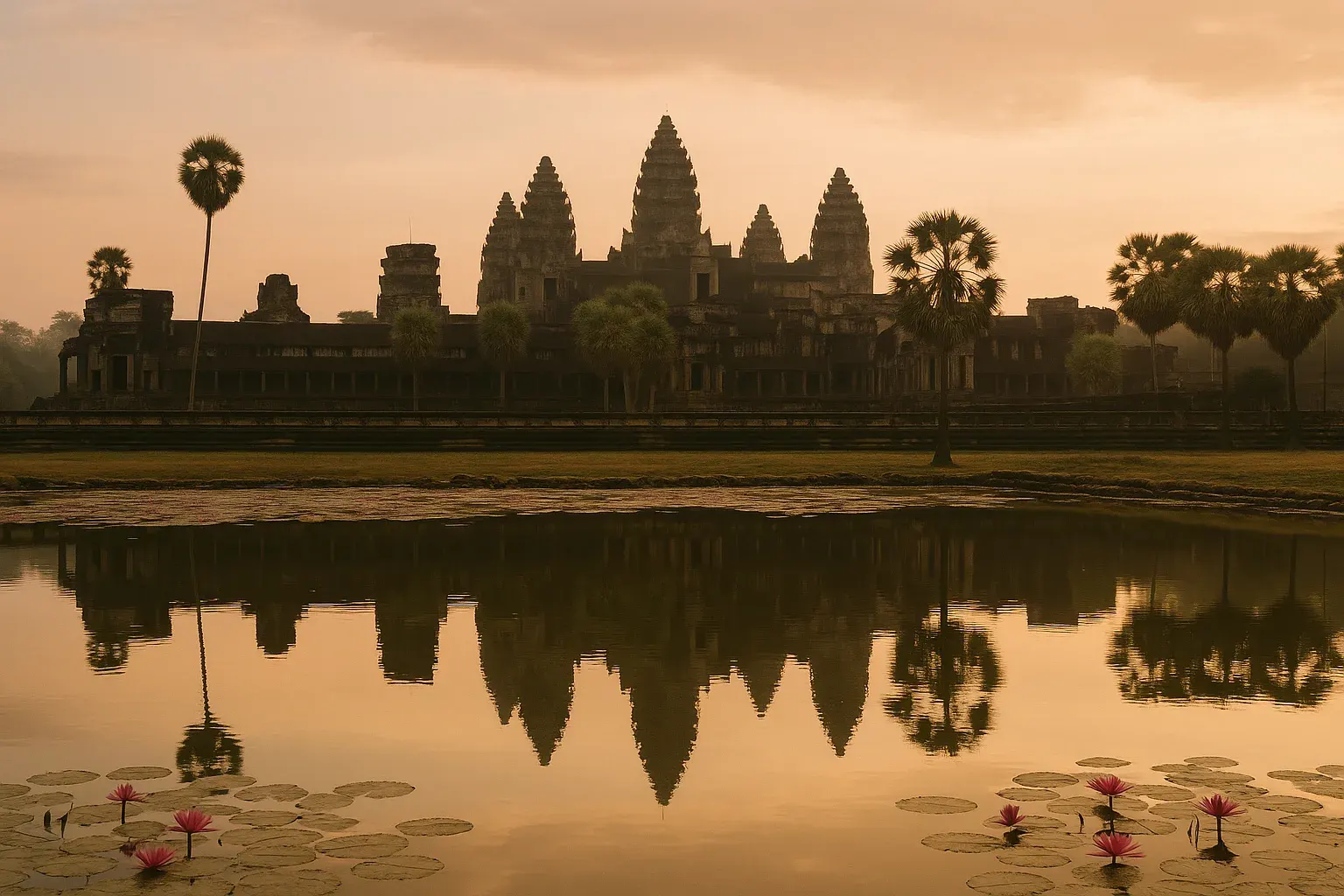
Angkor Wat Travel Guide 2026: Everything You Need to Know
KhmerAngkor Wat, the world's largest religious monument, spans over 400 acres in the heart of Cambodia. T...
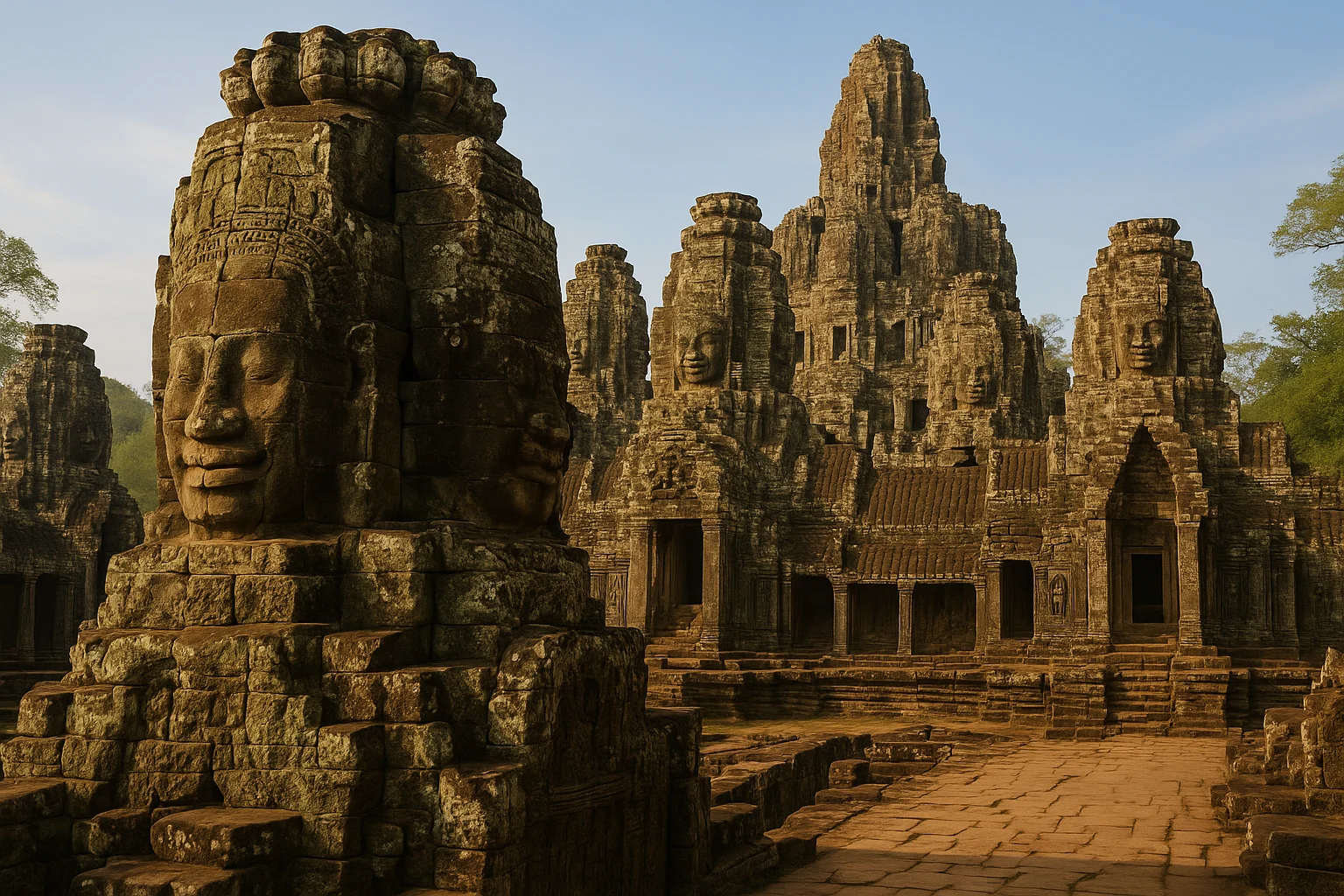
Bayon Temple Travel Guide 2026: Face Towers, Bas-Reliefs, and Best Visit Timing
KhmerBayon Temple sits at the center of Angkor Thom and is famous for its carved stone faces. This guide ...